-
-
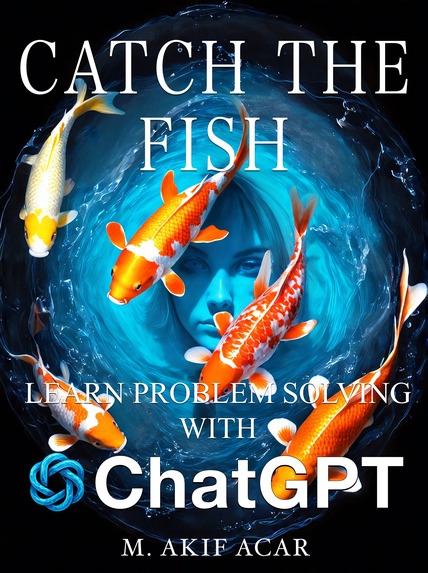
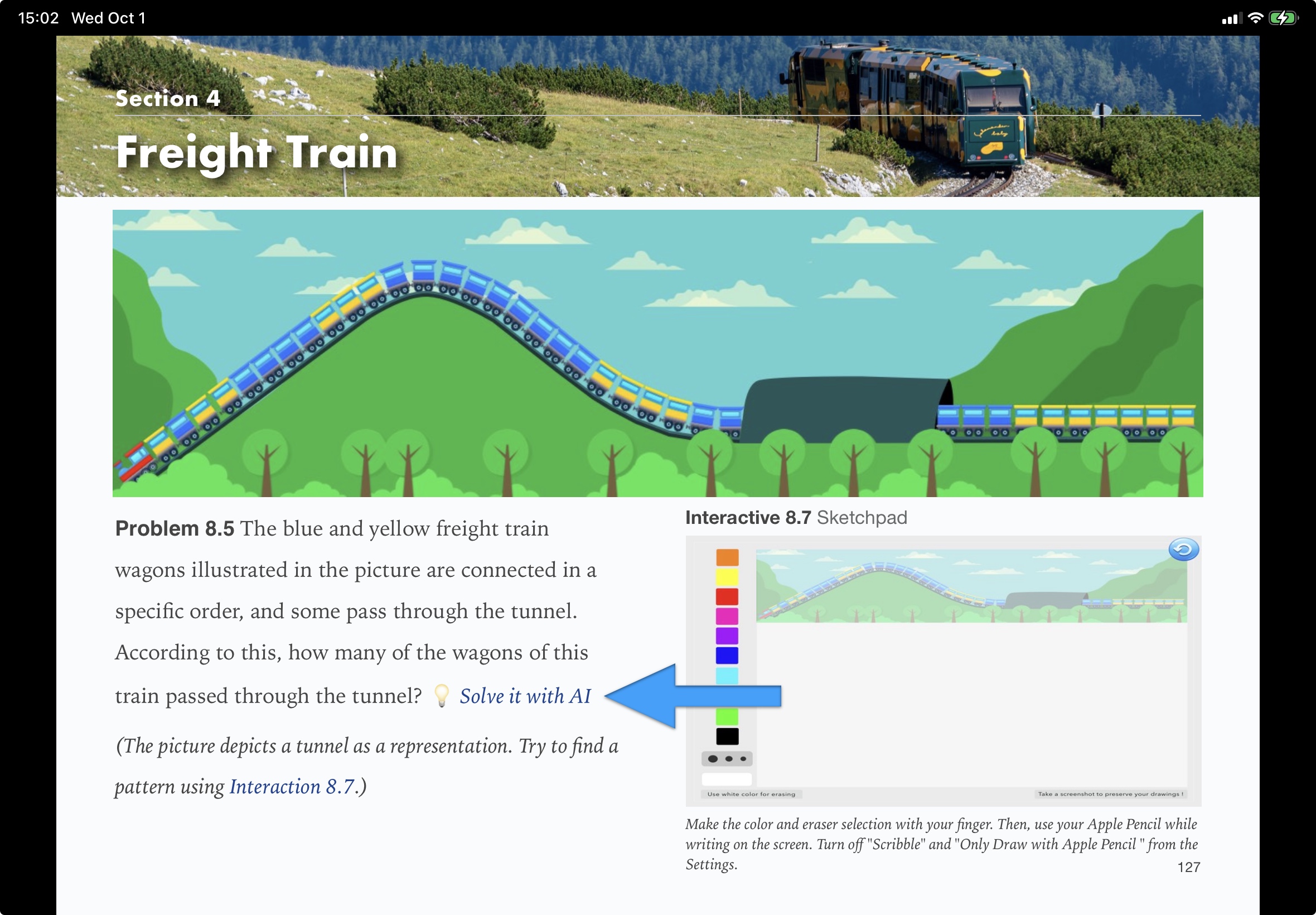
Book Cover
-
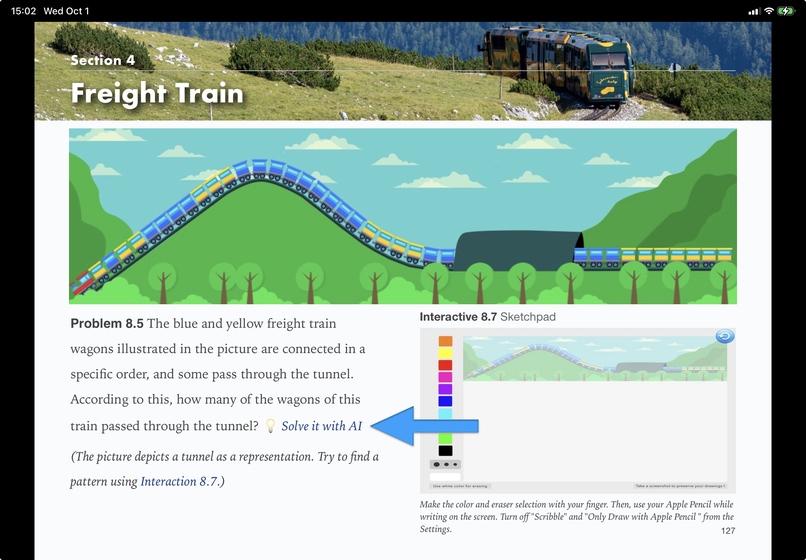
Click Solve it with AI (Deep Linking to the custom GPT)
-
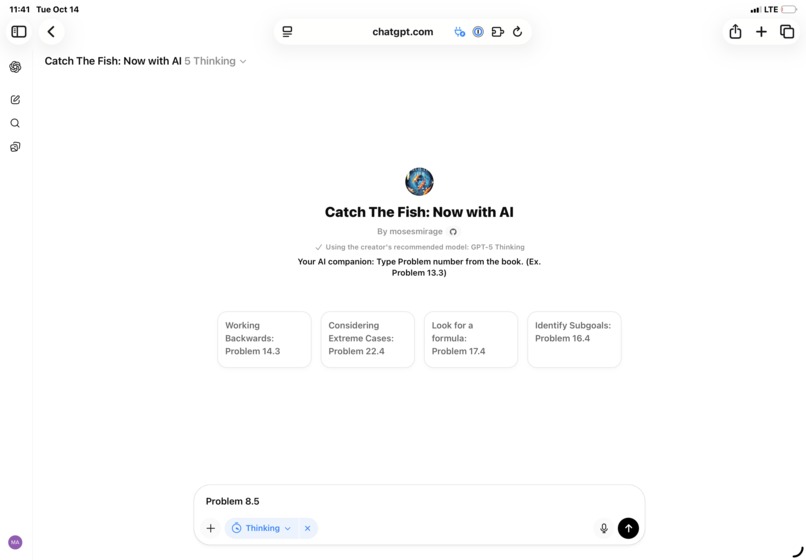
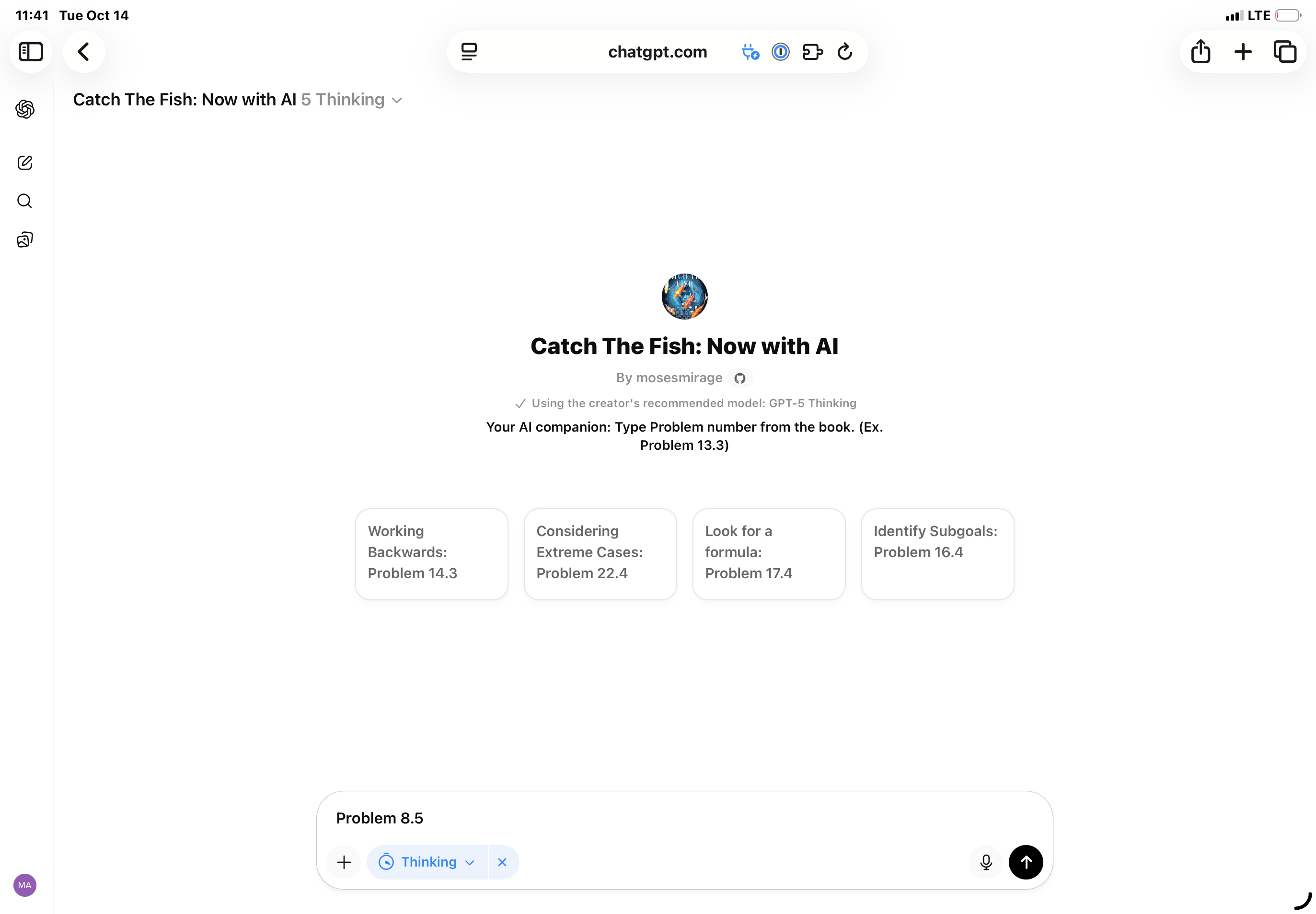
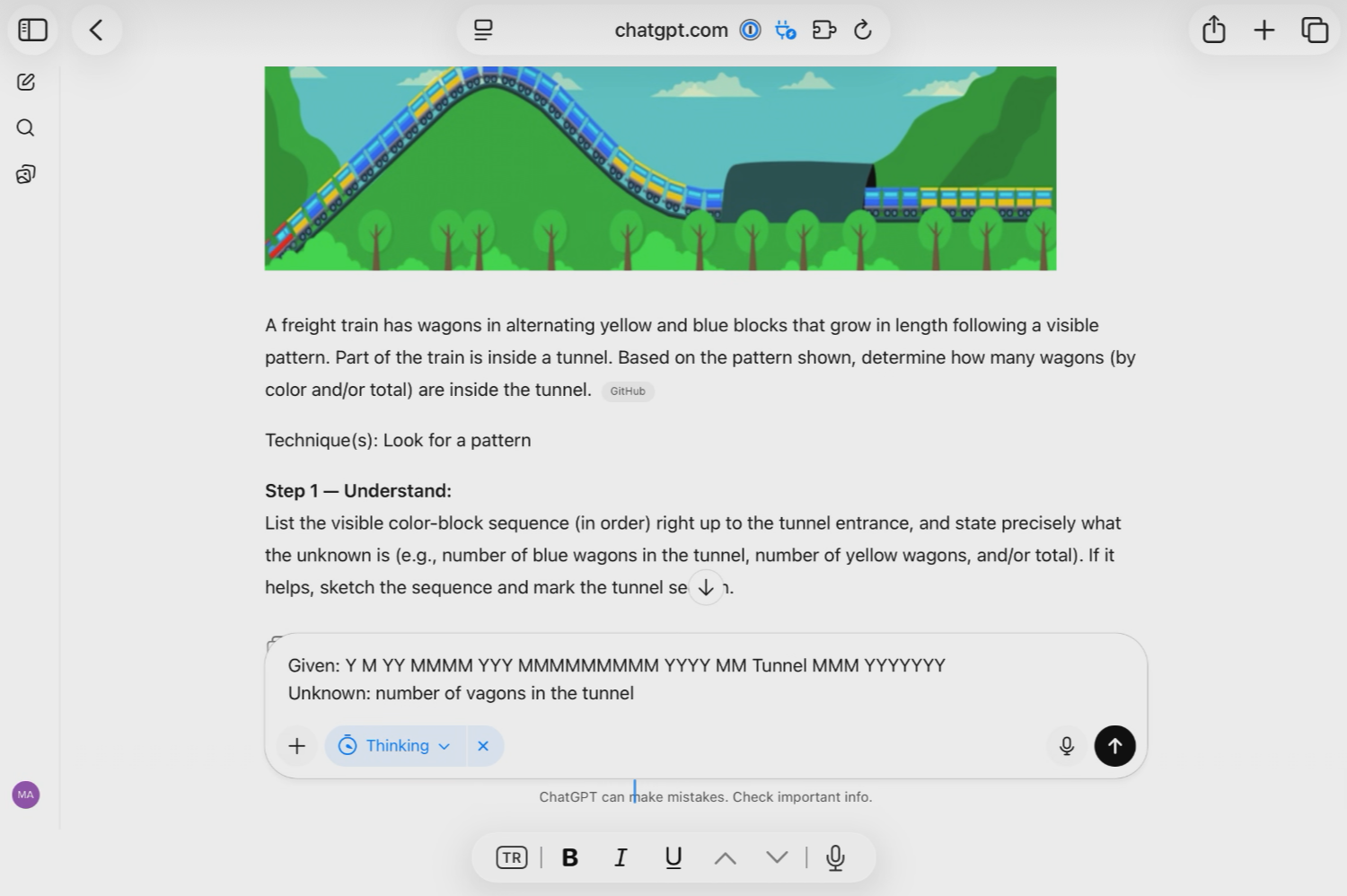
The Custom GPT launches with the selected problem number preloaded
-
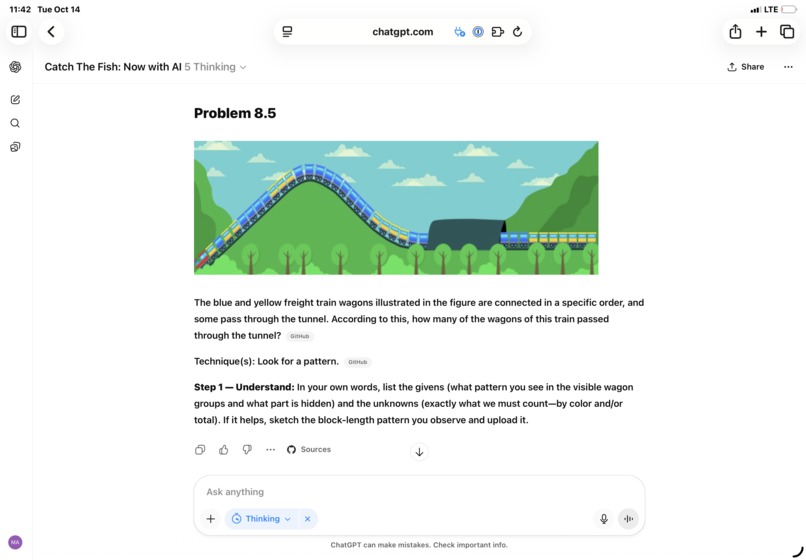
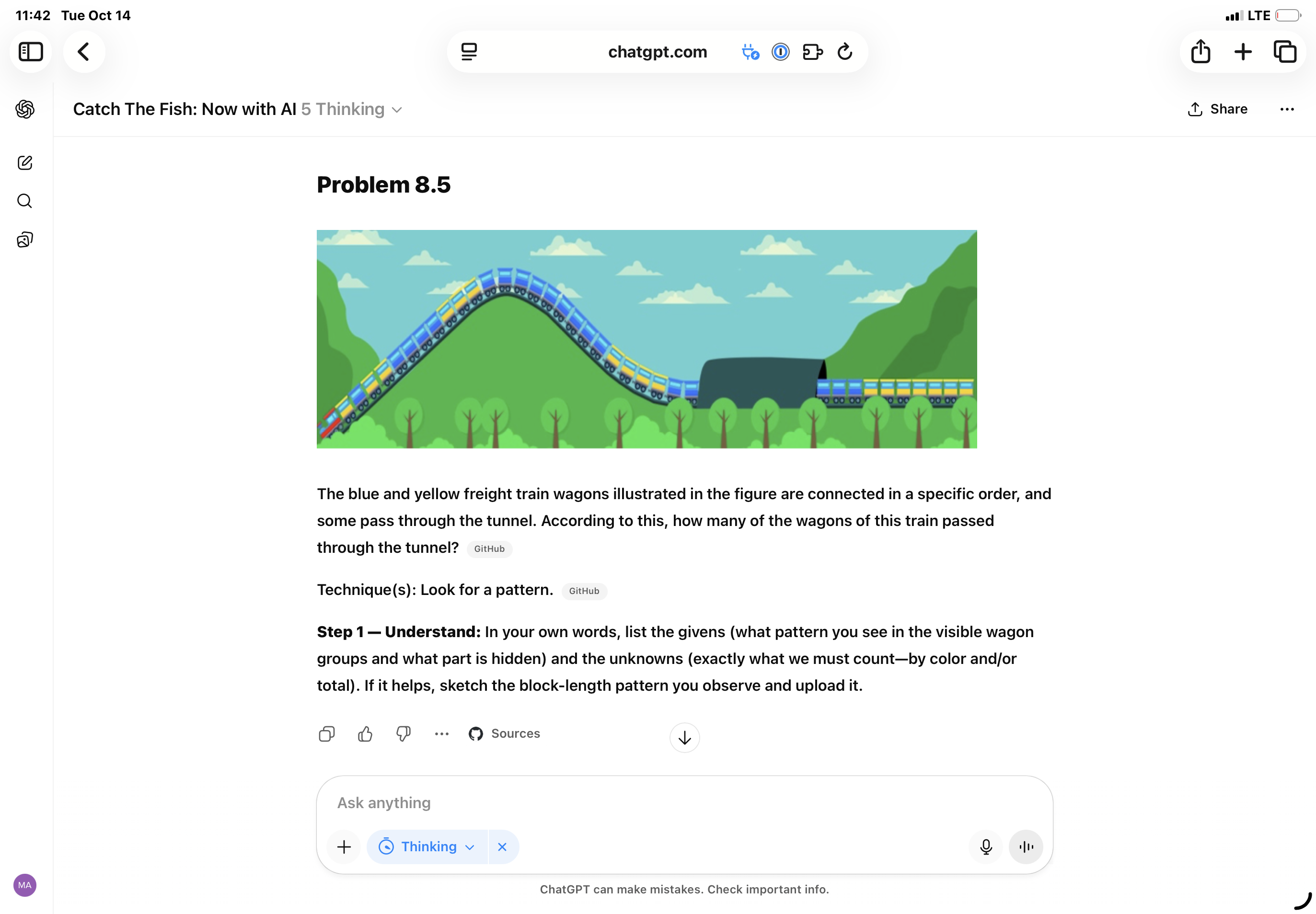
Problem and related figure are fetched from the dataset; the Custom GPT initiates the session at the Understand step.
-
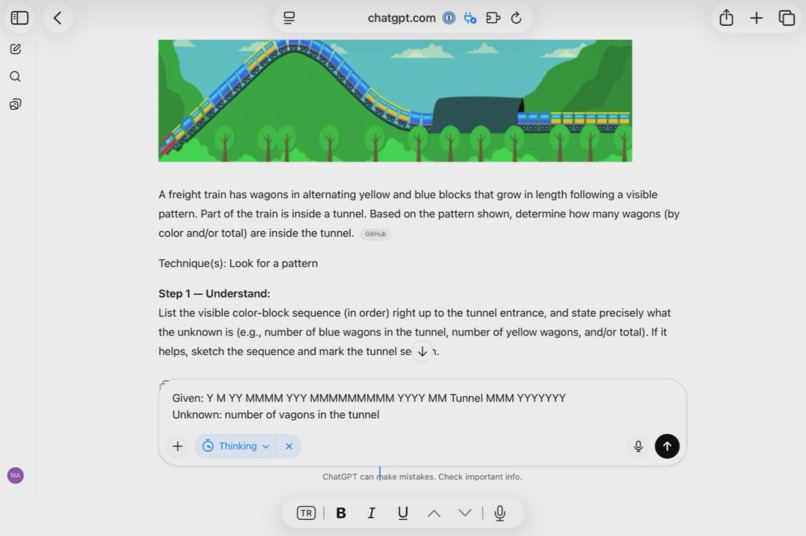
The user enters what they understand under the guidance of the Custom GPT.
-
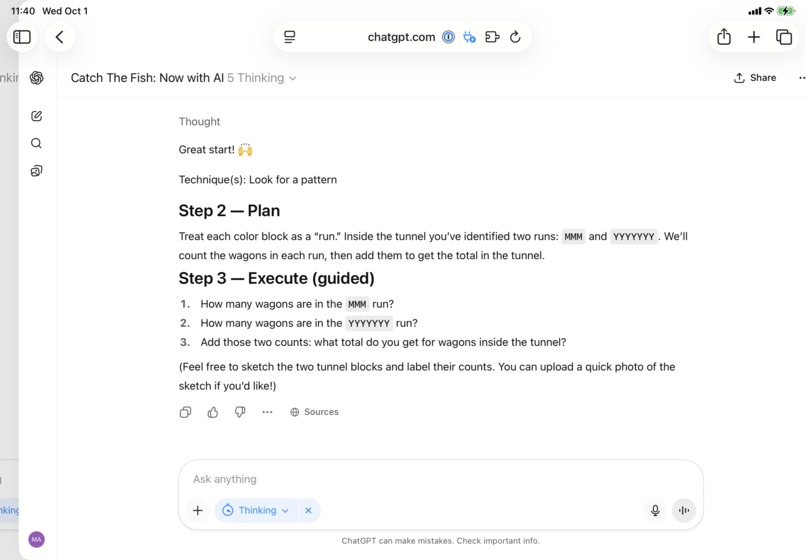
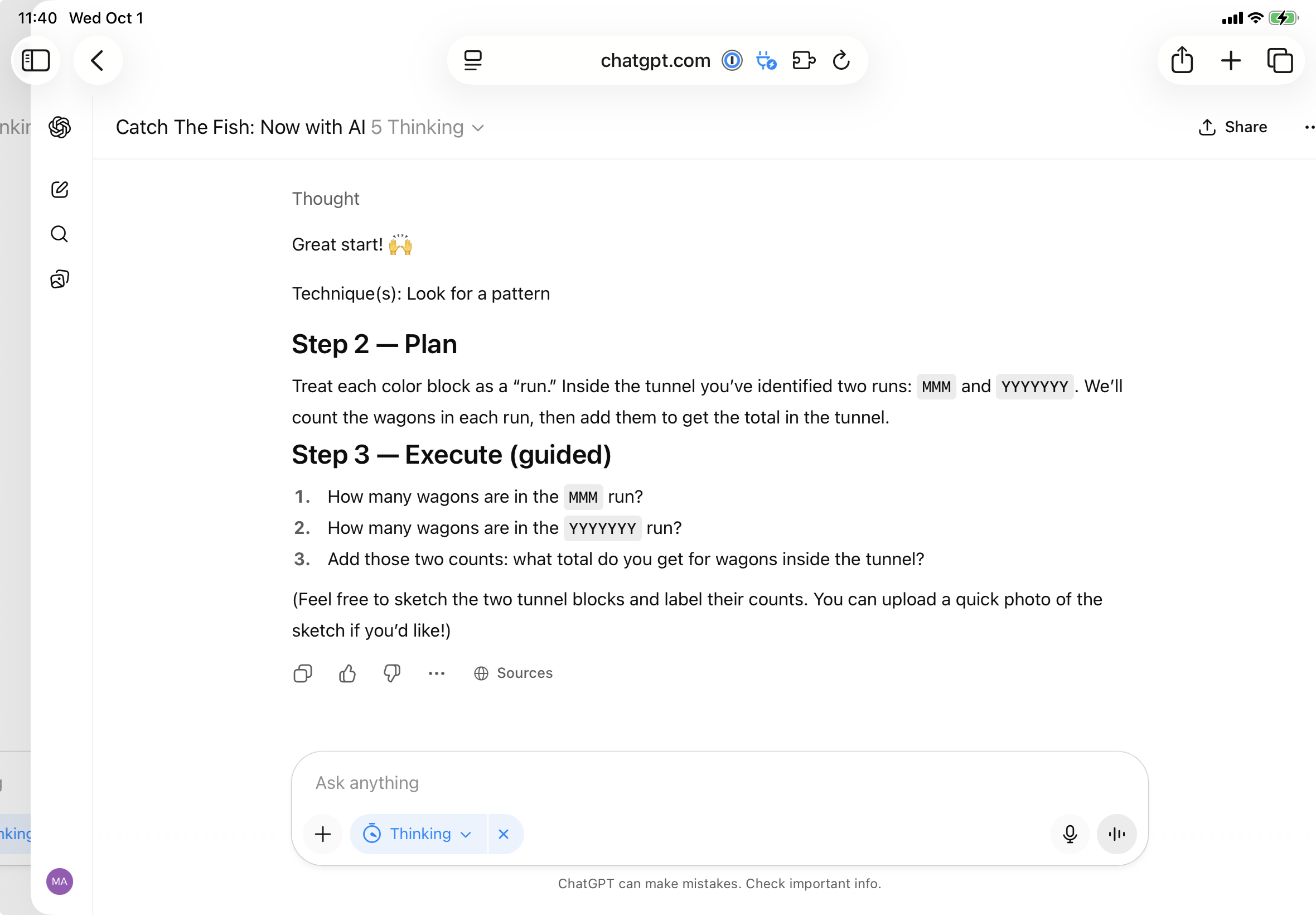
the customgpt responded back and propose to apply the next steps of Polyas problem solving namely plan an execute
-
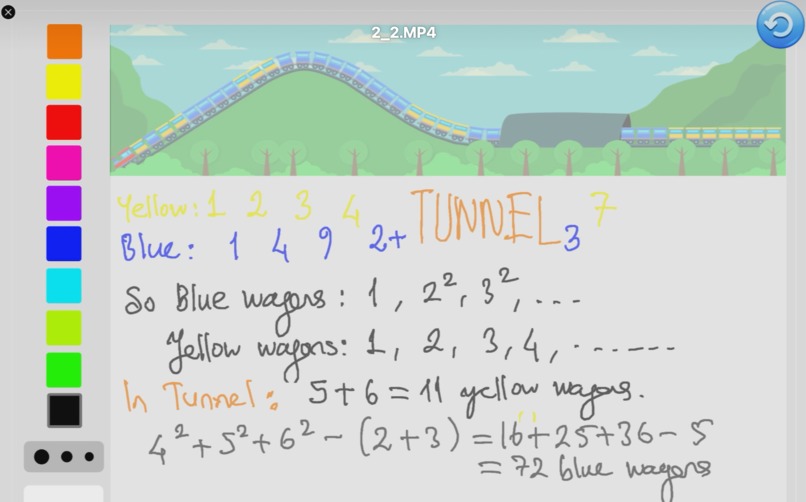
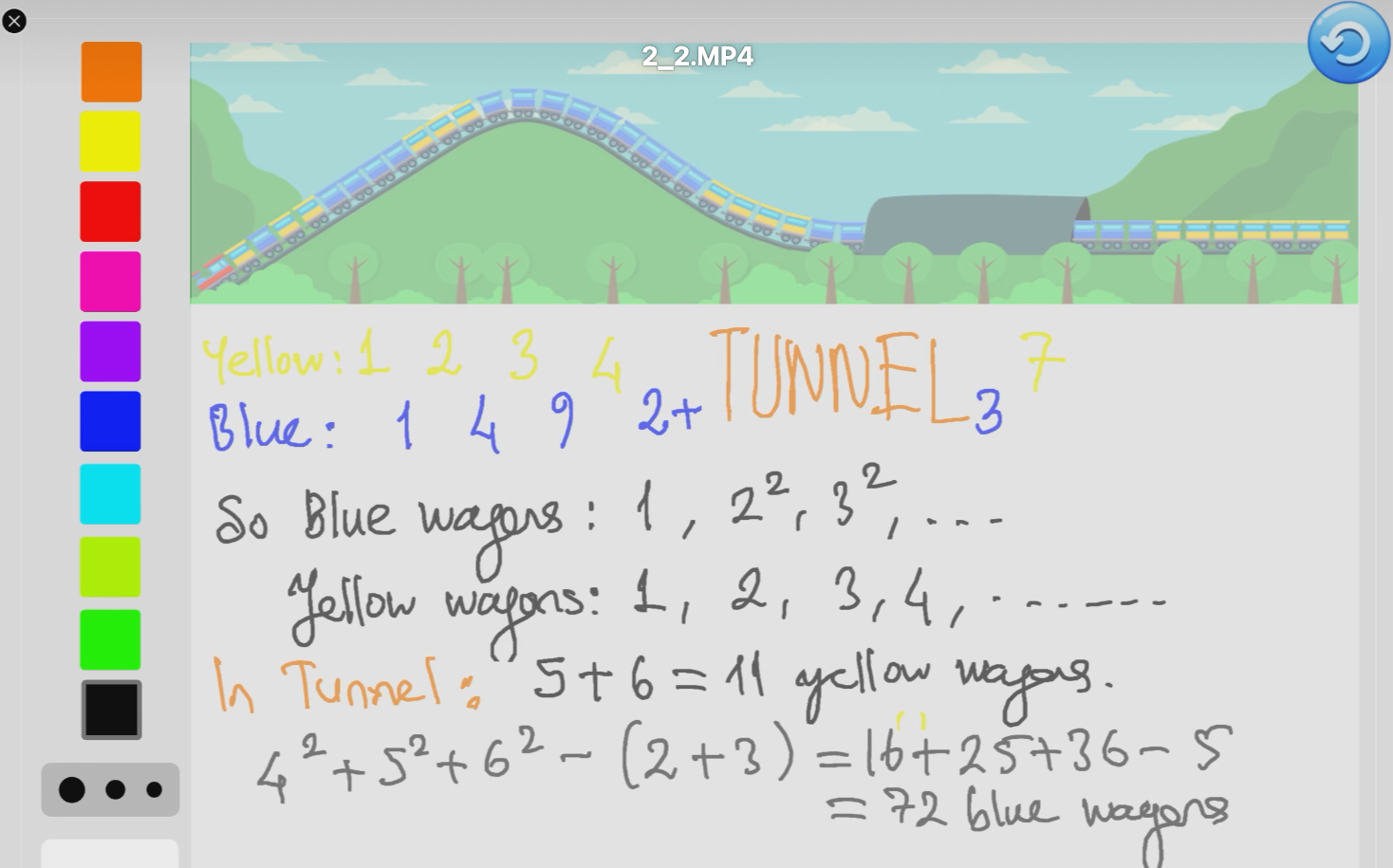
User visualizes wagon counts using color patterns, applying the “Look for a Pattern” technique to find totals inside the tunnel.
-
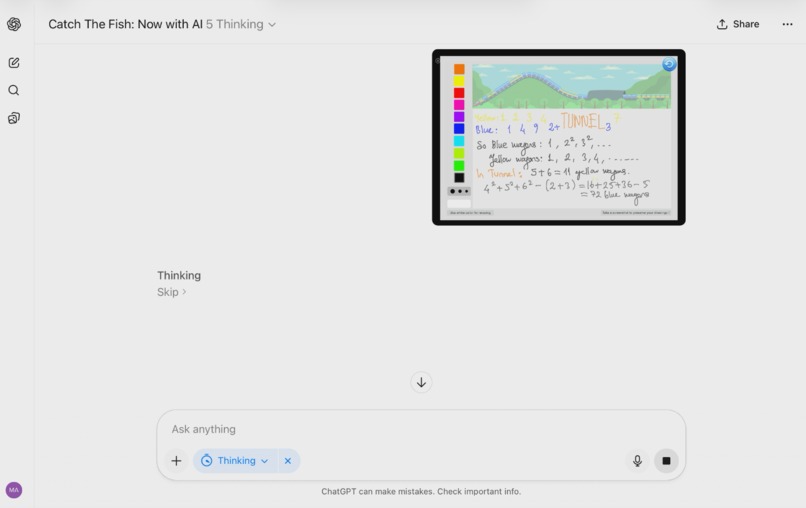
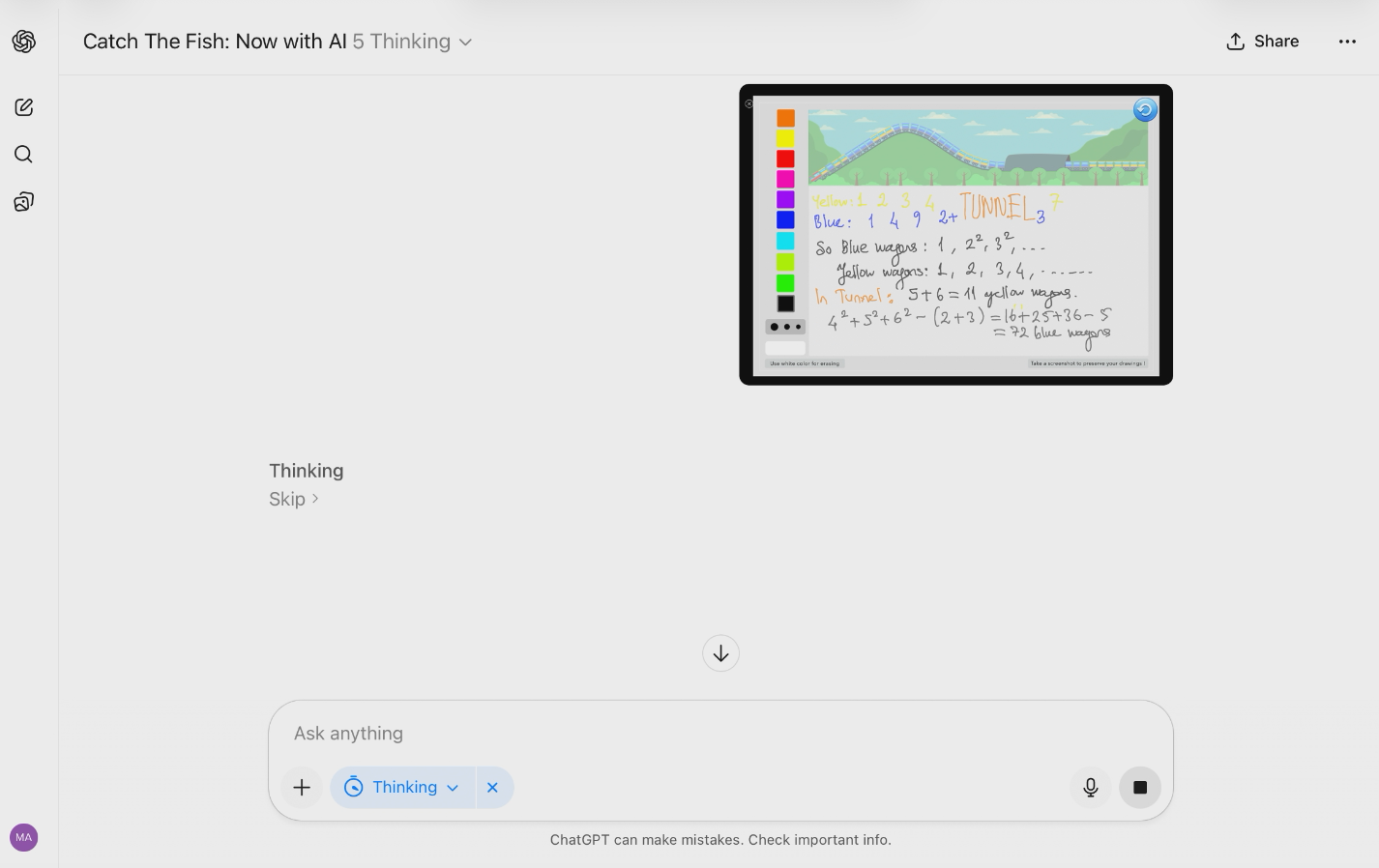
User uploads their solution screenshot for the Custom GPT to verify and provide guided feedback.
-
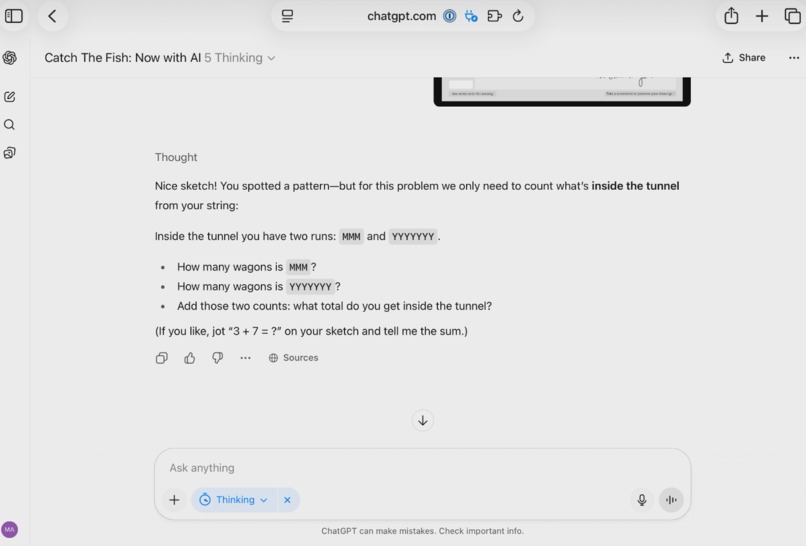
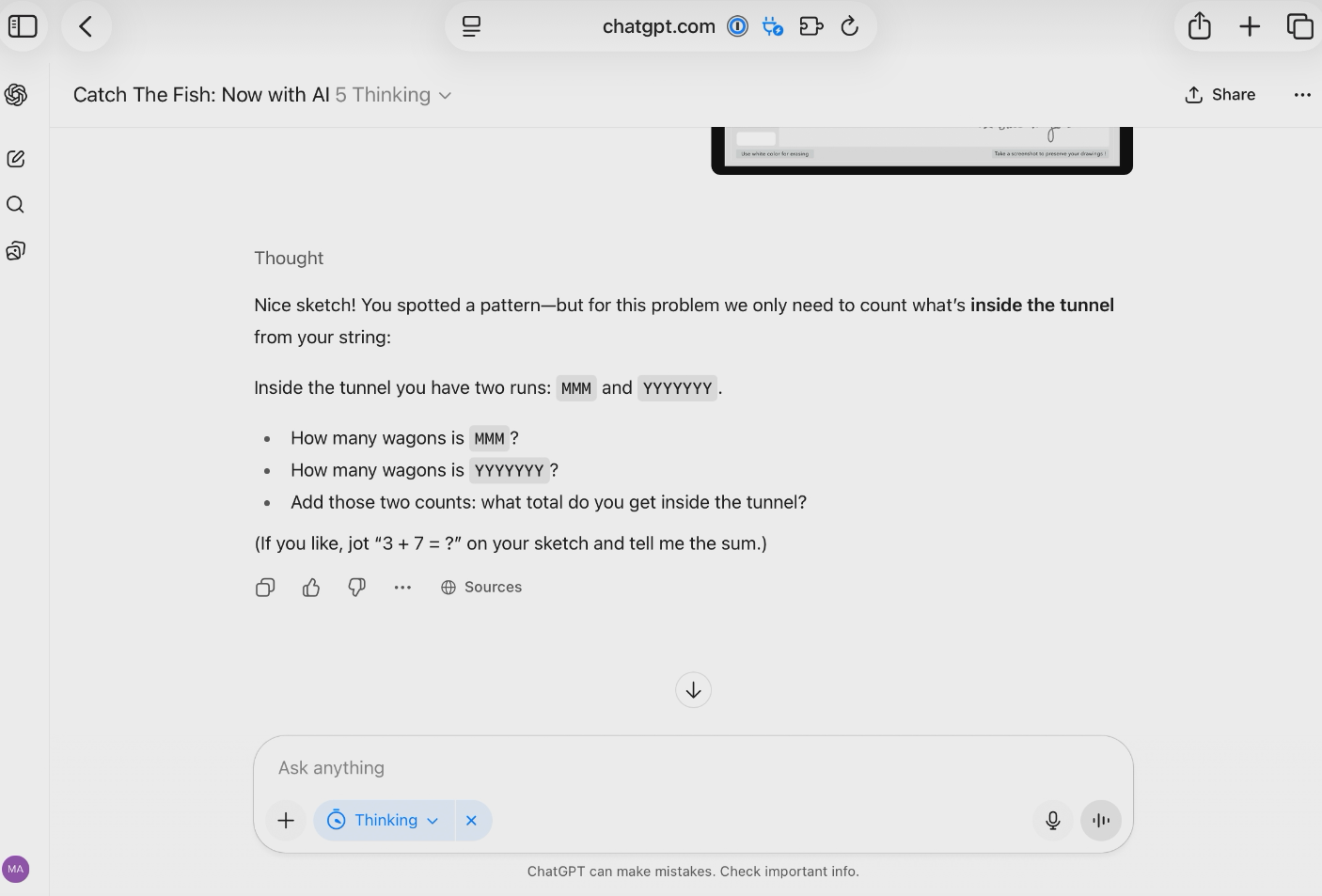
The Custom GPT analyzes the learner’s sketch and guides them to calculate wagon totals inside the tunnel, continuing Pólya’s Execute step.

Inspiration
Many students struggle with structured problem-solving because traditional materials focus on answers instead of thinking processes.
Catch the Fish: Learn Problem-Solving with ChatGPT began as an Apple Books iBook designed to teach mathematical reasoning through storytelling.
For EduHacks AI Fest 2025, I aimed to evolve it into a living AI tutor — a system that understands the learner, fetches real problems, and teaches how to think using Pólya’s four-step method.
The Problem
Educational content often presents static exercises that fail to adapt to different reasoning styles.
Learners rarely receive guided feedback while solving problems, and digital books typically can’t provide real-time, step-by-step support.
This gap inspired the creation of a dynamic AI companion that can understand, respond, and teach interactively within an existing learning ecosystem.
The Solution
The Custom GPT Companion transforms Catch the Fish into an AI-powered, adaptive learning system.
When a student taps “Solve with AI”, the GPT:
- Fetches the relevant problem and figure live from GitHub (
problems.json). - Reads which problem-solving technique applies (e.g., Working Backwards, Look for a Pattern).
- Guides the learner through Pólya’s four steps —
$$ \text{Understand} \rightarrow \text{Plan} \rightarrow \text{Execute} \rightarrow \text{Reflect} $$ - Asks focused, step-by-step questions instead of giving answers — replicating a human tutor’s approach.
Each session becomes a Socratic dialogue that encourages deep understanding, self-reflection, and metacognitive growth.
How we built it
- Custom GPT (GPT-5 Thinking): Configured to fetch JSON-based problems and figures directly from GitHub.
- Structured Dataset: Each entry includes
{id, body, techniques, figure, finalAnswer}mappings for dynamic problem retrieval. - Deep-Link Integration: Each iBook widget opens a GPT session (
solveitsmart://problem/3.2) via Safari, embedding the correct problem context. - Pedagogical Logic: The GPT applies the technique defined in the dataset, guiding the learner step-by-step.
- Frontend: Built on Apple Books using Tumult Hype widgets for interactive visual exploration.
Challenges we ran into
- Model Compatibility: Only GPT-5 (Thinking) could handle JSON parsing and reasoning flow reliably.
- Deep-Link Handling: The ChatGPT app ignored URL-embedded problem numbers; Safari preserved them, requiring dual integration paths.
- Prompt Engineering: Stable multi-step reasoning and figure display required extensive fine-tuning.
- Cross-App Context: Maintaining continuity between Apple Books and ChatGPT under sandbox restrictions was complex.
Accomplishments that we're proud of
- Built one of the first AI-integrated Apple Books capable of real-time reasoning and adaptive tutoring.
- Developed a Custom GPT that doesn’t just answer questions — it teaches how to apply problem-solving techniques.
- Solved integration and parsing issues creatively through prompt design and system-level testing.
- Preserved the book’s storytelling spirit while extending it into a truly interactive, AI-driven learning experience.
What we learned
- AI in education is most powerful when pedagogically structured. GPT becomes a mentor, not a machine.
- Prompt design is system design: instruction precision shapes reasoning quality.
- Balancing technical integration with cognitive engagement is key for sustainable educational AI.
What's next for Catch the Fish: Learn Problem-Solving with ChatGPT
We plan to expand the system into a bi-directional AI learning framework where:
- The GPT logs reflection data to personalize future problems.
- Integration and testing of new AI models enhance reasoning depth and feedback accuracy.
- Solutions will be added to the dataset so GPT can better demonstrate and apply techniques.
- A user feedback system will collect learner insights on clarity, engagement, and outcomes.
Our mission: to teach problem-solving techniques through hands-on, AI-supported learning, turning abstract strategies into guided, interactive experiences that help every learner think like a problem solver.
Built With
- applebooks
- chatgpt
- customgpt
- github
- javascript
- python
- tumulthype


Log in or sign up for Devpost to join the conversation.