Inspiration
While coming to USF, we realized that the structure to organize car pools to the hackathon was a bit lackluster. And we realized that this is often an issue for students to come to hackathons. We believe that increasing students' access hackathons will help those struggling to learn about computer science.
What it does
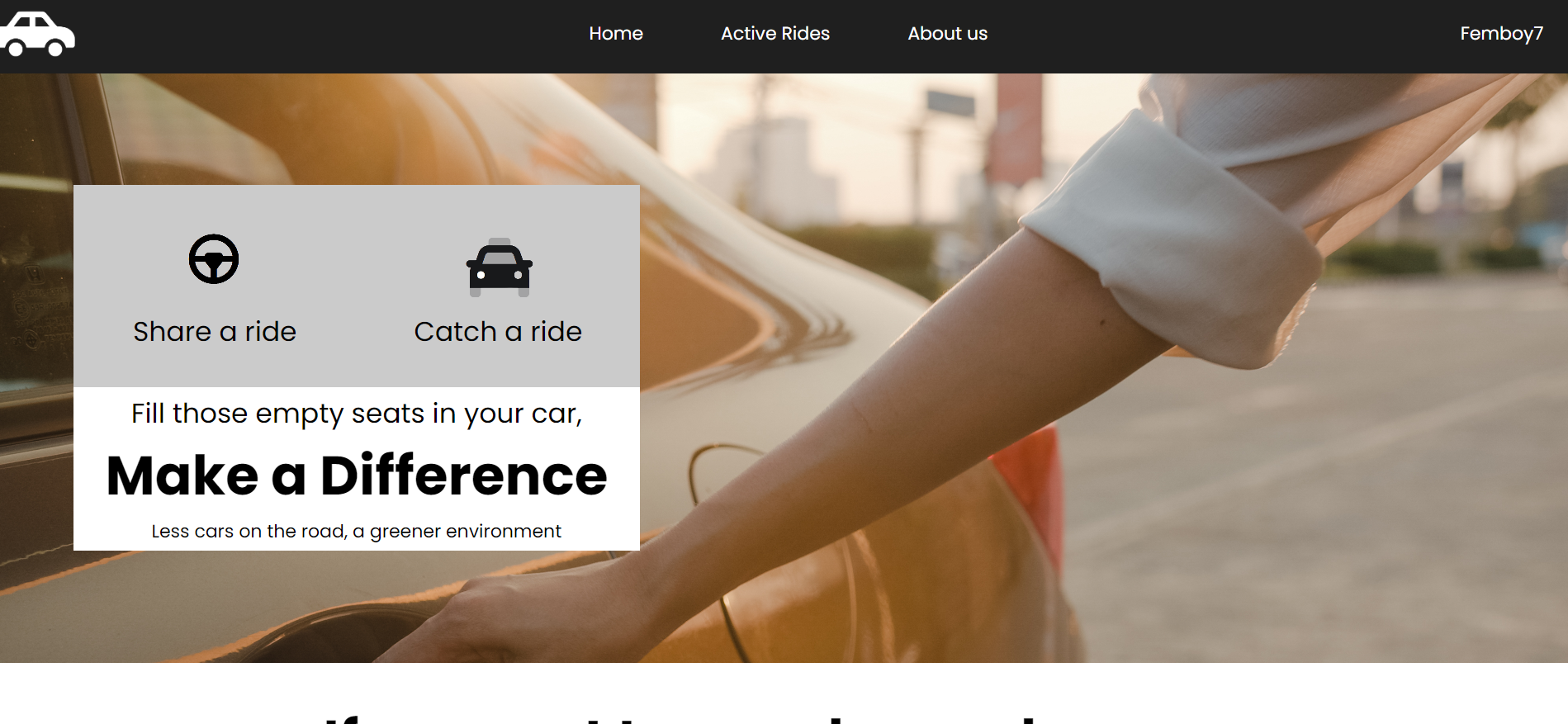
Since we only had 24 hours, we decided to set out our sights small and tackle the issue that was most critical, the inaccessibility to transportation to hackathons. Our website keeps track of all the current trips across universities and allows drivers and passengers to easily group and travel together. Our initial sights were to calculate the path from the driver's starting point through the passenger's checkpoints of pick up up to the destination.
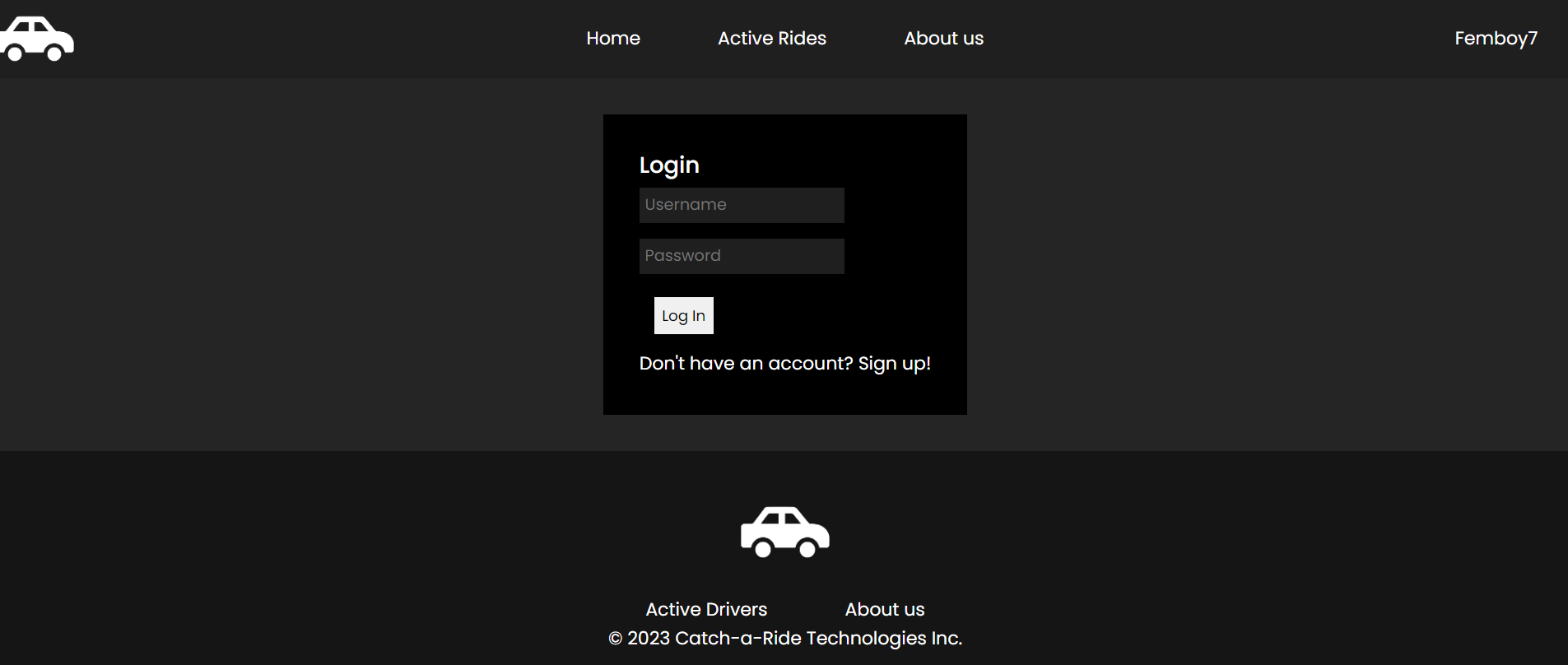
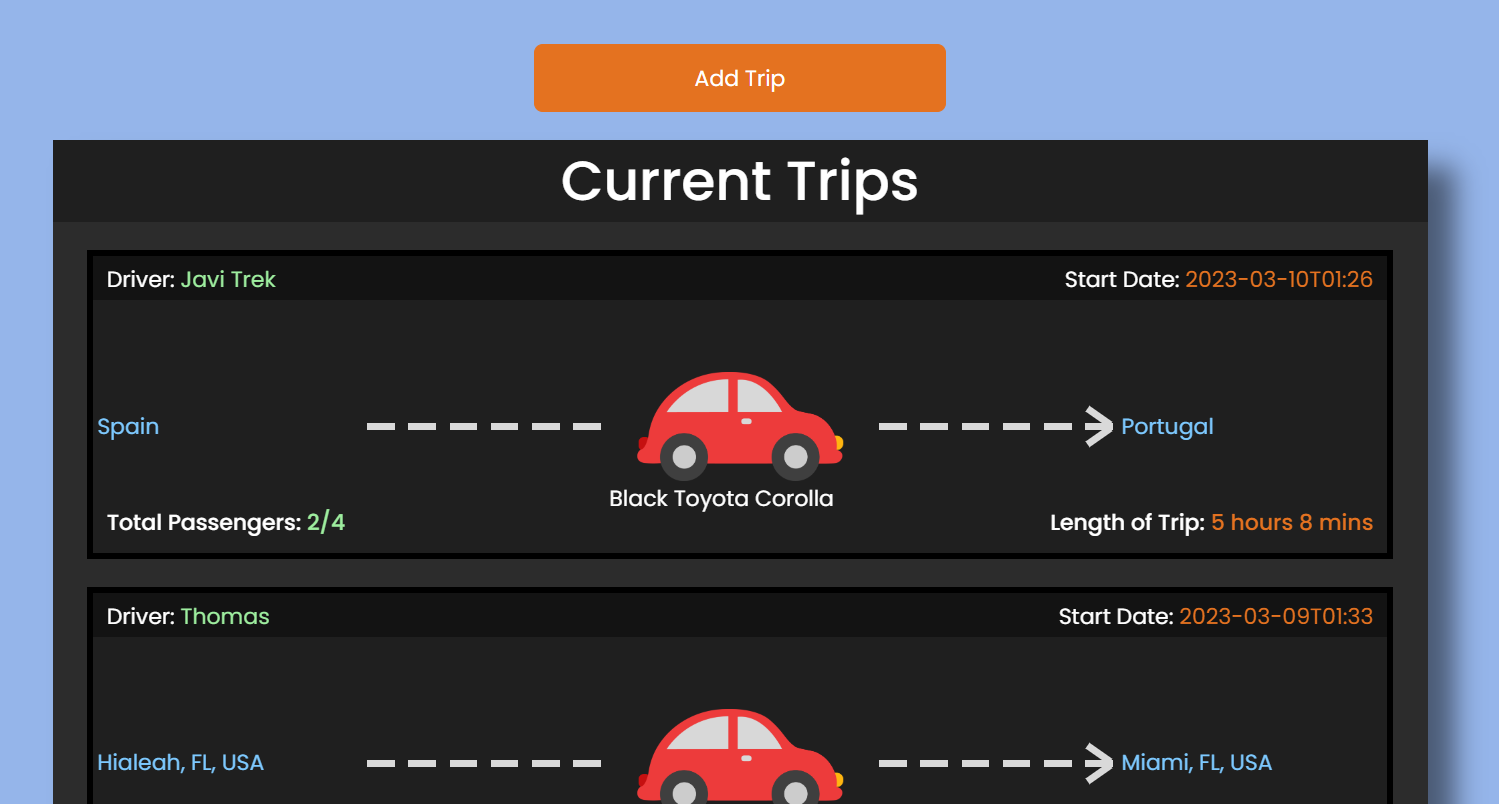
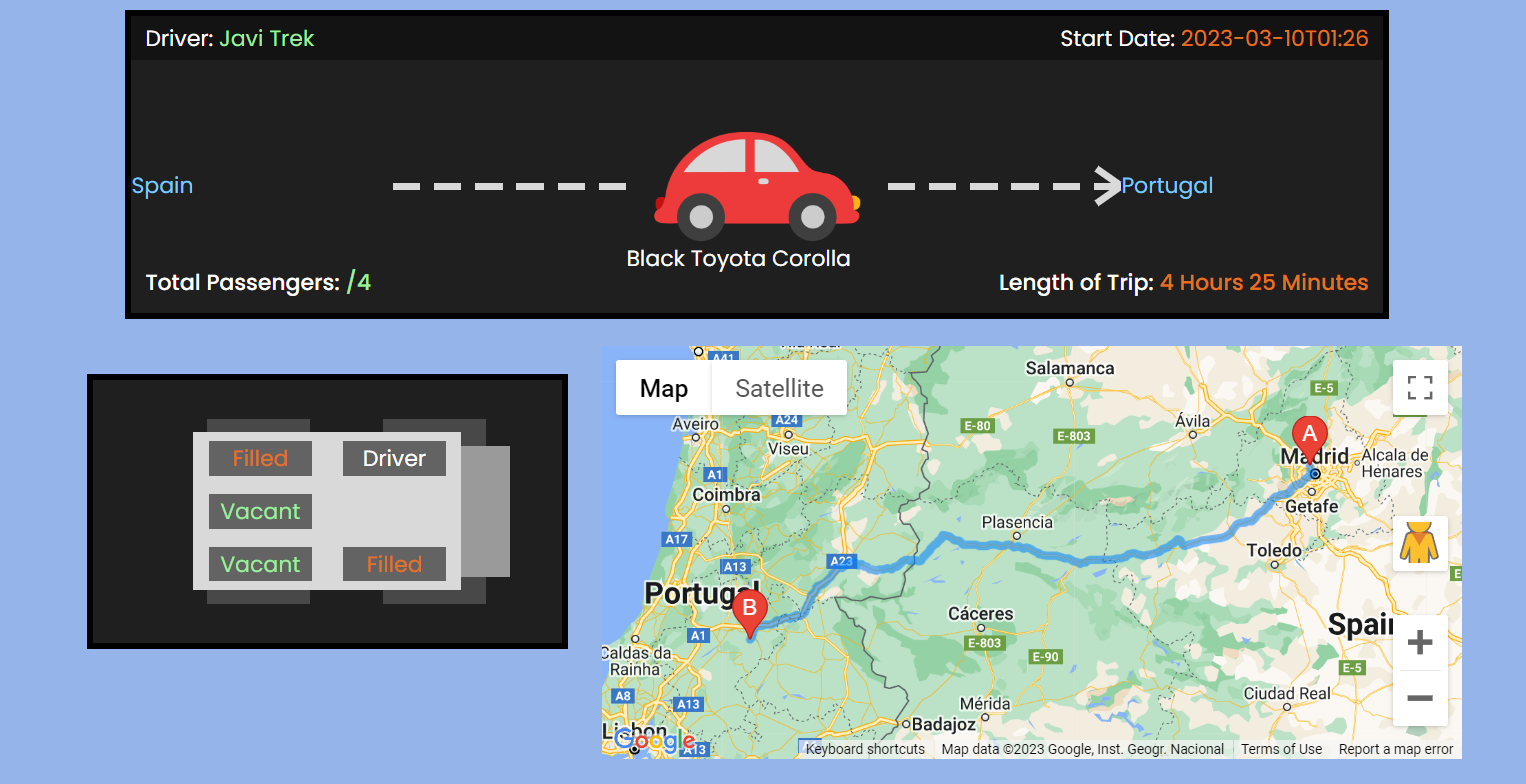
Our current project iteration involves a user that is able to create trips that can set the amount of available passengers, the car they drive, when the trip starts and of course, the starting point and destination. After the user sets a trip, the website automatically calculates the short trip from start to finish. From when the the trip is posted on the website to up until the trip is started, other users can choose a specific seat in the driver's or trip planner's car. This is also all done with user authentication and verification.
How we built it
We built the website using the MERN stack. This stack composes of MongoDB, Express.js, React.js, and Node.js. In the frontend, we used mostly Sass and a bit of Material UI for our styling. To calculate the path from starting point to destination, we used Google's Map API, more specifically, the Destination API, the react-google-api, and the Direction Services API. We also used Figma, to quickly brainstorm the website's styling and layout. In order to run the website, there is a README in the GitHub linked.
Challenges we ran into and What we learned
The challenges we faced in this project seemed miniscule from the outsiders perspective. For example, our backend team faced a hard time implementing user authentication despite having experience to do so. the time pressure and desire to perform strong in the competition sometimes caused a bit of a struggle. However, we persisted and overcame our challenges, no matter how big or small the challenge was. This hackathon taught us many valuable lessons that prepared us for the real world such as knowing that there will be time that things may see impossible. Regardless of any situation, you always got to just keep pushing forward.
Accomplishments that we're proud of
We believe our persistence to just keep going despite how rough our project might turn out was something we were most proud of. All the blood, sweat, and tears put into something we were really passionate about was an experience unlike any before. Working as a cohesive team was also something we loved.
What's next for Catch-a-Ride
We have big plans for Catch-a-Ride. In the future, we plan to further develop our shortest path from starting point to destination to a shortest path from starting point to multiple passenger checkpoints and then to destination. We also want to partner with potential big computer science clubs in big universities across the country to increase the reach of hackathons to more people. Near term, we would want to deploy our application using AWS.
Built With
- express.js
- google-maps
- materialui
- mongodb
- node.js
- react.js
- sass

Log in or sign up for Devpost to join the conversation.