Inspiration
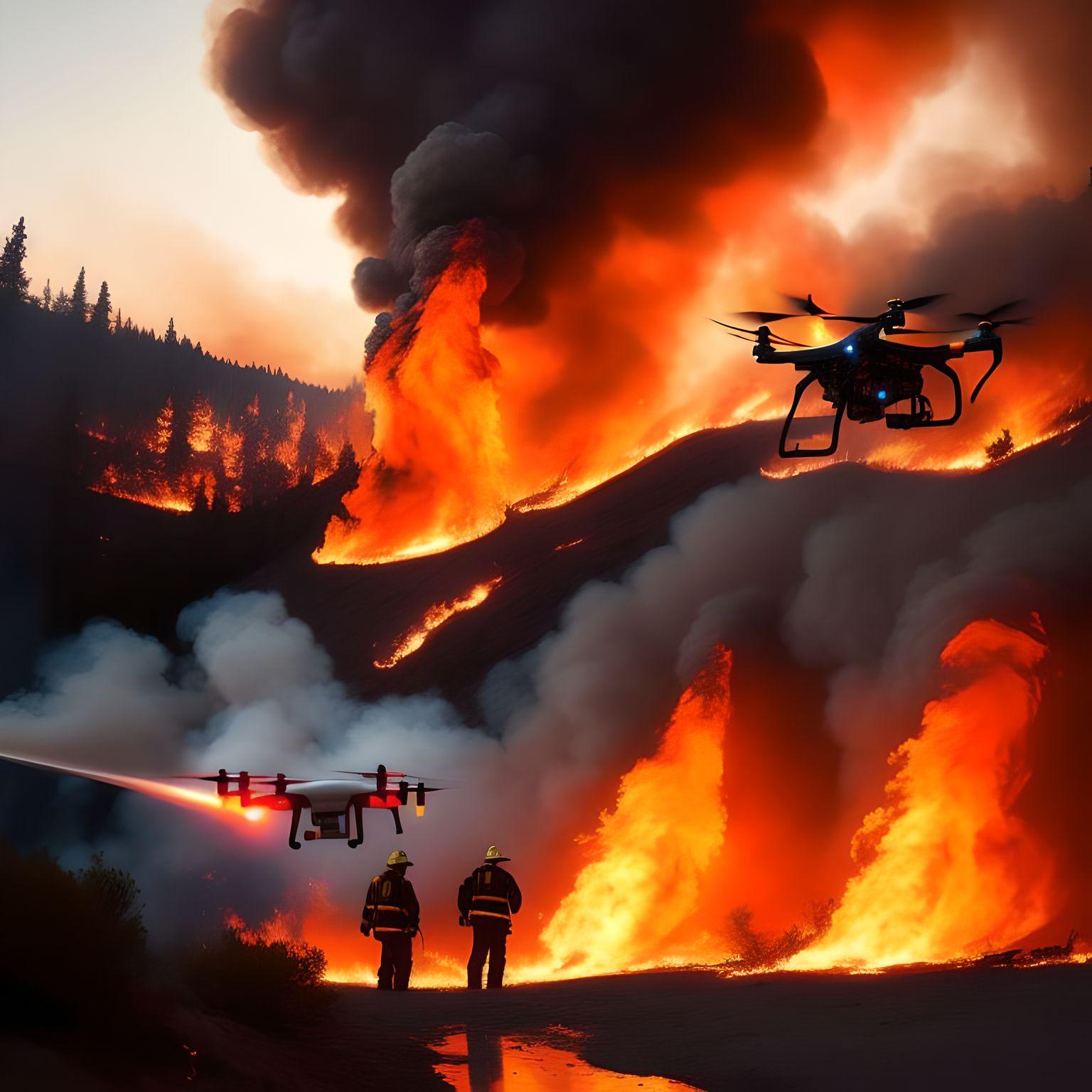
Our project was born out of a deep concern for the increasing frequency and severity of natural disasters, including submarine implosions, wildfires, earthquakes, and various other catastrophic events. Witnessing the immense challenges faced by individuals affected by these crises, we recognized a pressing need for advanced technological solutions in disaster response and relief efforts.
The difficulties encountered by first responders and the inherent risks to their lives became a catalyst for our innovation. It became clear that there is a critical gap in leveraging cutting-edge technology to augment the capabilities of these heroes who put their lives on the line to save others.
With this realization, our vision crystallized: to create a highly adaptable robot and drone system capable of functioning as force multipliers for first responders. We envision a future where our robotic and drone devices can shoulder an array of advanced responsibilities, including firefighting, providing immediate medical aid, and executing various other complex tasks traditionally undertaken by human first responders.
Our aspiration is to not only enhance the effectiveness of disaster response but also to significantly reduce the risks associated with these life-saving efforts, ultimately contributing to safer, more efficient, and more resilient communities in the face of adversity.
What it does
Our wildfire detection system is designed to monitor forested areas and detect potential wildfires in their early stages. Using a combination of temperature sensors, Arduinos, and real-time data analysis, the system can continuously measure environmental conditions. When the temperature readings surpass predefined thresholds, the transmitter in the forest monitor will send a signal to the receiver in the local fire station triggering alerts on both ends, which enables rapid response to potential fire outbreaks.
How we built it
The drone's electronics were built as follows: A temperature sensor sends a signal into our first Arduino, which sets off a buzzer and changes the LCD from saying "Safe Environment" to "FIRE ALERT". It then sends a signal off to the transceiver that sends radio waves to the corresponding transceiver located at the station. This transceiver hooks into another Arduino which sets off another buzzer, alerting whomever is present to the fire.
Challenges we ran into
Sourcing Hardware: We had many issues sourcing hardware such as Arduinos and other hardware components. This caused a major setback in our project due to the heavy reliance on these hardware.
Transmitting Signals: We also faced some difficulty with transmitting signals/data between the forest monitor and the local station machine. Originally, we tried using Bluetooth connection by trying to implement a Raspberry Pi, however, due to faulty equipment, we had to change our strategy. So, we decided to strip the transmitter and receiver from a toy remote control car and use that as the form of communication.
Transmitter Burning Out: 40 Minutes before our deadline, our transmitter shorted and burned out. As a result, we had to source a different remoter control car, strip the components, and rebuild the portions dependent on both the transmitter and receiver due to the previous ones being 49 MHz and the new one being 27 MHz.
Accomplishments that we're proud of
Coming up With a Purposeful Idea: We are very proud of ourselves for coming up with a meaningful idea that has the potential to help many people in the future.
Putting Together a Working Demo: We were ecstatic to create a working mock-up of our device.
What we learned
- How to use Arduinos
- How the software and hardware work together to create a working machine
- How to debug between the hardware and software
What's next for CataShield
Our commitment to our mission drives us to strive for ongoing progress and innovation. We are dedicated to further advancing our technology and extending our impact. Here's what lies ahead for us:
Continuous Improvement: Our plan is to constantly research and develop new features, capabilities, and enhancements for our devices.
Collaboration: We plan to seek collaborations with companies, organizations, and experts in disaster management, robotics, and AI. By working together, we can pool our resources, knowledge, and expertise to accomplish our mission more effectively.
Scaling Impact: Our vision is to make a meaningful difference in disaster response efforts on a global scale. We aim to deploy our technology in diverse environments and regions, addressing a wide range of disaster scenarios.

Log in or sign up for Devpost to join the conversation.