-
-
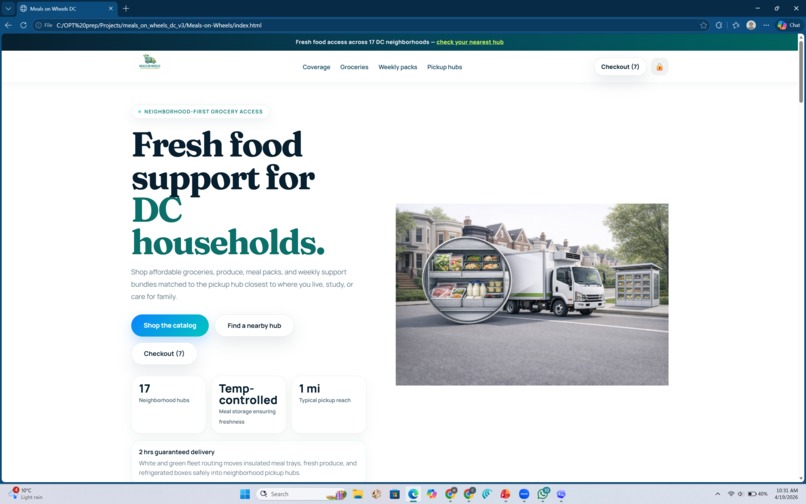
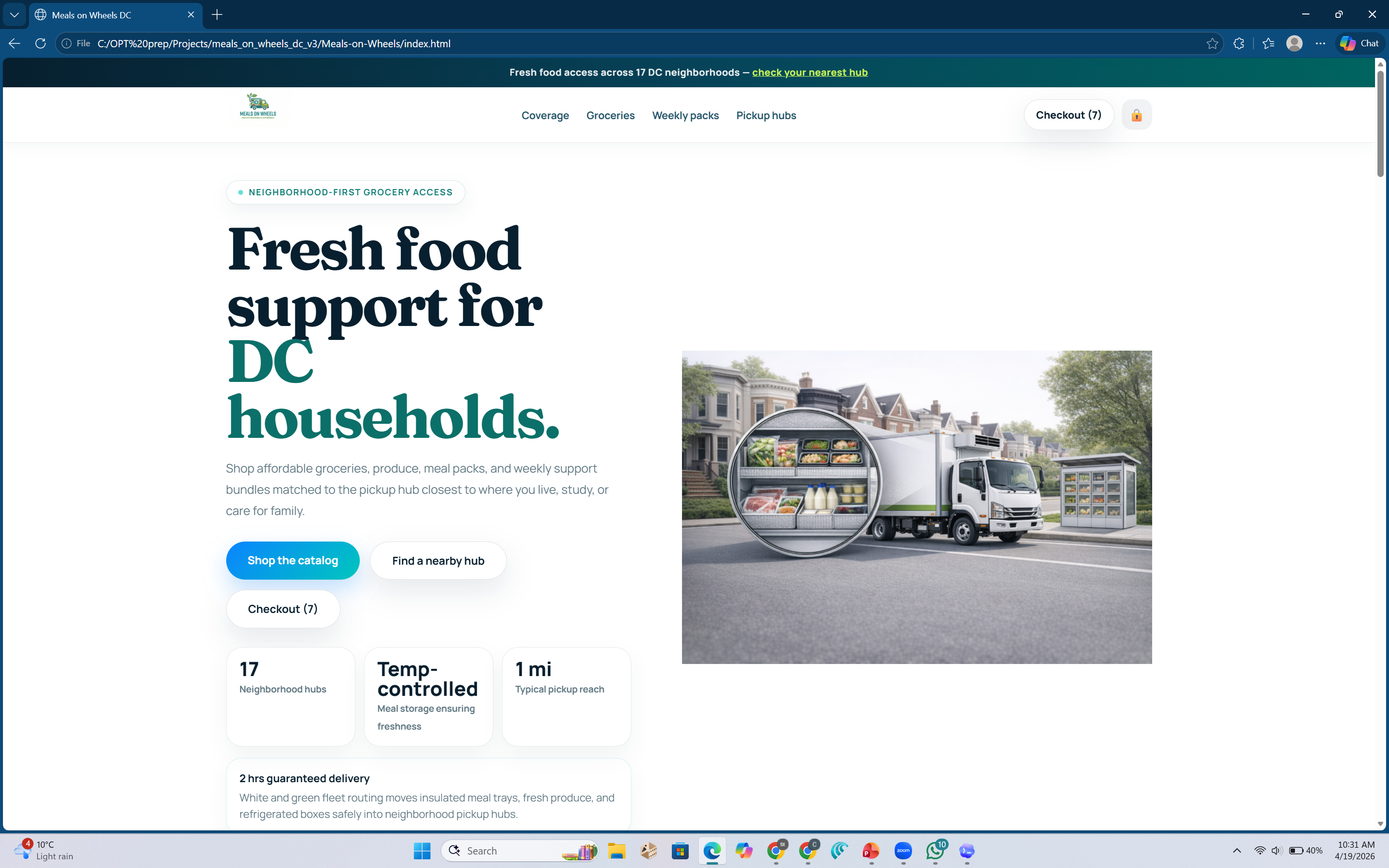
Homepage hero presenting the neighborhood-first food support model, temp-controlled storage, and pit-stop based pickup across DC.
-
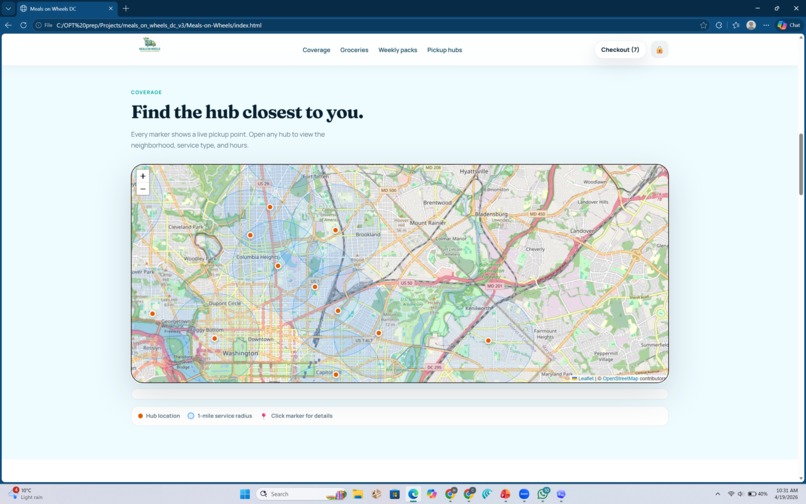
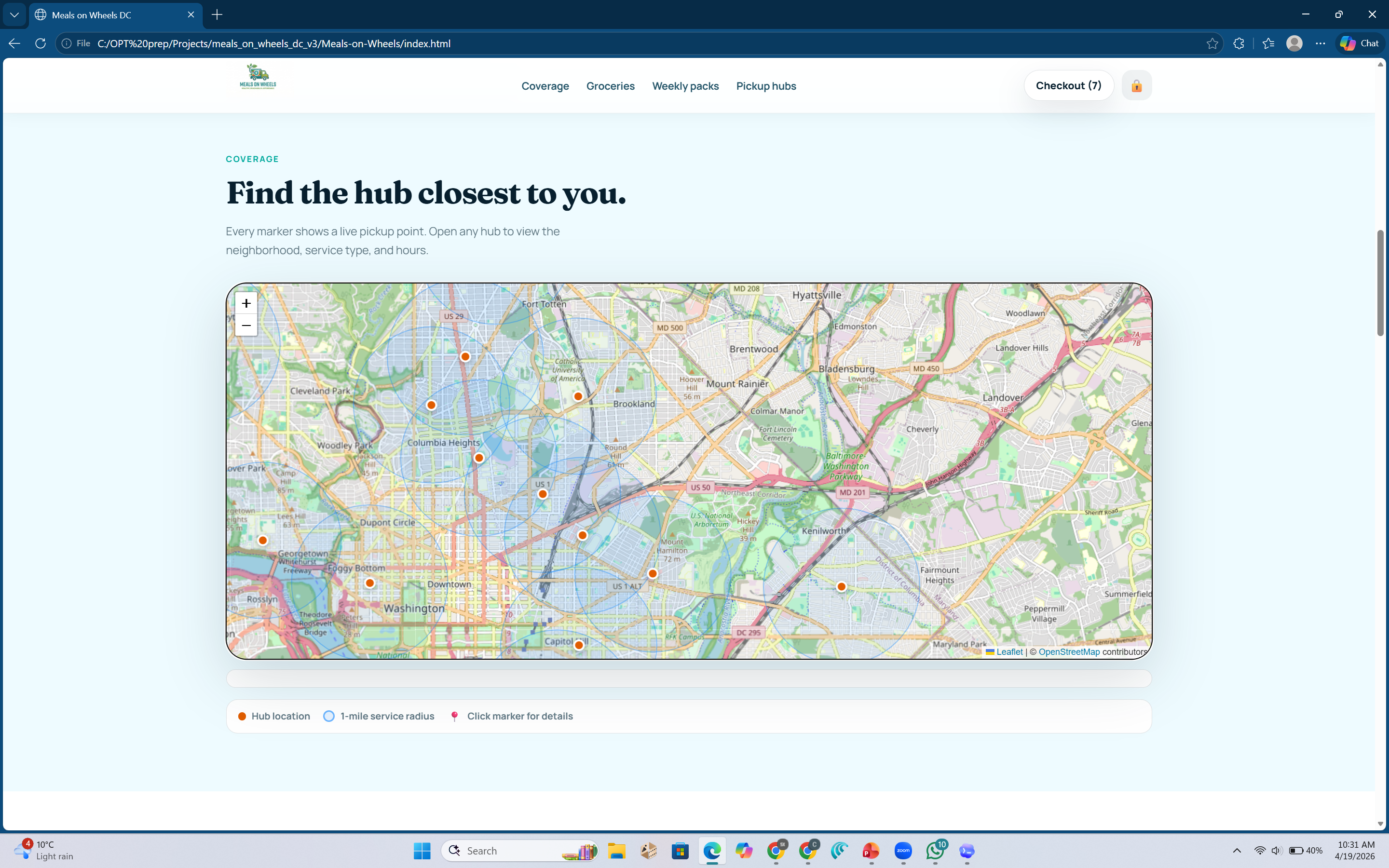
Coverage map showing our DC pit-stop network and 1-mile service areas so residents can find the closest pickup location.
-
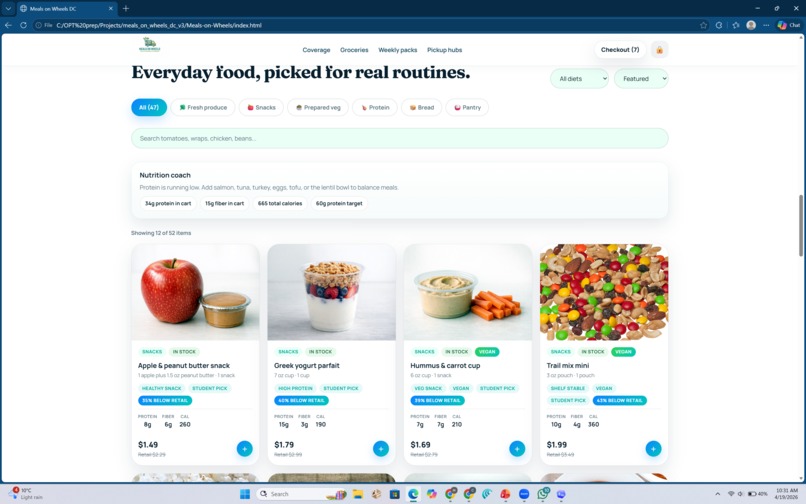
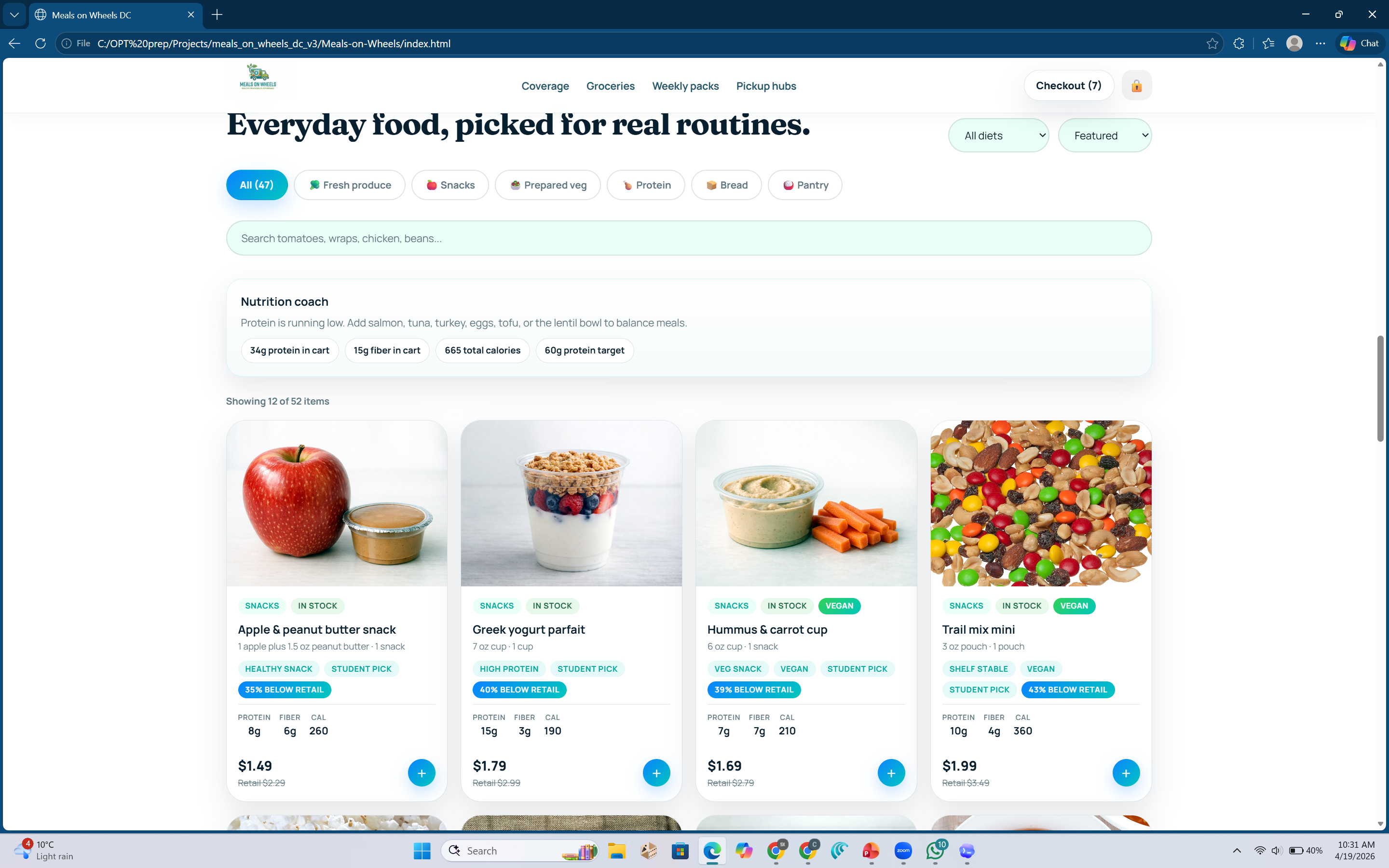
Grocery catalog view with nutrition-aware recommendations, category filters, and affordable everyday food items for DC residents.
-
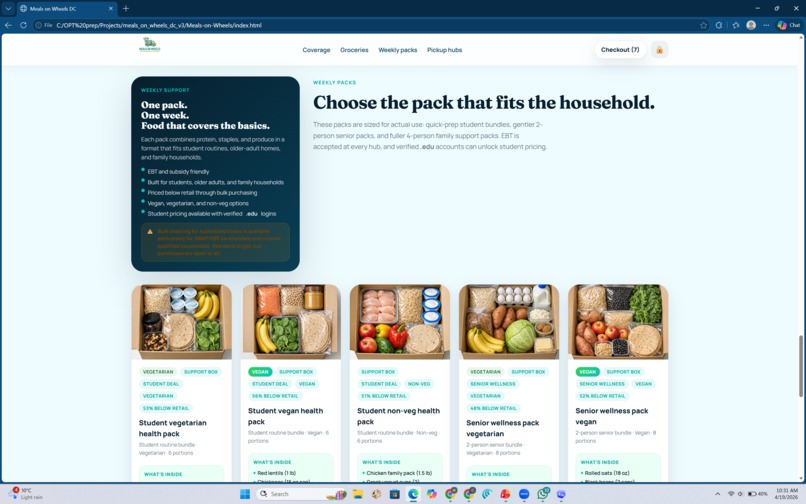
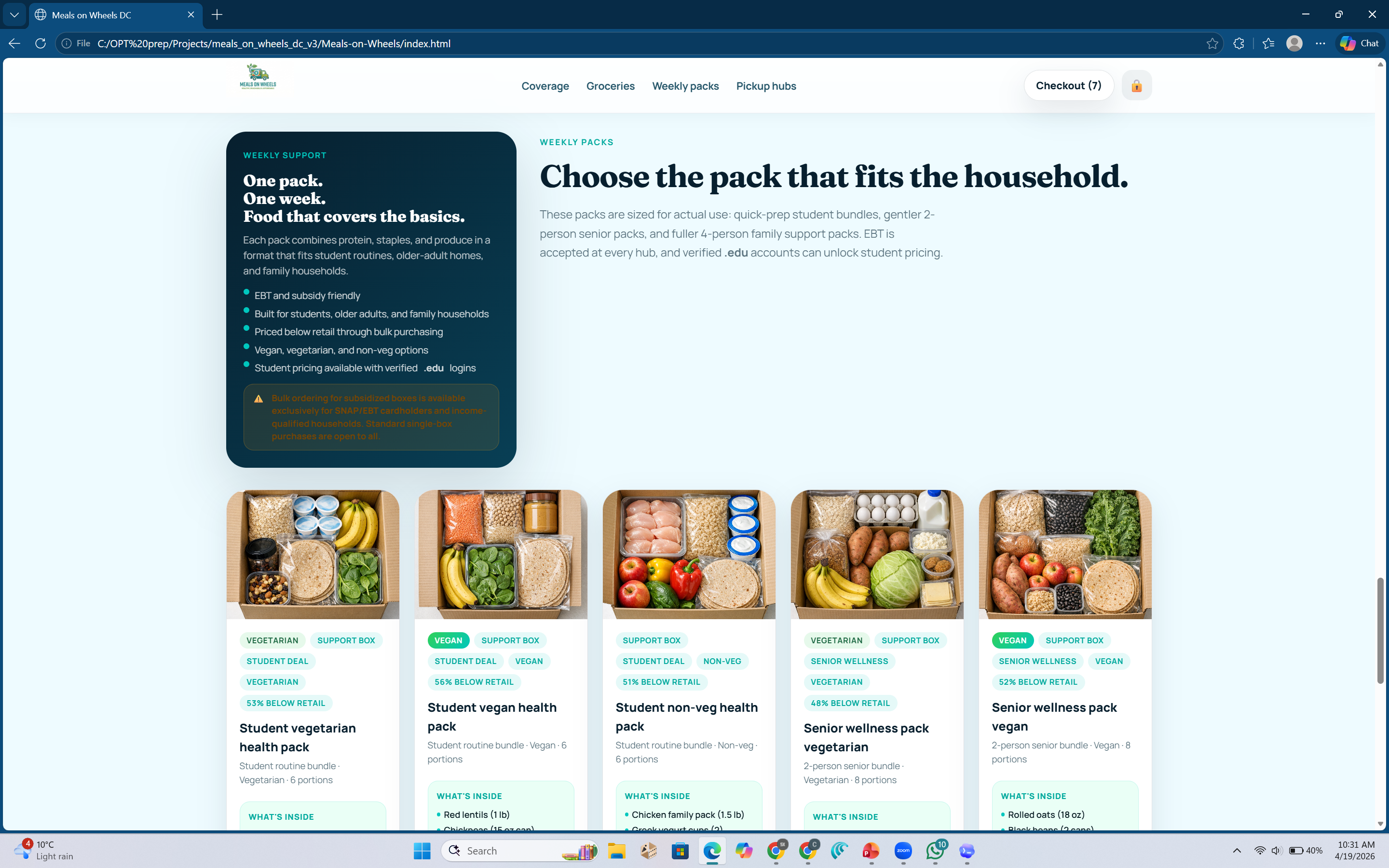
Weekly packs section showing household-specific support bundles for students, seniors, and families.
-
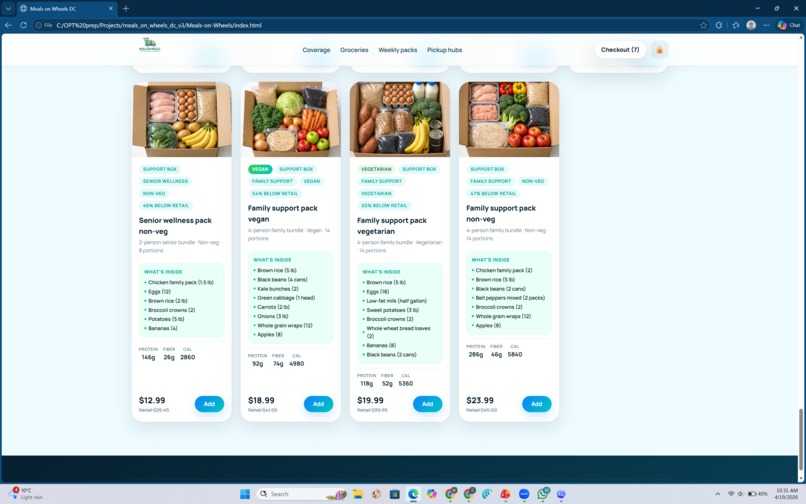
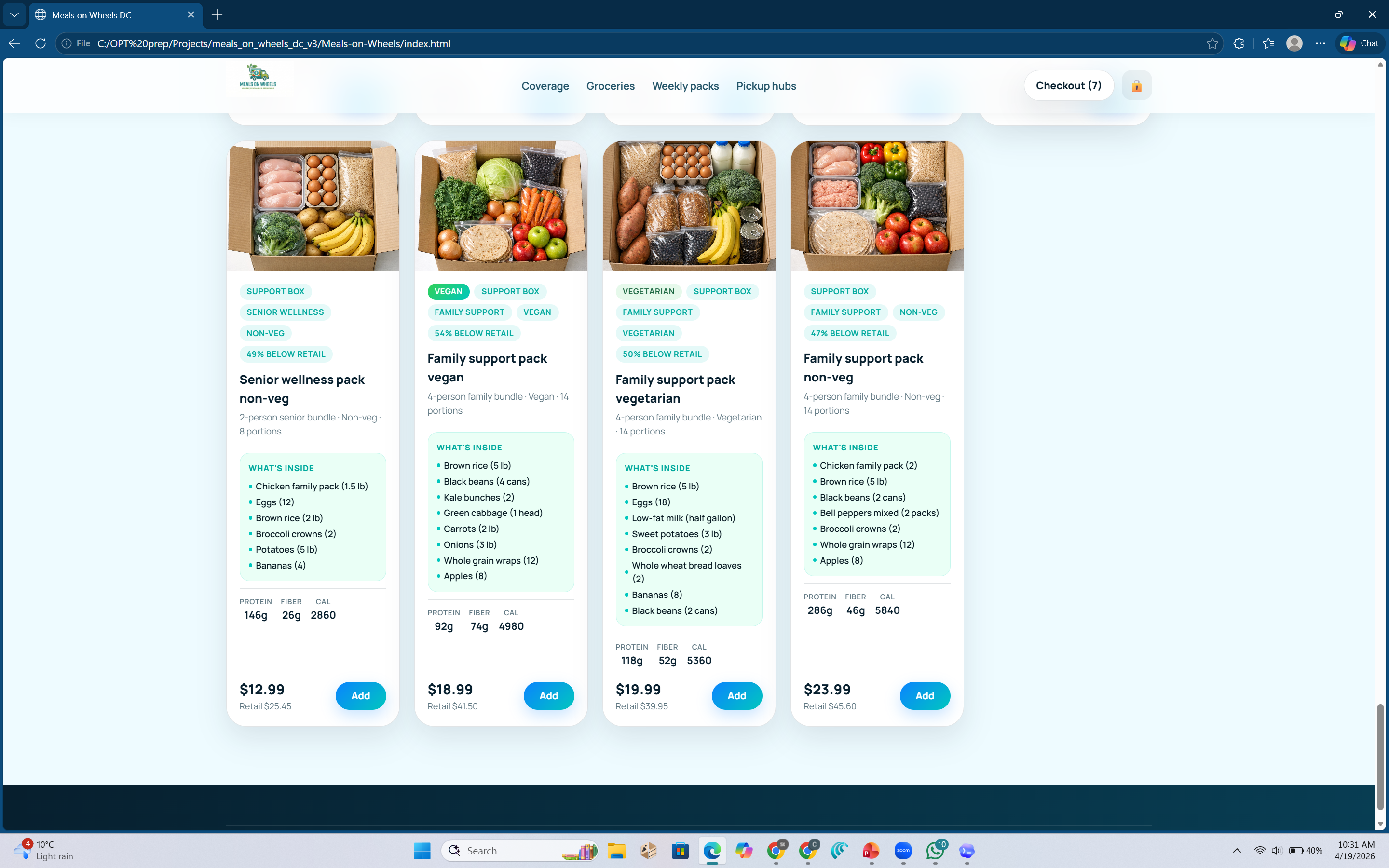
Support-pack product grid highlighting vegan, vegetarian, and non-veg family and senior bundles sized for real weekly household needs.
🛒 Meals on Wheels – The Corner Store of the Future
🌟 Inspiration
The idea for Meals on Wheels came from observing a simple but important problem:
in many urban communities, access to fresh and nutritious food is not as easy as it should be.
While full-service grocery stores offer healthy options, they are often located far from underserved neighborhoods. People without reliable transportation end up relying on nearby corner stores, which mostly stock processed or shelf-stable food. Over time, this creates a gap in nutrition and contributes to long-term health issues.
We wanted to rethink this system and ask:
What if the “corner store” itself could evolve into something healthier, smarter, and more accessible?
That question led to the idea of combining technology, local supply, and community-based distribution into one platform.
💡 What it does
Meals on Wheels is a mobile grocery platform that brings affordable and nutritious food closer to underserved communities through a neighborhood pickup model.
It allows users to:
- Browse real-time grocery inventory
- Select nearby pickup locations (pit stops)
- Pay using flexible options including cards, cash, SNAP, and EBT
- Receive nutrition guidance for healthier choices
By combining accessibility, affordability, and guidance, the platform simplifies how people access healthy food.
🛠️ How we built it
We designed Meals on Wheels as a mobile-first grocery platform with a supporting logistics model.
Key Components:
1. User Application
- Browse real-time grocery inventory
- Select nearby pickup locations (pit stops)
- Flexible payment options (cards, cash, SNAP/EBT)
- Built-in nutrition guidance
2. Pit Stop Model
We introduced community-based pickup points, called pit stops, which act as:
- Order pickup locations
- Mini grocery hubs with additional stock
3. EV-Based Logistics
Instead of traditional delivery:
- Electric vehicles run on fixed routes every 2 hours
- Orders are batched and transported together
- Pit stops are continuously restocked
This approach significantly reduces costs. Instead of delivering to individual homes, EVs follow optimized routes and restock multiple pit stops in a single trip. Lower fuel and maintenance costs of EVs, combined with batching, reduce overall delivery expenses.
[ \text{Cost per order} = \frac{\text{Total delivery cost}}{\text{Number of orders in a batch}} ]
As batch size increases, cost per order decreases, improving efficiency and scalability.
4. Hybrid Access Model
Pit stops serve two types of users:
- Users with subsidized access (SNAP/EBT verified)
- Regular users who can buy groceries at standard prices
This improves both financial sustainability and community reach.
⚡ Challenges we ran into
1. Balancing simplicity with functionality
We wanted the app to be easy to use while still supporting subsidies, multiple payment options, and real-time inventory.
2. Designing an efficient logistics model
Reducing last-mile delivery cost was a major challenge. We addressed this through batching, EV routing, and pit stop distribution.
3. Incorporating subsidy systems
Ensuring a smooth and fair verification process for SNAP/EBT users required careful design.
4. Ensuring scalability
We needed a system that could expand across neighborhoods using modular pit stops and repeatable workflows.
🏆 Accomplishments that we're proud of
- Designed a cost-efficient logistics model using EV routing and batch delivery
- Introduced pit stops as hybrid mini grocery hubs
- Integrated flexible payments including SNAP/EBT
- Built a scalable and community-focused solution
📚 What we learned
We learned that food access is a multi-dimensional problem involving accessibility, affordability, awareness, and behavior.
We also gained insights into logistics optimization and how batching and EV routing reduce delivery costs while improving efficiency.
Additionally, we learned how combining technology with community-based infrastructure can create inclusive and sustainable solutions.
🚀 What's next for Catalysts
- Build a working prototype of the platform
- Partner with local suppliers and community organizations
- Pilot the system in a target neighborhood
- Improve demand prediction and inventory optimization
Our long-term goal is to scale this model and make healthy food more accessible across communities.

Log in or sign up for Devpost to join the conversation.