-
-
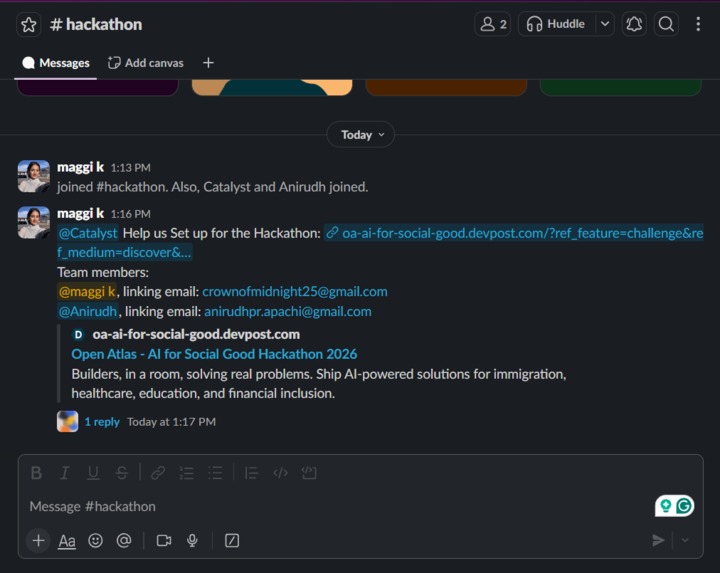
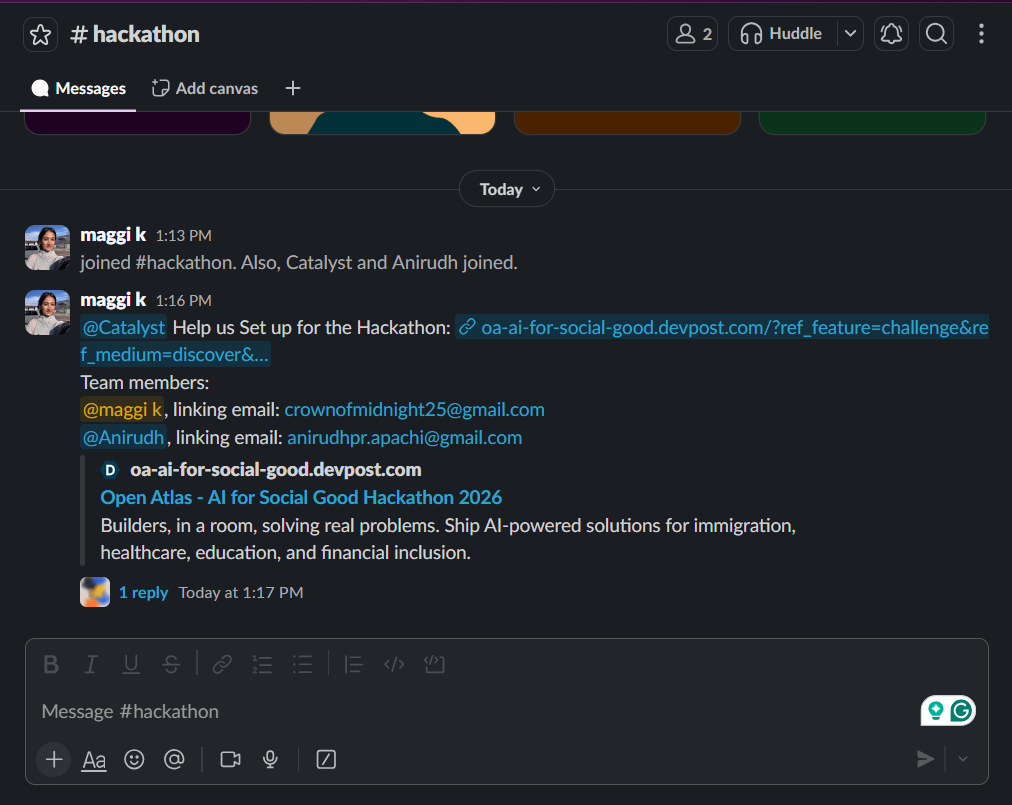
Set up the bot
-
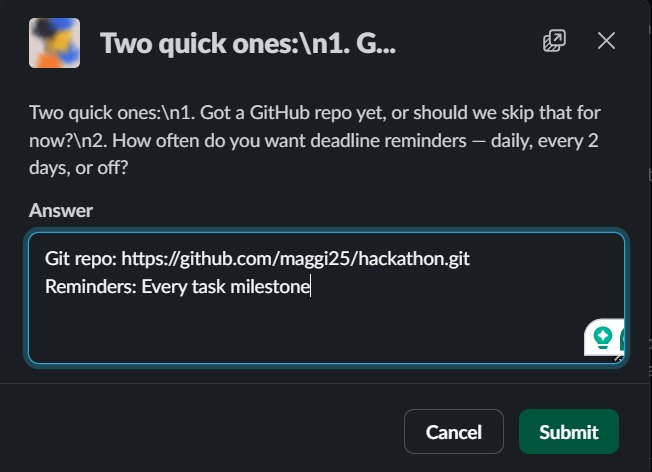
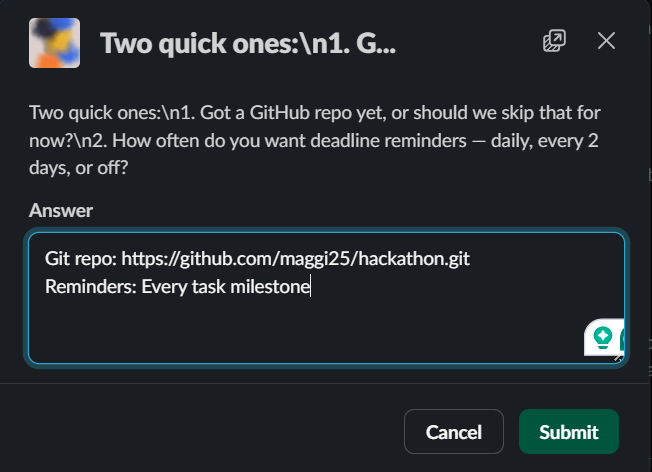
Link your git to the bot
-
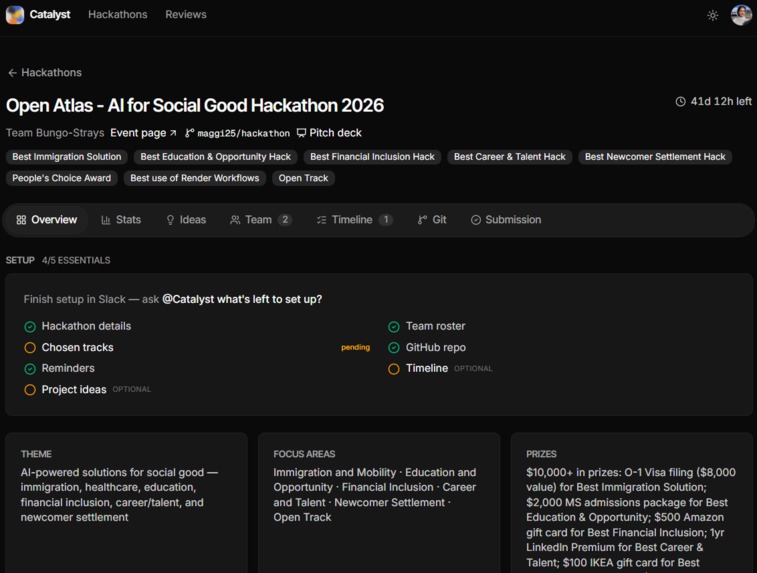
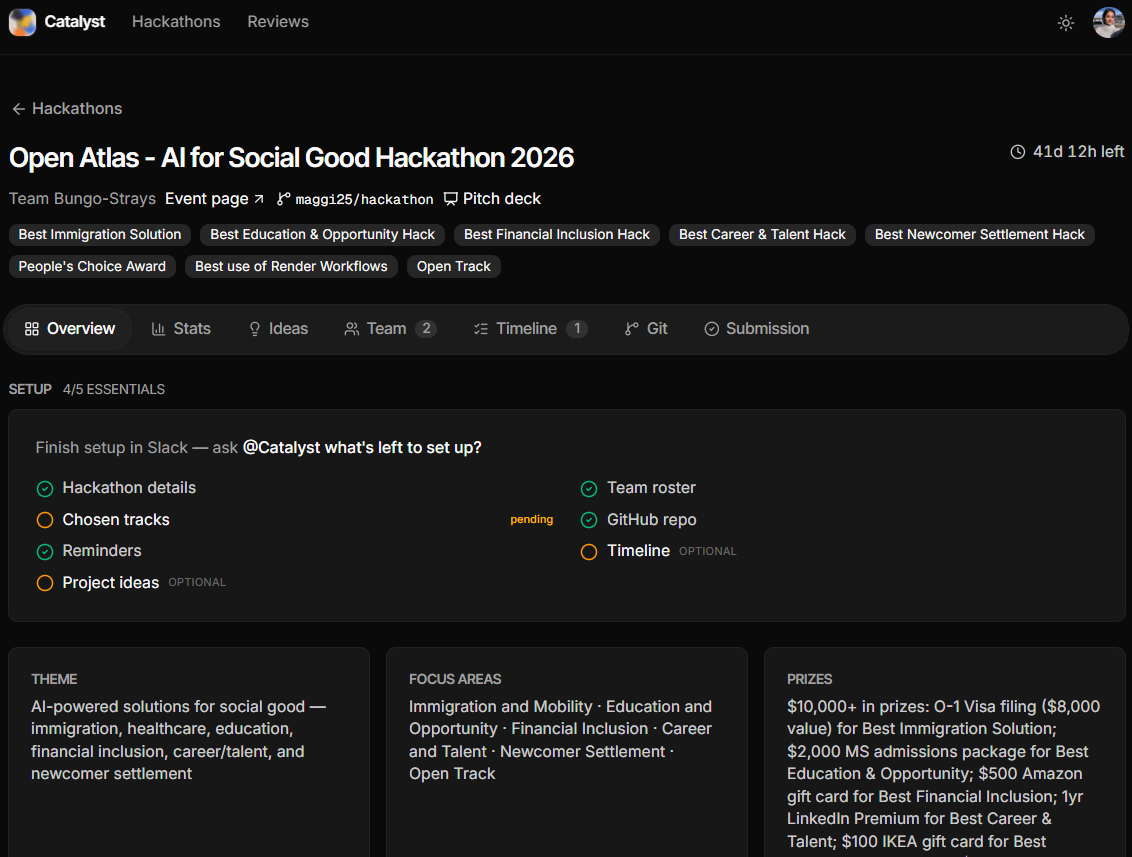
Hackathon at a glance on the website
-
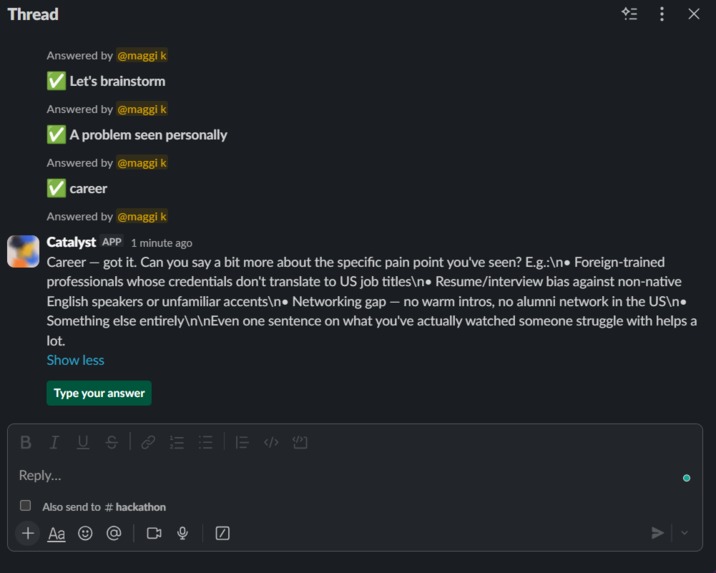
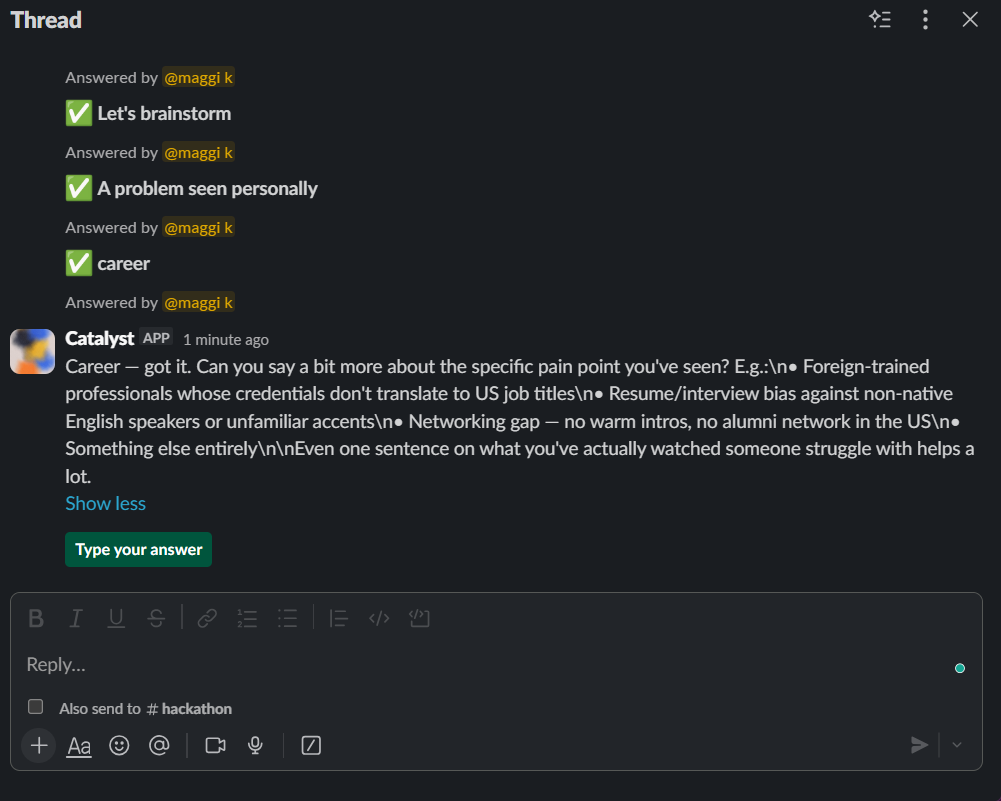
Generate ideas with the bot
-
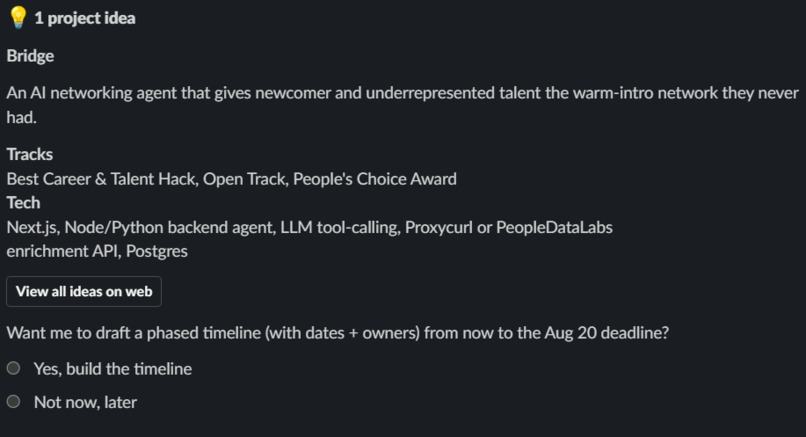
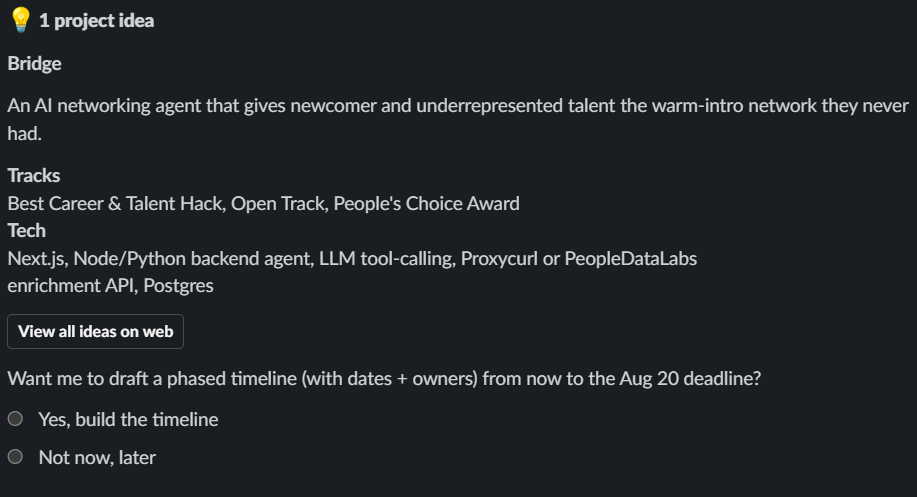
Choose ideas and create a timeline with the bot
-
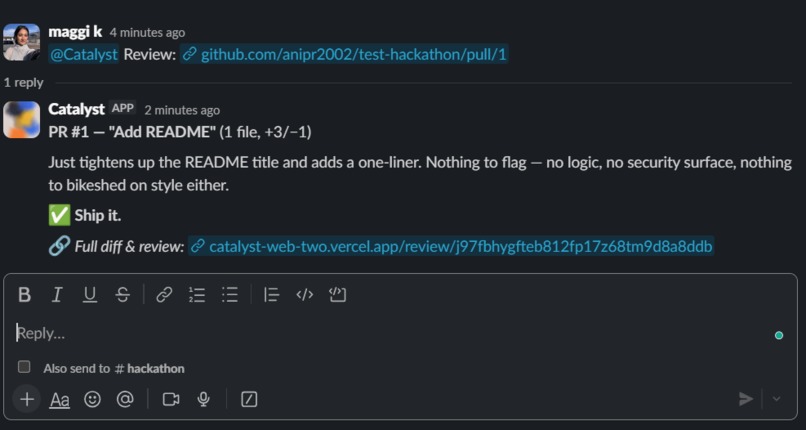
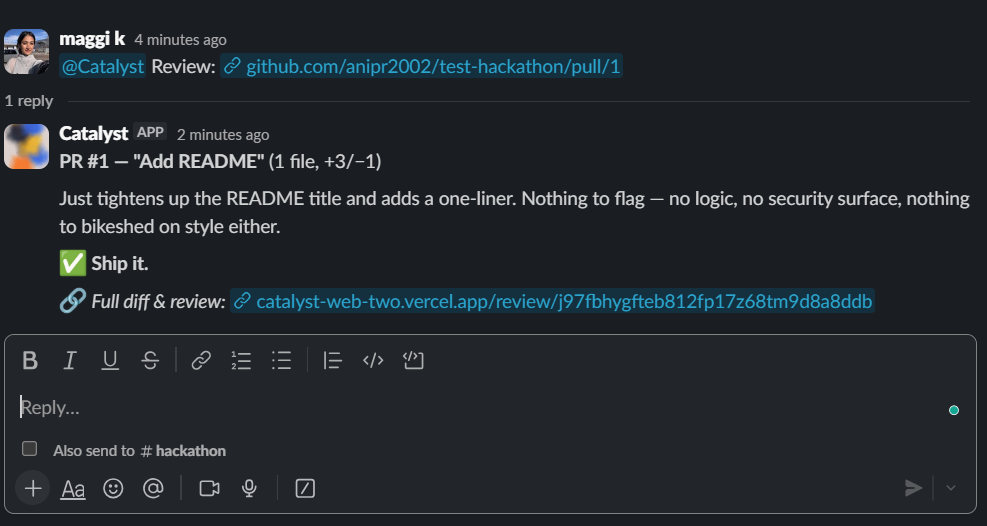
Review your git with the bot
-
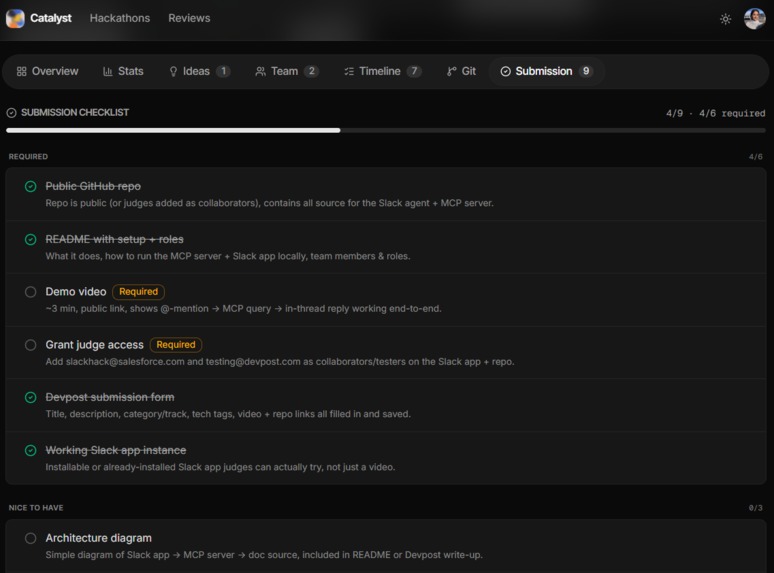
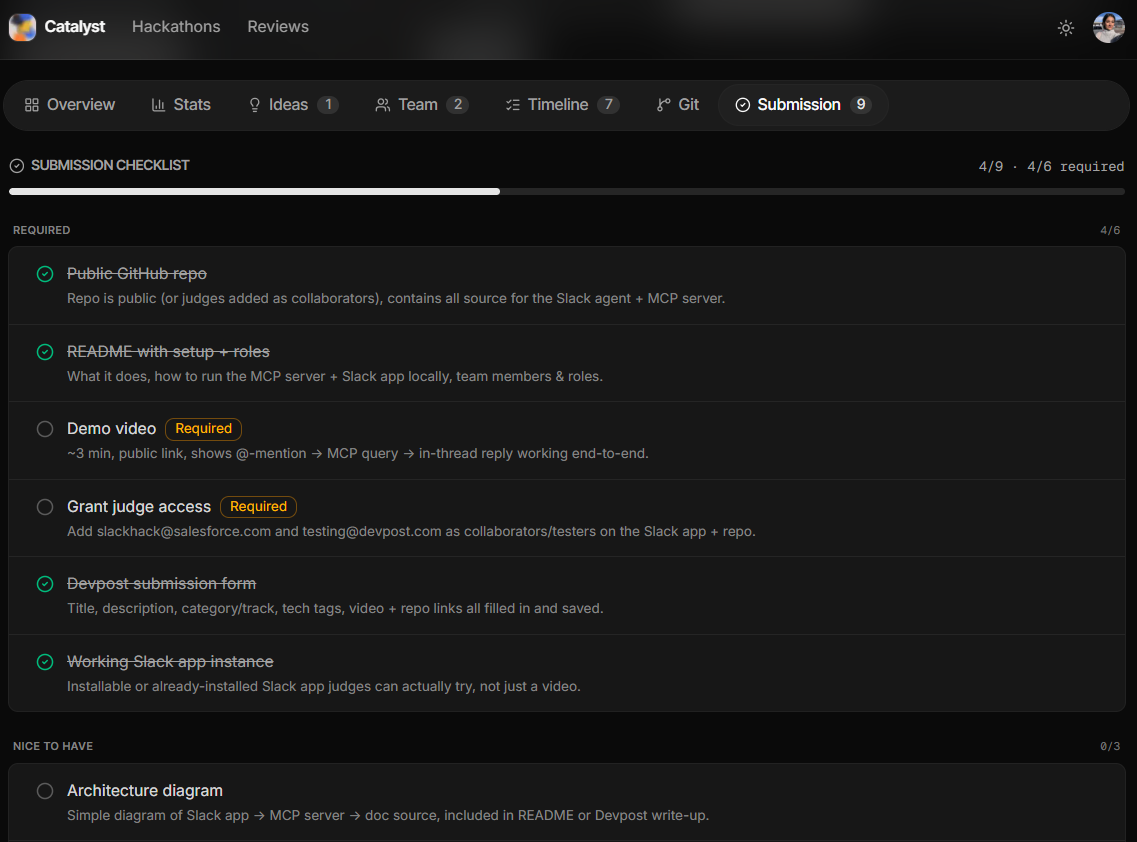
Generate a submission checklist
Inspiration
We've all been at that hackathon where the team just… stalls. Half the event is spent digging through API docs, arguing about architecture in circles, or realizing an hour before the deadline that the repo is straight-up cooked. We wanted something that acts like a calm senior teammate who keeps everyone moving, even when the clock is being brutal. Catalyst came out of that exact pain: an AI agent that actually lives with the team, gets your code and your milestones, and quietly drags you from "idea" to "demo ready" instead of just answering random one-off questions.
What it does
Catalyst pulls up in your team's workspace and becomes a project-aware teammate; it's not just another chatbot.
It reviews your code for readability, sneaky bugs, and missing tests, and drops better patterns or APIs when you're overcomplicating things. It shapes your system architecture by generating and updating diagrams as the project evolves, so nobody's working off a mental map from three hours ago. It surfaces the docs for the stack you're actually using instead of sending you on a generic Google spiral. And it tracks the milestones and deadlines the organizers set, nudging you when something's at risk and summing up where you stand.
Basically, Catalyst keeps you unblocked technically and un-cooked mentally, so you can focus on building something demo-worthy.
How we built it
We built Catalyst around Slack's agent model: a conversational interface backed by tools for reading code, generating diagrams, and managing timelines.
For code understanding, we hook into the team's repo, ingest the file structure and recent commits, and run an AI coding model to propose reviews and API suggestions. For architecture, we translate the project's components into diagram descriptions and render visual maps that update as the codebase changes. For docs, we index official documentation and common libraries in the team's stack, then let Catalyst answer "how do I…?" with direct, contextual links instead of vibes. For milestones, we store the hackathon schedule and each team's roadmap, then run lightweight checks that trigger reminders when something slips or a deadline creeps up.
All of it lives behind friendly slash commands and event-driven messages, so teams never have to leave their chat to get help.
Challenges we faced
The biggest one was figuring out how deep code review should go during a hackathon. Full static analysis is powerful but slow, so we scoped it down to high-signal checks that are actually useful in a 24–48-hour sprint. We also had to design the reminders carefully, because it's so easy for a "helpful" agent to turn into an annoying bot. We iterated hard on tone and frequency so nudges feel like a teammate tapping your shoulder, not a notification storm at 3 am. And keeping architecture diagrams in sync with a codebase that changes every ten minutes was rough. We tried a bunch of abstraction levels before landing on one that updates fast but still actually helps you reason about the system.
What we learned
The most valuable AI help in a hackathon isn't raw code generation — it's coordination. Helping teams see where they are, what's risky, and what to hit next mattered way more than just spitting out code. We also learned how much respecting a team's rhythm matters. An agent that gets your milestones and context feels like a real collaborator, while a purely reactive chatbot gets muted almost instantly. On the technical side, we got real experience combining repo analysis, architecture modeling, and lightweight project management into one agentic workflow — which pushed us past "chat with AI" toward "AI that actually shares responsibility for shipping."
Built With
- convex
- eve
- firecrawl
- next-js

Log in or sign up for Devpost to join the conversation.