Inspiration
The journey of Catalyst AI began with a simple but powerful observation: Despite having millions of online courses, tutorials, and resources, most students still feel lost. Students don’t need more resources — they need guidance, structure, and personalization.
What inspired me was seeing how: 1) Students struggle to choose the right skills for their dream careers. 2) Career counseling in schools/colleges is mostly one-size-fits-all. 3) AI tutors exist, but none understand the student as a whole person. 4) University curricula fail to keep up with rapidly changing industry requirements. 5) Students graduate without industry-ready skills despite learning for years.
I wanted to build something that doesn’t just teach — but understands, guides, adapts, motivates, and prepares students for real careers. This vision became Catalyst AI, a Multi-Agent Autonomous Learning System that acts like a full AI education team for every student.
What it does
Catalyst AI is a multi-agent AI system designed to personalize:
1) Learning paths 2) Skill development 3)Career guidance 4)Daily mentorship 5)Progress tracking 6)Industry alignment
It uses multiple AI agents that work together just like a real human team:
1) Personality Analyzer & Data Collector 2) Roadmap Generator AI 3)AI Daily Learning Mentor 4)AI Progress Tracker 5)Career Showcase Assistant 6)24/7 AI Chatbot — Leo
Each agent has a job, and all communicate continuously to make learning adaptive, personalized, and career-oriented.
How we built it
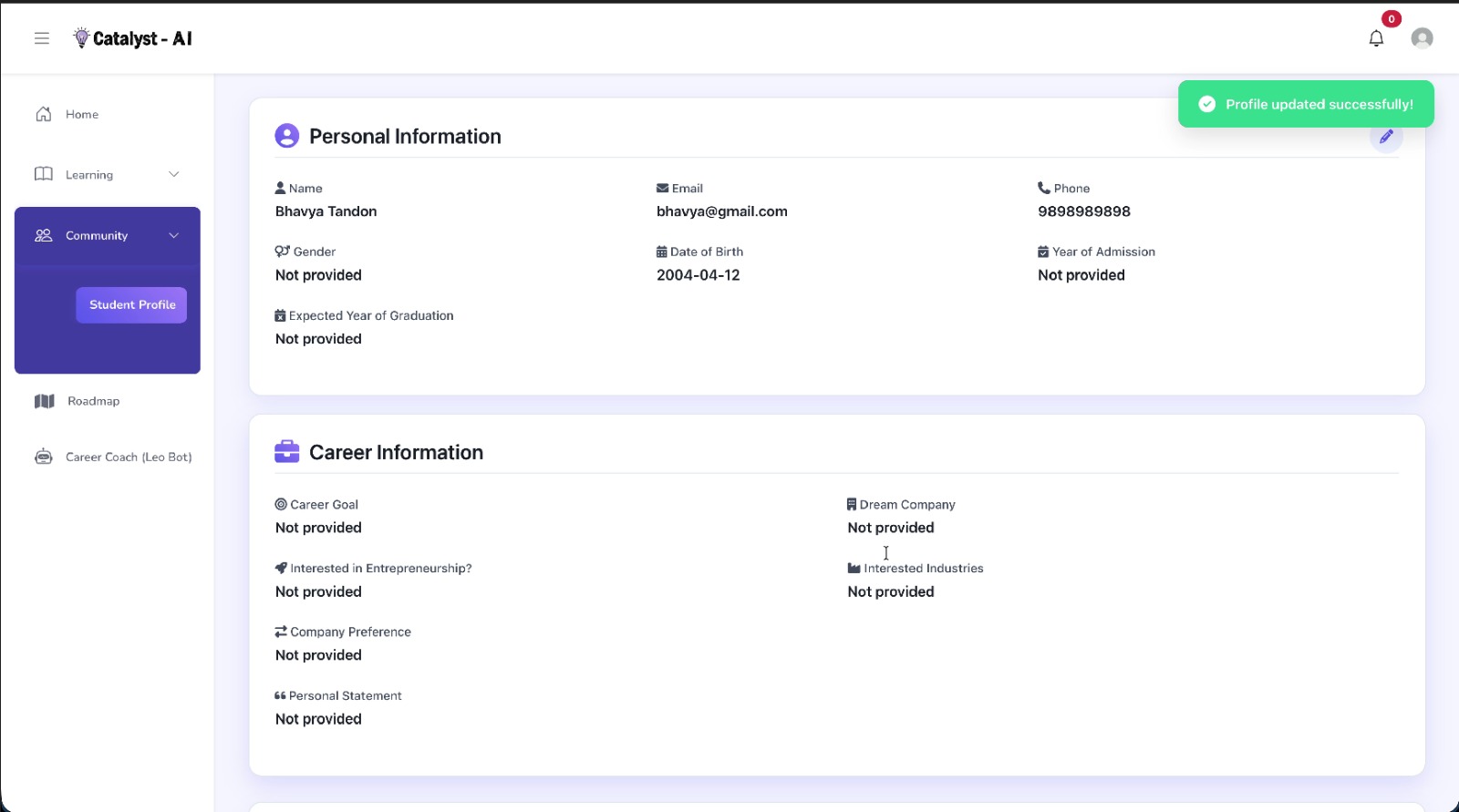
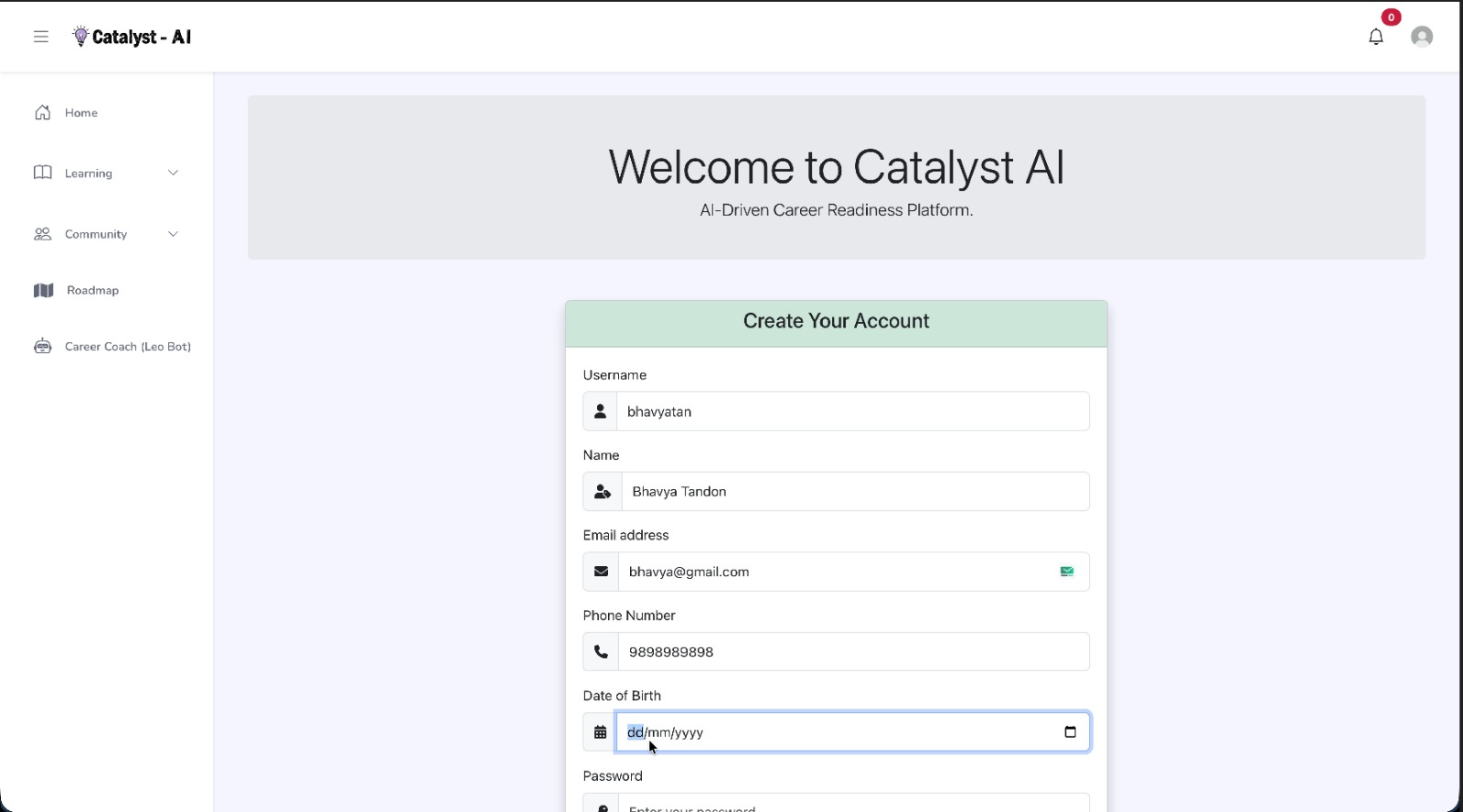
Step 1 — Understanding the Learner (Profile Creation)
Users create a detailed profile including: 1)Interests 2)Desired roles 3)Learning style 4)Skill level 5)LinkedIn & GitHub insights
This data is analyzed with NLP to build a complete learner persona.
Step 2 — Multi-Agent AI Coordination
Each agent performs a specific job:
Personality Analyzer Collects and processes learner data.
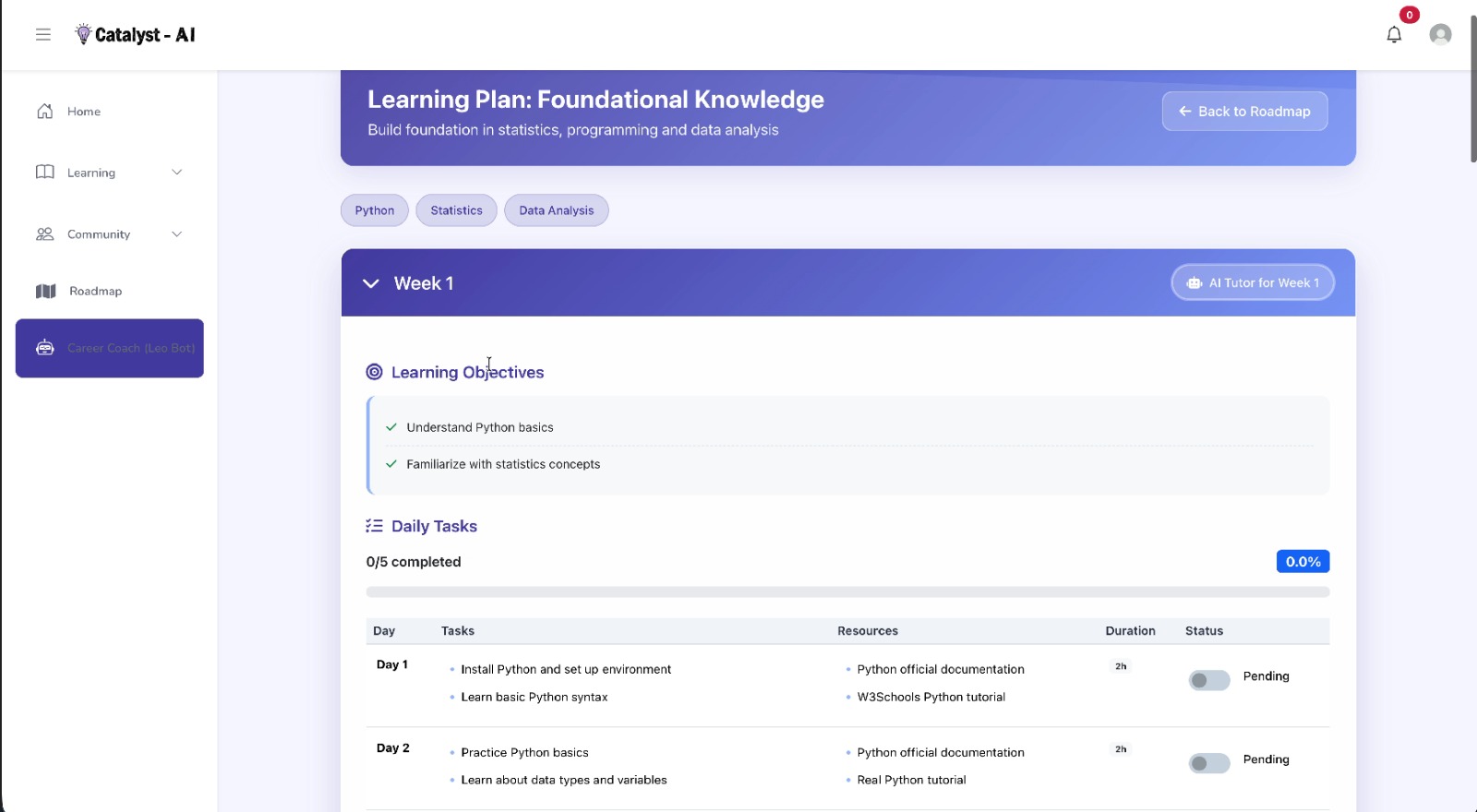
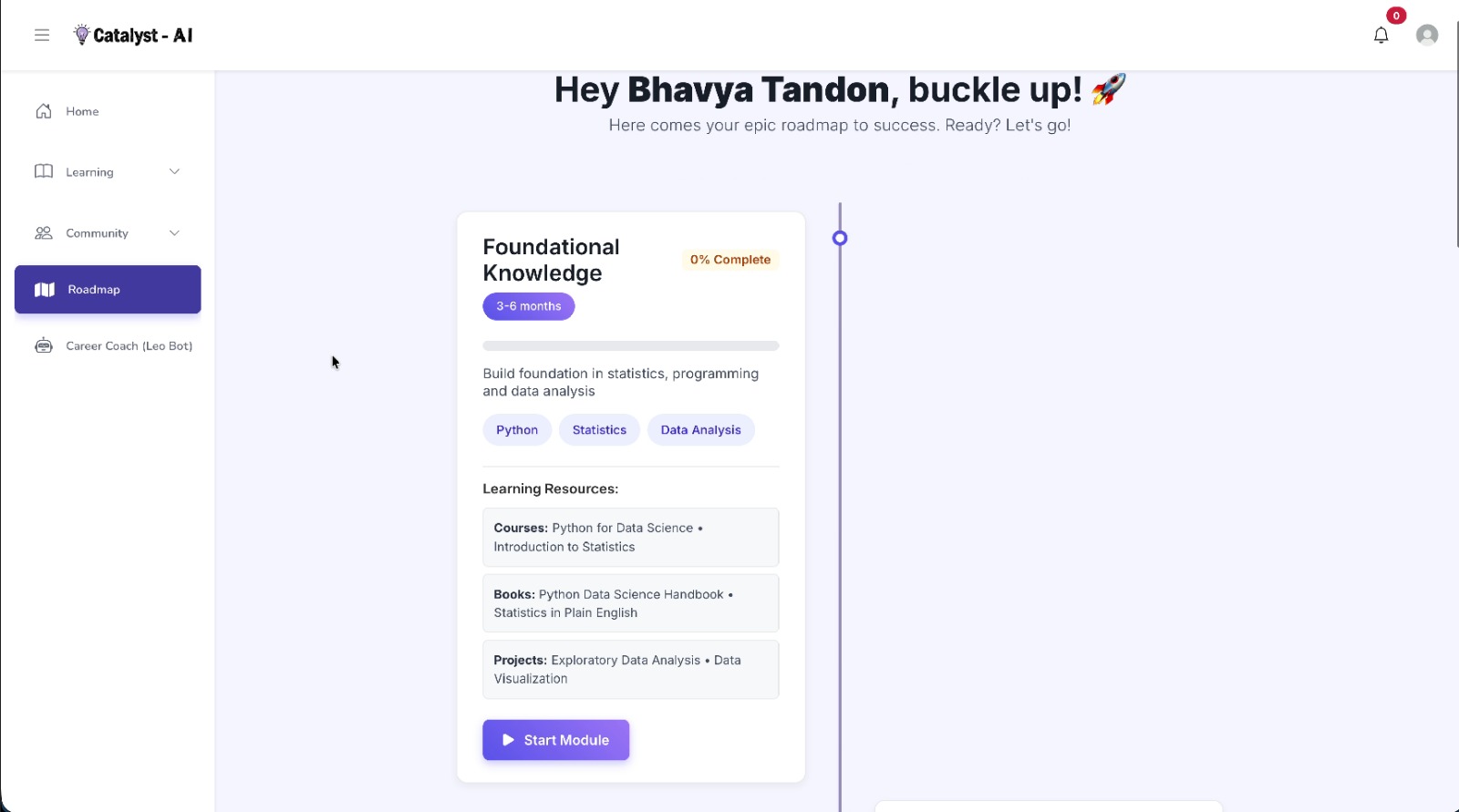
Roadmap Generator AI Creates a dynamic, multi-phase, adaptive learning plan.
AI Daily Learning Mentor Each day, the AI session includes:
1) Concept explanation 2)Visuals 3)Q&A 4)Curated resources 5)Adaptive difficulty
Progress Tracking AI Evaluates:
1)Concept mastery 2)Consistency 3)Learning patterns 4)Performance metrics
Career Showcase AI Guides users on:
1)LinkedIn improvements 2)GitHub optimization 3)Project suggestions 4)Portfolio strategy
Leo — 24/7 AI Chat Companion Provides real-time answers based on:
1)User profile 2)Skill gaps 3)Learning progress 4)Industry trends
Step 3 — Frontend + Backend Integration
Designed responsive UI
1)Built Flask APIs 2)Connected MongoDB 3)Built dashboard panels for roadmap, tasks, mentor chat, progress, etc. 4)Integrated external APIs 5)Connected AI agents using backend workflows
Challenges we ran into
1. Designing Multi-Agent Coordination Making agents talk to each other — like Mentor → Roadmap → Tracker — was complex.
2. Ensuring Personalization Extracting meaningful insights from LinkedIn + GitHub and mapping them to skill gaps was challenging.
3. Managing AI Latency LLaMA-70B model outputs were large, requiring optimization & trimming.
4. Building an Adaptive Roadmap Dynamically adjusting roadmap phases based on user performance took many iterations.
5. Creating a Seamless UX Making the platform feel like a real AI mentor, not just an AI chatbot, required thoughtful UI/UX design.
Accomplishments that we're proud of
1)Built a fully functional multi-agent AI system that personalizes career paths and automates learning recommendations.
2)Implemented real-time skill gap detection and readiness scoring, enabling accurate and adaptive guidance.
3)Designed an automated learning pipeline that customizes content based on user performance and goals.
4)Delivered a scalable, user-friendly platform that can support multiple careers, domains, and learning styles.
What we learned
Working on Catalyst AI taught me more than I expected:
1. Multi-Agent System Design I learned how different AI agents can coordinate internally to create a powerful adaptive system.
2. Integrating Large Language Models I gained hands-on experience using:
1) LLaMA 3.3-70B via Groq Cloud (for roadmap generation) 2)Gemini Flash 1.5 (for Leo Chatbot guidance)
3. Advanced API Integrations I integrated:
1)LinkedIn API — to analyze professional profiles 2)GitHub API — to understand coding level & activity 3)YouTube API & Medium API — for curated learning resources
4. Full-Stack Development I built the MVP using:
HTML, CSS, JavaScript, Bootstrap (frontend)
Flask + Python (backend)
MongoDB (database)
5. Understanding Real Career Problems Through research, I learned how deeply students struggle with:
1)Path confusion 2)Skill relevance 3)Motivation 4)Lack of structured mentorship 5)Poor visibility to employers
This shaped Catalyst AI’s design.
What's next for Catalyst AI
1)Expand multi-agent capabilities to include job-market prediction, resume enhancement, and interview simulation agents.
2)Integrate advanced analytics like behavioral insights and long-term performance tracking for deeper personalization.
3)Add real-time industry alignment mapping user progress to trending roles and in-demand skills using live market data.
4)Launch a full-scale platform, enabling students, institutions, and professionals to use Catalyst AI for continuous upskilling.

Log in or sign up for Devpost to join the conversation.