

🚜 Inspiration
Heavy equipment inspections today are still largely manual. Inspectors rely on checklists, handwritten notes, fragmented software tools, and memory. This leads to:
• Missed critical issues • Inconsistent documentation • Time-consuming reporting • Language barriers in global operations
We wanted to build something that feels like a field co-pilot, not just another form.
CAT AI Inspector was inspired by the idea that inspections should be intelligent, conversational, and instant. Instead of filling forms, inspectors should capture reality and let AI do the heavy lifting.
🚜 What It Does
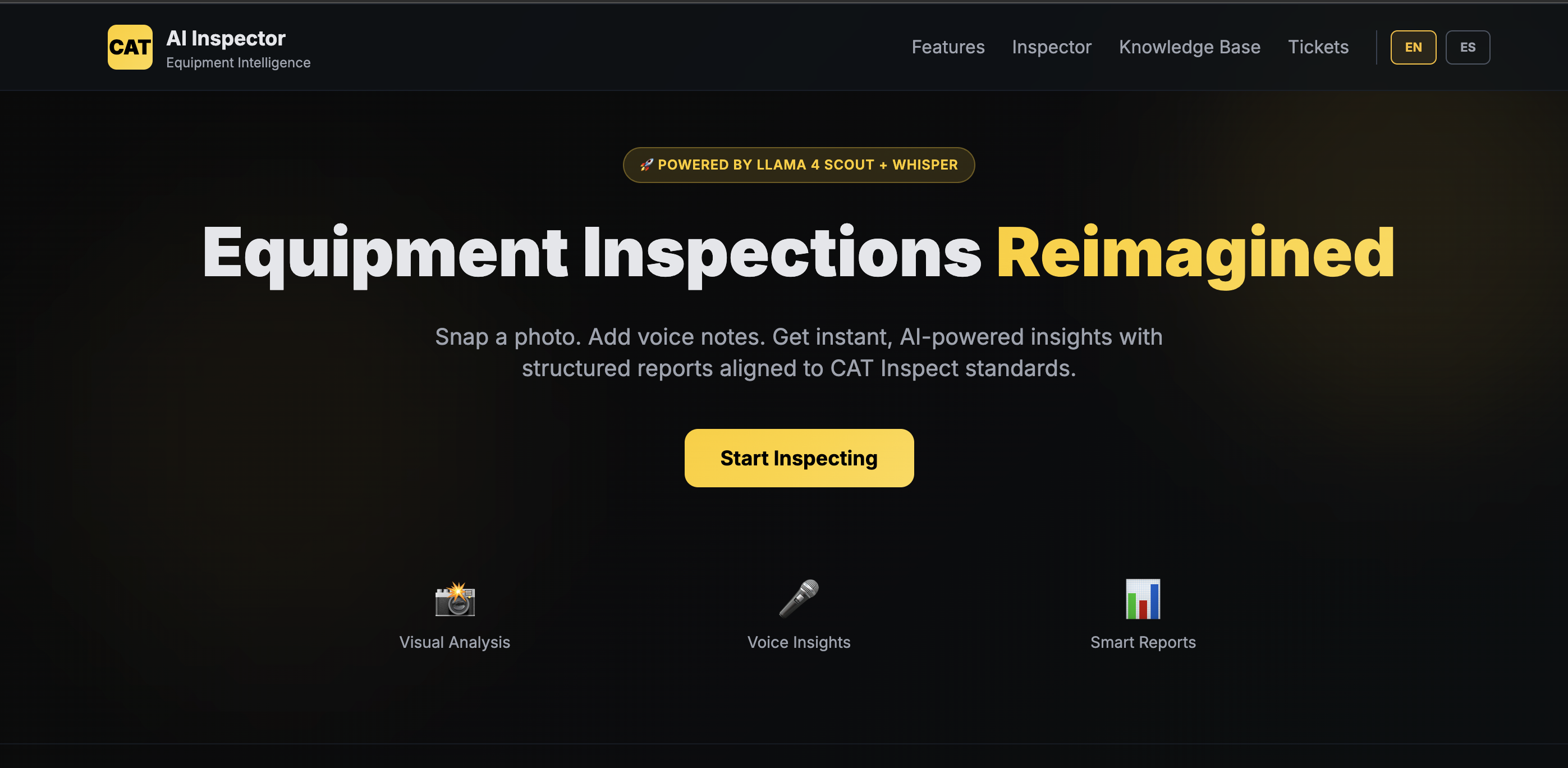
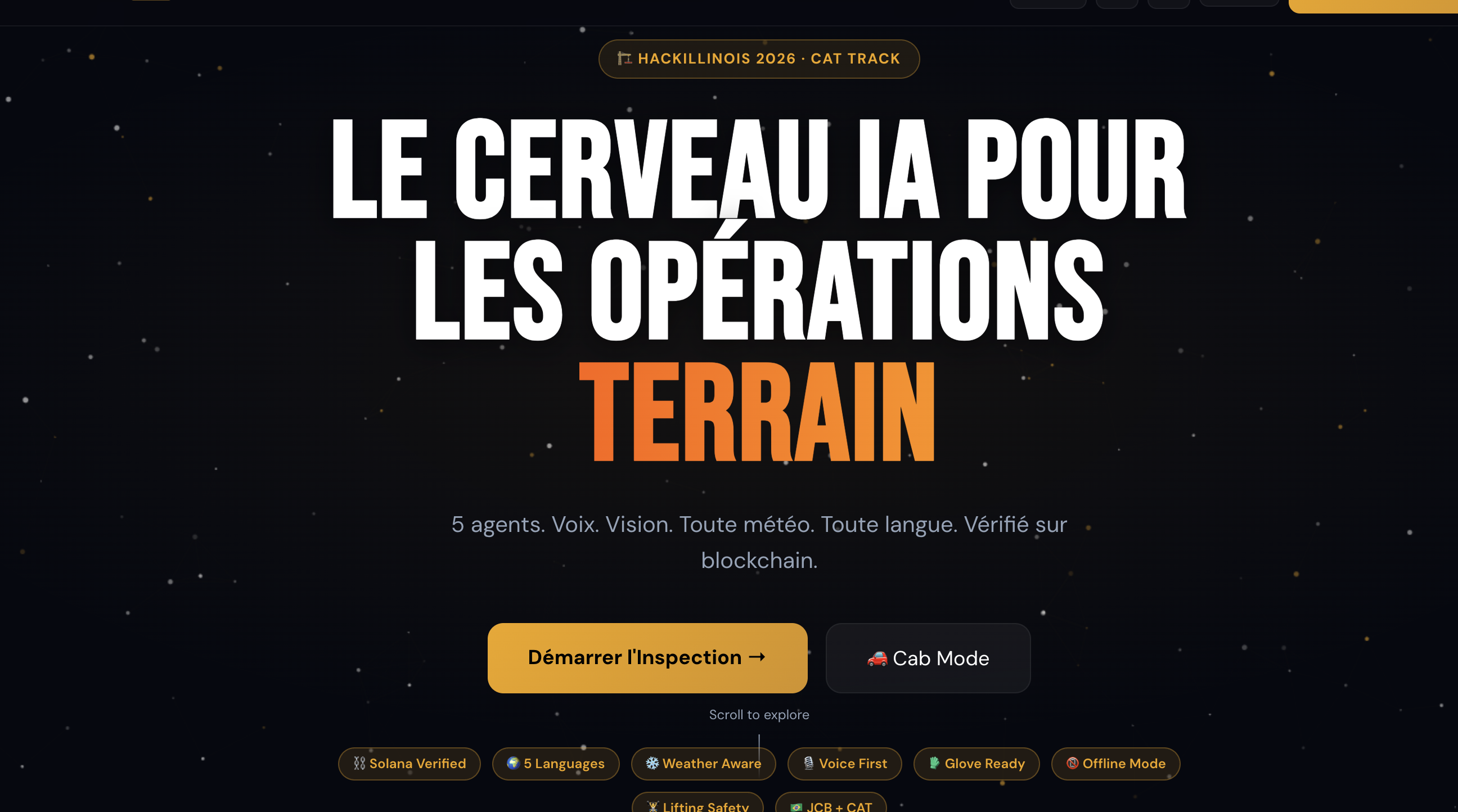
CAT AI Inspector is an AI-powered equipment inspection system that transforms how field inspections are performed.
It combines three powerful capabilities into one unified platform:
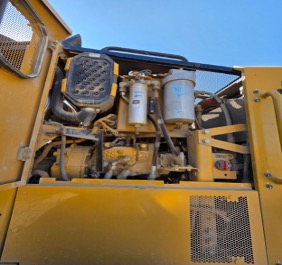
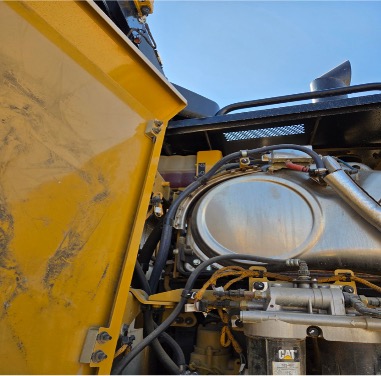
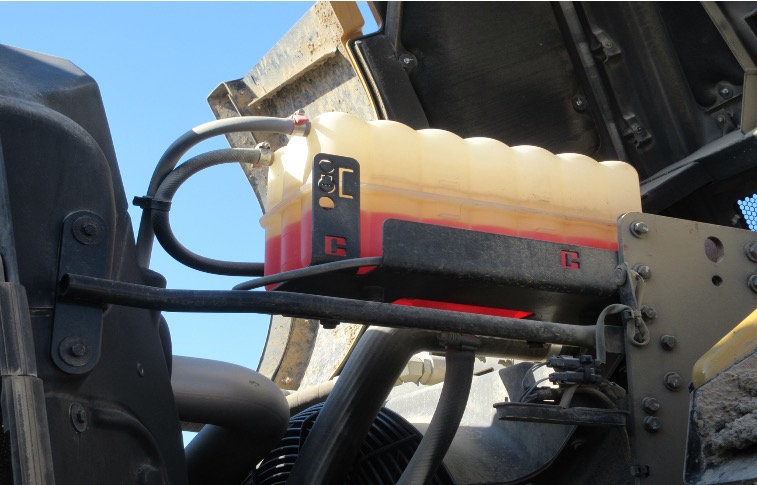
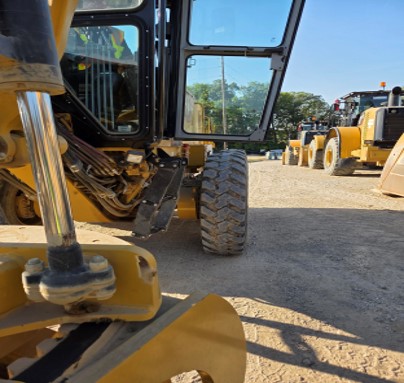
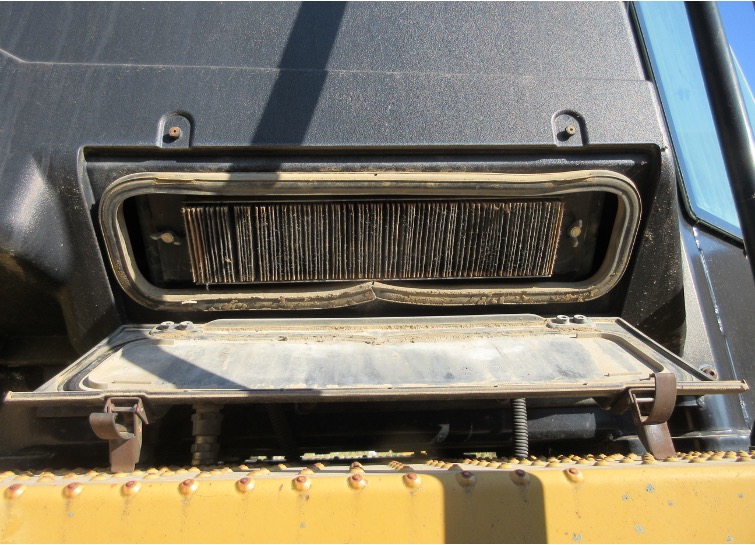
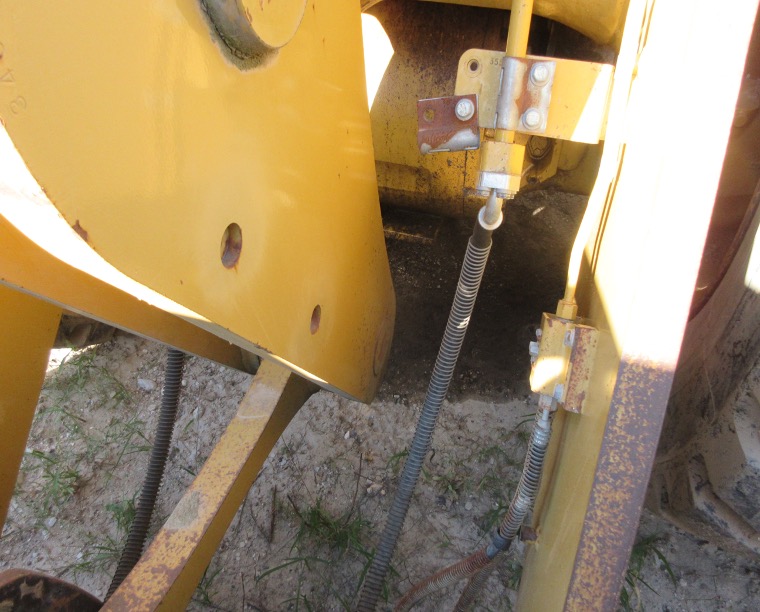
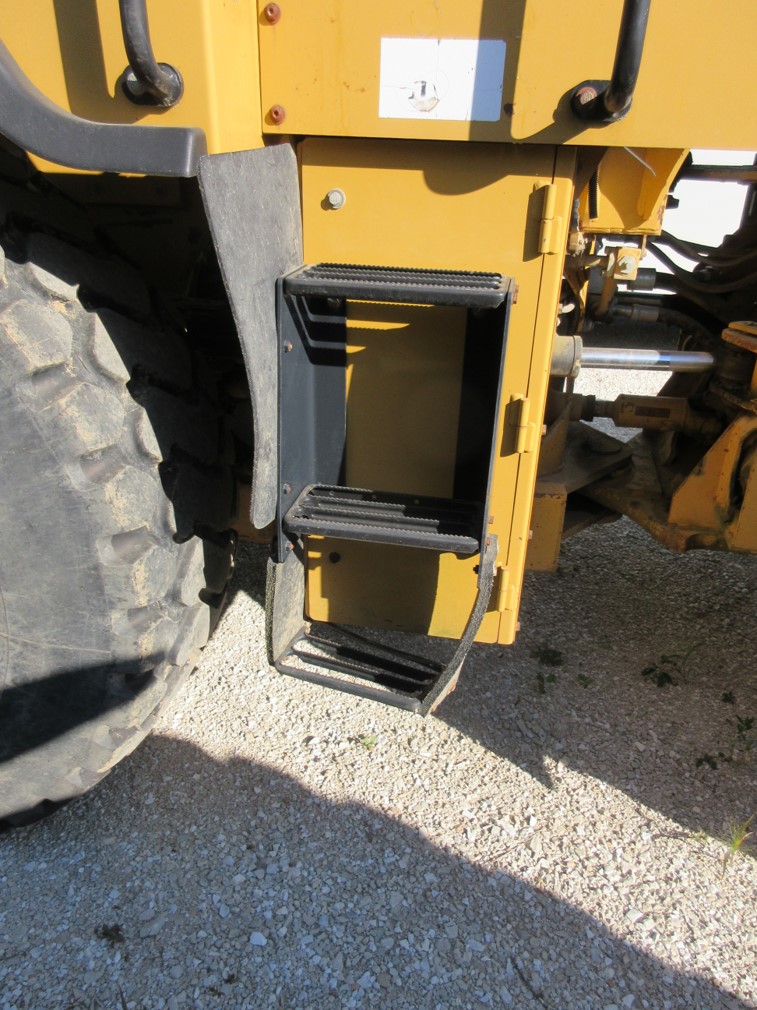
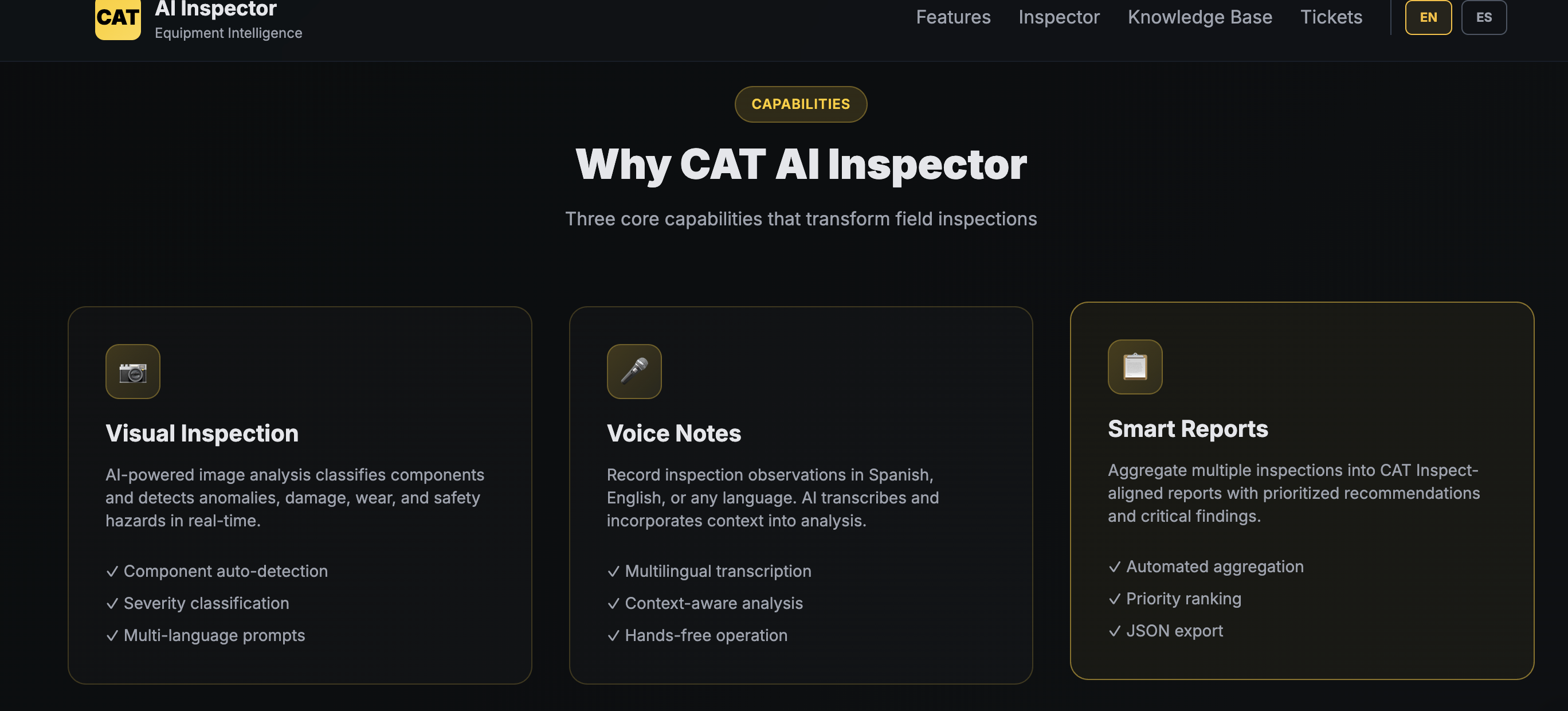
📸 Visual Inspection Upload an equipment image and the system: • Detects components automatically • Classifies anomalies • Assigns severity levels, Critical 🔴 Moderate 🟡 Minor 🟢 • Generates actionable recommendations
🎤 Multilingual Voice Intelligence Inspectors can: • Record voice notes in English or Spanish • Automatically transcribe using Whisper Large v3 • Integrate voice context directly into the inspection logic • Operate hands-free in the field
📚 Knowledge Base Search The system: • Indexes 65+ inspection transcript segments • Uses semantic search with ChromaDB • Surfaces similar historical cases instantly • Links to exact timestamps in previous inspection videos
📋 Smart Report Generation • CAT Inspect aligned structured reports • JSON export for downstream integration • Prioritized findings • Aggregated executive summaries
All results are delivered in under 5 seconds per image.
🚜 How We Built It
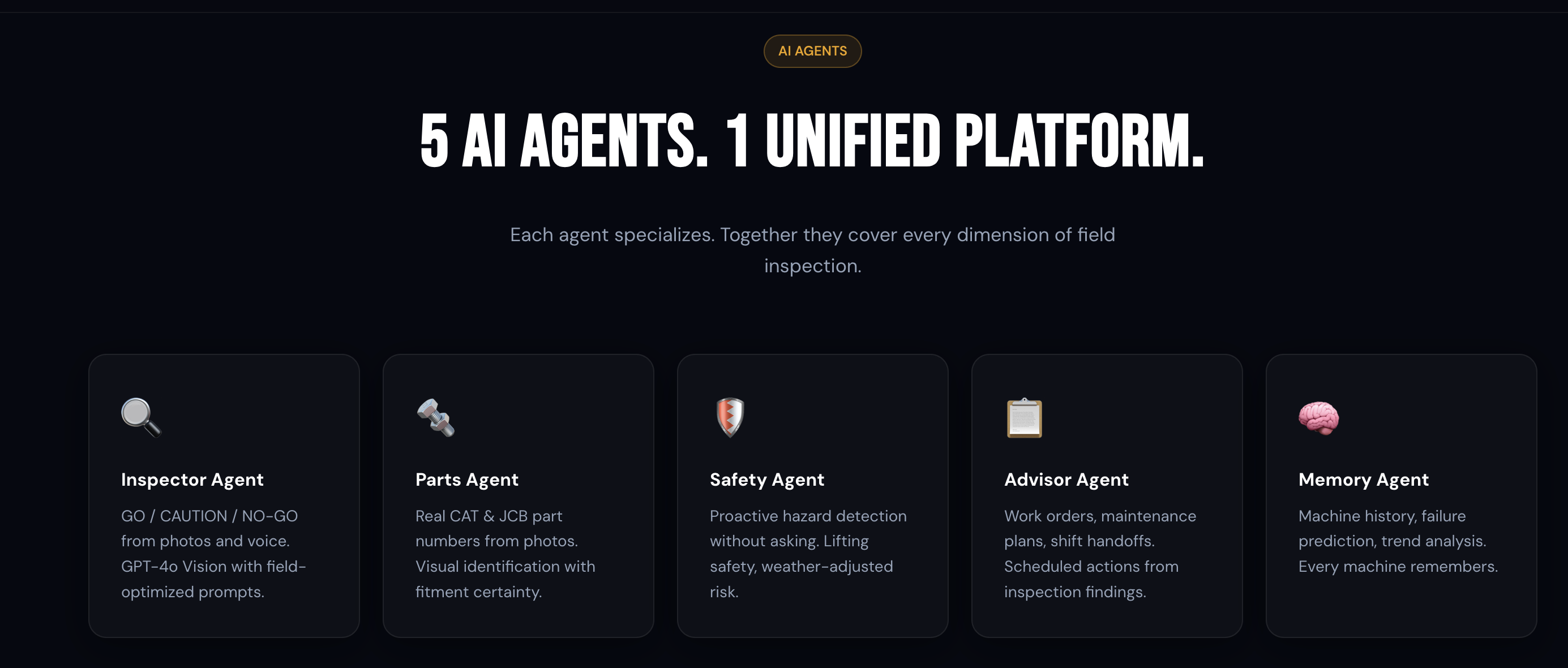
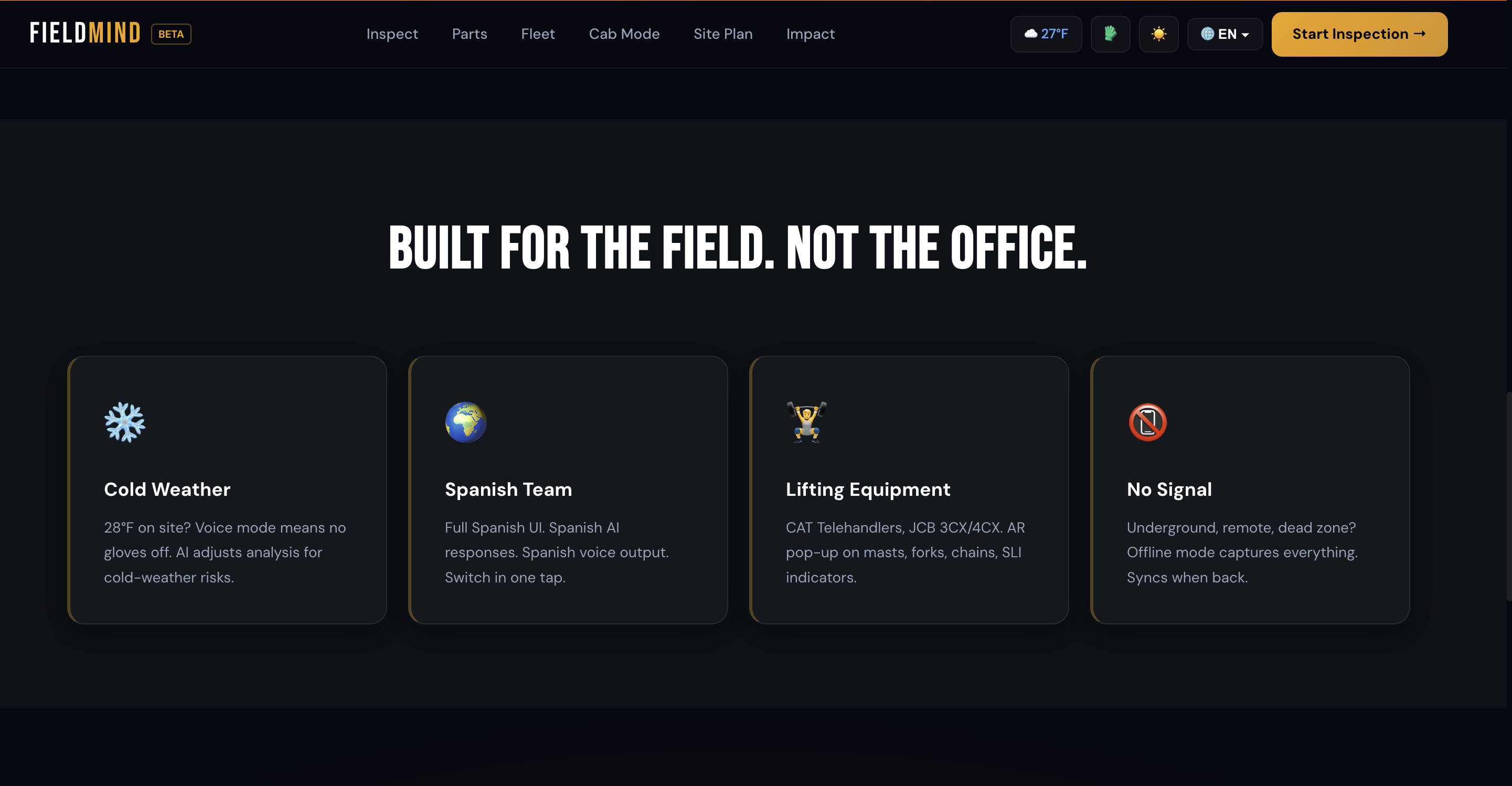
We designed a modular AI architecture powered by FastAPI and multiple AI pipelines
Pasted text
.
Backend: • FastAPI for REST endpoints • Dockerized deployment • Python 3.13 environment
Vision Pipeline: • Llama 4 Scout via Groq for primary image analysis • CLIP fallback for similarity search routing
Voice Pipeline: • Whisper Large v3 for speech to text • ElevenLabs conversational AI for natural interaction • PlayAI TTS for voice responses
Reasoning Layer: • Llama 3.3 70B for report generation and structured output
Knowledge Layer: • ChromaDB for vector search • Semantic embedding of inspection transcripts • Timestamp mapping to video resumes
Frontend: • Vanilla JS + Tailwind CSS • Real-time language switching EN ⇄ ES • Fully translated interface
The architecture cleanly separates vision, voice, reasoning, and knowledge pipelines, enabling scalability and modular upgrades.
🚜 Challenges We Ran Into
Multi-Model Coordination Routing between vision LLM and CLIP fallback required intelligent decision logic.
Real-Time Performance We had to keep inference under 5 seconds while combining image + voice + KB search.
Multilingual Consistency Ensuring both frontend UI and backend prompts responded correctly in English and Spanish required full i18n coverage.
Context Integration Merging visual findings with voice directives into a coherent structured report was non-trivial.
Knowledge Base Alignment Mapping transcript chunks to precise timestamps for video resume functionality required careful indexing.
🚜 Accomplishments We Are Proud Of
• Full multimodal pipeline, vision + voice + semantic search • <5 second image inspection turnaround • 67+ translation keys fully implemented • End to end structured CAT Inspect aligned reports • Real conversational voice agent that navigates the system • Dockerized, production ready architecture • Clean API layer with health checks and configuration endpoints
Most importantly, we built a system that feels like a real field tool, not just a demo.
🚜 What We Learned
• Multimodal AI is powerful, but orchestration is everything • Structured outputs matter more than flashy demos in enterprise contexts • Voice UX significantly improves usability in field environments • Semantic search becomes exponentially valuable when paired with timestamped media • AI adoption in industrial workflows must prioritize reliability and explainability
We also learned that speed and clarity win trust in industrial environments.
🚜 What’s Next for CAT AI Inspector
Real-Time Video Inspection Move from image-based inspection to continuous video stream analysis.
On-Device Edge Inference Deploy lightweight models for low connectivity job sites.
Predictive Maintenance Scoring Aggregate inspection data into failure prediction models.
Fleet Level Dashboard Executive analytics across equipment fleets.
Expanded Language Support Add French, Portuguese, German for global deployment.
Enterprise Integrations SAP, ServiceNow, asset management systems.
Human in the Loop Feedback Allow inspectors to validate and improve AI recommendations over time.


Log in or sign up for Devpost to join the conversation.