
Inspiration
Heavy equipment inspections are high stakes: a missed bolt, cracked hose, or “off” engine sound can lead to downtime, expensive repairs, or a safety incident. We wanted to build a fast, structured AI copilot that turns messy field observations into clear PASS / MONITOR / FAIL decisions, quantified risk, and a finalized report — and gets smarter over time.
What it does
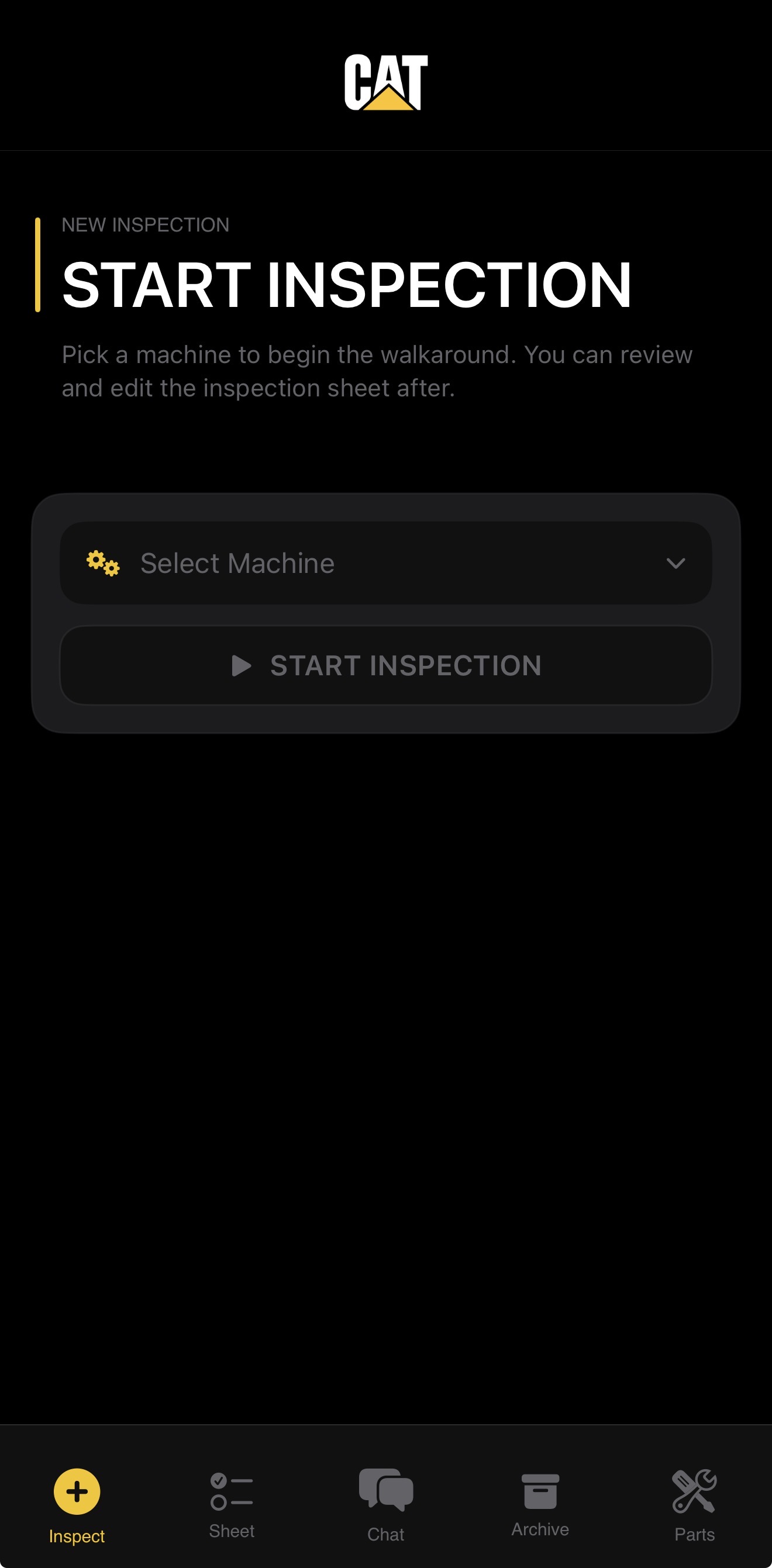
CATrack (CATAI) is an iOS inspection assistant (single Caterpillar model MVP) that lets an inspector:
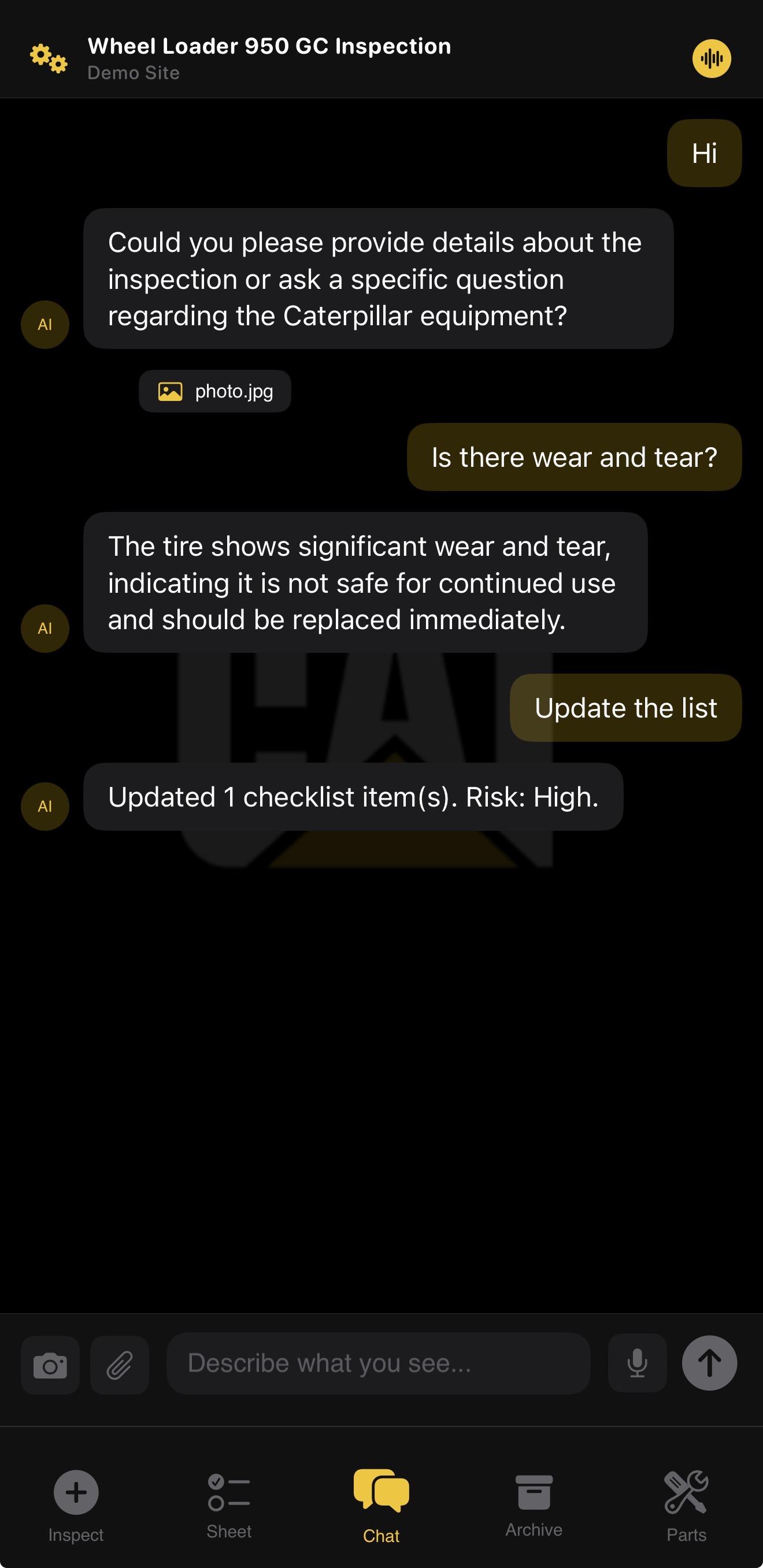
- Chat in plain English (and voice) about what they see/hear
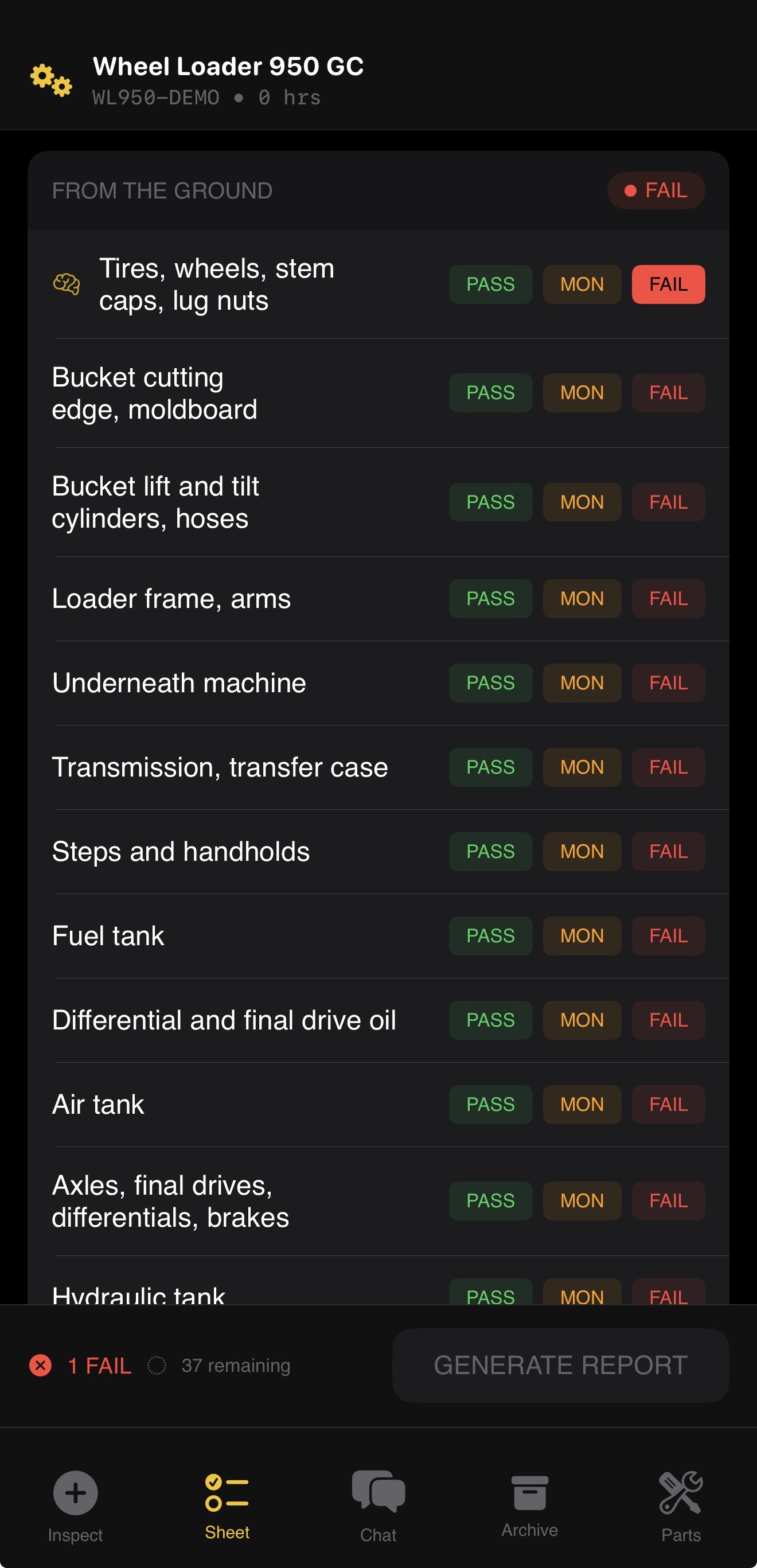
- Automatically update the inspection checklist with what changed + why
- Generate a final inspection report (executive summary, critical findings, recommendations, operational readiness, risk score)
- Save the report to Supabase (archive / source of truth)
- Use Supermemory to remember past inspection summaries per machine, so the AI can flag recurring issues and adjust recommendations
How we built it
- iOS (SwiftUI): chat UI, machine picker, editable inspection sheet, archive view, capture + upload flows
- FastAPI backend: endpoints for starting inspections, analyzing text/voice, generating reports, sound anomaly checks, plus debug tools
- OpenAI: reasoning + structured JSON outputs for checklist updates and report generation
- Supabase: persistent storage for inspections + generated reports (and media paths)
- Supermemory: stores/retrieves machine-tagged inspection summaries to add “history-aware” intelligence to every new analysis
Challenges we ran into
- Deploying backend for real iPhone testing: localhost worked on simulator, but phones needed a public endpoint → fixed by deploying and binding correctly to platform host/port
- Supermemory retrieval returning empty results: learned container tag matching + response formats; built debug endpoints to verify add/search behavior
- Keeping UI + sheet state consistent: ensuring AI updates don’t overwrite user edits, syncing notes reliably, and making explanations visible in-chat
Accomplishments that we're proud of
- End-to-end loop working: start inspection → AI updates checklist → generate report → archive + memory
- The assistant can say “this is recurring” because it actually retrieves prior inspection history (verified in outputs)
- Reports are persisted in Supabase, while memory stays fast and relevant via Supermemory
- Built a clean, demo-ready UX: machine list, chat, sheet editing, finalize/report, archive
What we learned
- The best architecture is two-layer memory:
- Supabase for canonical records + audit trail
- Supermemory for semantic recall that improves AI decisions
- Supabase for canonical records + audit trail
- Deployment details matter as much as code in a hackathon
- AI output must be actionable: inspectors need structured updates + reasons, not just a paragraph
What's next for CATAI
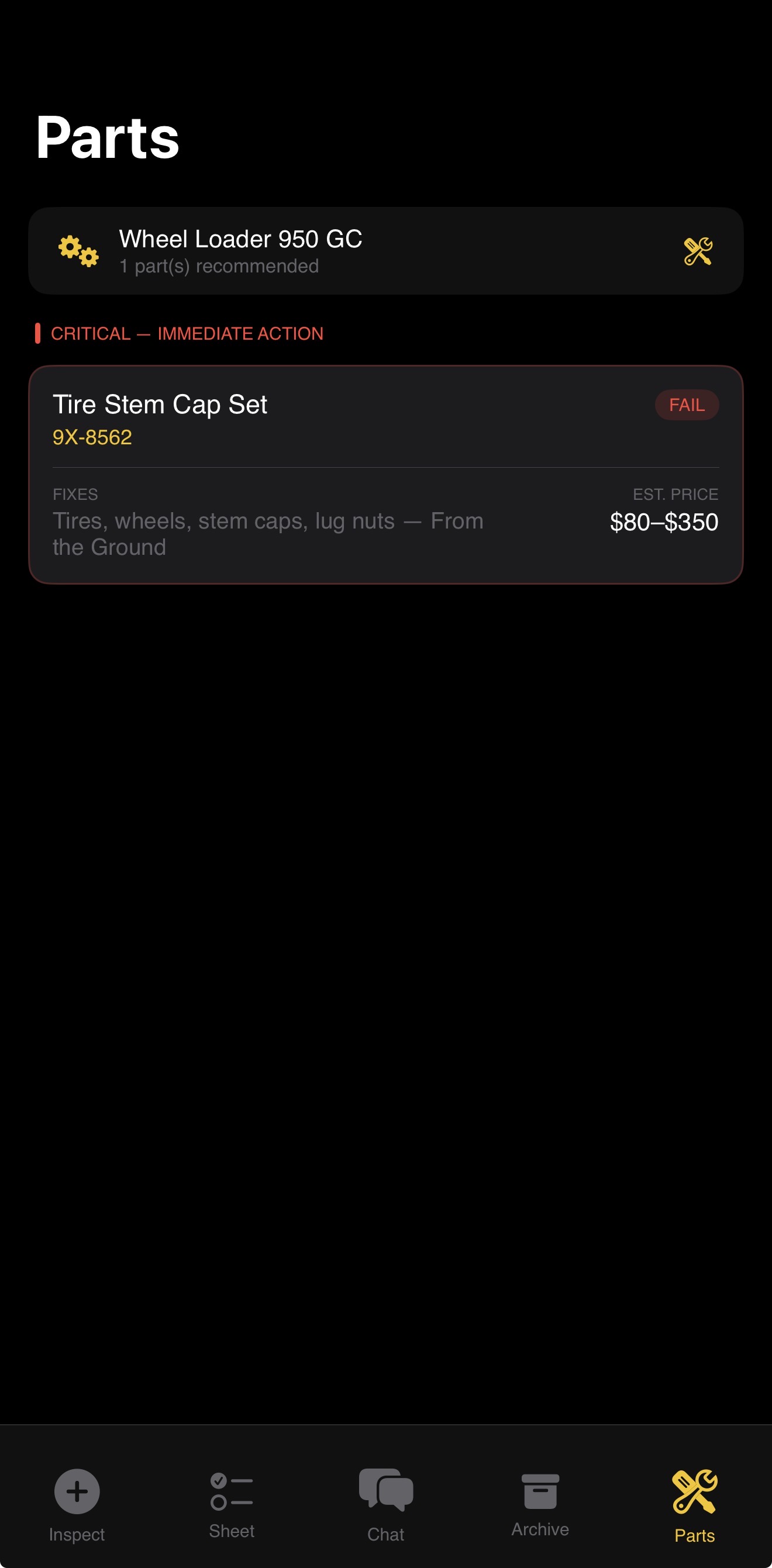
- Expand from one-model MVP to multiple models + templates with a parts library
- Improve quantification (probability/time-to-failure/cost/downtime) using more data + calibrated heuristics
- Add stronger image-first defect detection + localization (bolts/hoses/leaks)
- Create a maintenance ticket workflow (export PDF / CMMS integration / shareable report links)
Built With
- fastapi
- openai
- postgresql
- python
- railway
- supabase
- supermemory
- swift
- swiftui
- uvicorn


Log in or sign up for Devpost to join the conversation.