-
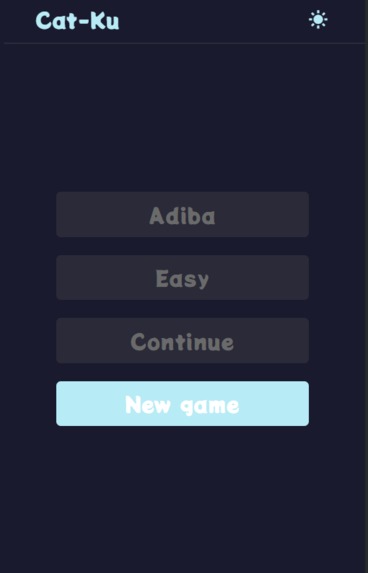
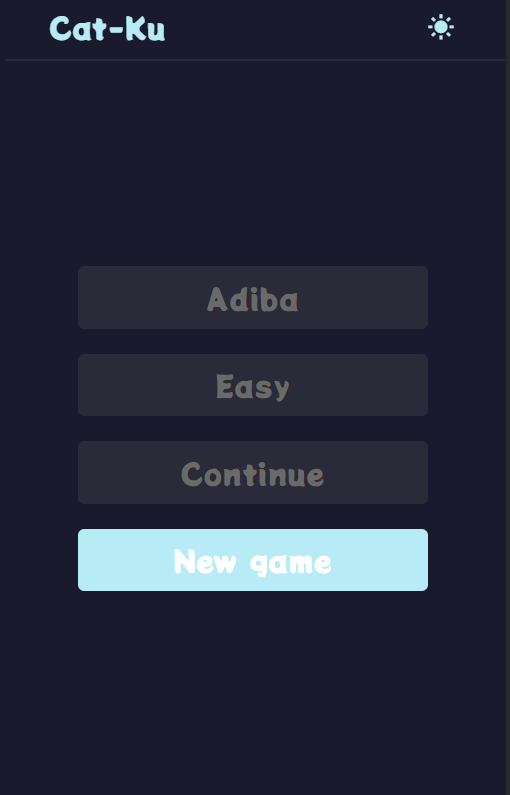
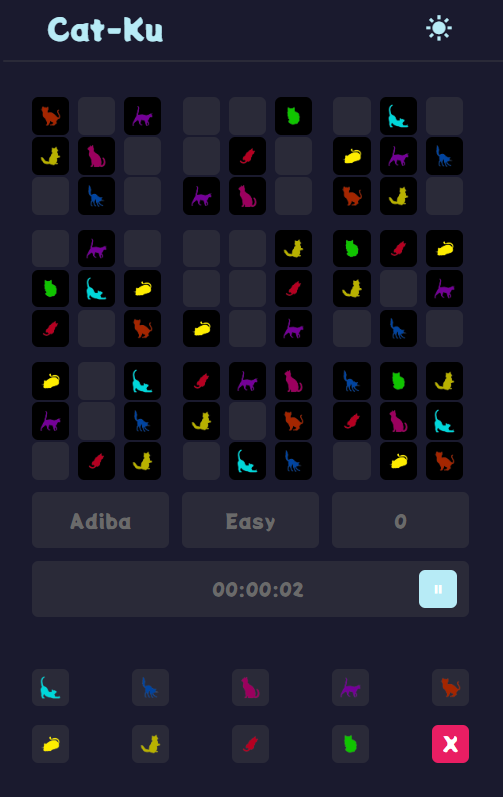
Start Screen
-
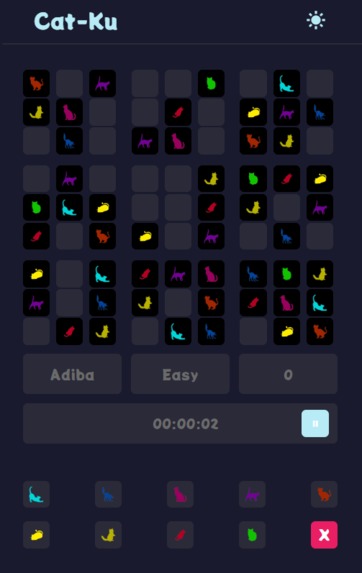
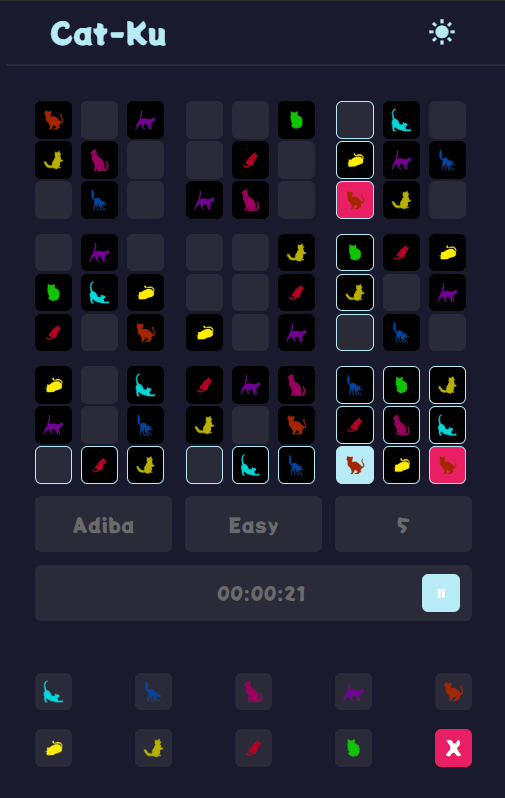
Gameplay Screen
-
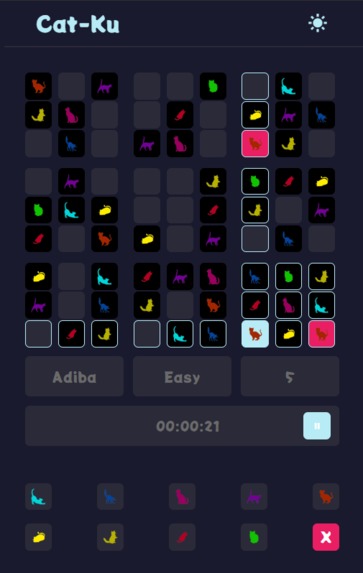
Error handling within the game
Inspiration
Cat-Ku was born out of my love for Sudoku puzzles and my fondness for cats. I wanted to create a unique twist on the traditional Sudoku game by replacing numbers with adorable cat images. It combines the challenge of logic-based puzzle-solving with the charm of cats, offering a relaxing yet stimulating experience for players of all ages.
What it does
Cat-Ku is a Sudoku puzzle game where cat images replace the typical numbers. Players need to fill a 9x9 grid according to the traditional Sudoku rules, ensuring each cat image appears only once per row, column, and box. The game includes the following features: Sudoku with Cat Pictures: Replace the traditional numbers with adorable cat images. Difficulty Levels: Choose from different levels, including Easy, Medium, Hard, Very Hard, Insane, and Inhuman (for the ultimate challenge). Scoring System: Earn +10 points for each correct answer and lose -5 points for each incorrect answer. Continuation: Continue the game where you left off using the resume feature. Time Tracking: Track the time taken to complete each puzzle.
How I built it
Cat-Ku was built using the following technologies:
Frontend: HTML5, CSS, and JavaScript for creating the interactive puzzle grid, styling, and game logic. Backend: JavaScript handles the core game mechanics. Local Storage: Stores player progress and game state for resuming games. Time Tracking: JavaScript timers to track puzzle-solving time. Hosting: Deployed using AWS Amplify, making the game easily accessible online. Code Refinement: Enhanced the codebase using Amazon Q Developer for improved performance. AWS Services Used Amazon Q Developer: Used to refine the game’s code for better performance and smoother gameplay. AWS Amplify: Deployed the game online, ensuring it is scalable and accessible to players worldwide.
Challenges I ran into
Ensuring the cat images were properly sized and positioned in the 9x9 grid without overlapping or distorting the layout was one of the main challenges. I spent time adjusting the CSS and image sizes to ensure smooth alignment. Another challenge was debugging the process for clearing and resetting the Sudoku grid when starting a new game. Balancing the timer and scoring system while maintaining smooth gameplay also required careful attention, especially with the +10 points for correct answers and -5 points for wrong ones along with error handlings. Lastly, implementing the reset and resume functionality required managing game state effectively so that the game could properly reset or resume based on the player's actions.
Accomplishments that I'm proud of
I'm proud of the solid game logic and the overall functionality, especially with the cat images replacing numbers in an intuitive way. The reset and resume features work seamlessly, and deploying the game via AWS Amplify has made it easy to share with others.
What I learned
Through this project, I gained valuable experience using AWS Amplify for deploying static web apps and managing continuous deployment from GitHub. I also improved my skills in HTML, CSS, and JavaScript, particularly in handling dynamic content and debugging interactive elements.
What's next for Cat-Ku
Looking ahead, I plan to:
Add difficulty levels or new challenges to make the game more engaging. Implement a 3-strikes system where players have only 3 chances to make a mistake before the game resets, adding a bit more pressure to the puzzle-solving process. Optimize performance for larger puzzles and improve the overall user interface (UI). Explore the possibility of expanding Cat-Ku to a mobile app or other platforms to reach a broader audience.
Built With
- amazon-web-services
- css
- github
- html5
- javascript
- localstorage


Log in or sign up for Devpost to join the conversation.