Inspiration
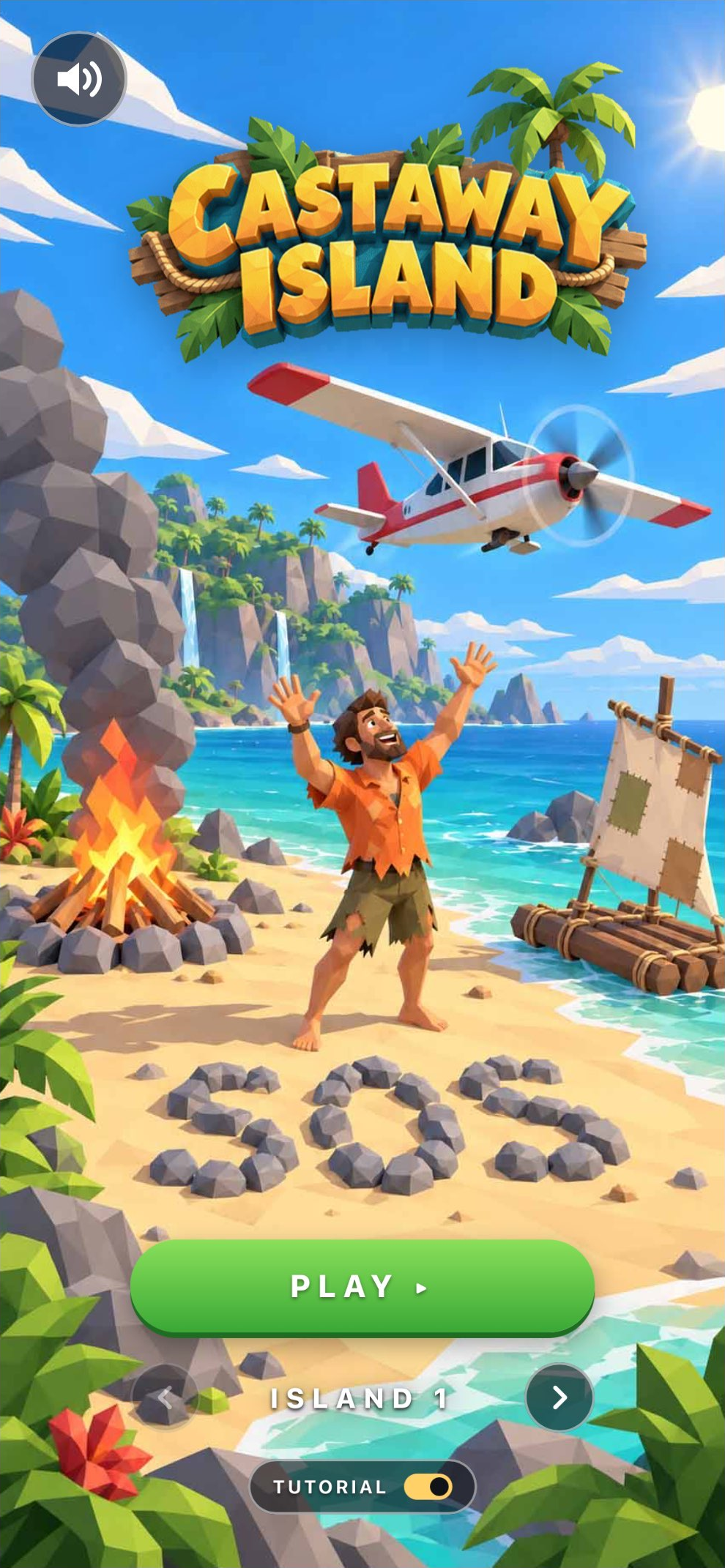
Castaway Island started with a simple idea: you're stranded on a desert island, a search plane is coming, and you need to get its attention before time runs out! I wanted to build around a situation that players would immediately understand, with a bright, hopeful tone and a clear goal to work toward.
The core idea was to connect survival and crafting directly to getting rescued. Finding food gives you the energy to gather materials, those materials become rescue signals, and each signal brings you closer to being spotted. Showing the plane's route in advance added a strategic layer to that loop. My goal was to make a short, satisfying survival experience where deciding what to build, where to place it, and how to spend your time all matter.
What it does
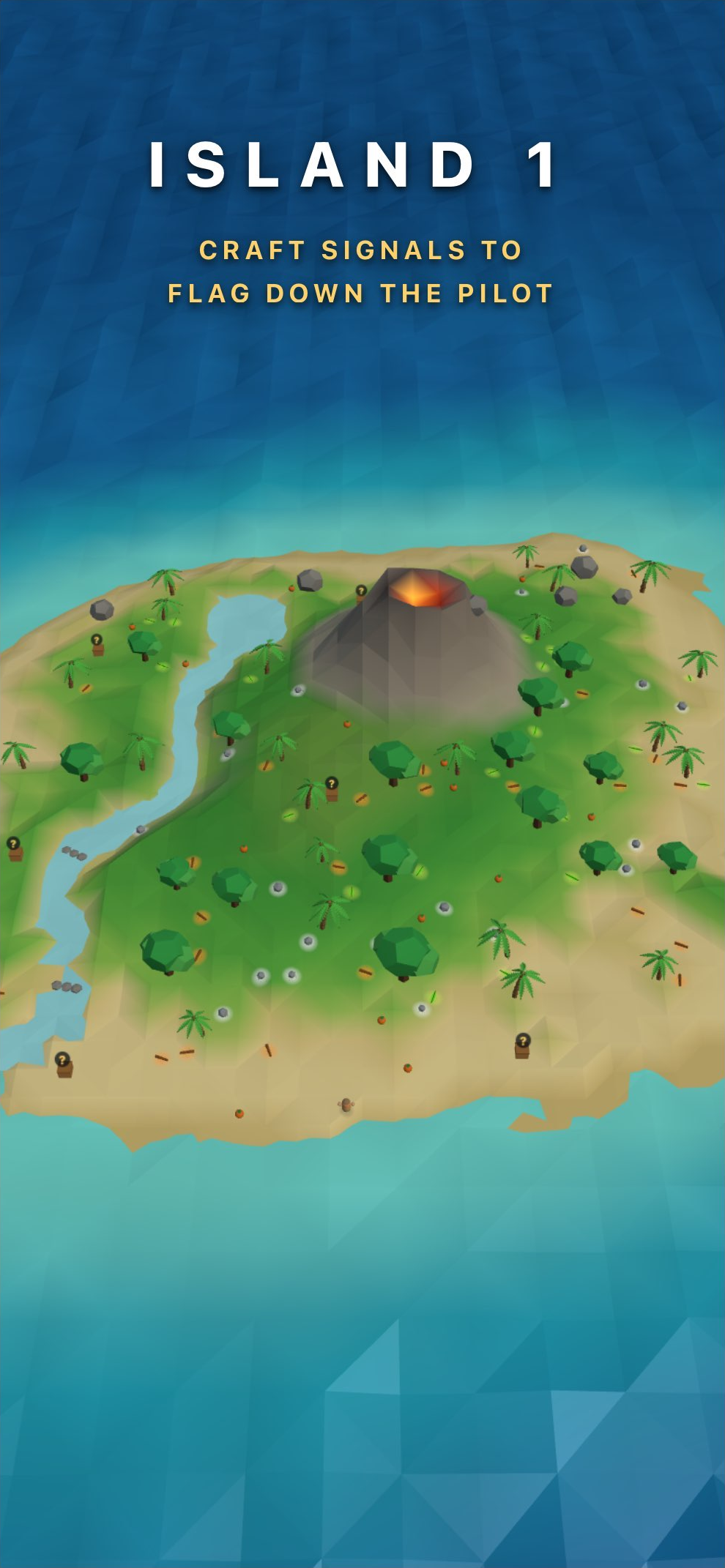
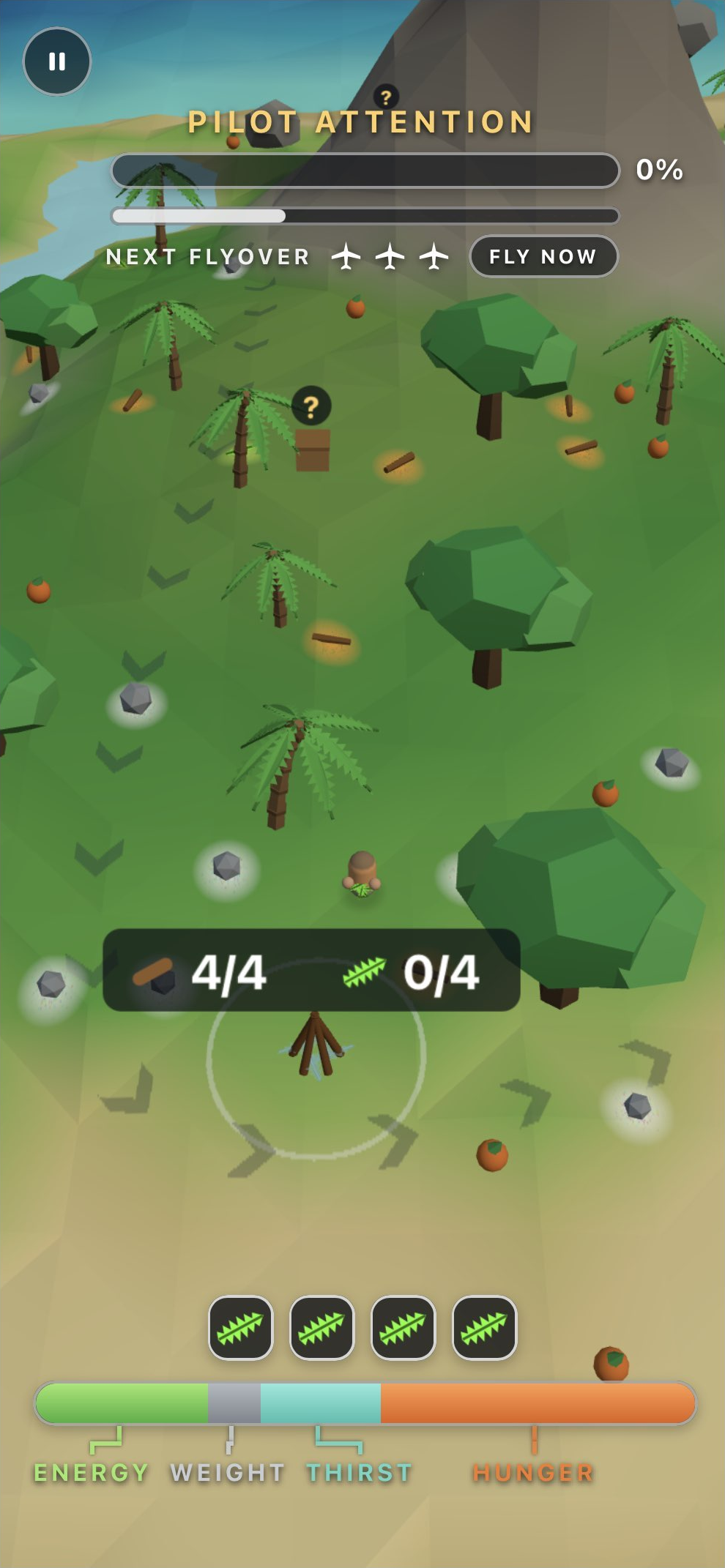
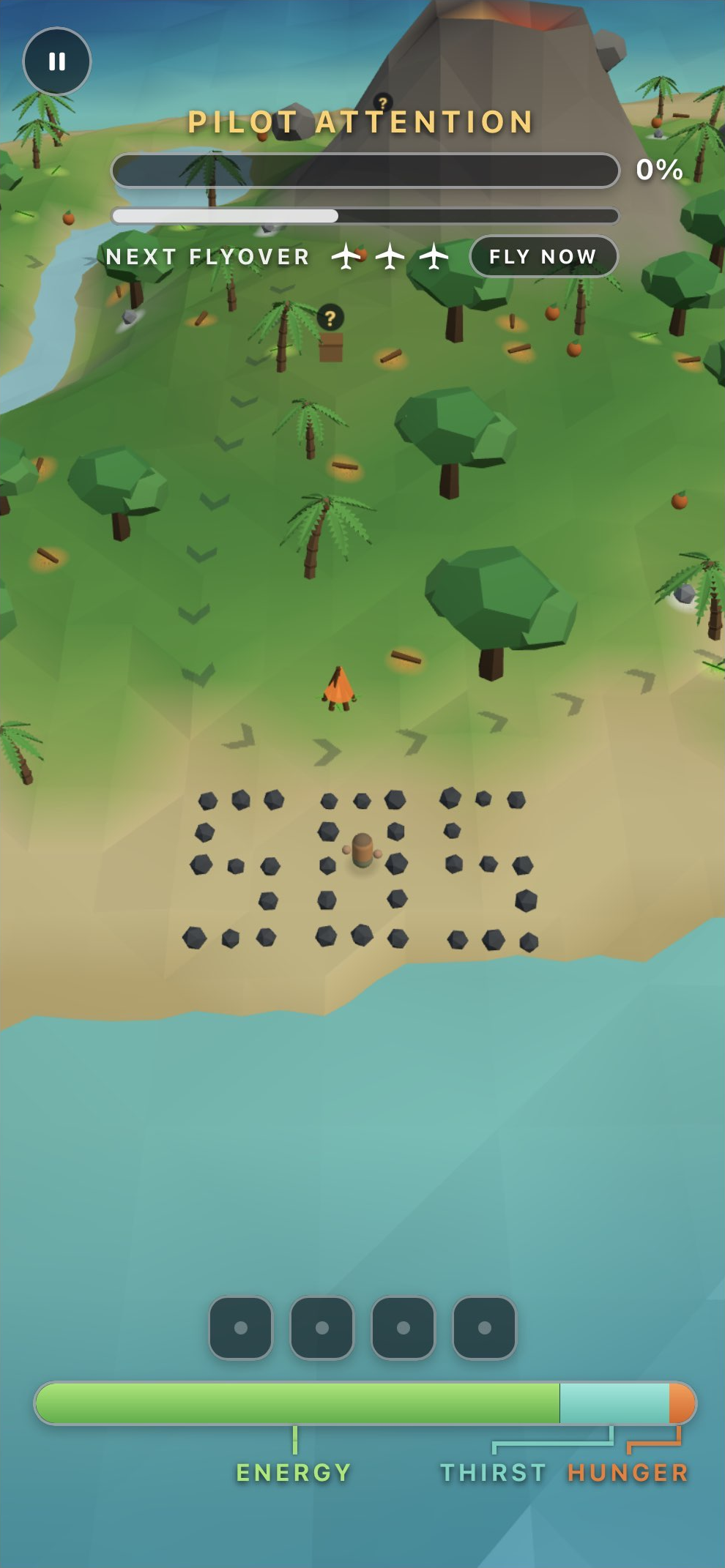
Castaway Island is a survival and crafting game designed for portrait play on mobile, with mouse controls also supported. Players wake up on a generated island and have nine and a half minutes to get rescued before the search is called off. The gameplay loop centers around exploring the island, collecting materials, and building signals while managing energy and the limited amount you can carry.
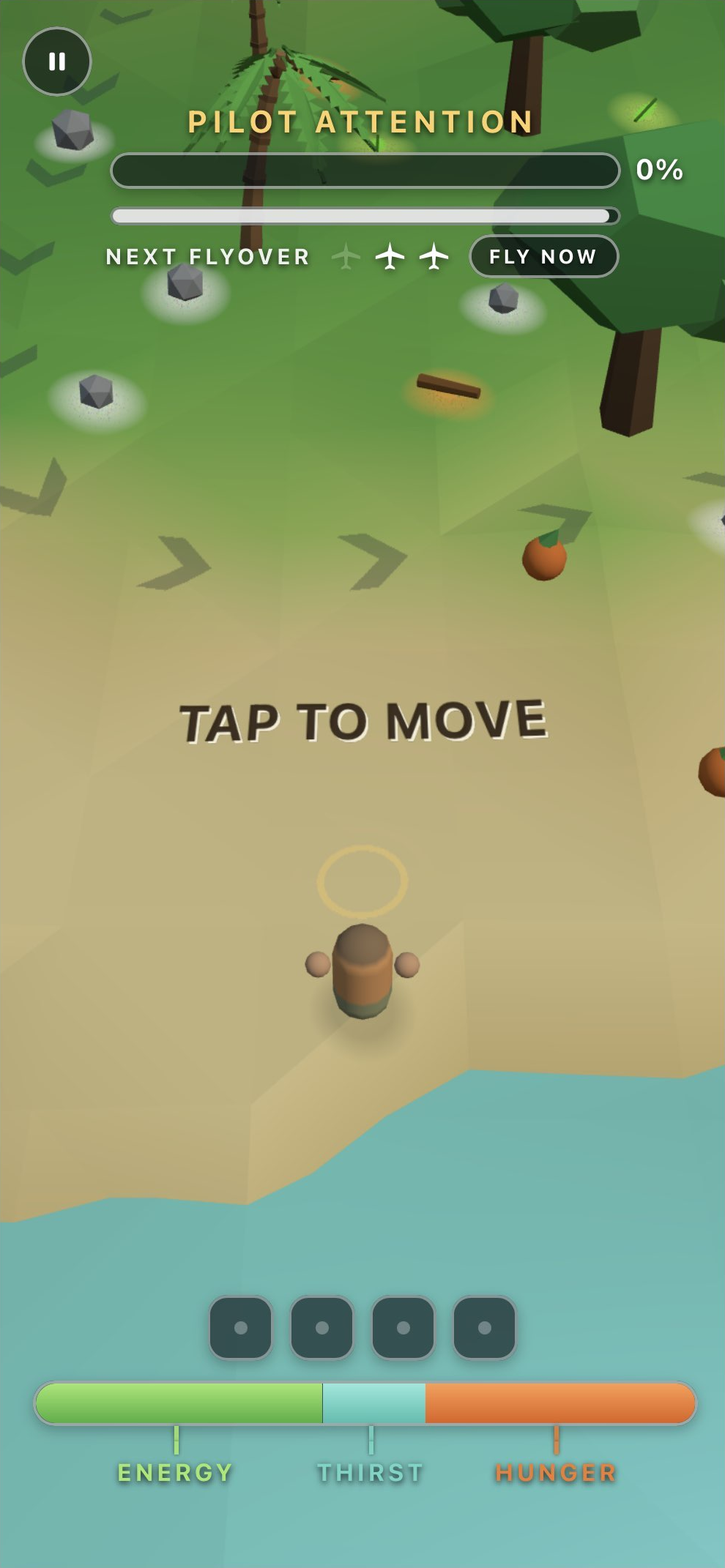
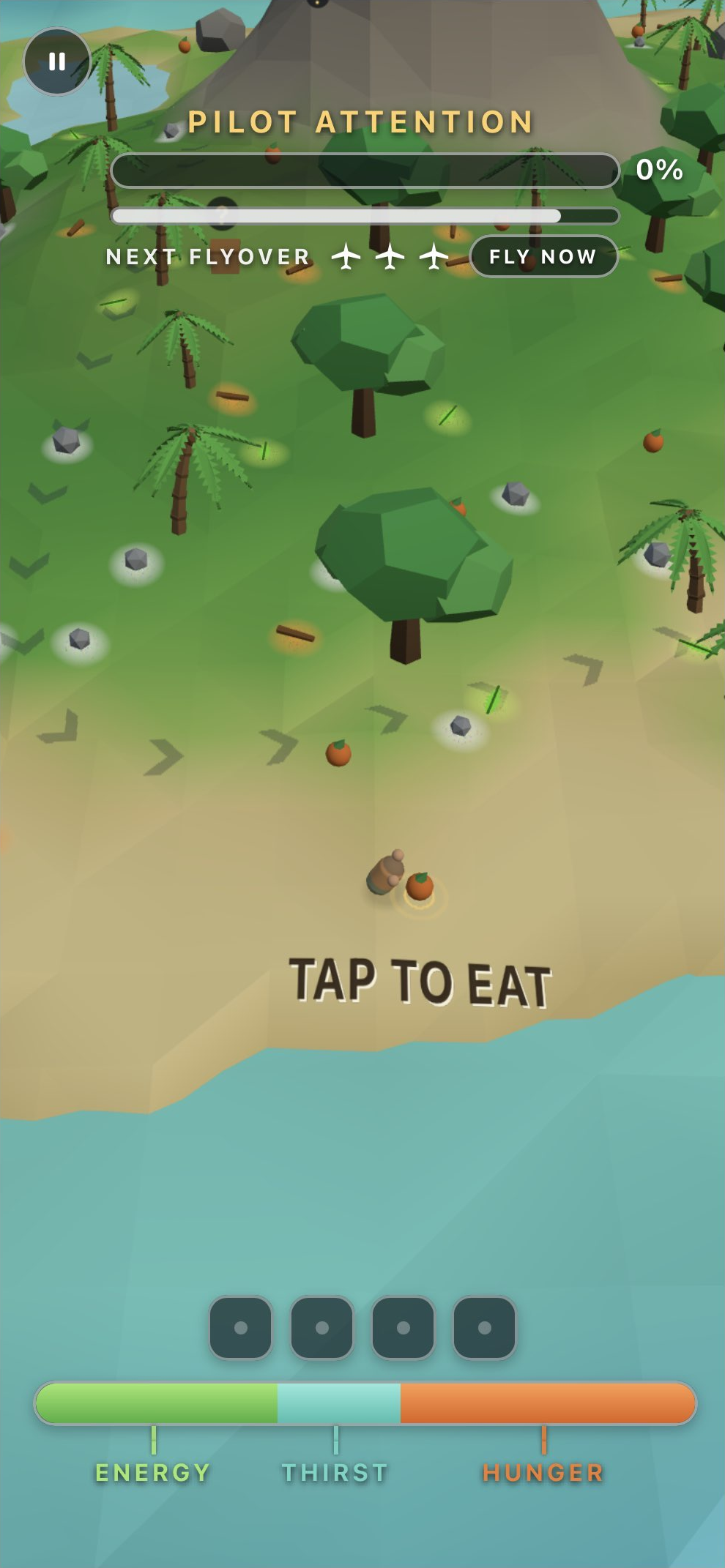
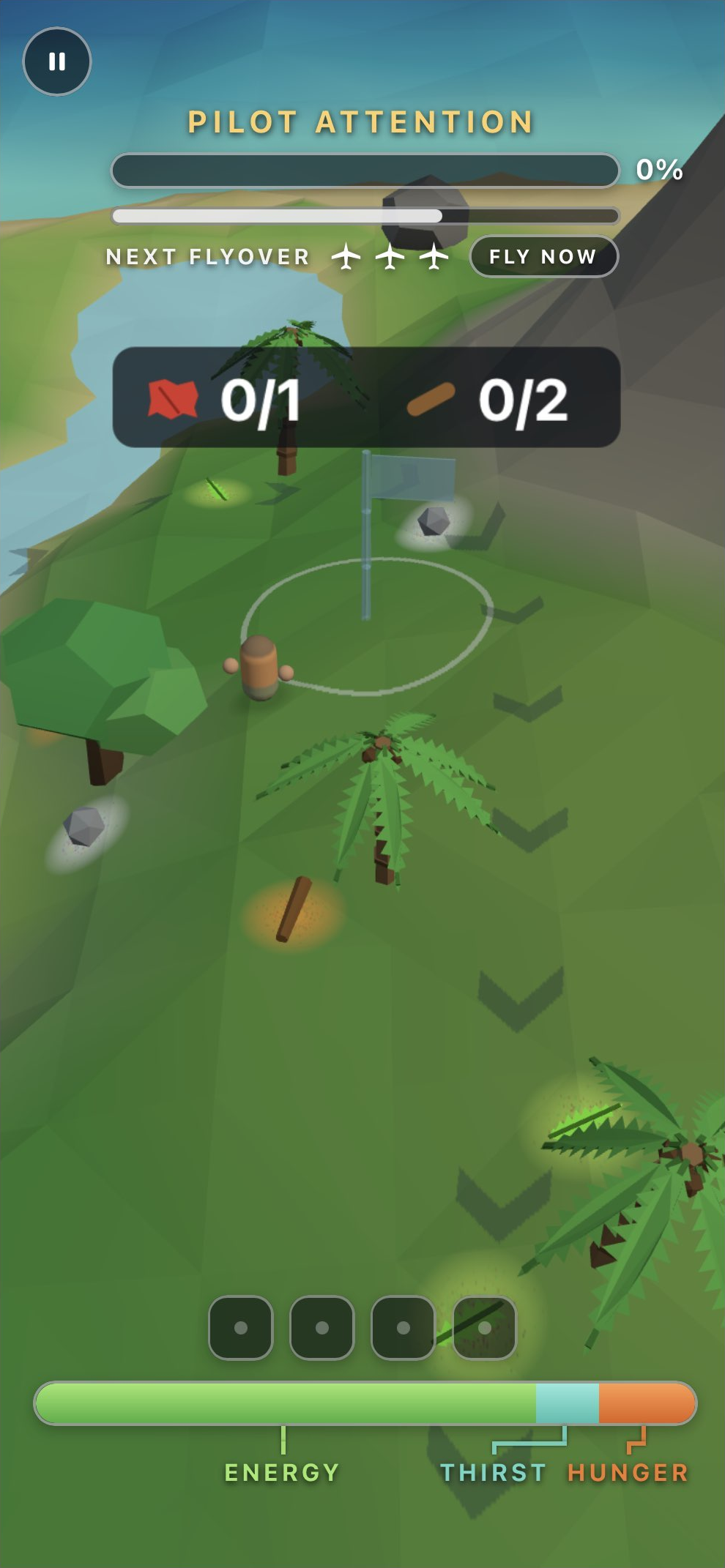
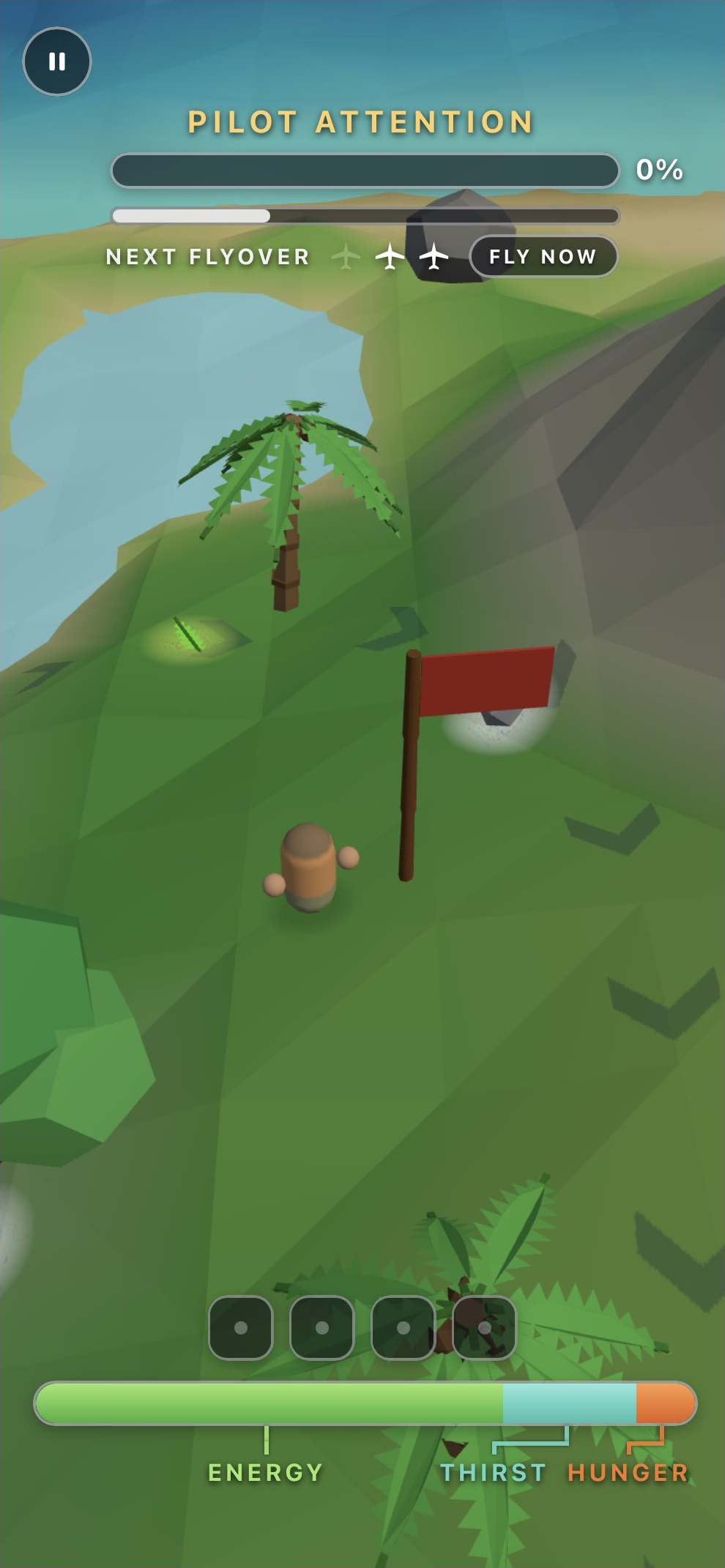
Seven mystery boxes contain blueprints for rescue signals across three tiers, including a giant SOS, a bonfire, a HELP message, a kite, a mirror, a flag, and a torch. Players place a blueprint where they want to build and deliver the required materials, carrying up to four items at a time. Running and hauling use energy, while fruit and fresh water restore it. Hunger, thirst, and carrying weight all feed into one energy bar, keeping the survival systems easy to follow on a phone.
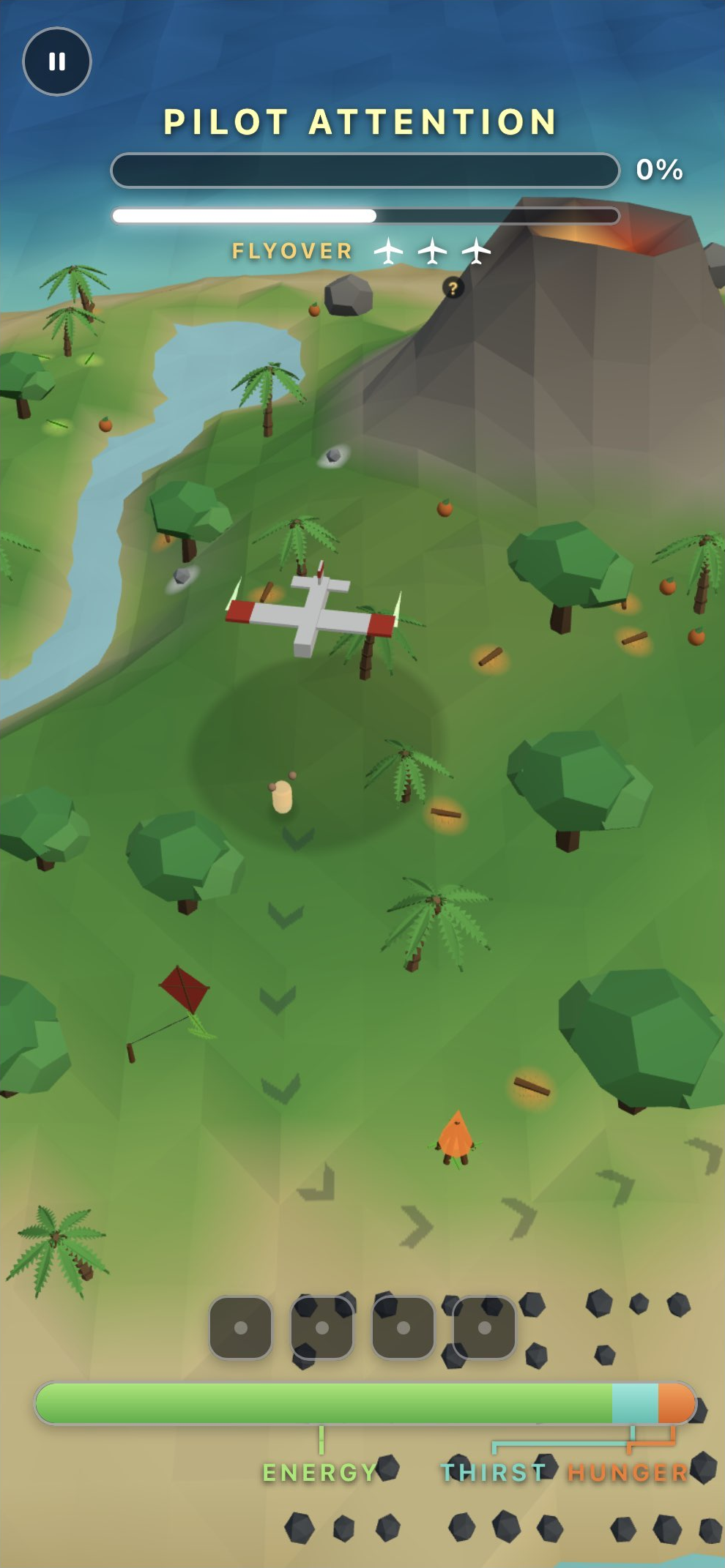
A search plane makes three flyovers, each longer and slower than the last. Its upcoming route is marked on the ground so players can plan their builds. Signals fill a pilot attention meter while the plane's shadow passes over them, with stronger signals contributing more. Players can even run under the plane to help get its attention themselves!
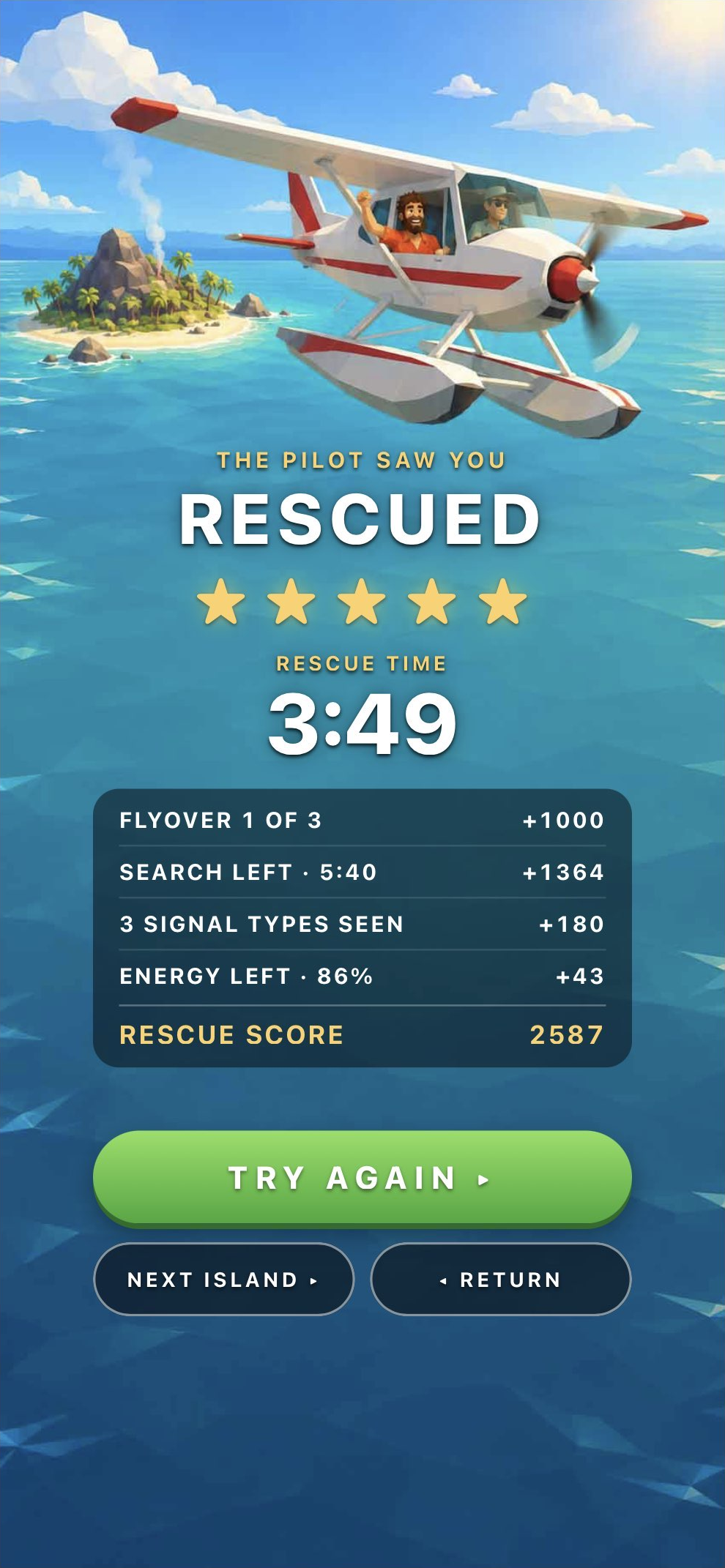
Filling the meter earns a rescue time, score, and up to five stars. Players can also call the next plane early with FLY NOW to attempt a faster rescue and higher score. Missing all three passes shows how close they came, and retrying the same island lets them improve their approach. Each island number generates a different layout to explore.
How I built it
I built the prototype through prompting in Claude Code across seventeen development sessions, with most of the implementation happening in the final five days. Design work happened in chat sessions, and a shared build log tracked decisions and progress between sessions. This helped keep the project consistent as the gameplay evolved.
The game uses Three.js, with roughly twenty source files assembled into a single readable index.html. All dependencies and assets are included locally so the packaged game runs without network requests. I set up the build, validation, and packaging workflow at the start, then tested regularly through a local server, on my phone through GitHub Pages, and from the final packaged build. All gameplay values live in one tuning table, with a live panel in development builds for adjusting balance on-device.
The island generator handles terrain, water, trees, resources, blueprint locations, and flight routes. I evaluated several hundred generated islands for starting conditions and selected six strong layouts as the first six islands. A small route simulator also helped test rescue timing and balance. The visual style uses flat shading, procedural palm trees, and painted title and end screens. I composed the music myself and used licensed sound effects, with audio mixed through Web Audio.
Challenges I ran into
Getting the plane mechanic right took a lot of iteration. Early versions hid the flight path, which meant players could spend several minutes building a signal without knowing whether the plane would ever see it. Showing the full route in advance made the goal much clearer and let players focus on the decisions that were actually fun: planning trips, managing energy, and choosing what they could finish before the flyover.
The island itself also changed significantly. I started with a fixed map, but after a handful of runs it became clear that exploring and navigating were a big part of the appeal. Moving to generated islands added variety, while introducing new challenges around resource placement and terrain. I reduced the island's size, brought starting materials closer, and made fires stay lit once built. Testing also helped identify generator issues like stray islets, clustered blueprint boxes, and uneven beaches that needed to be fixed across every layout.
Teaching the game clearly on mobile required just as much attention. I built the onboarding into the island using writing in the sand, arrows, and highlights that disappear as each lesson is completed. Six rounds of first-time player testing helped refine everything from the inventory display to how materials looked. Even small details had a big impact: players needed help discovering zoom, some resources were mistaken for other items, and a raft had to be removed because players understandably assumed they could escape on it.
Keeping the final build reliable was another ongoing challenge. I verified changes in small passes with browser checks and phone testing, but the last day still revealed a Windows line-ending issue in the ZIP validator. Testing the actual submission package was an essential part of finishing the project.
Accomplishments that I'm proud of
I'm proud of how the complete gameplay loop came together, from waking up on the island to getting rescued and trying again for a better score. The flyovers give each run a clear climax, and chasing the plane's shadow gives players one last opportunity to influence the result.
I'm also really happy with how much the game communicates through the world itself. First-time players can learn while exploring, and the single energy bar connects the survival systems without overwhelming the screen. Delivering a complete mobile experience in a self-contained, readable build was a big accomplishment for this prototype.
What I learned
I learned a lot about how closely level layout and game balance are connected. Travel time, resource placement, and the distance between objectives had a huge effect on whether a run felt achievable. Measuring those trips helped me understand where players were losing time and which changes would actually improve the experience.
Player testing also reinforced how much clear visual communication matters. Watching someone encounter the game for the first time revealed assumptions I would never have caught on my own. On the development side, working in small, verified steps and keeping an up-to-date build log helped me manage an evolving prototype across three weeks. I also learned to make packaging checks part of regular development from the beginning.
What's next for Castaway Island
I'd like to expand the game with more island variety, new rescue signals, additional materials, and hazards that create new planning challenges. Other ideas include a daily island with leaderboards and a longer survival experience built around the same rescue loop. I'm looking forward to seeing which parts players find most fun and using that feedback to guide what comes next.


Log in or sign up for Devpost to join the conversation.