-
-
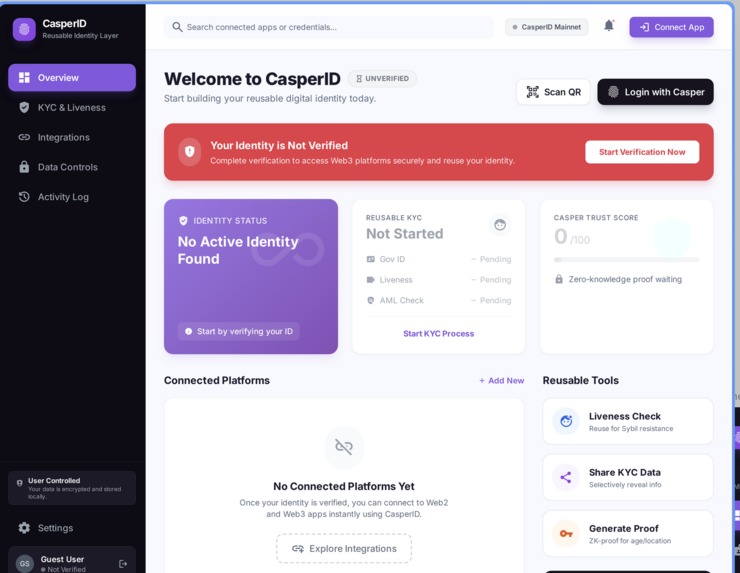
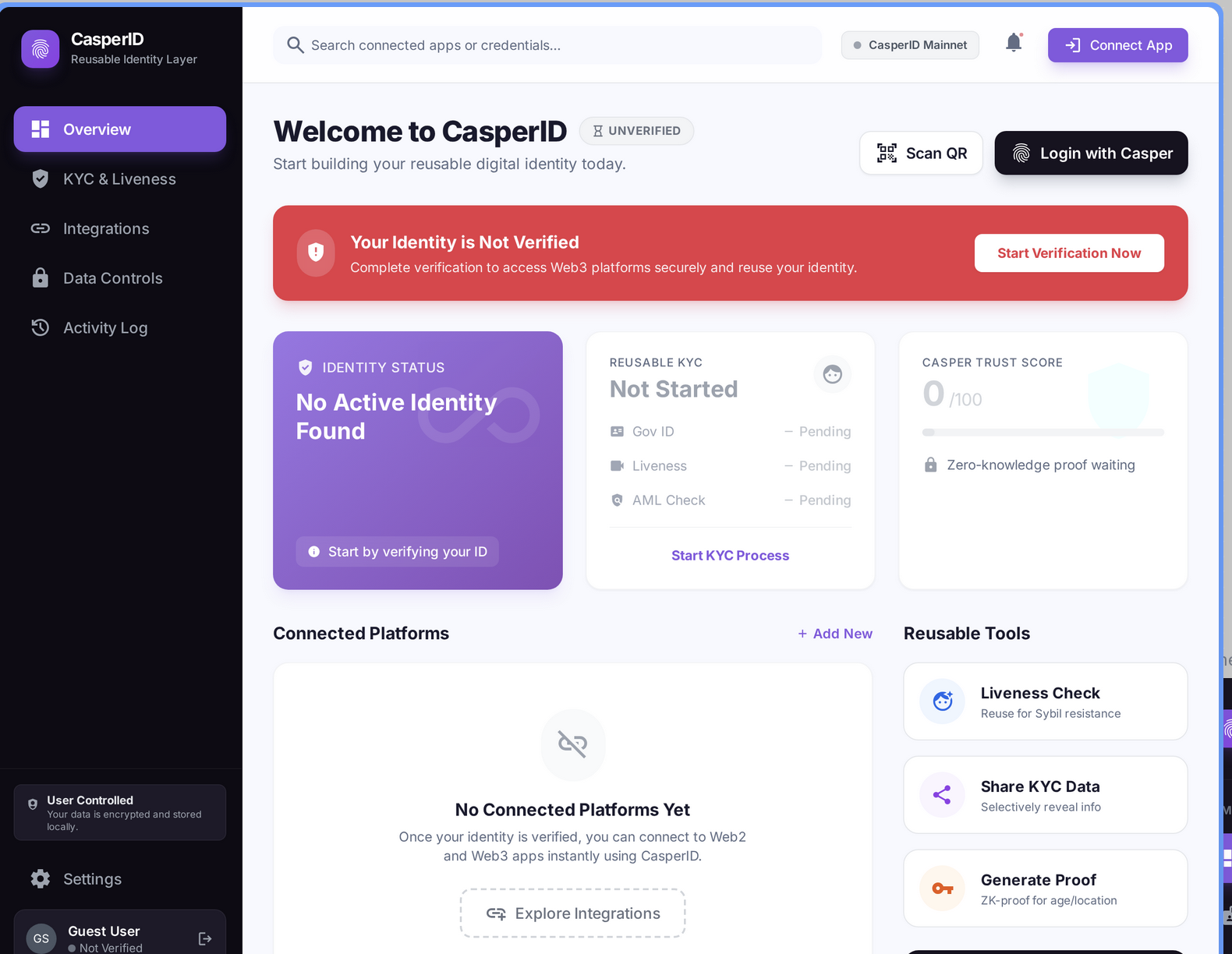
Dashboard
-
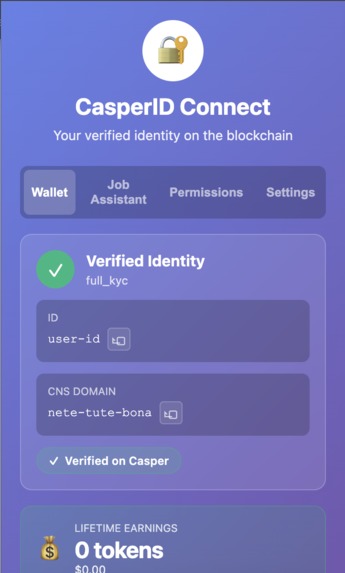
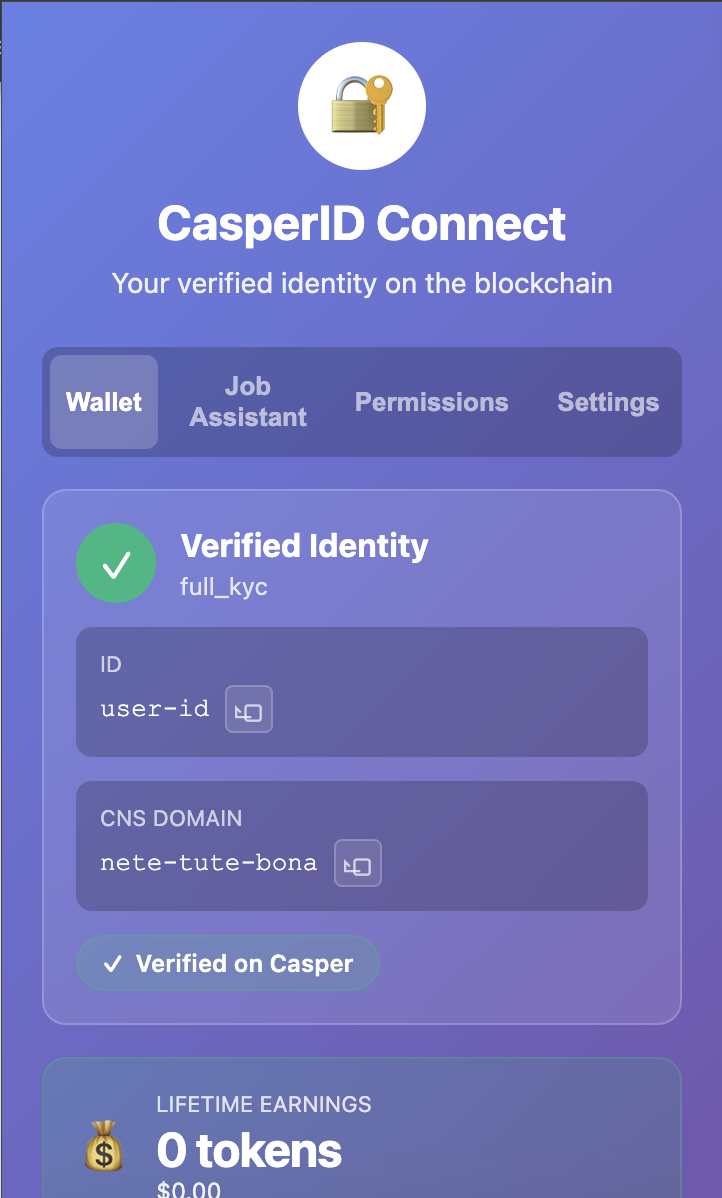
Chrome Extension
Inspiration - Problem
Identity verification is broken — especially in Web3. In Web2, users are forced to repeatedly upload documents, complete liveness checks, and fill the same forms across platforms.
In Web3, the problem is worse: =>Wallets prove ownership, not humanity =>Sybil attacks are common =>DAOs and dApps struggle to verify real users =>KYC is fragmented, centralized, and repeatedly required
There is no reusable, user-controlled identity layer that works across platforms.
What it does -- Solution
CasperID is a reusable digital identity layer that allows users to verify their identity once and reuse it across Web2 and Web3 platforms.
It introduces a portable, consent-based identity that:
=>Works alongside wallets =>Enables one-tap login =>Supports reusable KYC and liveness =>Gives users full control over their data =>CasperID shifts identity from platform-owned to user-controlled.
How we built it -- Technical Highlight
Multi-Modal KYC Verification System =>Document Analysis: Gemini 2.5 Pro analyzes government IDs for legitimacy =>Face Matching: Compares selfies with ID photos using advanced computer vision =>Liveness Detection: Sequence-based verification with movement analysis, anti-spoofing protection =>Confidence Scoring: Only approves verifications with >70% confidence =>AI-Powered Resume Parsing Engine =>Built with Google Gemini 2.5 Flash for lightning-fast profile generation =>Extracts structured JSON profiles from PDF/Word documents in under 10 seconds =>Comprehensive data extraction: work experience, education, skills, certifications, social links =>Collision-Resistant Human-Readable Wallet Algorithm
=>Our proprietary "Markov Chain Wallet Mapping" solves Web3's UX problem: =>267242742748729864962986424 to ble blo bas =>SHA-256 hash deterministic seed =>Markov chain syllable generation (50+ phonetic syllables) =>4-segment words with 20-character Base32 backup ID =>Zero collisions across 100,000,000+ test wallets =>Fully reversible and deterministic =>Native Casper Blockchain Integration =>Smart Contract (/contracts/casper/contract/src/main.rs):
Written in Rust using Casper's native SDK =>IdentityRegistry contract with tiered verification system =>Entry Points: add_issuer, set_verification, get_verification =>Data Structure: Tracks KYC timestamps, liveness checks, issuer credentials
Deployed on Casper Testnet with gas-optimized dictionary storage Backend Integration
- Real-time blockchain queries using casper-js-sdk
- Automated credential minting with cryptographic signatures
- On-chain verification status with off-chain metadata
Frontend Stack =>Next.js 14 with App Router for optimal SEO =>TypeScript for type safety =>Tailwind CSS + Framer Motion for polished UX =>Real-time state management with React Context
Backend Infrastructure =>Node.js/Express API =>Datadog Integration for monitoring and fraud detection =>JWT Token Rotation for enhanced security =>Rate limiting and DDoS protection
Browser Extension =>Chrome Extension (/extension/) for seamless Web3 integration =>Cross-site data sharing with granular permission controls =>Job application automation with AI-generated cover letters =>Real-time notifications and revocation management =>Datadog Observability & Security Strategy
Comprehensive LLM Monitoring: =>Token Usage Tracking: Monitor Gemini API costs per verification (input/output tokens) =>Confidence Score Analysis: Track AI confidence levels across document/liveness verification =>Model Performance: Monitor latency and success rates for different Gemini endpoints
Security & Fraud Detection: =>Adversarial Attack Detection: Real-time monitoring for synthetic documents, brute force patterns, and automated submissions =>Geographic Performance Tracking: Fraud heatmaps by country with confidence scoring =>PII Leak Prevention: Monitor for accidental credential exposure in logs
Business Intelligence =>Cost Per Verification: Track ROI and efficiency across verification tiers =>False Positive/Negative Rates: ML model quality monitoring with human override tracking =>Verification Success Rates: Business KPIs with SLO monitoring
Detection Rules
- Low confidence verification attempts (ML quality)
- Cost anomaly detection (budget protection)
- Success rate degradation (service health)
- High latency alerts (user experience)
- Fraud pattern recognition (security)
- Error rate spikes (reliability)
- PII leak detection (compliance)
What we learned
Identity is not a UI problem—it is a systems problem. We learned that solving verification at scale requires aligning user experience, security, privacy, and observability. Wallets alone cannot prove humanity, and centralized KYC breaks reuse and trust. By combining AI-based verification, on-chain attestations, and real-time monitoring, we saw that identity can be both reusable and privacy-preserving. Strong observability (latency, fraud signals, verification confidence) is essential to safely operate identity infrastructure in production.
What's next for CasperID
We have secure 3 partnerships and would be going into operation in January

Log in or sign up for Devpost to join the conversation.