-
-
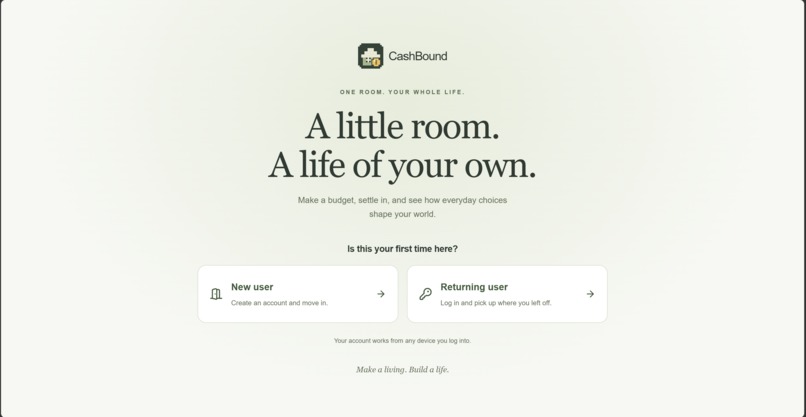
Landing page
-
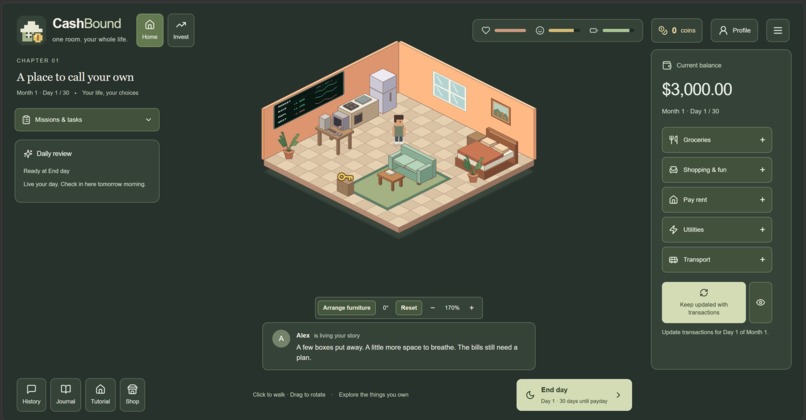
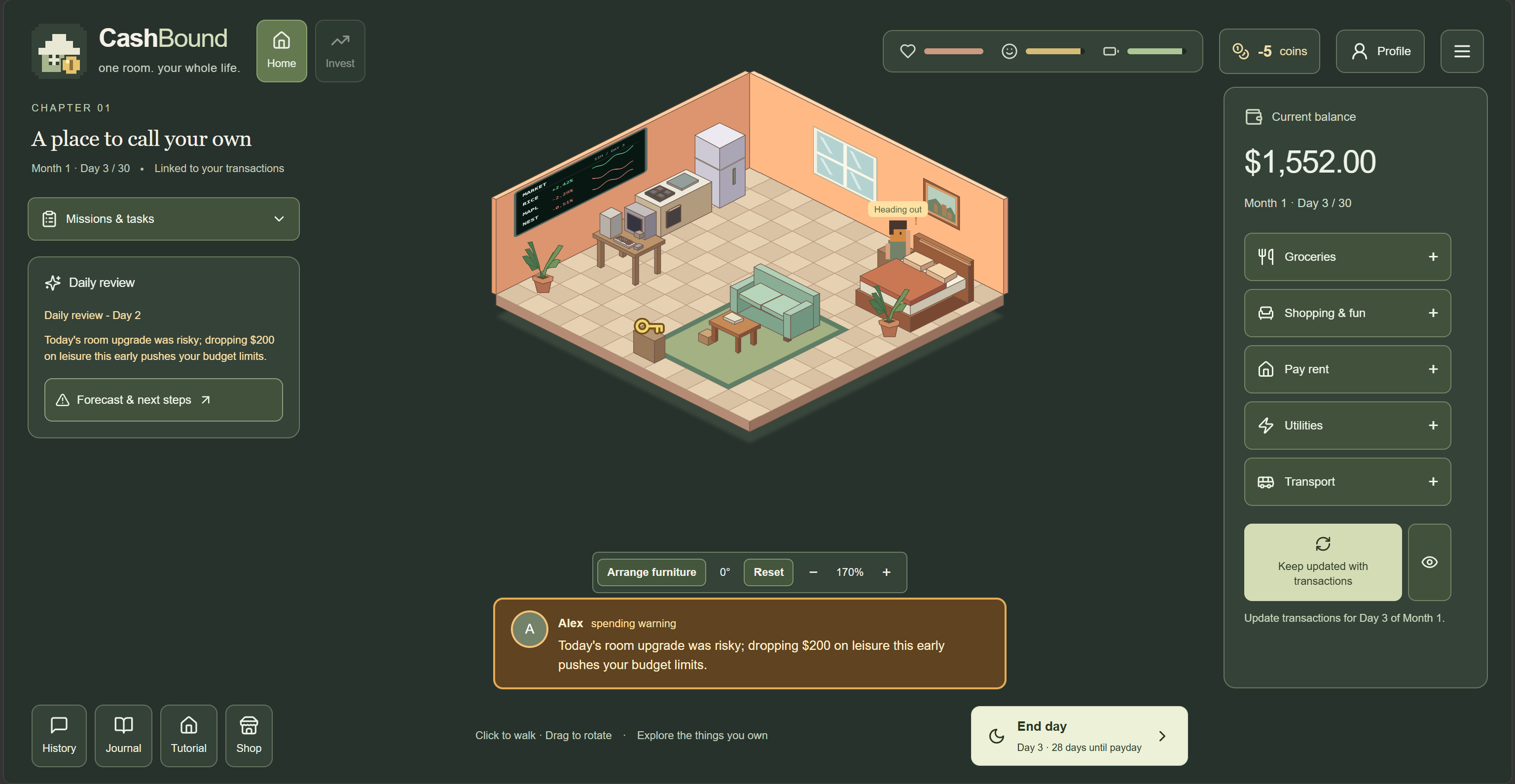
Home page
-
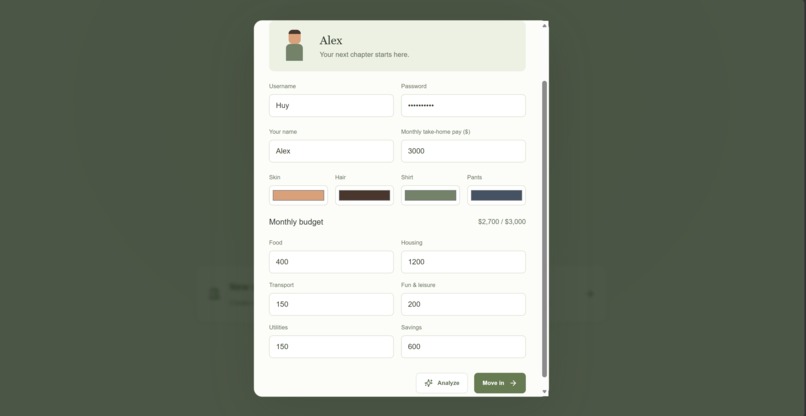
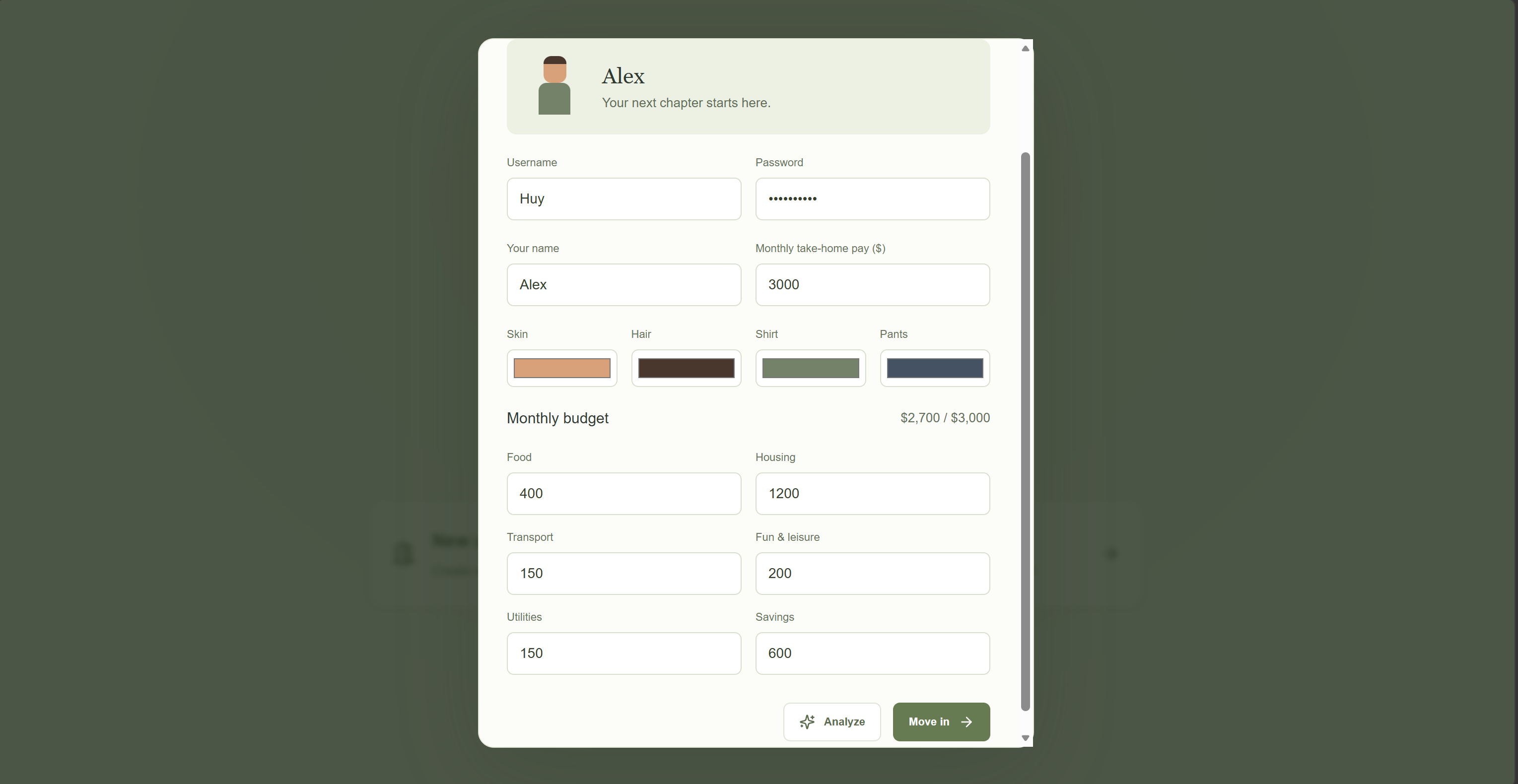
Create new character
-
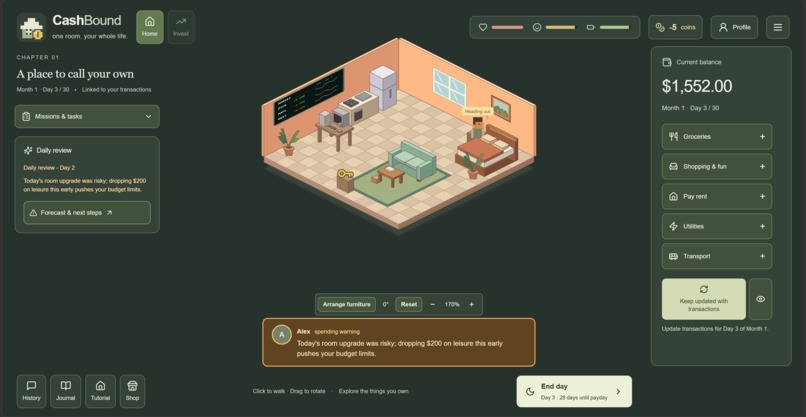
Warning spending
-
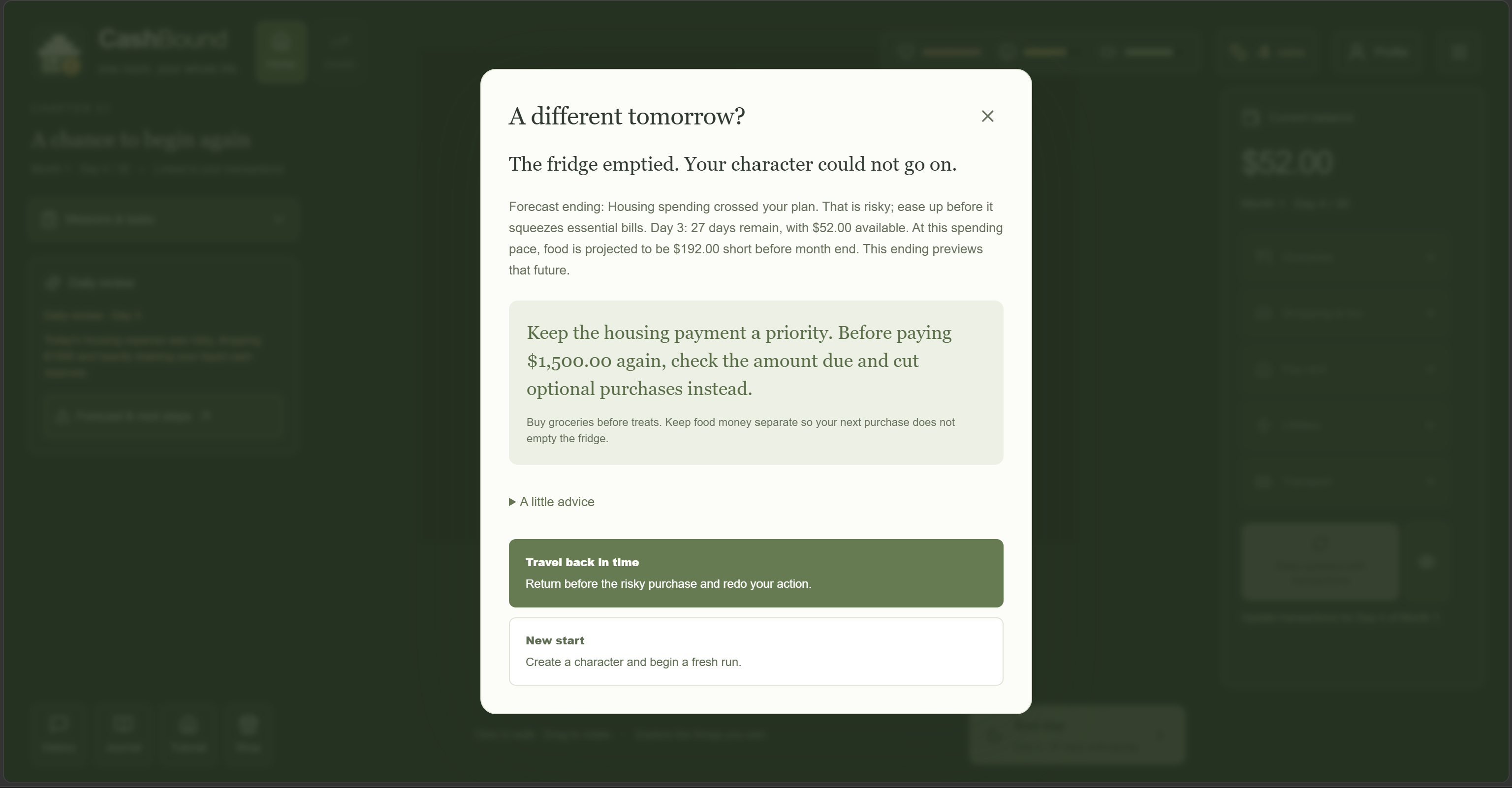
Ending - lost
-
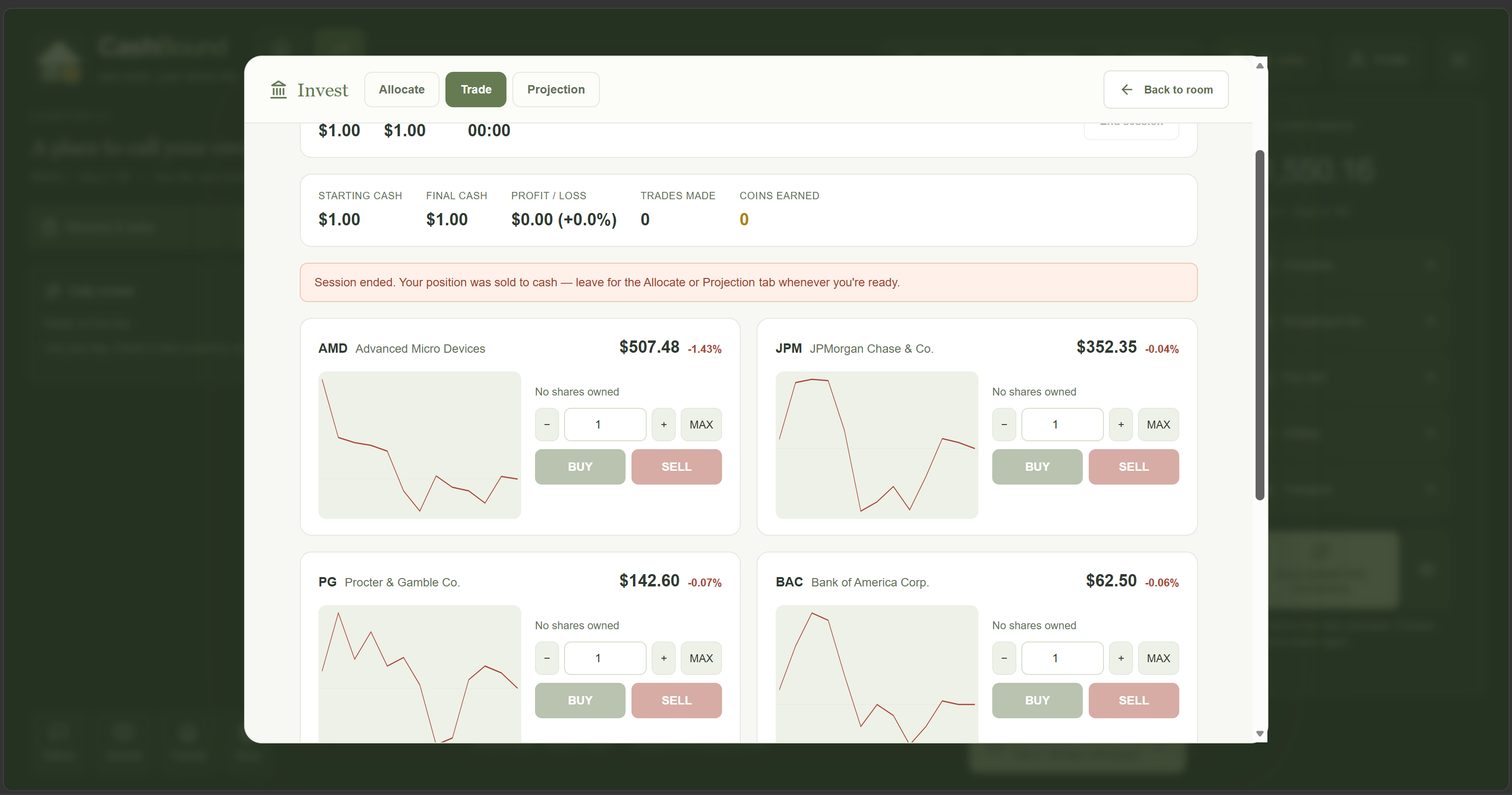
Investing page
Inspiration
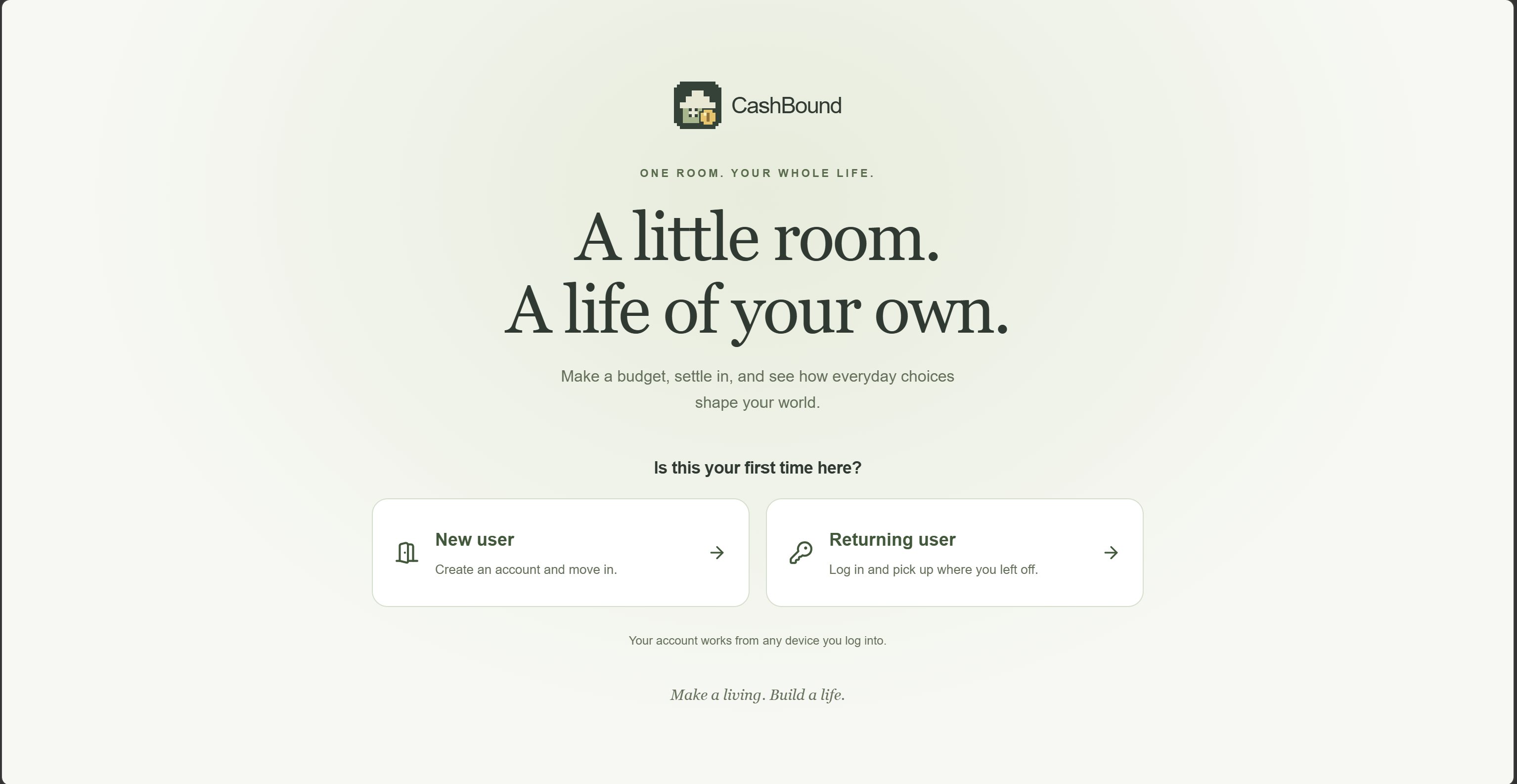
Budgeting often feels like watching numbers change without understanding what those changes mean for everyday life, and how will it affect our future plan. We wanted to make those consequences visible and personal in a more attractive way. CashBound turns a budget into a place you live. An empty refrigerator, a dark apartment, or a home improved through saving tells a story that a spreadsheet cannot. Our goal was to create an approachable way to explore financial tradeoffs, make mistakes, and learn through play.
What it does
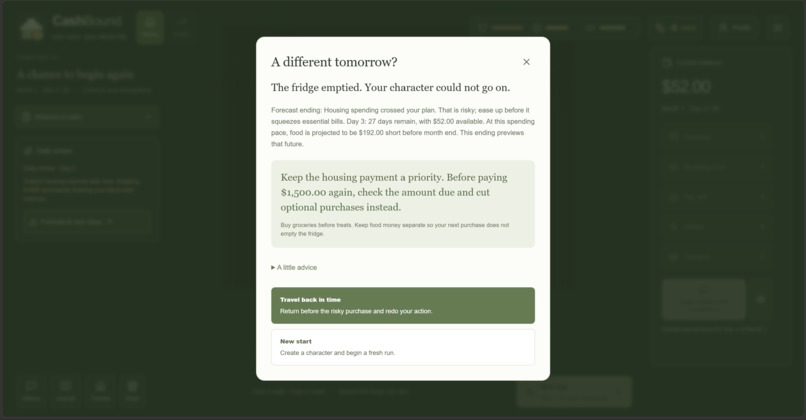
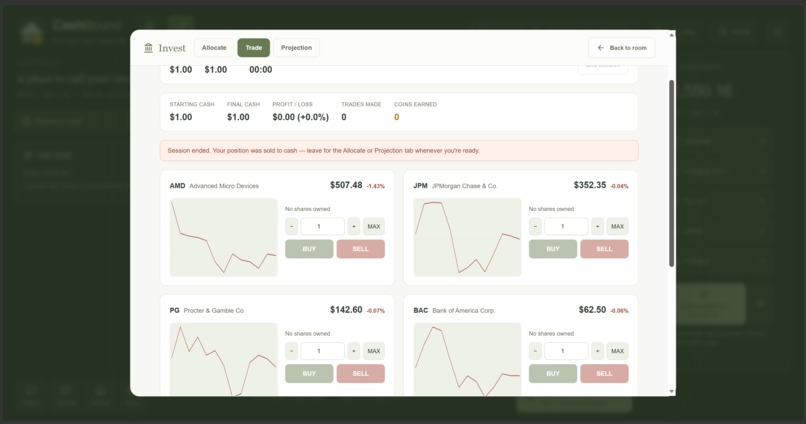
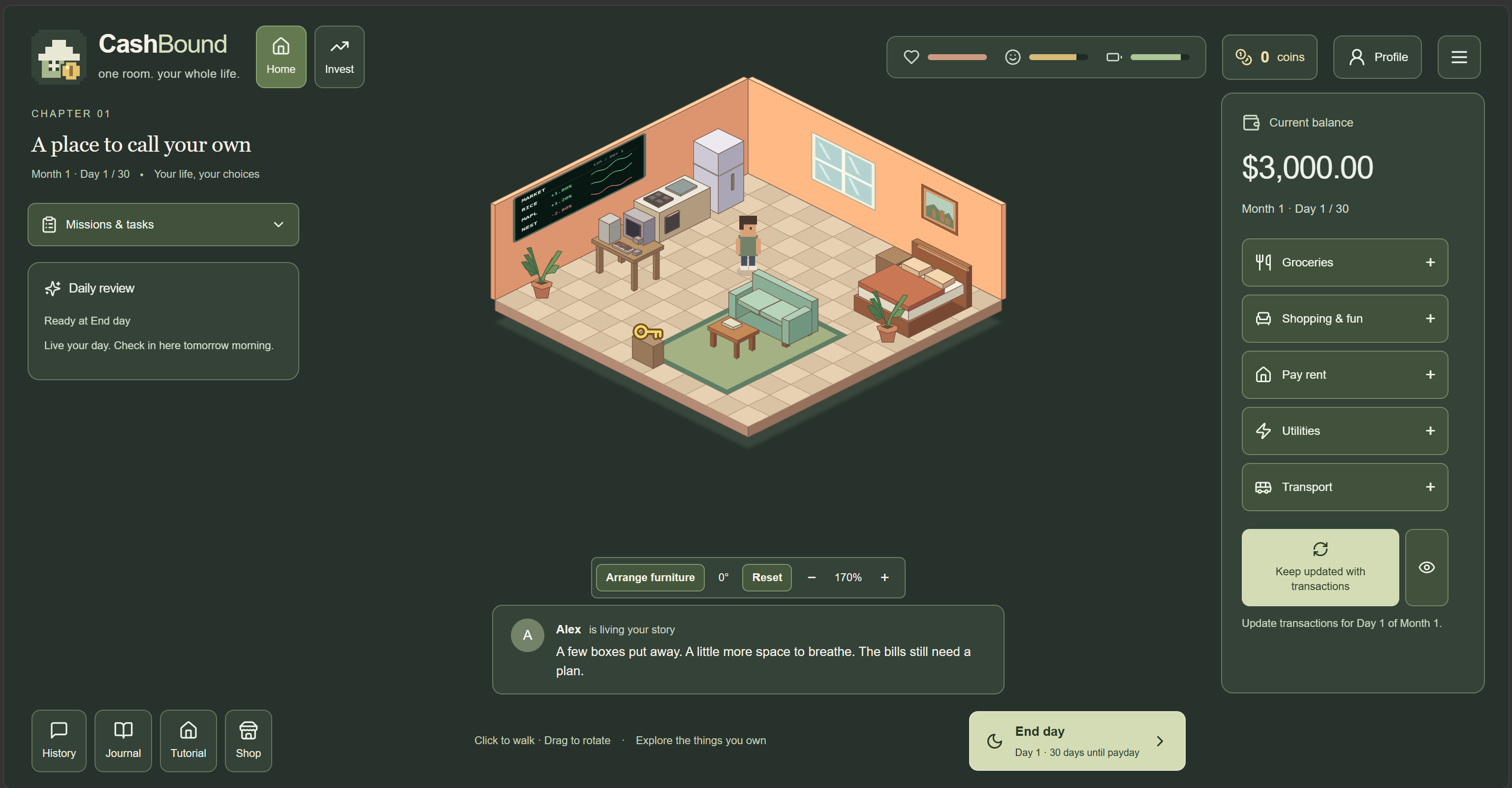
CashBound is your personal financial assistant brought to life as an interactive apartment. Your transactions tell the story, and your character lives it. With Keep updated with transactions, your spending becomes part of your character’s everyday life. You can also input the spending manually. Groceries stock the fridge, bills keep the home running, and saving helps you earn upgrades. Your apartment makes financial habits visible—and gives you a reason to care beyond a number on a screen. At the end of each day, your spending activity will turn into short, personalized feedback: what went well, what needs attention, and what upcoming expenses you should prepare for. Your character celebrates good habits and reacts when your spending puts essentials at risk. If your spending is too risky and negatively affects the future fund, you will be led to different bad endings!! CashBound makes checking your finances feel like checking in on someone you care about: your little digital self, living with your financial choices.
How we built it
We built CashBound with Next.js, React, and TypeScript, using Tailwind CSS and custom CSS for the interface. The apartment uses a custom HTML Canvas 2D renderer with isometric projection, depth-sorted furniture, animated character movement, and grid-based pathfinding. Players can rotate the room through 360 degrees and zoom up to 200%. A separate TypeScript game engine handles transactions, daily needs, financial forecasts, missions, and monthly settlement. This engine calculates daily consequences before Gemini generates the accompanying explanation, keeping the simulation consistent and testable. We integrated Google Gemini through the Google Gen AI SDK for analyzing player's spending and Nessie through server-side API routes for player's transaction. Zod validates inputs, saved games, and provider responses. Progress saves locally in the browser, with JSON import and export.
Challenges we ran into
We struggled with turning player missteps into genuine learning moments rather than frustrating game-overs. A flat failure screen rarely teaches anything, while simply forgiving bad choices ruins the game's stakes. We solved this by implementing dynamic, branching endings based on the specific root cause of bankruptcy, whether it was starvation from dining out, eviction from missed rent, or sudden liquidity death during an emergency shock. Each ending triggers an AI post-mortem powered by Gemini that breaks down exactly where the math derailed, delivers tailored recovery advice, and encourages an instant roguelike restart so players can apply their takeaways immediately and test better budgeting strategies.
Accomplishments that we're proud of
We’re proud of turning an everyday challenge, which is managing money, into a world people can connect with. Instead of looking at numbers on a screen, players care for their mini version, build a home, and see how their choices shape daily life. Our biggest accomplishment is making budgeting feel personal. Buying groceries, covering rent, or saving for something special becomes part of a story. We wanted to capture the balance between enjoying life today and taking care of your future self. We’re also proud of creating a space where mistakes are opportunities to learn. Players can try, struggle, and start again, with a better understanding of their choices and a little more confidence for the next chapter. That means before spending money on some risky purpose, user can test it on CashBound to see the result and learn.
What we learned
We learned that financial feedback needs context. Money remaining today means little without considering upcoming bills, food needs, and the time until the next income arrives. We also learned the value of separating calculation from explanation. Deterministic rules provide consistency, while AI can make their meaning easier to understand. Working with transaction data highlighted how much correctness depends on dates, units, transfer direction, and duplicate handling. Building the apartment reinforced that visual design and interaction must work together: an object needs to look right, remain clickable, and be reachable by the character.
What's next for CashBound
We want to expand CashBound with more financial scenarios, recurring obligations, and configurable difficulty levels. We also plan to improve transaction categorization, let players correct categories, and explore user accounts, cloud saves, and individually authorized financial connections beyond the current sandbox setup. On the experience side, we want stronger accessibility, broader browser testing, and more character and apartment customization. Most importantly, we want to test CashBound with students and first-time budgeters to learn whether its visual feedback helps people understand tradeoffs and build more thoughtful financial habits.
Built With
- canvas-2d
- google-gemini-api
- nessie
- next.js
- tailwind
- typescript


Log in or sign up for Devpost to join the conversation.