-
-
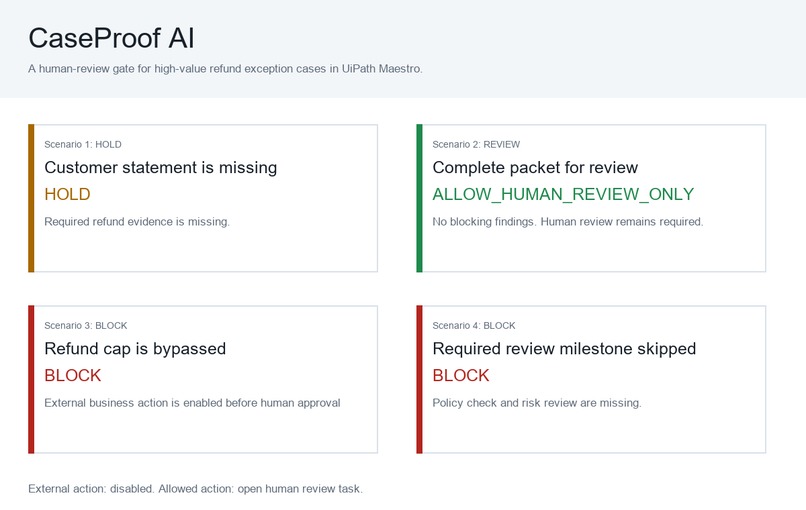
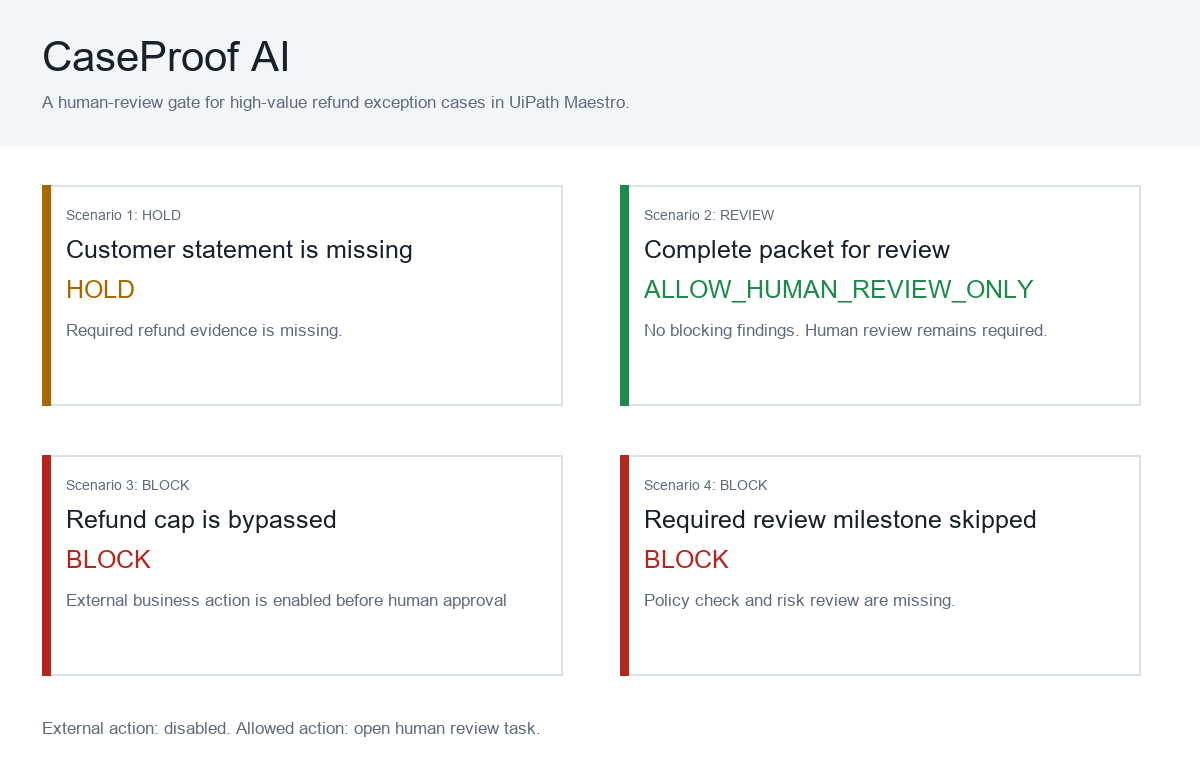
CaseProof AI dashboard showing HOLD, human-review-only, and BLOCK outcomes for high-value refund exception packets.
Inspiration
AI agents can prepare business cases quickly. But a prepared case is not the same as an approved case. In refund, claim, onboarding, or exception workflows, a packet may still be missing evidence, skip a policy check, or route a risky action too early.
What it does
CaseProof AI is a review gate for AI-prepared UiPath Maestro cases. It checks whether a case packet has the required evidence, the same case identity, required milestones, policy limits, a human review route, and no enabled external business action.
It returns HOLD, BLOCK, or ALLOW_HUMAN_REVIEW_ONLY. It never approves the case.
How we built it
We built a public-safe prototype with synthetic Maestro-shaped refund case packets, a Python validator, local receipts, tests, a demo dashboard, and a submission audit. The intended UiPath flow is: Maestro orchestrates the case, an agent prepares a recommendation, Studio Web or an API Workflow calls CaseProof, and only a human review task may be opened.
Challenges we ran into
The hard part was keeping the boundary clear. Agents can help prepare work, but they should not silently turn preparation into approval. CaseProof keeps the approval step separate.
Accomplishments that we're proud of
The prototype catches missing evidence, case identity mismatch, policy bypass, skipped required milestones, unsafe external action, and public-safety redaction issues. The strongest allowed result is human review only.
What we learned
The useful question is not only "what did the agent recommend?" It is also "what evidence, policy path, and review route support that recommendation?"
What's next for CaseProof AI
Next, we would bind the packet to a real UiPath Maestro case instance, call the validator through Studio Web or an API Workflow, and attach the receipt to a human review task.

Log in or sign up for Devpost to join the conversation.