-
-
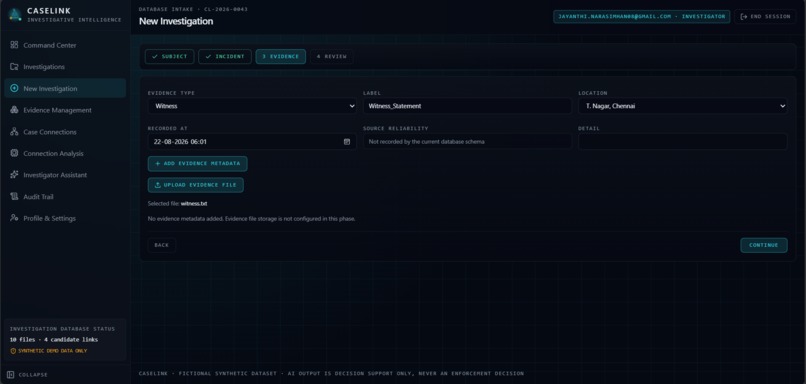
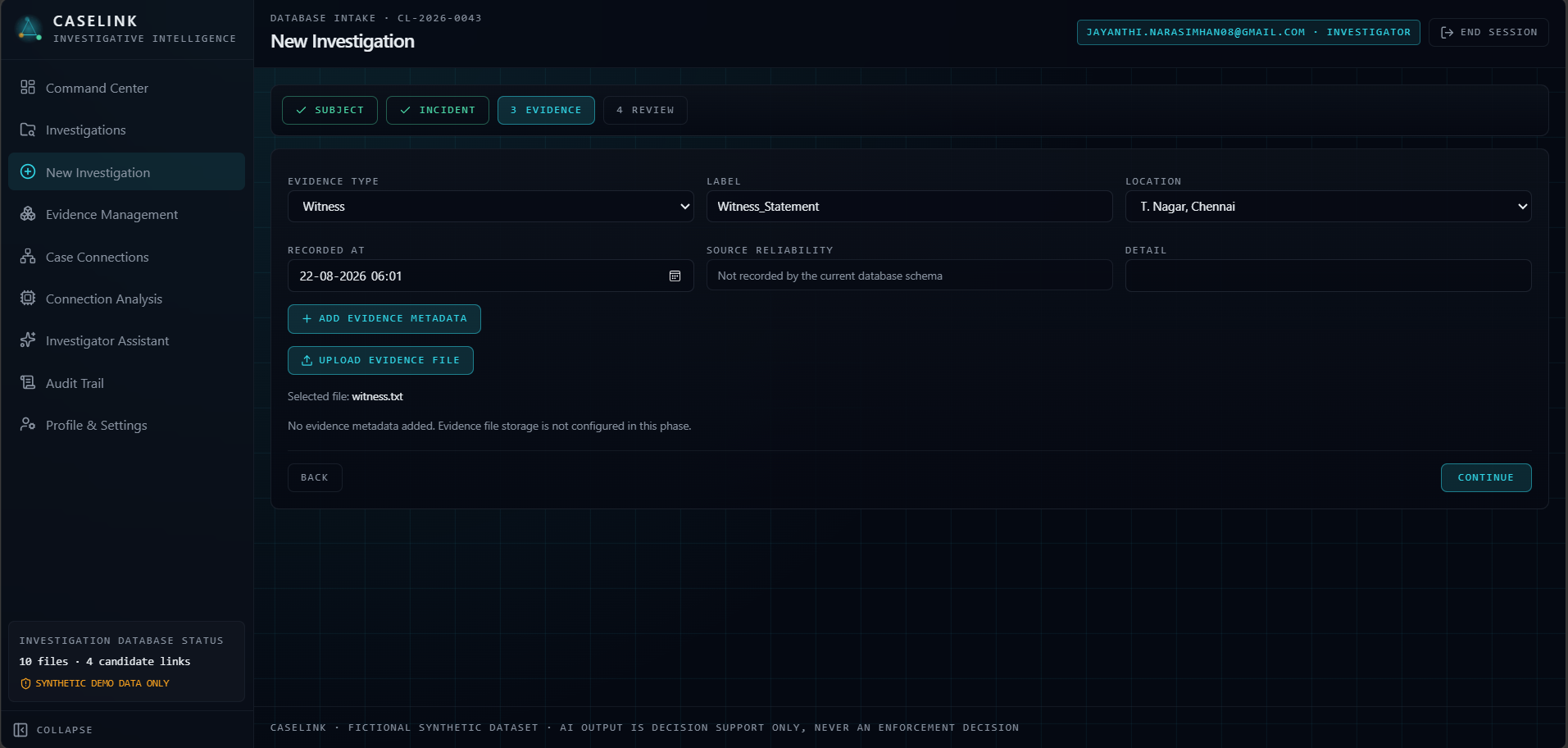
New Investigation- evidence
-
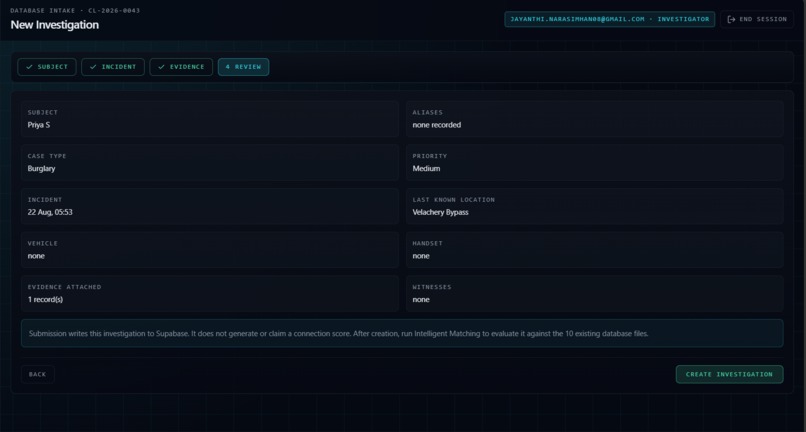
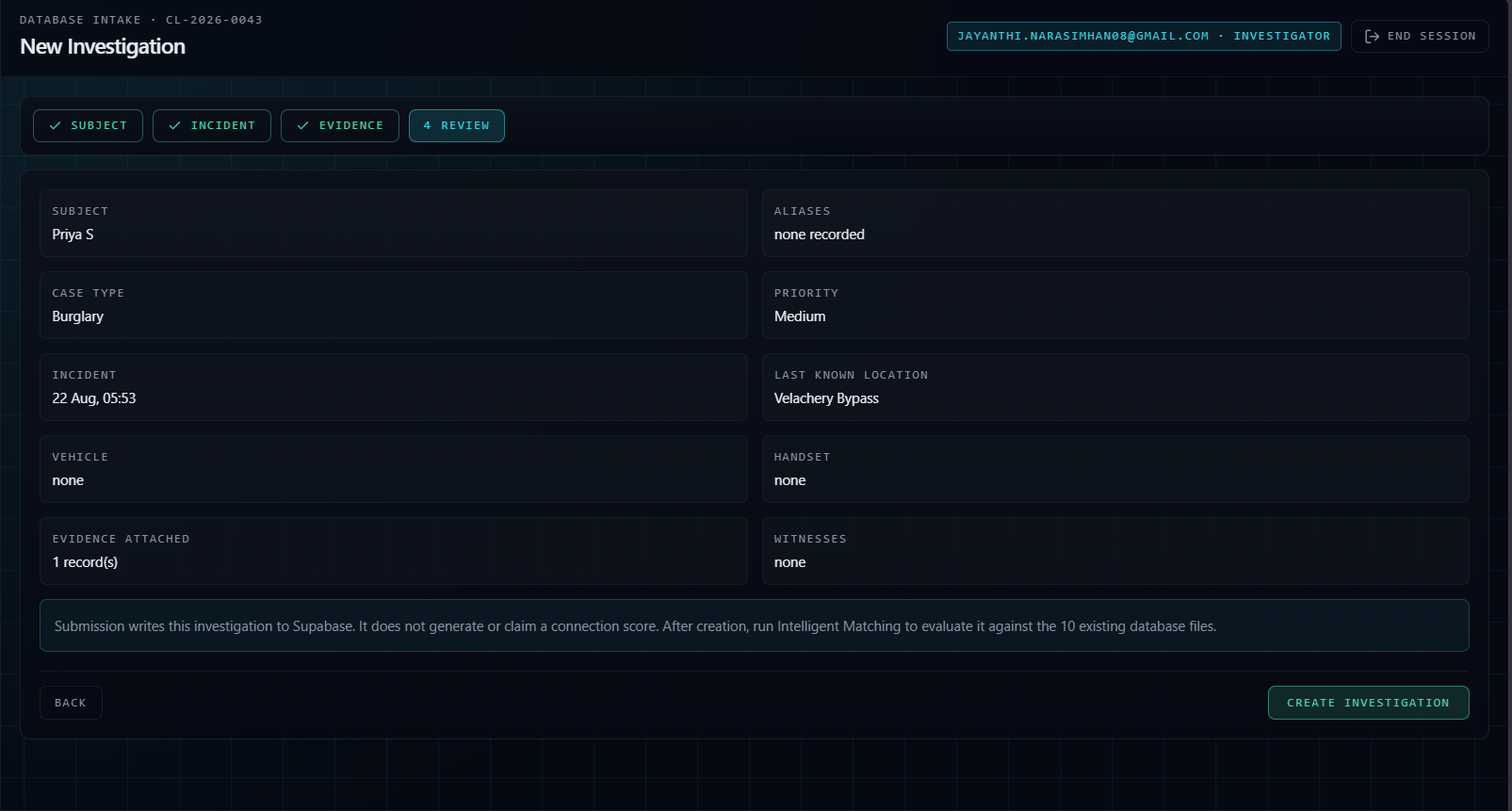
New Investigation- review
-
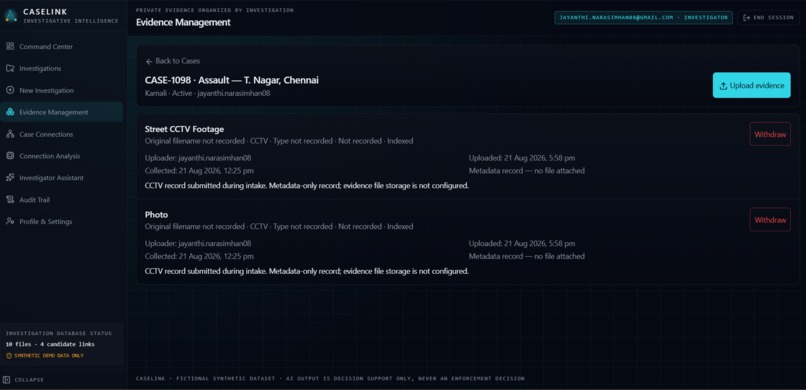
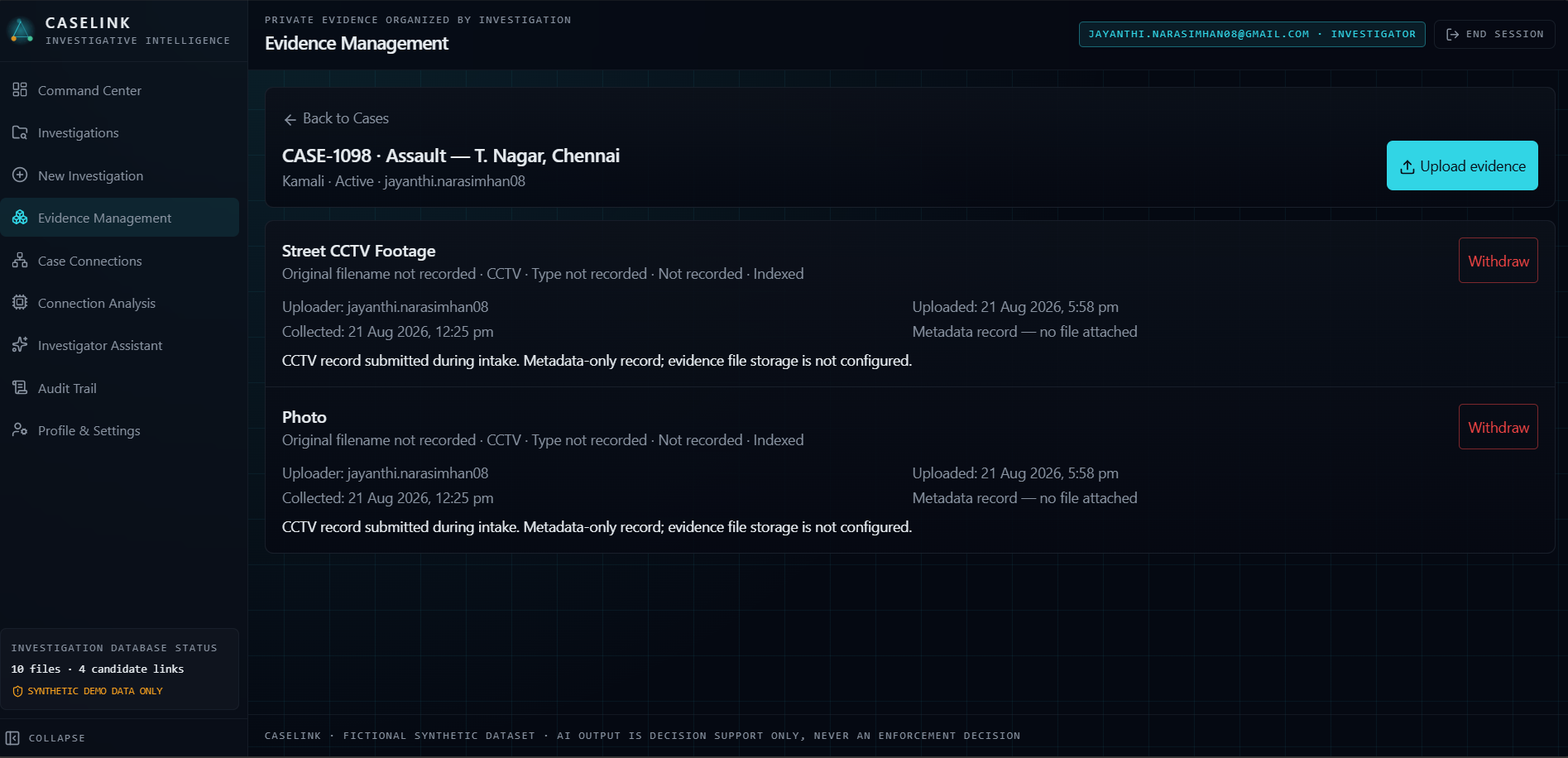
Evidence Management
-
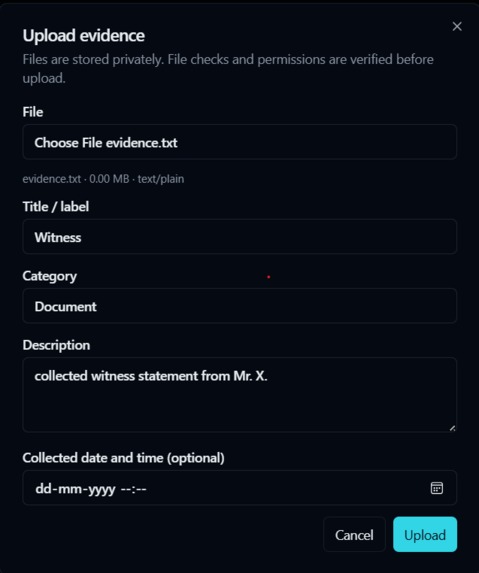
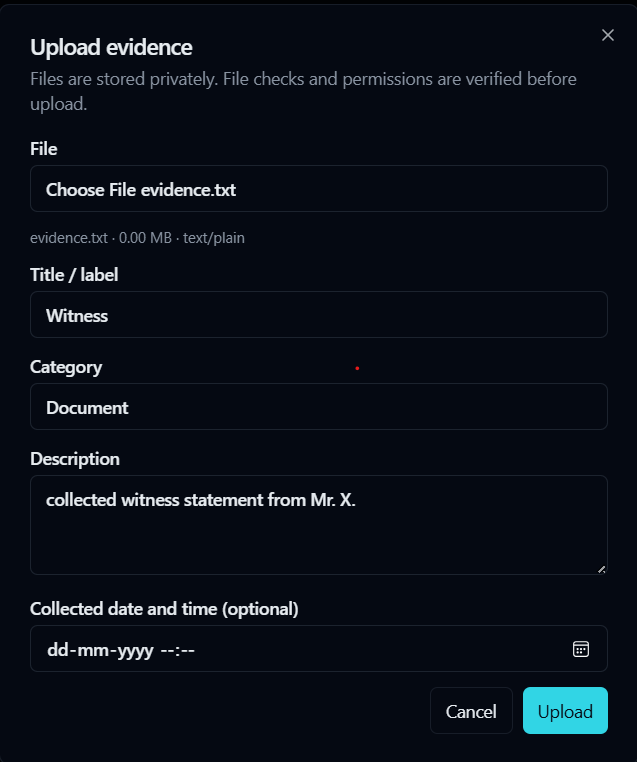
Evidence Management- Upload evidence
-
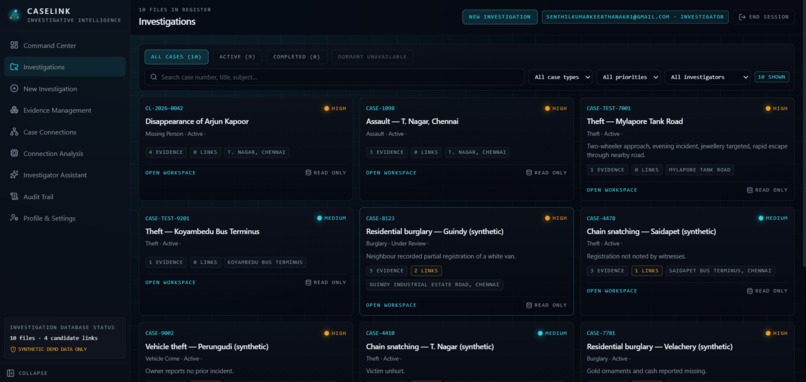
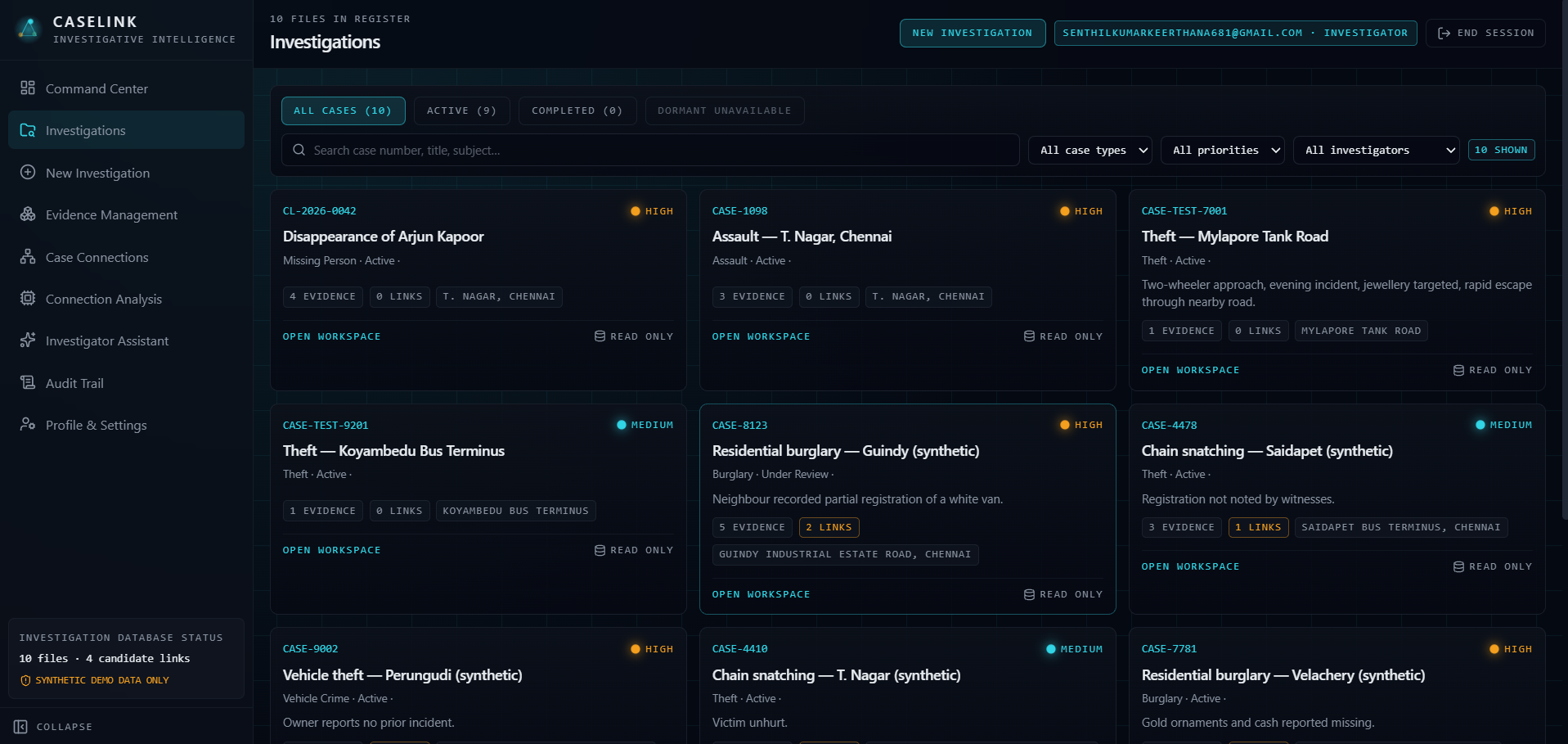
Investigation
-
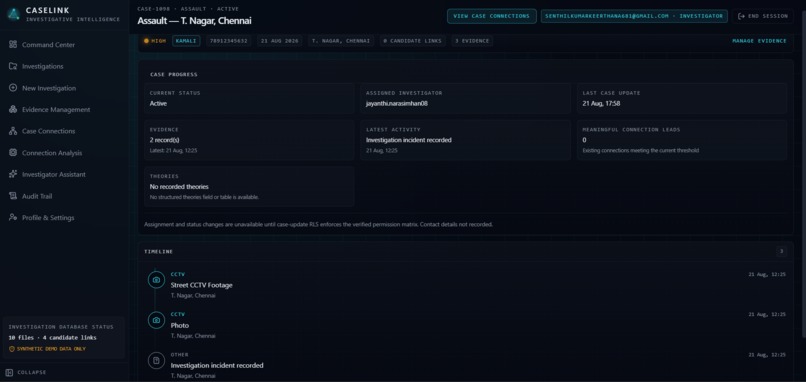
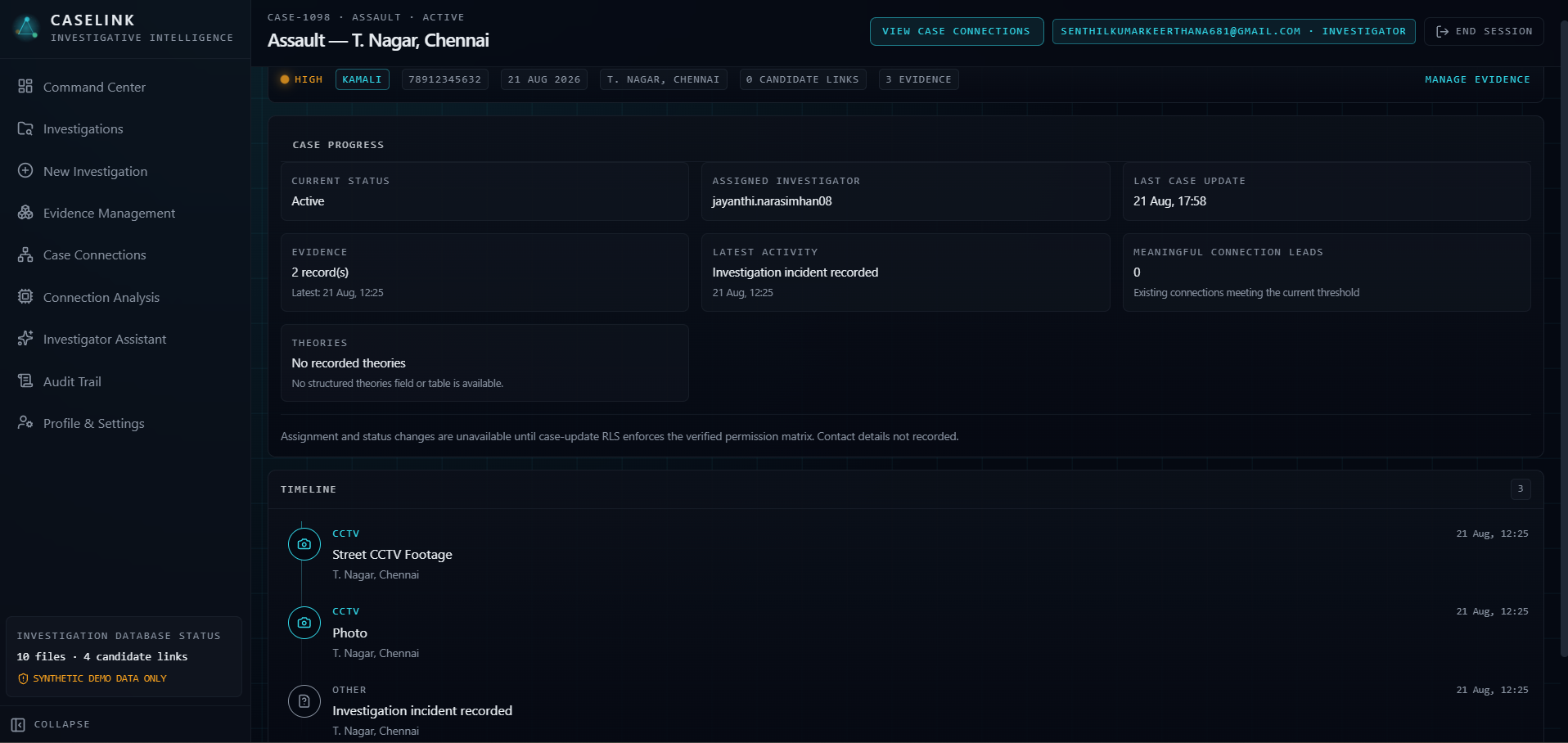
Investigation View – Case Progress & Timeline
-
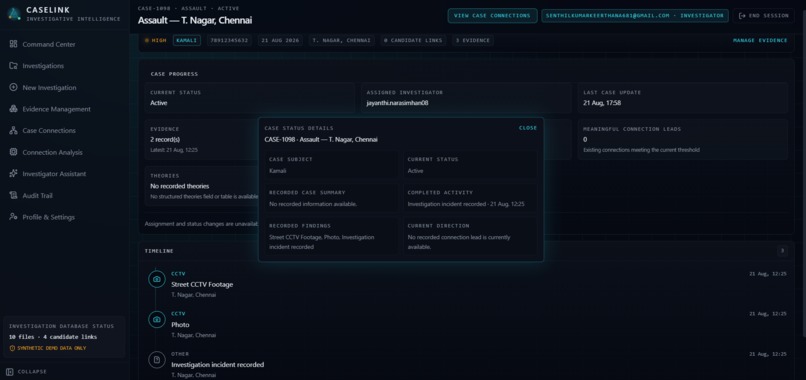
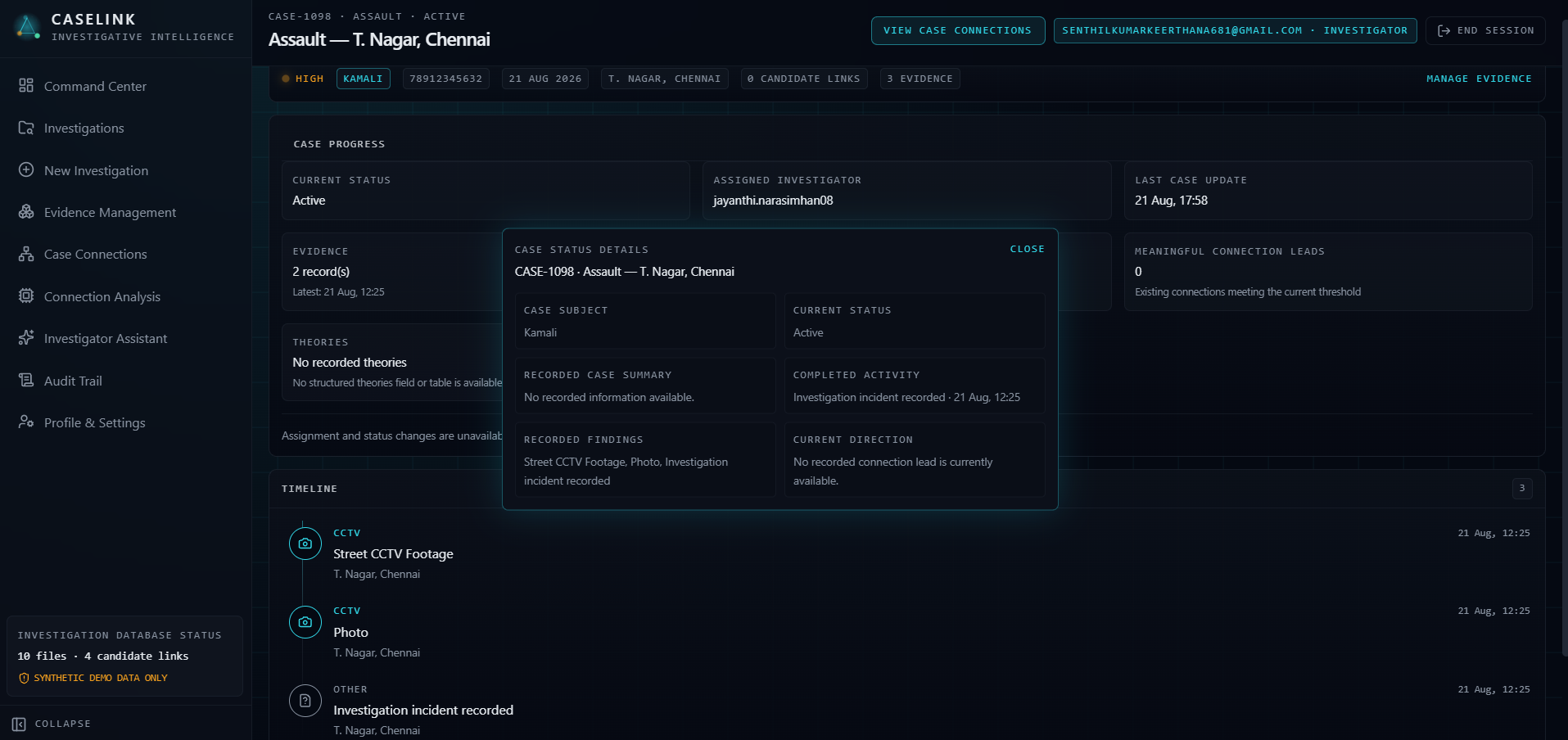
Case Status Details – Investigation Summary
-
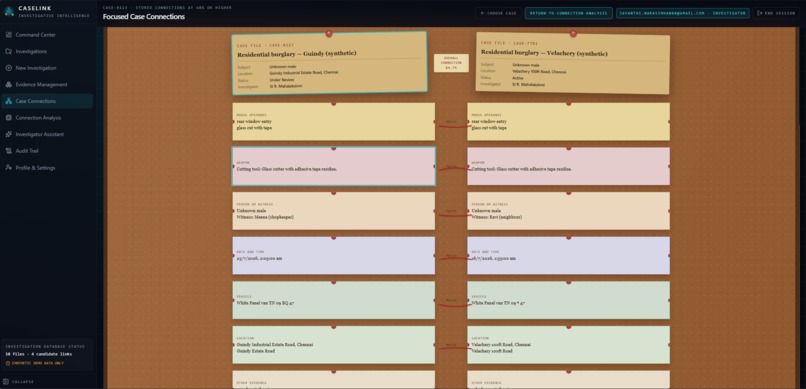
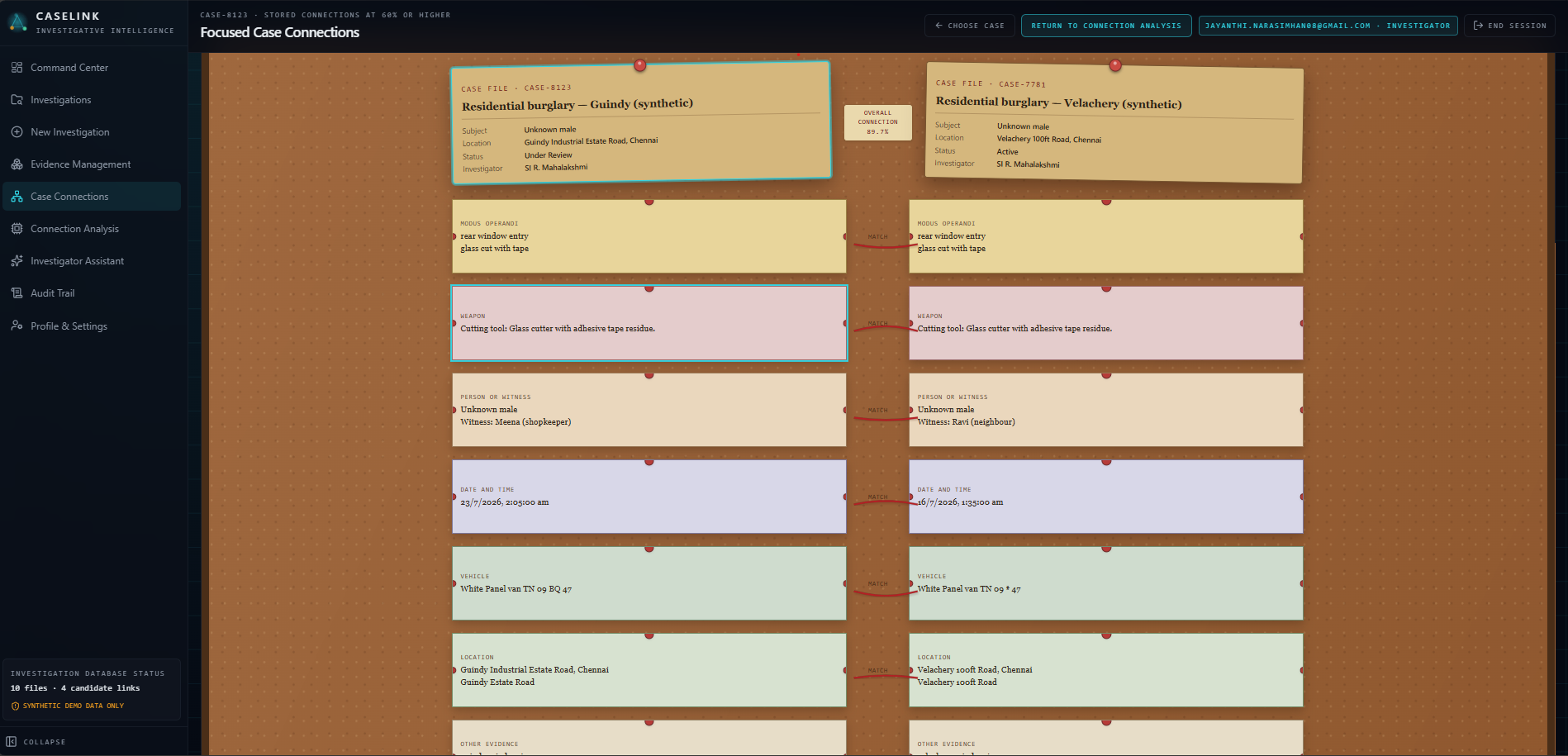
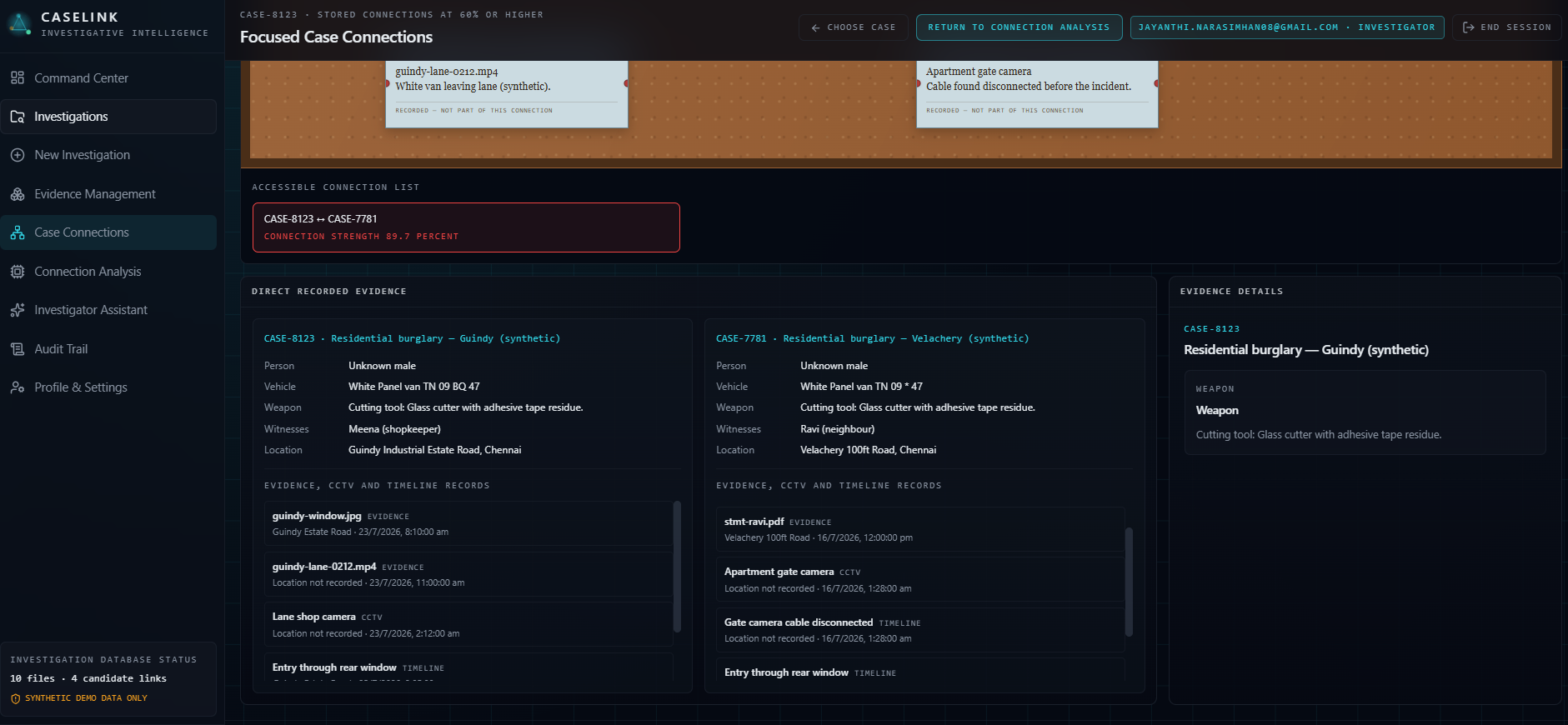
Case Connections
-
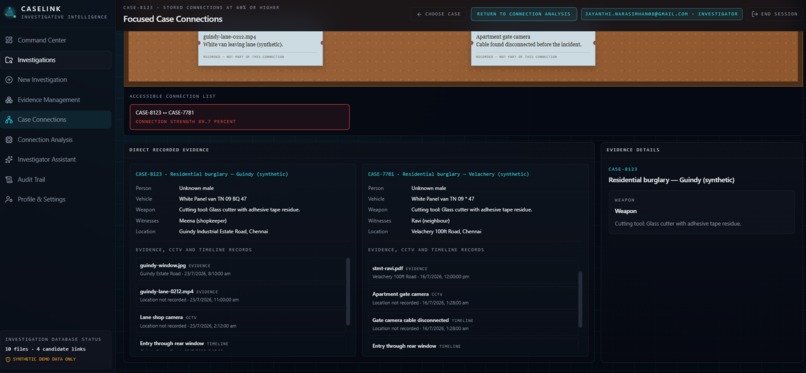
Case Connections- Accessible connection list
CASELINK — Project Story
Inspiration
Investigations often involve large amounts of disconnected information: case details, people, locations, vehicles, evidence, and records from different investigations. When this information is stored separately, potentially important relationships can be difficult to notice.
We wanted to build CASELINK, an investigative intelligence platform that helps investigators organize evidence and discover meaningful connections across cases. The goal was not simply to create another case-management system, but to build a workspace where information can be connected and explored to support better investigative decision-making.
What it does
CASELINK provides investigators with a centralized workspace for managing investigations and their associated evidence.
Investigators can create and manage cases, capture important investigation details, upload and manage evidence files, and review evidence within the context of an investigation.
The platform also focuses on connecting information across investigations. By bringing together case details, subjects, locations, vehicles, evidence, and other relevant information, CASELINK helps surface relationships that may otherwise remain hidden.
A key part of the platform is its evidence-management workflow. Evidence files can be securely uploaded, validated, stored privately, previewed when supported, downloaded when needed, and withdrawn without simply destroying the underlying record.
CASELINK is designed as a decision-support tool. Its purpose is to help investigators organize information and identify possible connections, while keeping final investigative decisions with human investigators.
How we built it
We built CASELINK as a modern web application with a structured frontend, backend functionality, database-backed investigation data, and private evidence-file handling.
The application was developed using TypeScript, React, TanStack Start, and Vite, with reusable components for investigation and evidence workflows.
We designed the evidence system around separate evidence records and private file storage. This allowed us to support operations such as file validation, upload, preview, download, withdrawal, and restoration while keeping evidence management tied to the relevant investigation.
We also worked with a Git-based development workflow, using feature branches and pull requests to develop and integrate functionality into the main project.
Challenges we ran into
One of the biggest challenges was designing evidence management so that it was more than simply attaching a file to a case.
We needed to think about how evidence should be represented, how files should be stored privately, how unsupported or invalid files should be handled, and how investigators should be able to preview, download, withdraw, and restore evidence.
Integrating the new evidence workflow into the existing investigation experience also required careful changes across multiple parts of the application.
Another challenge was ensuring that the interface remained understandable while exposing a growing amount of investigative information. We had to balance functionality with a workflow that investigators could navigate quickly.
Accomplishments that we're proud of
We are particularly proud of turning CASELINK into a working investigative workflow rather than just a concept or static interface.
We implemented an end-to-end evidence-management experience where investigators can upload evidence directly during investigation intake and manage that evidence from the dedicated Evidence Management area.
We also implemented secure evidence-file operations, evidence preview and download functionality and evidence withdrawal and restoration workflows.
Beyond individual evidence files, CASELINK brings investigation information together to help investigators move from isolated records toward a connected view of their cases.
Most importantly, we built the project around the idea that AI and intelligent matching should support investigators rather than replace their judgment.
What we learned
Building CASELINK taught us that solving a real-world problem requires more than implementing individual features. The features need to work together as one coherent workflow.
We learned how important it is to think about data relationships, file security, user workflows, and edge cases while building a full-stack application.
We also learned how much can be accomplished through iterative development: building a feature, testing it in the actual application, finding integration issues, fixing them, and then integrating the completed work through Git and pull requests.
Most importantly, we learned to design technology around the people who will use it. In an investigative environment, the system should make information easier to understand and connect without presenting automated conclusions as unquestionable facts.
What's next for CASELINK
We see CASELINK evolving into a broader investigative intelligence platform.
Future improvements could include stronger cross-case relationship visualization, richer evidence analysis, improved search and filtering, additional evidence formats, more advanced intelligent matching, and deeper timeline and location analysis.
We would also like to strengthen collaboration and audit capabilities so that investigative teams can understand not only what information exists, but also how evidence and case information have changed over time.
Our long-term vision is for CASELINK to help investigators connect the dots faster while keeping human judgment, transparency, and responsible decision-making at the center of the process.
Built With
- lucidereact
- postgresql
- react
- sonner
- supabase
- tailwindcss
- tanstackrouter
- tanstackstart
- typescript
- vite

Log in or sign up for Devpost to join the conversation.