-
-
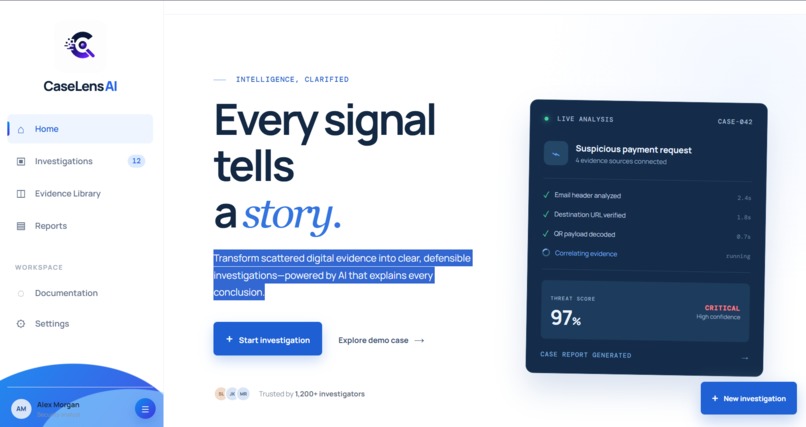
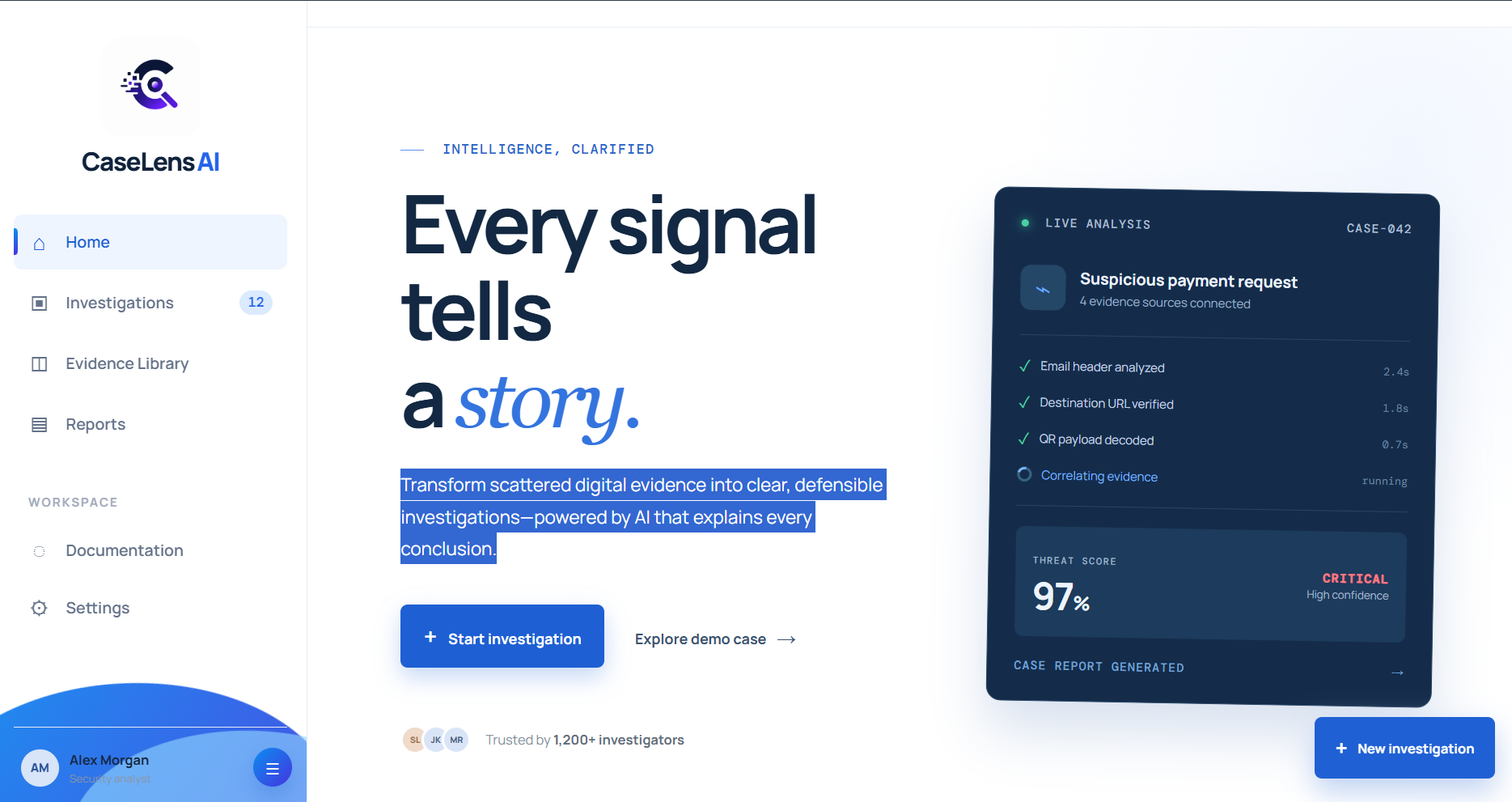
home page
-
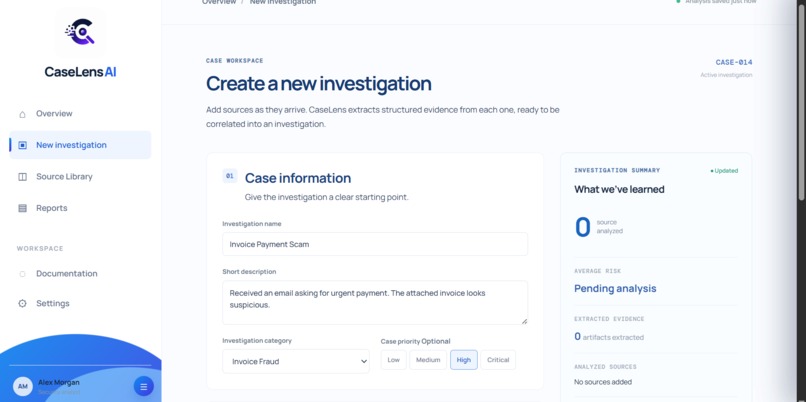
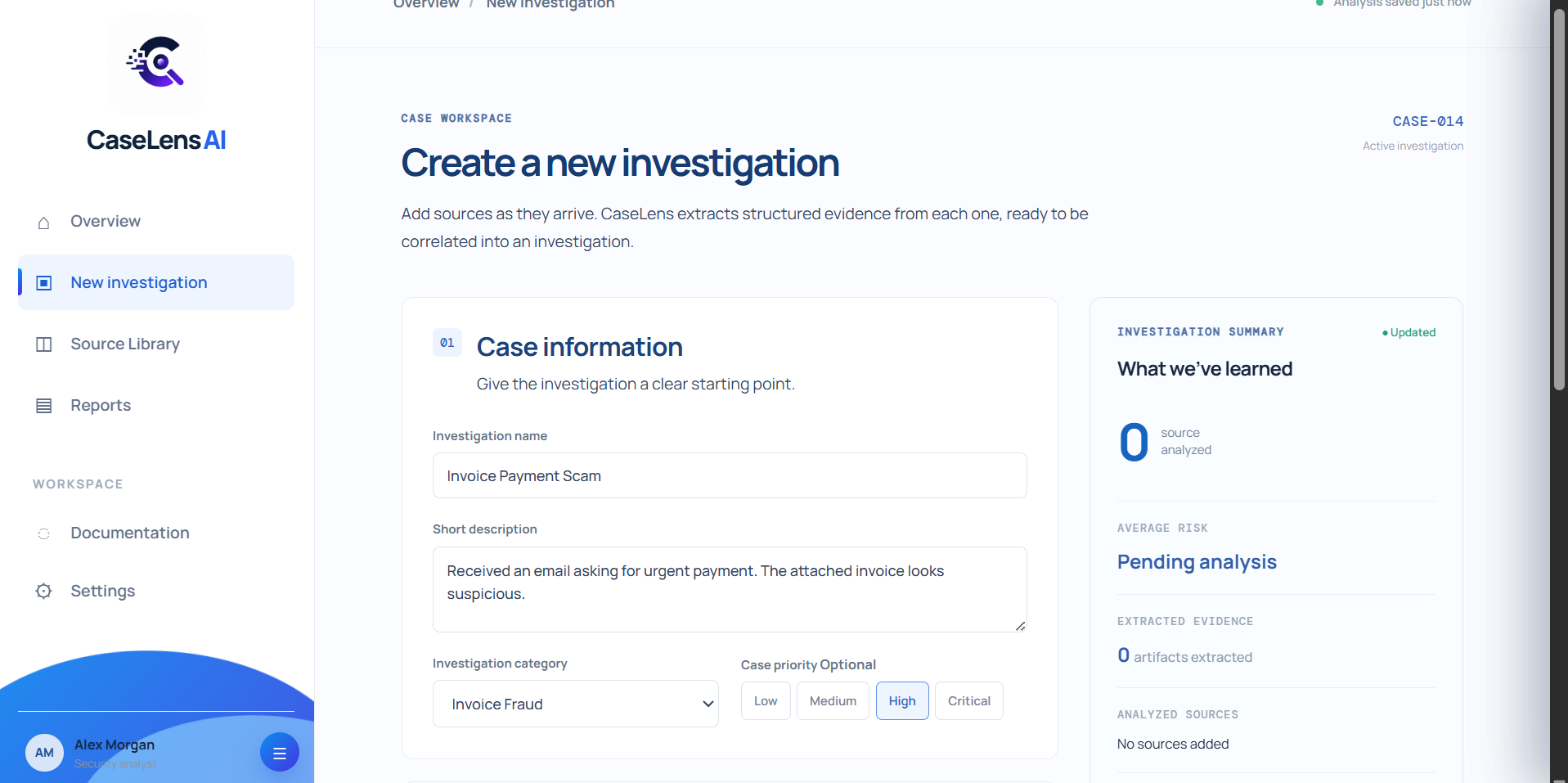
create a new investigation
-
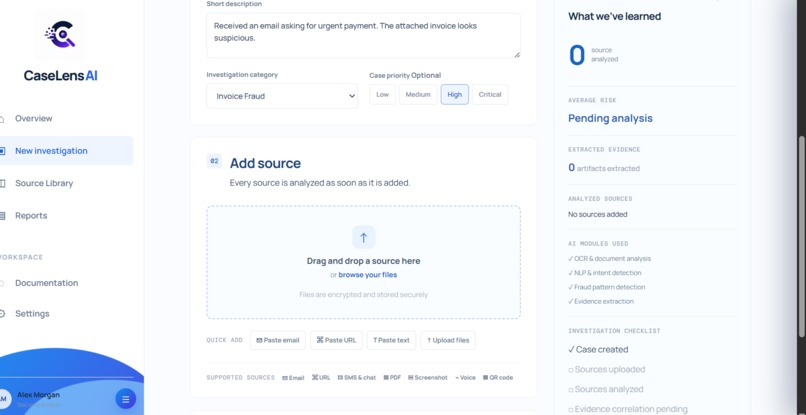
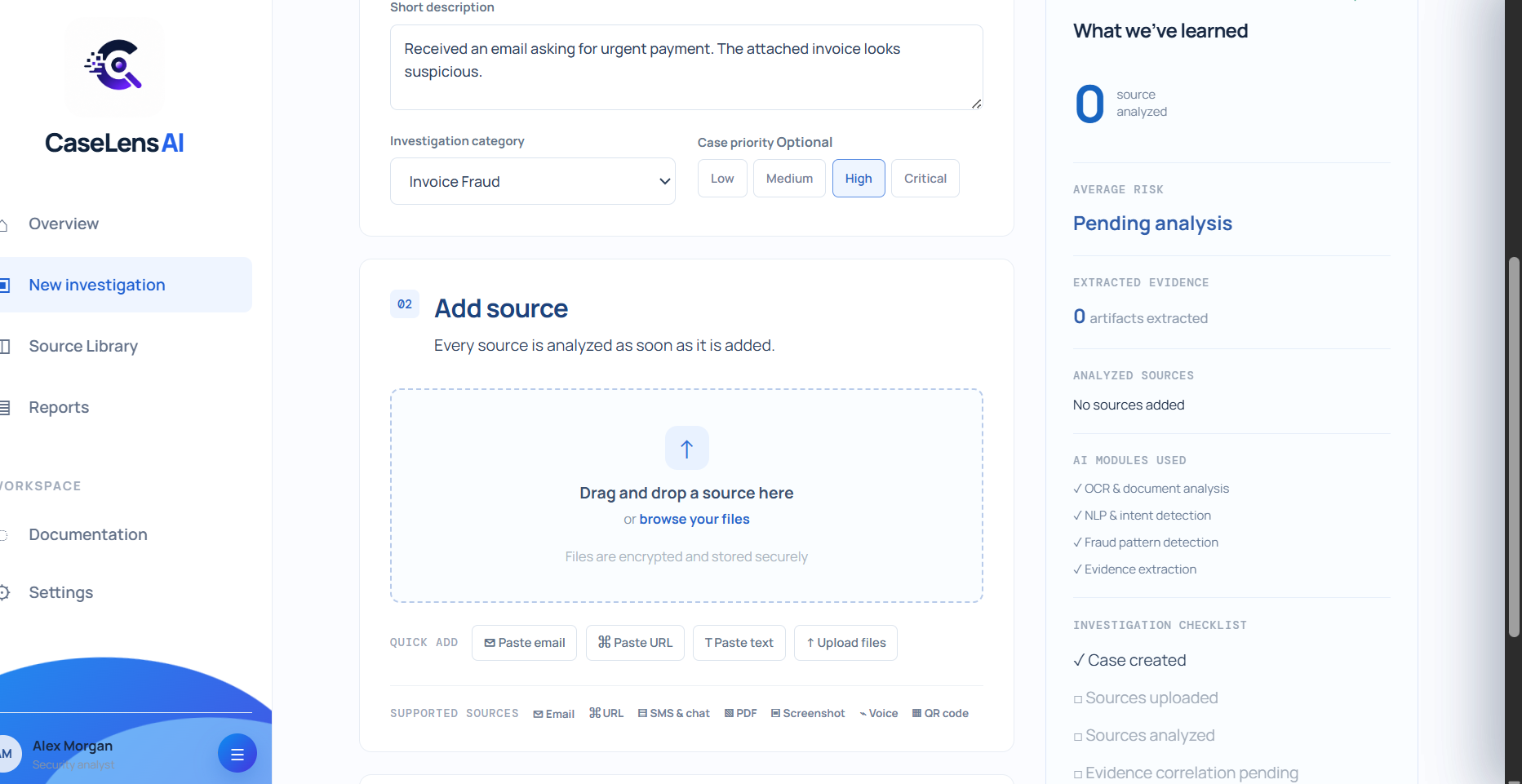
Add sources
-
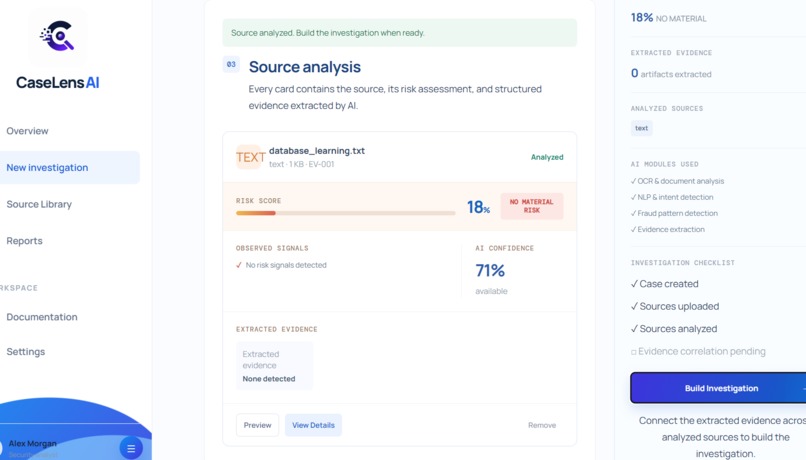
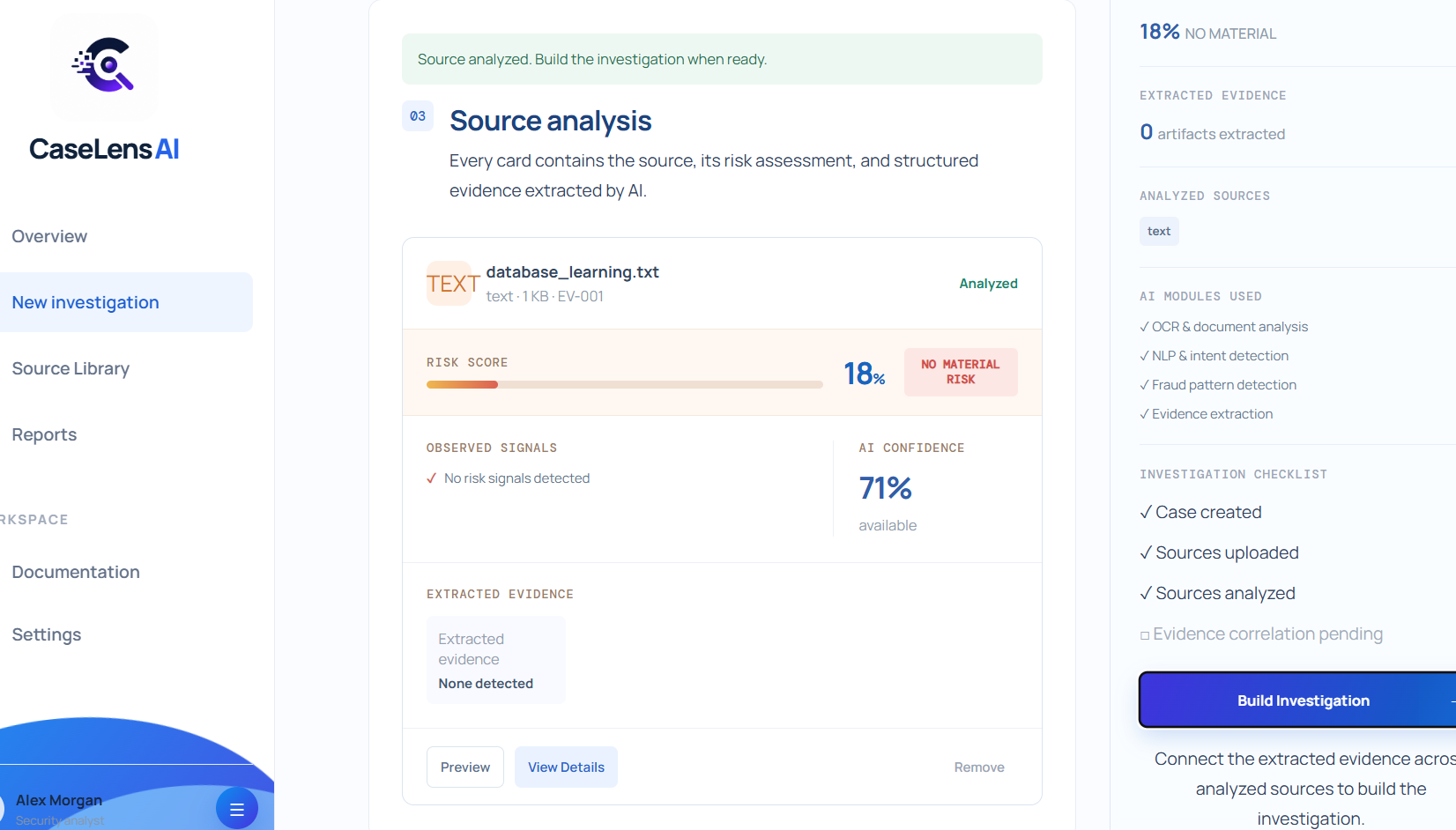
analysis
Inspiration
Online fraud often arrives through scattered pieces of evidence: a suspicious email, payment URL, invoice, screenshot, or message. We wanted to build a tool that helps users collect these sources, inspect what is actually present, connect repeated indicators, and produce an understandable case report.
What it does
CaseLensAI is an evidence-driven fraud investigation platform. Users create a case, add sources such as emails, URLs, text, and PDFs, and analyze them. The platform extracts indicators including email addresses, domains, URLs, phone numbers, payment amounts, invoice references, and bank-account-like identifiers. It calculates source-level risk from observed signals, correlates repeated indicators across submitted sources, builds an investigation, and generates a downloadable PDF case file. It intentionally does not invent missing evidence. If a source or capability is absent, the report says so instead of fabricating a result.
How we built it
We built the frontend with HTML, CSS, and JavaScript, and the backend with Python and Flask. For analysis, CaseLensAI uses structured extraction and rule-based risk detection. PDF text is extracted with pypdf; reports are generated with ReportLab. The backend uses a modular flow: Source → Analyzer → Extracted Evidence → Correlation → Investigation → PDF Report We deployed the application on Vercel, using Supabase for persistent case records, uploaded sources, and generated reports. Codex accelerated the implementation, debugging, design iteration, evidence-driven safeguards, testing, and deployment setup.
Challenges we ran into
The biggest challenge was preventing hallucinated evidence. Early prototype-style interfaces can make it tempting to show fixed results such as QR codes, phishing emails, or malicious URLs even when a user has not submitted them. We redesigned the backend so analysis and investigations are generated only from submitted sources and extracted indicators. We also handled Vercel’s temporary filesystem by moving persistent source and case storage to Supabase.
Accomplishments that we're proud of
Built a working, publicly deployed end-to-end investigation platform. Created an evidence-driven workflow that does not fabricate missing artifacts. Added source upload, paste, preview, analysis, removal, and case closure. Implemented real PDF embedded-text extraction. Implemented cross-source correlation based on actual repeated indicators. Generated professional downloadable PDF case files. Kept unavailable capabilities honest instead of simulating them. What we learned We learned that trustworthy AI systems need clear boundaries. In a forensic-style tool, it is more valuable to state “not detected” or “not configured” than to generate confident but unsupported claims. We also learned how to structure a full-stack application for deployment: separating frontend interaction, backend analysis, persistent storage, report generation, and secure environment variables.
What's next for CaseLens AI
Next, we plan to add real OCR for screenshots and image documents, QR-code decoding, speech-to-text for voice recordings, and verified URL/domain reputation checks. We also plan to add stronger email-header authentication analysis, user accounts, case sharing, investigator timelines, improved visual evidence graphs, and optional GPT-powered narrative investigations using securely configured server-side API keys.
Built With
- codex
- css3
- flask
- html5
- javascript
- supabase

Log in or sign up for Devpost to join the conversation.