-
-
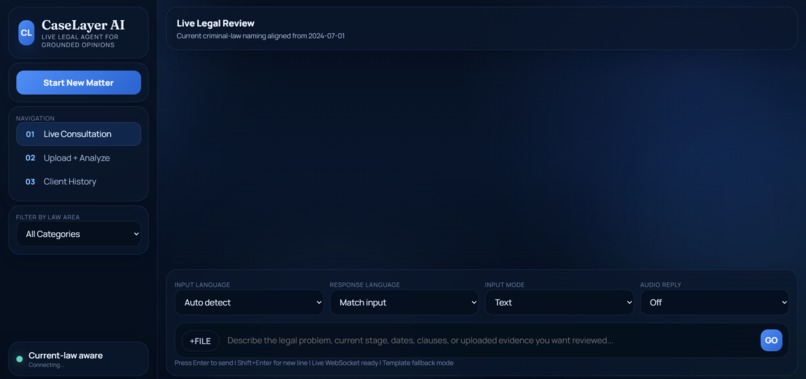
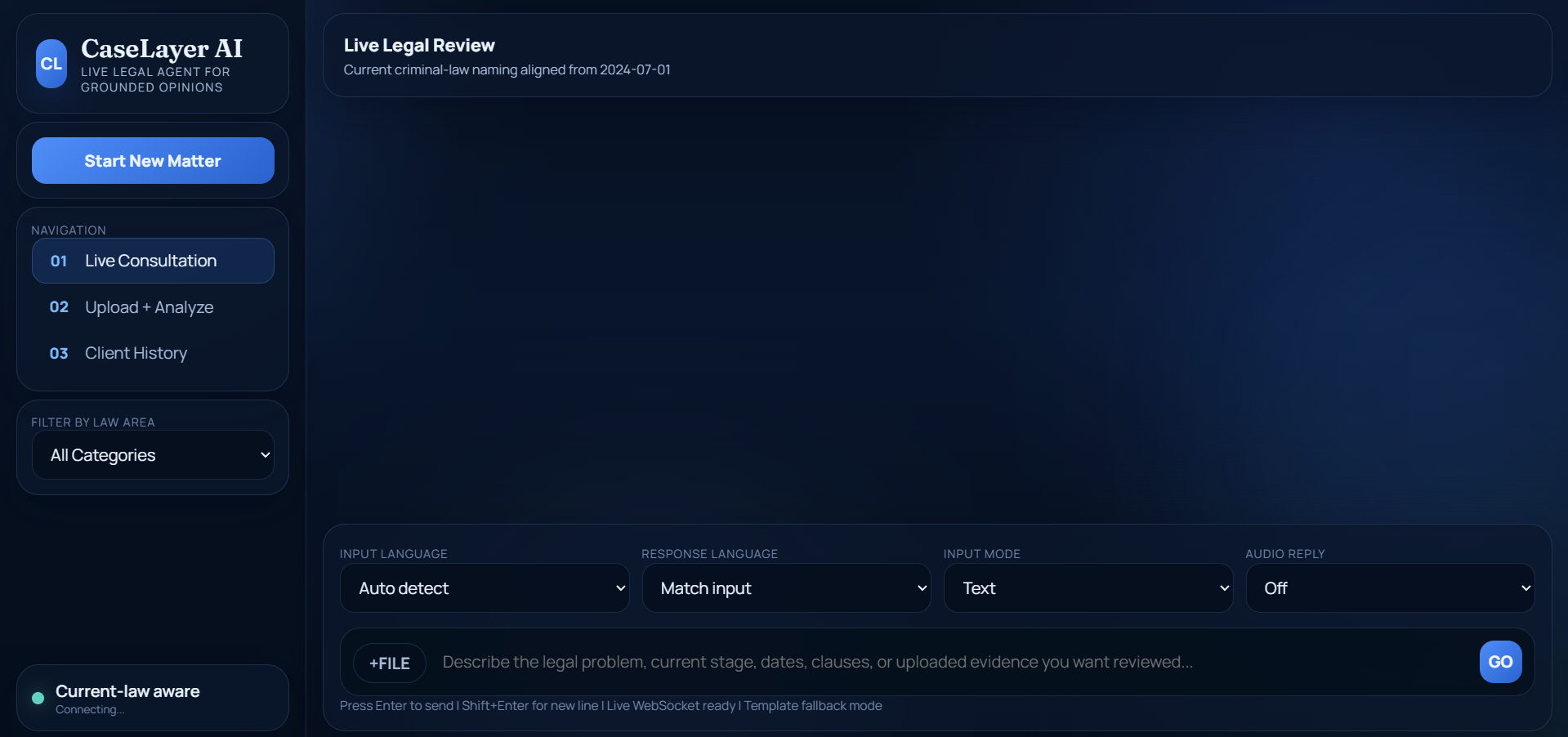
CaseLayer AI Dashboard
-
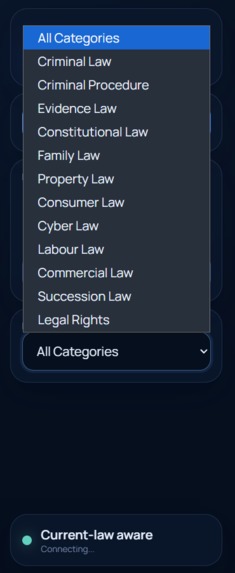
Legal Category Filter
-
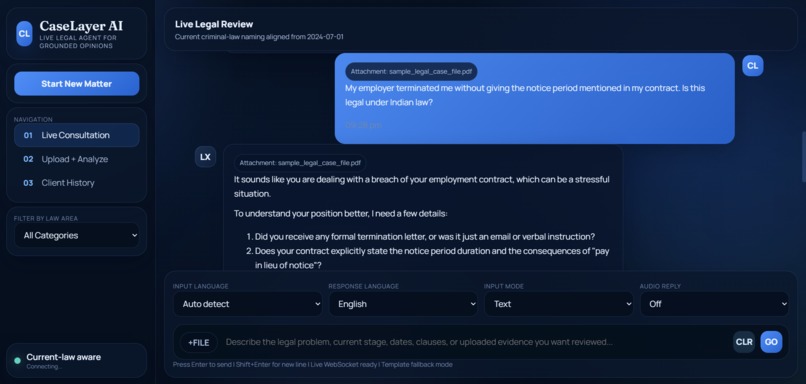
Live Legal Consultation with Attachment
-
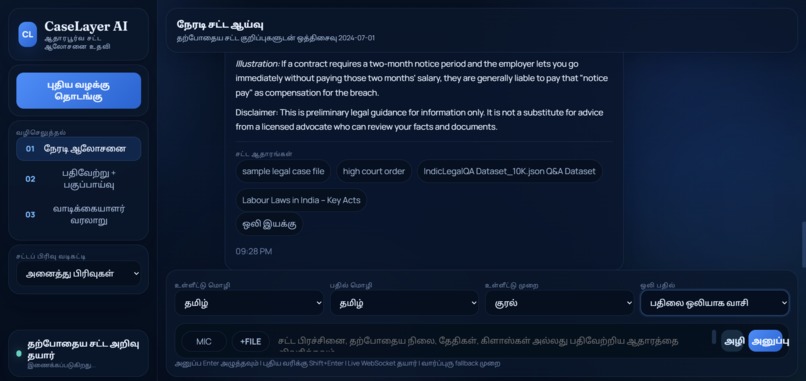
Tamil Multilingual Legal Interface
-
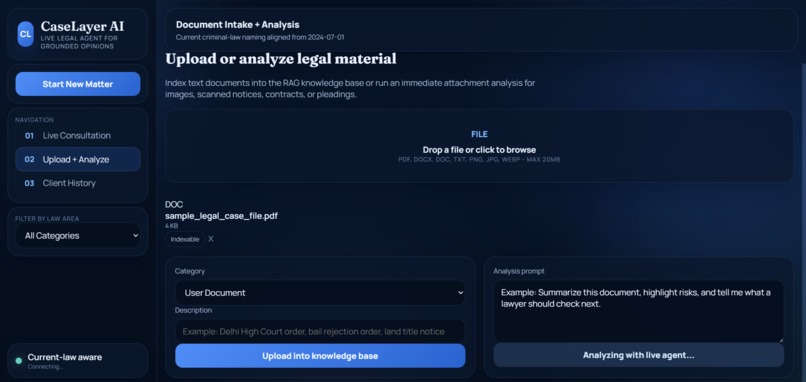
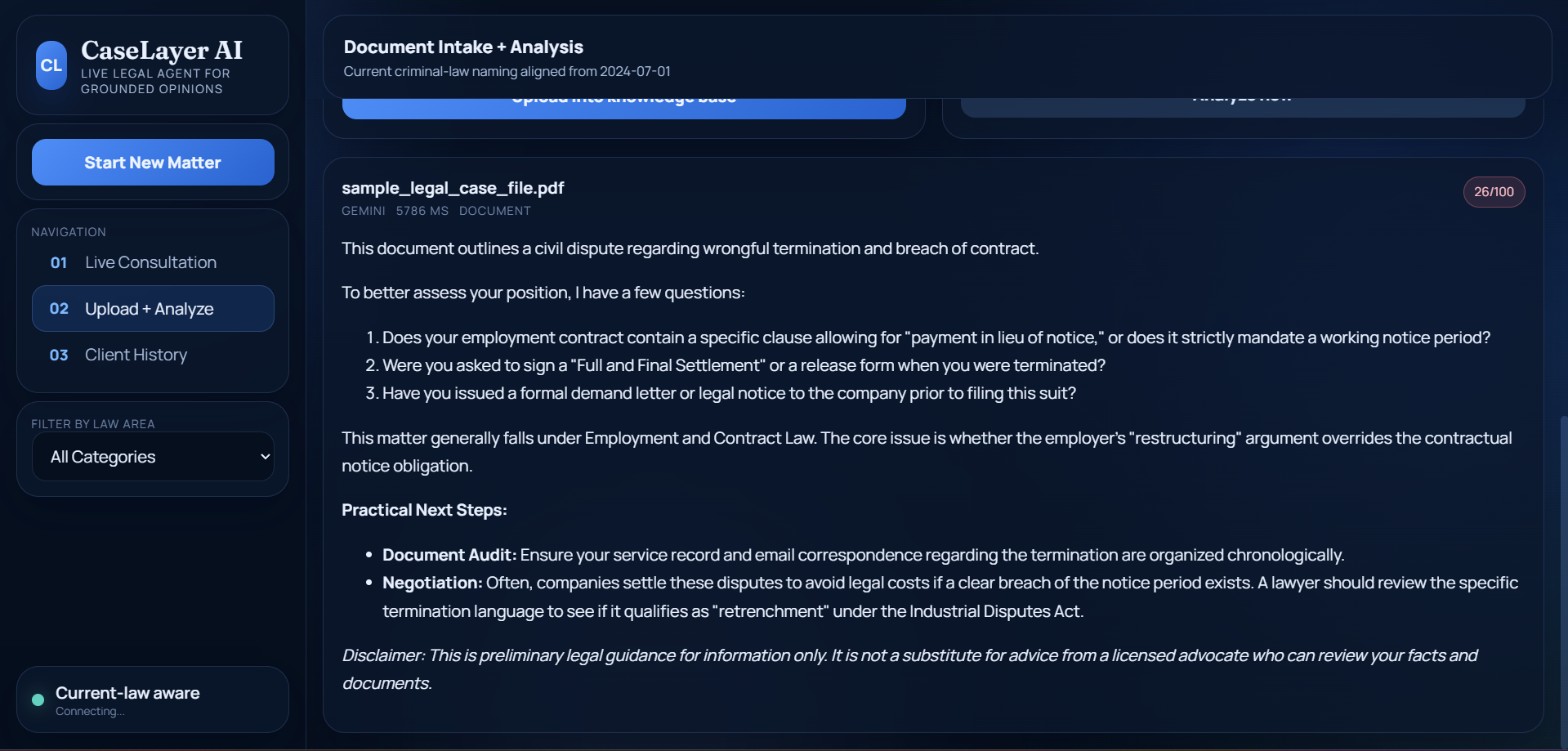
UPLOADED DOC SUMMARY-1
-
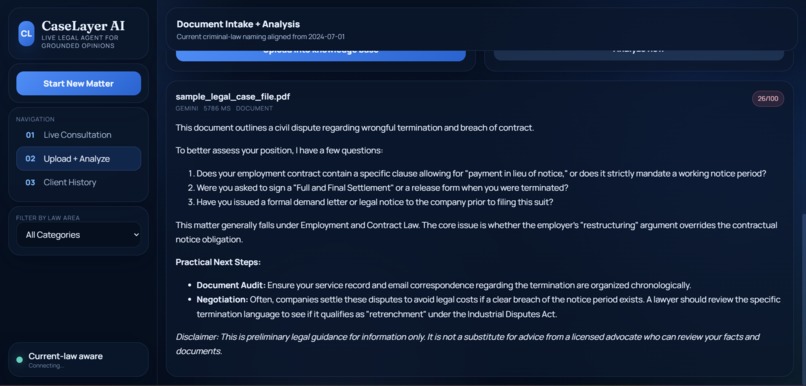
UPLOADED DOC SUMMARY-2
-
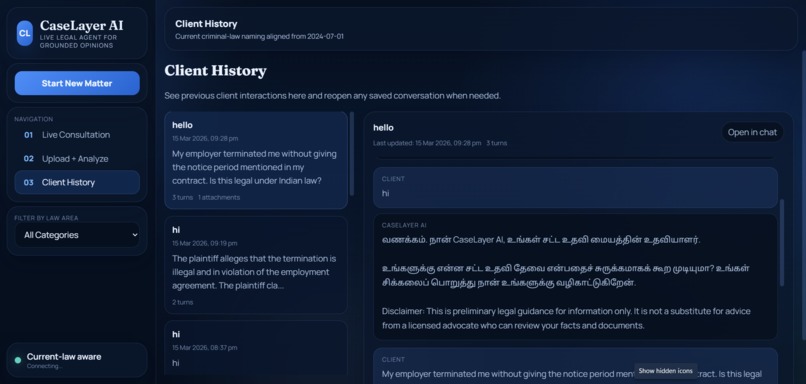
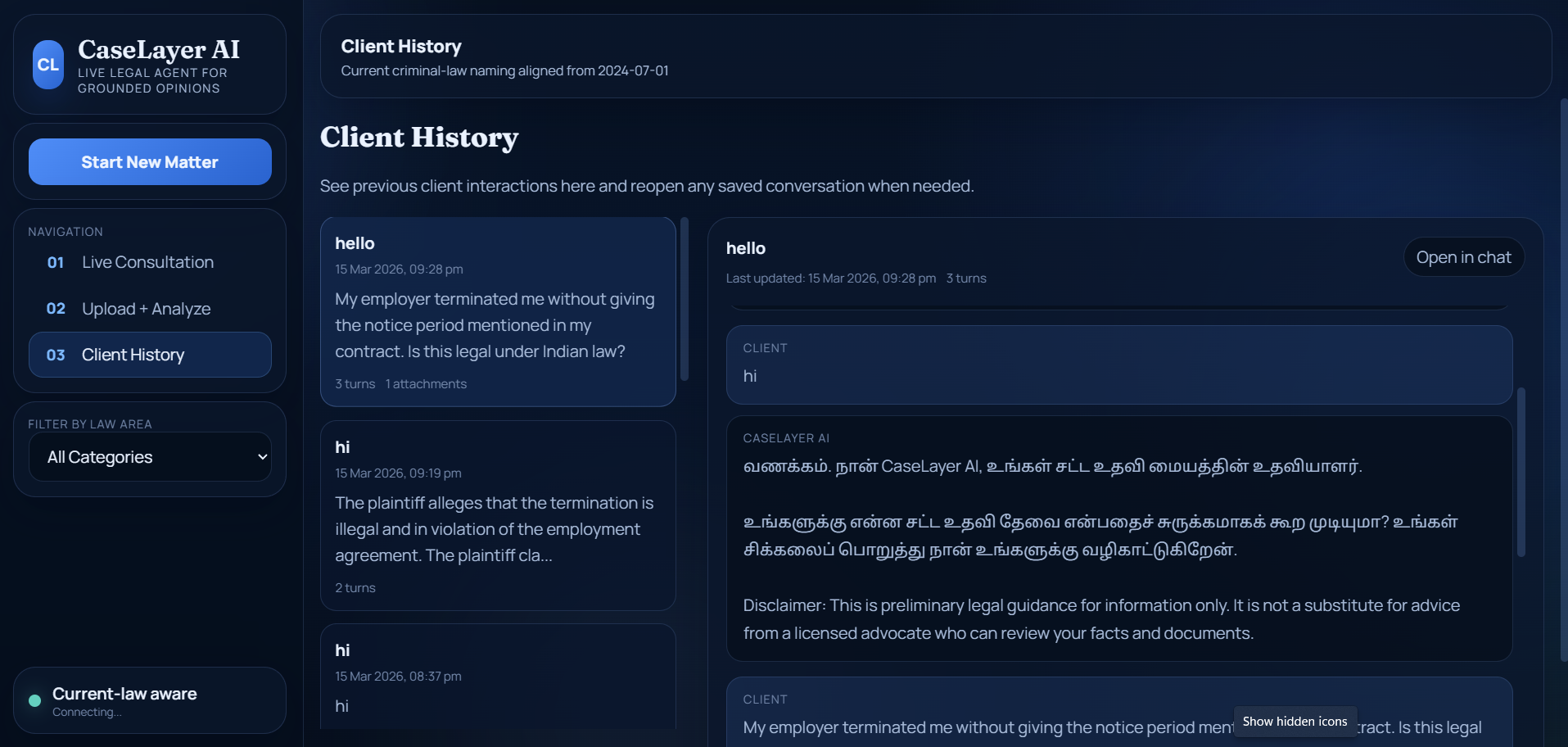
RAG CLIENT HISTORY
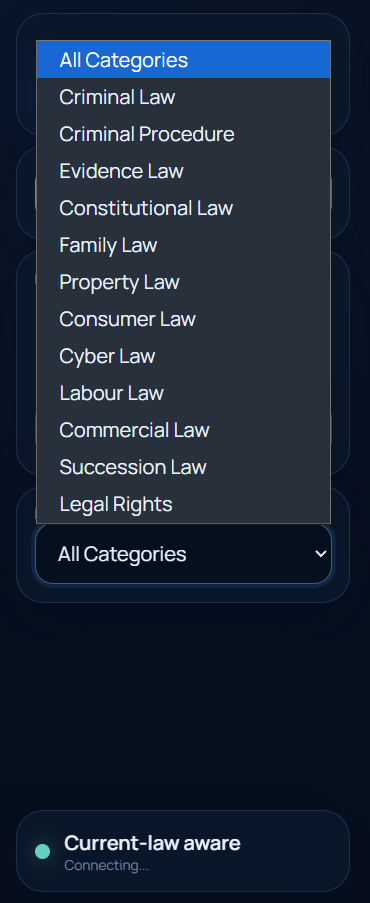
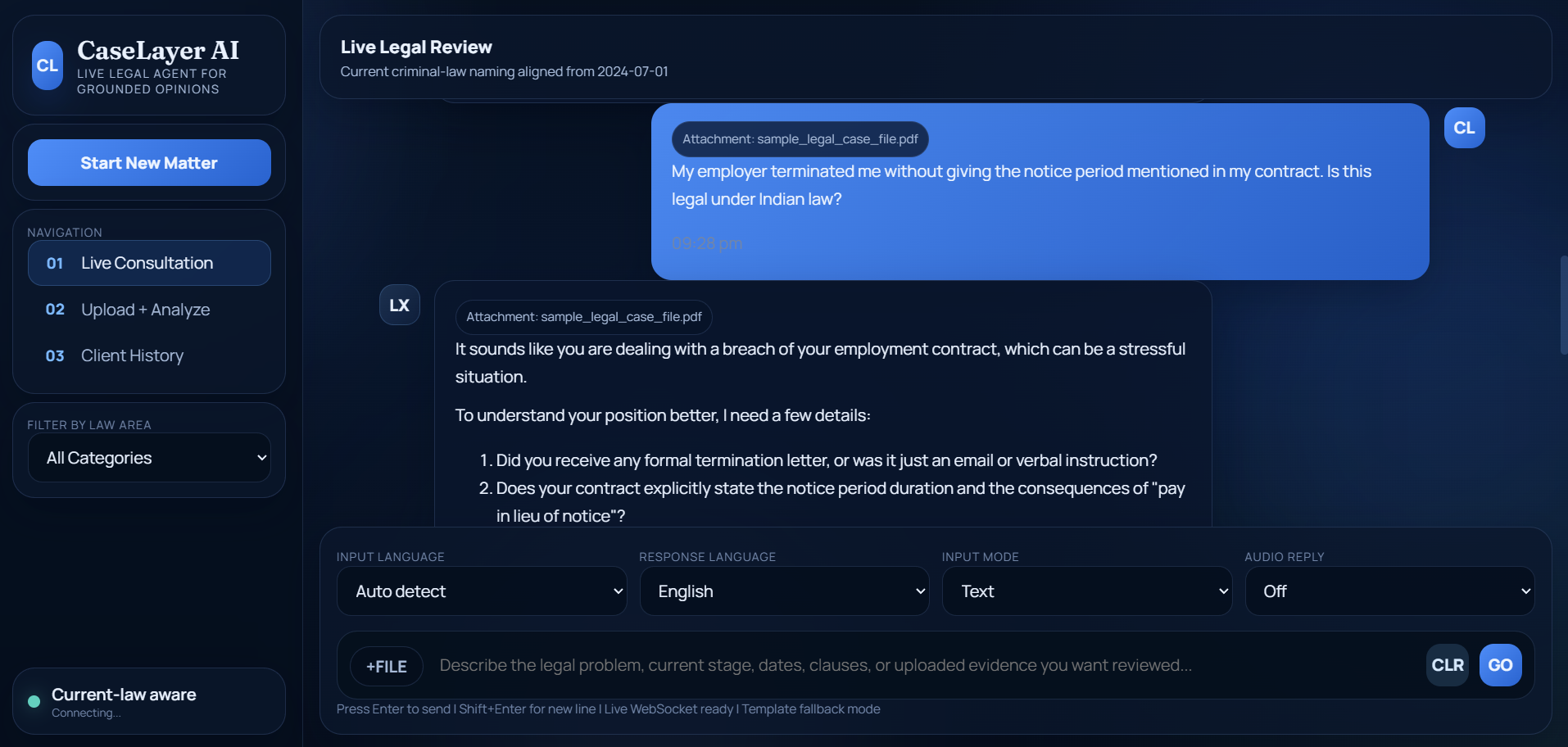
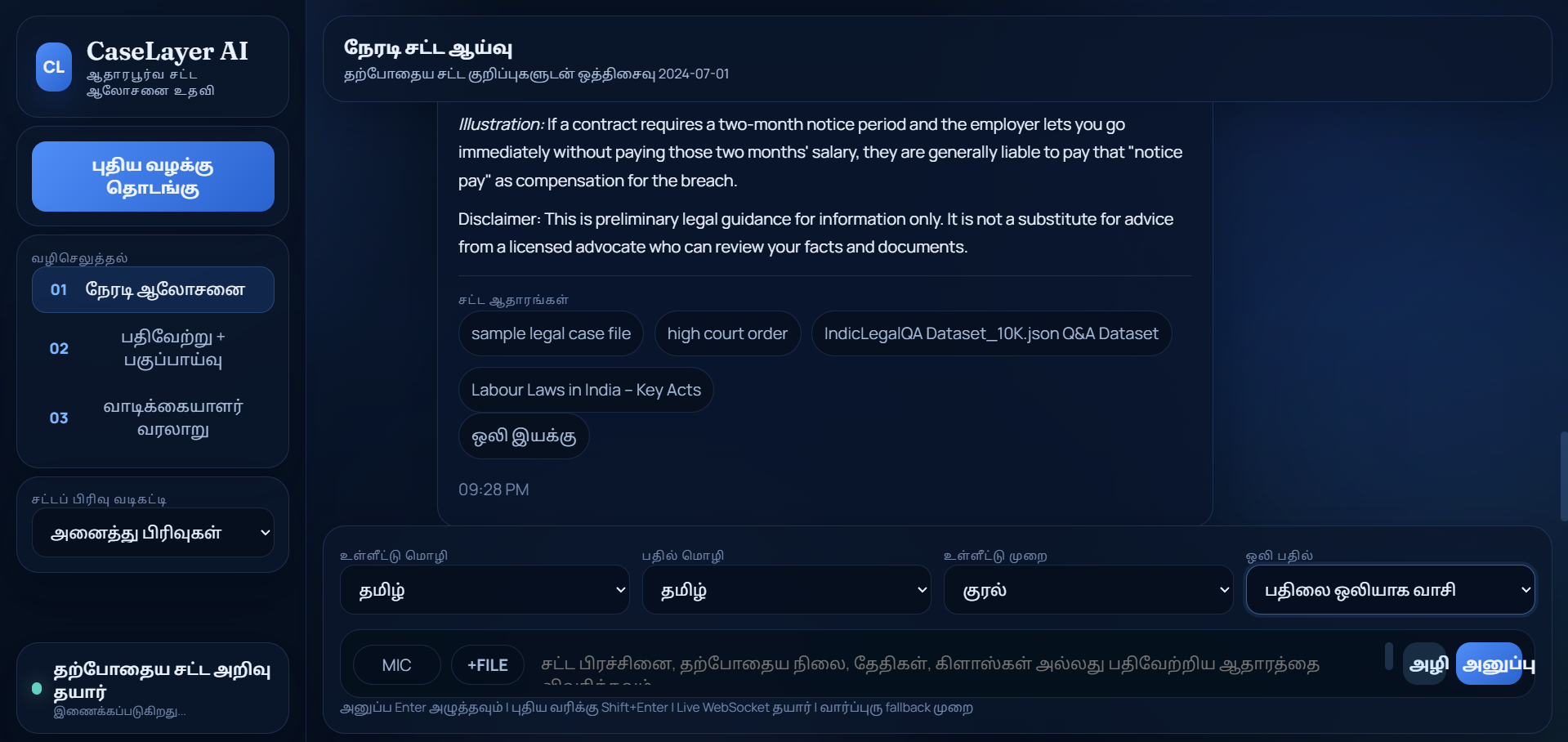
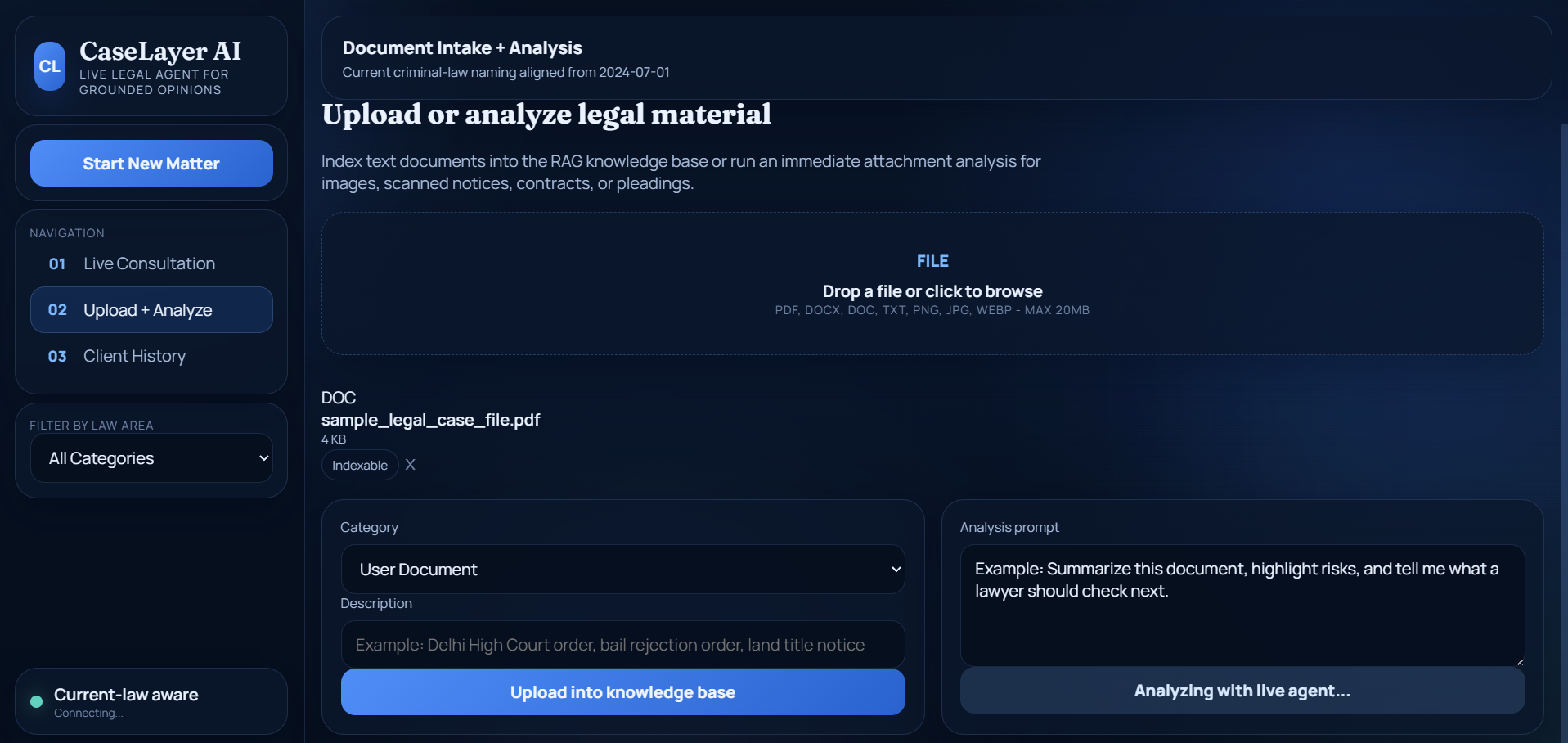
Inspiration CaseLayer AI was inspired by the gap between legal complexity and first-step access to clarity. People often receive a notice, FIR reference, contract clause, or court document and do not know what it means, what area of law it falls under, or what to do next. We wanted to build a system that could turn that first moment of confusion into a grounded, structured starting point. We were especially motivated by the idea that legal AI should not just sound smart. It should be careful, context aware, and useful in real workflows. That pushed us toward a retrieval first system instead of a generic chatbot.
What it does CaseLayer AI is an AI-powered legal assistant for Indian law. It helps users ask legal questions, upload documents, analyze evidence, and get grounded guidance based on retrieved legal context. It supports live chat, document analysis, multilingual interaction, and review-style outputs such as risk flags, redlines, and practical next steps. It also keeps conversation history so a matter can be reopened and continued later. That makes the app more grounded and workflow-oriented than a free-form assistant.
How we built it We built CaseLayer AI as a full-stack application with a React + Vite frontend and a FastAPI backend. The frontend handles live consultation, uploads, saved history, and the review interface. The backend handles retrieval, document processing, language handling, session storage, and answer generation. The core of the project is a RAG pipeline. Legal content is indexed into a vector database, then retrieved based on the user’s question before generation. We also added support for multilingual query handling, current-law reference alignment, document upload and analysis, and live streaming responses. On top of that, we layered review-oriented features like clause risk detection, fairness checks, and suggested redlines to make the tool more useful for legal workflows.
Challenges we ran into One major challenge was balancing usefulness with trust. In legal contexts, an answer that sounds confident but is weakly grounded is actually dangerous. We had to design the assistant so it stays close to retrieved material, asks clarifying questions when context is thin, and avoids overstating certainty. Another challenge was dealing with real-world legal inputs. Documents can be scanned, messy, incomplete, multilingual, or poorly formatted. Building a system that could handle both conversational queries and uploaded evidence required careful work on document processing, context extraction, and prompt design. We also had to manage the tradeoff between speed and quality. Live interaction feels important, but grounding, review signals, and retrieval all add latency. Making the product feel responsive while still being careful was a big part of the engineering work.
Accomplishments that we're proud of We are proud that CaseLayer AI feels like a legal workflow tool rather than just a chatbot. It can take a user from question to context to practical next steps in one interface. We are also proud of the grounded design: retrieval-backed answers, current-law awareness, multilingual support, document analysis, review mode, and saved client history all work together to make the system feel more credible and more usable. Building a product that is both technically capable and careful in tone was one of the biggest wins for us.
What we learned We learned that legal AI is less about generating impressive text and more about structuring reliable judgment. Retrieval quality, document handling, prompt restraint, and workflow design matter just as much as model choice. We also learned a lot about building AI systems that are actually useful in practice: how to combine live chat with document review, how to support multilingual legal use cases, and how to design for trust instead of just novelty. The biggest lesson was that good AI UX in law comes from reducing ambiguity, not adding more words.
What's next for CaseLayer AI Next, we want to make CaseLayer AI more production-ready and more useful for legal professionals. That includes stronger source attribution, better document parsing for scanned filings, deeper support for more Indian languages, and improved matter-level organization. We also want to expand its legal workflow capabilities with better precedent surfacing, smarter drafting support, stronger citation handling, and more refined review tools for contracts, notices, and pleadings. The long-term goal is to make CaseLayer AI is a dependable first layer of legal analysis that helps both clients and legal teams move faster with more confidence.
Built With
- bm25
- built-with-react
- chromadb
- document
- faiss
- fastapi
- google-gemini
- openai
- python-based
- sentence-transformers
- vite
- websockets

Log in or sign up for Devpost to join the conversation.