-
-
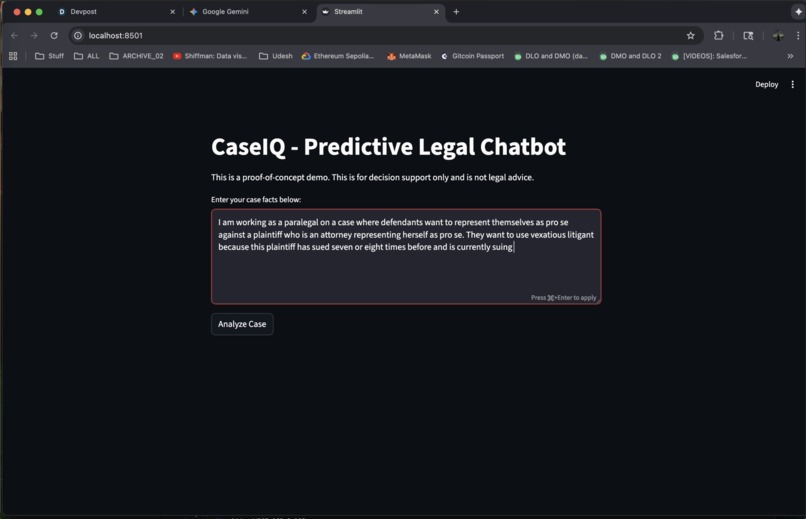
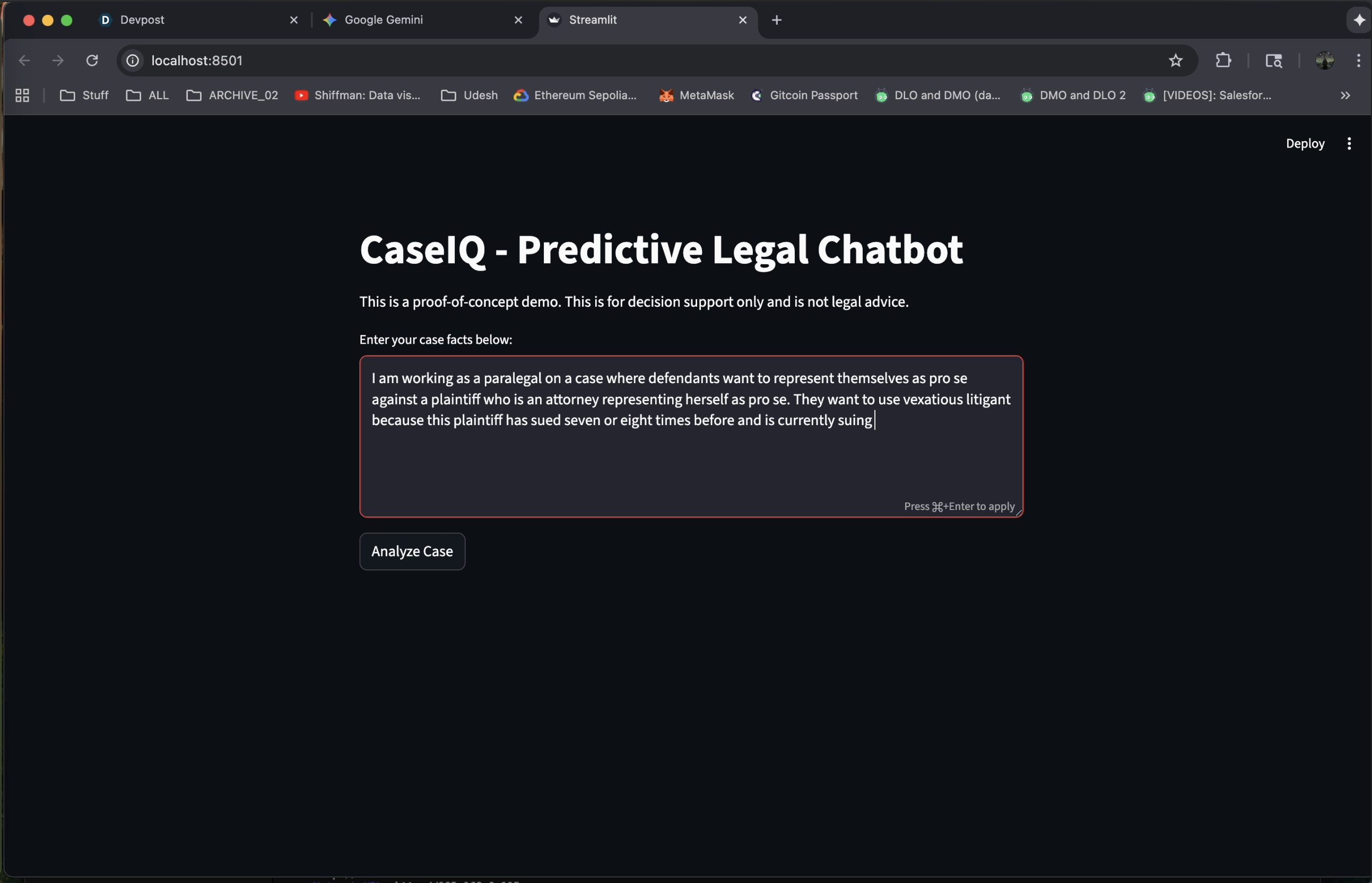
Streamlit UI displaying User's question on Legal Case Prediction
-
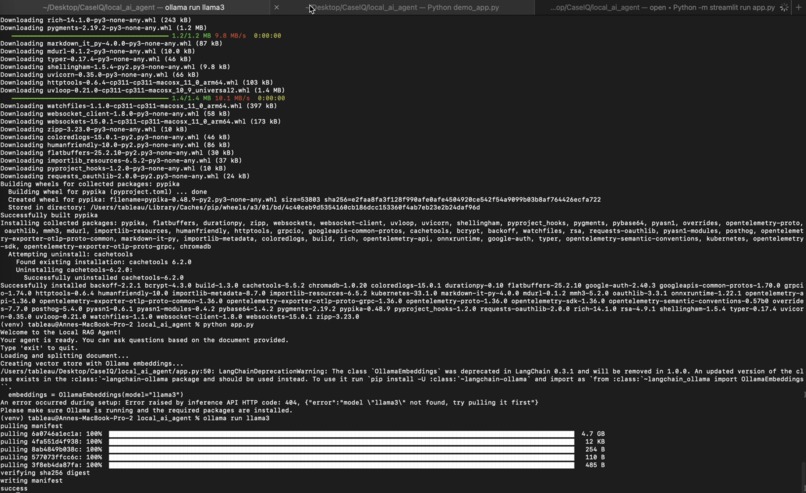
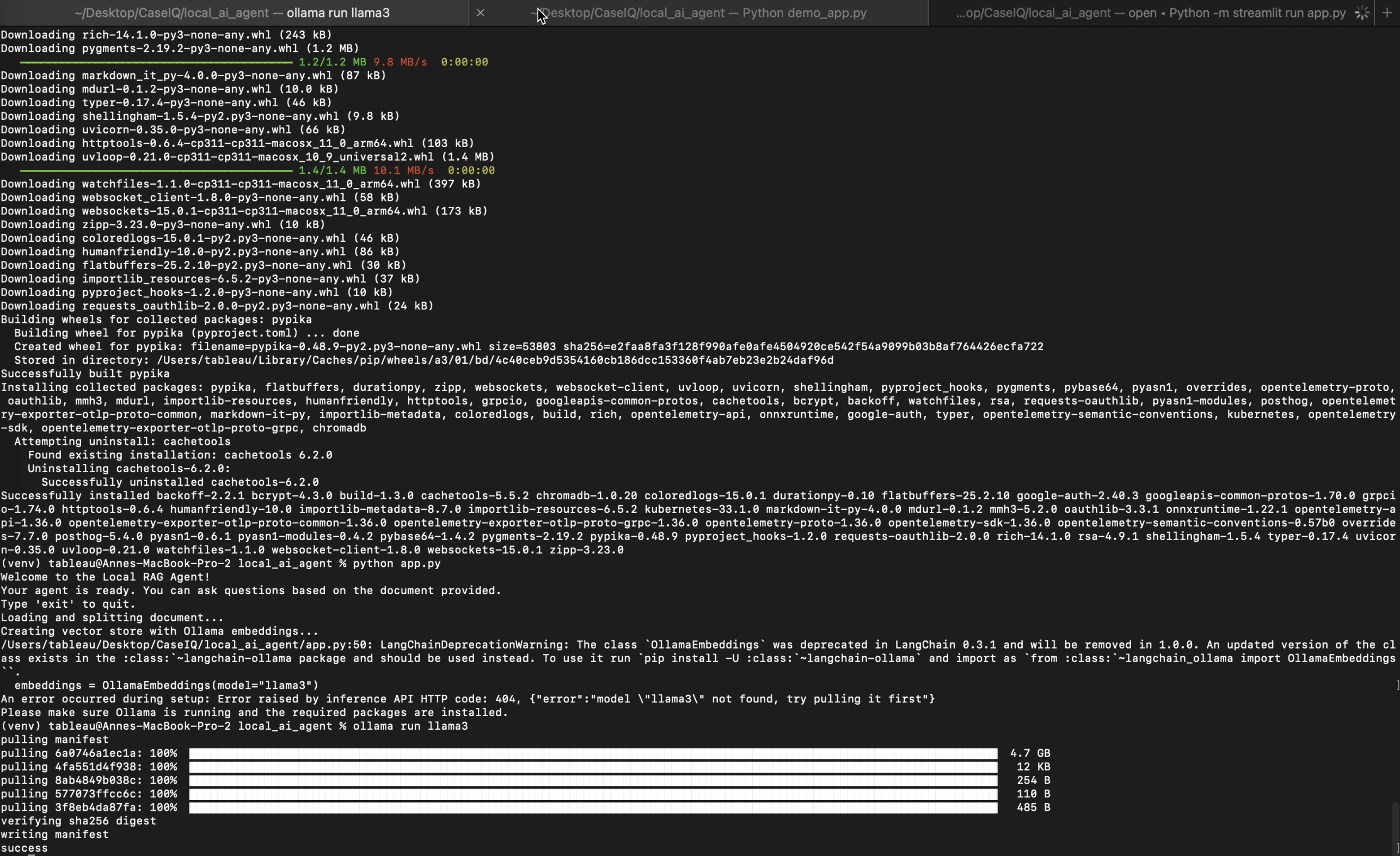
Ollama AI Running in terminal
-
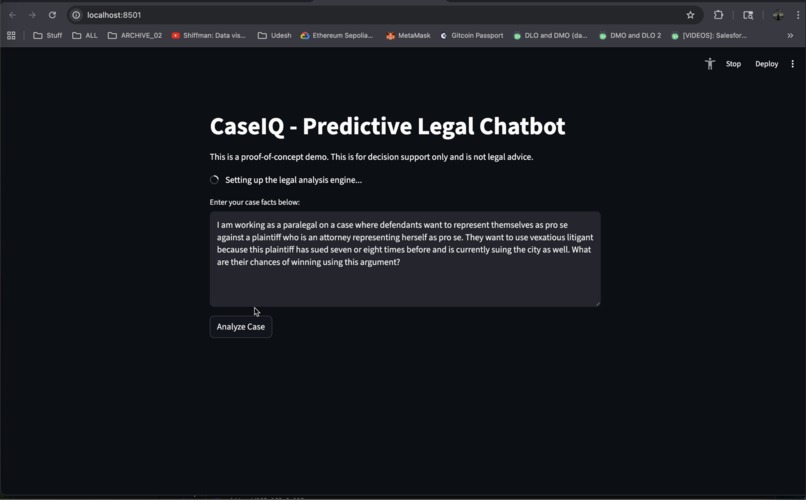
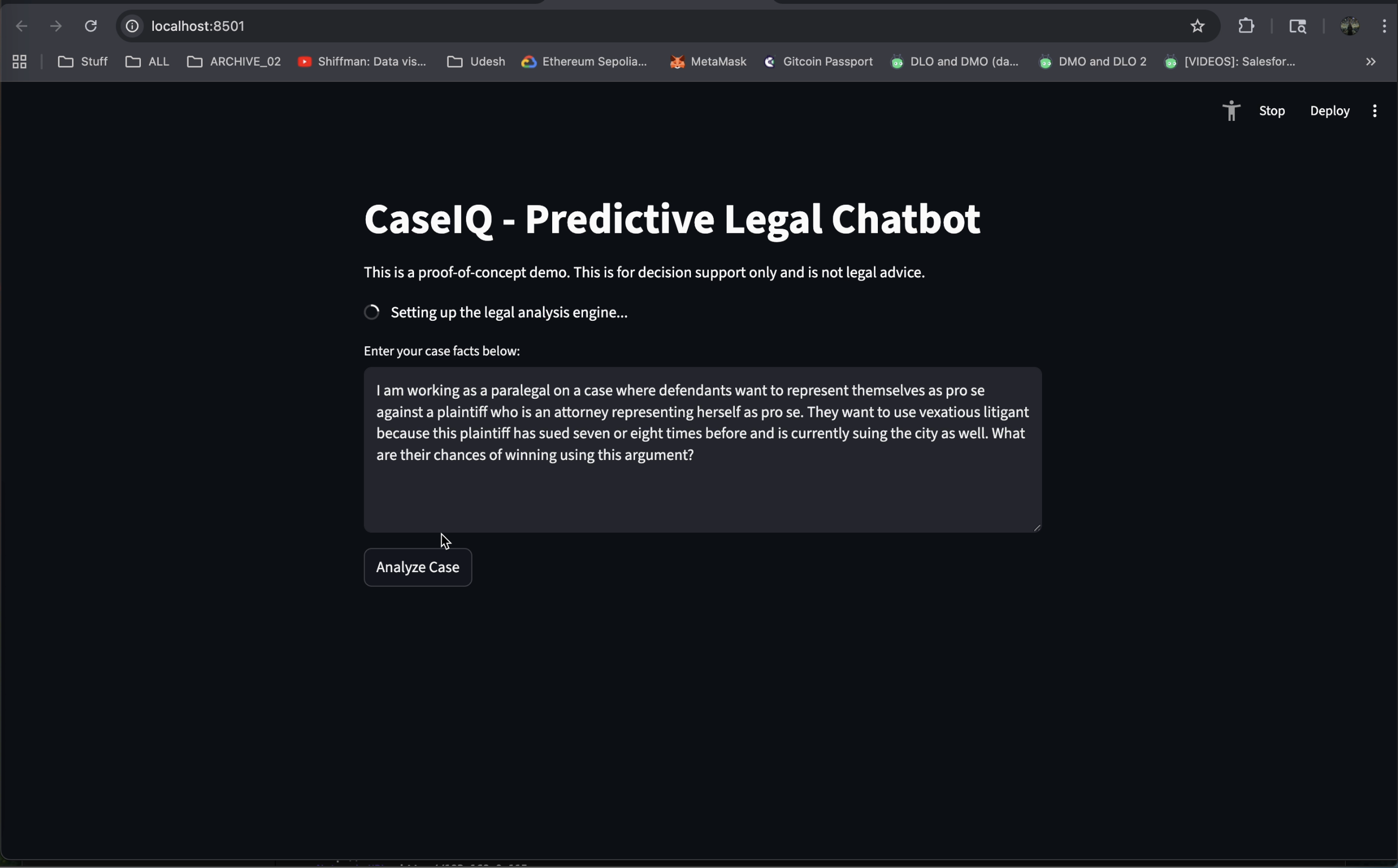
Streamlit UI running analysis of Ollama AI
-
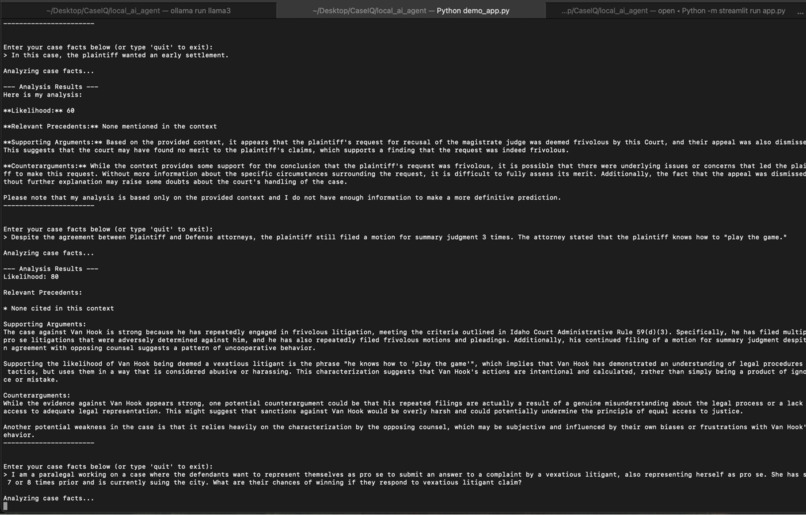
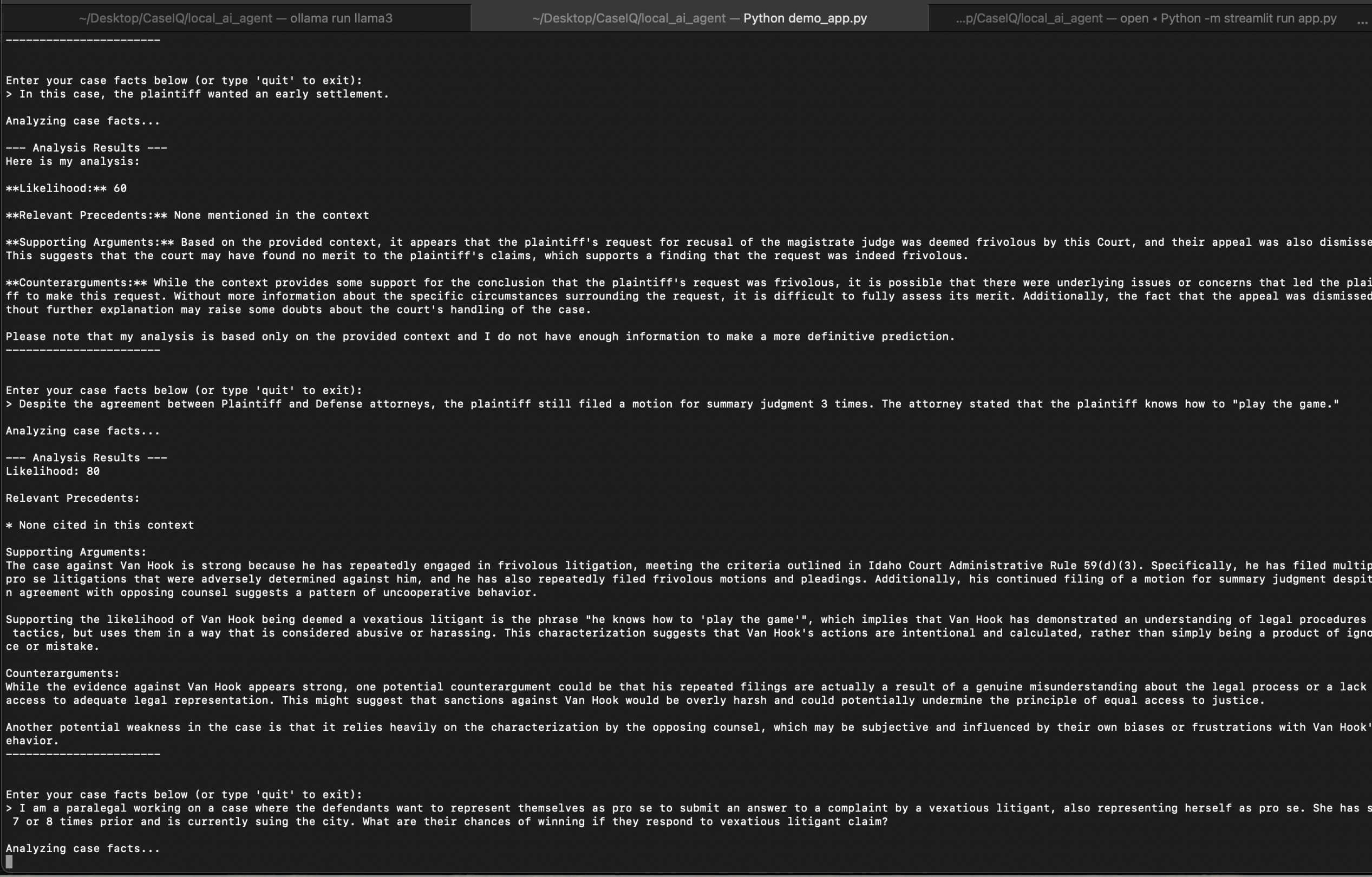
Ollama Legal Case Analysis of several questions asked by User who is a "Paralegal."
Inspiration
The inspiration comes from wanting to make the legal system more accessible. Too often, only the wealthy or elite can afford to know their real chances in court. This project helps people—especially those with limited means—see if their attorney is building a strong case, and it gives attorneys support tools to serve clients more effectively. It’s about shifting power from gatekeepers back to people who need justice.
What it does
CaseIQ is a chatbot that analyzes case law and constitutional provisions to predict the likelihood of success in a legal case. It retrieves similar precedents, highlights relevant arguments, and surfaces potential counterarguments, giving lawyers and clients transparent, data-driven decision support.
How we built it (ChatGPT, Google Gemini AI, and I)
We will build CaseIQ using OpenAI’s GPT-4 for legal reasoning and text generation, combined with embeddings to retrieve similar cases from open-source case law datasets. We connected these with a vector database (Pinecone/FAISS) to surface precedents, and wrapped the system in a simple chatbot interface so users can ask questions in natural language. The workflow: user inputs facts → embeddings retrieve similar cases → GPT-4 compares them against constitutional provisions → chatbot outputs likelihood, arguments, and citations. We used Hugging Face Sentence Transformer: https://huggingface.co/sentence-transformers/all-MiniLM-L6-v2
Challenges we may run into
• Data quality & access: Legal datasets are massive and often behind paywalls. Using only open-source case law limits coverage • Slow connection and access to Streamlit • Accuracy & bias: Predictive outputs may reflect biases in past rulings or incomplete precedent sets. • Explainability: Lawyers need transparent citations, not black-box answers — building trust is critical. • Ethical boundaries: The tool must support decision-making without crossing into unauthorized legal advice. • Performance: Handling long case documents and complex constitutional analysis efficiently.
Accomplishments that we will be proud of whether or not the project works
• Prototyping a chatbot that combines case law retrieval with constitutional reasoning. • First completed chatbot project and successful Vibe Programming Project • Building a workflow that connects embeddings, GPT-4, and a vector database into a usable interface. • Framing the tool as decision support, not legal advice — a crucial ethical distinction. • Designing for transparency: surfacing citations and counterarguments, not just predictions. • Taking a first step toward making legal analysis more accessible to those with limited resources. • Learned an incredible amount of information and new skills
What we learned
• How embeddings and retrieval-augmented generation (RAG) can be applied to legal data. • The importance of balancing predictive modeling with explainability in high-stakes fields. • That legal datasets are both technically challenging and socially impactful when made more open. • How framing and language (decision support vs. legal advice) are as important as technical accuracy. • Collaboration between law and technology requires constant attention to ethics and trust.
What's next for CaseIQ - Predictive Legal Chatbot
• Expand datasets: Integrate larger open legal corpora and eventually licensed case law for broader coverage. • Refine predictive modeling: Train classifiers on historical outcomes (win/loss rates) to complement GPT-4 reasoning. • User trust features: Add explainability layers such as argument maps, confidence scoring, and cited precedent timelines. • Accessibility focus: Develop lightweight, mobile-first versions to support clients and public defenders with limited resources. • Partnerships: Explore collaboration with legal aid organizations and clinics to test CaseIQ in real-world contexts. • Ethics & compliance: Formalize disclaimers and guardrails so CaseIQ remains decision-support, not legal advice.
Built With
- courtreporter
- googlegemini
- llama3
- ollama
- openai
- python
- streamlit
- visual-studio

Log in or sign up for Devpost to join the conversation.