-
-
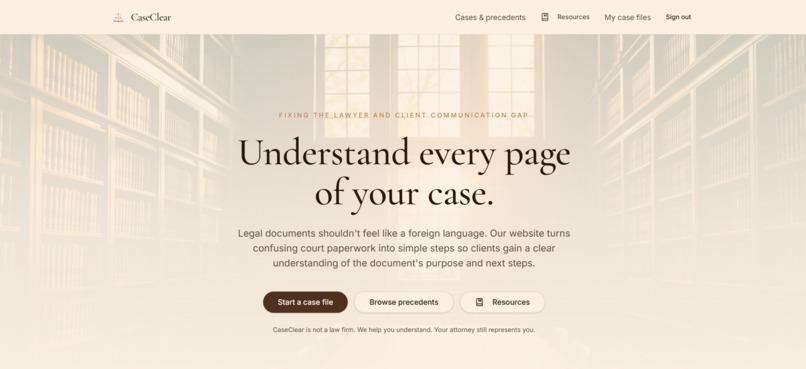
Hompage Part 1
-
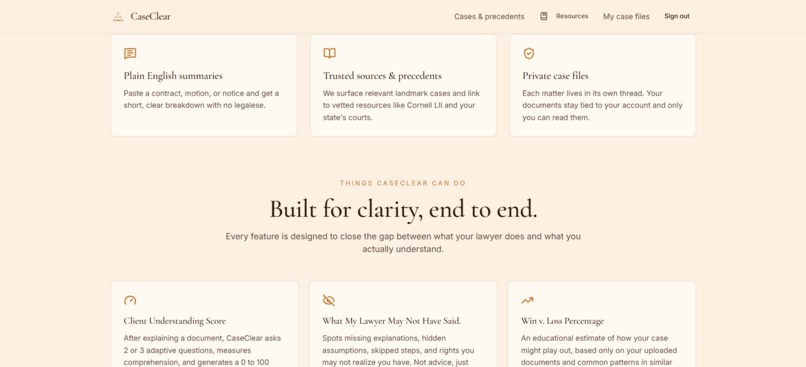
Homepage Part 2
-
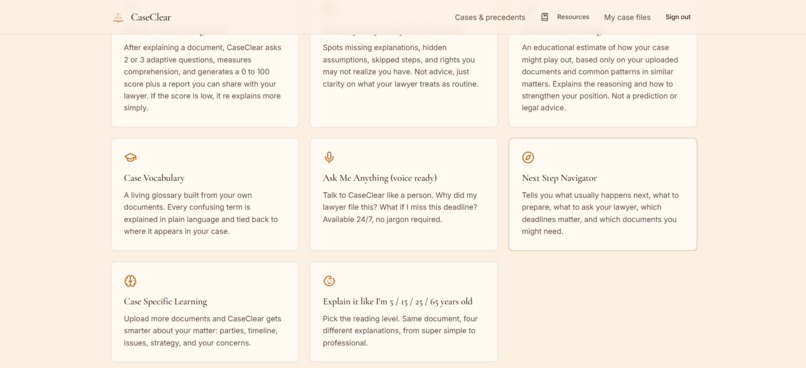
Homepage Part 3
-
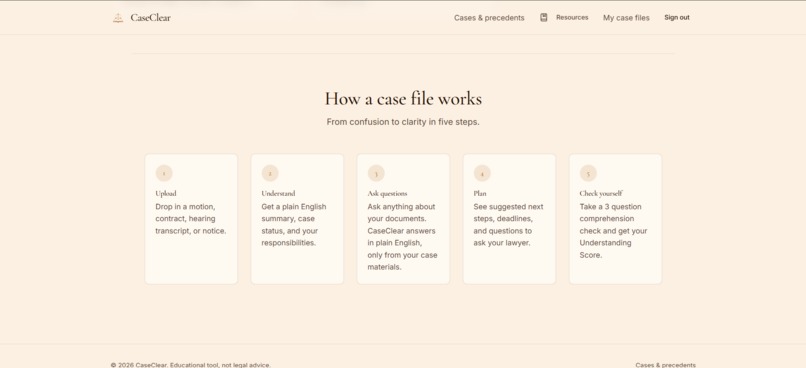
Homepage Part 4
-
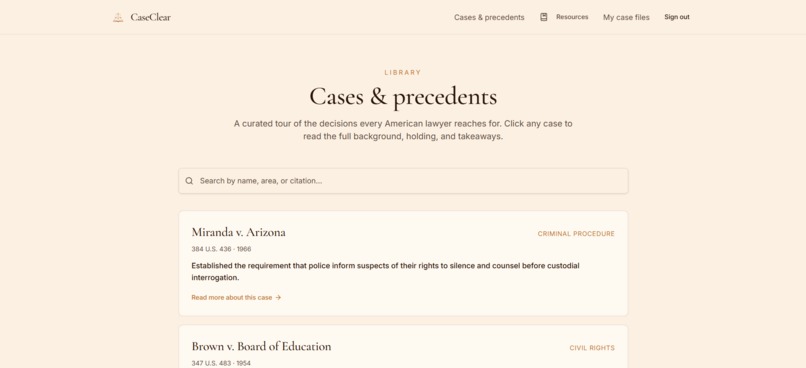
Cases & Precedents
-
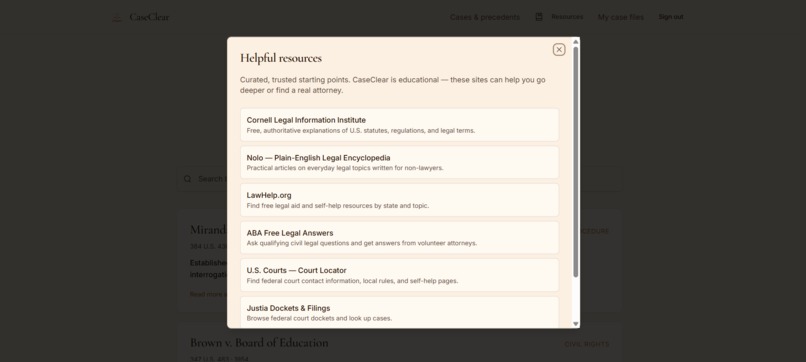
Resources
-
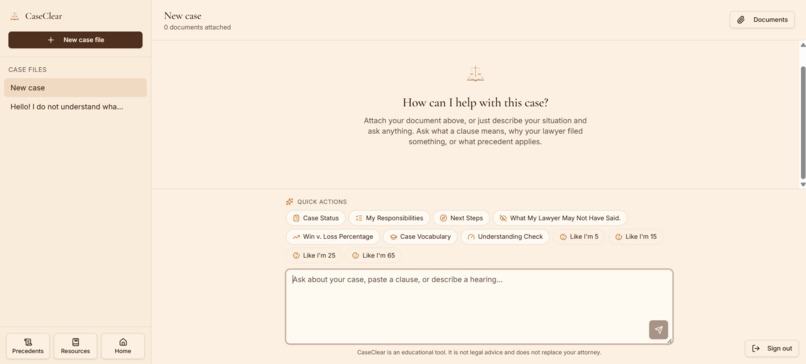
New Case File Part 1
-
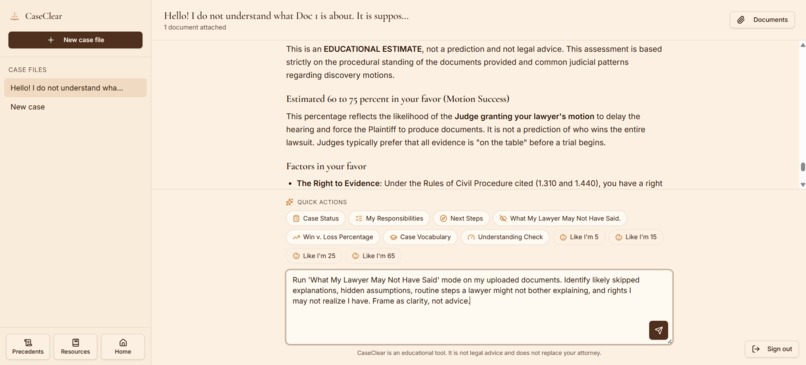
New Case File Part 2
-
Inspiration
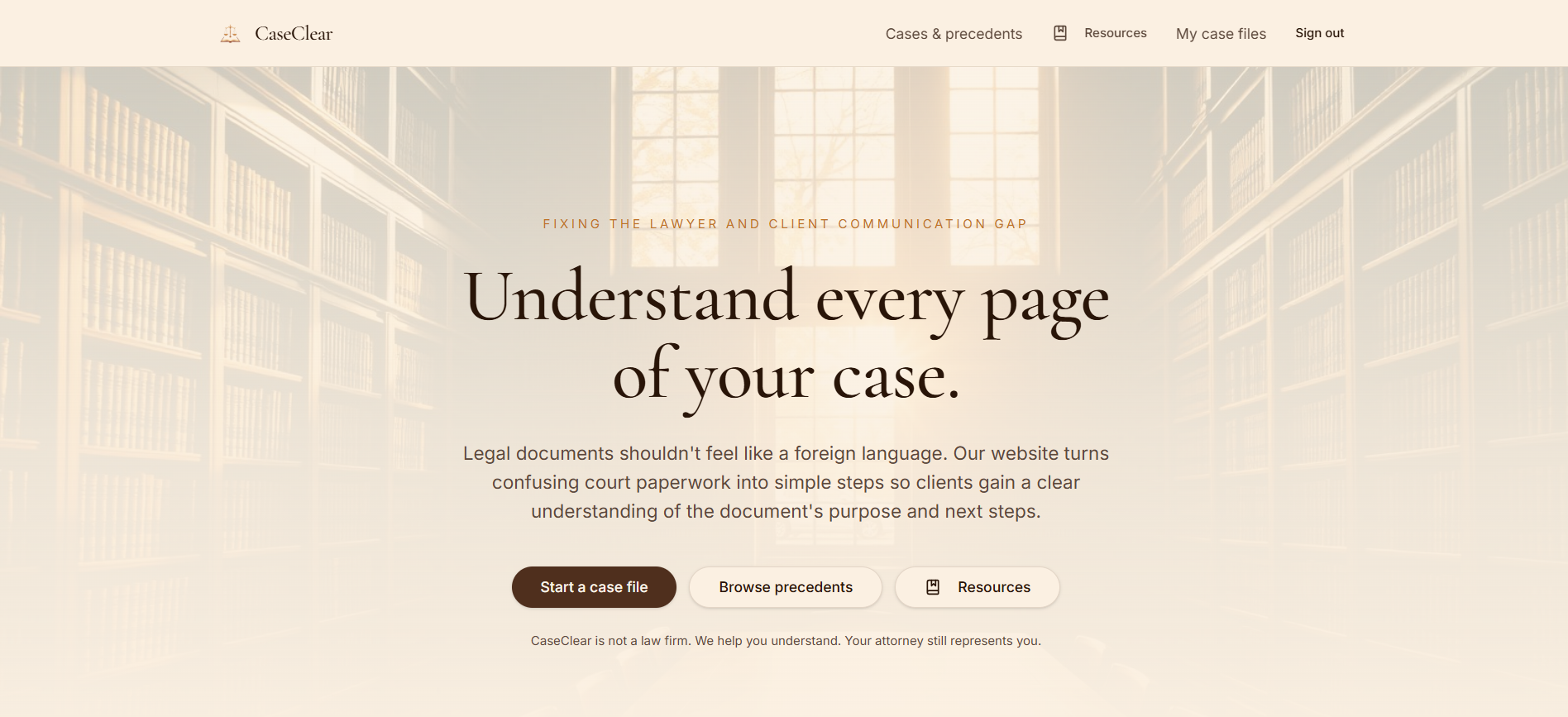
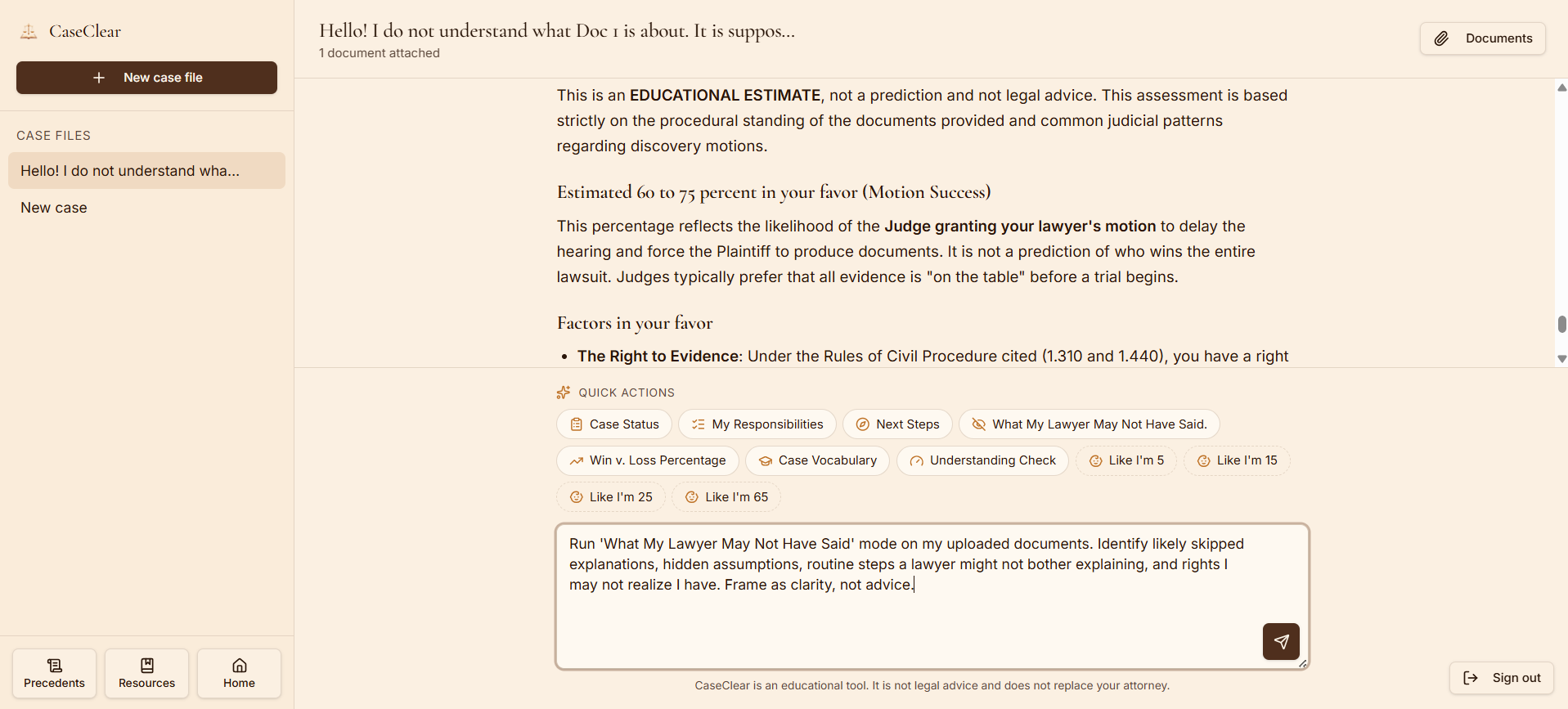
The inspiration for our platform, CaseClear, comes from a pattern found in a legal show that we often watch. In this show, everyday people frequently lose their cases on the opposing side simply because their attorneys leave them entirely in the dark, failing to explain critical legal actions or strategies. Realizing that this also occurs in the real world with a big gap where uncooperative communication leaves vulnerable clients feeling powerless. And that was why we built CaseClear; Our platform helps users by translating intimidating, complex legal documents into transparent, simple language insights, making sure everyone is in the know during a legal crisis.
What It Does
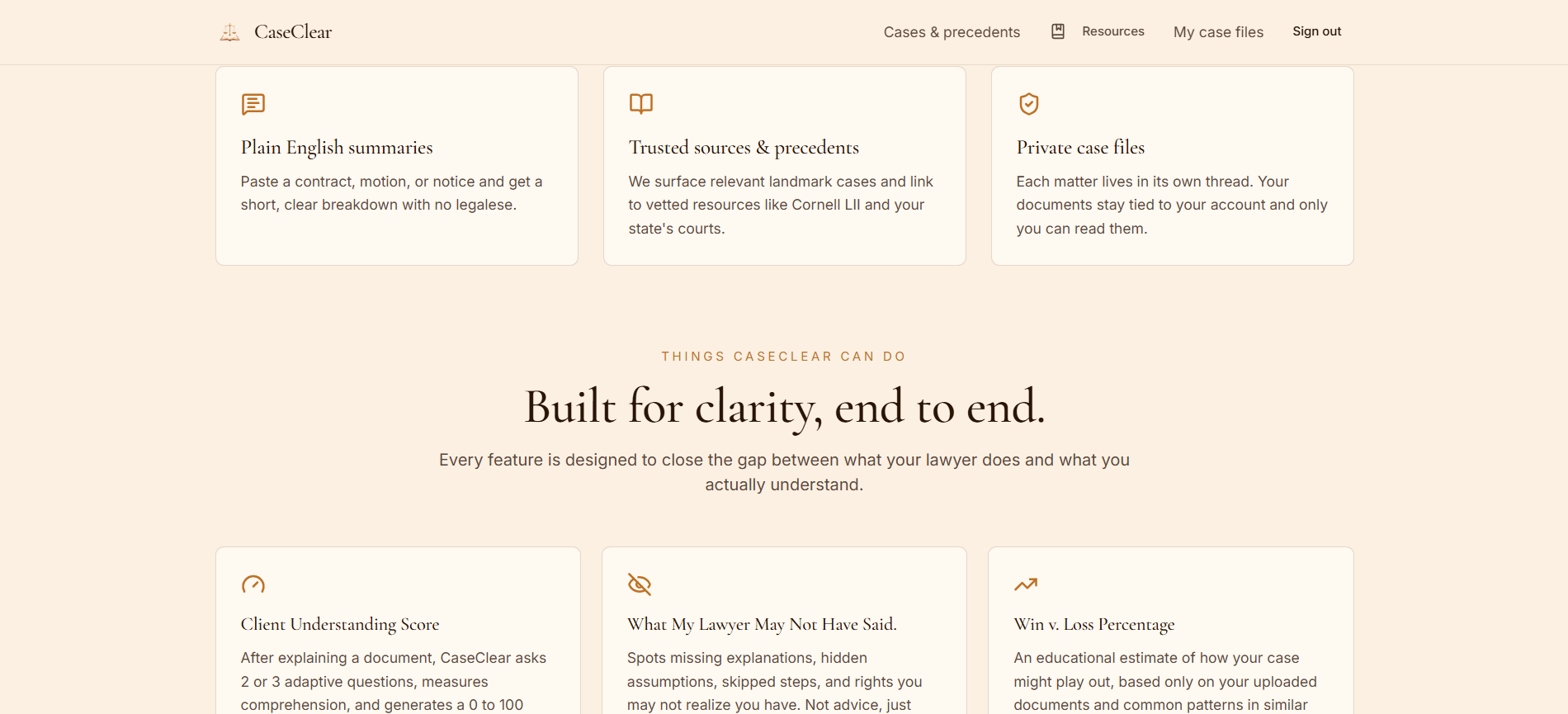
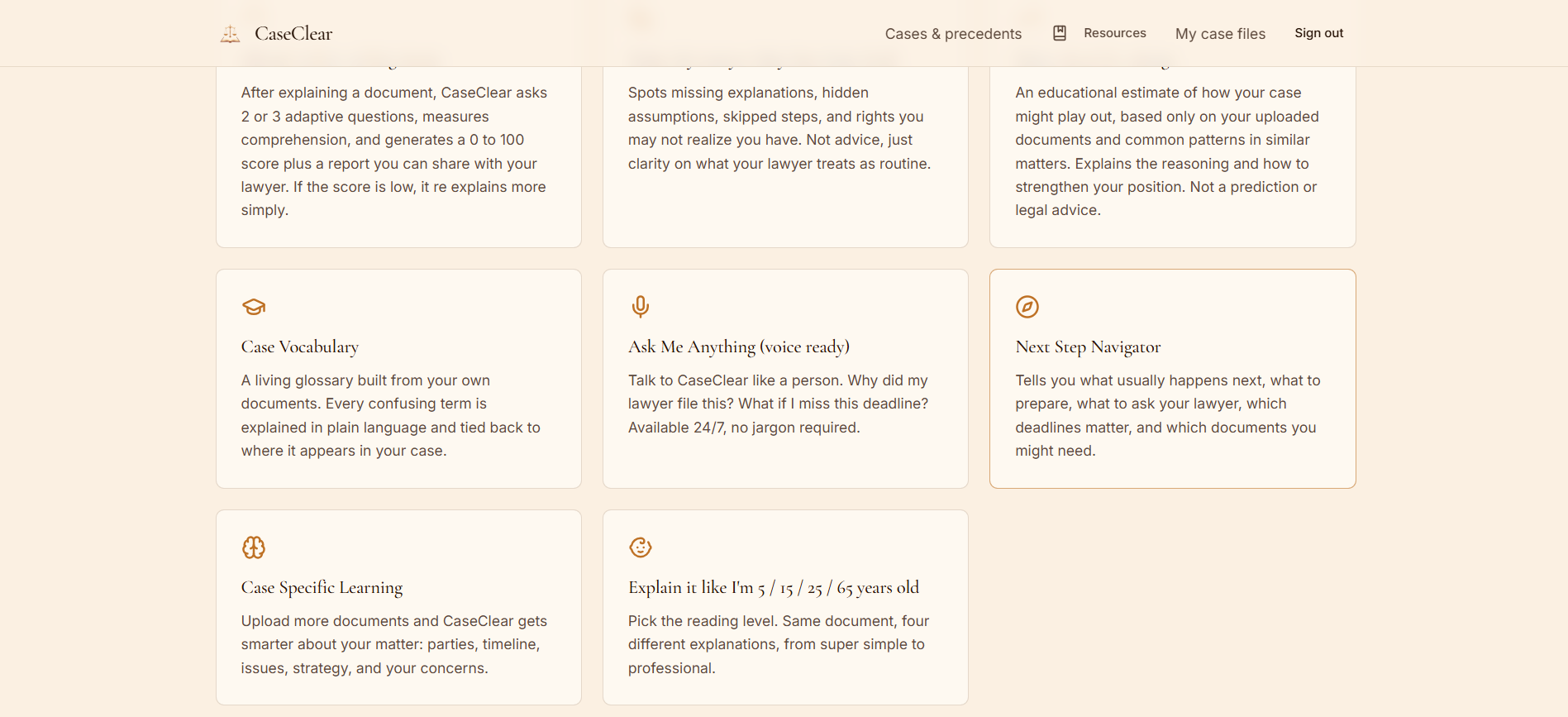
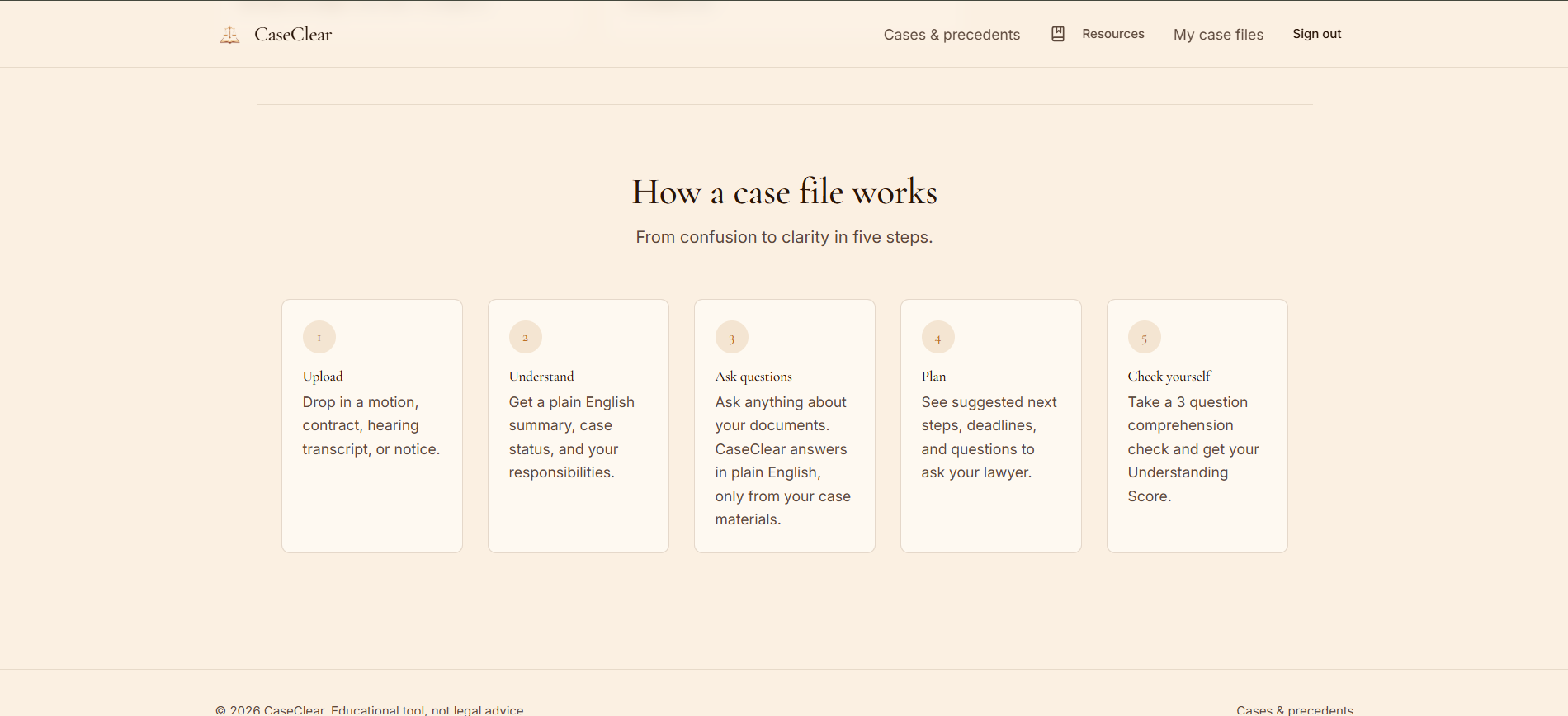
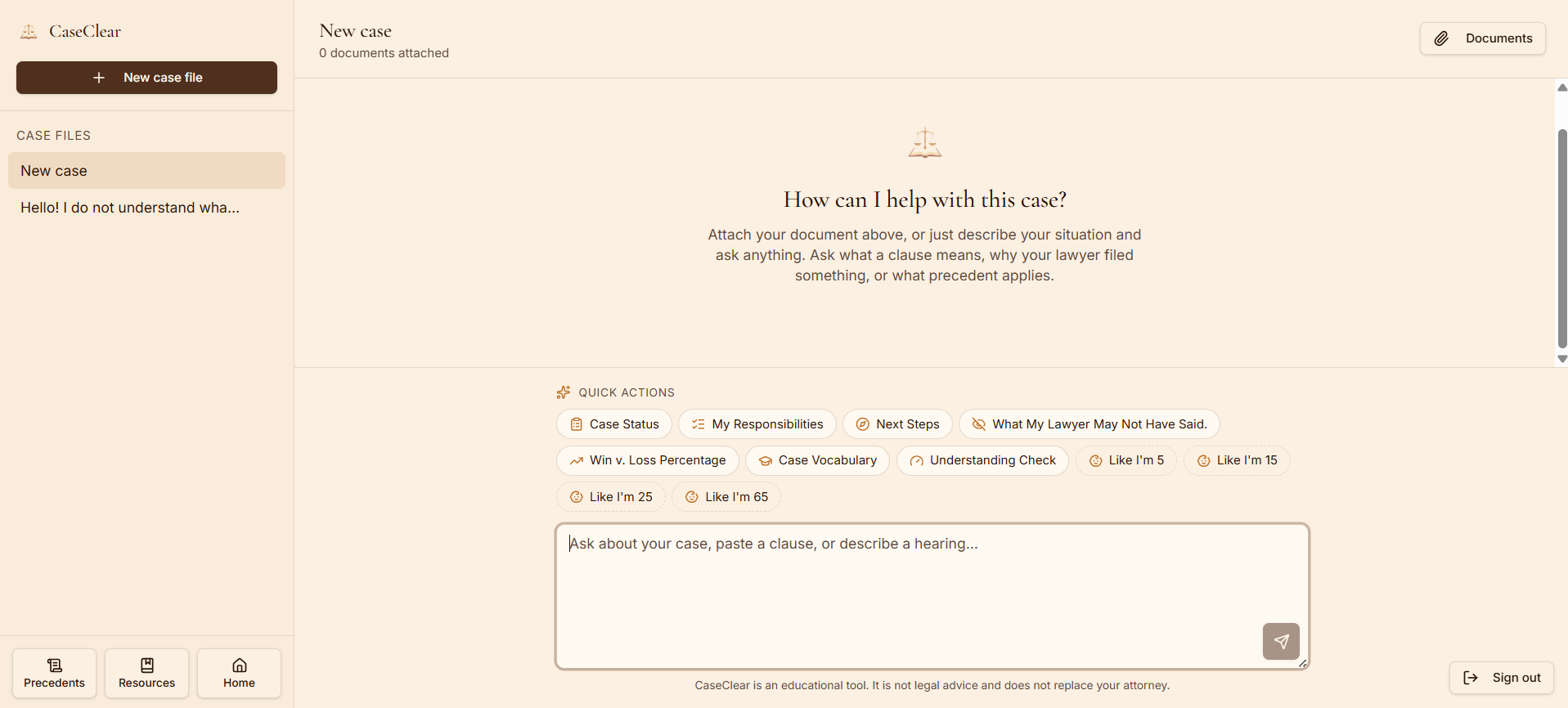
CaseClear takes complicated legal documents and turns them into simple, clear explanations that people can actually understand. When someone uploads a motion, notice, or contract, the AI breaks it down into what it means, why it matters, and what the document is basically asking from them. For example, if a judge requests proof of lost wages, CaseClear explains what that means and why the court needs it, without telling the user exactly what to submit. It gives context and highlights key details because most people never get clear explanations from their lawyers. The whole goal is to help users feel informed and confident instead of confused or overwhelmed by legal language.
How We Built It
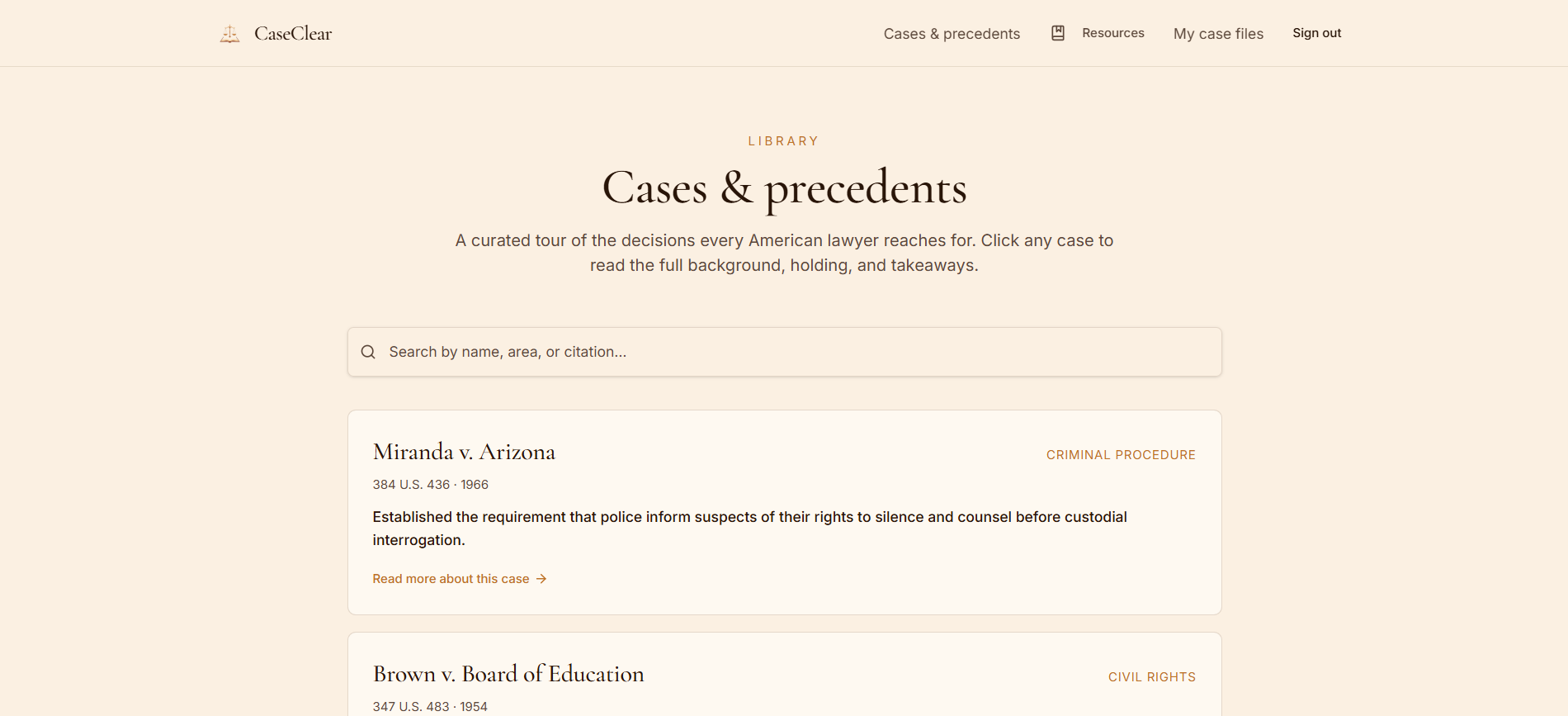
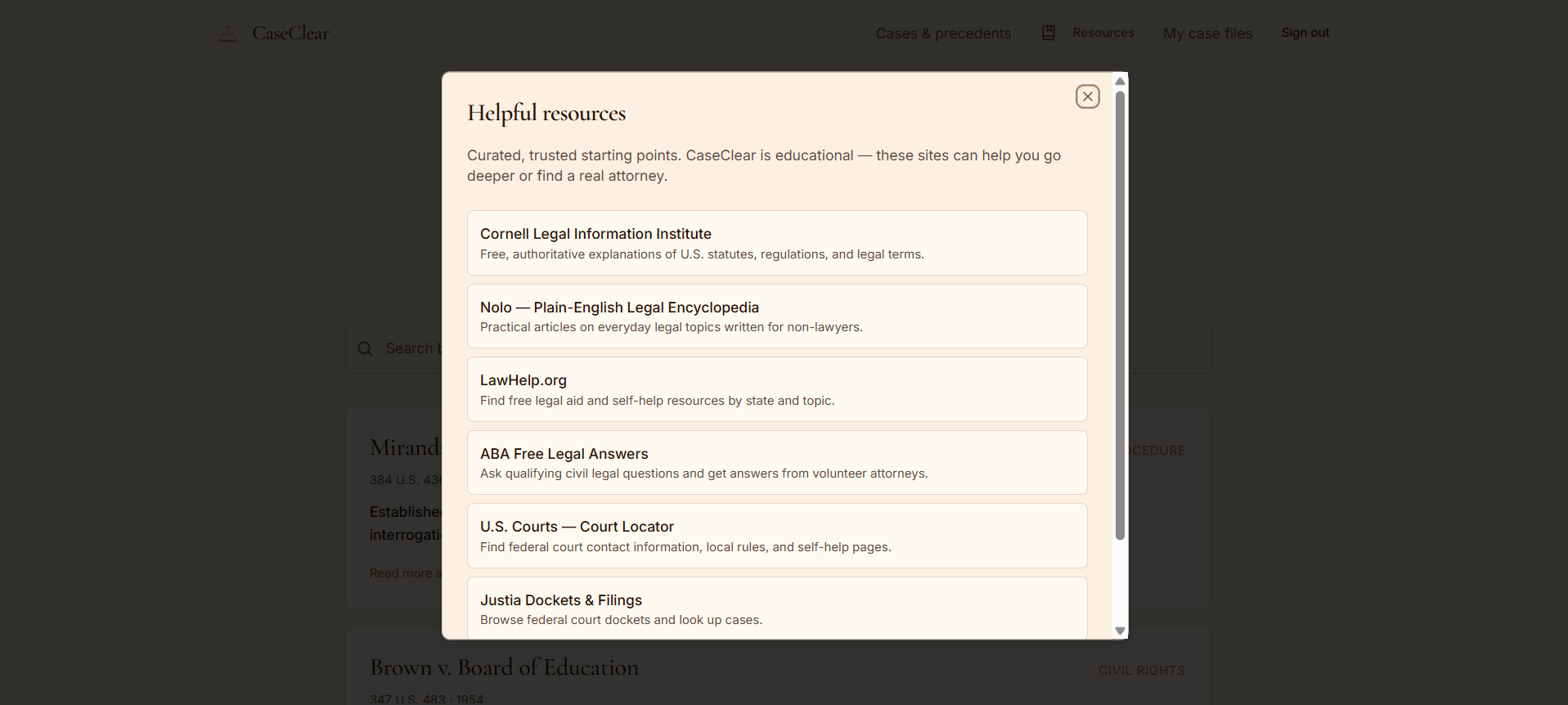
We built CaseClear using Lovable, but we had to guide it with very specific prompts to shape the design and features exactly the way we imagined. Every part of the site came from our own original ideas, so we kept refining the prompts until the layout, explanations, and tools matched what we were thinking. We focused on making the website feel simple and clear, because our goal was to create something that actually helps people understand their legal documents. The whole process was a mix of creativity, trial‑and‑error, and making sure the AI captured the experience we wanted users to have.
Challenges We Ran Into
While creating CaseClear, our primary obstacle was managing resource constraints with our development environment. Utilizing Lovable’s free platform meant working with a limited number of credits, which frequently required us to pause development and wait for credit resets. This restriction significantly slowed our momentum, energy, and motivation and forced us to become highly strategic with our prompts, ensuring that every single iteration was planned to secure efficiency under tight time constraints.
Accomplishments That We're Proud Of
We are incredibly proud of successfully transforming a complex, real world social problem into a fully functional, high impact website within the constraints of this hackathon. Despite the technical and resource challenges we faced, we designed a user centered platform that connects a major accessibility gap in the legal system. Creating a smooth integration between a complex AI engine and an intuitive dashboard while maintaining very ethical guardrails against misinformation is a massive achievement for us as high schoolers, and we are proud to have built a tool that can truly help people in times of crisis.
What We Learned
Throughout this AI hackathon, we gained valuable technical experience in prompt engineering, AI development, and creating structured user interfaces under tight resource limitations. More importantly, we learned how to design AI ethically by understanding how to build strict guardrails and disclaimers so our tool remains an educational resource rather than a source of legal misinformation. Ultimately, this project taught us that the most impactful technology isn’t only about complex code; it is about empathy, accessibility, and using innovation to solve real problems for people in our community.
What’s Next For CaseClear
We want to keep growing CaseClear by making it more specific to the kinds of cases people actually deal with. Our plan is to create clearer departments inside the platform, like sections for criminal matters, license issues, family cases, and other common legal situations. This would let users get explanations that feel more tailored to what they’re going through instead of one general system. We also want to keep improving the features so people can stay organized, understand their responsibilities, and feel more confident when talking to their lawyers.
Built With
- auth
- cloudfare
- css
- googlegemini
- icons
- lovableai
- lucide-react
- postgresdatabase
- react-markdown
- row-levelsecurity
- shadcn/ui
- sonner
- startv1
- storage
- tailwind
- tanstack
- tanstackquery
- typescript
- vercelaisdk
- vite7


Log in or sign up for Devpost to join the conversation.