-
Logo
-
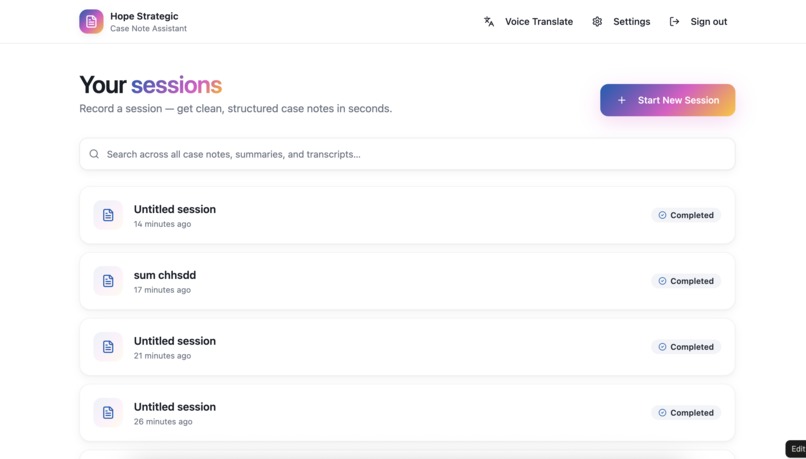
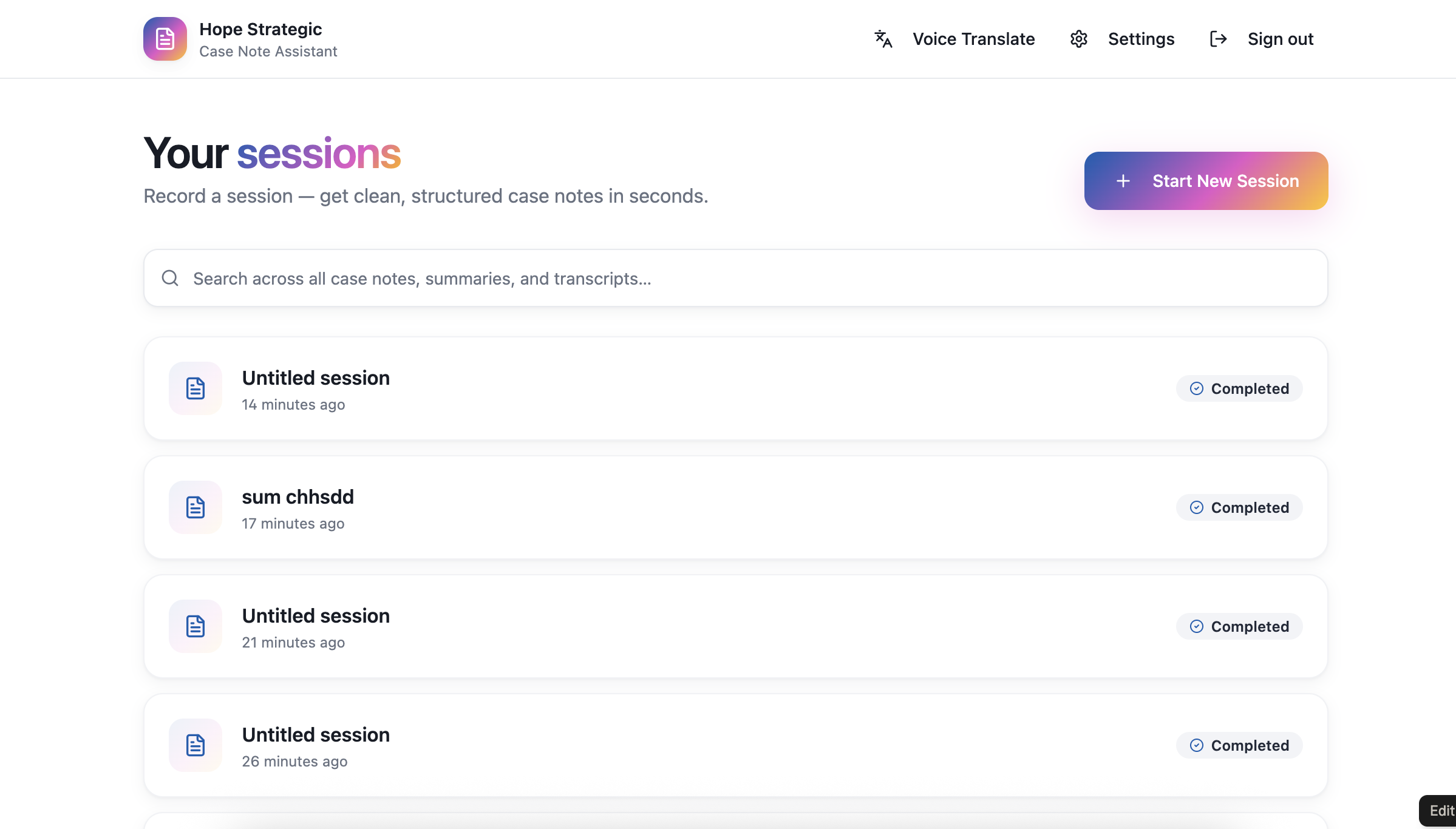
screenshot of webapp
-
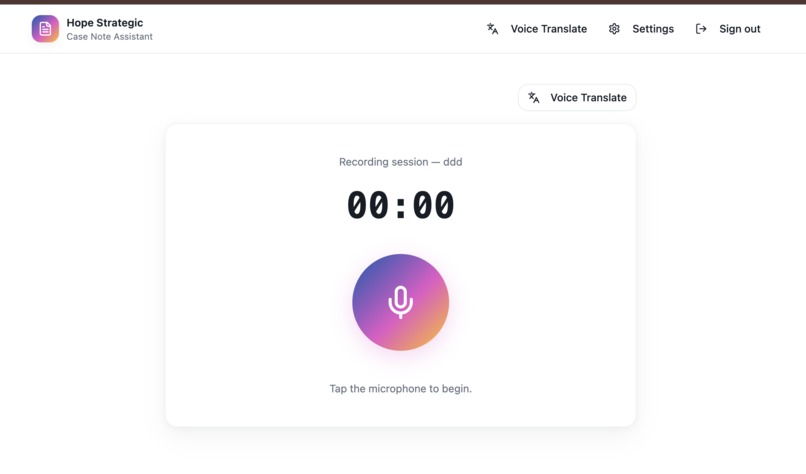
real time translation
-
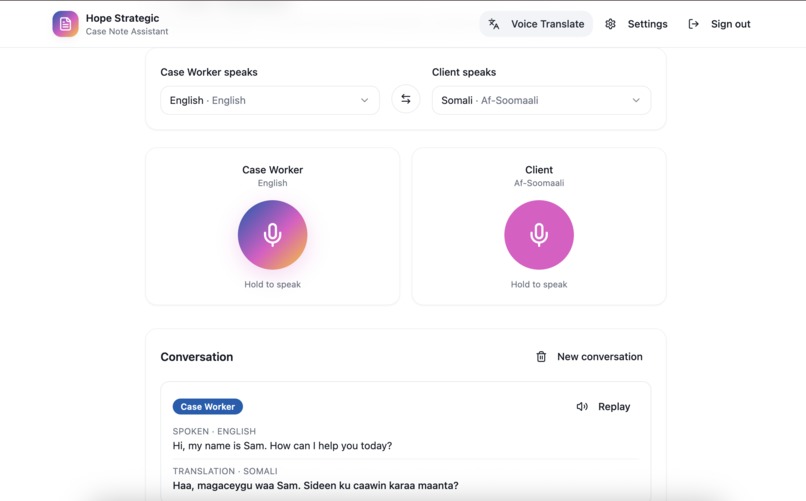
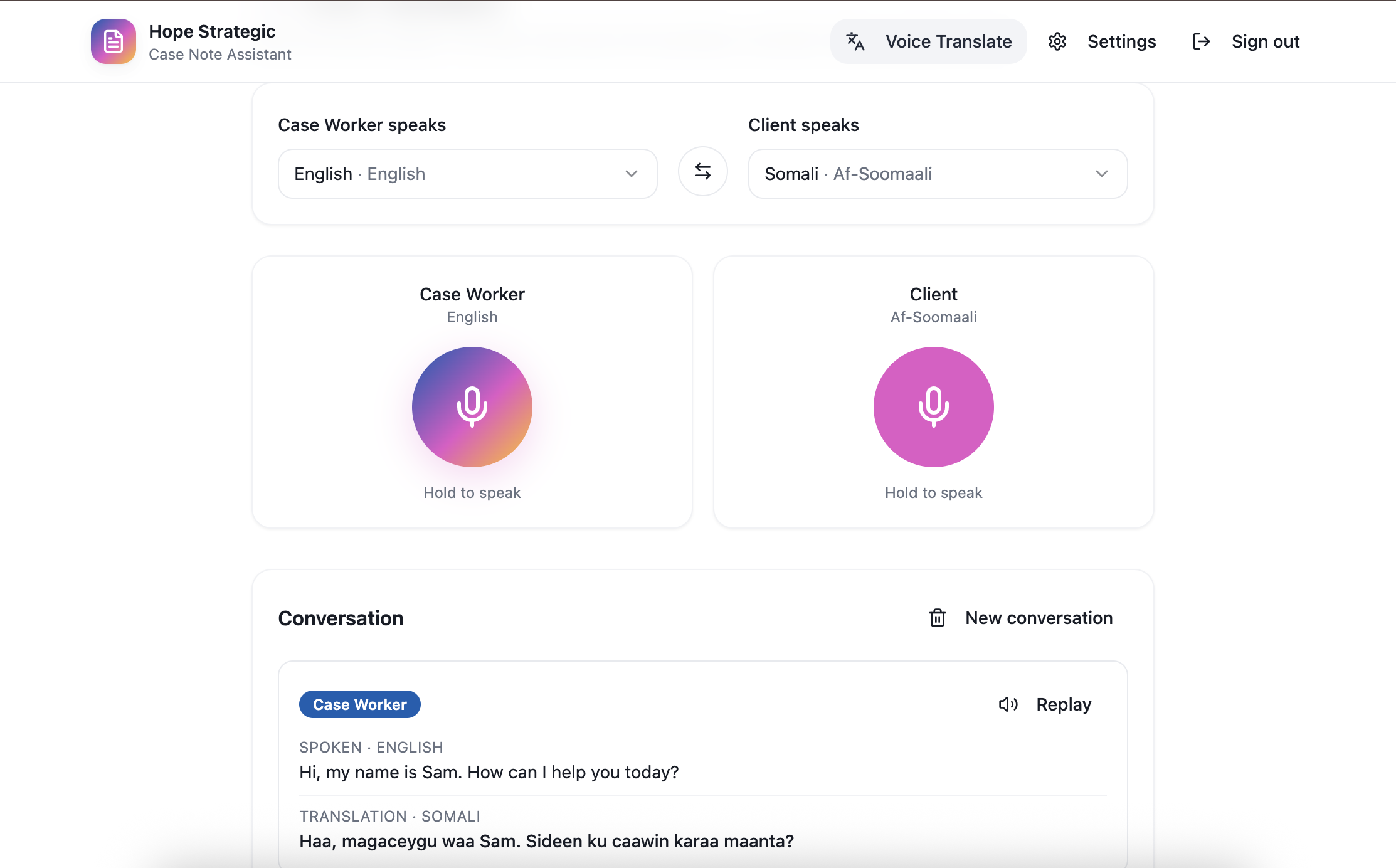
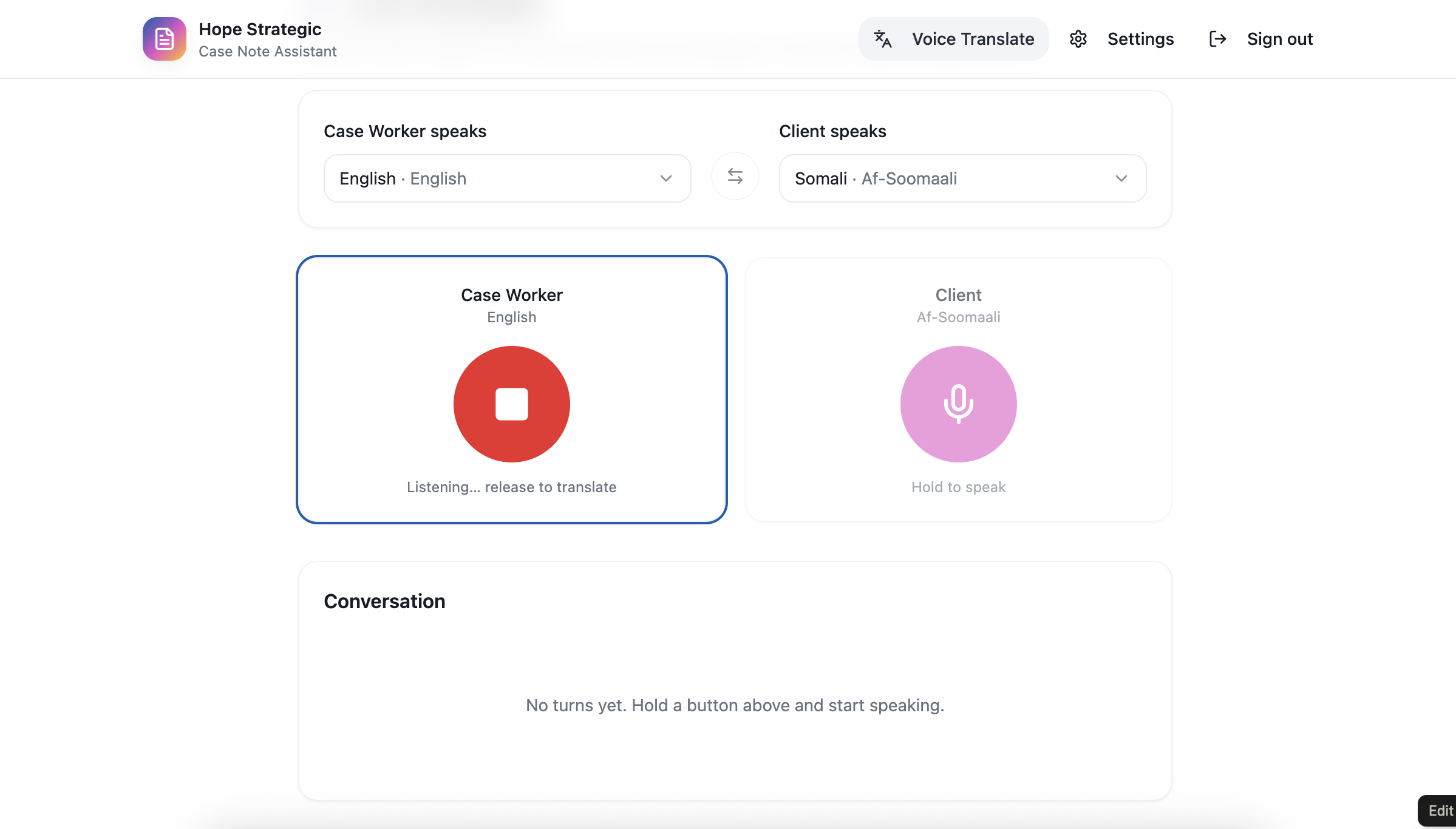
Audio Live Translation between 2 different languages
-
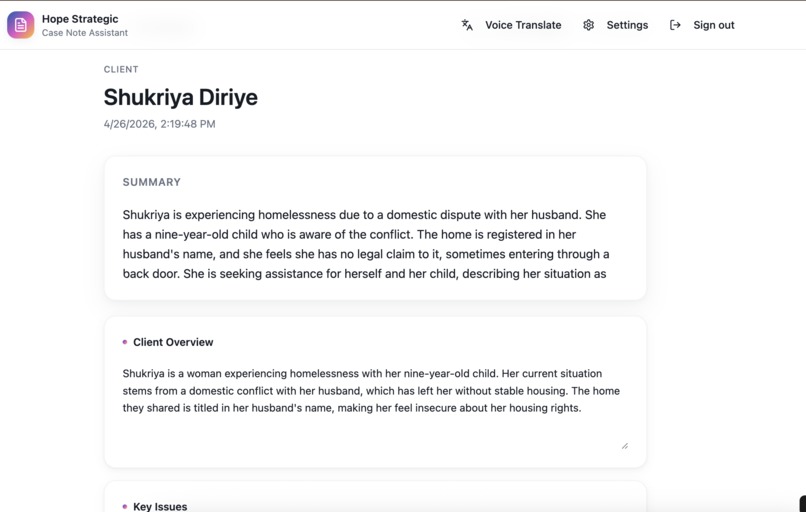
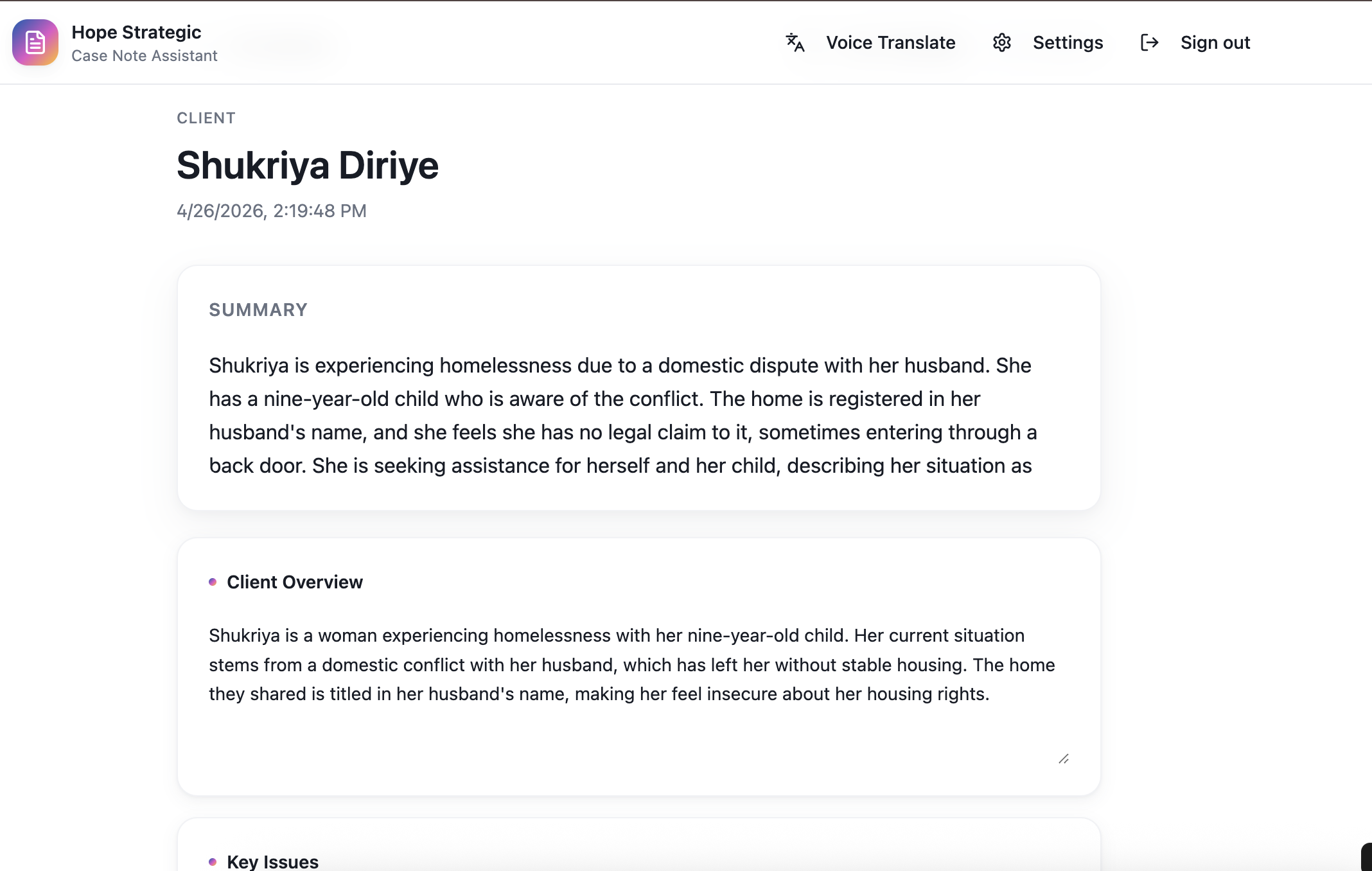
Case Summary
-
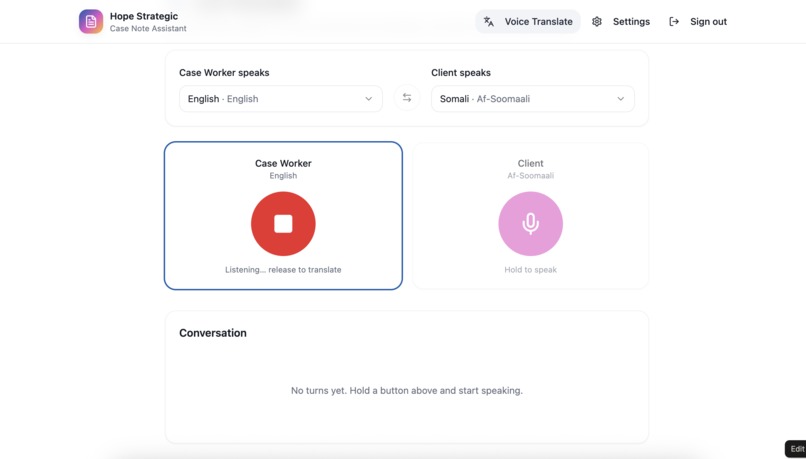
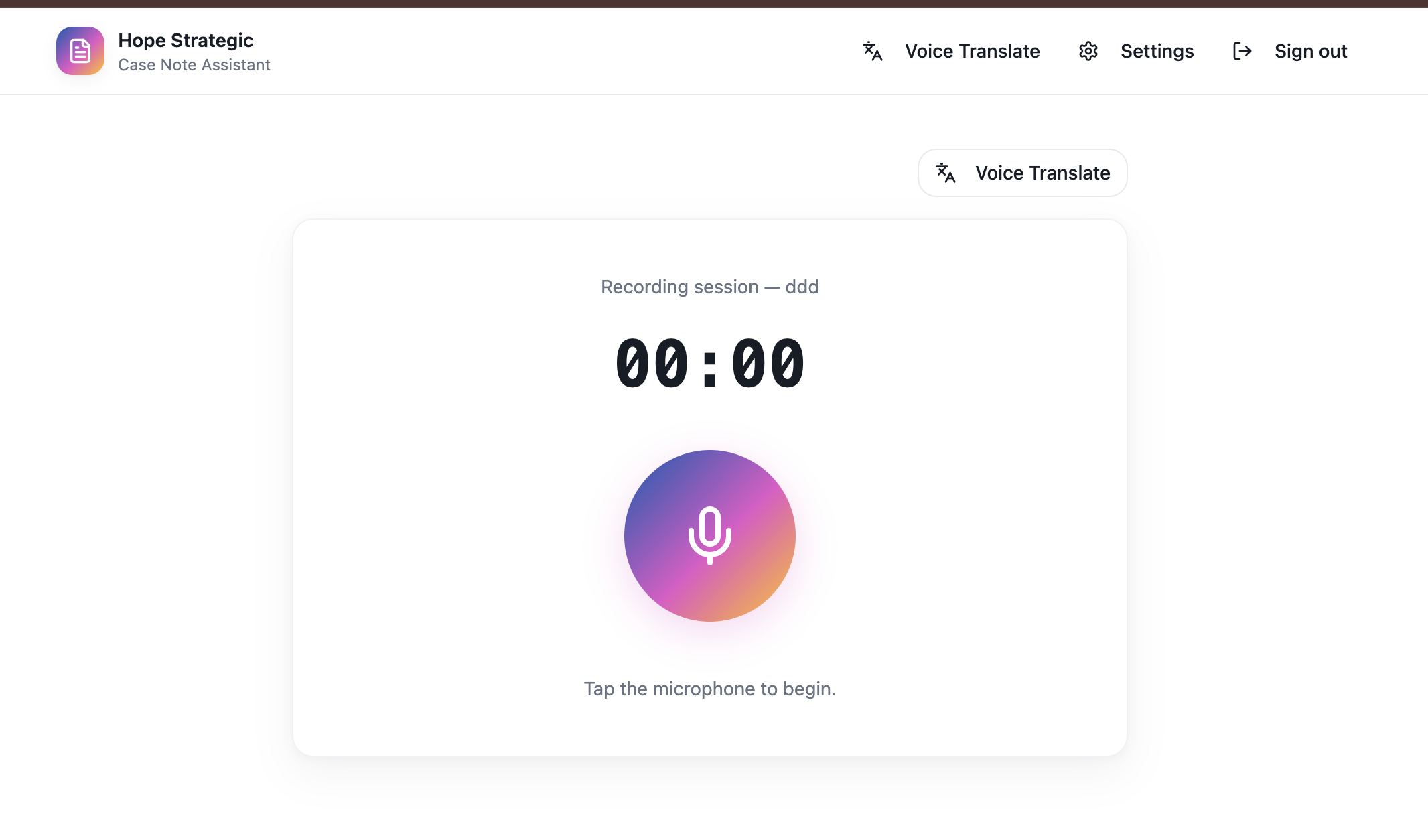
Recording
What inspired you?
We were inspired by the reality that case workers spend a large portion of their time on documentation instead of directly supporting clients. In high-pressure environments like housing, immigration, and crisis response, every detail matters—but manual note-taking is time-consuming and often inconsistent. We also saw how language barriers can limit trust and accuracy in client interactions. That combination—administrative overload and communication gaps—made it clear there was an opportunity to build a tool that helps case workers stay present while ensuring high-quality documentation.
What does it do?
The Hope Strategic Case Note Assistant is an AI-powered tool that acts as a real-time assistant during client sessions. It records conversations (with consent), transcribes them, and automatically generates structured case notes, including client overview, key issues, important details, and action items. It also produces a concise session summary for quick review. Additionally, the app includes voice translation, allowing case workers and clients to communicate across languages more effectively. This helps improve understanding, reduce reliance on interpreters, and ensure more accurate information capture.
How did you build it?
We built the app using Lovable for both the frontend and backend, which allowed us to move quickly from idea to working product. For speech-to-text, we used OpenAI Whisper to accurately transcribe client conversations. We then used AI models to process the transcripts and generate structured case notes and summaries. For resource-related context and future expansion, we referenced the 211 database to understand how to map client needs to local services. The system combines audio capture, transcription, AI structuring, and a clean user interface into a single workflow.
What challenges did you run into?
One of the biggest challenges was clearly identifying the core problem. It’s easy to try to solve everything—documentation, recommendations, prioritization, translation—but we had to narrow our focus to what delivers the most immediate value. Another major challenge was incorporating translation in a way that feels natural and accurate. Real-time voice translation introduces complexity around context, accuracy, and user experience. Ensuring that translations preserved meaning—especially in sensitive conversations—was a key difficulty. We also had to think carefully about privacy, consent, and how to handle sensitive client data responsibly.
What accomplishments are you most proud of?
We’re proud that we successfully built and shipped a working product end-to-end. Beyond just building it, we: Integrated voice transcription and structured note generation Added a working voice translation capability Engaged directly with real users (case workers and clients) Tested the product in realistic scenarios and incorporated feedback Most importantly, we didn’t build in isolation—we validated the idea with the people who would actually use it.
What did you learn?
We learned that clarity of problem definition is everything. Once we focused on reducing documentation time, decision-making became much easier. We also learned that simplicity wins. Case workers don’t need a complex system—they need something fast, reliable, and easy to use. Another key learning was the importance of user feedback early on. Talking to real clients and case workers shaped both the features and the experience. Finally, we learned that AI is most valuable when it works quietly in the background—supporting users rather than overwhelming them.
What’s next for the Case Management System?
Next, we plan to expand the system into a more complete decision-support platform. Key areas of focus include: Smarter prioritization of client needs Integration with local resource systems to recommend services in real time Improving translation accuracy and adding more language support Building integrations with existing case management platforms Enhancing privacy and compliance features for broader NGO adoption Our long-term vision is to create a system that not only documents cases, but actively helps case workers make better, faster decisions and connect clients to the right support at the right time.
Built With
- 211database
- javascript
- lovable
- node.js
- react
- whisper

Log in or sign up for Devpost to join the conversation.