-

Example Chatbot
-
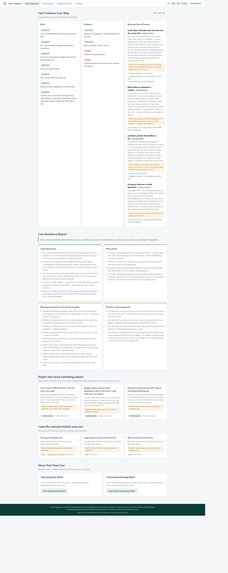
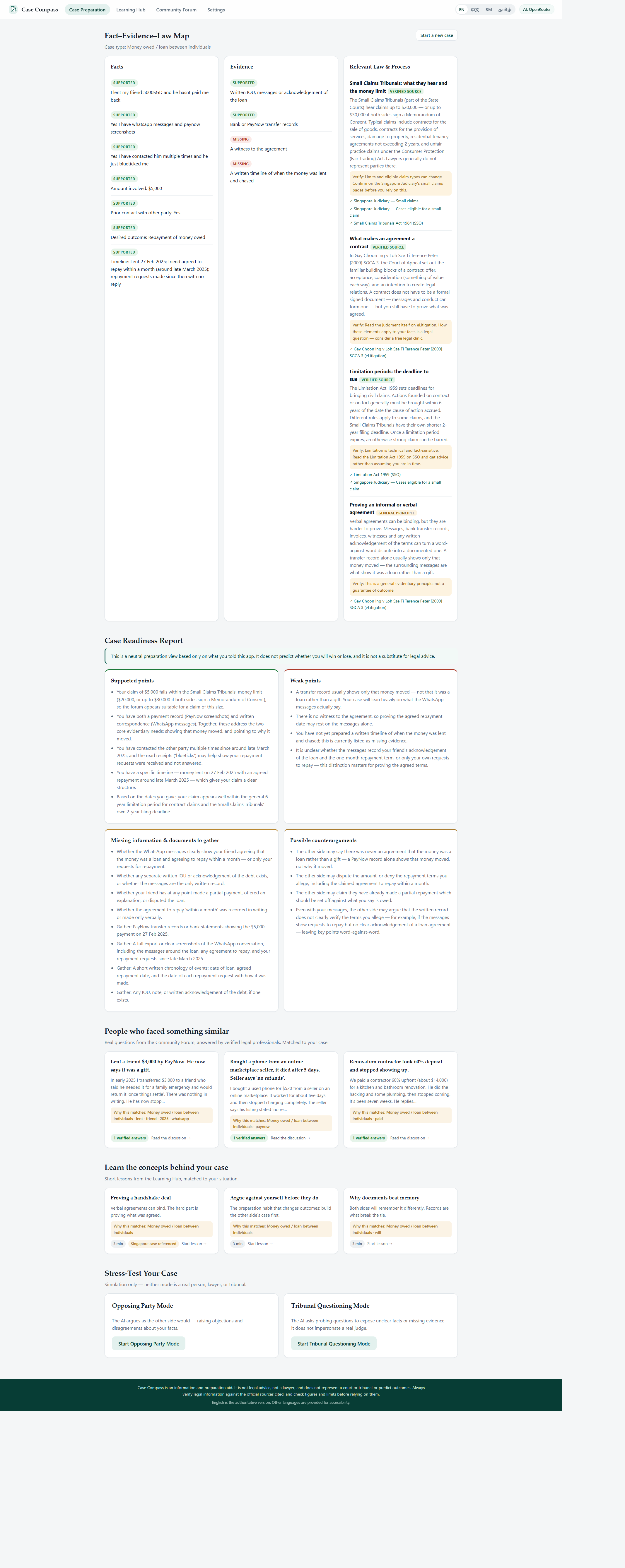
Example Case Map
-
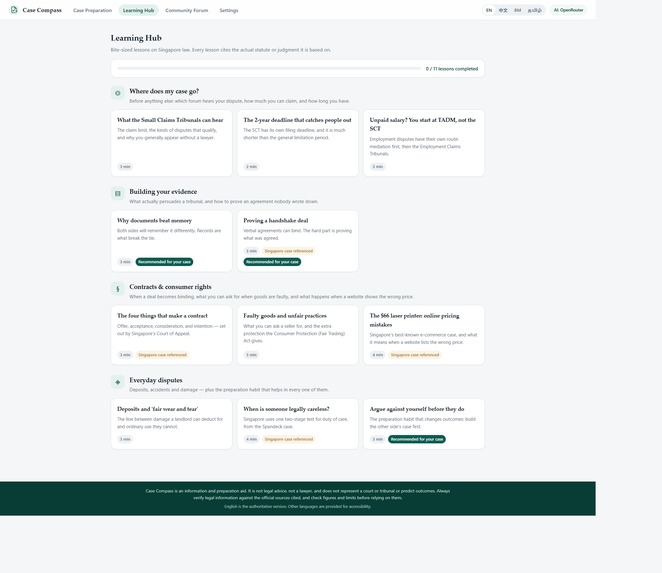
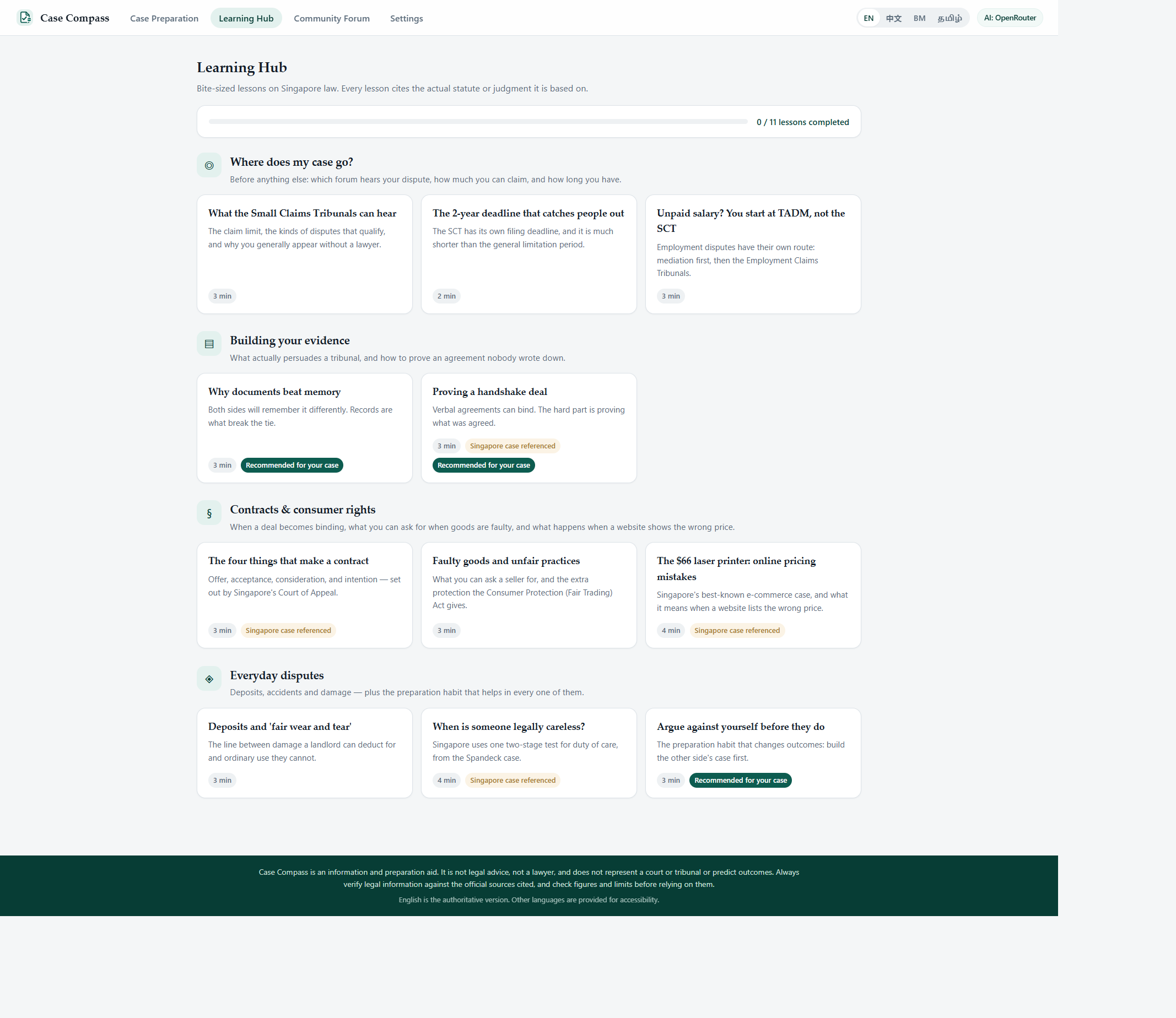
Learning Hub Demo
-
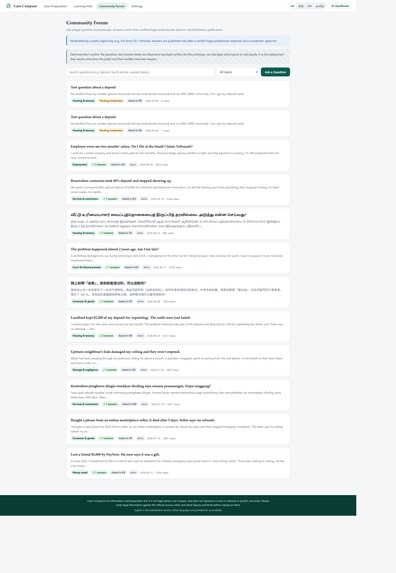
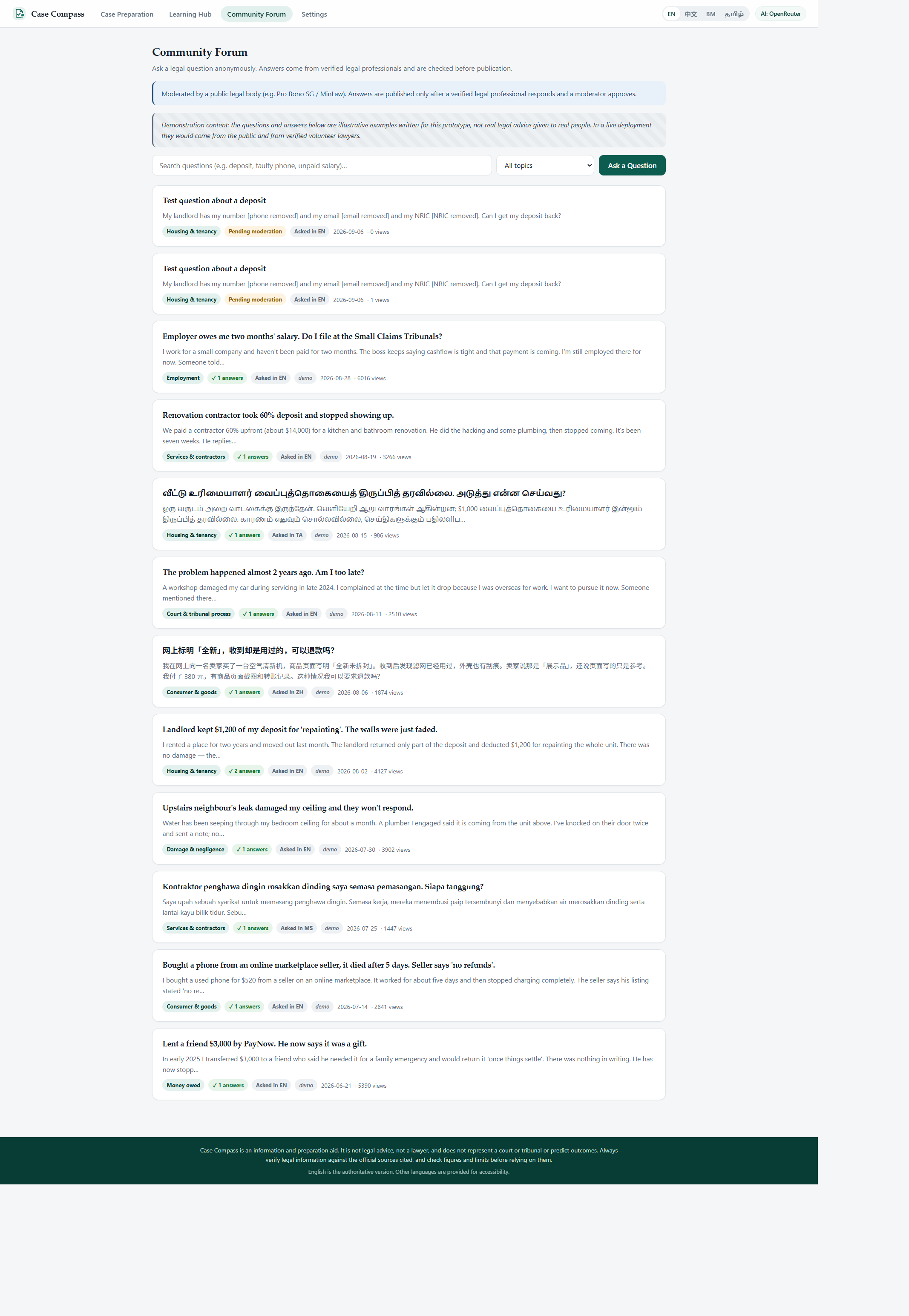
Community Forum Demo
-
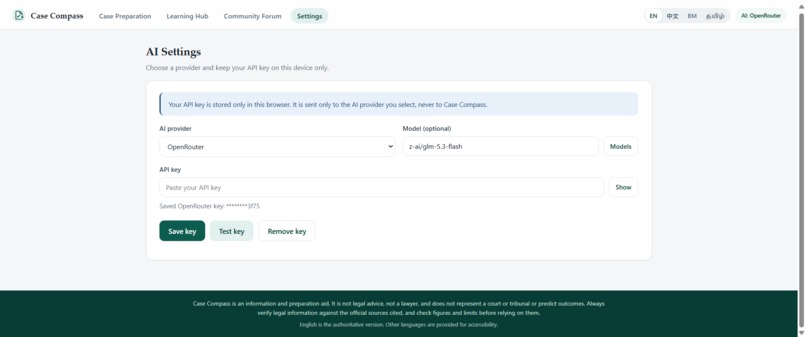
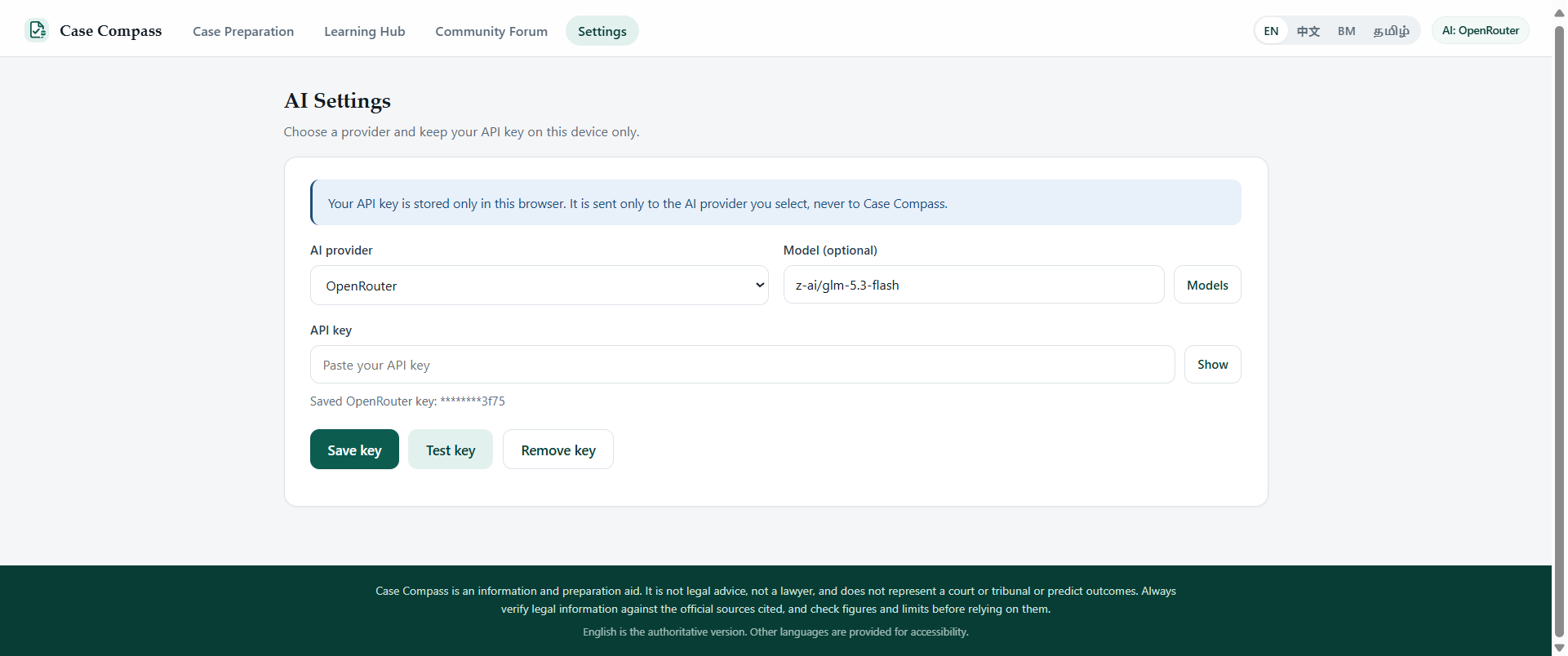
Settings demo (browser only api)

We are Team SeeGenHur, Team 27
Inspiration
We asked a simple question: What happens when someone with a legal problem uses GenAI before they even know what to ask?
AI can help, but it can also reinforce assumptions or confidently give the wrong answer. We wanted Case Compass to do more than agree with users — it should challenge them, highlight missing evidence, and prepare them for the other side.
What we built
Case Compass helps self-represented users organise their claim into a Fact–Evidence–Law map, identify weak points, and generate a Case Readiness Report.
Users can also practise through opposing-party and tribunal-style role-play, learn through a cited Learning Hub, and explore a moderated Community Forum.
How we built it
We used Node.js + Express with a simple HTML, CSS and JavaScript frontend.
The important case logic is rule-based and checkable, while Gemini or OpenRouter handles natural-language parts like follow-up questions and role-play.
We also added support for English, Chinese, Bahasa Melayu and Tamil.
Challenges we faced
The biggest challenge was deciding what AI should control and what should stay deterministic.
We also had to deal with API integration, invalid model responses, file uploads, multilingual support, and keeping the project realistic within a hackathon timeframe.
What we learned
We learned that responsible AI is not just about adding a disclaimer.
The system itself has to be designed so AI is used where it helps, while important facts, evidence and legal references stay grounded and checkable.
Most importantly, we realised that helping someone prepare for a legal case is not always about giving them more answers — sometimes it is about showing them what they are still missing.
Built With
- ai
- api
- css
- express.js
- gemini
- generative
- github
- html
- javascript
- json
- language
- mammoth.js
- natural
- node.js
- openrouter
- pdf.js
- render
- rest


Log in or sign up for Devpost to join the conversation.