Inspiration# Emergency Response Multi-Agent System
Overview
This project aims to revolutionize how 911 operators manage emergency responses during disasters. When disasters strike, emergency services are often overwhelmed with calls and messages, making it challenging to provide timely assistance to everyone in need. Our multi-agent framework helps operators prioritize, process, and dispatch resources more efficiently.
Problem Statement
During disasters, 911 operators face:
- Overwhelming volume of emergency calls
- Difficulty in prioritizing critical situations
- Challenges in coordinating appropriate response units
- Time pressure to make life-saving decisions
Our Solution
We've developed an intelligent multi-agent system that:
- Continuously processes incoming emergency data
- Extracts critical metadata and assigns severity scores
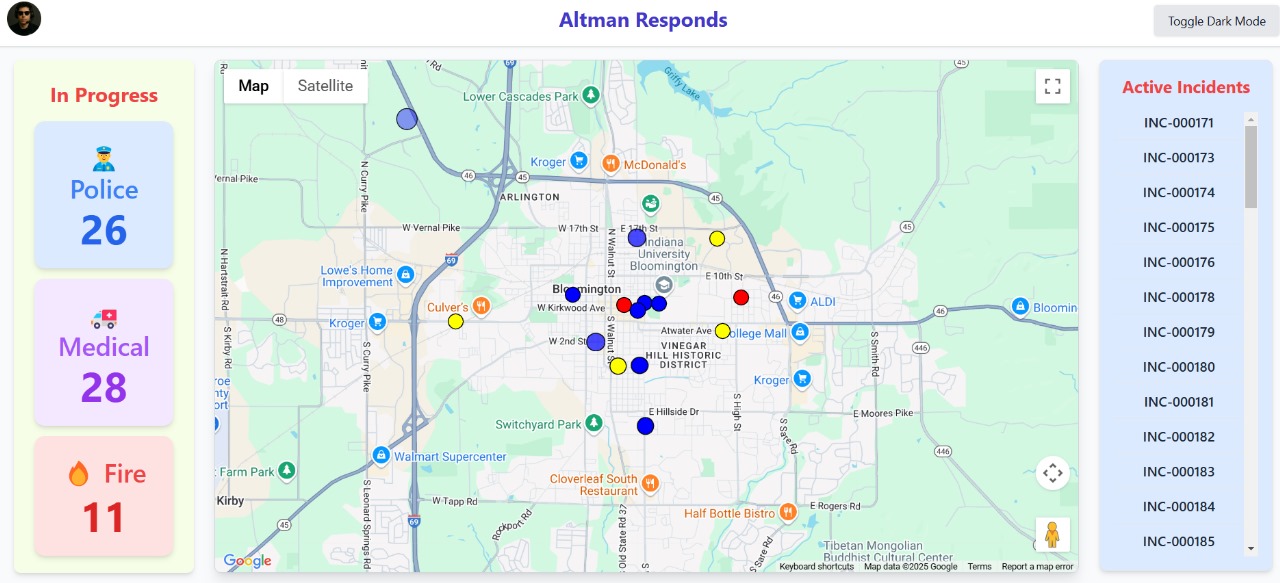
- Visualizes incidents on an interactive map of Bloomington
- Automatically dispatches appropriate response units if operator action is delayed
System Architecture
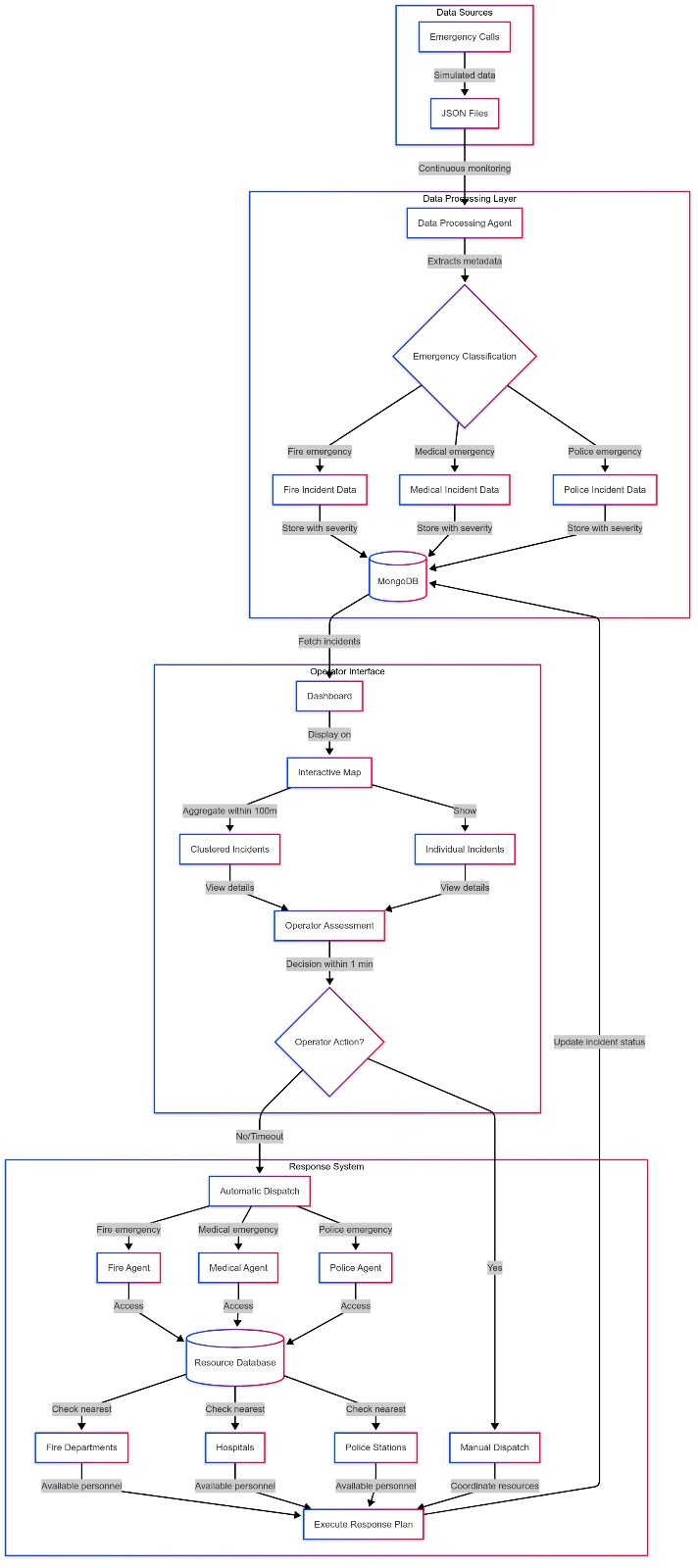
Data Processing Agent
- Monitors incoming emergency data (simulated from JSON files)
- Extracts metadata: emergency type, people affected, location, etc.
- Assigns severity scores based on key factors
- Stores processed information in MongoDB
Visualization Dashboard
- Displays incidents on an interactive map of Bloomington
- Aggregates similar incidents within 100 meters
- Color-codes emergencies by type and severity
- Provides operators with a clear visual overview of the situation
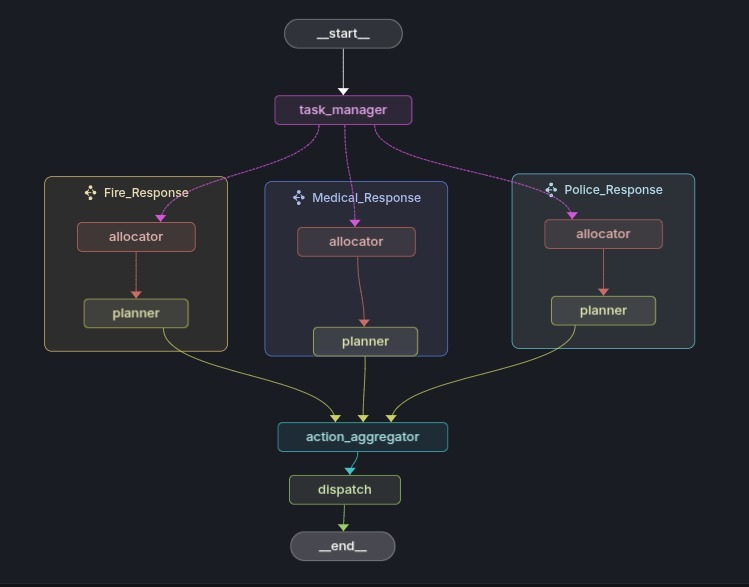
Specialized Response Agents
Three types of response agents can be automatically activated:
- Fire Department Agent: Coordinates firefighting resources
- Police Agent: Manages law enforcement response
- Medical Agent: Organizes emergency medical services
Automatic Dispatch System
- Operators have a one-minute window to assess and respond
- If no action is taken within this timeframe, the system automatically:
- Analyzes the emergency context
- Identifies the nearest appropriate resources
- Dispatches the required personnel and equipment
- Executes the response plan
Technical Stack
- Backend: Multi-agent framework
- Database: MongoDB for incident storage and resource tracking
- Frontend: Interactive map visualization
- Data Processing: AI-powered metadata extraction and severity assessment
Getting Started
Installation
bash
Clone the repository
git clone https://github.iu.edu/nbangal/altman_responder.git
Navigate to the project directory
cd emergency-response-system
Install dependencies
npm install
Running the Application
bash
Start the backend services
npm run start-backend
In a new terminal, start the frontend
npm run start-frontend
Future Enhancements
- Integration with real emergency call systems
- Machine learning models for better incident classification
- Mobile application for field responders
- Predictive analytics for resource allocation
Contributors
- Dilip Nikhil Francies
- Prinston Rebello
- Nischal BK
- Sathya NC


Log in or sign up for Devpost to join the conversation.