-
-
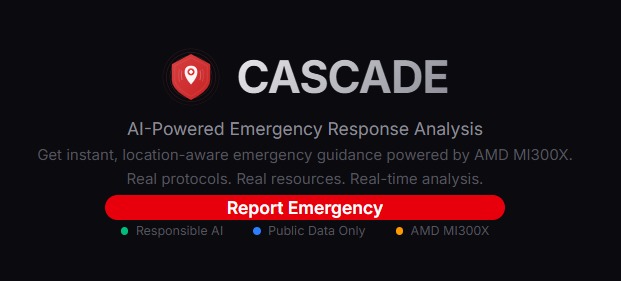
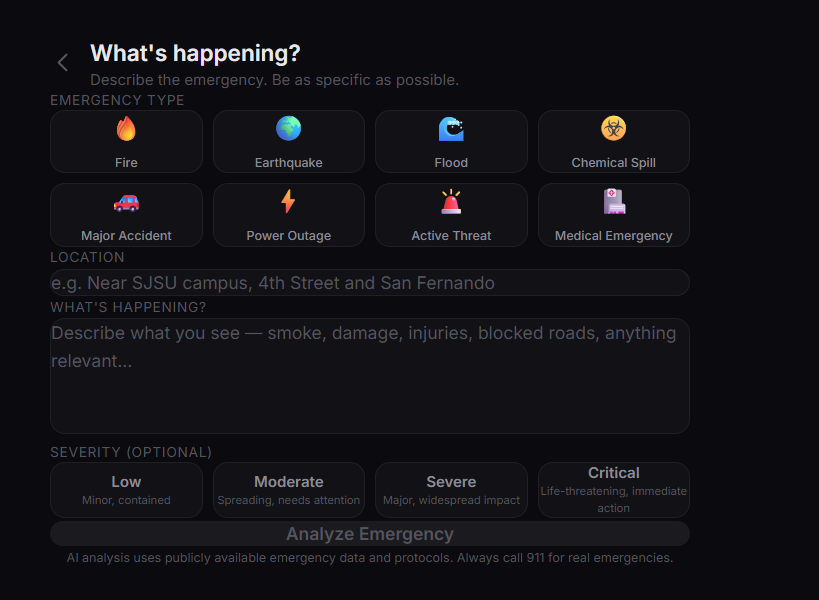
Front page
-
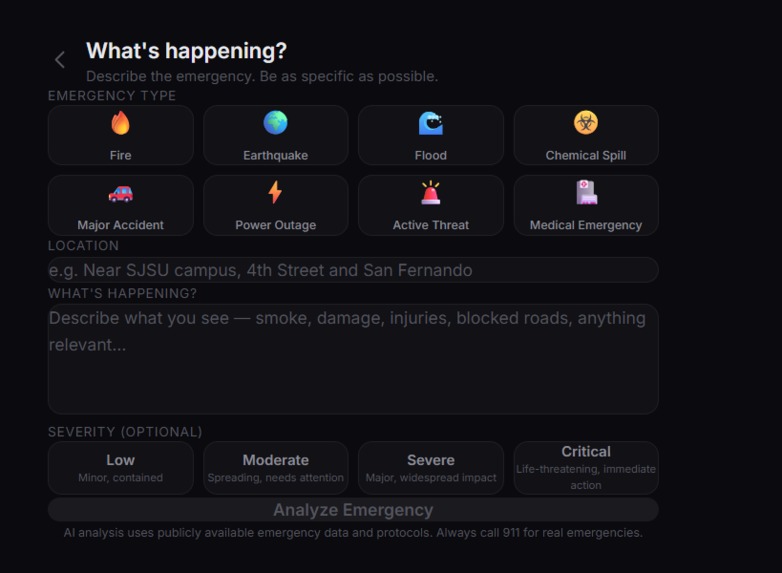
Emergency dipicting
-
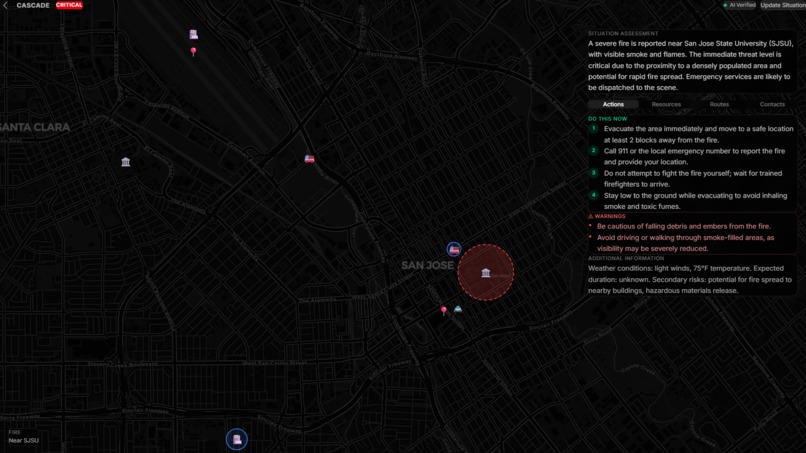
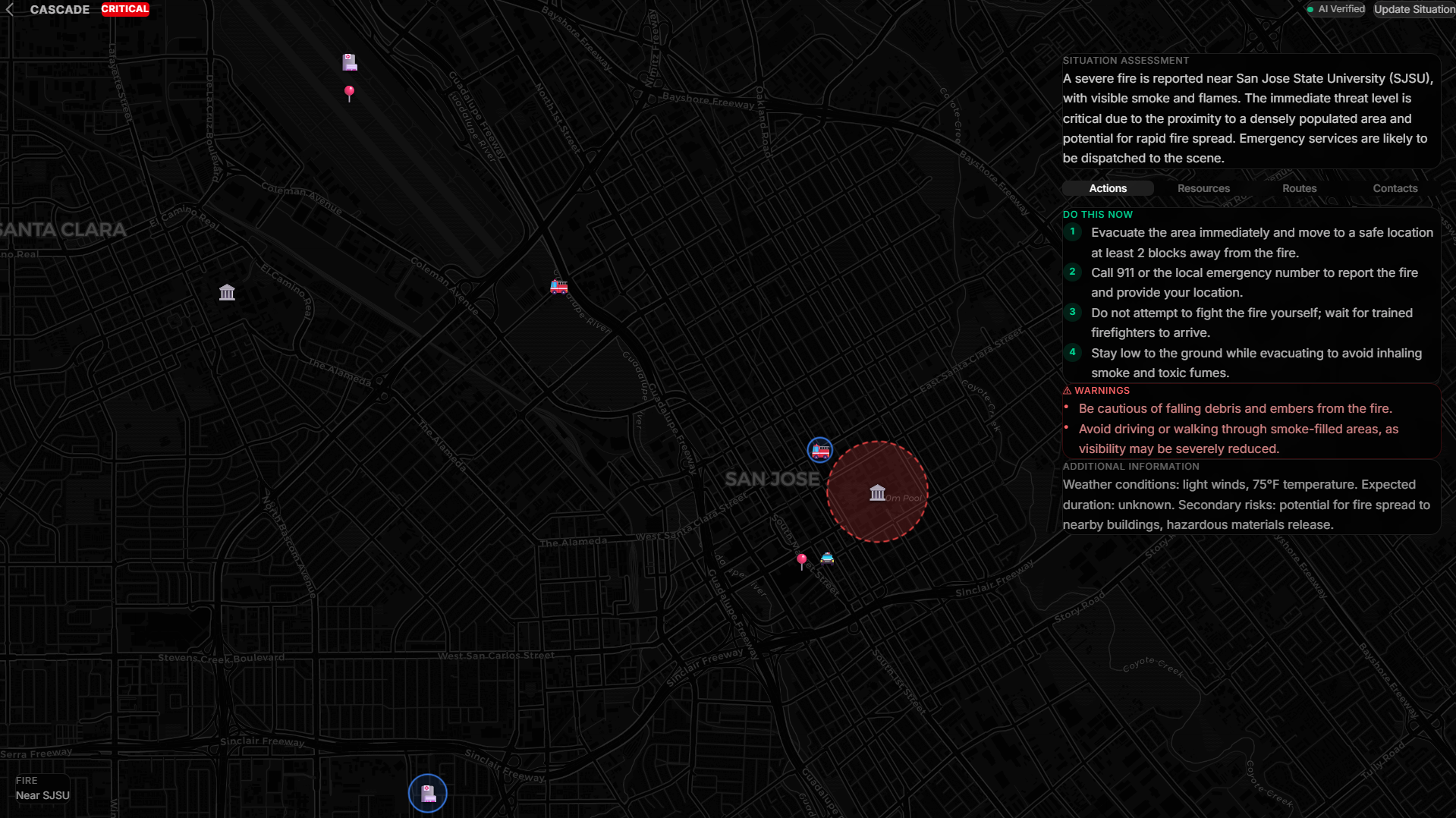
Informational screen with emergency details
Inspiration We wanted to build something that actually helps people. During emergencies most people freeze because they don't know what to do or where to go. We thought what if AI could bridge that gap and give you real guidance before first responders arrive. Not a game, not a simulation, just a tool that could actually save lives using publicly available data.
What it does You describe any emergency like a fire, earthquake, flood, or chemical spill and Cascade instantly analyzes it. It gives you step by step actions to take right now, shows nearby hospitals, fire stations, and shelters on a live map, provides evacuation routes, safety warnings, and emergency contacts. Everything is location aware and based on real public data and emergency protocols. You can also update the situation as things change and get refreshed guidance in real time.
How we built it React and Vite for the frontend, Tailwind CSS for styling, Leaflet for the interactive dark map, and Framer Motion for animations. The AI runs on AMD Developer Cloud using an MI300X GPU serving Meta Llama 3.1 70B through vLLM with an OpenAI compatible API. No separate backend server, the frontend calls the model directly. We also built a responsible AI layer that checks every response for content safety, bias, and factual grounding.
Challenges we ran into Honestly this project went through three completely different versions in one night. We started with a life decision strategy game, pivoted to a gamified emergency simulator, then realized neither was right and rebuilt the whole thing as a real emergency tool. Each pivot meant scrapping hours of work and starting over. We were up until 5am debugging API responses, fighting with map rendering, and rewriting AI prompts to get useful structured output instead of hallucinated resources. Getting the 70B model to consistently return valid JSON with real locations was way harder than expected.
Accomplishments that we're proud of The fact that it actually works and gives genuinely useful guidance. The map with real nearby resources, the responsible AI transparency badge, and the live situation update feature all came together really well. We're also proud we had the discipline to pivot twice when something wasn't working instead of just shipping something mediocre.
What we learned When to let go of an idea. We spent hours on two different concepts before landing on the right one. We also learned a lot about working with large language models in production, prompt engineering for structured output, and how to build responsible AI guardrails. Coming from a previous hackathon we thought we had our workflow figured out but this one humbled us.
What's next for Cascade GPS auto detection so you don't have to type your location. Real time data feeds from USGS, National Weather Service, and CAL FIRE. Push notifications for community wide alerts. Multi language support for diverse communities. Offline mode with cached local emergency data. And eventually integration with official emergency management systems.
Huge thanks to my teammate Yug for helping build this. Unfortunately he was feeling sick during the hackathon and needed to step away for a bit but his contributions were essential to getting this across the finish line.
Track Competes: Main Top 3 Projects, Best Use of AMD Technology, Best In Play, and Best Use of Responsible AI
Built With
- amd-developer-cloud
- amd-mi300x-gpu
- framer-motion
- javascript
- leaflet.js
- meta-llama-3.1-70b
- openai
- react
- tailwind-css
- vite
- vllm

Log in or sign up for Devpost to join the conversation.