-
-
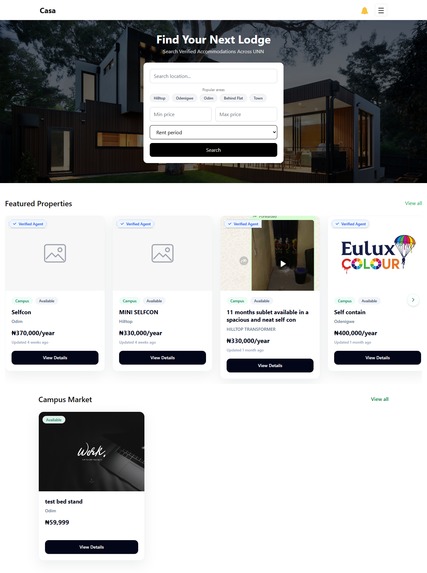
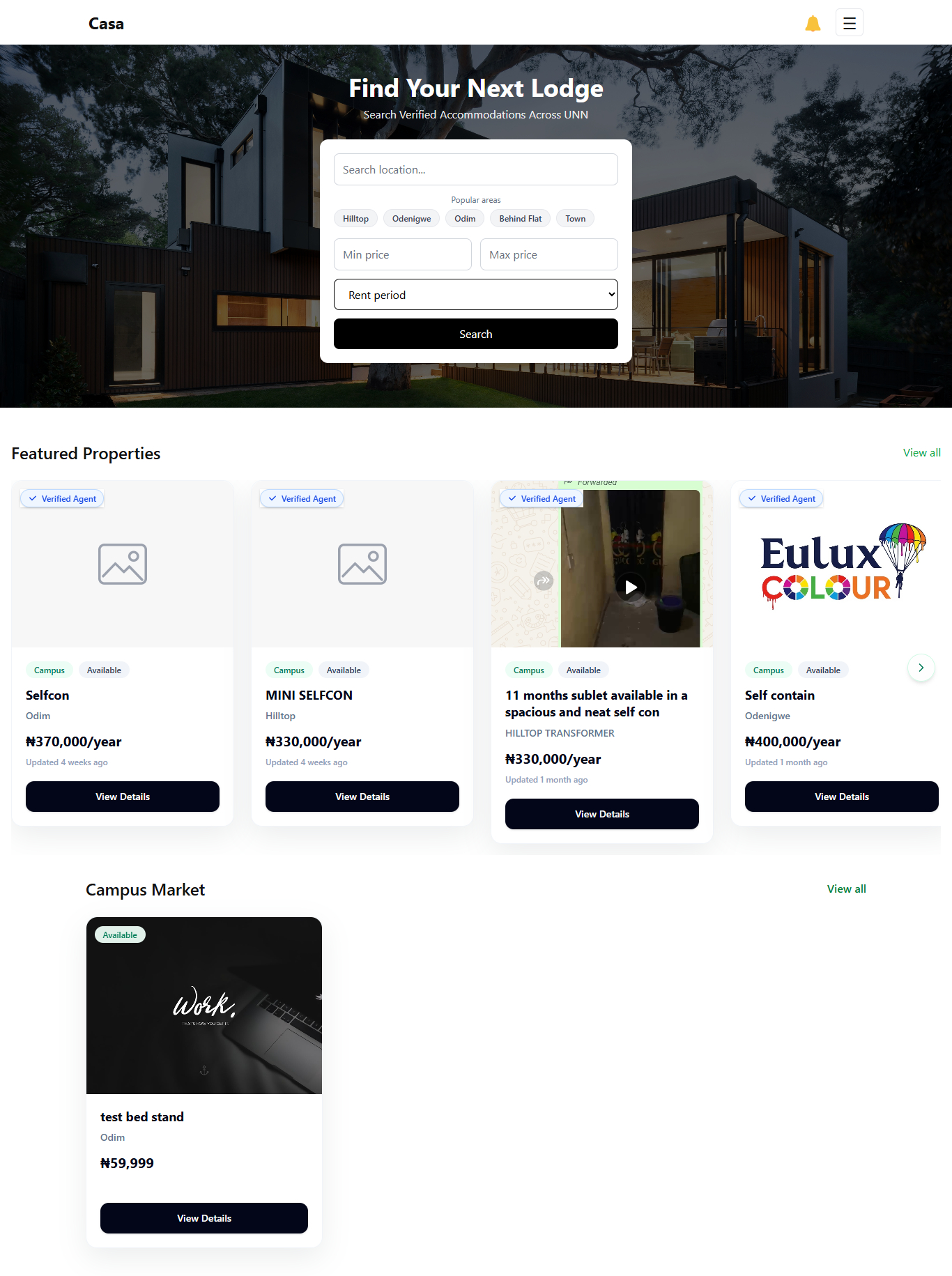
Homepage
-
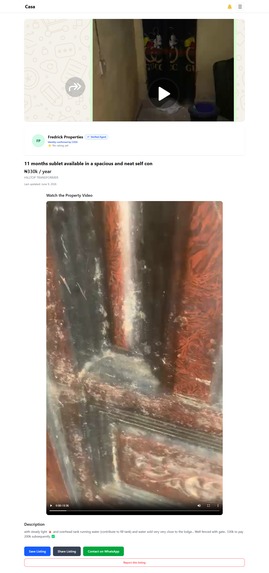
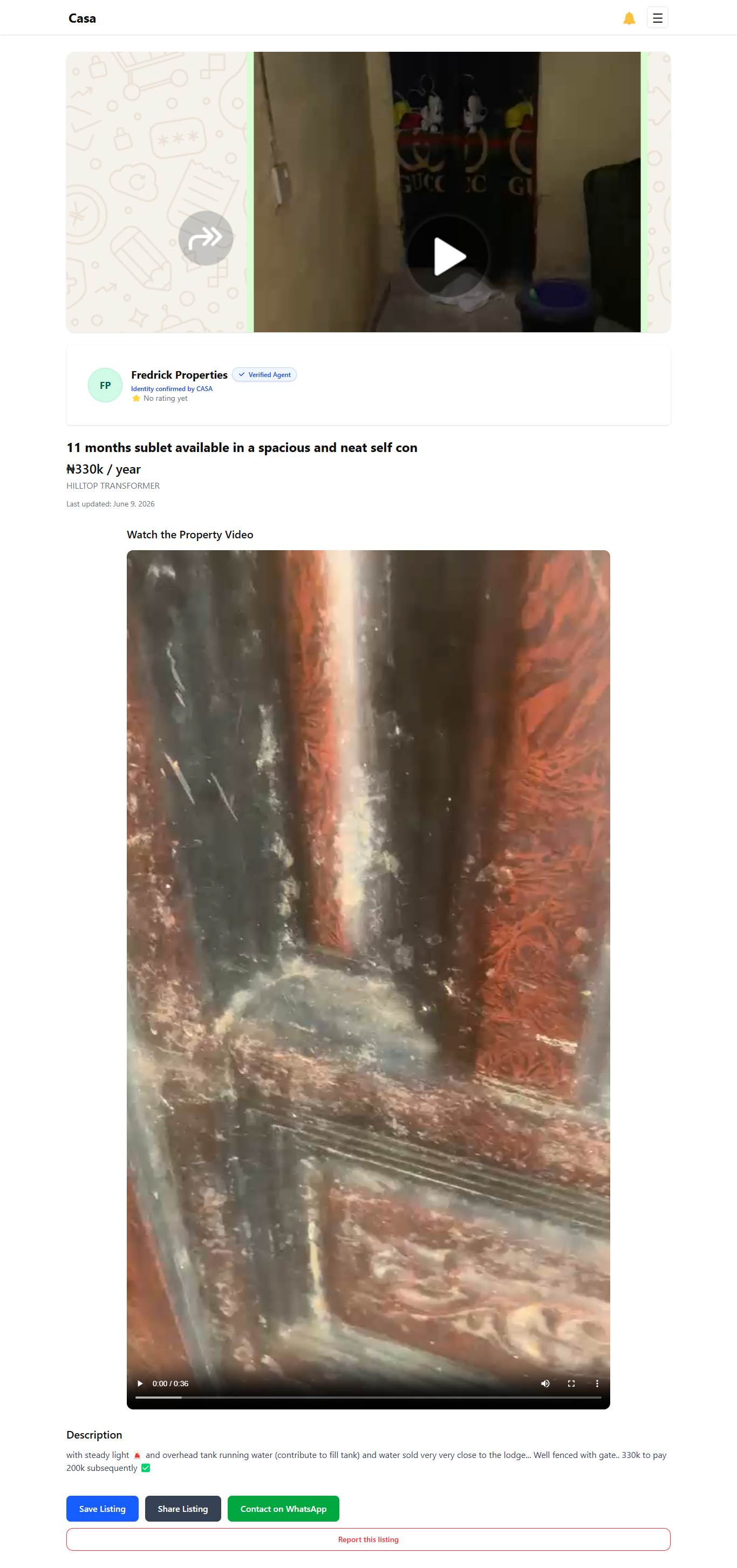
Property details page
-
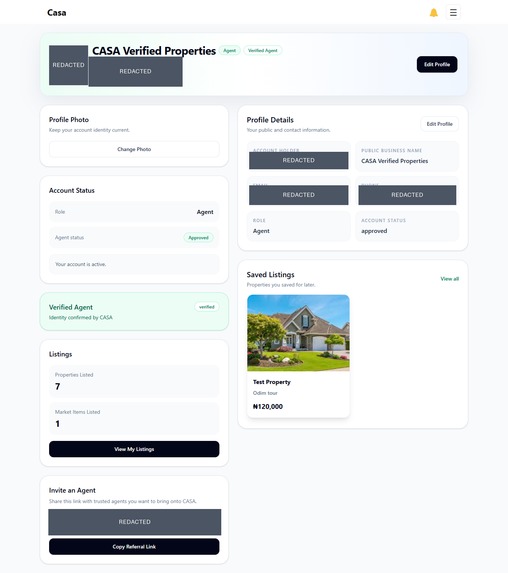
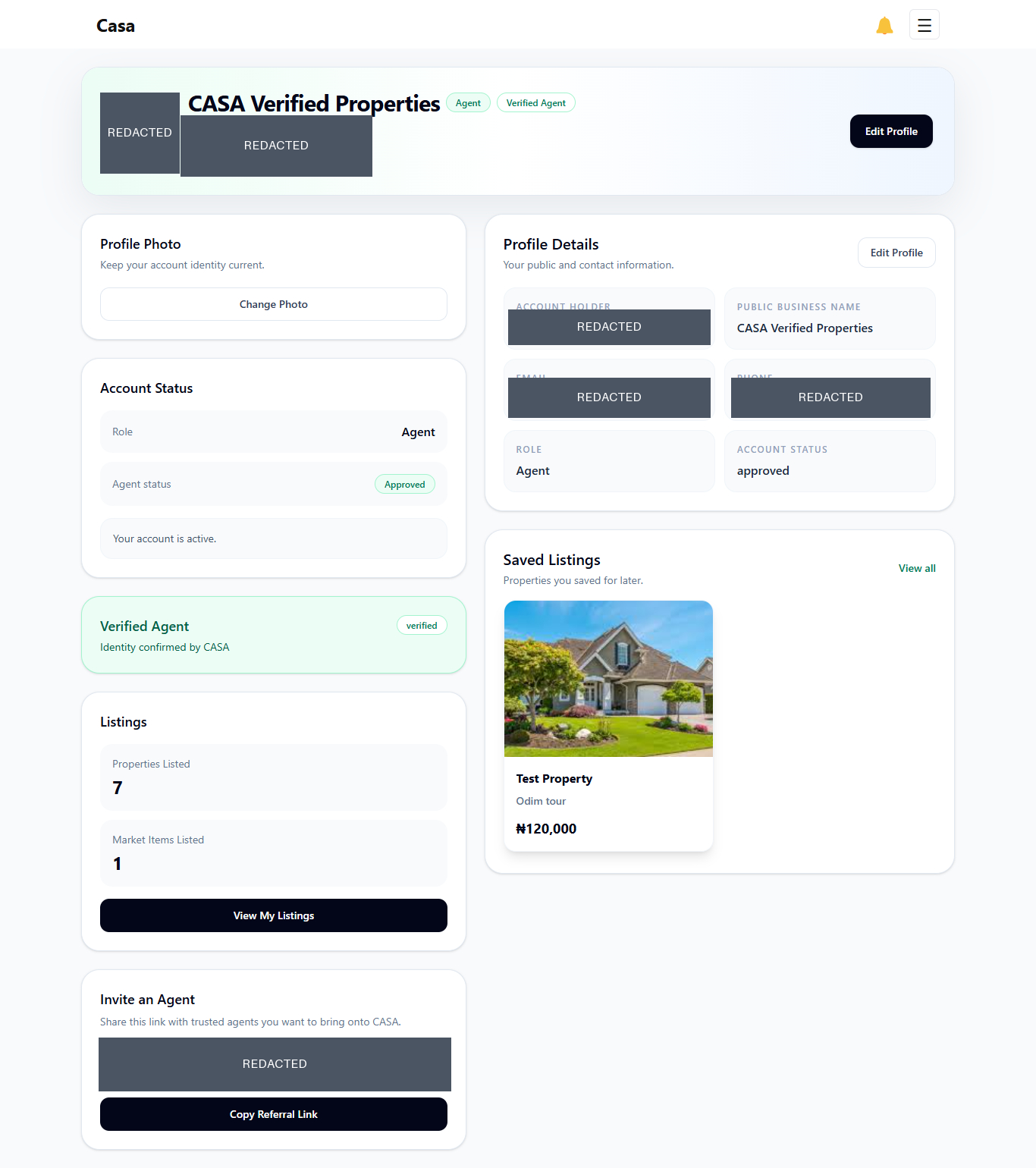
Verified agent profile
-
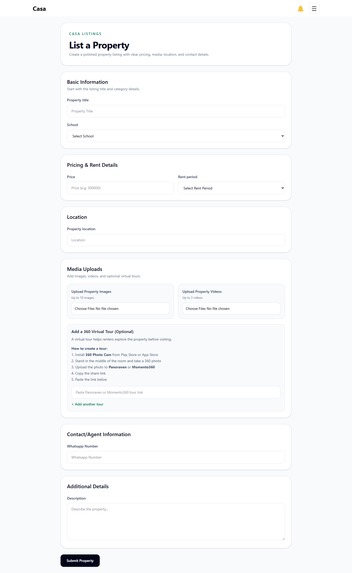
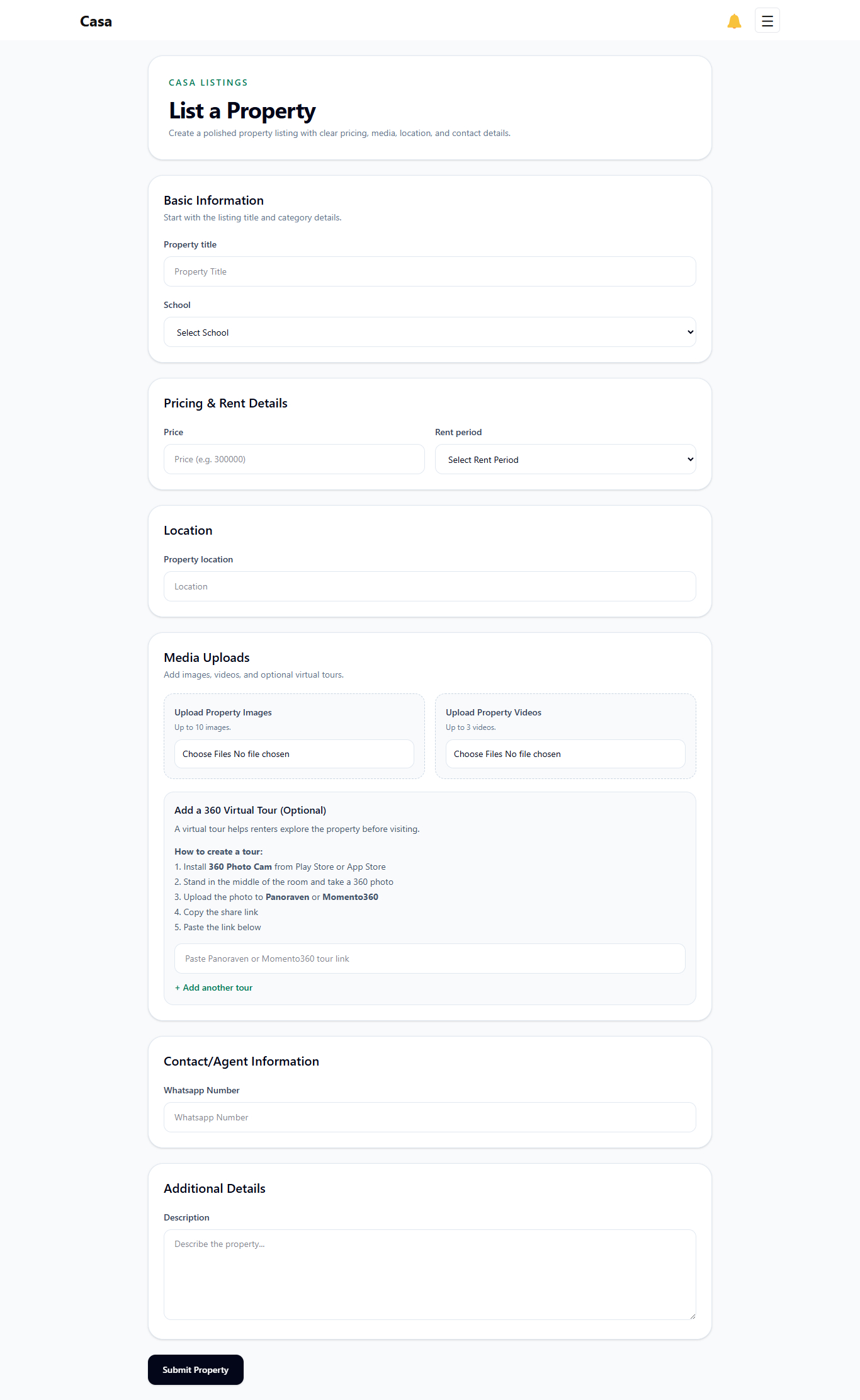
Property listing form
-
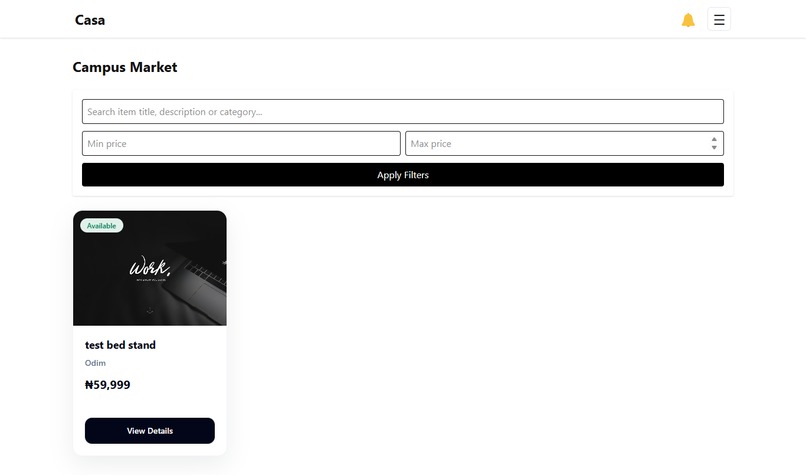
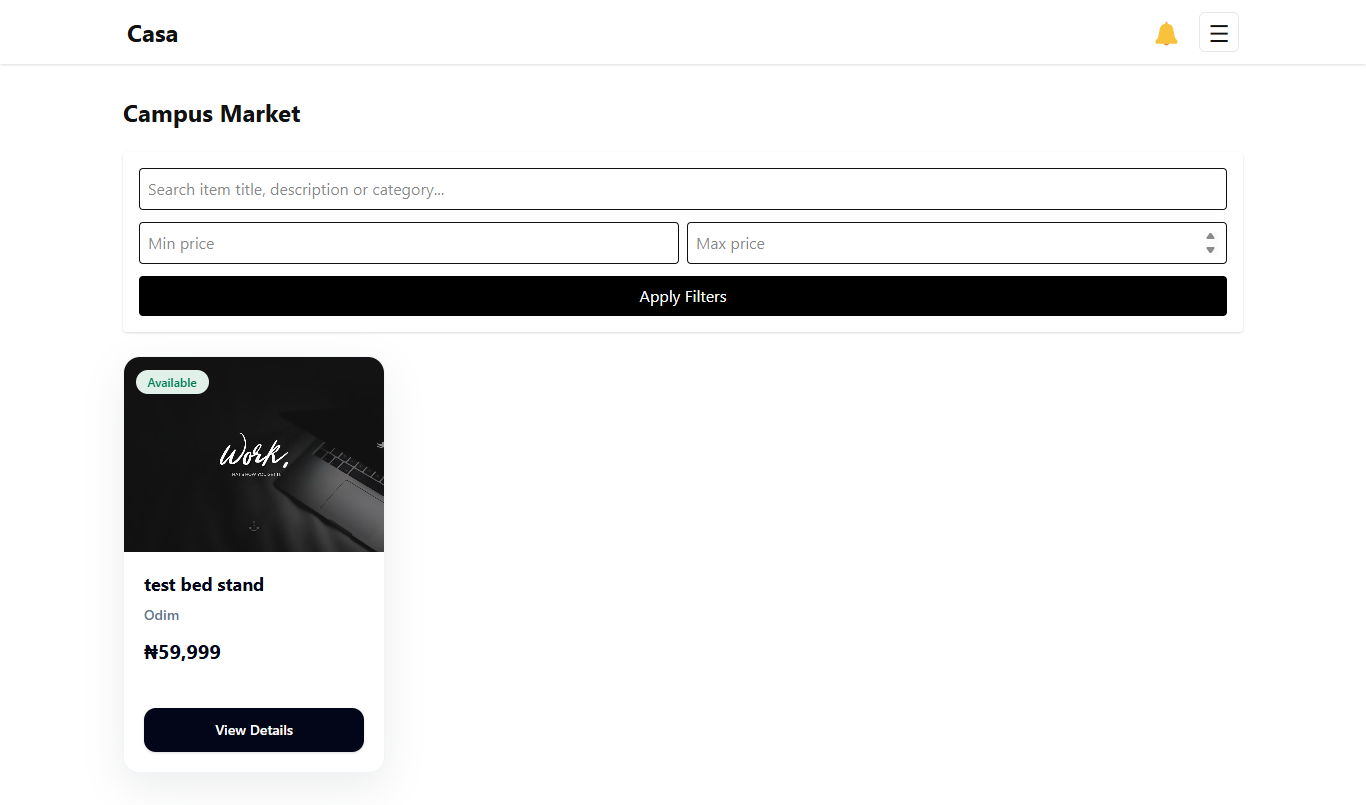
Campus Market
-
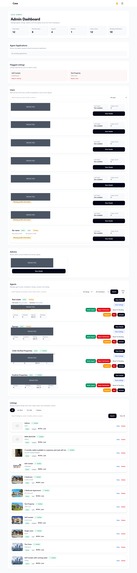
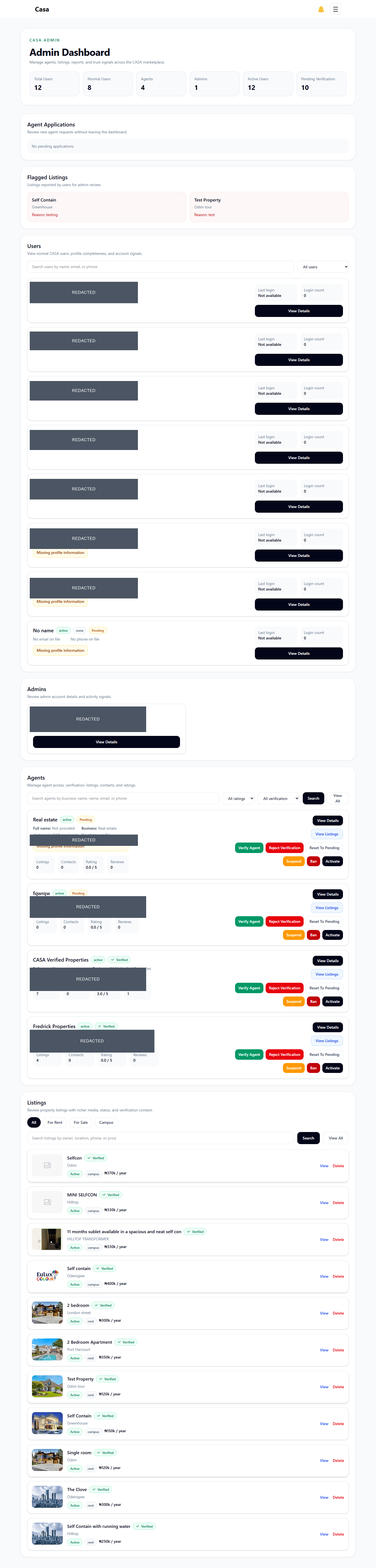
Admin dashboard
Inspiration
Finding accommodation in Nigeria is often stressful, fragmented, and heavily dependent on word of mouth, informal agents, and repeated physical visits.
People struggle to compare available properties, understand real prices, know which agents are trustworthy, and avoid misleading or fraudulent listings.
CASA was created to make housing discovery more structured, transparent, and accessible.
Although the current MVP focuses on students searching for accommodation around the University of Nigeria, Nsukka, CASA is not intended to remain a student-only platform. The student market is the first focused demographic used to validate the idea before expanding to renters, buyers, landlords, and property agents across Nigeria.
What CASA Does
CASA is a mobile-first housing and local marketplace platform that helps users:
- Browse and search available properties
- View prices, locations, descriptions, images, videos, and virtual tours
- Save properties for later
- Contact property agents directly
- View verified agent profiles and ratings
- Report suspicious listings
- Browse items in the Campus Market
Approved agents can:
- Create and manage property listings
- Renew existing listings
- Post items in the Campus Market
- Build a public agent profile
- Receive ratings from users
- Invite trusted agents using referral links
Administrators can:
- Review and approve agent applications
- Verify trusted agents
- Moderate users and listings
- Review reported properties
- Track referral relationships
- Manage the platform’s early agent network
How It Was Built
CASA was built using:
- Next.js
- React
- TypeScript
- Tailwind CSS
- Supabase Authentication
- Supabase PostgreSQL
- Supabase Storage
- Vercel
The entire software implementation was completed through Codex.
I am a non-technical founder and digital marketer. I defined the product vision, user flows, requirements, feature priorities, interface direction, and acceptance criteria in plain English. Codex inspected the repository, wrote the code, implemented features, fixed bugs, refactored components, and validated production builds.
The development process followed an iterative loop:
- I described the feature or problem in plain English.
- Codex inspected the relevant parts of the codebase.
- Codex implemented a focused change.
- I tested the result manually.
- I shared screenshots and explained what was wrong.
- Codex diagnosed the issue and improved the implementation.
- Linting and production builds were used to validate the changes.
GPT-5.6 was used extensively during the later stage of development to review the codebase, diagnose bugs, reason through Supabase data relationships, improve agent onboarding, refine listing ownership logic, strengthen referral and verification workflows, and turn non-technical feedback into precise Codex implementation tasks.
CASA began before GPT-5.6 became available, so I do not claim that GPT-5.6 created the original product. Its role has been in debugging, product reasoning, production hardening, and improving the implementation during the later development stage.
Challenges
One of the biggest challenges was building a technically complex platform without being a software developer.
I had to learn how to express product requirements clearly enough for Codex to implement them correctly. Many issues only became visible after testing the product on mobile and desktop.
Examples included:
- Property ownership not being assigned correctly
- Agent referral relationships needing better database support
- Inconsistent image fallbacks
- Responsive card and carousel problems
- Agent approval and verification being treated as the same thing
- Public business names needing to be separated from private legal names
- Inconsistent loading states
- Property and marketplace cards behaving differently across screen sizes
These problems were solved through repeated testing, screenshots, clear feedback, and scoped Codex implementation tasks.
Accomplishments
The biggest accomplishment is that CASA became a real working application despite being led by a non-technical founder.
The project now includes:
- A functioning property marketplace
- Authentication and user profiles
- Agent onboarding and approval
- Referral-only agent recruitment
- Agent ratings and public profiles
- Property listing creation and management
- Saved listings
- Property reporting
- Campus marketplace listings
- Admin moderation tools
- Responsive mobile-first interfaces
- Supabase database and storage integration
- A deployed production application
The project also demonstrates how Codex can enable a non-developer to turn a detailed product vision into working software.
What I Learned
I learned that building with AI still requires strong product thinking.
Codex can write and inspect code, but the founder must still define:
- The actual user problem
- What the product should do
- Which features matter most
- How the experience should feel
- What counts as a successful implementation
- What should not be changed
- How to test whether a feature works correctly
I also learned the importance of giving Codex narrow, testable instructions instead of broad requests.
The quality of the result improved significantly when I included:
- The current problem
- The required behaviour
- What must remain unchanged
- Edge cases
- Validation steps
- Expected reports after implementation
What’s Next
The current MVP is focused on student accommodation around University areas.
The next stages include:
- Expanding to more Nigerian universities
- Supporting wider rental and property-sale markets
- Improving listing and agent verification
- Adding better property comparison
- Improving search and recommendations
- Onboarding agents into the platform
- Expanding fraud and risk detection
- Building stronger tools for professional agents and landlords
- Growing CASA into a trusted national property-discovery platform
CASA’s initial growth strategy is to position the platform as a free lead-generation channel for credible local agents. Agents gain visibility, enquiries, a public business profile, and tools for managing their listings. This helps CASA build listing supply without requiring agents to pay before the platform has proven its value. As user demand and verified enquiry volume grow, CASA may introduce paid lead-generation tools, premium agent subscriptions, or enhanced listing visibility.
Built With
- auth
- codex
- css
- github
- gpt-5.6
- next.js
- postgresql
- react
- storage
- supabase
- tailwind
- typescript
- vercel

Log in or sign up for Devpost to join the conversation.