Inspiration
Every week, millions of people overspend on groceries simply because prices vary across nearby stores and change constantly. We realized there wasn't a simple way to know where your grocery list would be cheapest before leaving home. At the same time, every shopper already walks away with something incredibly valuable—a receipt. We asked ourselves: What if every receipt could help everyone shop smarter? That idea became Cartly AI.
What it does
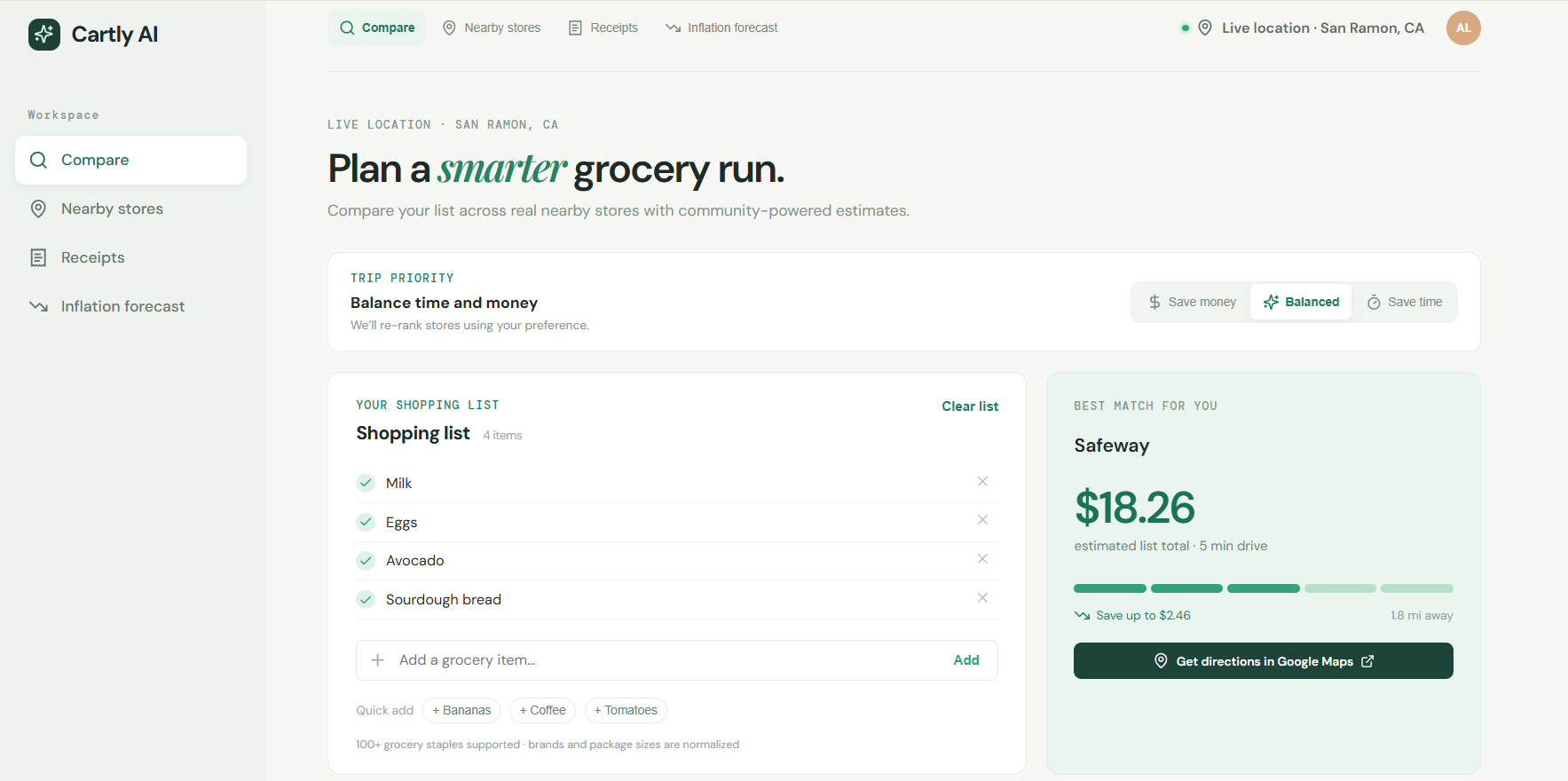
Cartly AI helps users find the most cost-effective grocery shopping plan by comparing prices across nearby stores while balancing travel time and savings.
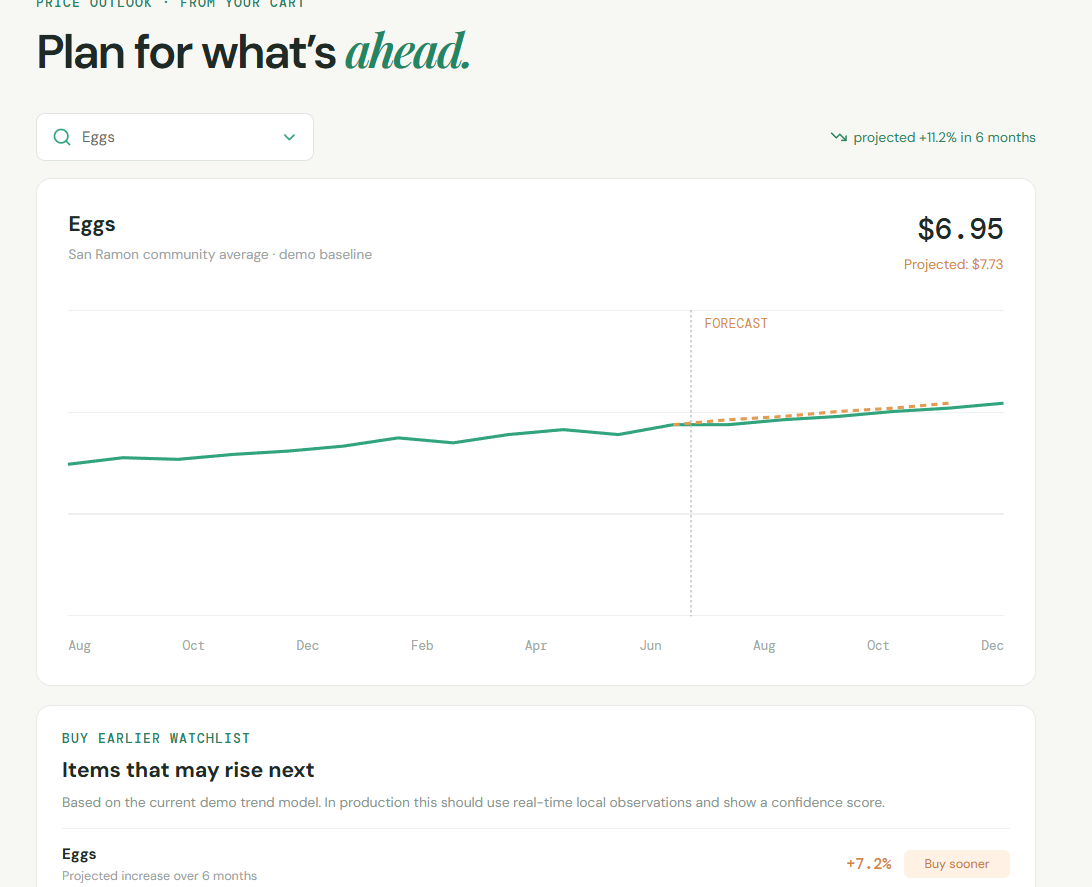
After shopping, users can upload a picture of their receipt. OCR automatically extracts products and prices, anonymously adding them to a crowdsourced database. As more receipts are uploaded, Cartly continuously updates price comparisons, predicts future grocery prices, tracks inflation trends, and detects unusual shopping patterns that may indicate shortages or sudden spikes in demand.
How we built it
We built Cartly AI as a full-stack web application using Next.js, React, and Tailwind CSS for the frontend and Supabase for authentication, storage, and the PostgreSQL database.
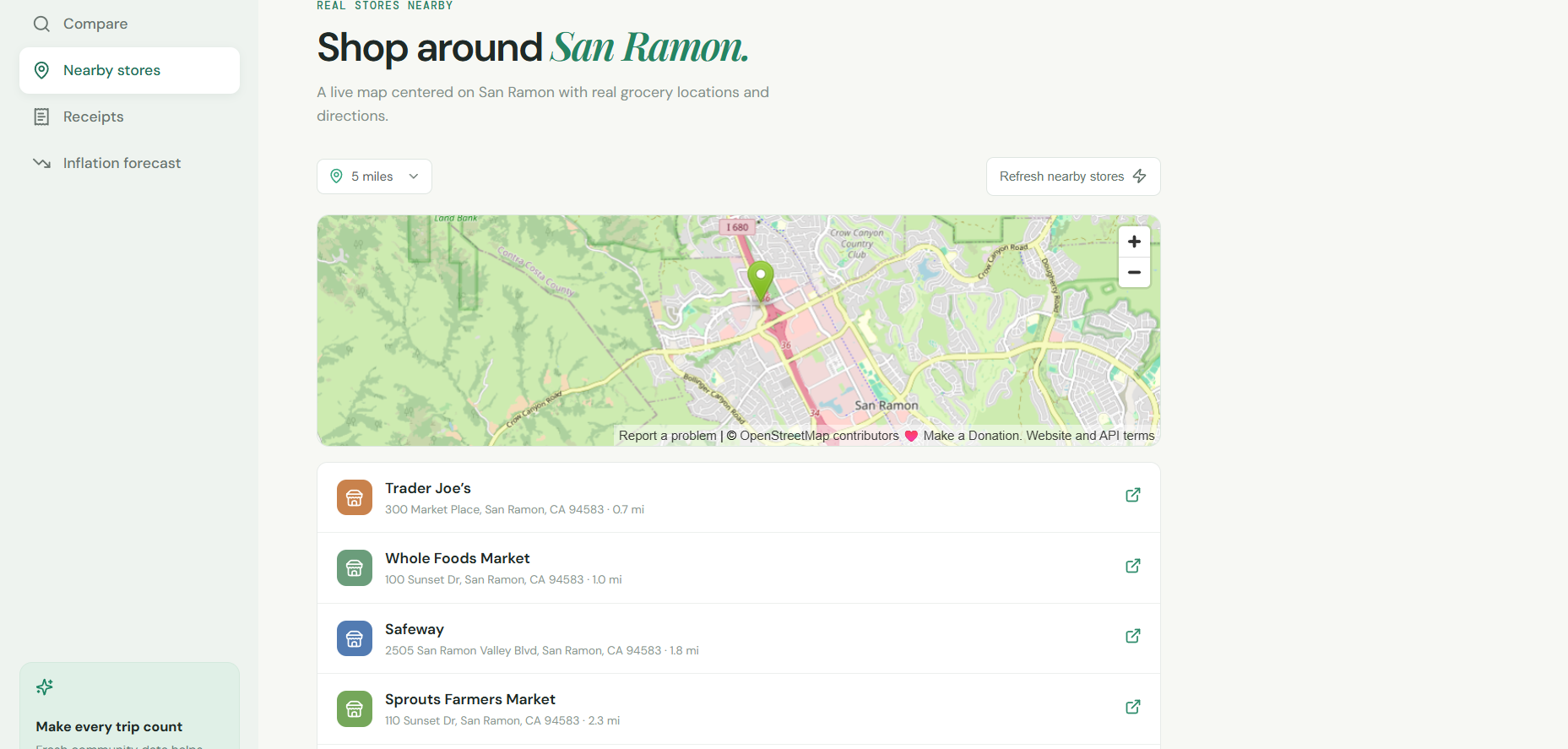
We integrated OCR to extract product names and prices from uploaded receipts and used mapping APIs to locate nearby grocery stores and estimate travel times. An optimization algorithm compares total grocery costs across stores while balancing travel distance. Historical receipt data is then used to generate price trends and predictions.
Challenges we ran into
One of our biggest challenges was handling receipt OCR. Grocery receipts vary significantly between stores, making accurate extraction difficult. To improve reliability, we designed a review step that allows users to quickly verify OCR results before contributing them to the community database.
Another challenge was standardizing product names from different stores (for example, "Eggs Large" vs. "Grade A Large Eggs"), requiring normalization before meaningful comparisons could be made.
Finally, since crowdsourced platforms rely on data, we had to think carefully about bootstrapping the system so it remains useful even with a small number of users.
Accomplishments that we're proud of
Building an end-to-end shopping optimization platform instead of just a price comparison tool. Successfully combining OCR, crowdsourcing, AI predictions, routing, and data visualization into one application. Creating a scalable crowdsourcing model that becomes more valuable as more people contribute. Designing an intuitive interface that makes complex optimization simple for everyday shoppers.
What we learned
This project taught us that solving real-world problems isn't just about building AI models—it's about collecting reliable data and making that data useful.
We also learned how challenging OCR, data normalization, and optimization problems can be in real-world applications, especially when dealing with inconsistent user-generated data.
Most importantly, we learned how powerful community-driven data can become when combined with AI.
What's next for Cartly AI
Our roadmap focuses on making Cartly smarter as the community grows.
Introduce rewards and cashback incentives for users who contribute receipts. Add personalized shopping accounts with savings analytics, budgets, and price alerts. Predict checkout wait times, store crowd levels, and product availability before users leave home. Expand our AI models to detect grocery shortages, inflation trends, and regional purchasing behavior in real time. Partner with retailers and community organizations to improve pricing accuracy and broaden coverage.
Ultimately, our vision is to transform millions of everyday grocery receipts into a real-time intelligence network that helps shoppers save money while providing valuable insights into local economic trends.
Built With
- css
- next.js
- ollama
- react
- sql
- typescript

Log in or sign up for Devpost to join the conversation.