Inspiration
We noticed that online shopping often takes more effort than it should. You might know exactly what you want, but finding the right product within your budget means going through multiple websites, comparing specifications, checking prices, and reading reviews.
We started thinking: what if shopping could be as simple as telling someone what you need and having them help you find the right product?
That was the idea behind Cartiva. We wanted to explore how AI could make everyday shopping easier, faster, and more personalized.
What it does
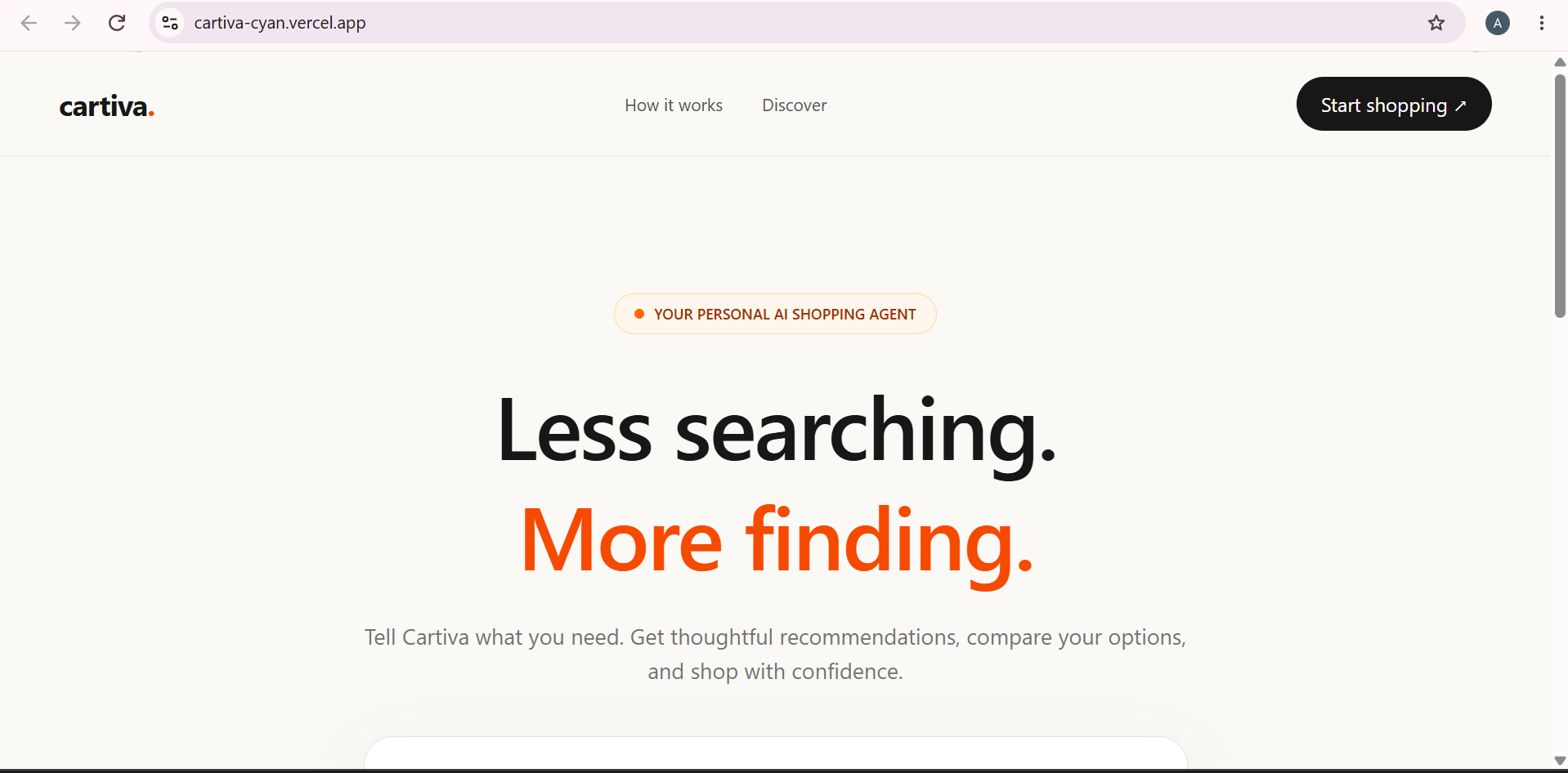
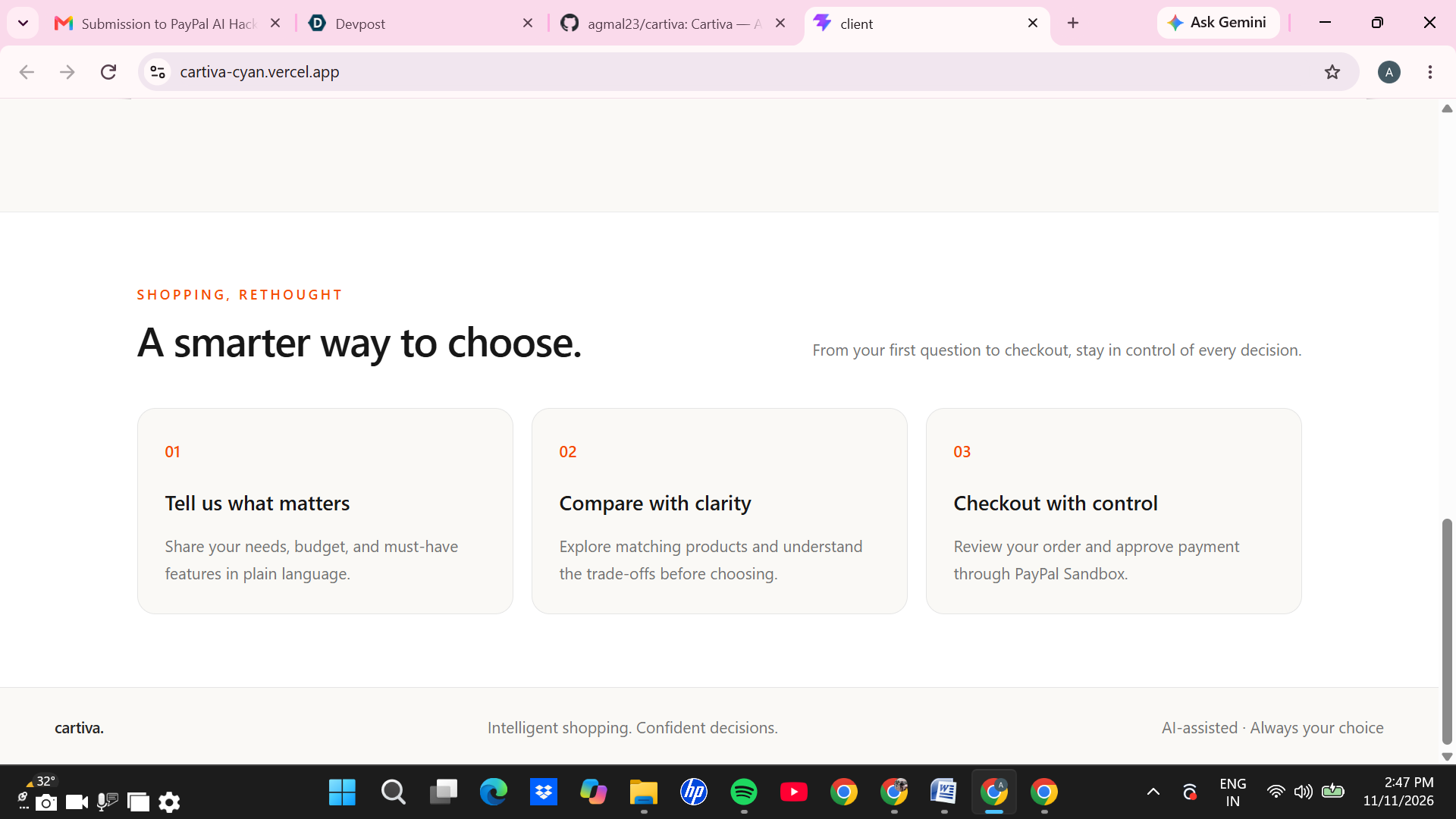
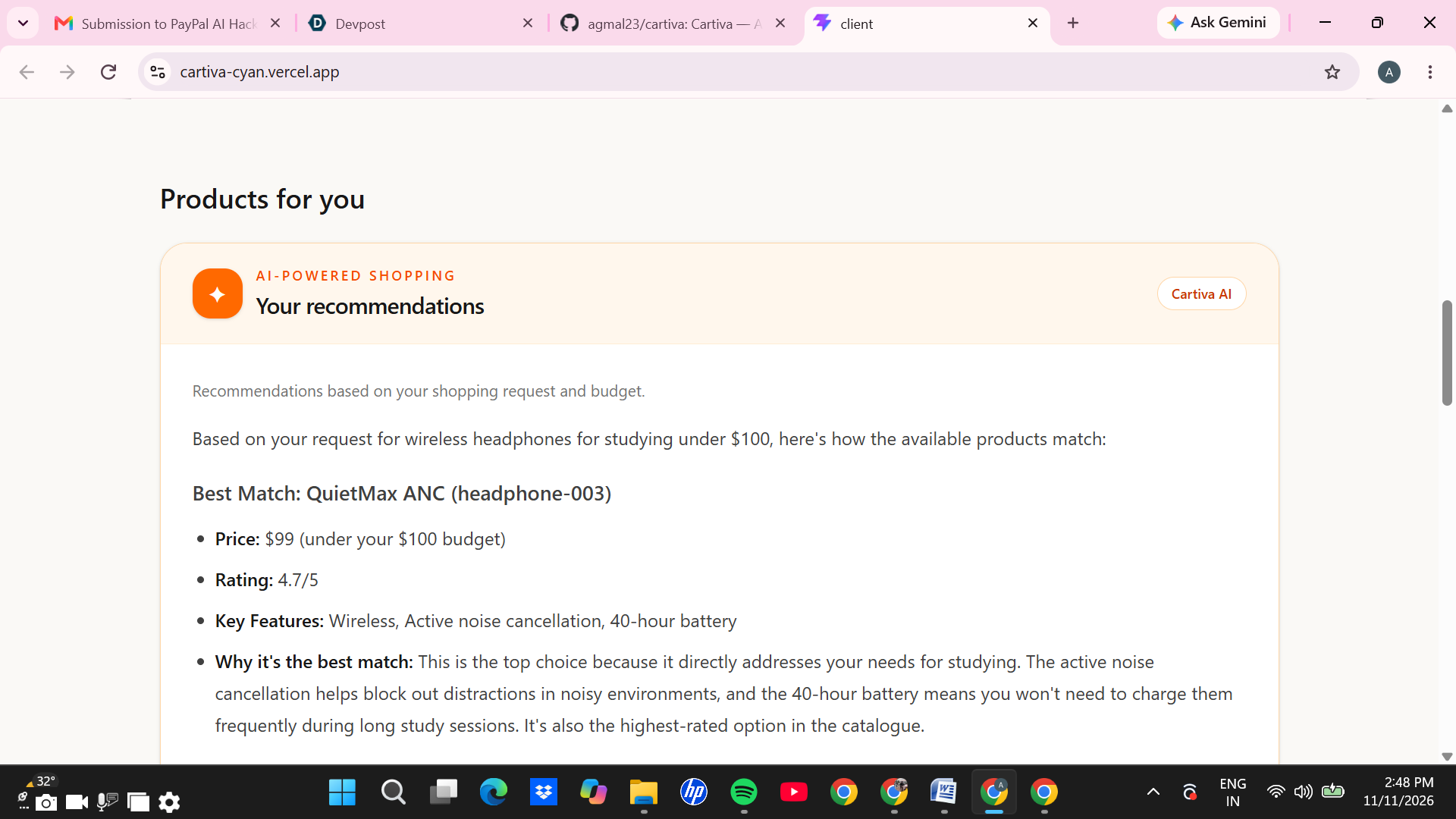
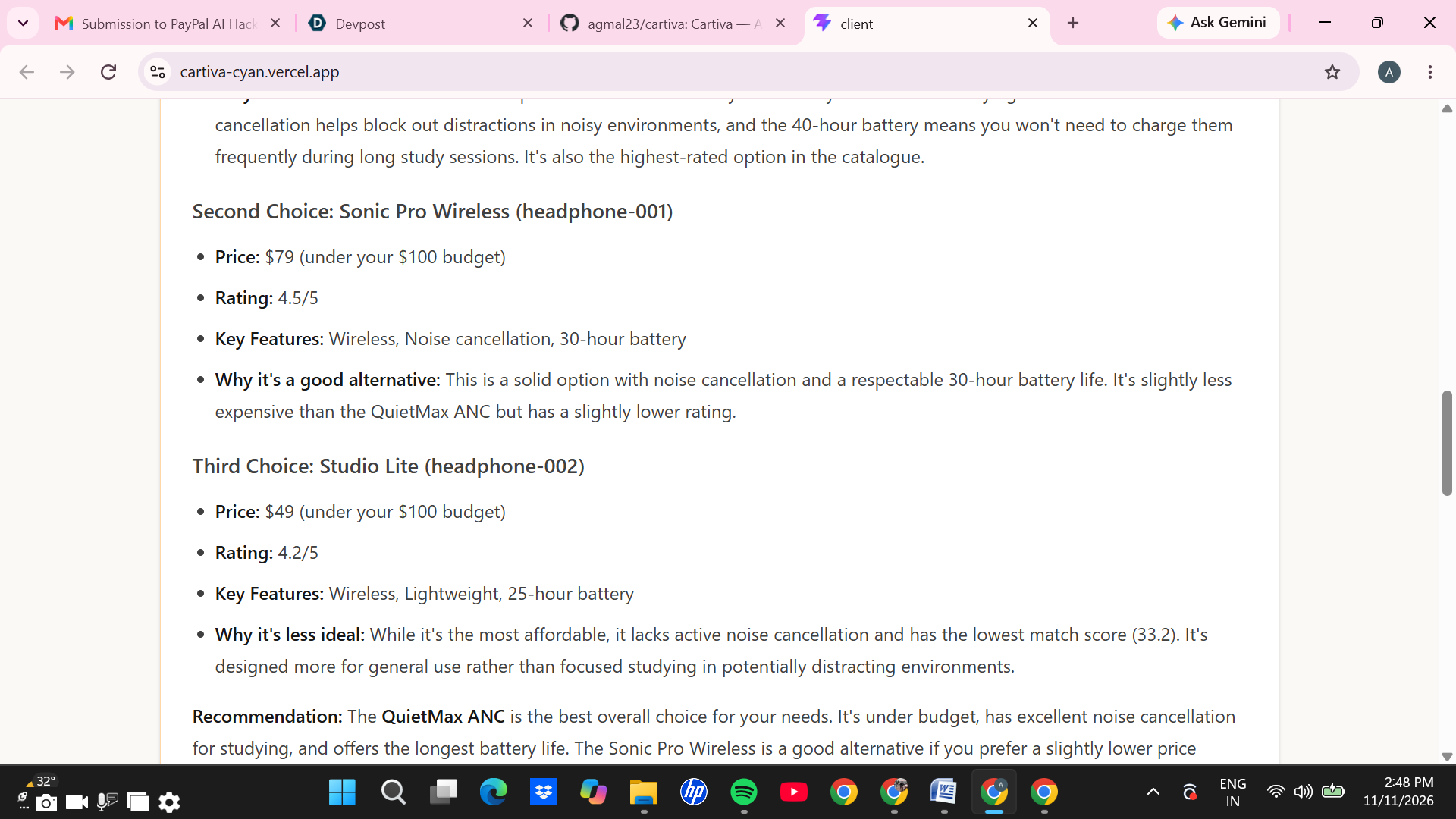
Cartiva is an AI-powered shopping assistant that helps users discover products based on their requirements and budget.
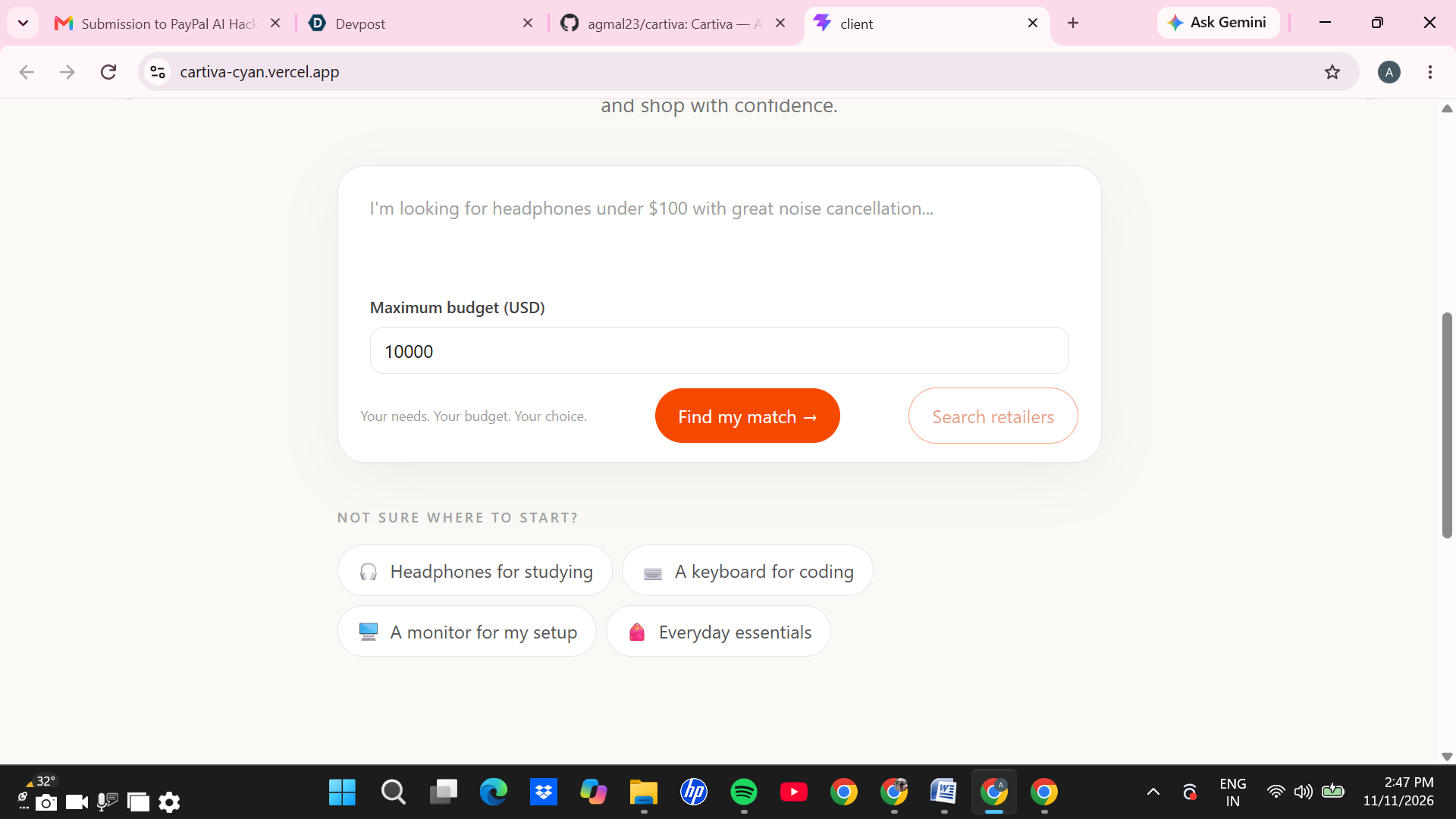
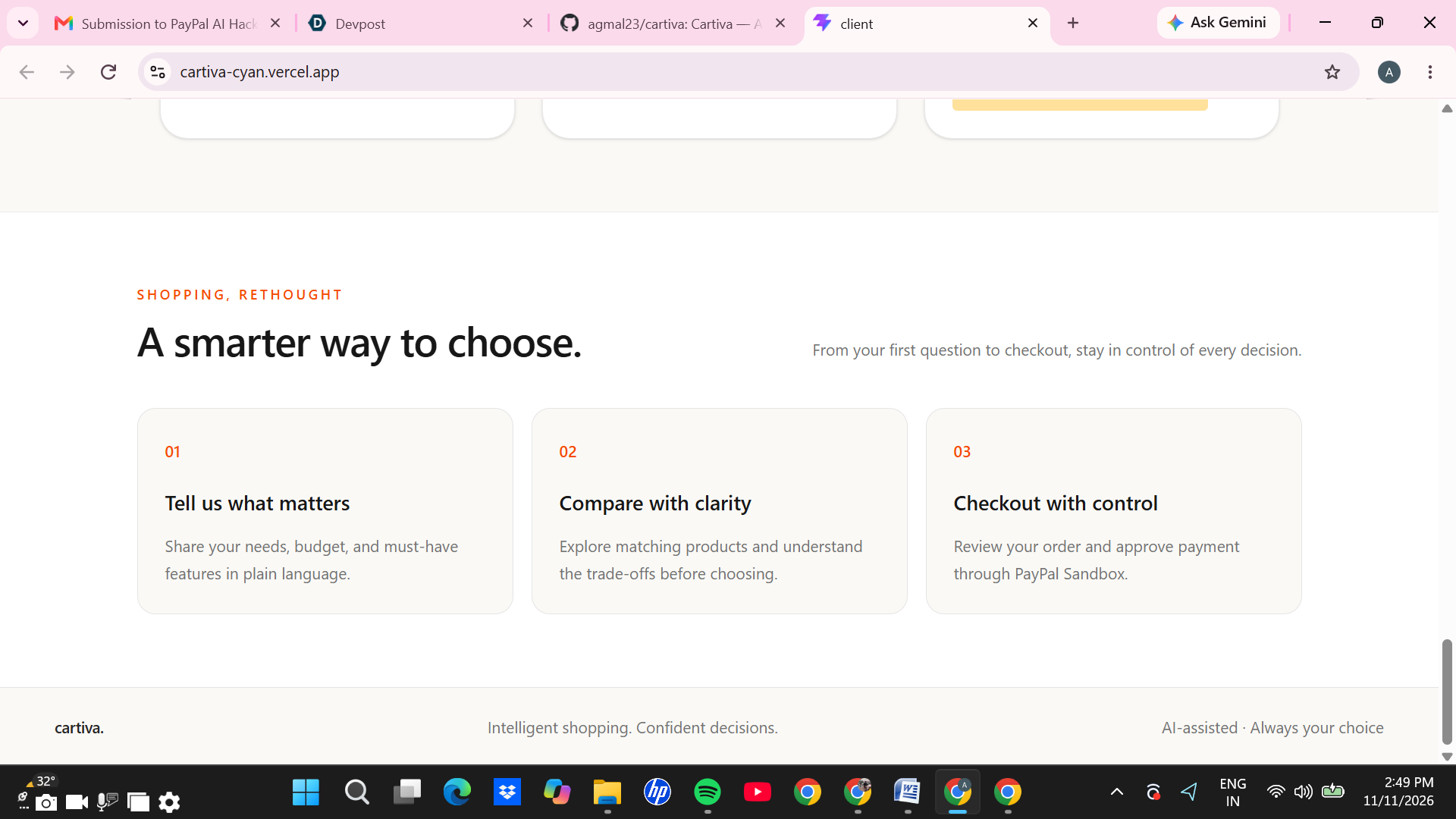
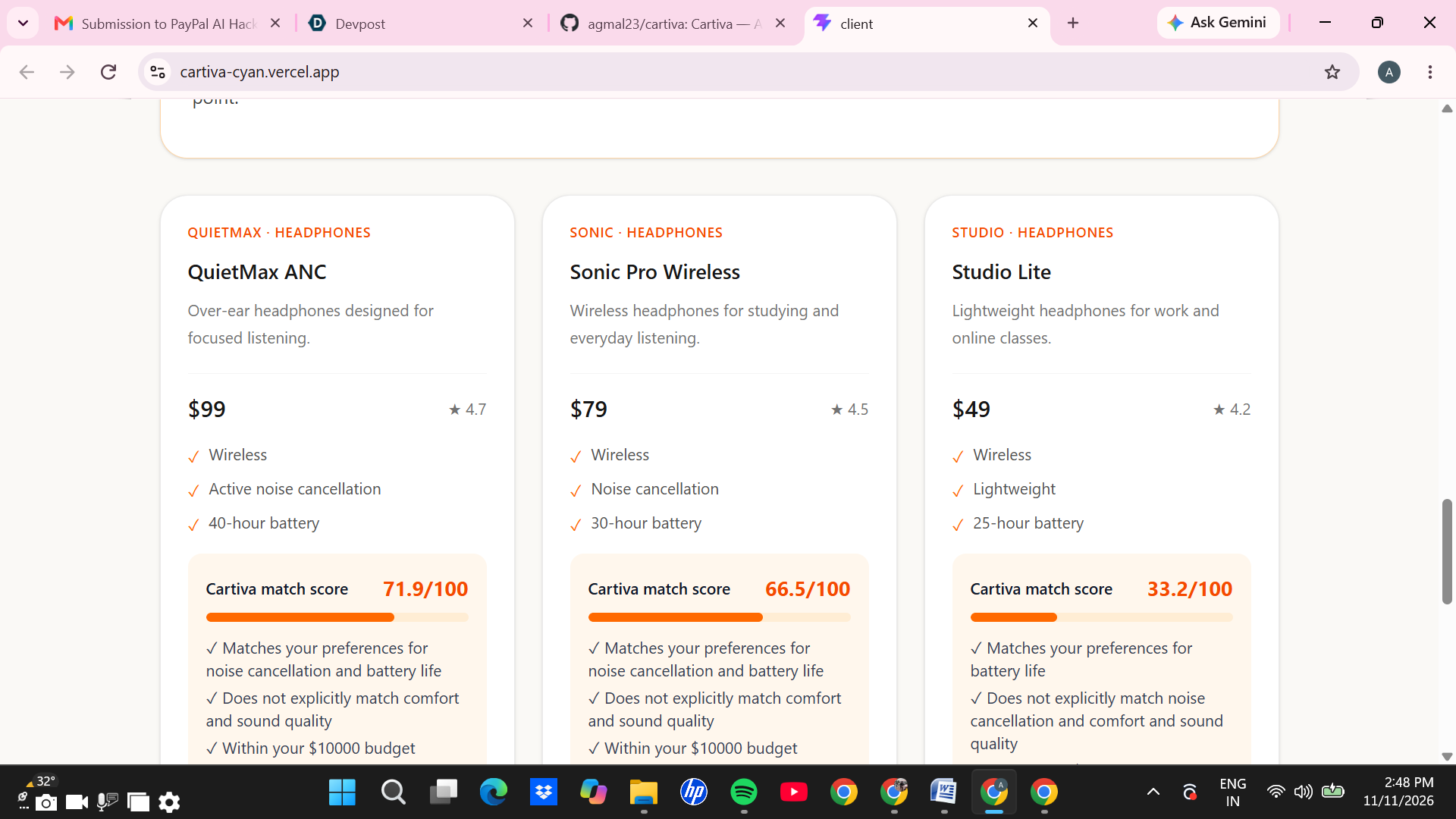
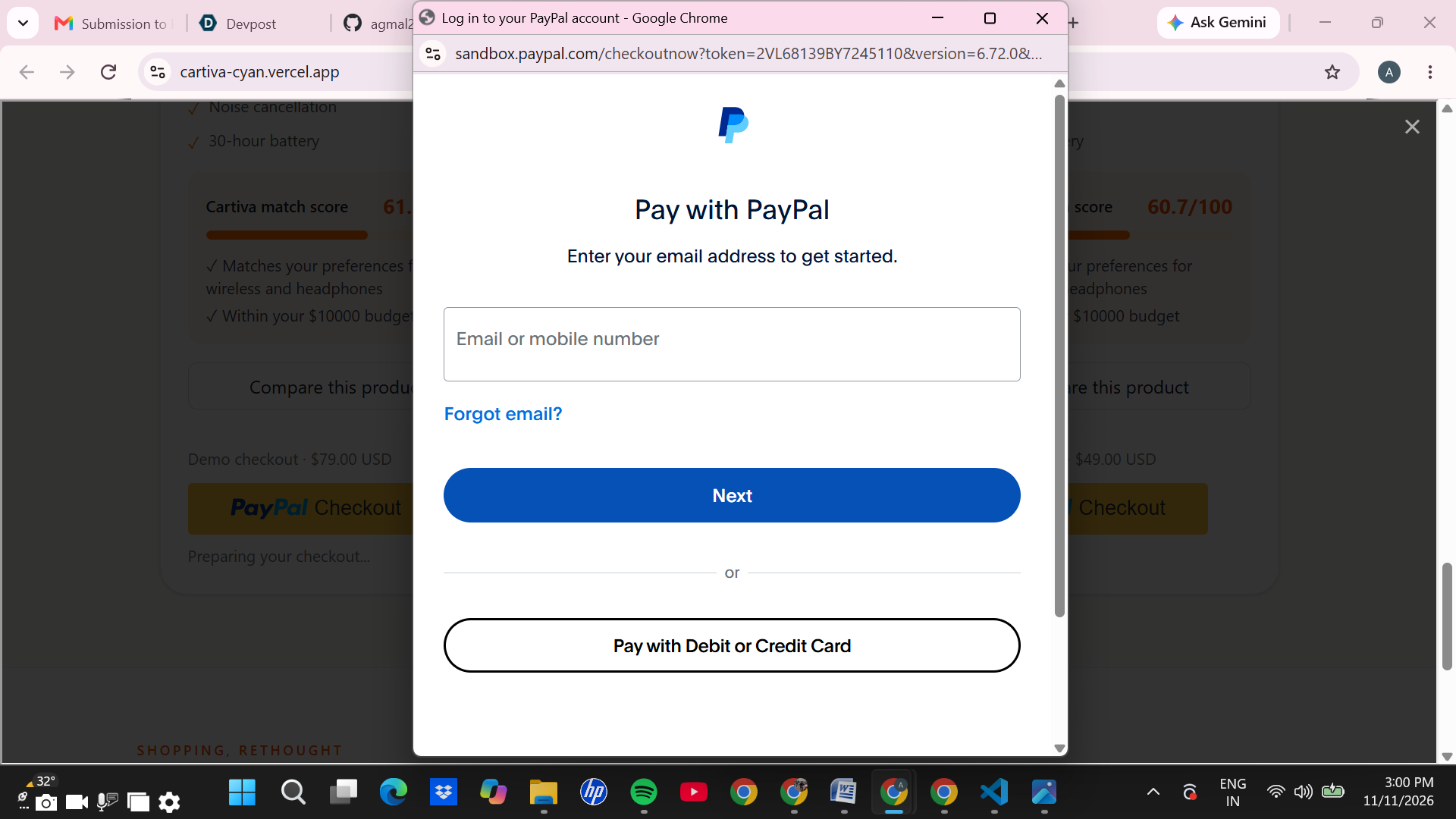
Users can simply describe what they're looking for, set their budget, and get product recommendations. They can also compare products, search retailers, and proceed to checkout using PayPal.
The idea is to reduce the time spent searching and help users make more informed purchasing decisions.
How we built it
We built Cartiva using React and Vite for the frontend and Node.js with Express.js for the backend.
We integrated OpenRouter to power the AI recommendation experience. For product discovery and comparison, we created a demonstration catalogue containing product details, prices, ratings, and features.
We also integrated PayPal Sandbox to demonstrate the checkout process. The frontend is deployed on Vercel, and the backend is hosted on Render.
Challenges we ran into
One of the biggest challenges was getting all the different components to work together.
Connecting the frontend with the backend, integrating the AI service, handling API requests, and making the PayPal checkout work took quite a bit of testing and debugging.
We also faced deployment issues, particularly with CORS configuration and PayPal SDK credentials. These problems helped us understand how different services communicate and how to troubleshoot issues in a real deployed application.
Accomplishments that we're proud of
We're proud that we took an idea and turned it into a working application that people can actually interact with.
Getting AI-powered recommendations, product comparison, retailer search, and PayPal Sandbox checkout working together was a major milestone for us.
We're also proud of successfully deploying both the frontend and backend and making the application accessible through a live website.
Most importantly, we were able to build something that explores a practical use of AI rather than just creating another chatbot.
What we learned
This project taught us a lot about building and deploying a full-stack AI application.
We gained hands-on experience with AI API integration, backend development, frontend and backend communication, third-party payment integration, environment variables, and deployment.
We also learned that building an AI-powered product involves much more than connecting an AI model. The real challenge is making the entire experience useful, reliable, and easy for people to use.
What's next for Cartiva
Cartiva is a starting point, and there's a lot more we would like to build.
Our next goal is to expand the product catalogue and explore integrations with real retailer platforms. We also want to improve recommendations through personalization, make product comparisons smarter, and create a more seamless shopping experience.
Ultimately, we want Cartiva to become a shopping assistant that understands what users need, helps them find the right products, and makes the purchasing journey simpler while keeping the final decision in their hands.
Built With
- ai
- css
- express.js
- html
- javascript
- node.js
- openrouter
- paypal
- paypal-sandbox
- react
- rest-api
- vercel
- vite
