Project Story: CartAround
Inspiration
CartAround was born out of a personal and community-level realization. In recent years, many small local shops around us began shutting down due to the growing dominance of supermarkets and online marketplaces. These closures created delivery gaps in neighborhoods, forcing people to walk long distances or face frequent order rejections due to lack of service coverage.
Even when orders are accepted, delivery delays or unavailability of essential items—often found in local stores—are common. We also noticed the need to visit multiple stores to complete one list of daily essentials. This inefficiency stood in stark contrast to the promise of modern e-commerce.
A major turning point was a personal experience: during my internship, I came home late one evening and was asked to buy a few essentials. I had to wait a long time at the store, which made me question why there wasn’t a system for pre-scheduling pickups—thus, the Takeaway feature was conceived.
Another profound inspiration came from observing the daily challenges faced by my grandmother and some of my friends and family members who are specially-abled. They rely heavily on others for something as basic as buying groceries. This gave rise to our goal of making shopping truly accessible through voice-based and sign language-enabled video ordering—ensuring that everyone, regardless of ability, can shop independently.
What it does
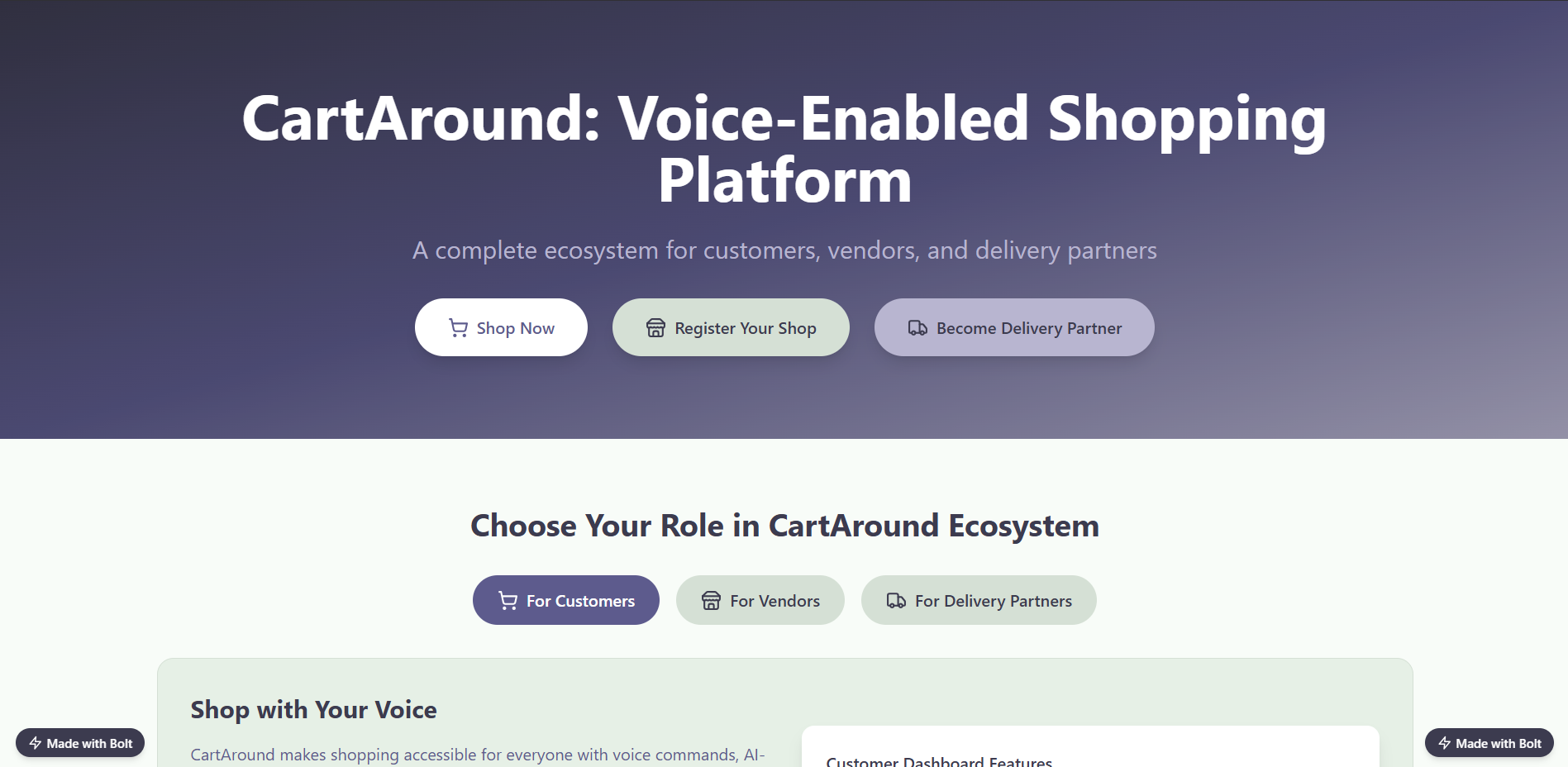
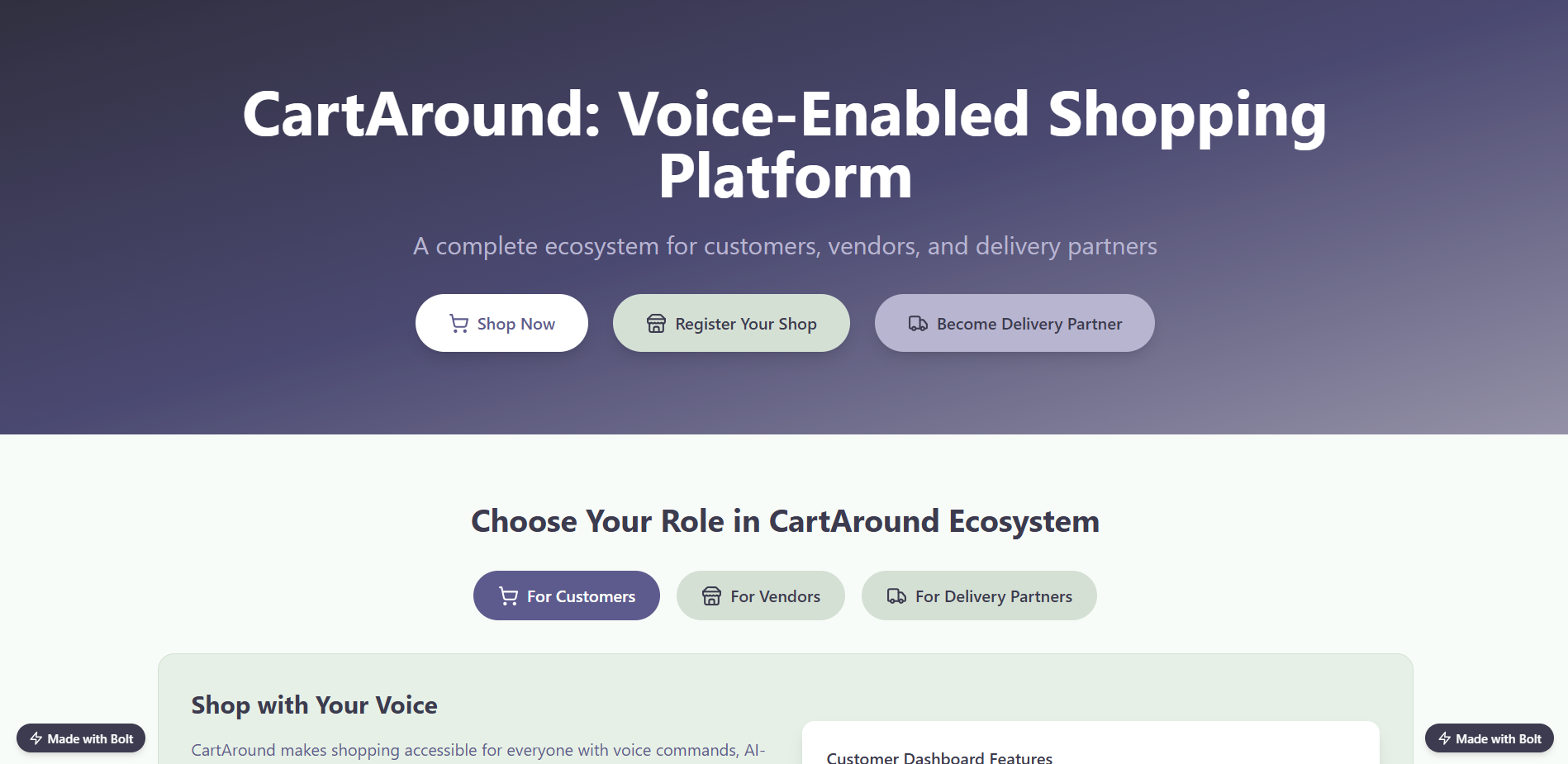
CartAround is a voice- and video-enabled hyperlocal shopping platform designed to:
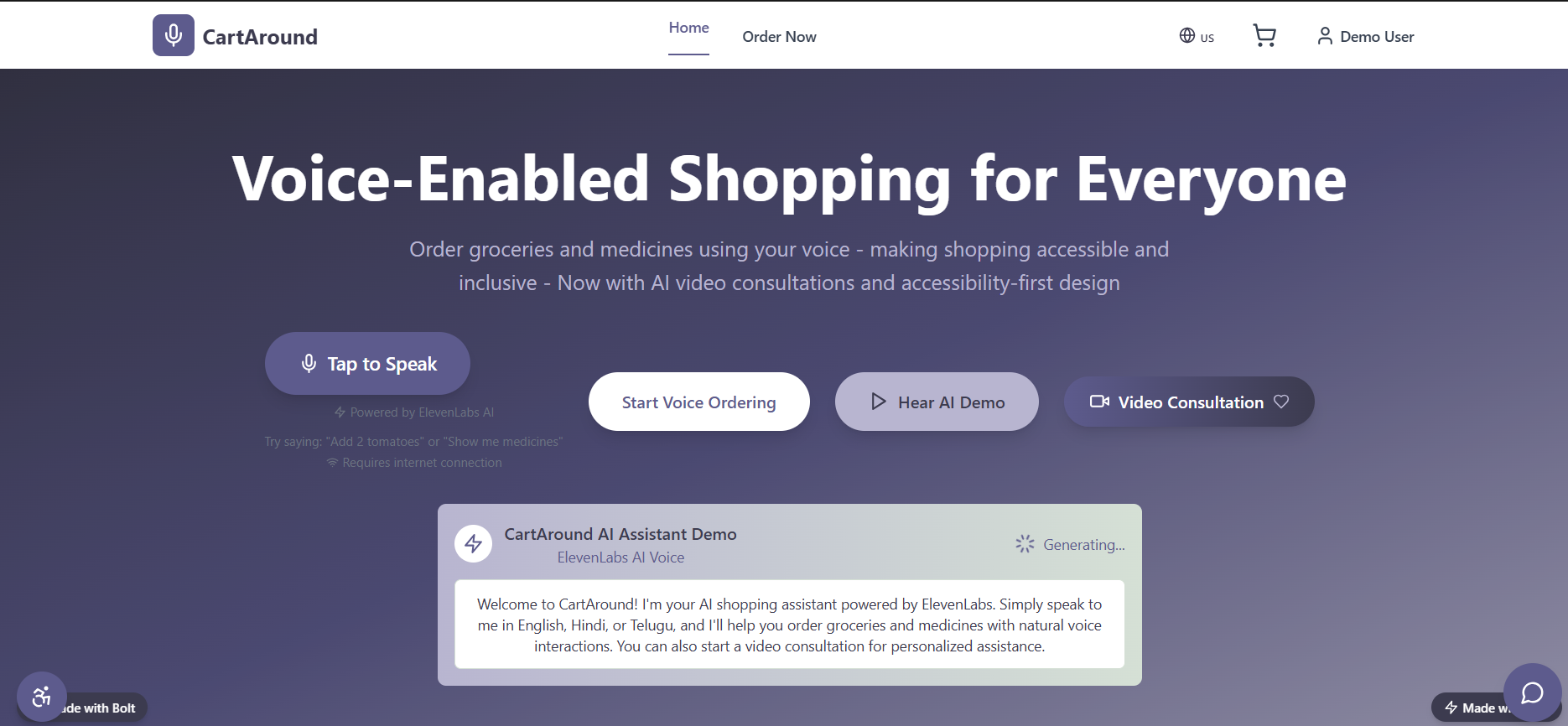
- Allow users to place orders via voice commands in English, Hindi, and Telugu.
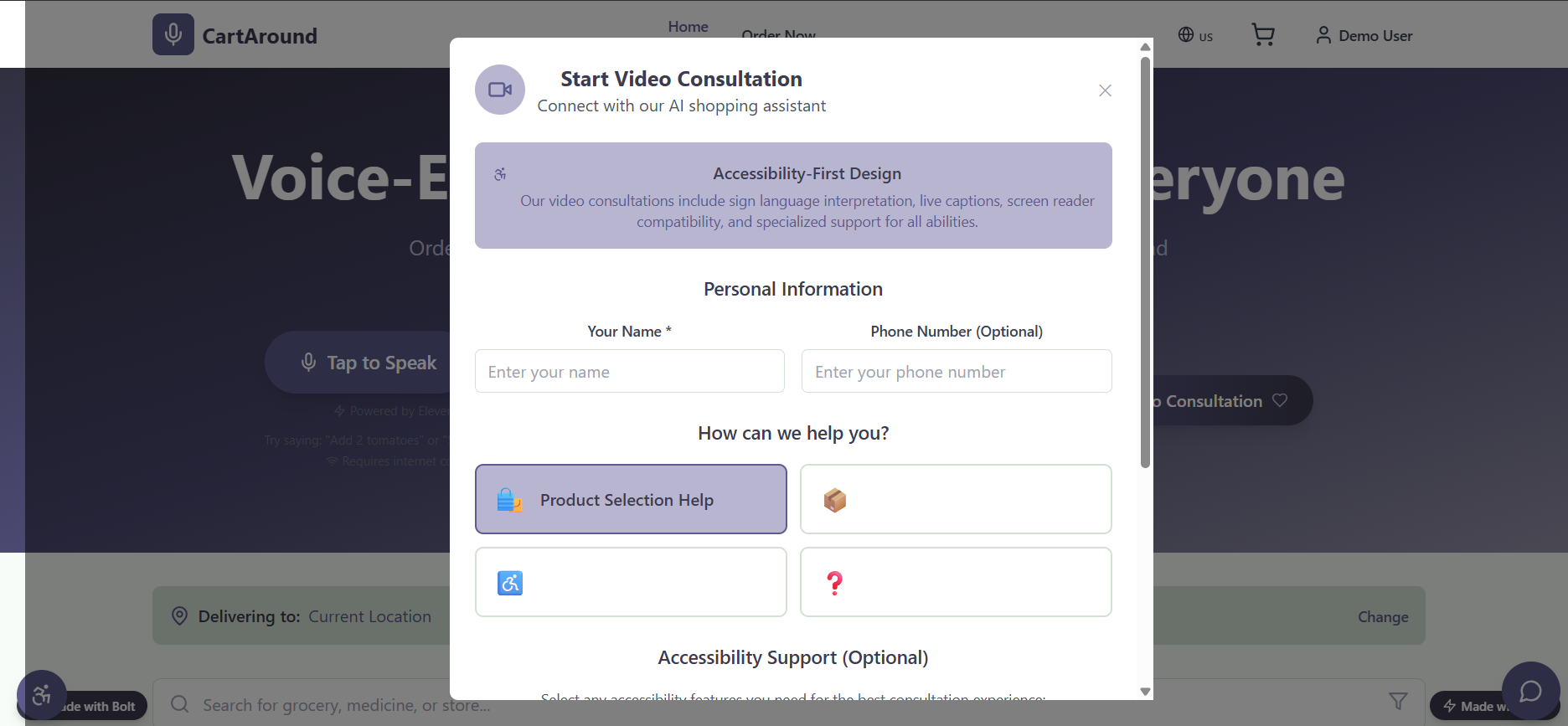
- Offer video consultations for users who prefer visual interaction or communicate using sign language.
- Enable AI-powered customer support that handles queries and places orders conversationally.
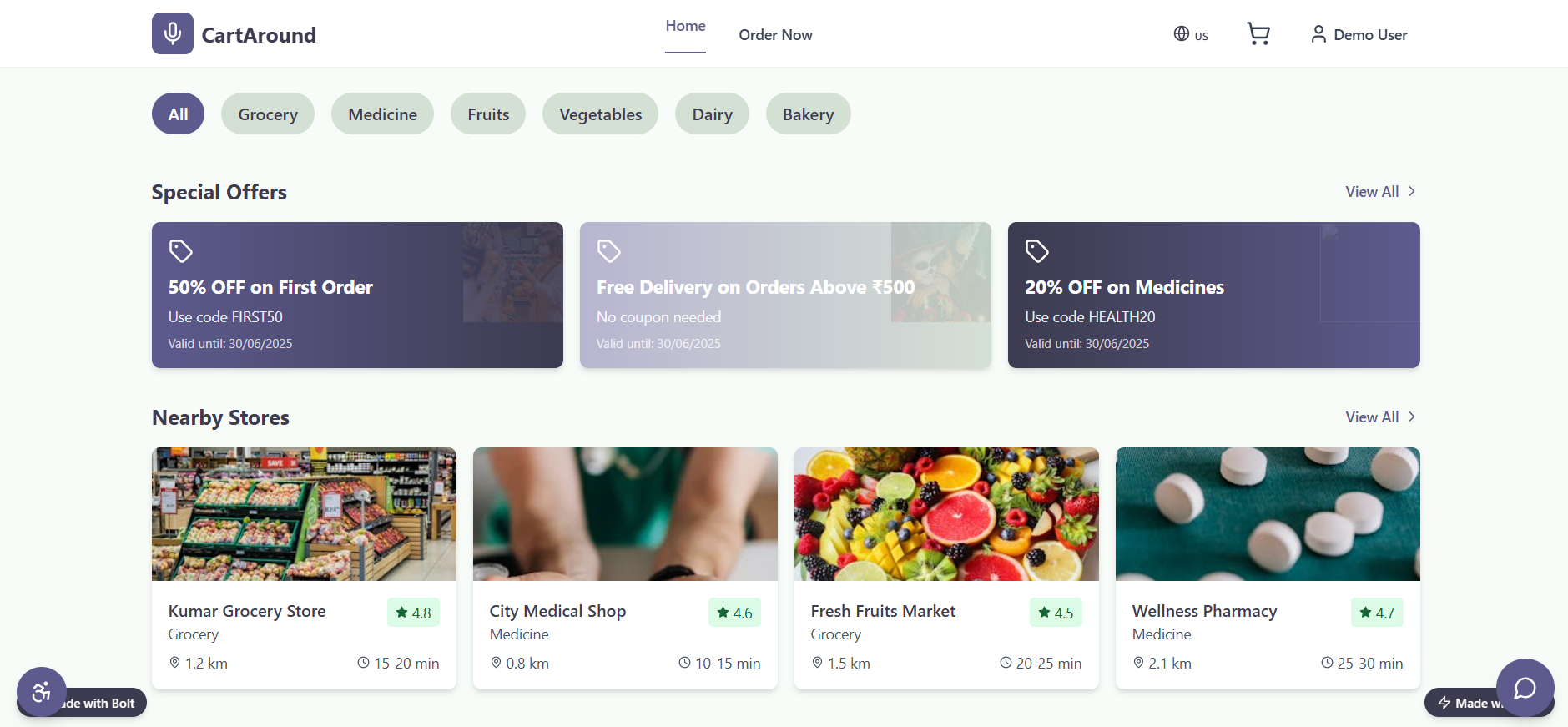
- Distribute orders intelligently across multiple nearby vendors based on inventory and delivery proximity.
- Provide options for delivery and takeaway, depending on user preference and urgency.
- Support real-time order tracking through in-app notifications and WhatsApp messages.
- Include accessibility-first features like large text, high contrast mode, and voice navigation.
How we built it
CartAround consists of three applications built using React with TypeScript:
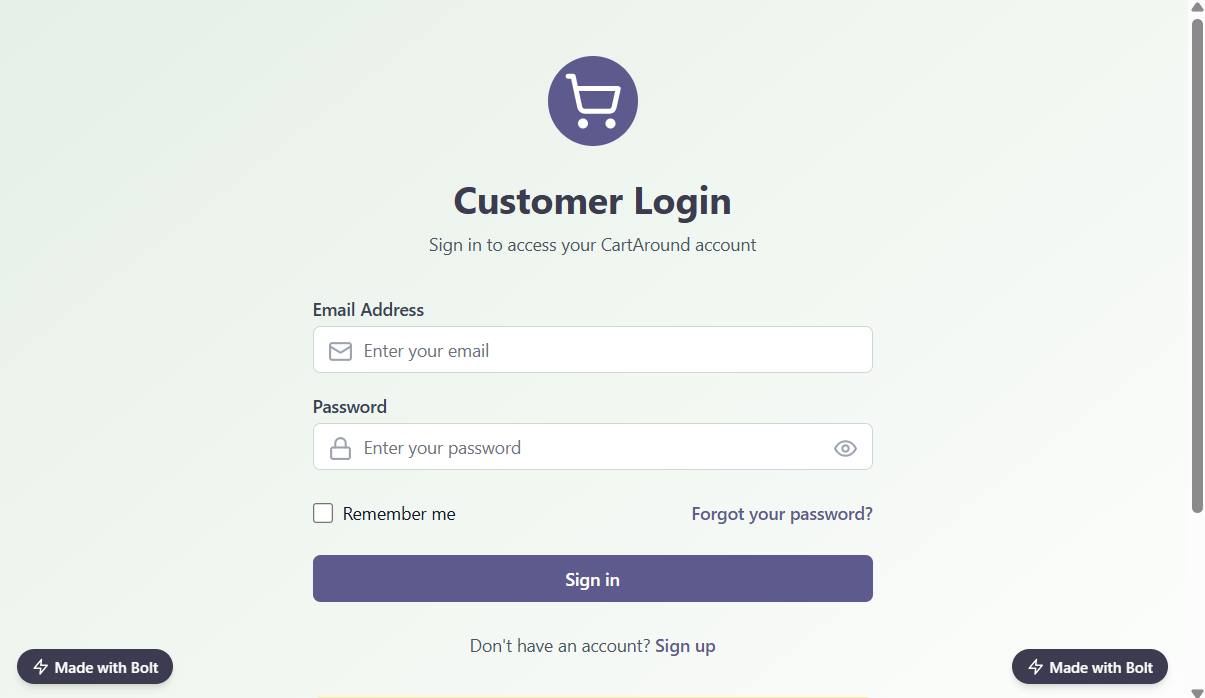
- Customer App (Port 5173)
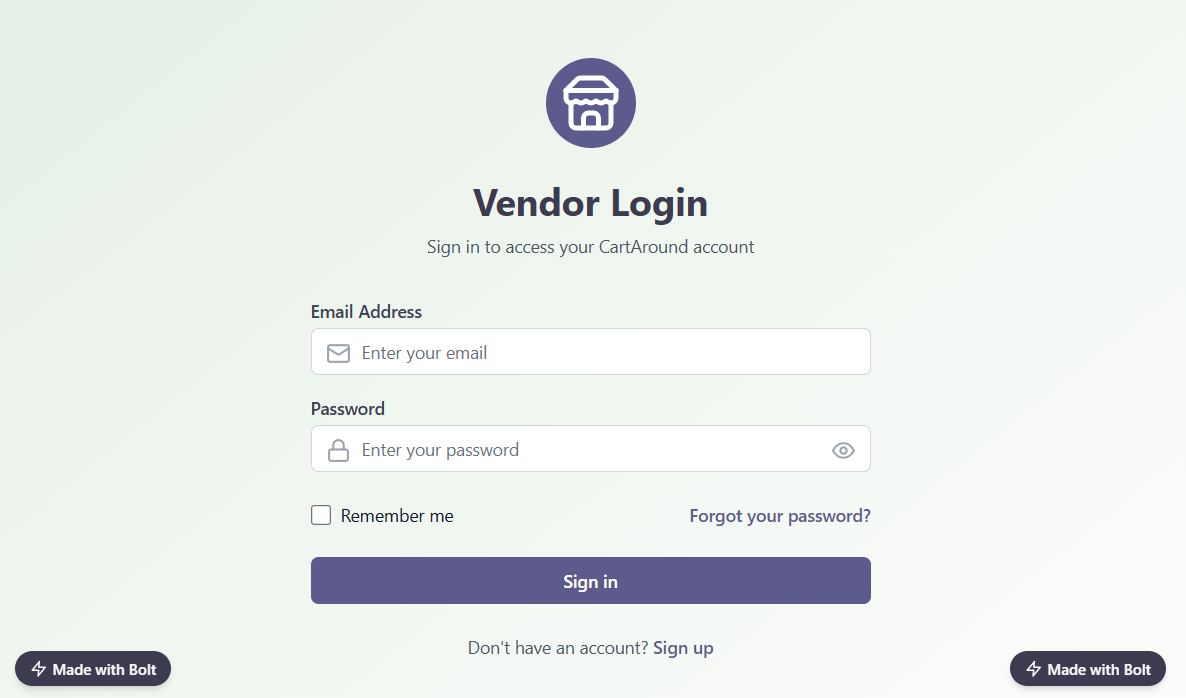
- Vendor Dashboard (Port 3002)
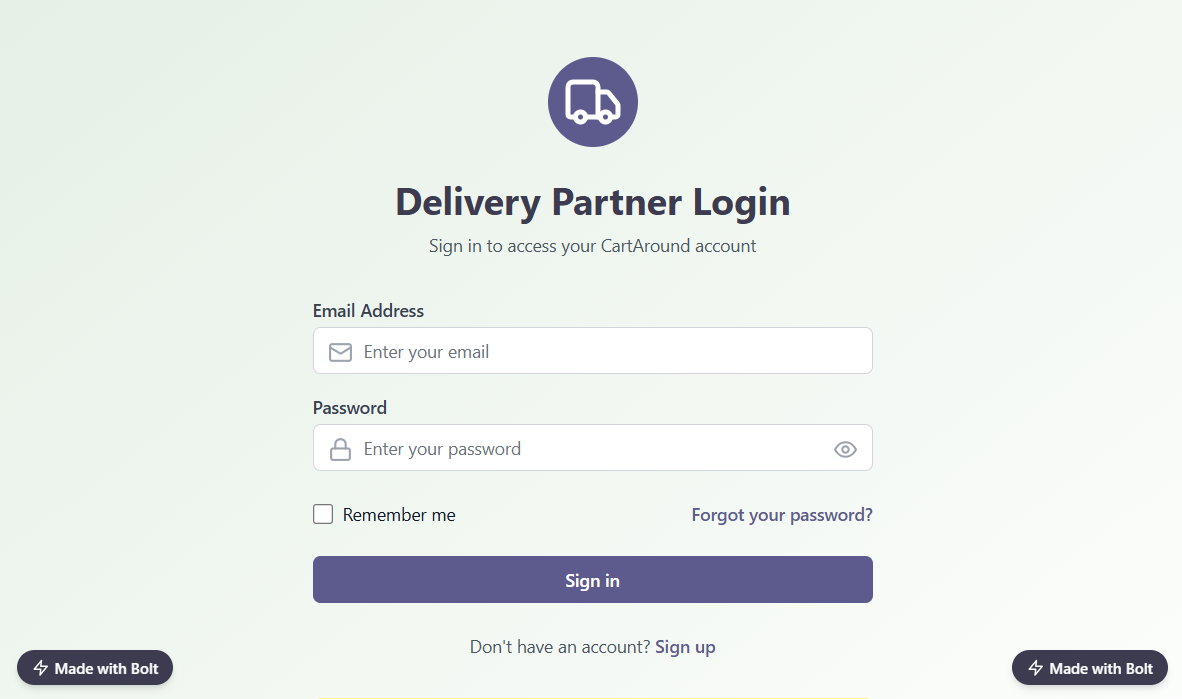
- Delivery Partner App (Port 3003)
The technology stack includes:
- Google AI Studio for voice-to-text processing and natural language understanding.
- ElevenLabs for real-time text-to-speech conversion in multiple languages.
- Tavus for video consultations with accessibility features, including sign language support.
- Supabase for real-time database services and user authentication.
- n8n for backend automation, order workflows, and customer communications.
- WhatsApp Business API for delivery updates and customer engagement.
We also developed an AI-powered agent using Google AI Studio, integrated with ElevenLabs. This agent now acts as a virtual assistant, capable of handling customer queries, offering product recommendations, and even placing orders via voice interaction, providing a seamless conversational shopping experience.
Challenges we ran into
- Implementing accessibility features across platforms while maintaining usability and performance.
- Building a voice assistant that could understand multiple languages and dialects.
- Convincing small shopkeepers to adopt the platform and managing their digital onboarding.
- Handling multi-vendor logistics, especially for split orders and delivery coordination.
- Developing a robust takeaway system that integrates stock blocking and scheduled pickup logic.
Accomplishments that we're proud of
- Delivered an inclusive shopping solution accessible to elderly users and the specially-abled.
- Created a no-warehouse logistics model, partnering with local vendors to fulfill orders.
- Built a full-stack solution with conversational AI that can place orders and provide real-time assistance.
- Provided income opportunities for delivery partners in underserved areas.
- Developed a scalable and modular architecture for easy expansion into new regions or verticals.
What we learned
- Building for accessibility unlocks value for everyone, not just people with specific needs.
- Hyperlocal problems demand context-aware AI that understands geography, culture, and language.
- Integrating third-party tools like ElevenLabs and Tavus requires careful orchestration and robust API management.
- Collaboration with small retailers not only makes the model sustainable but also revives community commerce.
What's next for CartAround
- Integrate Twilio Voice APIs for telephonic ordering and updates.
- Expand support for more Indian languages and dialects.
- Add personalized product recommendations using machine learning.
- Partner with local NGOs and municipal bodies for public sector rollouts.
- Launch a storefront toolkit for offline stores to list, manage, and promote their inventory in real time.
- Improve delivery partner analytics and introduce incentive-based rewards.
Built With
- elevenlabs
- giminiapi
- lucide
- n8n
- recact
- supabase
- travis.io
- typescript

Log in or sign up for Devpost to join the conversation.