Inspiration
In an informational interview with an intern at The Night Ministry (TNM), we gained helpful insights into homelessness and the lesser-known struggles and thoughts of those experiencing it. The Night Ministry is a Chicago-based organization focused on providing support to adults and youth struggling with homelessness and poverty, whether it be shelter, health care, help finding work, among other social services. In this discussion, we learned that, above all else, we need to keep human rights at the forefront of our ideation as we work through this design. All too often, homeless people are treated as helpless or as burdens to the city. Giving autonomy back is huge and can be done through the development of human-centered solutions. We also learned that when homeless people are confronted by law enforcement, they are given little time to pack up their belongings before they are forced to leave. Reliable storage solutions are hard to come by and are often seen in the form of strollers or shopping carts for those who can find them. Lastly, we learned that the most important characteristic of a tent for shelter is insulation and warmth. We aim to target all of these pain points in our final design.
What it does
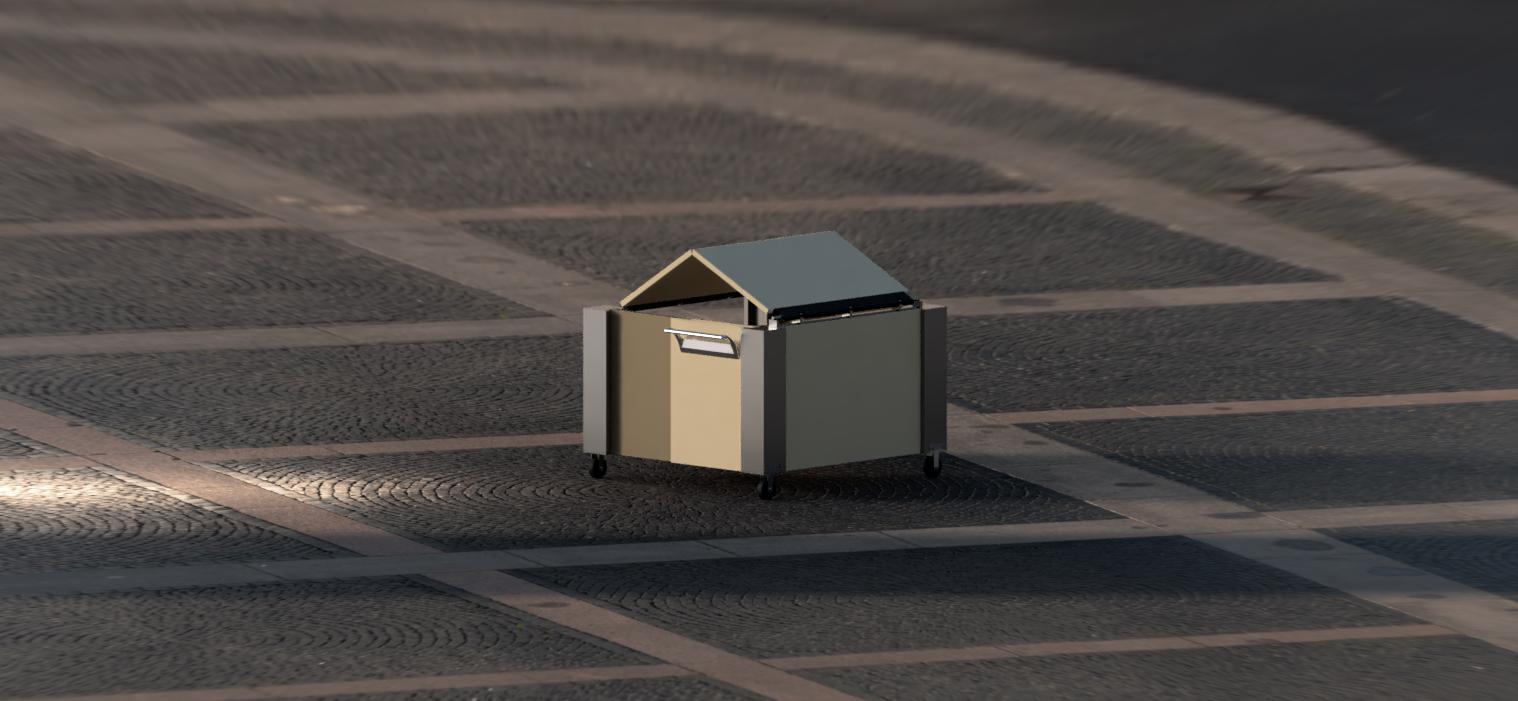
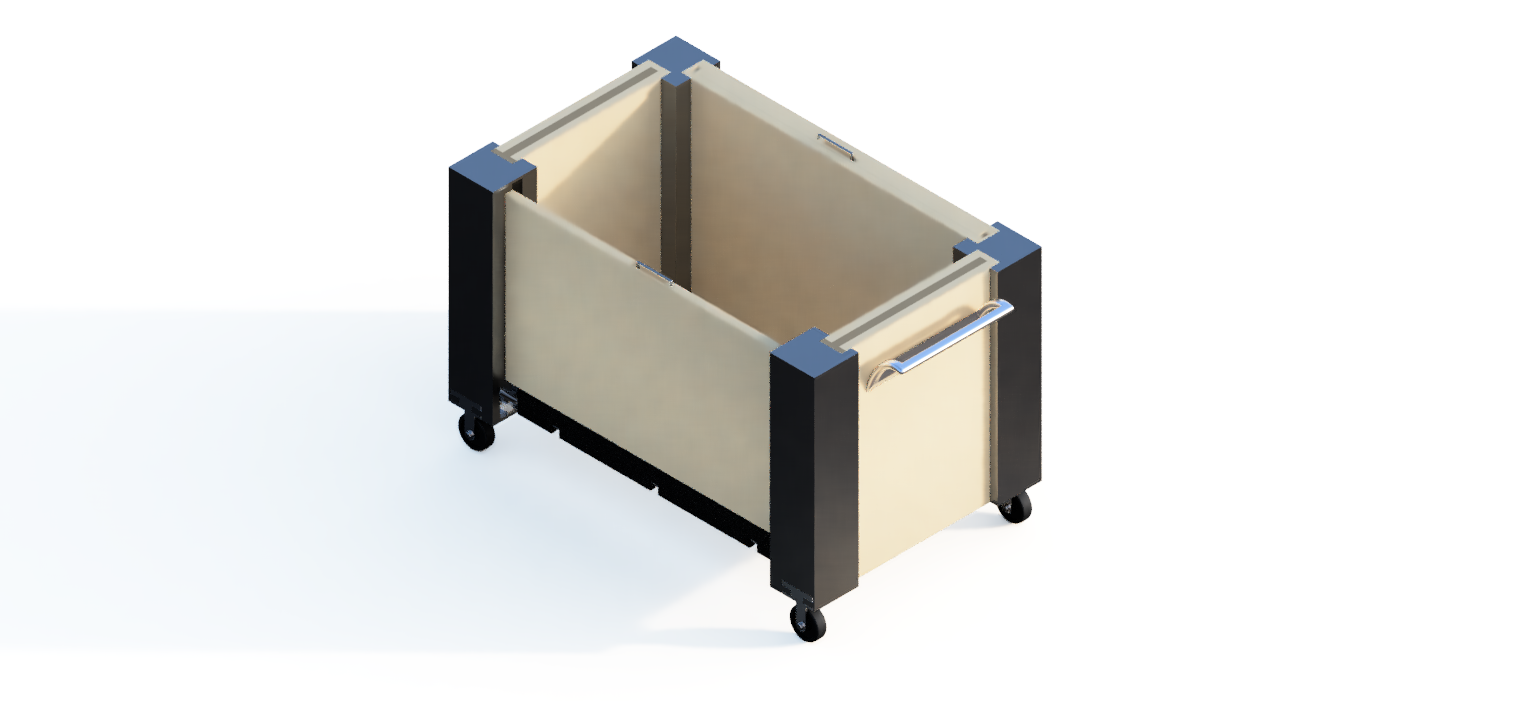
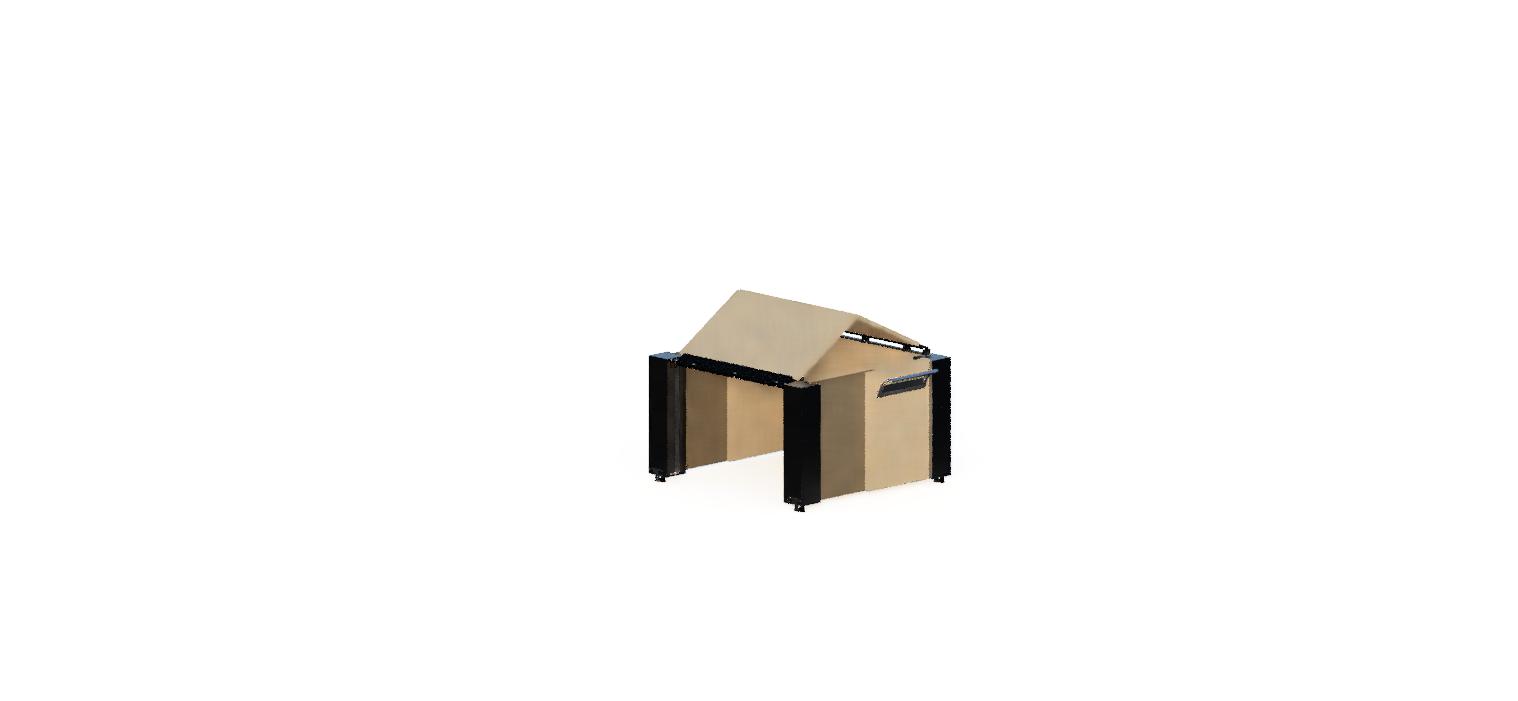
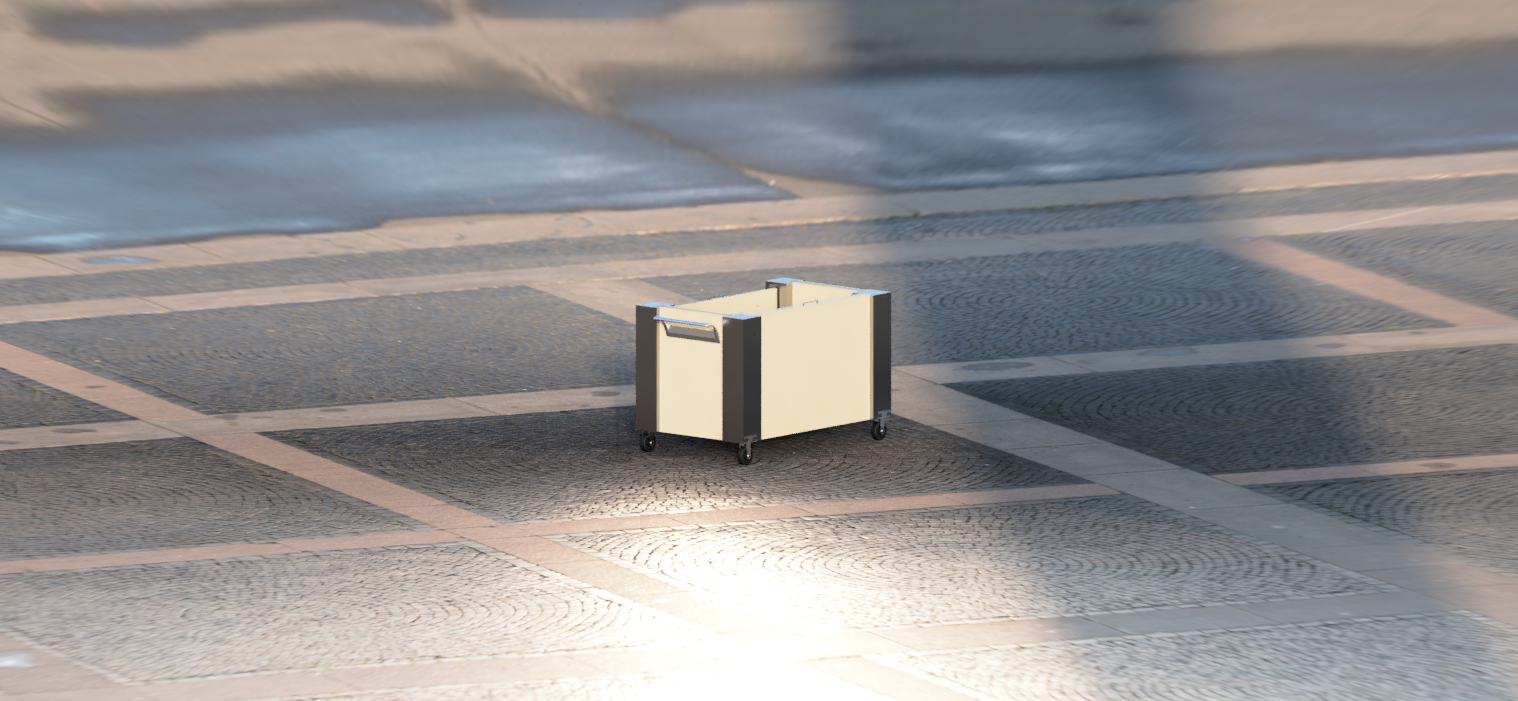
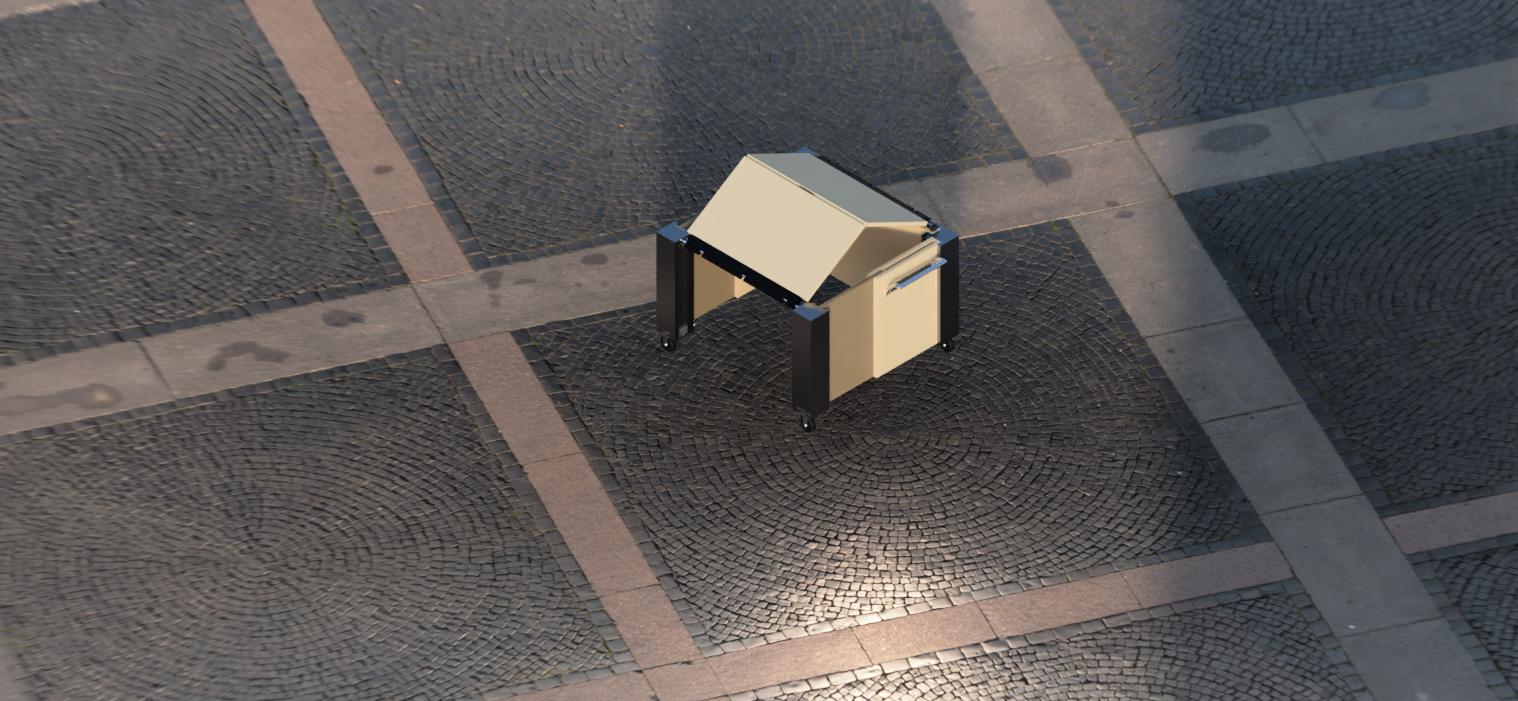
The Cart/Tent for homelessness is designed to be a 2-in-1 solution to mobility issues for homeless people and their personal belongings. The design is at first a storage cart with four wheels and lined by tarp that can be used to hold and move any belongings. The wheel component, attached to the rods via a sliding connection, can be removed to provide a standing support, and the long panels of the cart contain internal panels which slide upwards and inwards, attach to one another via pairs of twisting hooks, and form a roof. The perpendicular panels expand laterally to form a base long enough to shelter 1-2 individuals. The entire structure is then further insulated using the tarp which lined the cart. This is not shown because of limitations with Fusion360 simulating fabric. In 3 short steps, the structure can be turned back into a cart and moved at the user’s will. The panels and rods of the structure will be made of ABS plastic (acrylonitrile butadiene styrene). This thermoplastic is low cost, durable, and easy to machine. For these reasons, it is ideal for our application. The wheels are rubber, so there is no need for inflation over the lifespan of the product. Rubber is used between the junction where the roof emerges for weatherproofing purposes. We would use EPDM (ethylene propylene diene monomer) rubber, specifically, for its resilience in inclement weather and cost-effectiveness. The hooks will be made of aluminum along with the wheel casing.
How we built it
This design was done using Autodesk Fusion360.
Challenges we ran into
We ran into a lot of issues with optimizing the user experience. Oftentimes, the most obvious solution to a joint or connecting feature was not the most user-friendly. We found ourselves reminding each other of human-centered design as we went through iterations of this project.
Accomplishments that we're proud of
We are extremely proud of what we accomplished over one day of designing. Over the course of approximately 30 hours, we ideated, found our problem space, and began proposing designed until we landed on one we liked. With less than a day left to design, I think we came up with something pretty special with lots of potential to improve the quality of life of many.
What we learned
We learned a lot about how to effectively assemble with sliding joints, and we also made hinges from scratch. A lot of lessons in tolerancing and careful dimensioning were also learned.
What's next
We brainstormed, researched, and designed the tent/cart for homelessness over the course of a few days. With more time or with more help, we would spend more time refining the design to decrease the material required and ultimately make the structure less bulky. We also might prototype and lok for failures, such as what steps of assembly might be difficult or dangerous for the user. Another interesting thing to research would be the ideal storage capabilities of the cart, and whether we have achieved that. We would also do interviews with city leaders and get their opinions on the product and their likelihood to invest. The Cart/Tent for homelessness can be a socially impactful device, and to bring it to market, we would need to find investors with a passion for human rights who would be willing to help get these out to the streets of major cities.

Log in or sign up for Devpost to join the conversation.