-
-
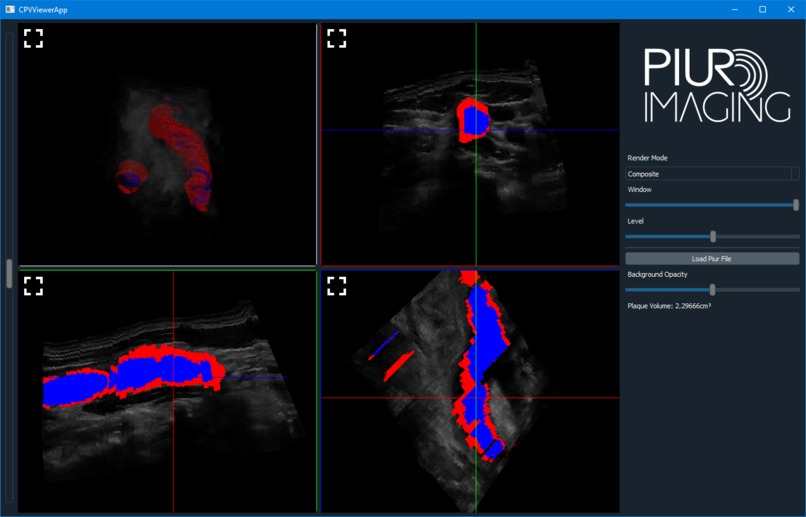
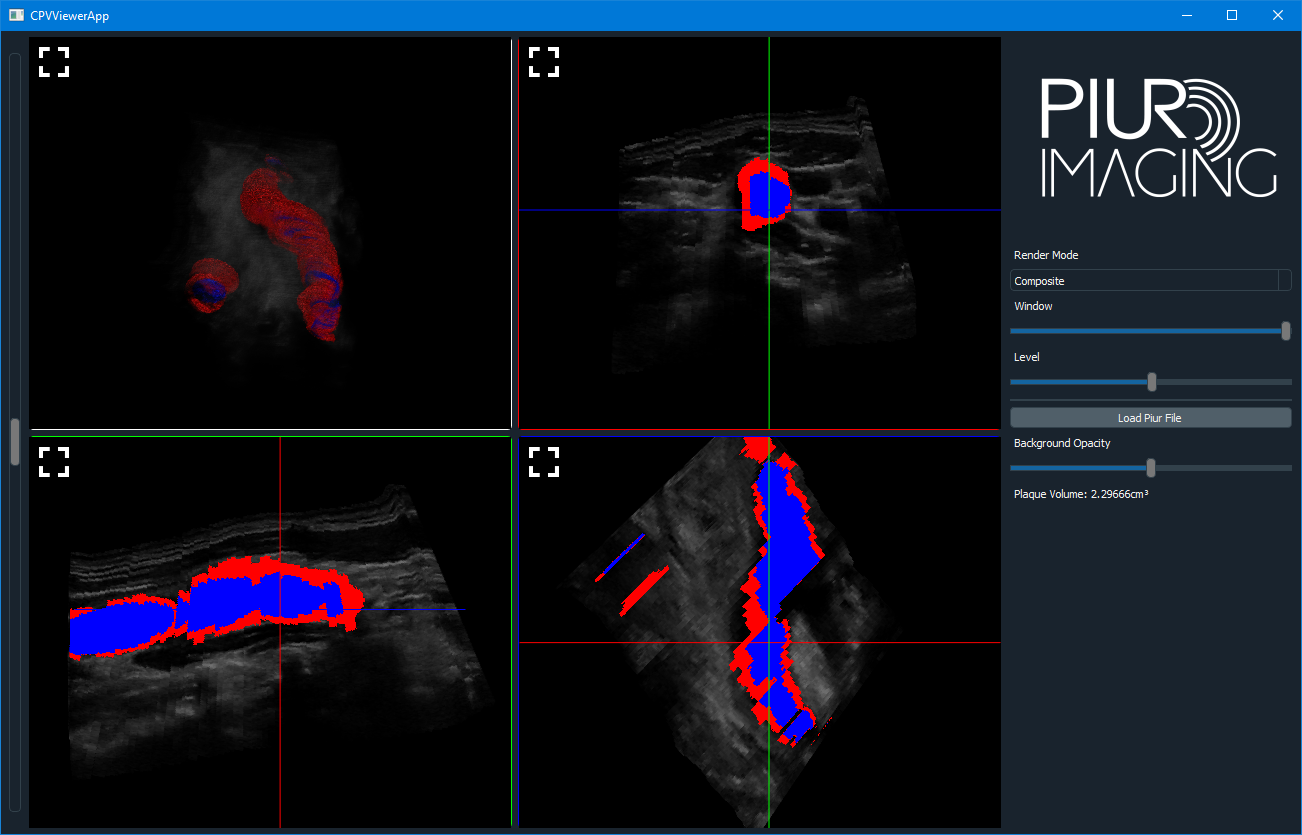
Screenshot of the proposed solution
-
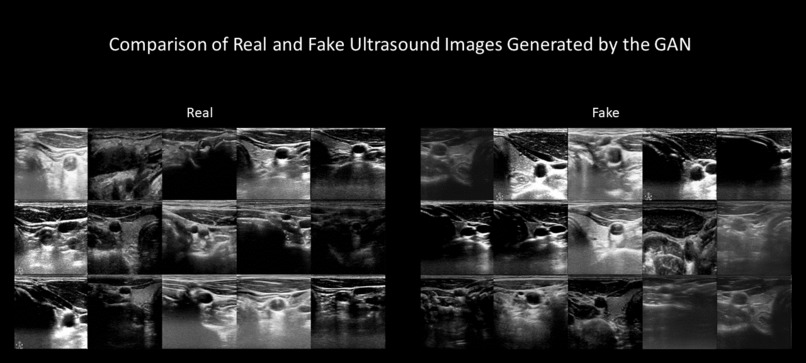
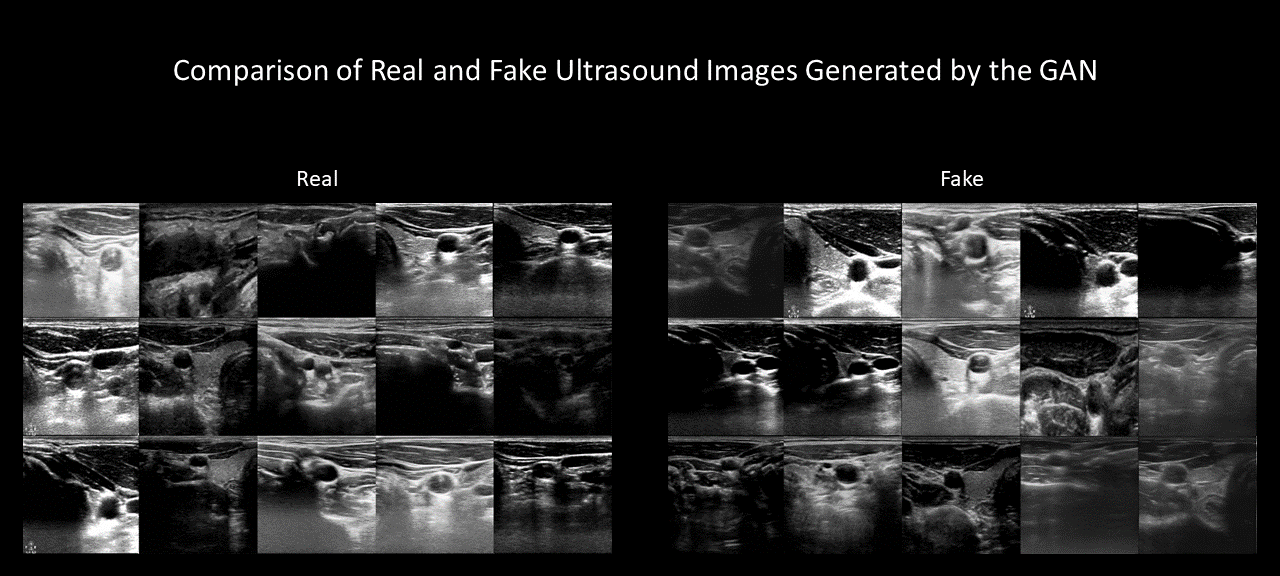
Comparison of real and fake ultrasound images generated by the GAN
-
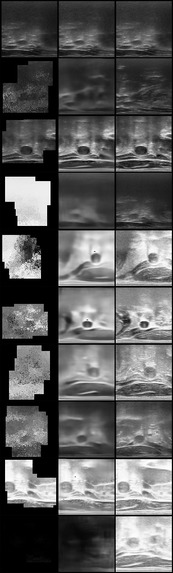
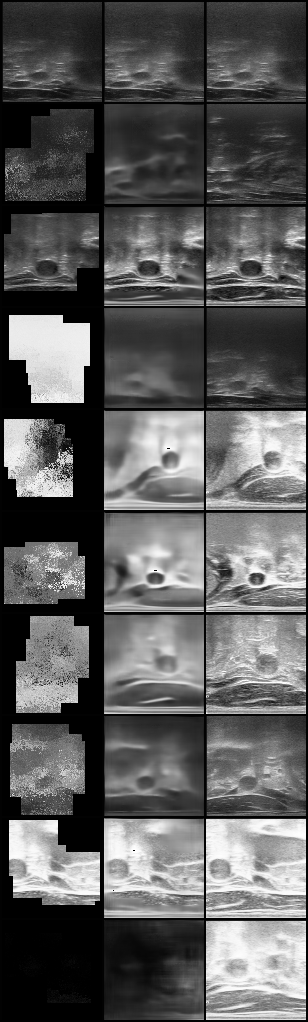
Self supervised pretraining (right input to the CNN, middle prediction, left label)
-
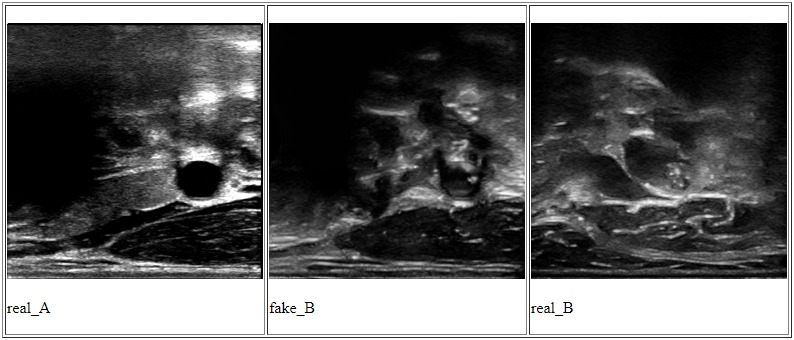
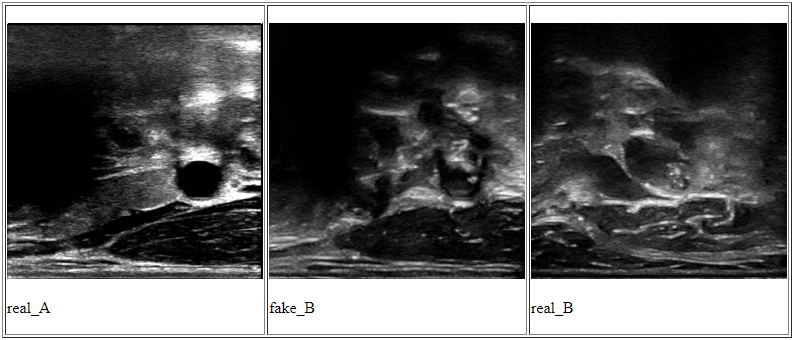
Domain transferring of carotid US images
Inspiration
Atherosclerotic plaque is a leading cause of death worldwide. Ultrasound (US) imaging is a widely-used and popular modality for carotid plaque screening due to its simplicity and low cost. However, automated diagnosis using 2-D US remains challenging due to the large variability in scanning location and operator skill. We aim to alleviate this issue by allowing to review the exam independently of the acquisition, bringing the workflow closer to CT Angiography (CTA) and MR. This not only reduces the operator dependency but it is also better suited for automated plaque measurement and characterisation. Furthermore, the examination cost is much reduced compared to other imaging techniques. We present and evaluate an automatic diagnostic system for carotid plaque risk prediction.
What it does
Given a carotid ultrasound sequence the software segments plaque volume in carotid and other arteries to extract volumetric parameters like volume, volumetric stenosis, 3D greyscale median and greyscale median distribution. The original ultrasound is visualized in a 3D view where it is clearly shown the carotid and the plaque.
How we built it
We collected a small dataset (30 patients) of annotated US sweep and a big dataset of unlabelled data, 150 patients, regarding carotid plaque. It is a common problem in medical imaging to have a large amount of unlabelled data and few annotated data. Moreover, the annotation process is usually expensive due to the need to involve an expert able to correctly segment the data. In order to leverage on all the data available we identified 3 area to work on:
- create an application able to visualize in 3d and 2d an ultrasound sweep and the result of the segmentation
- pretrain in an unsupervised way a network able to segment the US sweep
- generate synthetic data to be used for training
Challenges we ran into
- there is a multitude of probes, post-processing methods and user-specific settings available on US machines that result in visually different US images
- rich literature on unsupervised learning and synthetic data generation but focused on natural images more than medical images
Accomplishments that we're proud of
Using self supervised techniques and Generative adversarial network we managed to leverage unused data and pretrain a convolutional neural network on the field of interest ( US carotid images). We created a simple and effective application able to automatically analyse an US sequence and extract measurements useful to a doctor to estimate health situation and risks for a patient.
What we learned
We learned that is challenging to create an easy application able to perform completely automatically a difficult task like segmenting an US image. In order to achieve a good result one needs to use all the available knowledge, supervised and unsupervised.
What's next for Carotid Plaque Analysis
We presented and evaluated an approach to carotid plaque risk assessment using a low-cost system. Such a system also enables remote diagnosis, making cardiovascular screening affordable in rural areas and developing countries. The presented system enables collaboration between the automated framework and medical experts by allowing them to improve the output of any stage of the model. For example the current system could allow experts to correct mistakes in the automatic segmentation. This in turn could contribute to more data collection and improved diagnostic accuracy


Log in or sign up for Devpost to join the conversation.