-
-
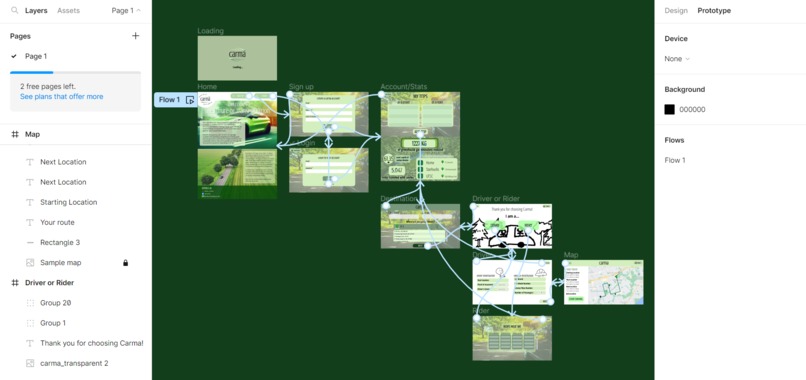
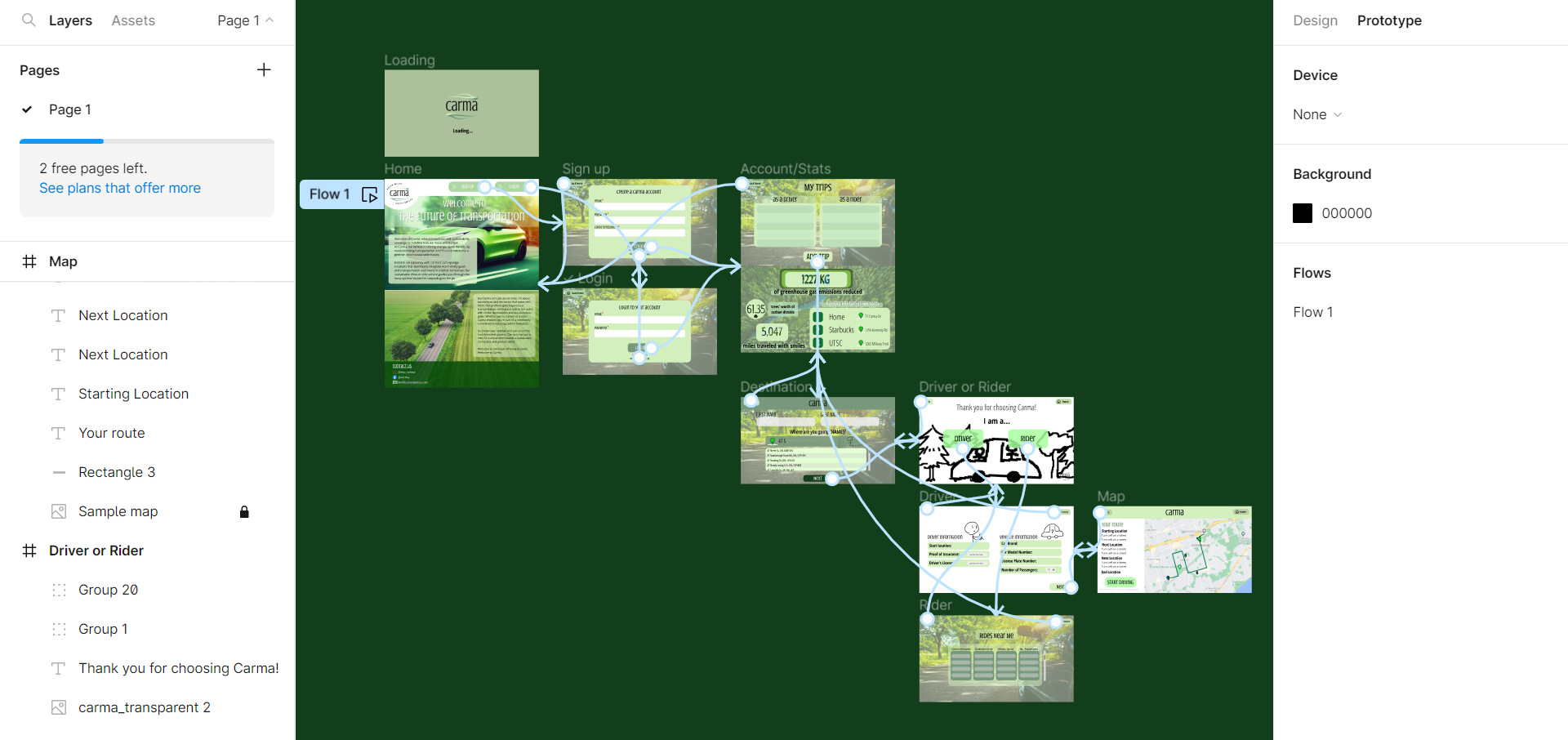
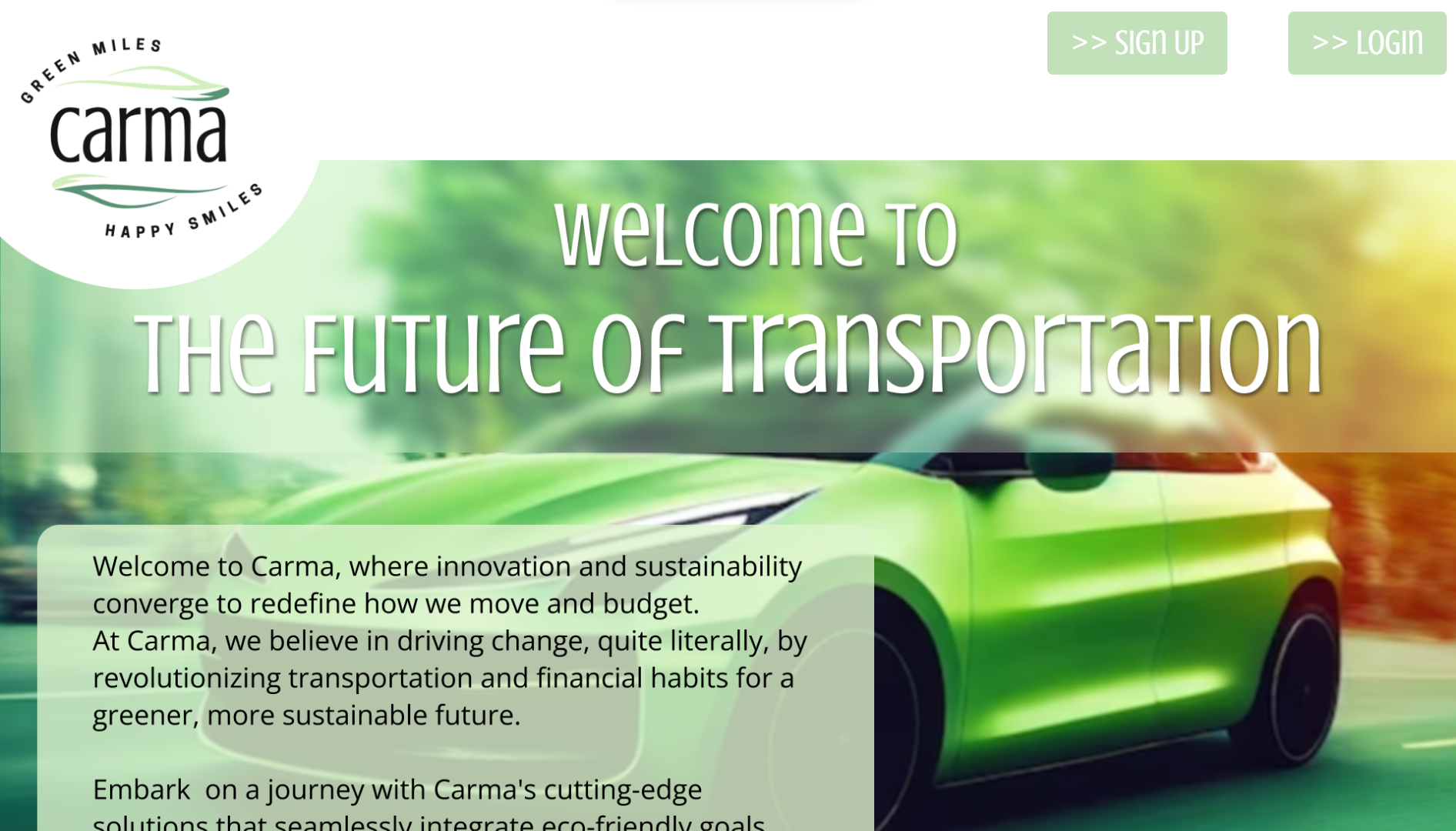
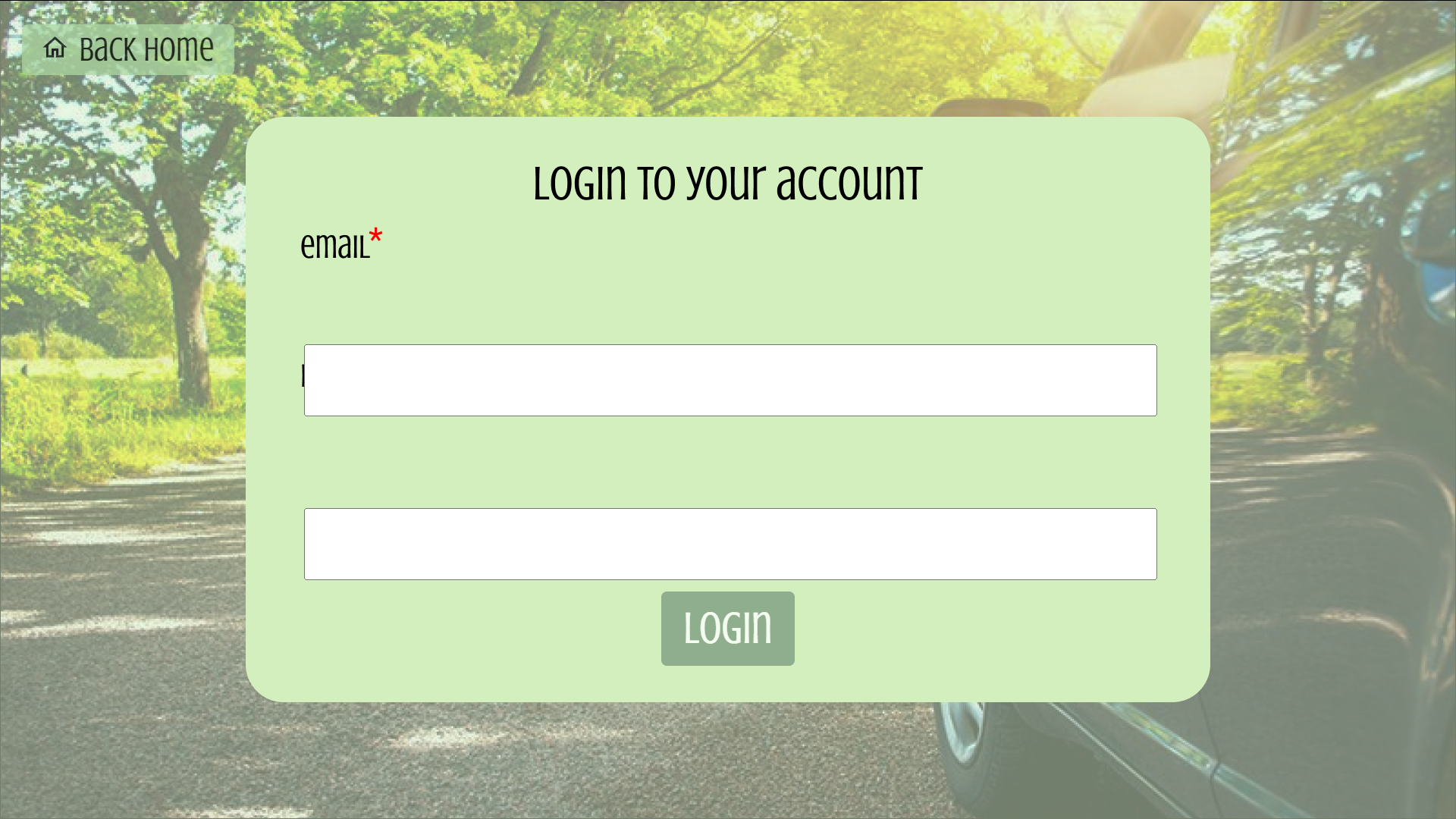
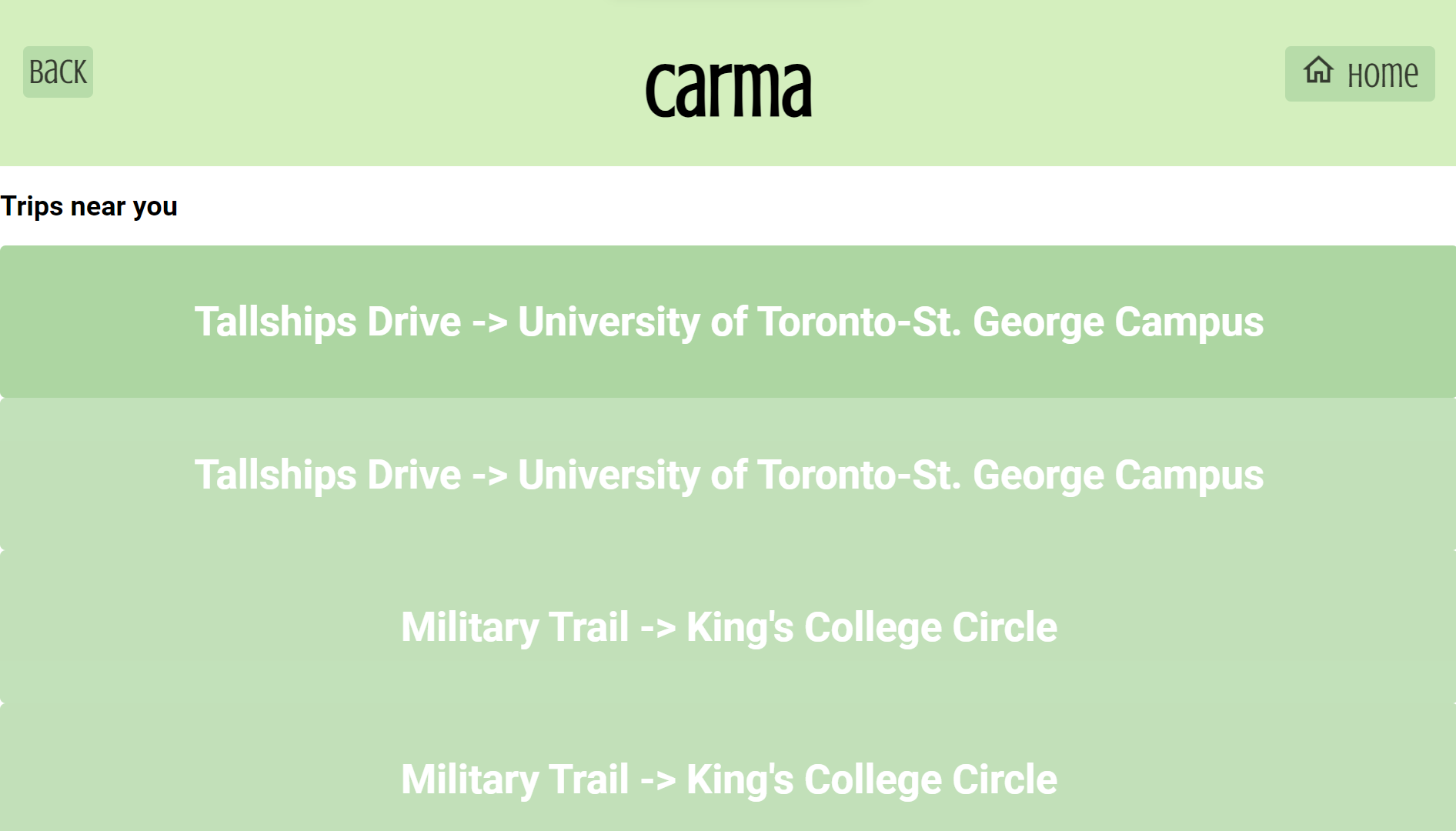
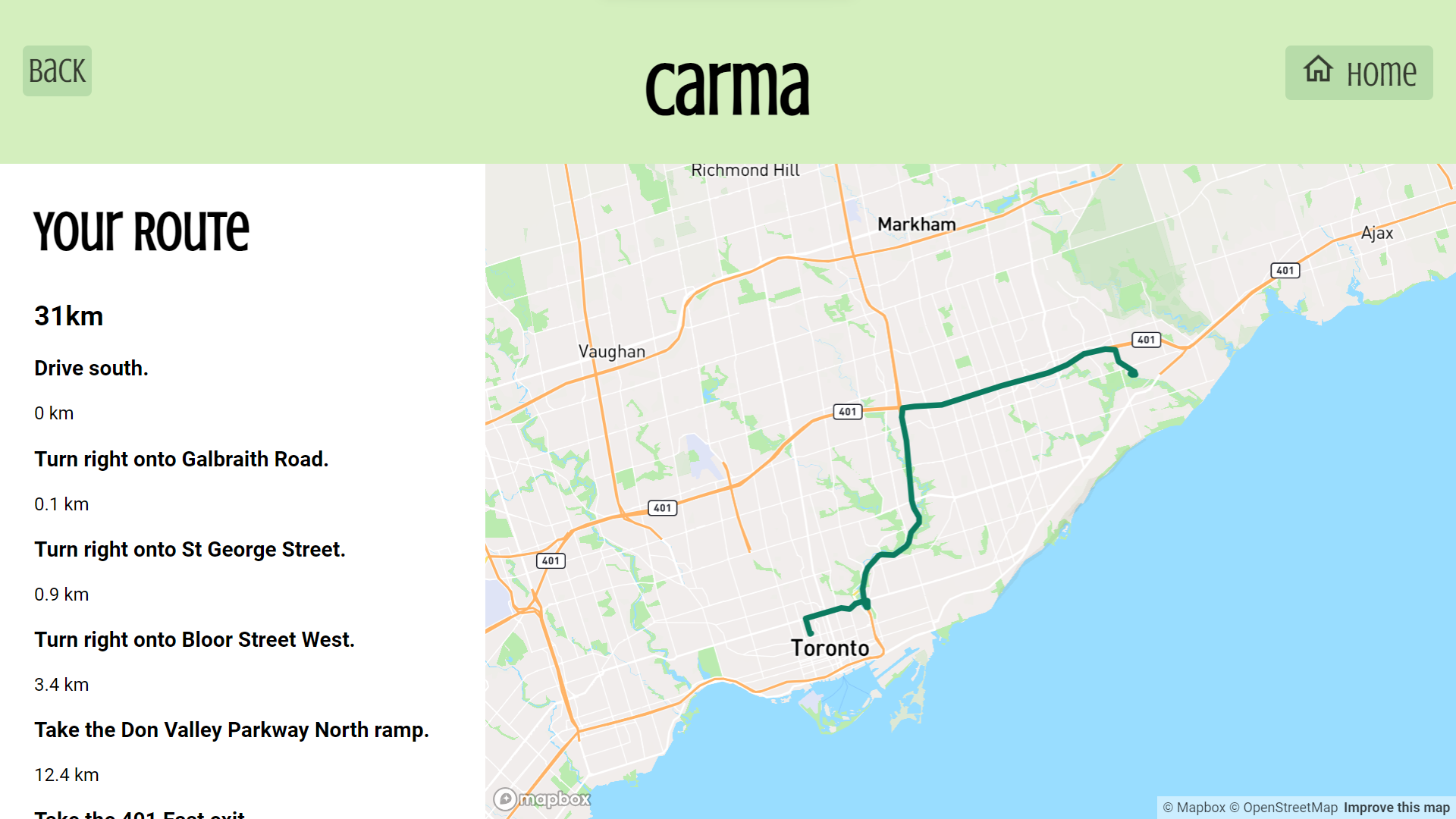
Figma prototype
-
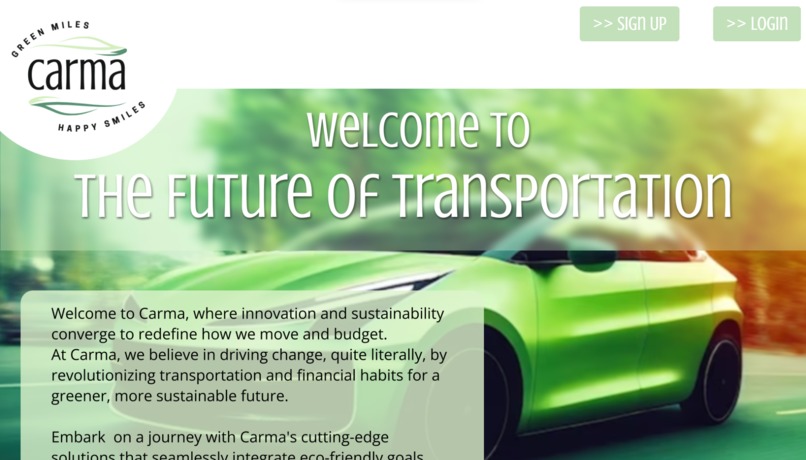
Home page
-
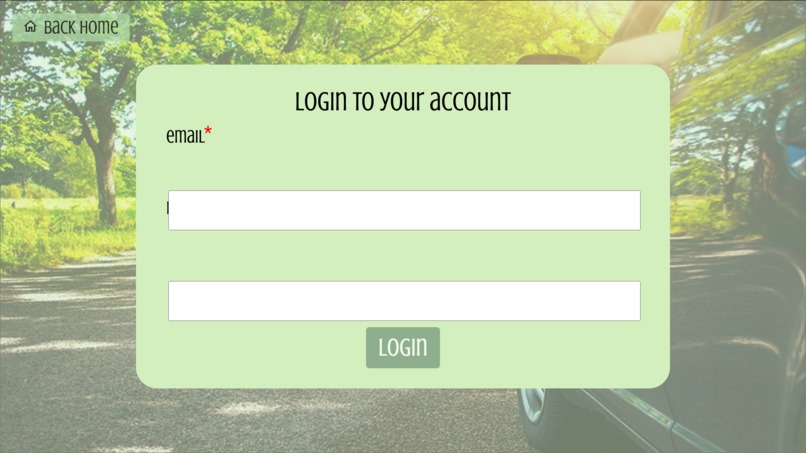
Login screen
-
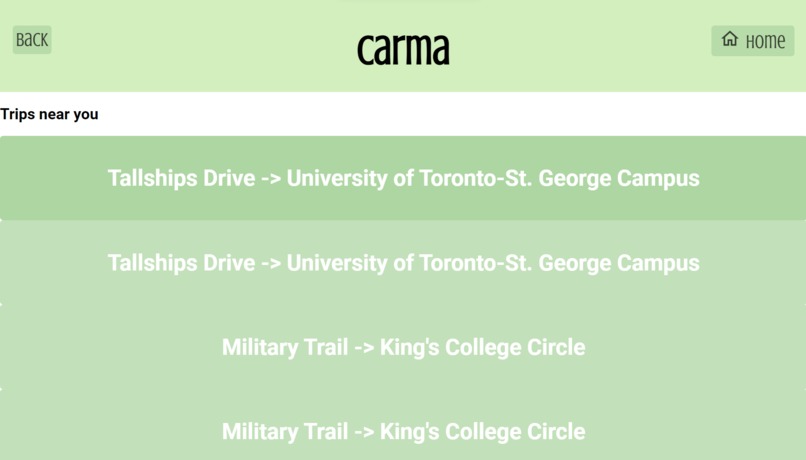
Trip selecition for passenger users
-
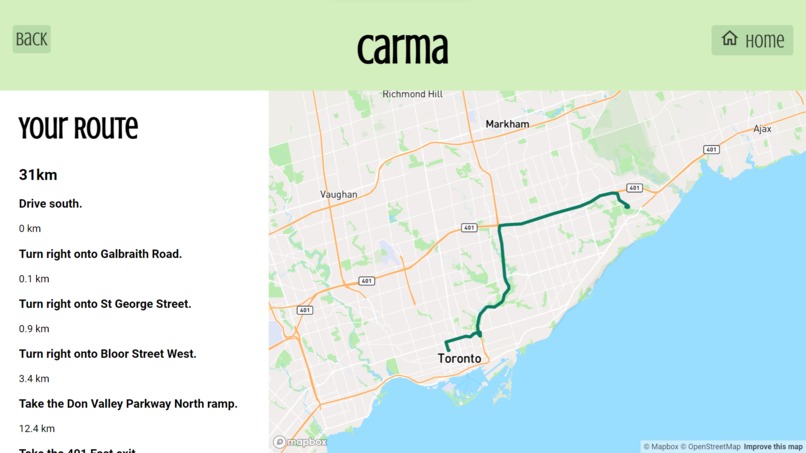
Sample route
-
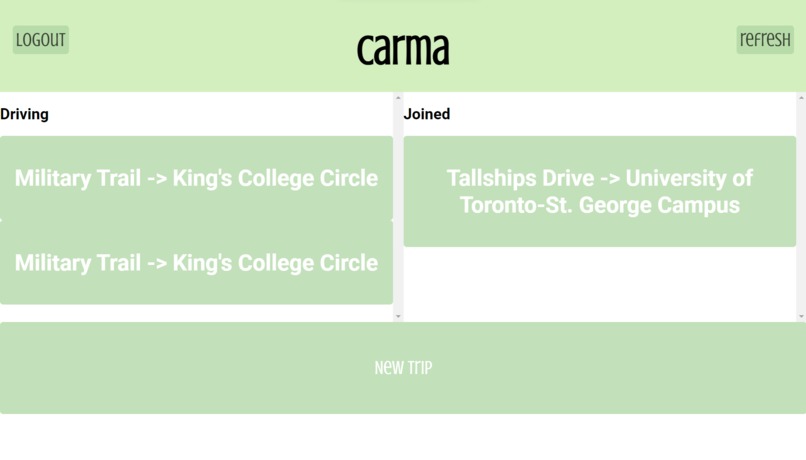
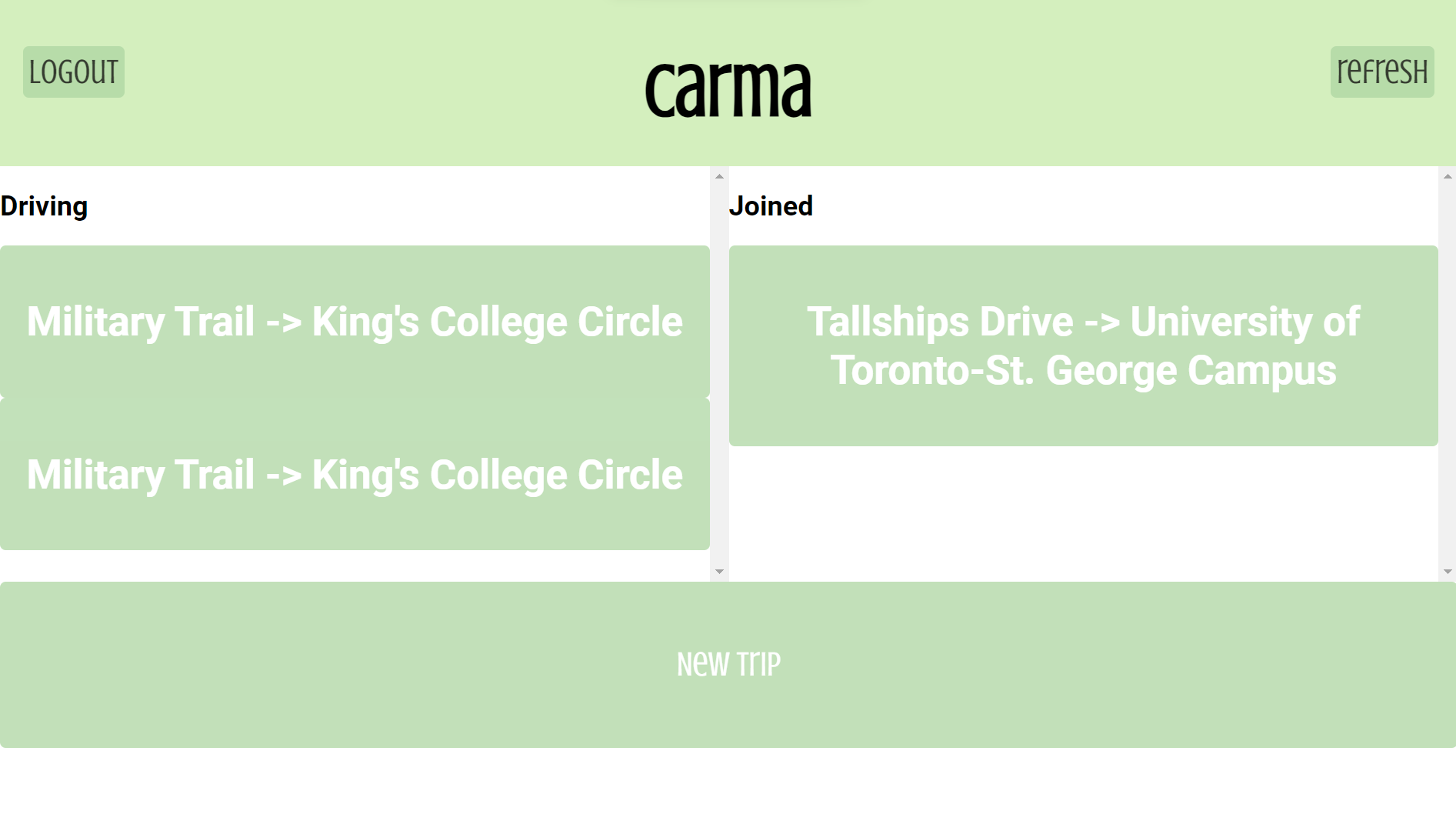
User dashboard
-
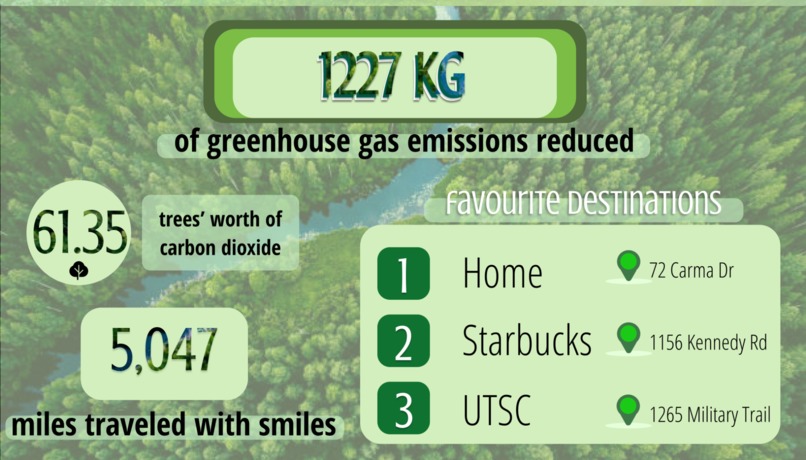
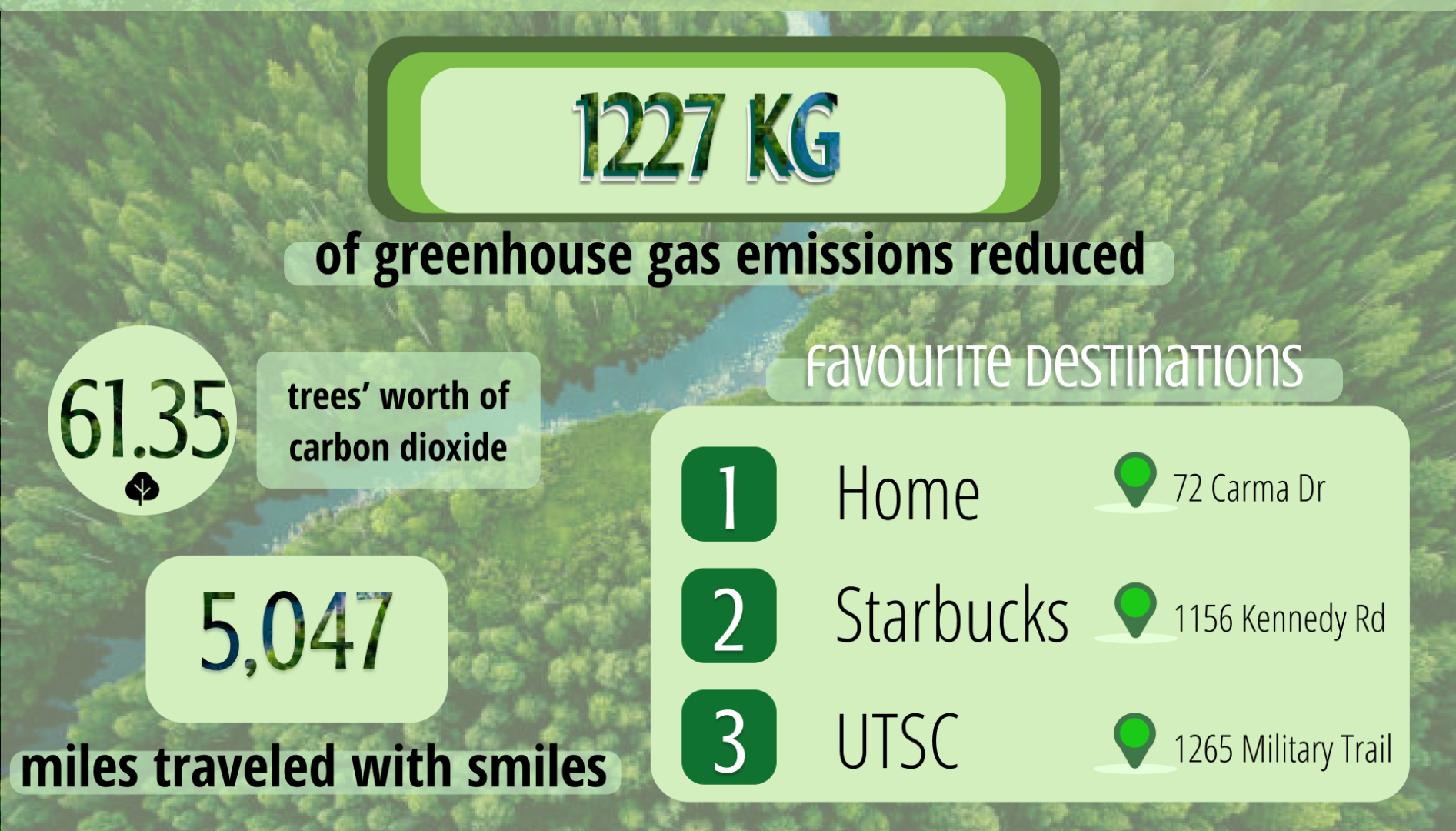
User statistics showing how they're saving the environment
check out our GitHub repository: link
🐢🦖🌱☘️🍐🍏🥝🥬📗❇️
🌵🌳🌲About Carma🌲🌳🌵
💚 Welcome to Carma, where transportation and sustainability meet innovation. At Carma, we believe in driving change, quite literally, by revolutionizing transportation and financial habits for a greener, more sustainable future.
✳️ Our Inspiration ♻️
💚 Our journey began with a simple but powerful realization: the way we move impacts not only our lives but the world we live in. Climate change and environmental degradation pushed us to reimagine our daily commutes, turning them into opportunities to reduce our carbon footprint. We envisioned a world where every journey counted, not just for individuals but for the planet.
🐛🐛 What We Learned
💚 Creating Carma was a valuable learning experience for our team. We delved into the world of design using Figma, improving our familiarity with the software and increasing our skills in crating intuitive user interfaces. While building our website, we brushed up on our coding and markup languages. In the process, we also gained a deeper understanding of Mapbox and navigation systems, enhancing our understanding of location-based services. Most importantly, we learned how to build a website from scratch, from concept to deployment, building on our web development knowledge. Carma not only served as a fun project to create, but also as an amazing opportunity for our team to grow our skills as programmers.
How Carma Was Built 🥑
We built Carma using numerous languages, packages, and tools.
Before a single line of code was written, our team used Figma to visualize and refine the user interface and user experience. Figma's design collaboration platform helped us prototype and perfect our vision before turning it into a tangible product.
1. JavaScript, HTML5, and CSS ❇️
- The foundation of Carma's web platform lies in the trio of JavaScript, HTML5, and CSS. These core technologies allowed us to create a user-friendly interface that serves as the gateway to Carma's services.
2. Node.js and Express.js📗
- The backend of Carma is powered by Node.js using Express.js, enabling us to build a robust, efficient, and scalable server that handles user requests, data processing, and seamless communication between the frontend and backend.
3. MongoDB ☘️
- To manage and store user data, trip details, and other critical information, we utilized MongoDB, a NoSQL database. This allowed us to provide a secure and highly customizable data storage solution.
4. Mapbox 🌱
- For the heart of our navigation and routing services, we turned to Mapbox. Its powerful mapping and geolocation tools ensured that users could find the optimal carpooling routes easily and with precision.
🐸 Challenges Faced
💚 While building Carma, we were presented with a series of challenges unique to a hackathon environment. With the clock ticking, we had to make careful decisions regarding the project's scope, knowing that we couldn't implement all the features we initially envisioned. Initially, ideation was a struggle as we grappled to form a concrete concept. However, our team powered through and we ended up concieving the idea of Carma. During the development phase, many technical challenges also arose, such as unfamiliarity of stretching our coding and knowledge skills; it did not help that our team was constantly fighting the battle against sleep deprivation. One final unexpected challenge we ran into was balancing the allure of exciting events with our workload. Despite these hurdles, our team's determination to succeed and adaptability allowed us to overcome these obstacles and deliver a successful project.
Welcome to the future of transportation. Welcome to Carma.
🐢🦖🌱☘️🍐🍏🥝🥬📗❇️


Log in or sign up for Devpost to join the conversation.