Inspiration
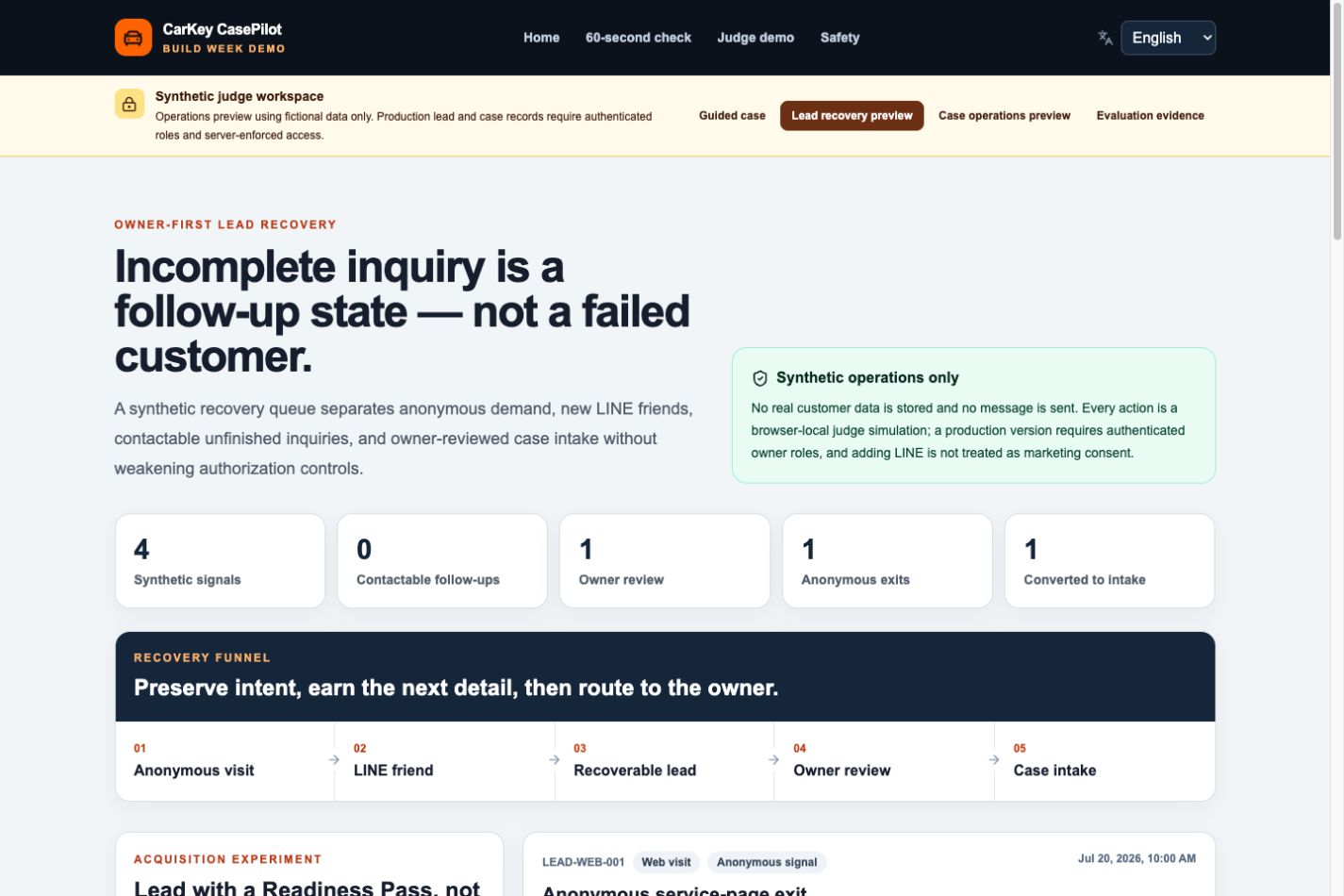
Field-service work often begins before a complete inquiry exists. A visitor may leave the website, add the official LINE account without sending a message, or stop halfway through a rushed call or chat.
Treating those interactions as failed cases loses potential customers. Treating incomplete information as dispatch-ready creates authorization, safety, and operational risk.
The opportunity does not end after service completion either. Verified field knowledge is often trapped in notes and photos instead of becoming safe, reusable answers for future customers.
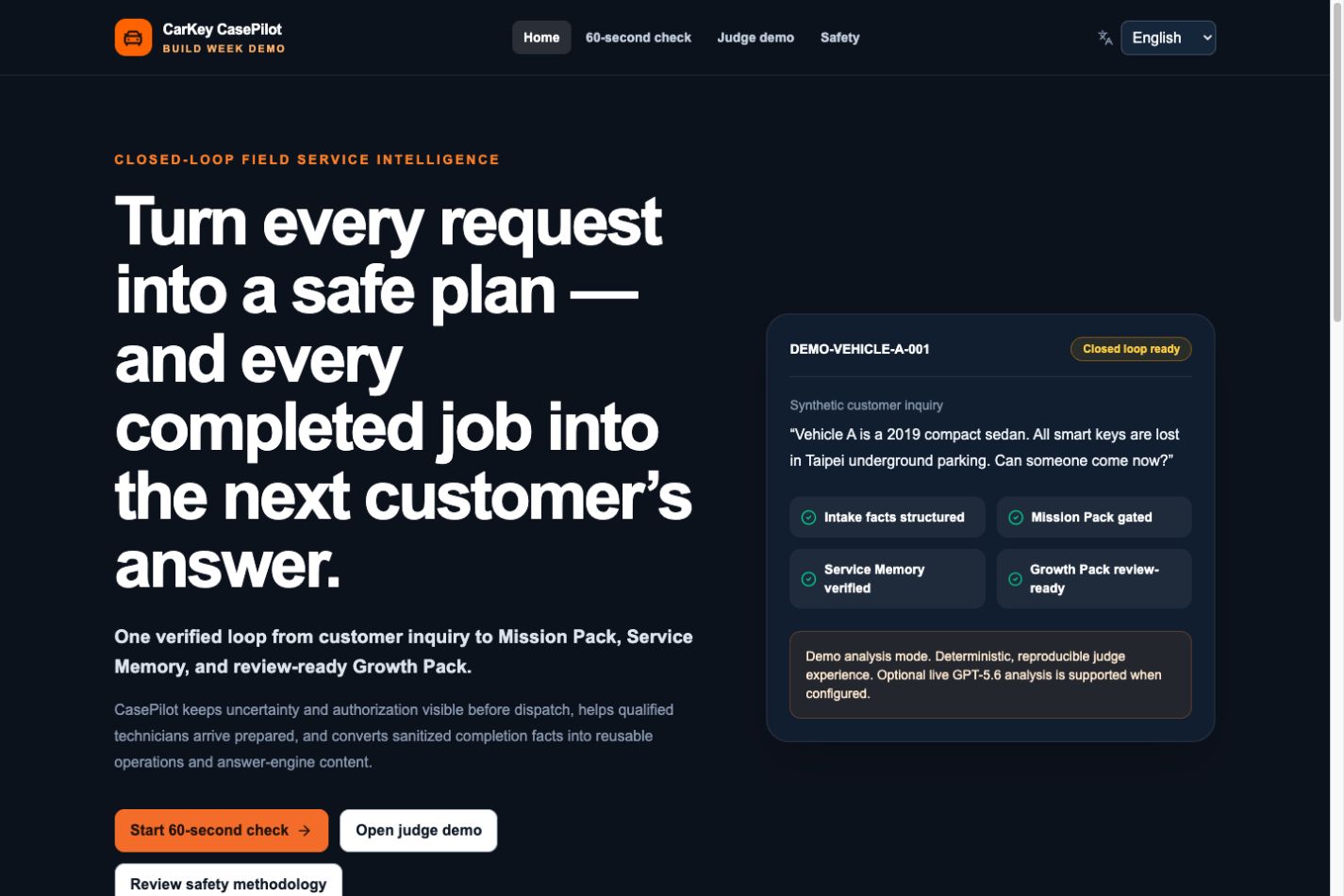
CarKey CasePilot connects these disconnected stages into one human-controlled loop: recover the inquiry, verify the service, preserve qualified completion knowledge, and prepare the next customer’s answer.
What it does
CasePilot turns incomplete demand into a safe, auditable field-service workflow:
- Separates anonymous visits, silent LINE contacts, recoverable inquiries, and owner-review-ready leads.
- Preserves only appropriate context and requires contactability and service follow-up permission before preparing a recovery draft.
- Asks the smallest next-best question instead of rejecting incomplete customers.
- Routes qualified intake to the business owner before formal case creation.
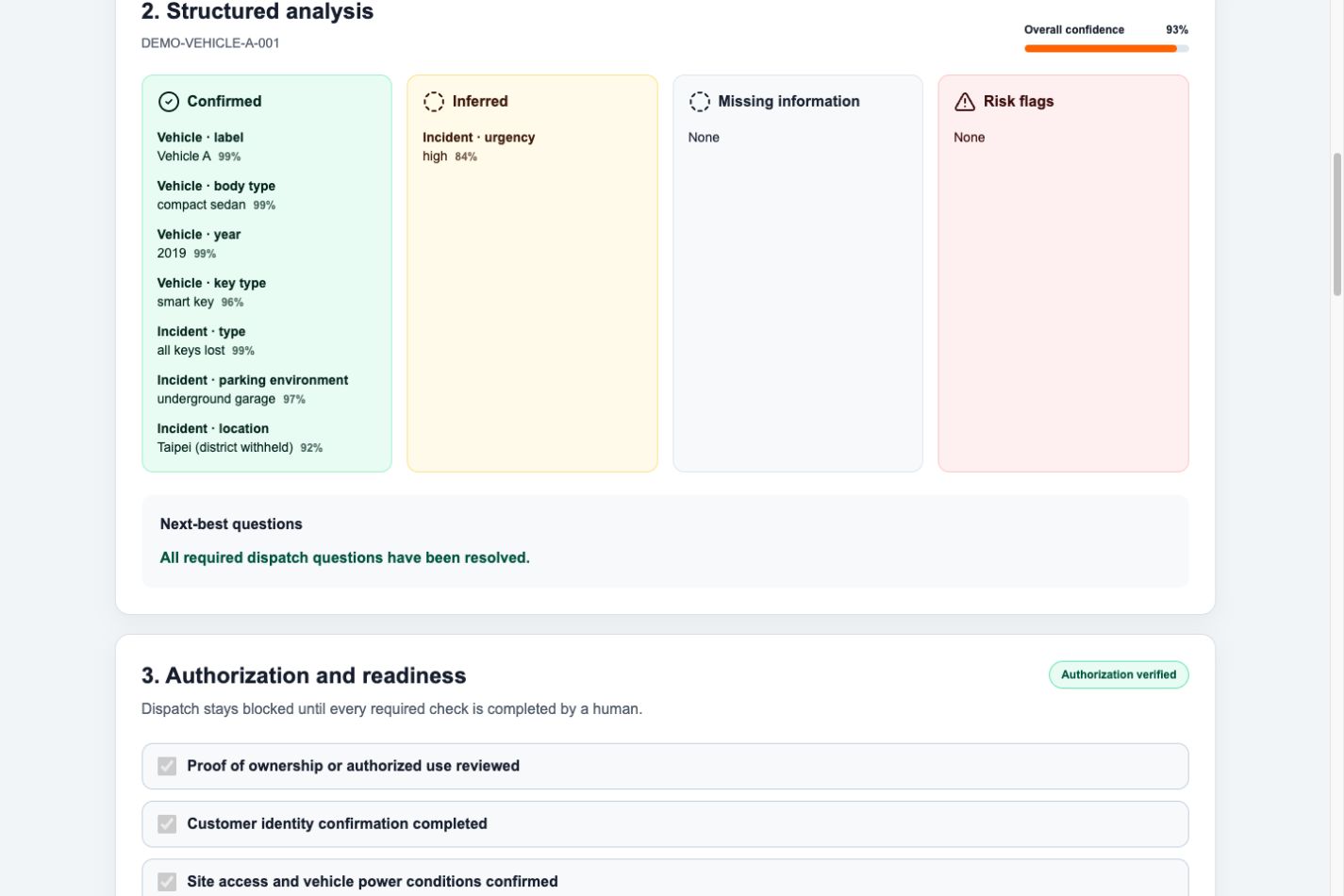
- Structures confirmed facts, cautious inferences, missing information, risks, and confidence.
- Blocks work-order generation until lawful authorization and site-readiness checks are completed by a human.
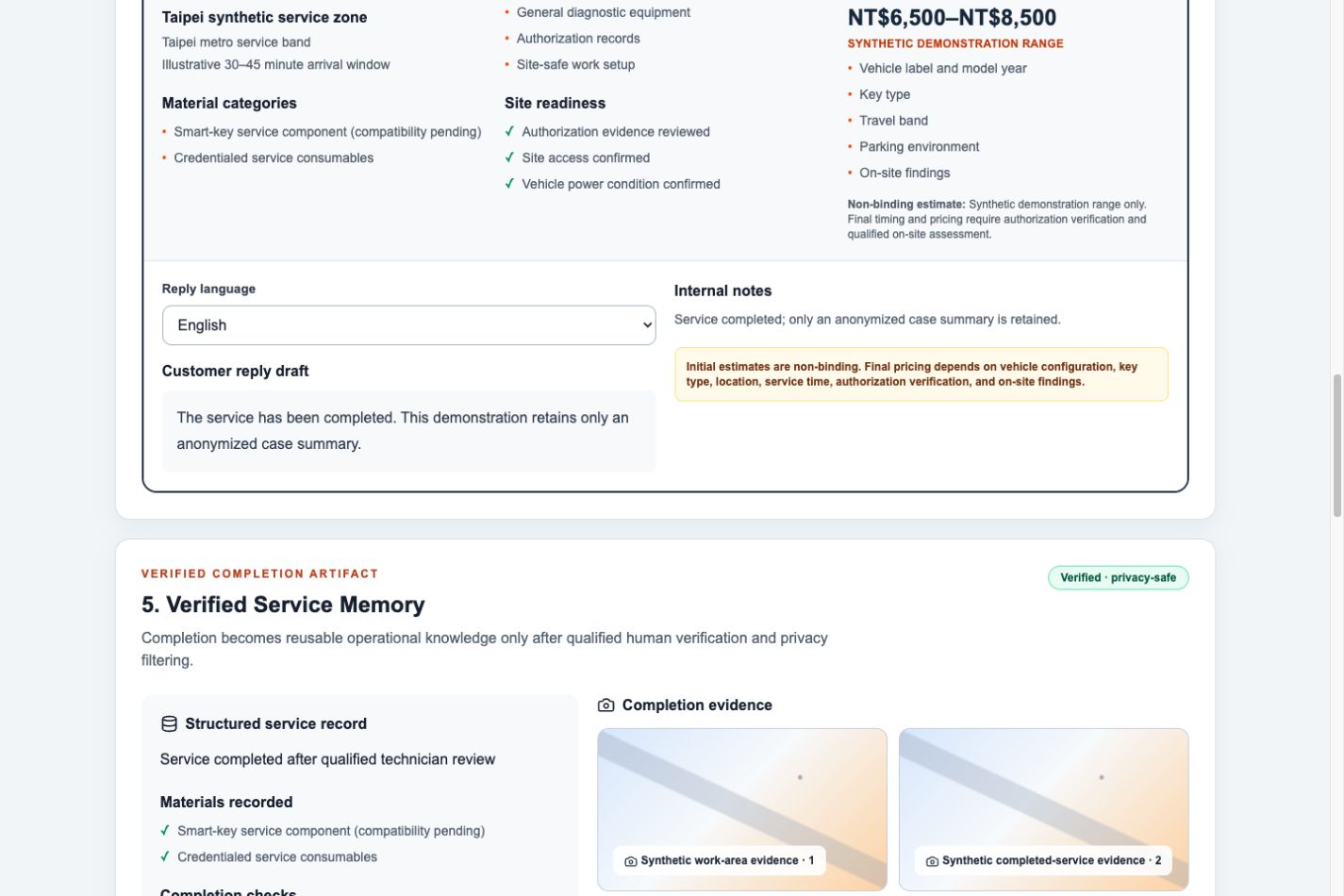
- Creates a technician-ready Mission Pack without exposing security-sensitive procedures.
- Captures qualified completion as privacy-safe Service Memory.
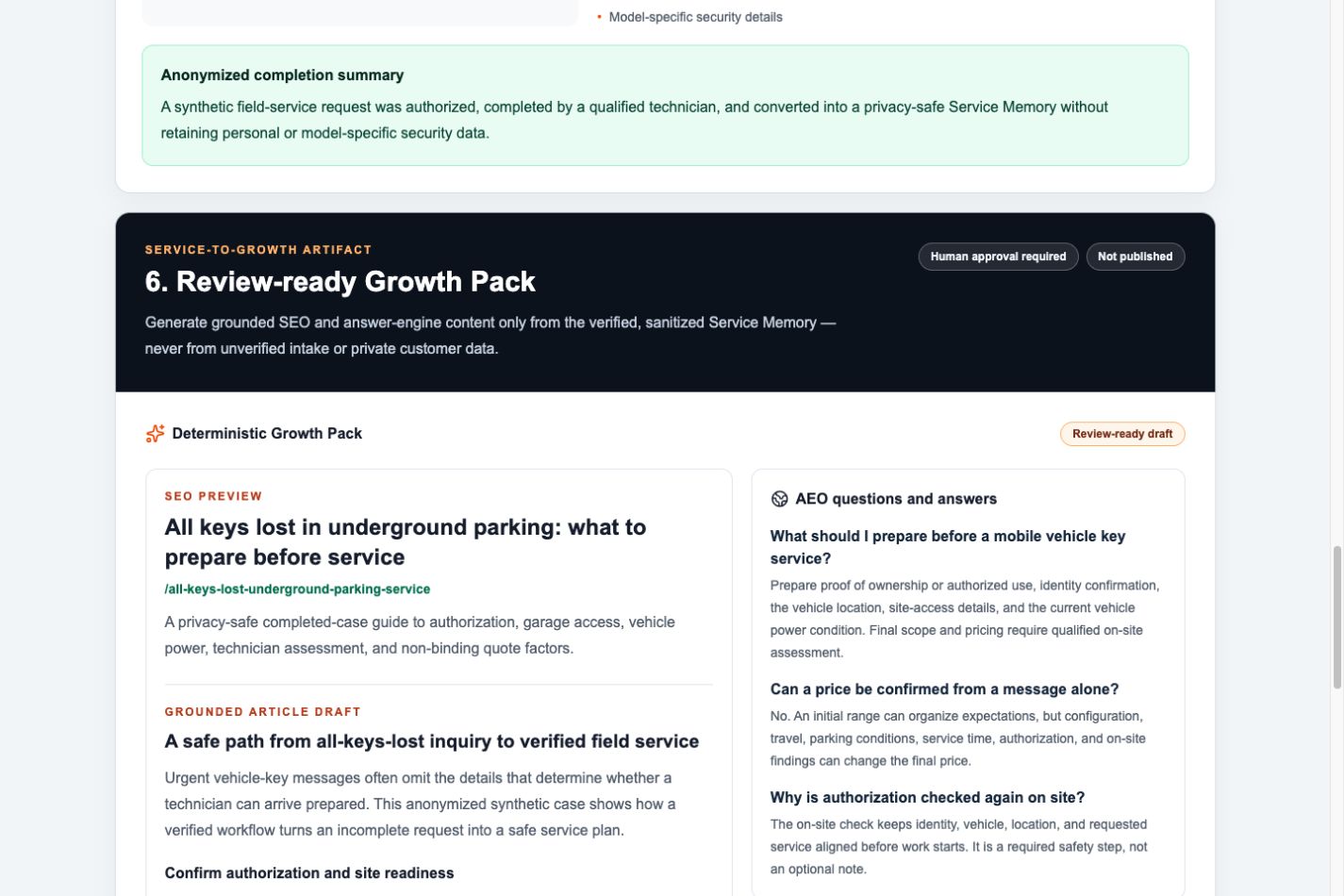
- Generates a bilingual Growth Pack for SEO and answer engines using only verified, sanitized facts.
- Keeps all generated content in “Human approval required” and “Not published” state.
The public demo uses synthetic data, sends no external messages, and publishes nothing automatically.
How we built it
CasePilot uses Next.js App Router, React, strict TypeScript, Tailwind CSS, Zod, Vitest, and Vercel.
Separate typed LeadRecord and CaseRecord schemas protect the boundary between incomplete commercial intent and formal service operations. The guarded case workflow produces three explicit artifacts: Mission Pack, Service Memory, and Growth Pack.
The application includes deterministic providers for a stable, reproducible judge experience and optional server-side OpenAI providers for live analysis and Growth Pack generation.
The optional providers use the OpenAI Responses API structured-output pattern with strict Zod schemas, responses.parse(), zodTextFormat(), store: false, timeout handling, PII masking, response validation, and safe deterministic fallback.
No API key is required for the public demo, automated tests, production build, or judge flow. The interface clearly identifies when deterministic demo analysis is being shown instead of a live GPT runtime.
Challenges we ran into
- Recovering unfinished demand without inventing consent or identifying anonymous visitors
- Keeping lead recovery separate from the authorization-controlled case queue
- Making LINE useful as a continuation channel without treating it as the workflow database
- Enforcing authorization in domain rules instead of relying only on disabled buttons
- Preparing useful service context without exposing proprietary or security-sensitive techniques
- Converting completion evidence into reusable knowledge without retaining identity, documents, exact vehicle identifiers, or original photos
- Keeping all generated content bilingual while preserving workflow state
- Demonstrating optional live AI integration without making an API key a deployment dependency
Accomplishments that we're proud of
- A complete inquiry-to-growth loop with no login or credentials required
- Consent-aware lead recovery and owner-first review
- Human-gated authorization, dispatch, completion, and content-generation states
- Mission Pack, Service Memory, and Growth Pack as typed, auditable artifacts
- English and Traditional Chinese dynamic content with state retention
- Deterministic and optional OpenAI provider contracts
- PII masking, sensitive-request refusal, fact provenance, and a hard publishing boundary
- Trademark-safe synthetic cases and evidence
- A 73-check reproducible evaluation harness covering structured output, authorization, privacy, refusal behavior, locale parity, and fact grounding
What we learned
The most useful AI workflow is not simply a longer conversation. It is a sequence of bounded artifacts with explicit prerequisites, verified sources, and clear human ownership.
Incomplete information should create the next helpful action—not automatic rejection. In high-risk field service, trustworthy growth content should begin with verified completion memory, not an unconstrained marketing prompt.
What's next for CarKey CasePilot
- Run a real operational pilot measuring inquiry recovery, owner review, confirmed orders, and completed services
- Add authenticated owner, dispatcher, and technician roles
- Define retention rules, consent evidence, and audit export
- Build a private LINE adapter with an authenticated outbox and human approval
- Evaluate the optional GPT-5.6 providers with synthetic and consented test data
- Connect reviewed private travel and quotation adapters
- Add a CMS review adapter that can never bypass human publication approval
Built With
- api
- codex
- gpt-5.6
- next.js
- node.js
- openai
- react
- responses
- tailwind
- typescript
- vercel
- vitest
- zod

Log in or sign up for Devpost to join the conversation.