-
-
Caring & Inclusive Common Spaces
Inspiration
The vulnerability of the group of people with disabilities has been further highlighted by the Coronavirus crisis. Before the begining of the crisis there were many socially disadvantaged people in Europe, who faced obstacles that lead them to exclusion or poverty. These groups significantly included women and men with disabilities.
The confinement of the population has restricted their personal mobility. In view of the forthcoming de-escalation of confinement, we detected that the implementation of measures must be guaranteed and prioritized to ensure the participation of every person, included people with disabilities, in the different urban and rural areas, minimizing the risks of contagion.
The situation of confinement has meant a drastic suspension of physiotherapeutic therapies, regression in psychomotor treatments, etc, and the probable aggravation of previous pathologies. People with disabilities confined in residential centres have found themselves in a situation of special danger of contagion due to the need for personal support in the performance of daily life activities. The general lack of supplies of personal protective equipment (PPE) has created a situation of defenselessness in many of these centres in Europe.
Also, has been reduced the autonomy of people who need support in decision making due to their disability and those who have difficulties in accessing assistive technologies that have represented alternative channels of social communication and ways of teleworking during the confinement situation.
The expected economic crisis puts at risk necessary investments in accessibility that are even more priority than before. On the other hand, the experience of confinement gives the opportunity for many people to understand and empathize with these situations that until now used to go unnoticed.
What it does
Disability occurs, from a social point of view, when there is a situation of disadvantage between the person and his environment. Therefore, we propose to influence the physical and social environment from a rights-based approach and to promote the necessary changes in the urban and community environment to allow a safe and accessible transit for the most vulnerable people.
This promotes change towards a more inclusive society that does not leave people with disabilities behind, and enhances resilient and inclusive cities, in line with Sustainable Development Goal 11 of the Agenda 2030.
How we build it
Through a web portal with a design for all app that offers:
- On the one hand, a mechanism for citizen participation, through which people can inform local administrations about accessibility barriers in public space and situations of vulnerability, based on a decalogue of measures to achieve better coexistence for these moments of isolation.
There will be several sections where citizens will be able to frame their complaints or suggestions: zoning, schedules, changes in the use of public space, changes in the mobility of public roads, mechanisms of urbotics, adding an image to their proposals obtained by mobile devices and geolocated.
- On the other hand, it will be a channel of direct, updated and accessible information (sign language, audio description, easy reading) from official sources in times of crisis and de-confinement, that will inform about changes in the use of public space in order to guarantee security.
Taking into account the multiple variations that are occurring and the different approaches made in each local area, depending on the aggressiveness and affectation of the virus in each area. Above all, we focus on the changes:
Of uses in the spaces: removal of elements, variations in the means of transport, changes in the timetables of both public services and premises of first necessity (pharmacies, food)
In personal mobility: restrictions, openings and characteristics, in terms of the group: infants, people with behavioural disorders, people with therapeutic wandering, etc., as the purpose of their mobility: workers in essential activities, sports, necessary for both physical and mental health, etc.
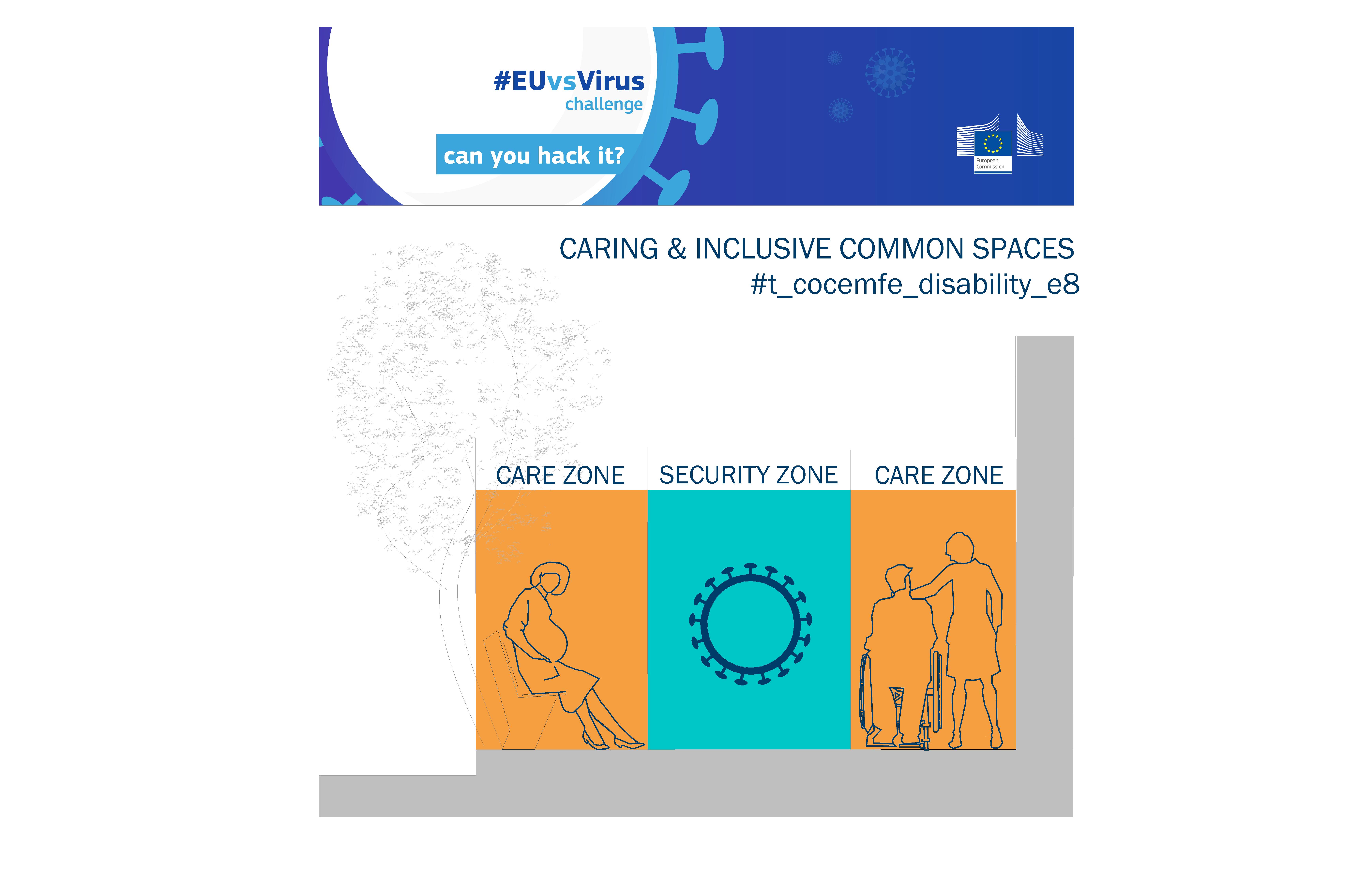
It will also contain a decalogue of measures to propose changes in the public space, so they become safe and accessible for everyone, including those who require others to support them in their free enjoyment and wandering in public spaces (accompanied elderly people, people with wheelchairs, accompanied children, people with carts, ...).
Challenges we run into
It would be necessary the collaboration with public space managers and other government agencies to:
Get updated/real-time data on changes in the norms of use of public space due to the pandemic situation.
Collect and channel the demands notified by the citizens of accessibility barriers in the environments, and implement measures to solve them.
Keep the accessible use of public outdoor spaces against the pressure of restaurants&bars, shops and any other bussinesess to occupy these spaces, in order to offer greater safety distance from infection.
Likewise, it will be necessary to provide material and human resources to attend to the incidents and reports of the portal in order to respond to the demands made.
The web portal and the App must be really accessible at a cognitive and sensorial level, to guarantee that the most vulnerable people in this pandemic situation can access and make use of them: user interface visually accessible, cognitively, design for all, provide clear, direct and useful information.
A communication strategy is needed to make the tool known and to promote its use among all people, including the most vulnerable.
And safeguard the right to privacy and personal data protection regarding health of people in a situation of disability, while protecting the Right to Life by preventing people from the risk of contagion of infectious diseases such as the one we are living now.
What's next for CARING & INCLUSIVE COMMON SPACES
Develop a prototipe for the web page and the App. Gathering measures to be included in the decalogue of measures to propose changes in the public space.


Log in or sign up for Devpost to join the conversation.