-
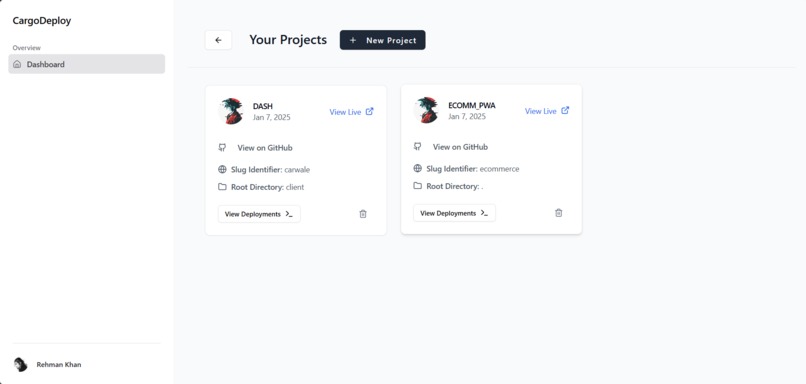
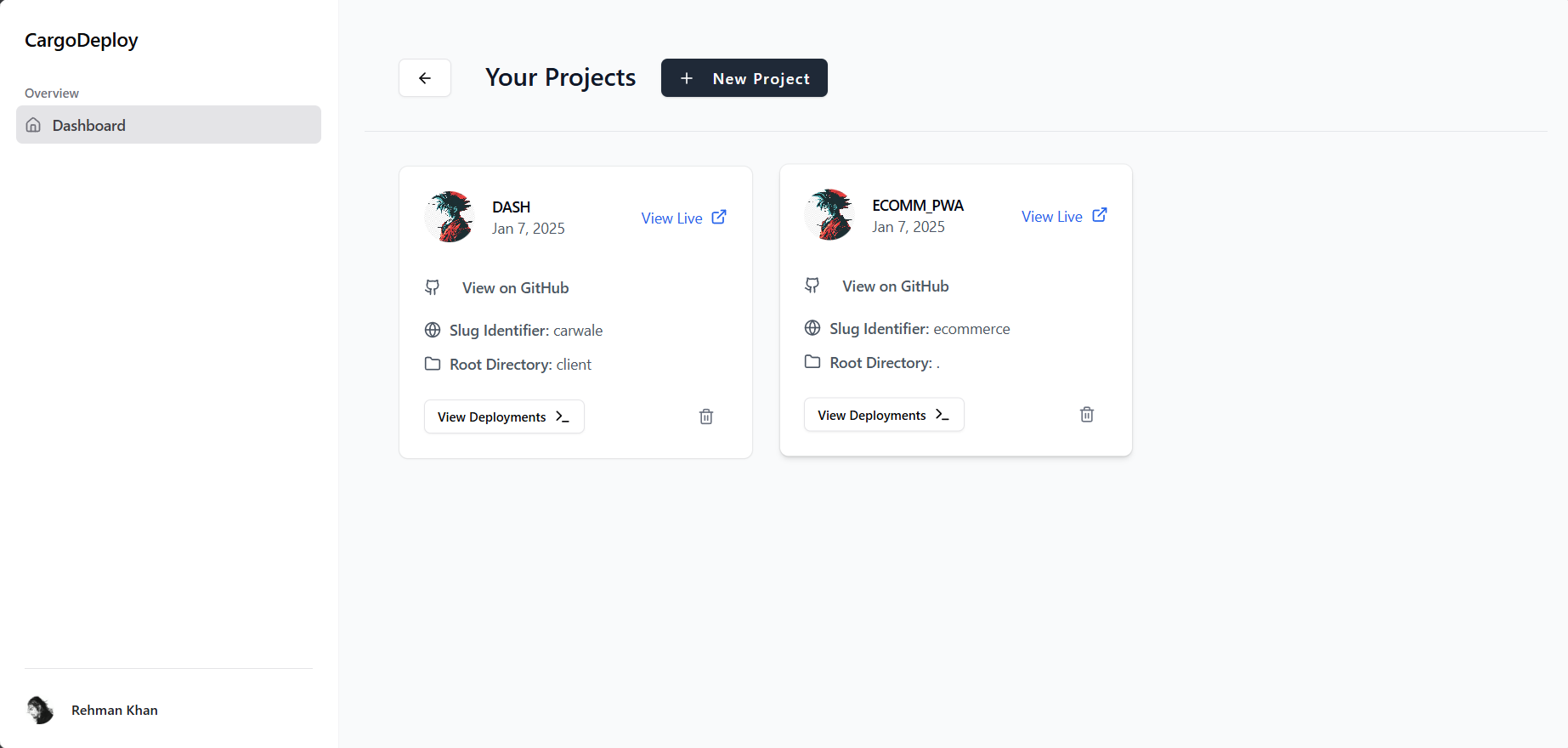
Dashboard Preview
-
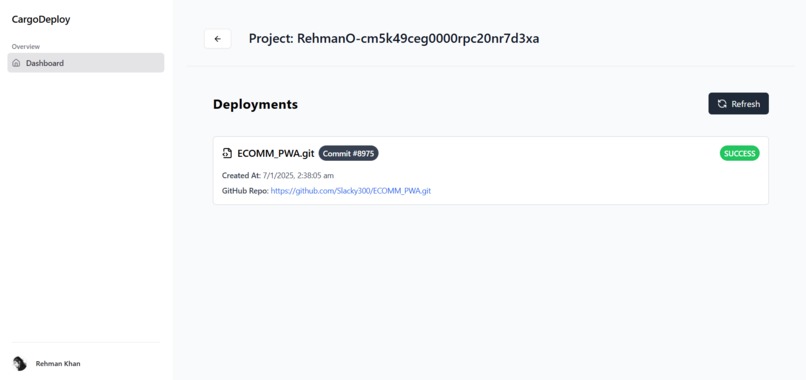
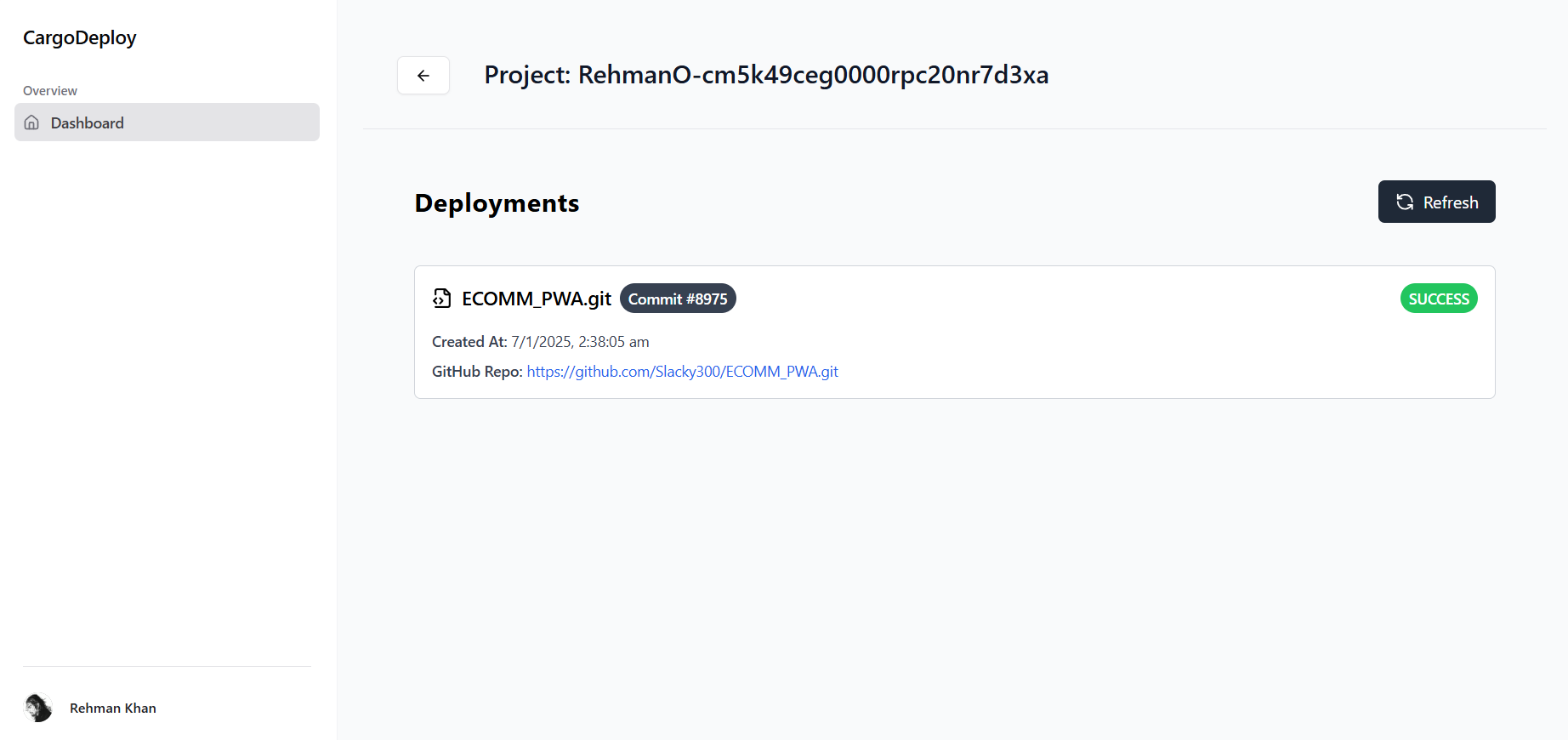
List of Deployments
-
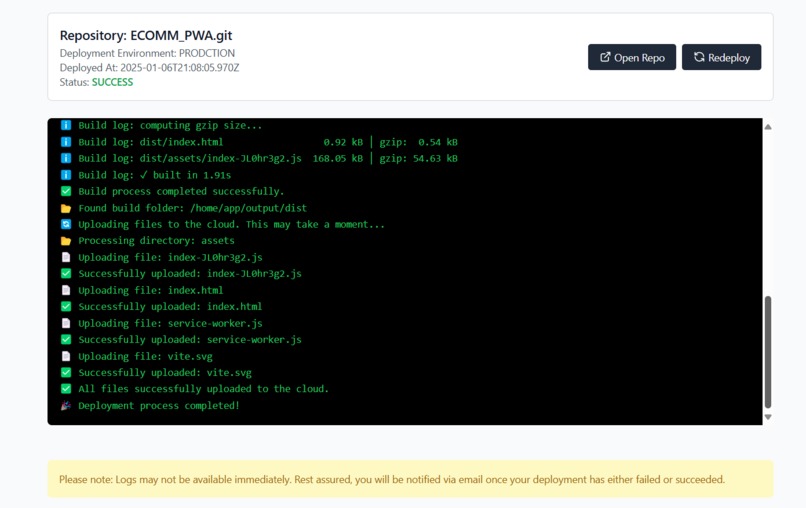
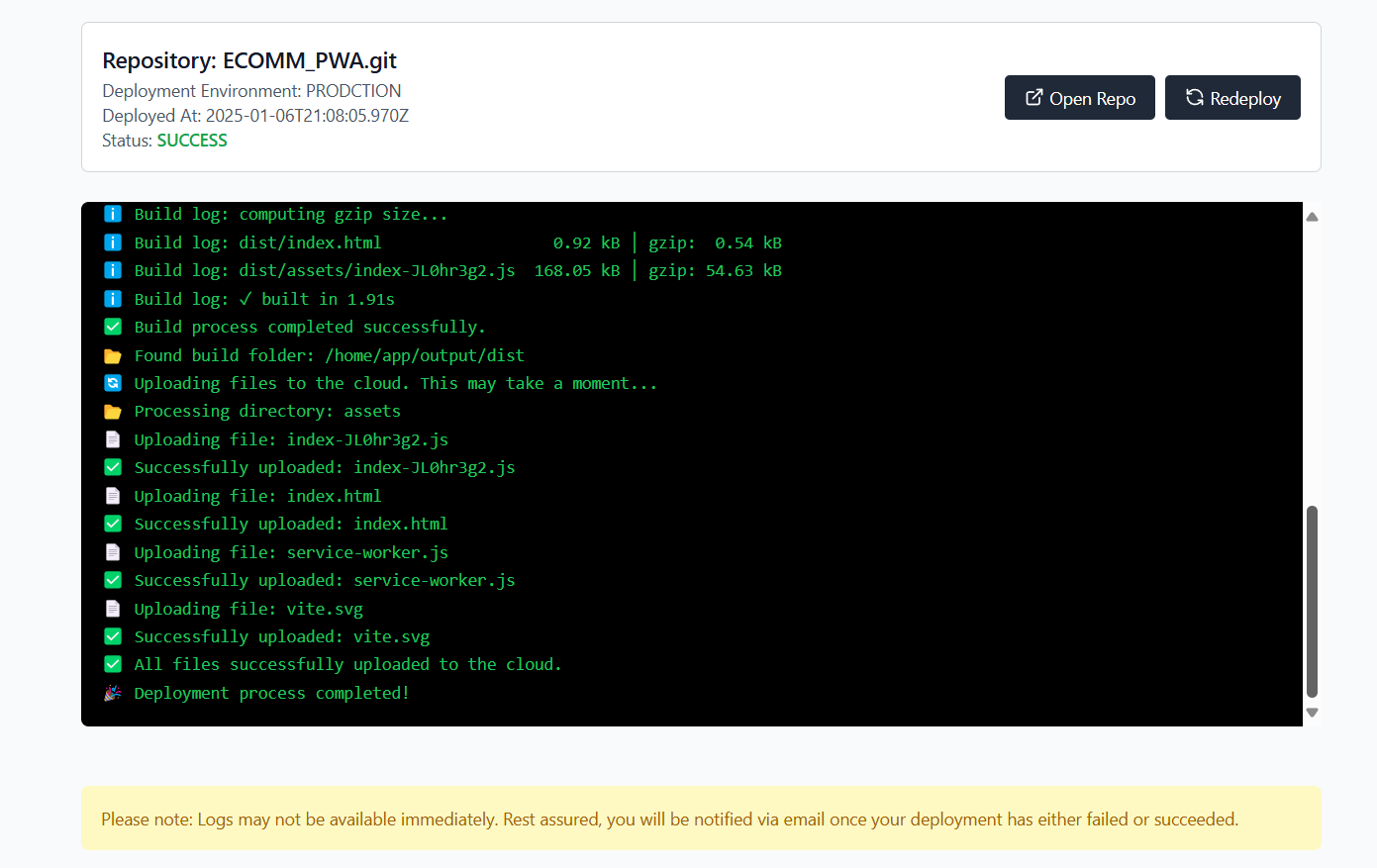
Logs of respective Deployment
-
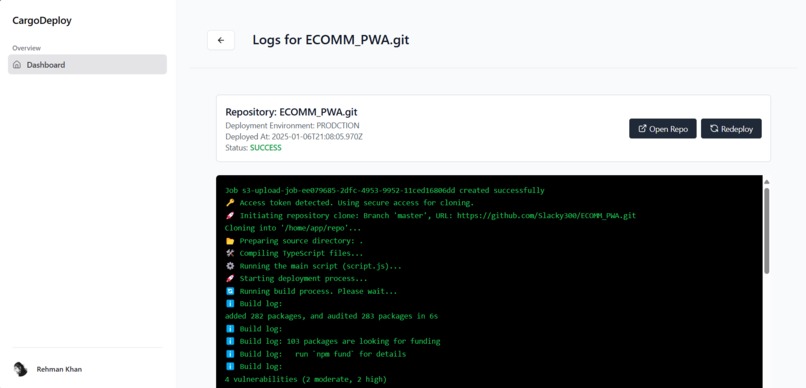
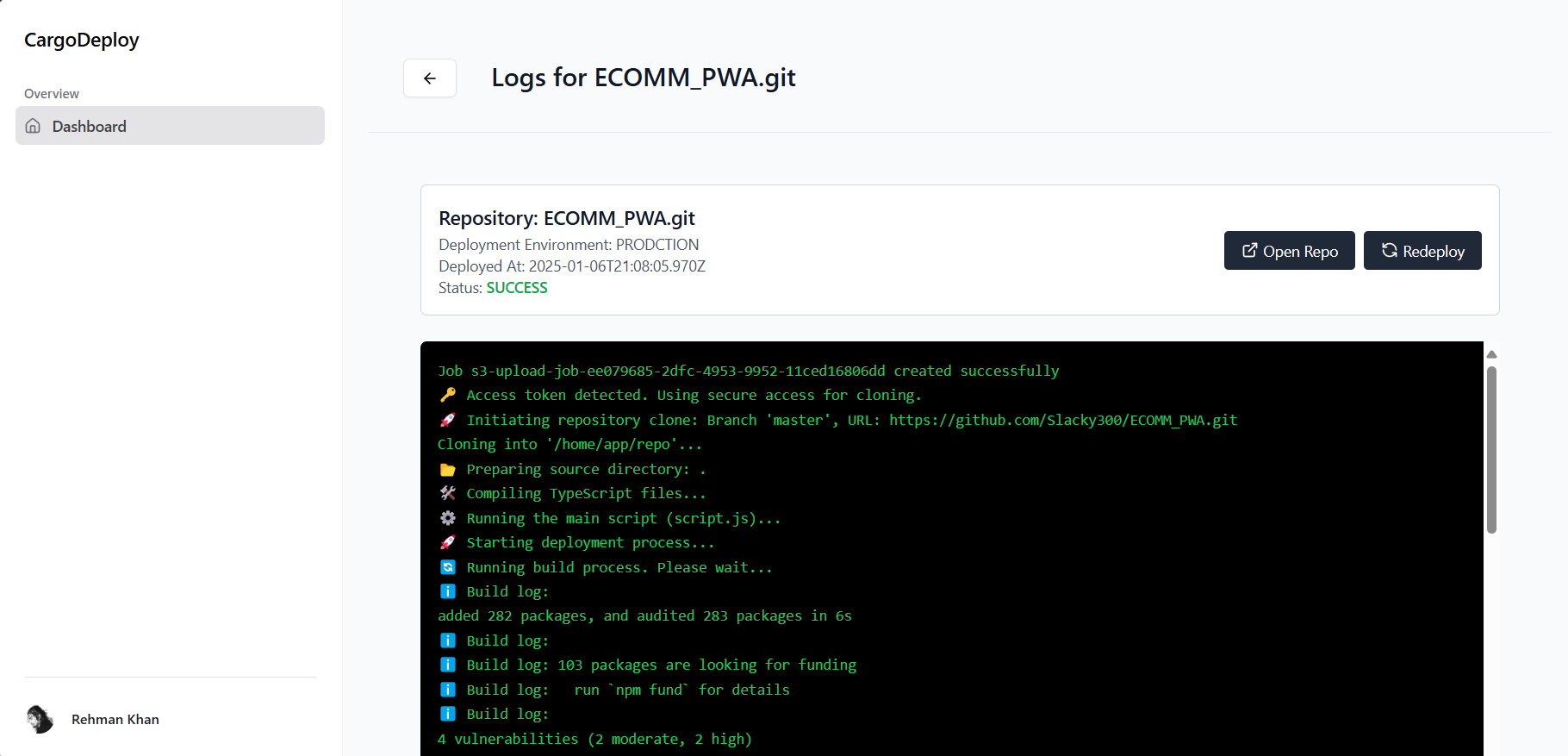
Logs of respective Deployment
-

Deployed website

CargoDeploy: Revolutionizing Frontend Deployment
Inspiration
As developers, we often face the challenges of deploying frontend applications seamlessly, especially with modern frameworks like React and Vite. Traditional deployment pipelines are cumbersome, involving manual processes, compatibility issues, and scalability limitations. CargoDeploy was born from the desire to eliminate these inefficiencies by automating the entire deployment pipeline using the latest technologies like containerization, cloud storage, and orchestration.
What It Does
CargoDeploy automates the deployment process for frontend applications by integrating:
- Containerization with Docker: Ensures consistent builds across environments.
- Kubernetes Orchestration: Handles scaling and fault-tolerance for containerized jobs.
- AWS S3 for Static Assets: Provides high availability and scalability for serving static files.
- Node.js Reverse Proxy: Dynamically routes requests based on subdomains for multi-tenant environments.
- Secure Authentication: Leverages GitHub OAuth for secure access to repositories.
This results in a streamlined, scalable, and reliable system that minimizes manual intervention and speeds up deployment cycles.
Key Features
- Automated Deployment: From repository cloning to static file uploads, the process is fully automated.
- Multi-Tenant Architecture: Supports multiple clients with isolated environments on shared infrastructure.
- Dynamic Routing: Serves application files based on subdomains using a reverse proxy.
- Fault Tolerance: Automatically handles container failures, ensuring system reliability.
- CI/CD Friendly: Easily integrates with existing pipelines for continuous delivery.
Technologies Used
- Frontend Frameworks: Next.js
- Containerization: Docker
- Orchestration: Kubernetes
- Cloud Storage: AWS S3
- Reverse Proxy: Node.js
- Authentication: Clerk and GitHub OAuth
- CI/CD Pipeline: Azure Kubernetes Service (AKS)
- Security: Cloudflare for SSL and CDN
Challenges Faced
- Dynamic Subdomain Routing: Mapping requests to the correct static files required careful handling.
- Fault Tolerance: Building a reliable system to handle container failures and retries was complex.
- Multi-Tenancy: Ensuring logical isolation for multiple clients while sharing resources.
- Authentication Setup: Integrating secure access for public and private repositories using GitHub OAuth.
- Performance Optimization: Configuring Kubernetes to efficiently manage resources across deployments.
What I Learned
- The power of Docker and Kubernetes for scalable containerized applications.
- The efficiency of AWS S3 for hosting static assets with high availability.
- How Node.js reverse proxies can handle dynamic routing for multi-tenant systems.
- The importance of automation in reducing errors and speeding up development cycles.
- Leveraging CI/CD pipelines to streamline development and deployment.
Future Goals
- Real-Time Monitoring and Analytics: Introduce dashboards to track deployment performance and detect issues proactively.
- Improved Multi-Tenancy: Enhance isolation and scalability for large-scale deployments.
- UI Overhaul: Build an intuitive and user-friendly interface for deployment management.
- Cross-Platform Compatibility: Extend support to other frameworks and backend platforms.
- AI-Driven Optimizations: Integrate AI to predict resource utilization and optimize deployments.
Why CargoDeploy Stands Out
CargoDeploy is more than just a deployment tool—it’s a comprehensive solution for modern web applications. By automating critical processes and ensuring scalability, it addresses the pain points of developers and organizations, enabling faster time-to-market and greater reliability.
This project embodies innovation, practicality, and scalability, making it a perfect fit for the hackathon. We are confident that CargoDeploy will leave a lasting impact in the tech ecosystem and inspire future advancements in deployment automation.
Built With
- aks
- azure-virtual-machines
- docker
- kubernetes
- n8n
- next.js
- node.js
- postgresql
- prisma
- redis
- s3
- socket.io
- typescript

Log in or sign up for Devpost to join the conversation.