-
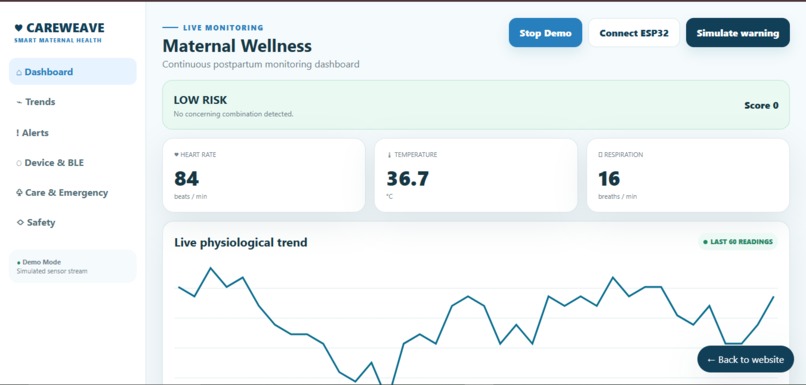
Dashboard of our demo prototype
-
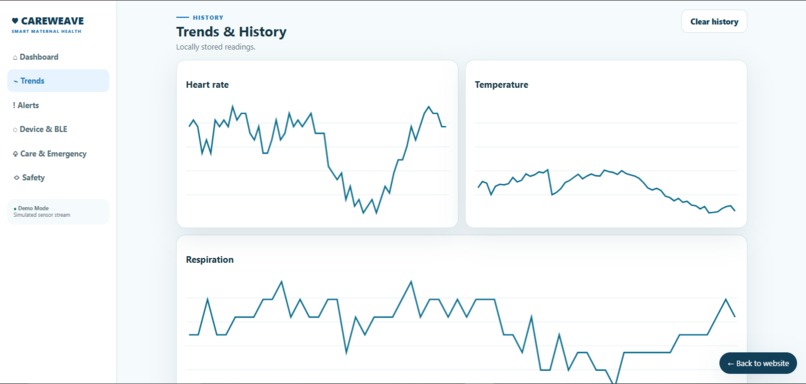
Live vitals of the patient
-
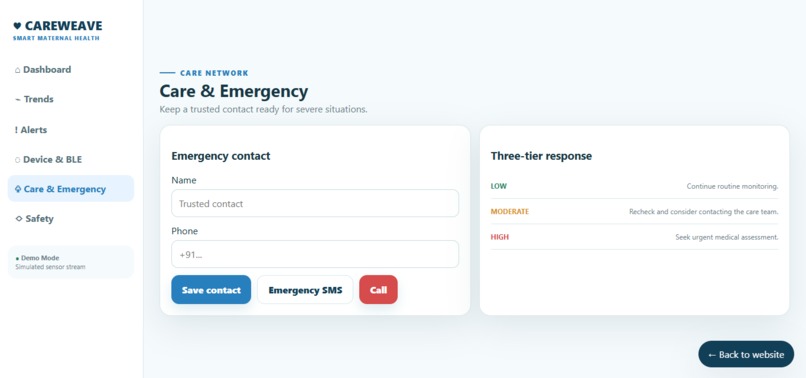
Emergency contacts of the website
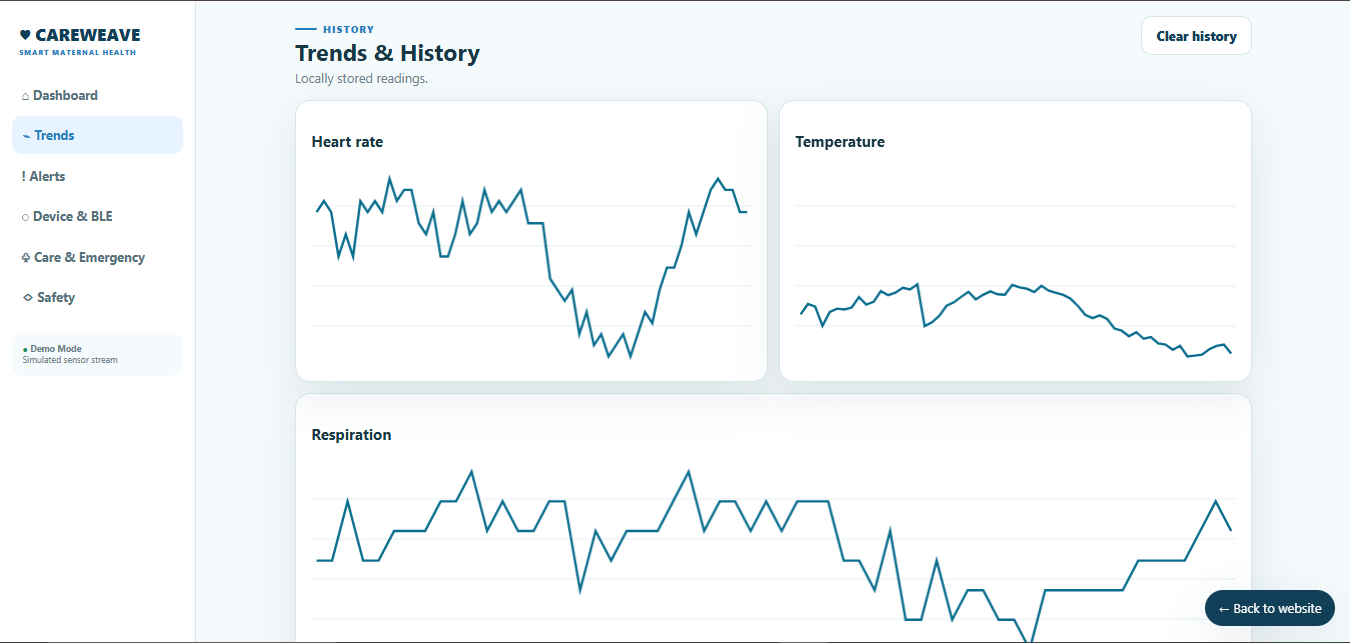
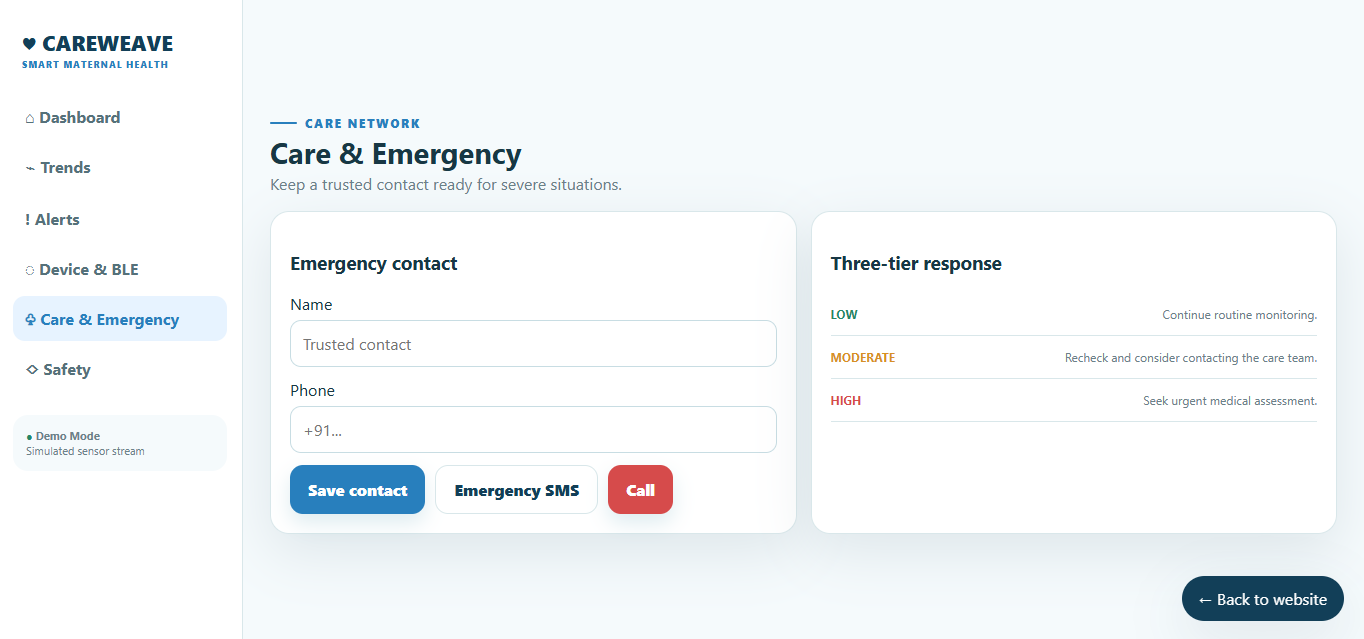
CAREWEAVE was inspired by the gap between hospital-based monitoring and postpartum care at home, where early changes in heart rate, temperature, respiration, or fluid loss may go unnoticed. The problem faced by the mothers during the postpartum period
CAREWEAVE is a proposed smart-textile postpartum monitoring system that continuously tracks heart rate, temperature, respiration, and experimental fluid-loss indicators through wearable sensors. Data is transmitted via ESP32 and Bluetooth to a mobile application, where trends are analyzed to identify potentially concerning patterns and provide timely early-warning alerts.
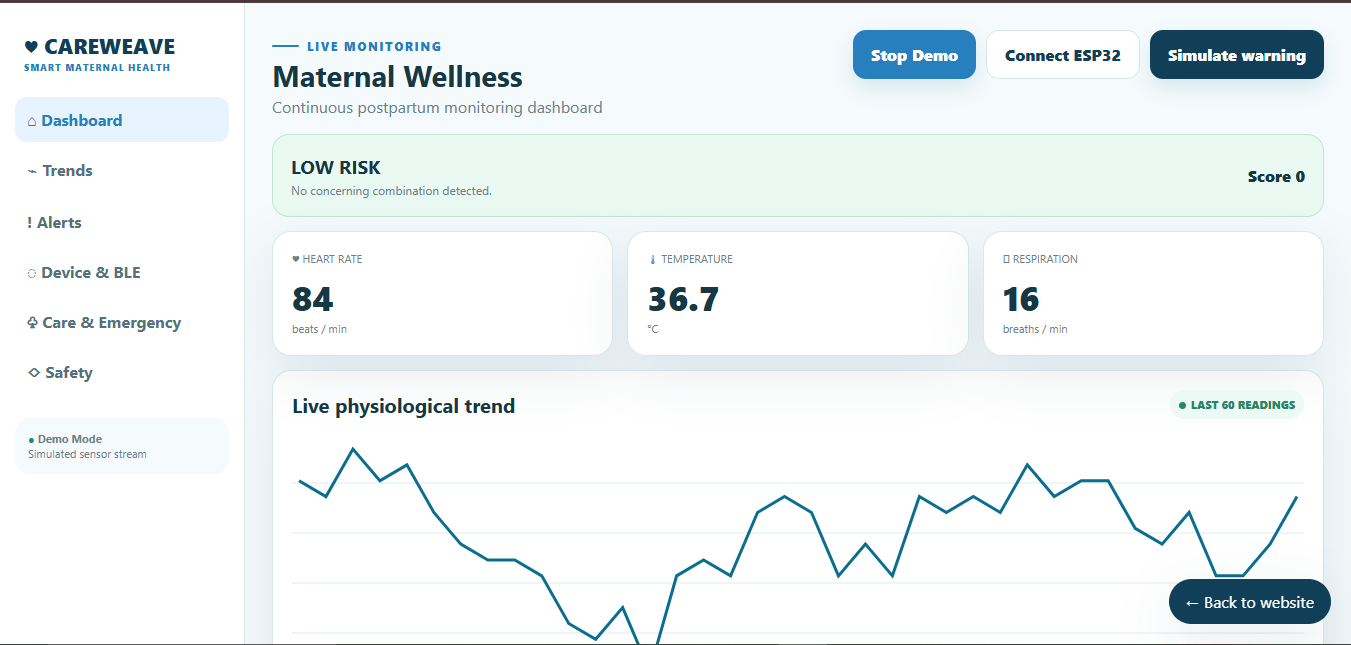
We designed CAREWEAVE as a modular system combining smart-textile sensors, an ESP32 microcontroller, Bluetooth Low Energy, and a web/mobile dashboard. The software prototype was developed using HTML, CSS, and JavaScript to visualize health trends and generate rule-based alerts. The physical smart-textile hardware is currently under development, while fluid-loss sensing remains an experimental component requiring further testing and validation and complete implementation is under process.
Developing CAREWEAVE involved challenges such as integrating sensors into comfortable textile materials, maintaining reliable readings during movement, designing low-power wireless communication, and developing meaningful alert logic without overclaiming medical accuracy. The fluid-loss sensing component is still experimental, while building and validating the physical smart-textile prototype remains an ongoing challenge.
We developed a working CAREWEAVE software prototype that demonstrates the complete monitoring concept, including health-data visualization, trend tracking, rule-based alerts, and a user-friendly interface. We also designed a modular smart-textile architecture connecting sensors, ESP32, BLE, and the app, creating a practical foundation for future physical prototyping and clinical validation. Solving a major problem faced by the mothers during postpartum period.
Through CAREWEAVE, we learned how to combine healthcare needs with technology, including wearable sensors, ESP32-based data collection, Bluetooth communication, and web-based monitoring. We also learned the importance of user comfort, data privacy, reliable sensor readings, responsible health alerts, and clinical validation when developing healthcare solutions.
Our next steps are to "build and test the physical smart-textile prototype", integrate the sensors with the ESP32 and BLE, and connect them to our existing monitoring application. We will improve sensor accuracy, test the experimental fluid-loss sensing approach, refine the alert system, and eventually pursue clinical validation, healthcare partnerships, and regulatory approval for real-world deployment.

Log in or sign up for Devpost to join the conversation.