-
-
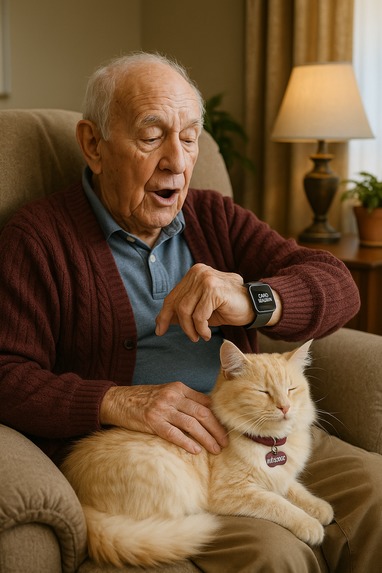
Empowering seniors to live independently while keeping their families connected and reassured.
-
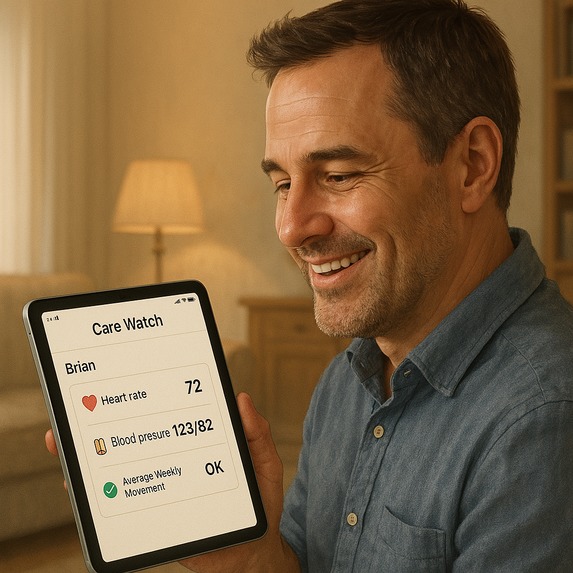
Stay connected with family members through real-time health updates and notifications.
Inspiration
My father lived with multiple complex health conditions, including Parkinson’s, diabetes, high blood pressure, and bronchiectasis. He was PEG-fed and required daily care. Despite these challenges, he did remarkably well for many years. As his primary carer, I supported him through his gradual health decline. It was always difficult to truly know how he was doing when we went on holiday with the children, even though we did have carers in morning and night. His health could fluctuate quickly, and monitoring his signs physically was the only way to assess whether he was okay. I also noticed that beyond the medical care, he sometimes felt lonely and bored. It made me realise just how much his quality of life depended on having people around him. If he hadn't been living with us, those final years could have been so much harder for him — and for us. That experience left a lasting impression. It made me think deeply about other elderly people who are living alone, unable to get out, and disconnected from regular human interaction. Many of them may not have someone checking in on them every day — and that can have a serious impact not just on their health, but on their happiness and dignity.
What it does
CareWatch is a proof-of-concept elderly monitoring system designed to help seniors maintain independence while providing peace of mind to their families. This front-end demonstration showcases the user interface and interaction flows that would be present in a fully functional product. CareWatch is a non-technical, easy-to-use elderly monitoring solution that allows seniors to maintain their independence without the stress of managing complex technology.
The watch, Whiskers (the therapeutic robotic cat), mobile phone, and smart speaker (such as Amazon Alexa) all function as accessories to the CareWatch app, creating a fully integrated system that’s controlled entirely by the elderly individual’s voice or touch.
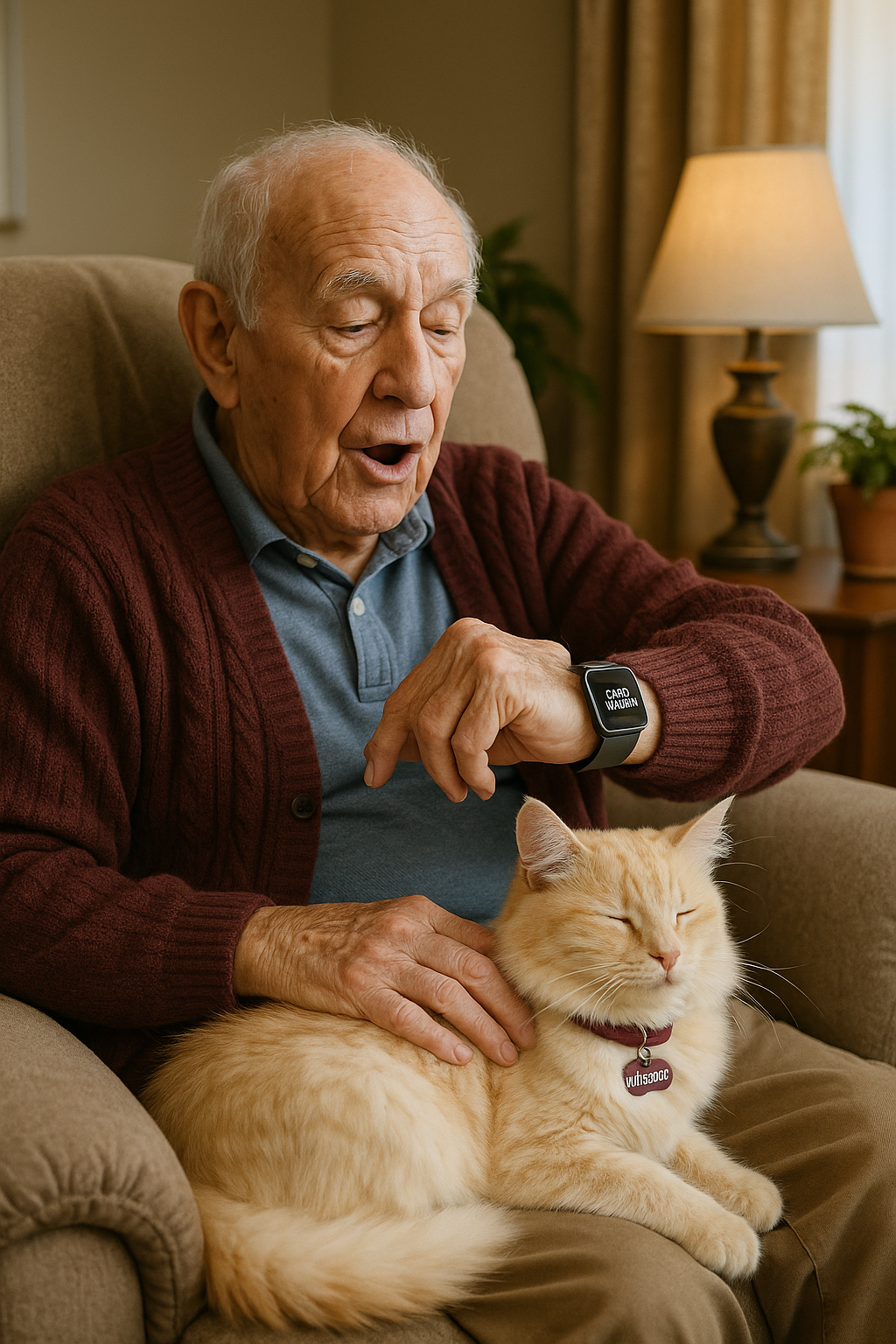
The user only needs to talk to their watch, which is connected to their phone and smart speaker, to play music, hear books read aloud for mental wellness, make calls to friends and family, or even request help in an emergency—without having to deal with complicated devices.
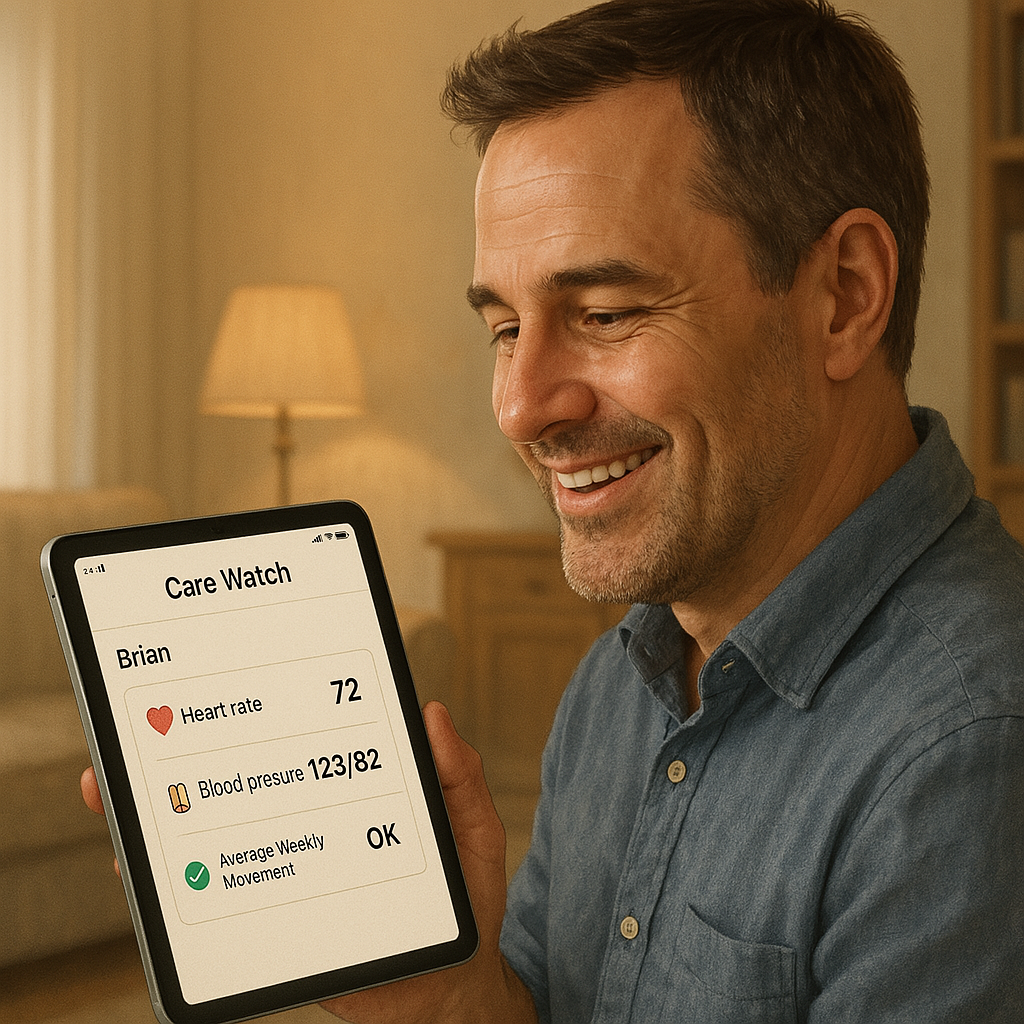
Family members and caregivers have instant access to critical health data, such as vital signs and movement patterns, and can receive notifications if there are any changes in health or activity. The decline in activity over a short period of time can identify that the individual may not be feeling well and can act as an early warning system for carers.
The system also includes auto fall detection, which automatically alerts family members, or the elderly person can simply say “Help” to notify them. Whiskers, the touch-sensitive robotic cat, offers comfort and emotional support, either on demand or when an emergency occurs, providing an added layer of well-being.
CareWatch also simplifies medication management with verbal reminders and confirmation of whether medications have been taken, ensuring family members are kept up to date. Appointments are shared directly with family members, so they always know when the next medical check-up or meeting is scheduled. The seamless integration of the watch, Whiskers, mobile phone, and smart speaker ensures that seniors can access all these features without having to deal with any confusing technology, offering a comforting and reliable solution for both the elderly and their families.
This hands-free, intuitive approach eliminates the complexities of modern technology, making it especially suited for elderly individuals who may find tech difficult. CareWatch creates a sense of comfort and security, both for the senior and their family and carers, knowing that the individual’s health is monitored and that help is just a voice command away.
How we built it
CareWatch was built by me providing Bolt with the requirements for CareWatch and then iteratively improving the requirements and asking for changes and feedback on an agile basis.
CareWatch is a comprehensive elderly monitoring system designed with a focus on accessibility, security, and ease of use. Bolt built using a React frontend with TypeScript, the application offers a responsive design powered by Tailwind CSS. It utilises React Context API with useReducer for state management and React Router for navigation. The app includes a range of core features, such as a Dashboard for central monitoring, VitalSignsCard for health metrics, EmergencyPanel for urgent responses, and WhiskersCatCompanion for therapeutic support.
The application simulates integrations with Alexa for voice assistance and includes offline capabilities with PWA support. Security is prioritised, with encrypted storage, JWT authentication, and secure handling of sensitive health data. Additionally, the app supports voice feedback through an AudioService and provides specialised hooks like useHealthData, useEmergencyResponse, and useAuth.
Key features include vital signs tracking, emergency alerts, medication and appointment management, and a therapeutic companion cat (Whiskers). Designed for elderly users, the app offers accessibility features such as large text, high contrast modes, and voice feedback, all while maintaining privacy controls and offline support. The development approach emphasises reliability, security, and a user-friendly interface, making it a robust and scalable solution for elderly monitoring. The codebase is cleanly structured, with clear separation of concerns, error handling, and user feedback mechanisms, ensuring the application is both maintainable and extensible.
Challenges we ran into
During the development of the CareWatch application, we encountered several significant challenges. The complexity of building a comprehensive elderly monitoring system required careful consideration of technical, ethical, and usability factors. One major challenge was balancing robust health monitoring capabilities with clear medical disclaimers to ensure users understood this was not a medical device. We needed to implement sophisticated data visualization for vital signs while repeatedly emphasising the system's limitations. Security and privacy concerns were paramount given the sensitive health data being handled, requiring implementation of secure storage, encryption, and granular privacy controls.
The user interface presented unique challenges as we needed to design for elderly users with potential vision, motor, or cognitive limitations, necessitating larger touch targets, high contrast options, and simplified navigation flows. Integrating multiple systems - from voice commands to emergency response protocols to the therapeutic companion cat - required careful architecture to ensure these components worked together seamlessly.
Finally, ensuring the system remained functional during offline periods was critical, as elderly users might experience internet outages but still need access to emergency features and health data.
Accomplishments that we're proud of
The CareWatch application represents a significant achievement in elderly care technology, blending sophisticated health monitoring with intuitive user experience design. Bolt and I have successfully created a comprehensive system that addresses the critical balance between independence and safety for elderly users. The application excels in its holistic approach, offering continuous health monitoring through vital signs tracking, sleep pattern analysis, and activity monitoring, all while maintaining clear medical disclaimers to ensure users understand its wellness-focused nature.
The emergency response system is particularly noteworthy, featuring a multi-layered approach that contacts family members in priority order while providing therapeutic comfort through the innovative Whiskers companion cat.
The voice interface implementation allows for natural, hands-free operation, making the technology accessible to users with varying technical abilities. We've also prioritised family /carers connection through detailed sharing controls and customisable notification systems, ensuring family members stay informed without compromising the elderly user's sense of independence. The application's robust privacy controls and security features demonstrate our commitment to protecting sensitive health data, while the offline functionality ensures critical features remain available even without internet connectivity.
Perhaps most importantly, we've created an interface that's genuinely accessible to elderly users through thoughtful design choices like larger touch targets, voice feedback options, and simplified navigation flows, making complex technology approachable for this demographic.
What we learned
During the development of the CareWatch application, we learned several valuable lessons about creating effective healthcare technology for elderly users. We discovered that balancing comprehensive health monitoring with user privacy and data security is a delicate challenge, requiring careful implementation of consent mechanisms and clear medical disclaimers.
The integration of the Whiskers therapeutic companion cat revealed the importance of physical comfort devices as a complement to digital monitoring, showing how tangible interfaces can provide emotional support alongside technical functionality.
We found that voice interfaces are particularly crucial for elderly users, as they remove technical barriers and create a more natural interaction model. This led us to implement robust voice command processing that works across multiple contexts, from medication tracking to emergency responses. The emergency response system taught us about the importance of layered safety protocols, with family notification cascades proving more effective than direct emergency service integration for most situations.
The project also highlighted the value of offline functionality in healthcare applications, as consistent access to critical features must be maintained even without internet connectivity.
Perhaps most importantly, we learned that effective elderly care technology must balance safety monitoring with user autonomy - providing peace of mind to family members while preserving the independence and dignity of elderly users. This balance was achieved through customizable sharing controls, privacy settings, and user-centric design principles throughout the application.
What's next for CareWatch
The next steps are to create the backend of the solution, continue to find a partner hardware company to integrate our software with their watches, integrate with Alexa, create Whiskers, getting medical advice on health baselines and notification limits etc. and further develop the application.
Looking further ahead (1 to 2 years), CareWatch aims to become a comprehensive health ecosystem. We'd also prepare for broader market adoption through geographic expansion, partnerships with assisted living facilities, and chronic disease management programs. Throughout this growth, we’ll remain committed to simplicity, user-centered design, and empowering families to care for their loved ones with confidence.
Built With
- bolt.new


Log in or sign up for Devpost to join the conversation.