Inspiration
The healthcare system faces real challenges: delayed diagnoses, overwhelmed doctors, rural inaccessibility, and a lack of personalized guidance. With the rise of Generative AI, we saw an opportunity to create an intelligent assistant that bridges these gaps. CareVision.ai was inspired by the idea of making smart, AI-driven healthcare support accessible to all—patients, doctors, and hospitals—through a unified platform.
What it Does
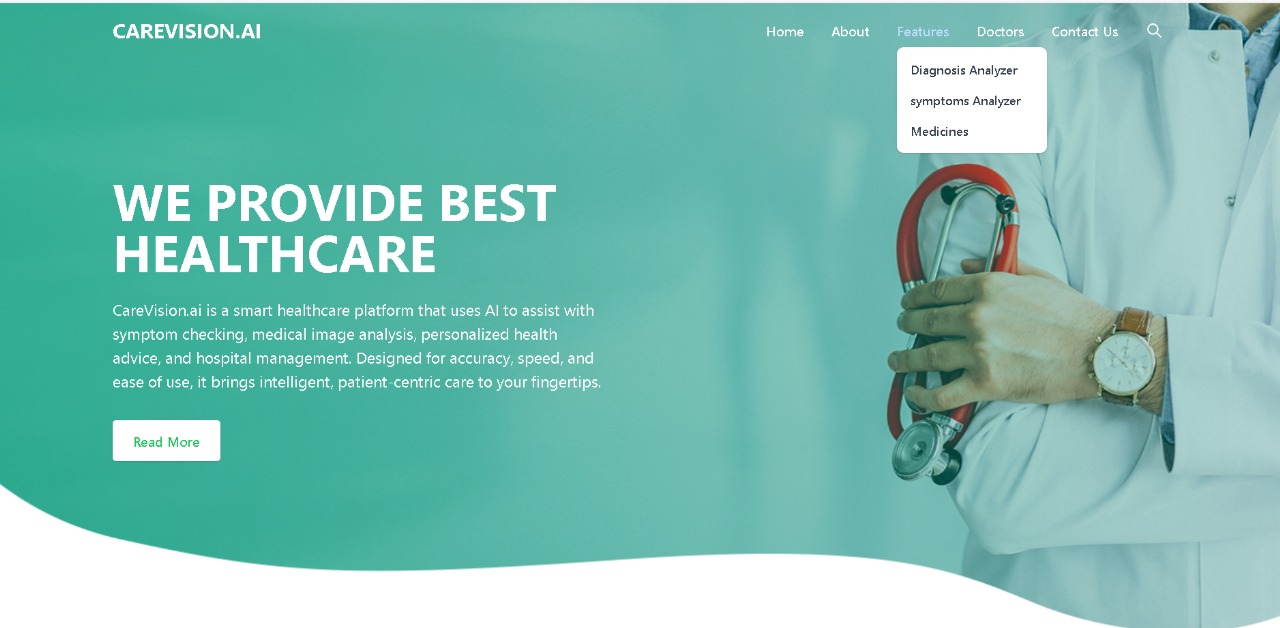
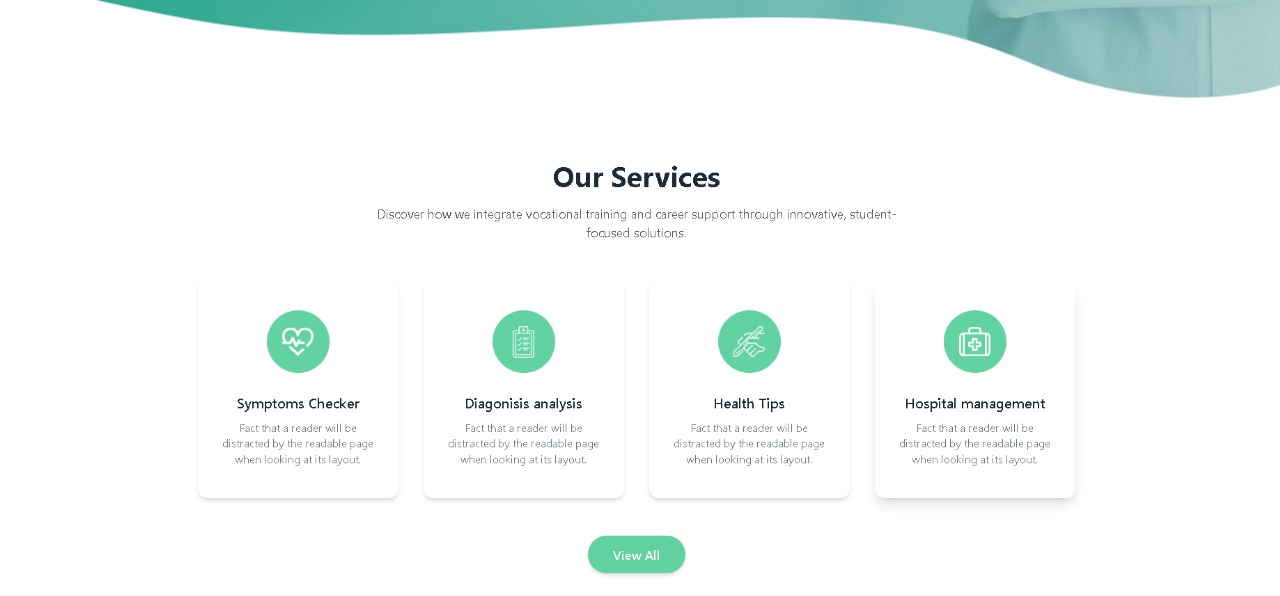
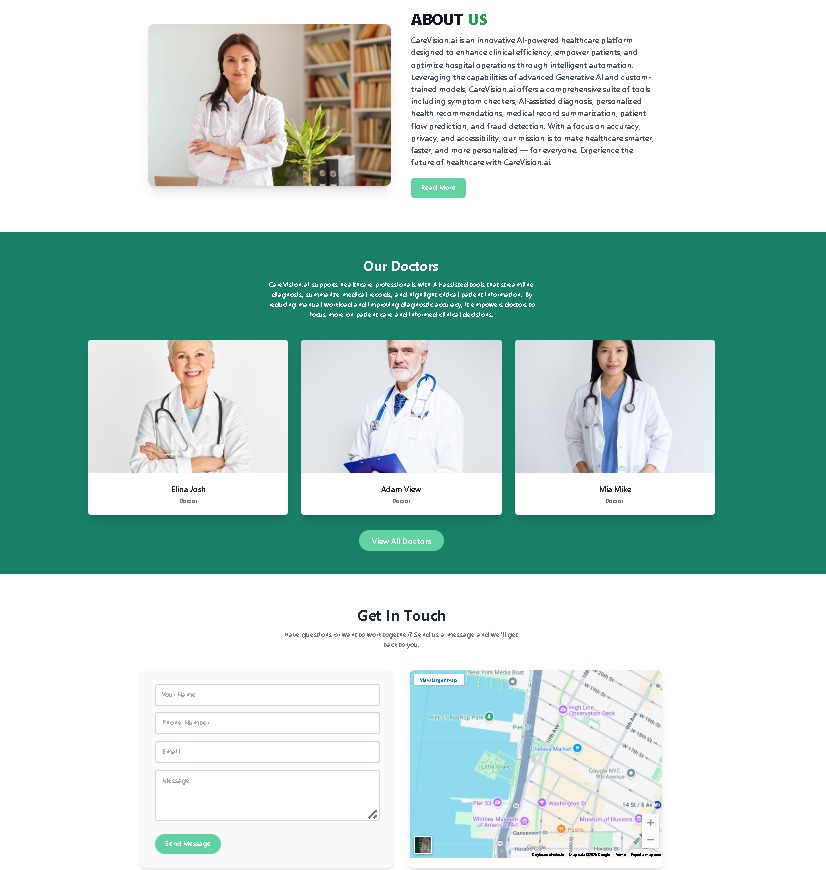
CareVision.ai is an AI-powered healthcare platform with three core tools:
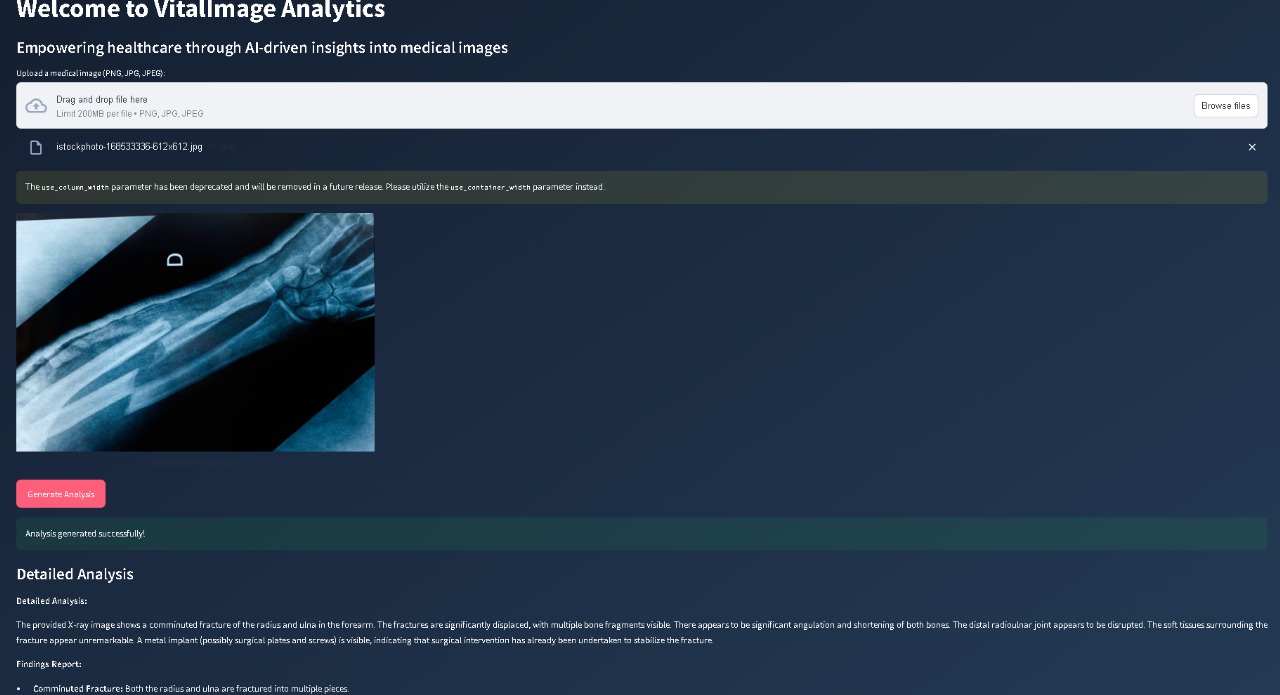
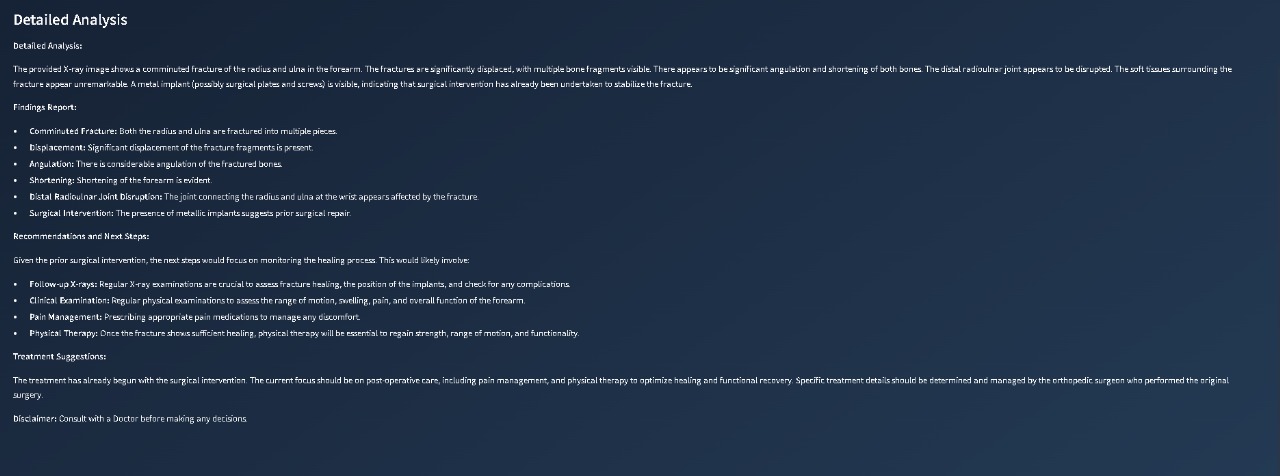
🧠 AI Image Analyzer
Accepts medical images (X-rays, MRIs) and analyzes them using AI to provide diagnostic insights and highlight anomalies.
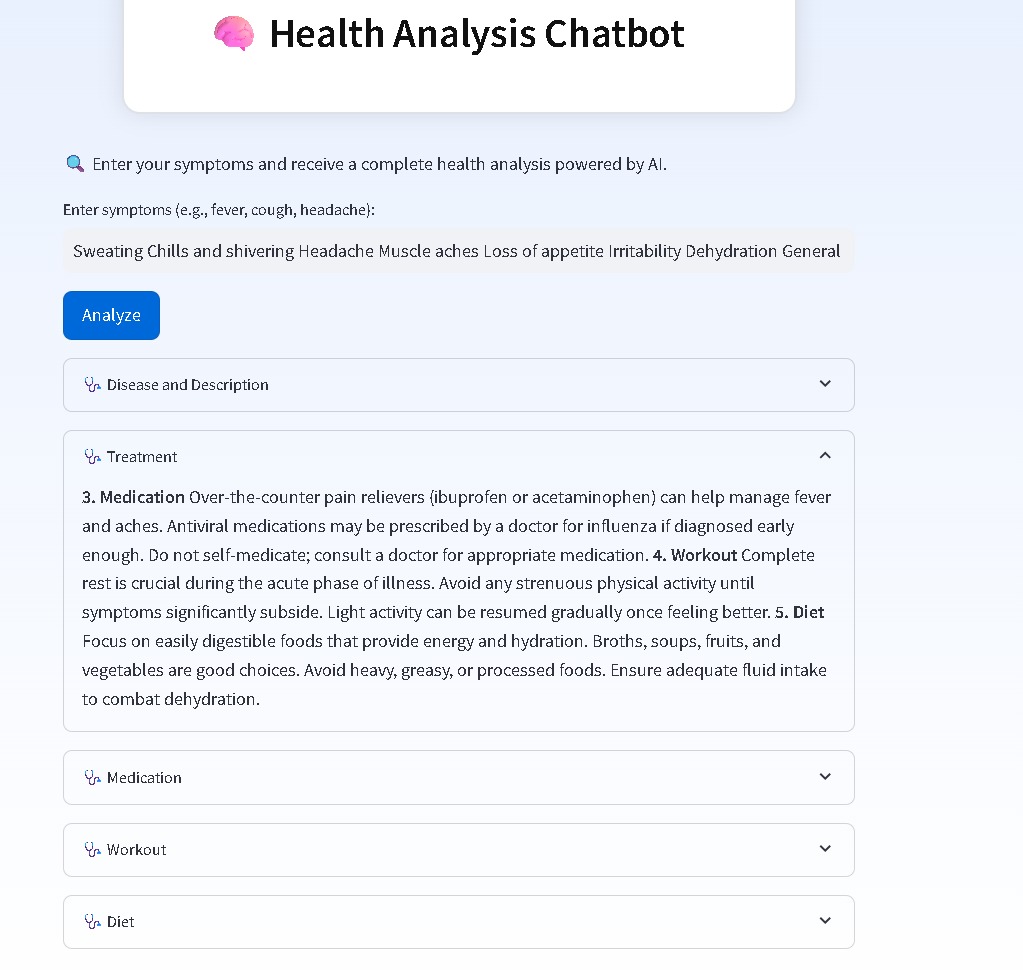
💬 AI Chatbox
An interactive health assistant powered by Google Generative AI (Gemini), capable of understanding symptoms and providing health advice, disease predictions, and responses in natural language.
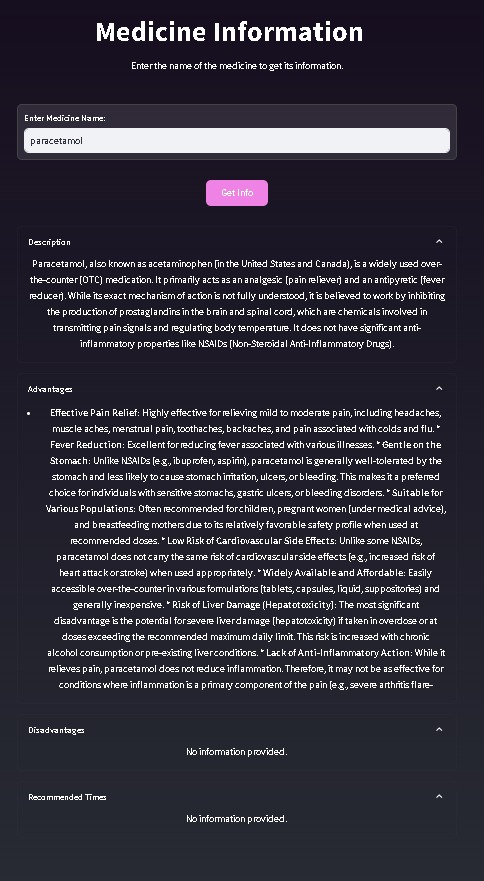
💊 Mediverse
A searchable medicine database that allows users to view drug uses, timing, dosages, side effects, and interactions.
Together, these modules support early diagnosis, educate patients, and assist doctors in clinical decision-making.
How We Built It
🚀 Frontend
- Built using HTML, CSS, JavaScript, and Streamlit for a responsive and interactive UI
- Organized as separate tools, each accessible from a central
index.htmlpage
🧩 Backend & AI Integration
- AI Image Analyzer: Developed using Python, Google Generative AI APIs, and Streamlit to accept image uploads and provide analysis
- AI Chatbox: Integrated Google’s Gemini Pro model via its API in Python for conversational interactions
- Mediverse: Implemented as a JSON-based medicine database queried through JavaScript
Technologies Used
- 🐍 Python (Streamlit for web app logic)
- 🌐 JavaScript + HTML/CSS (Frontend & navigation)
- 🧠 Google Generative AI – Gemini API (NLP & vision capabilities)
- 🎛️ Streamlit (for AI tool interfaces)
- 💻 GitHub (for code management)
Challenges We Ran Into
- 📉 Medical Dataset Limitations: Access to publicly labeled medical images is highly restricted
- 🎯 Controlling AI Accuracy: Ensuring the AI provides reliable, non-misleading suggestions required prompt tuning and testing
- 💬 Managing Chatbot Hallucination: We had to implement fallback prompts and safety instructions to mitigate unreliable outputs
- 💾 Local Hardware Limitations: Running image models locally was resource-intensive; Streamlit helped simplify this for testing
Accomplishments That We're Proud Of
- ✅ Built a complete, AI-powered healthcare assistant from scratch using real-world tools
- 🖼️ Enabled medical image analysis via a simple interface
- 💬 Created a functional chatbot using Google’s Gemini API
- 💊 Developed a searchable medicine info tool that makes Mediverse practical for users
What We Learned
- 🔍 AI in healthcare must focus on accuracy, safety, and user trust
- 🧩 Combining multiple AI tools (NLP, image analysis, structured data) yields richer insights
- 🧪 Simplicity in design (using Streamlit and static data) enables fast iteration
- ✍️ Prompt engineering is critical when working with generative models in medical use cases
What's Next for CareVision.ai
- 🌍 Multilingual chatbot for better accessibility
- 🧠 Fine-tune medical image models on datasets like NIH ChestX-ray and MIMIC-CXR
- 🔐 User login system with encrypted medical history tracking
- 📱 Deploy mobile app for low-bandwidth rural healthcare delivery
- 🔄 APIs for hospitals to integrate CareVision.ai modules into their systems
- 🧑⚕️ Escalation to live doctors when the AI is uncertain about a diagnosis or recommendation

Log in or sign up for Devpost to join the conversation.