-
-
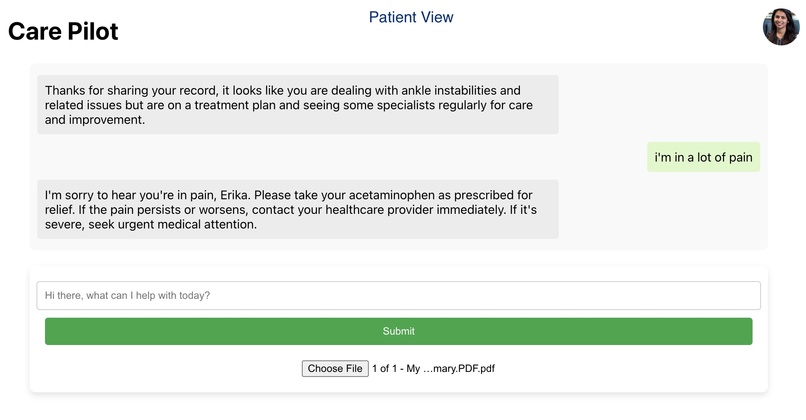
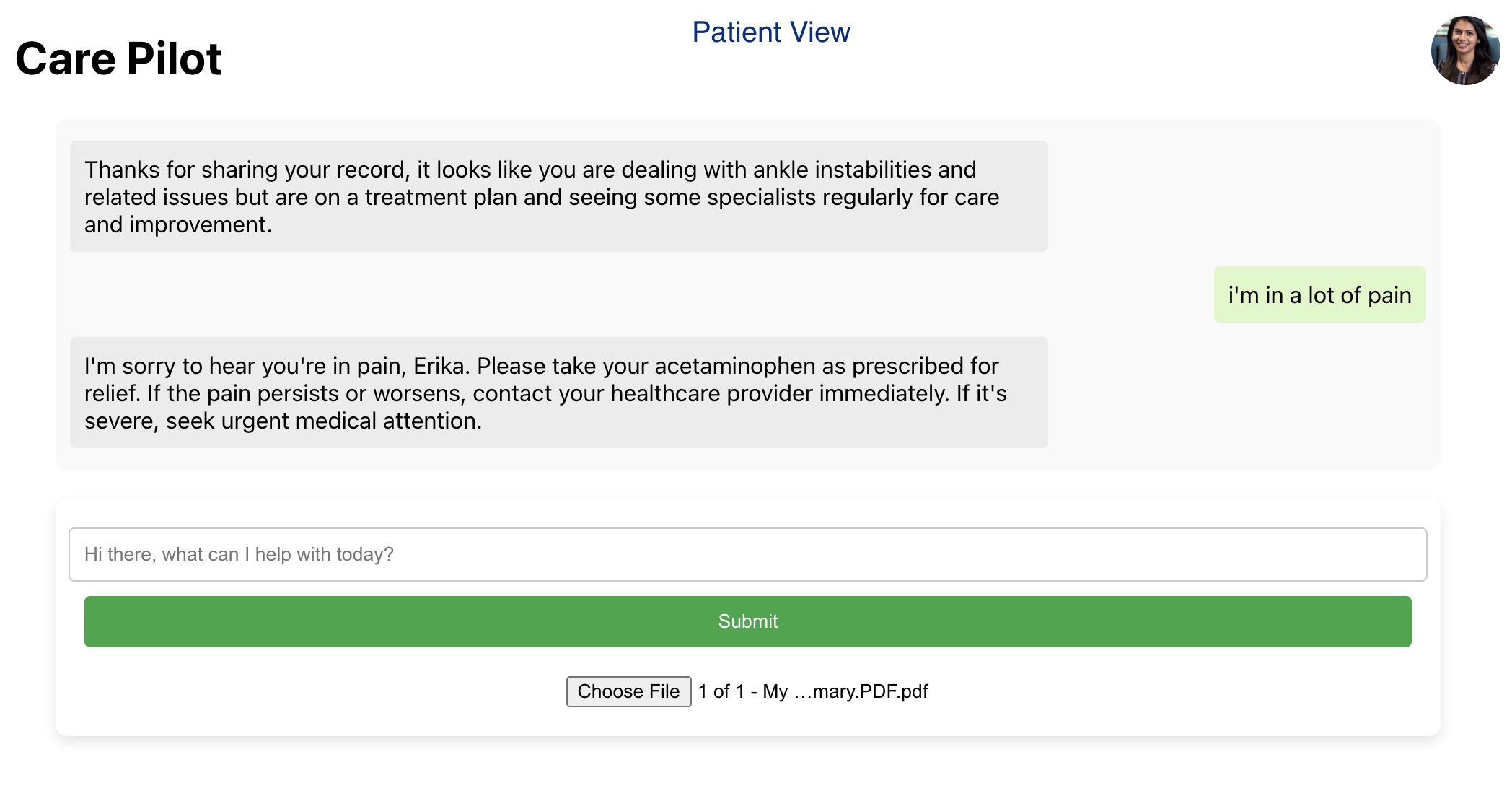
Patient View that allows patient to navigate their care plan and get AI assistance that can escalate to the doctor or caregiver as needed
-
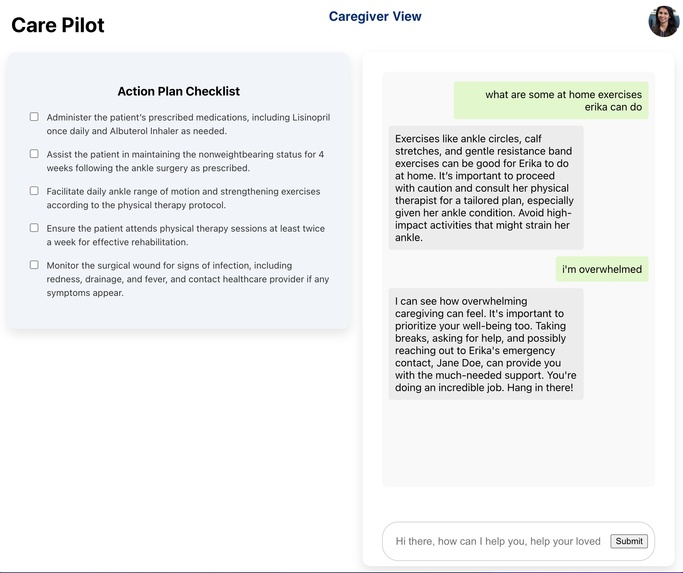
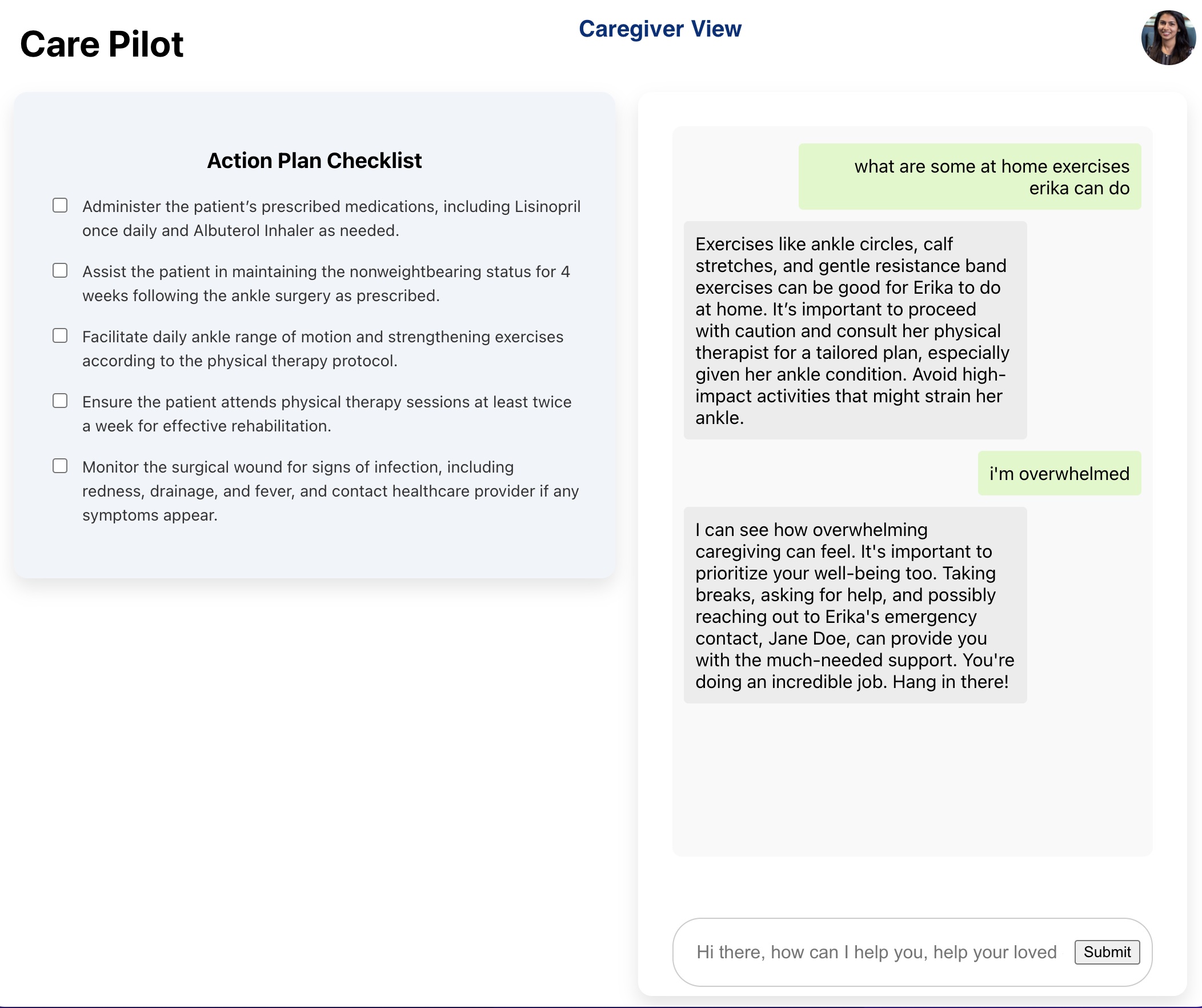
Caregiver View that allows caregiver to navigate and stay on top of the patient's care plan
Inspiration
As a caregiver for my aging parents while raising young children, I often felt overwhelmed by the weight of responsibility on my shoulders. There were days when I wished for just a moment of peace of mind, knowing that I could manage their care without sacrificing my family's needs. That’s why we created this app: to support caregivers like me, helping to simplify communication, organization, and access to resources.
What it does
Our app empowers patients to navigate their care journey by helping them understand their medical records and providing empathetic support. It facilitates sharing important information with their care team, including caregivers. Additionally, it equips caregivers with action plans, task management tools, and emotional support to enhance their caregiving experience.
How we built it
Our platform combines a robust tech stack: React for the frontend, Flask for the backend, and MongoDB for data management, enhanced by Kindo AI (ChatGPT-4o). We’ve crafted tailored prompts for various use cases, enabling the app to save and persist essential data, such as health records and chat history, to provide valuable context during interactions. The intuitive React frontend allows users to select their role—Patient or Caregiver—interact with CarePilot to report symptoms, receive guidance, monitor patient status, and stay informed with alerts about potential concerns.
Challenges we ran into
One of the key challenges was establishing language guardrails to ensure the quality and safety of responses. We addressed this by tailoring prompts and defining clear language guidelines, including requirements for response length and other critical considerations. This approach helped us maintain safety and relevance in our interactions, enhancing the overall user experience.
Accomplishments that we're proud of
- Reassurance: Provides patients and caregivers with confidence that they are on the right track for optimal recovery.
- Real-Time Check-Ins: Enables caregivers to monitor the patient's condition anytime and anywhere, raising alerts for any potential concerns, so they can take prompt action as needed.
- Comprehensive Tracking: Keeps track of the patient’s status, upcoming appointments, treatment plans, and prescriptions, allowing caregivers to focus on care without worrying about missed details, freeing up mental space while enhancing efficiency.
What we learned
- Support for Caregivers: Caregivers often feel uncertain about providing the best care for patients. Having a reassuring co-pilot can help track progress and guide recovery over the long term, offering much-needed confidence and clarity.
- Personalization and Role-Based Information: Care needs vary greatly among individuals, making a one-size-fits-all solution ineffective. Our AI generates personalized responses tailored to each patient’s health records and chat history while adjusting the tone and depth of information based on the user's role—whether caregiver, patient, or healthcare professional—ensuring context is understood and the right support is provided.
- Empathetic User Experience: Generative AI enables us to deliver an empathetic user experience at a low cost, fostering deeper connections between caregivers and patients. However, this requires ongoing work to ensure safety and responsibility in its application.
What's next for Care Pilot
- Multi-Channel Alerts: Expanding alert systems to include text notifications for enhanced communication.
- Healthcare Integration: Exploring partnerships with healthcare providers to enhance functionality and access to resources.
- Real-Time Vital Tracking: Integrating with wearables for continuous monitoring of patient vitals.
- Data Privacy Enhancements: Strengthening data privacy through patient information de-identification and potentially developing an in-house language model.
Log in or sign up for Devpost to join the conversation.