-
-
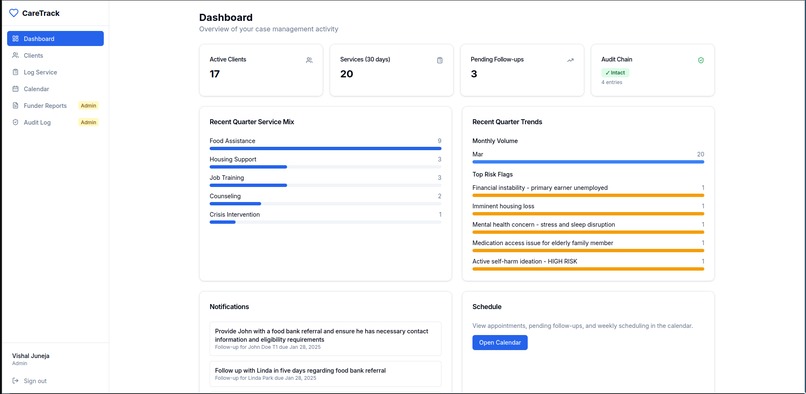
Dashboard
-
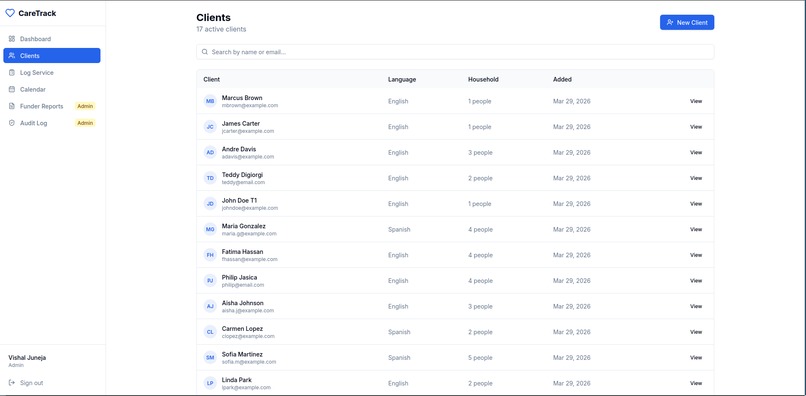
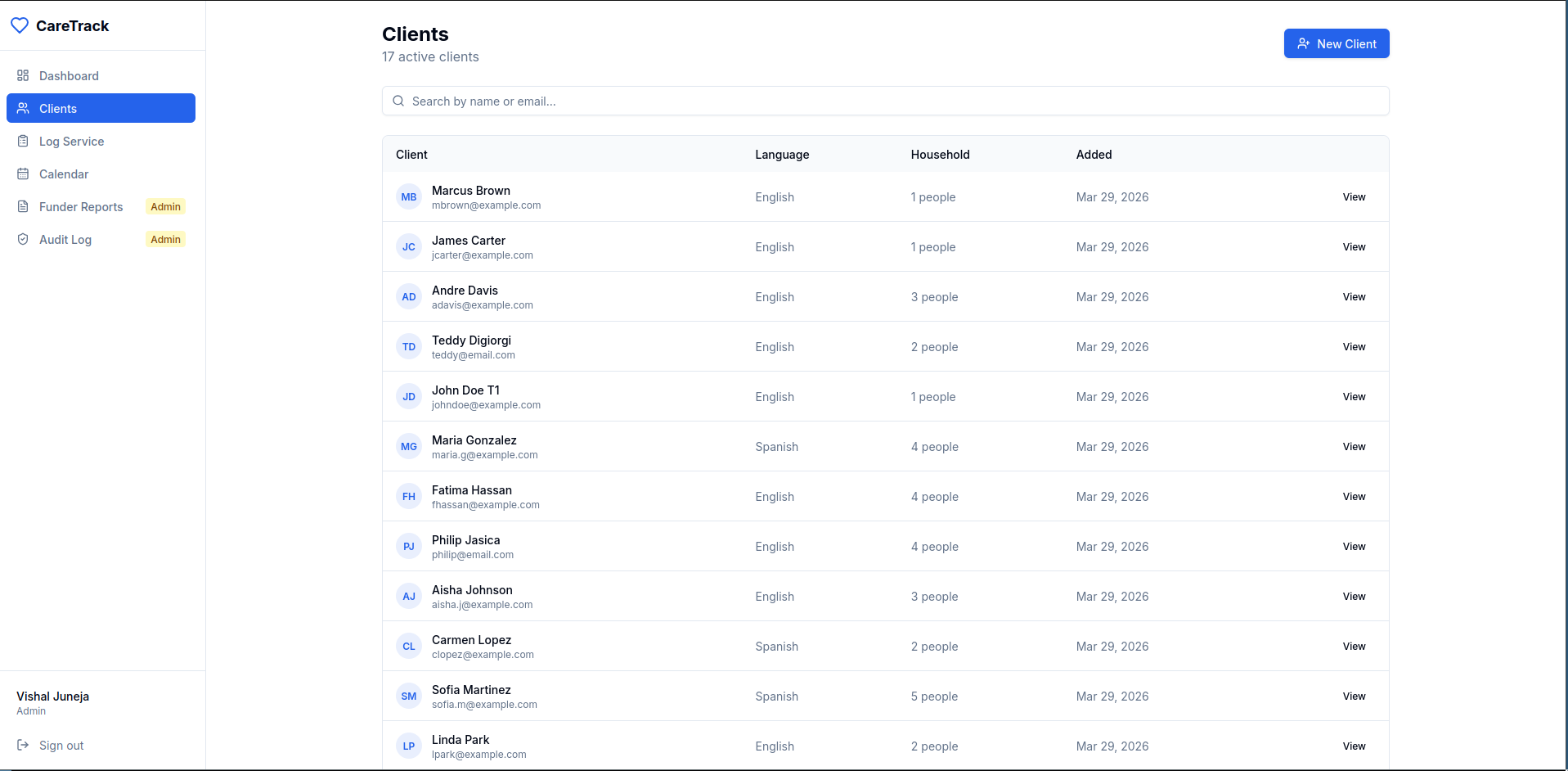
Clients page
-
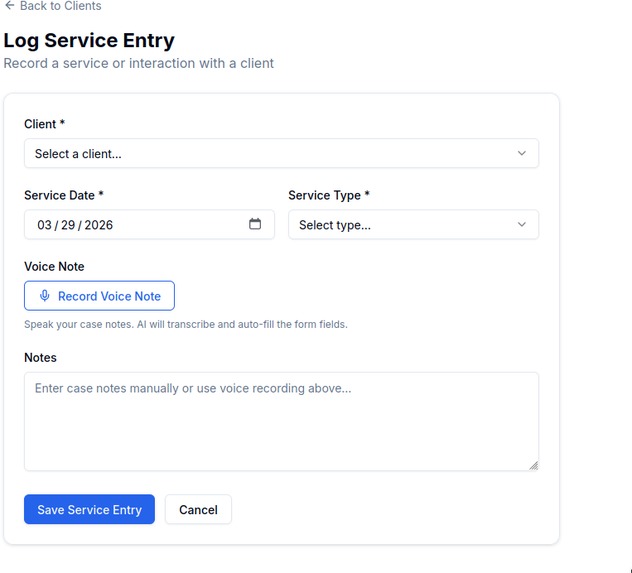
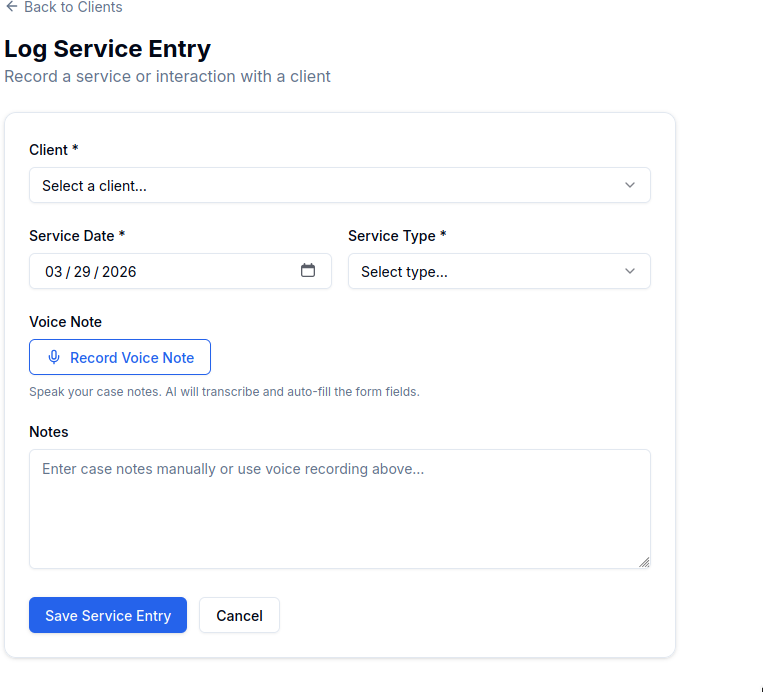
Log service
-
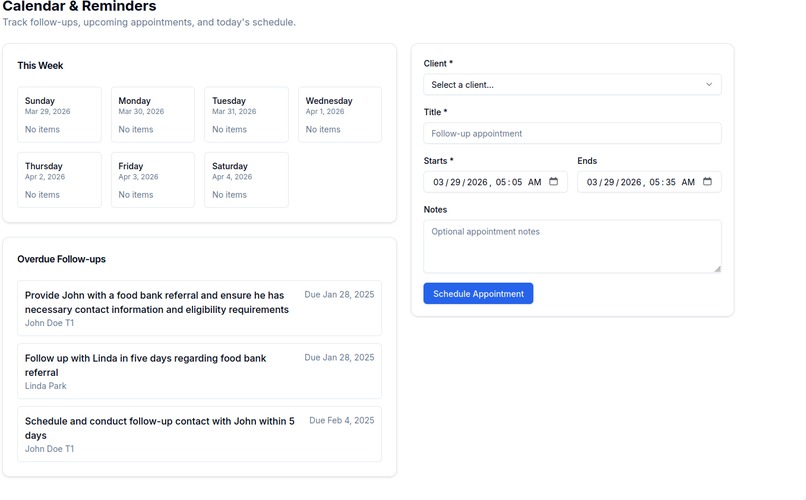
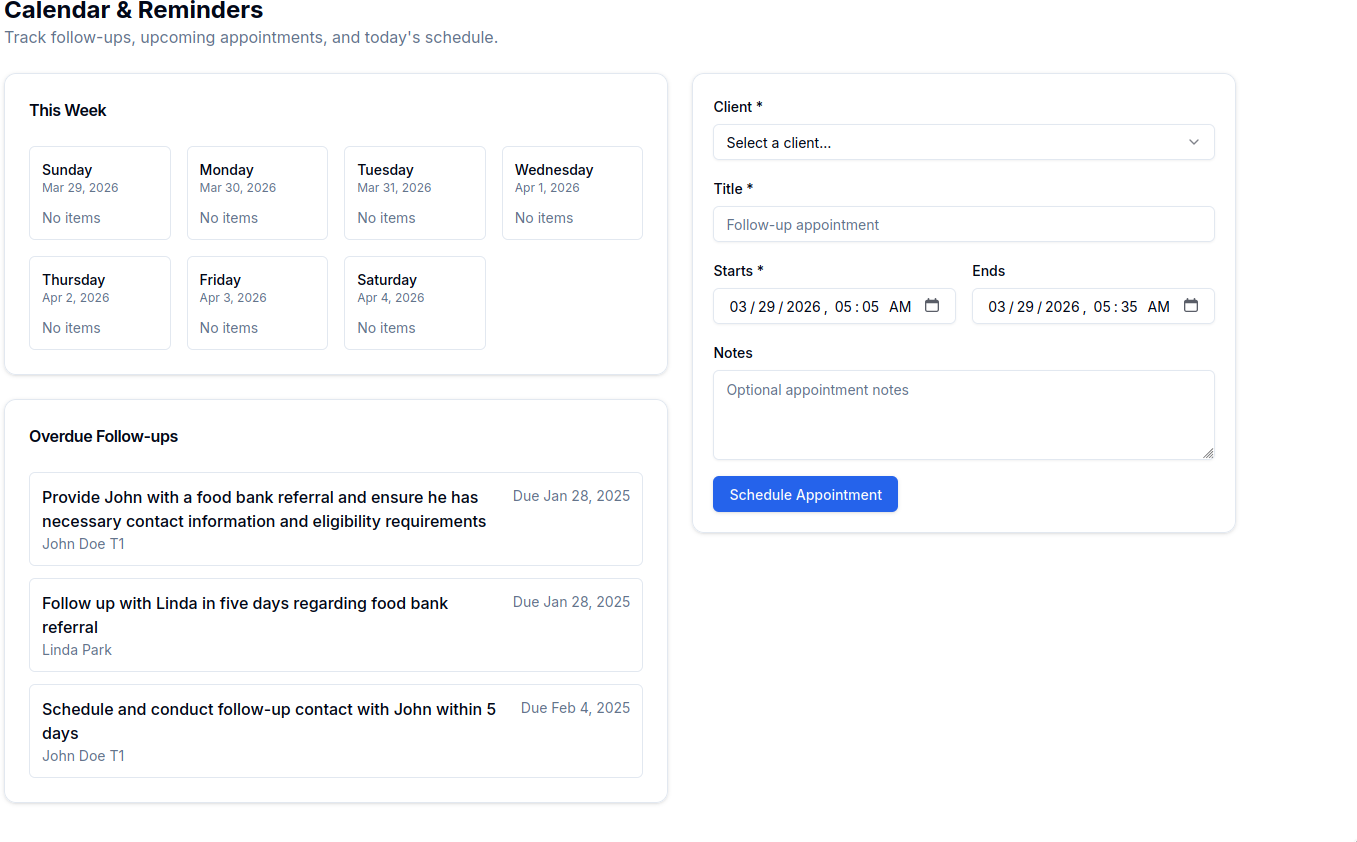
Calendars page
-
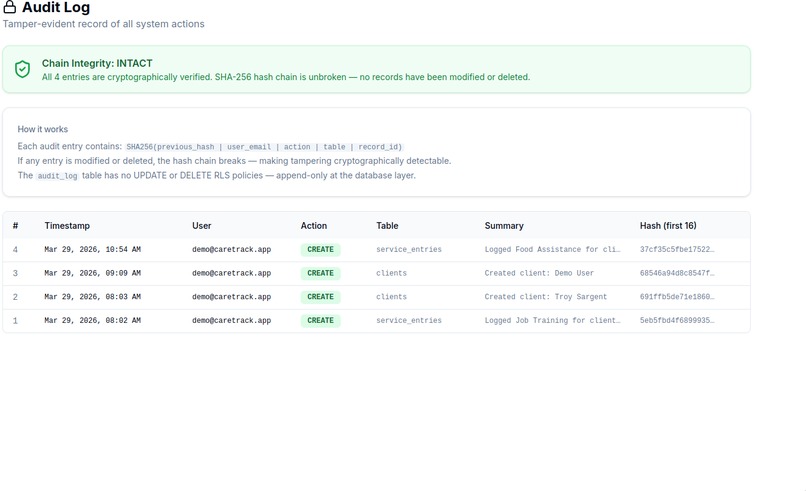
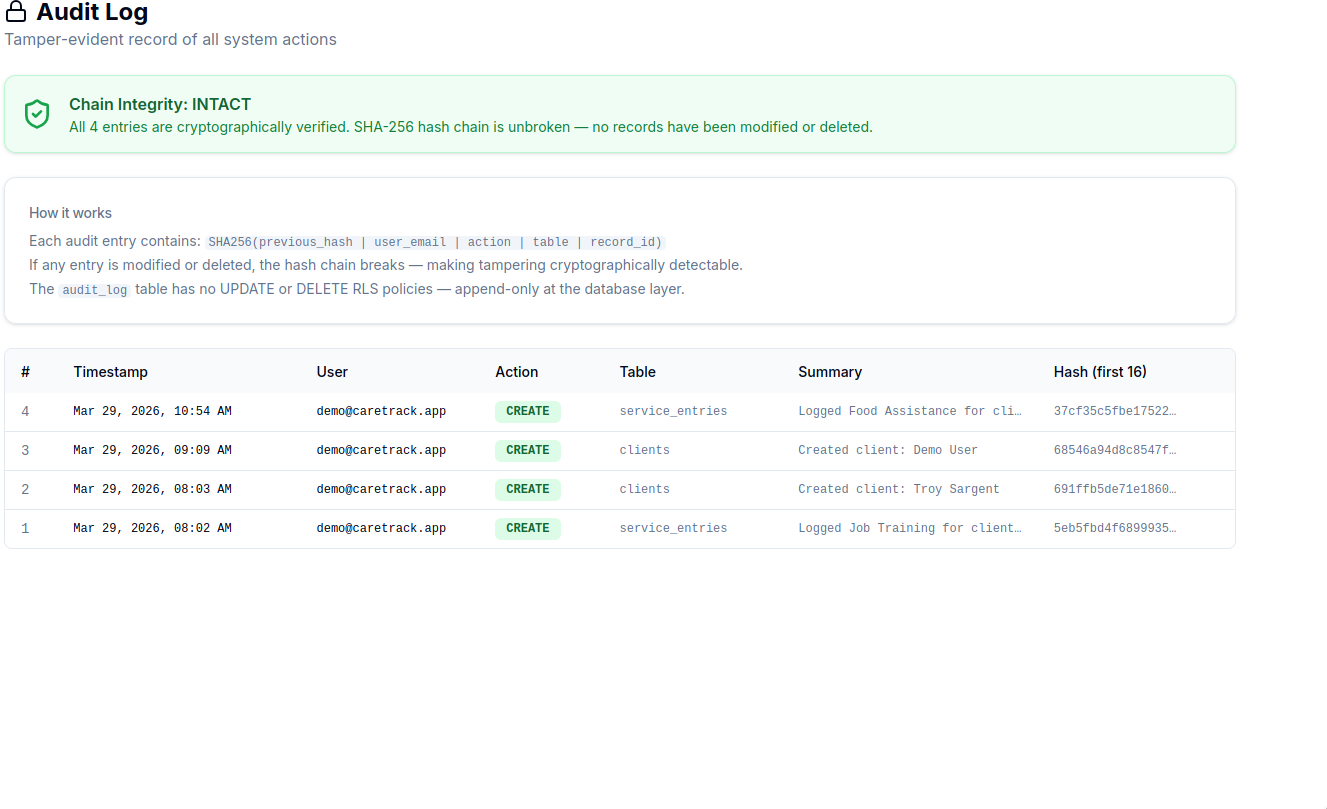
Audit Log (Admin only feature)
-
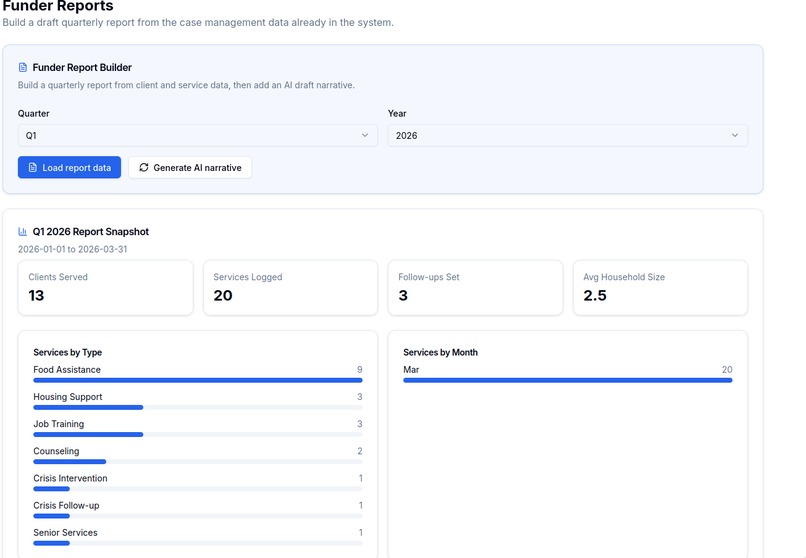
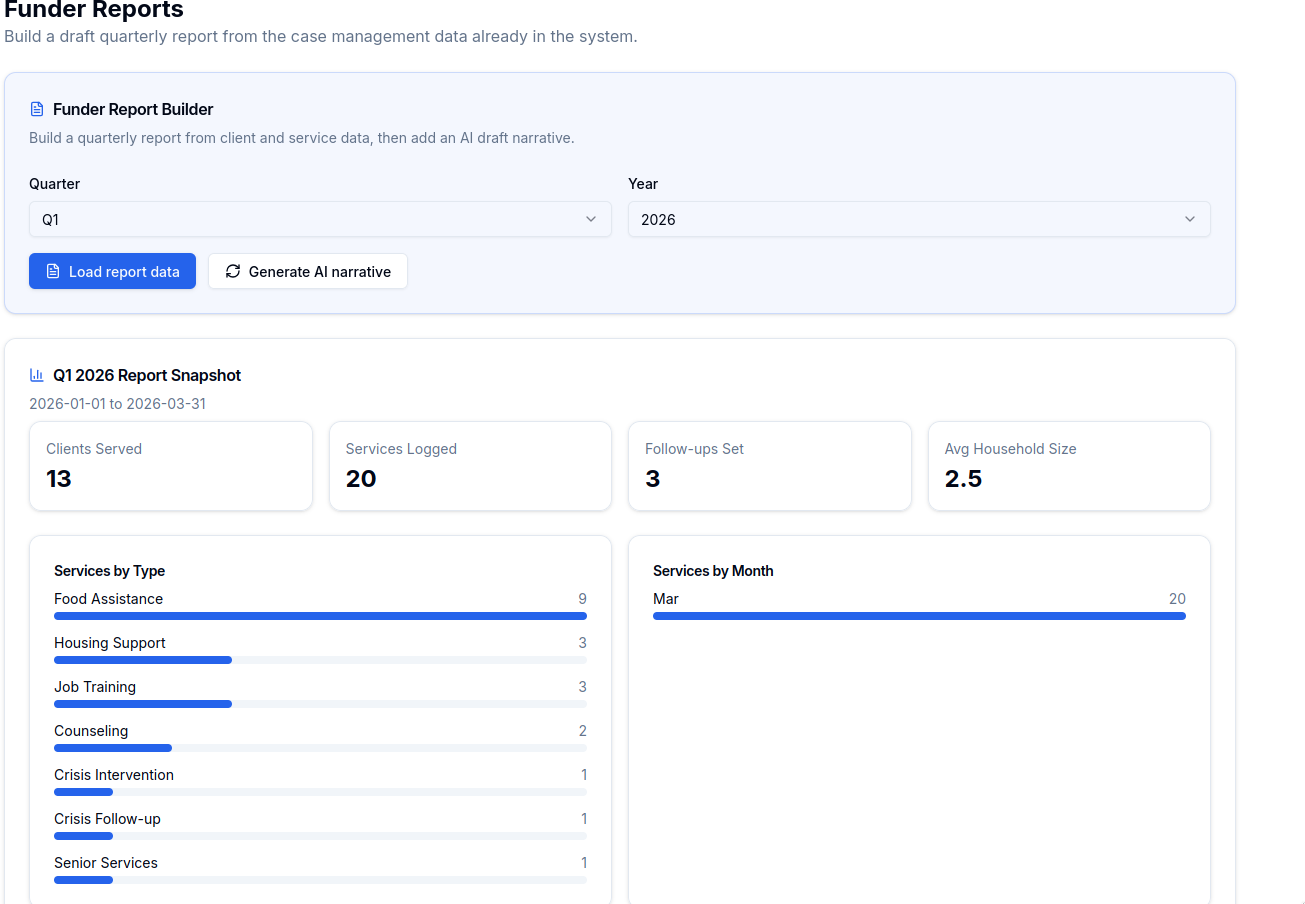
Funder report (Admin only feature)
-
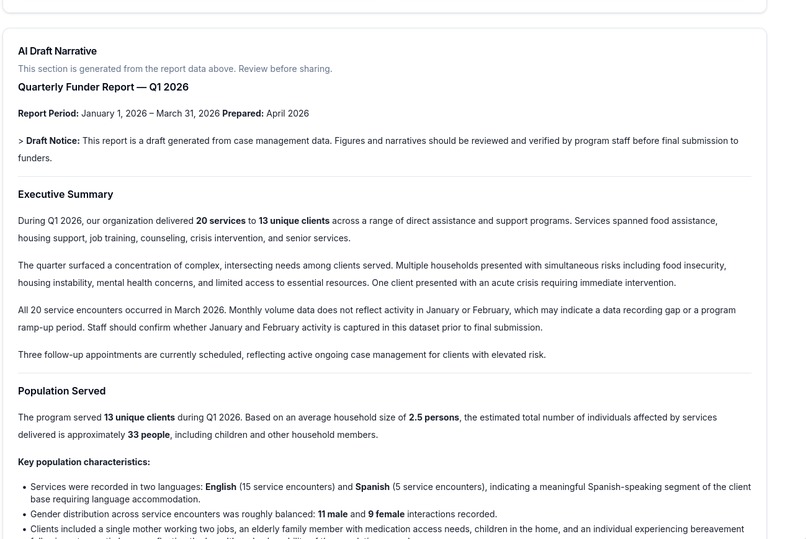
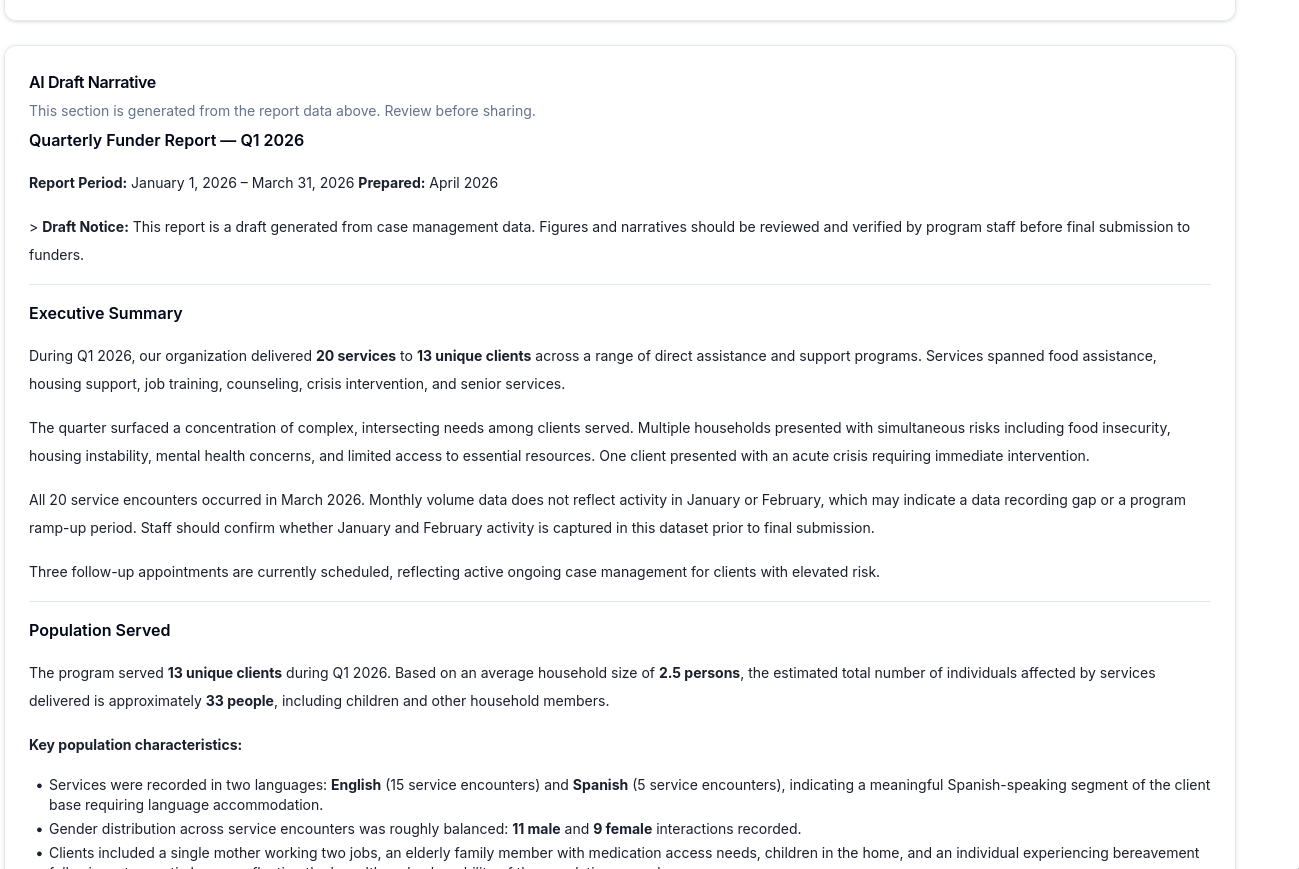
AI generated funder report (Admin only feature)
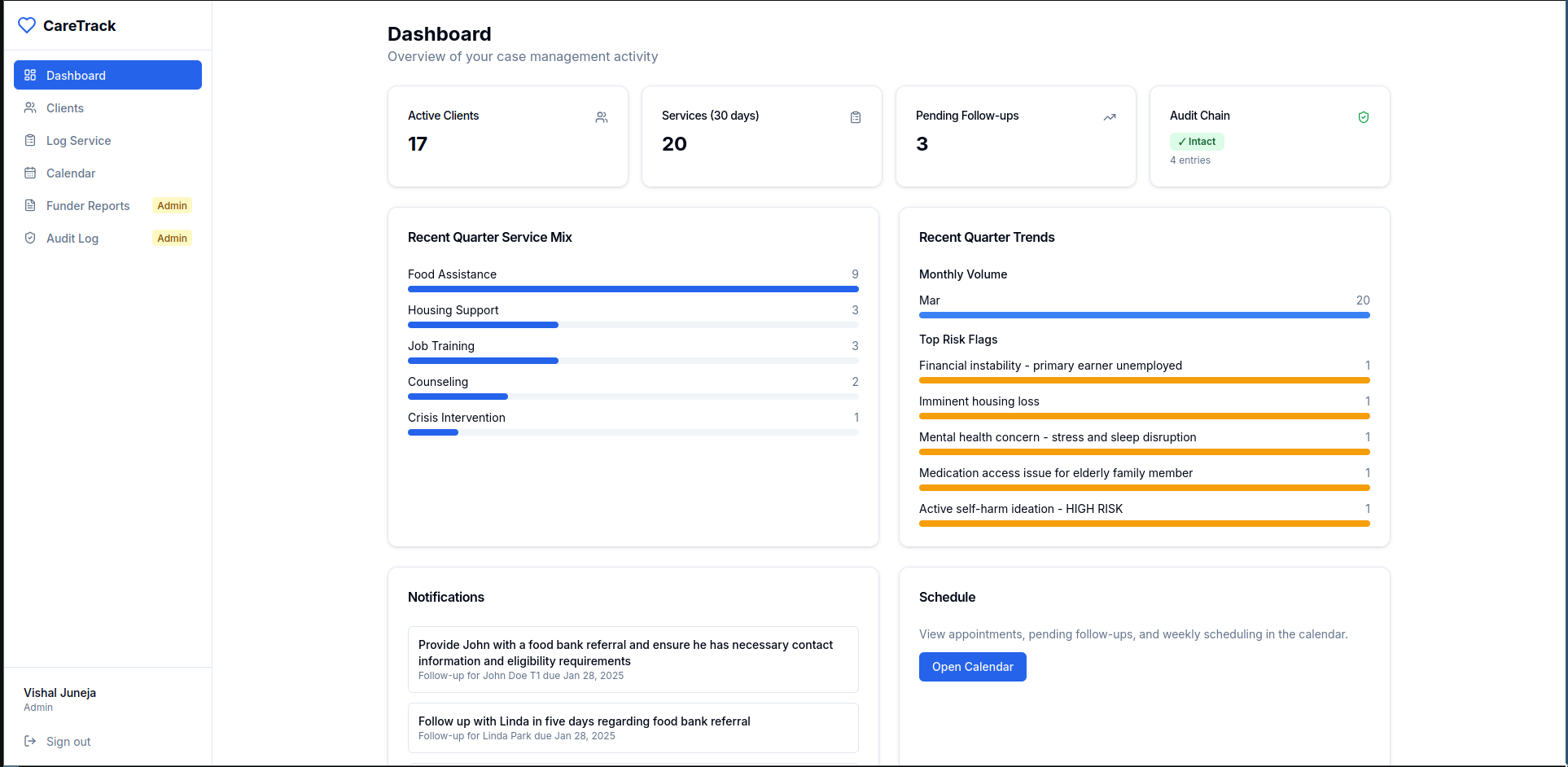
CareTrack
CareTrack replaces spreadsheets for nonprofit case workers. Staff speak their notes, AI structures them. Every data change is SHA-256 hash-chained --tamper-evident by design. Built solo overnight for Opportunity Hack x WiCS @ ASU.
Inspiration
I read through the problem statements and noticed something.
NMTSA, Chandler CARE Center, ICM Food Bank, Will2Walk --eight different nonprofits, eight different domains, but every single one submitted the same core ask:
- Help us register clients
- Record what we do for them
- Prove it to our funders
The tools that exist cost $150 per user per month. Most nonprofits are running on spreadsheets not because they want to, but because that's what they can afford.
I wanted to build something that:
- Actually works
- Costs almost nothing
- Takes seriously the fact that these organizations handle sensitive information about vulnerable people
The security angle came from my background in CTF competitions and cryptography. I kept thinking:
Grant auditors ask nonprofits to prove their records haven't been altered. A spreadsheet can't do that. A SHA-256 hash chain can.
What It Does
CareTrack is a full case management platform built for small nonprofits.
Voice-first case notes
A case worker taps a button, speaks for 30 seconds about a client interaction, and the app produces a structured record:
- Service type detected
- Summary written
- Action items extracted
- Risk flags raised
- Follow-up date calculated
No typing required. This directly targets the biggest time sink in case management: post-session documentation.
Text-to-speech readback
Any case note can be read aloud. Built for accessibility and for case workers in the field who are multitasking.
AI handoff summaries
One click generates a structured clinical brief from a client’s entire service history:
- Background
- Current status
- Active needs
- Risk factors
- Recommended next steps
Staff turnover in nonprofits exceeds 30% per year. This prevents clients from falling through the cracks.
AI funder reports
Quarter-end grant reporting takes 2–5 days of staff time. CareTrack:
- Pulls all service data
- Writes the narrative automatically
- Leaves final edits to staff
Appointment scheduling
- Calendar view of upcoming appointments
- No more sticky notes
Tamper-evident audit log
Every create, update, and delete is SHA-256 hash-chained:
SHA256(previous_hash | user_email | action | table | record_id)
- Any modification breaks the entire chain
- Live chain integrity badge
audit_logtable has no UPDATE or DELETE RLS policies (append-only)- Enforcement is at the database layer, not just API
This provides cryptographic proof of data integrity --something most $150/month SaaS tools do not offer.
How We Built It
Stack
- Next.js 16 (App Router)
- Supabase (PostgreSQL + RLS + Auth)
- Tailwind CSS
- Radix UI
- ElevenLabs (STT + TTS)
- Anthropic Claude Sonnet 4.6
- Vercel
Voice pipeline
- Browser MediaRecorder captures audio
- Sent to ElevenLabs
scribe_v1 - Filler words removed server-side (regex)
- Clean transcript sent to Claude
- Claude returns structured JSON
Relative dates (e.g. “in 5 days”) are returned as offsets and computed server-side.
Security architecture
- All API routes check
supabase.auth.getUser()first - RLS policies act as second layer
- Audit log is append-only
- No PII stored in audit trail
AI usage philosophy
LLMs are used only where necessary:
- Structuring speech
- Generating narratives
- Summarization
Everything else:
- Date math
- Filtering
- Aggregation
Handled in code.
Challenges
Audit chain verification
The hash chain broke in production but worked locally.
Root cause:
- PostgreSQL
TIMESTAMPTZvs JSDate.toISOString()mismatch
Fix:
- Removed timestamp from hash
- Used
user_emailinstead
Result: stable chain.
Supabase build failures on Vercel
Static prerendering failed due to missing env variables.
Fix:
export const dynamic = 'force-dynamic'for dashboard pages- Lazy init with
useRef - Avoid
createClient()at module scope
ElevenLabs TTS free tier
eleven_turbo_v2_5- 402 error- Switched to
eleven_multilingual_v2
CVE-2025-66478
- Vercel blocked deployment due to Next.js vulnerability
- Upgraded to Next.js 16
Accomplishments
Audit log system
End-to-end cryptographic integrity:
- Data model
- RLS policies
- Hash chaining
- Verification logic
Seeing “Chain Intact” after debugging was a major milestone.
Voice-to-note pipeline
- Fully functional in one recording
- Output is usable with minimal editing
- Not a gimmick
What We Learned
LLMs are bad at date arithmetic
- Return offsets, compute in code
Cryptographic integrity ≠ database enforcement
- Both must align
Scope discipline matters in solo hackathons
- Cut features like:
- CSV import
- Configurable fields
- Semantic search
Everything shipped works --that matters more.
What’s Next
- CSV import with AI column mapping
- Semantic search using
pgvector - Configurable field labels per organization
- Multi-tenant support for multiple nonprofits
Built With
- anthropic
- claude
- elevenlabs
- next.js
- node.js
- postgresql
- radix-ui
- react-hook-form
- sha-256
- supabase
- tailwindcss
- typescript
- vercel
- zod

Log in or sign up for Devpost to join the conversation.