Inspiration
Healthcare systems around the world are fragmented. Patients often carry years of medical history across disconnected PDFs, prescriptions, discharge summaries, handwritten notes, lab reports, and hospital systems that rarely communicate with one another.
We were inspired by a simple but important problem:
Patients should not need to remember their medical history better than the healthcare system.
We wanted to explore what healthcare could look like if AI acted as a longitudinal memory layer for medicine — not just summarizing documents, but continuously understanding patient history over time.
CareTrace OS was built to rethink how fragmented healthcare data can become structured, explainable, and clinically useful intelligence.
What it does
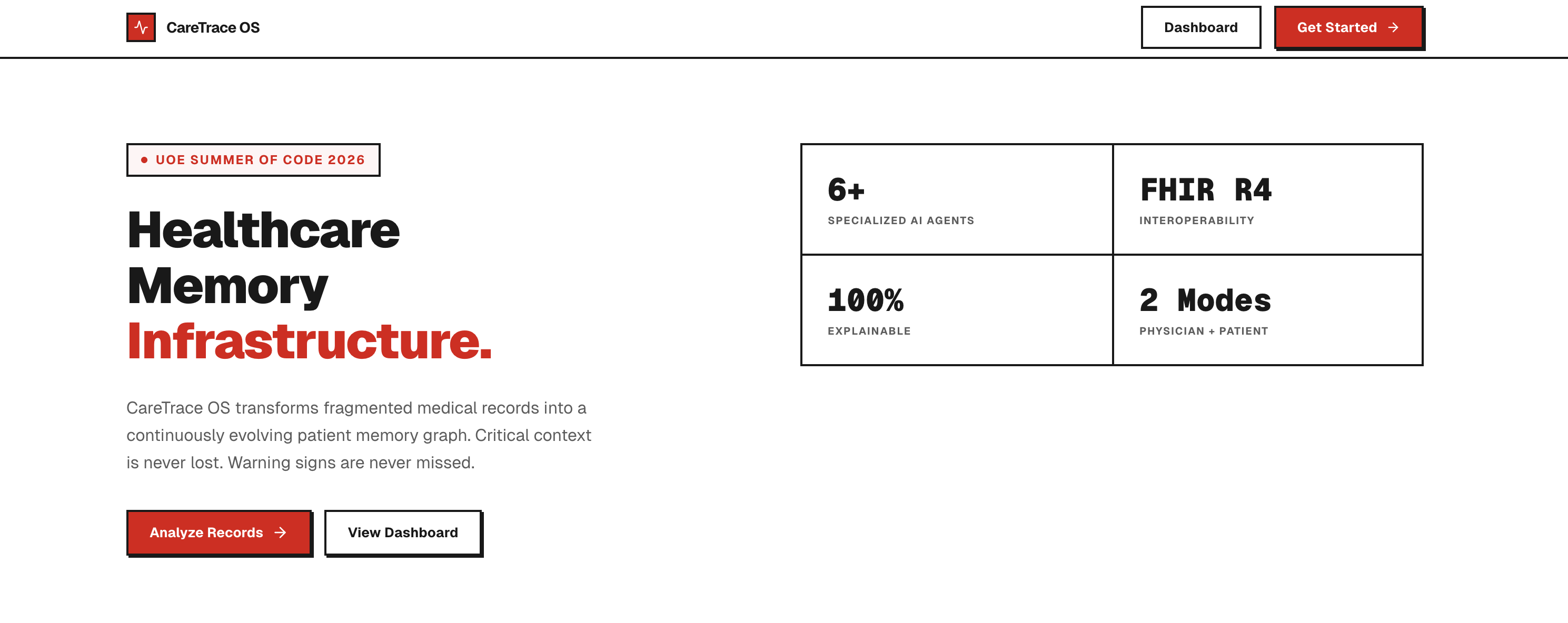
CareTrace OS is an AI-powered longitudinal healthcare intelligence platform that transforms fragmented medical records into a continuously evolving patient memory graph.
Users can upload:
- lab reports
- prescriptions
- discharge summaries
- referral notes
- scanned PDFs
- handwritten records
The platform then:
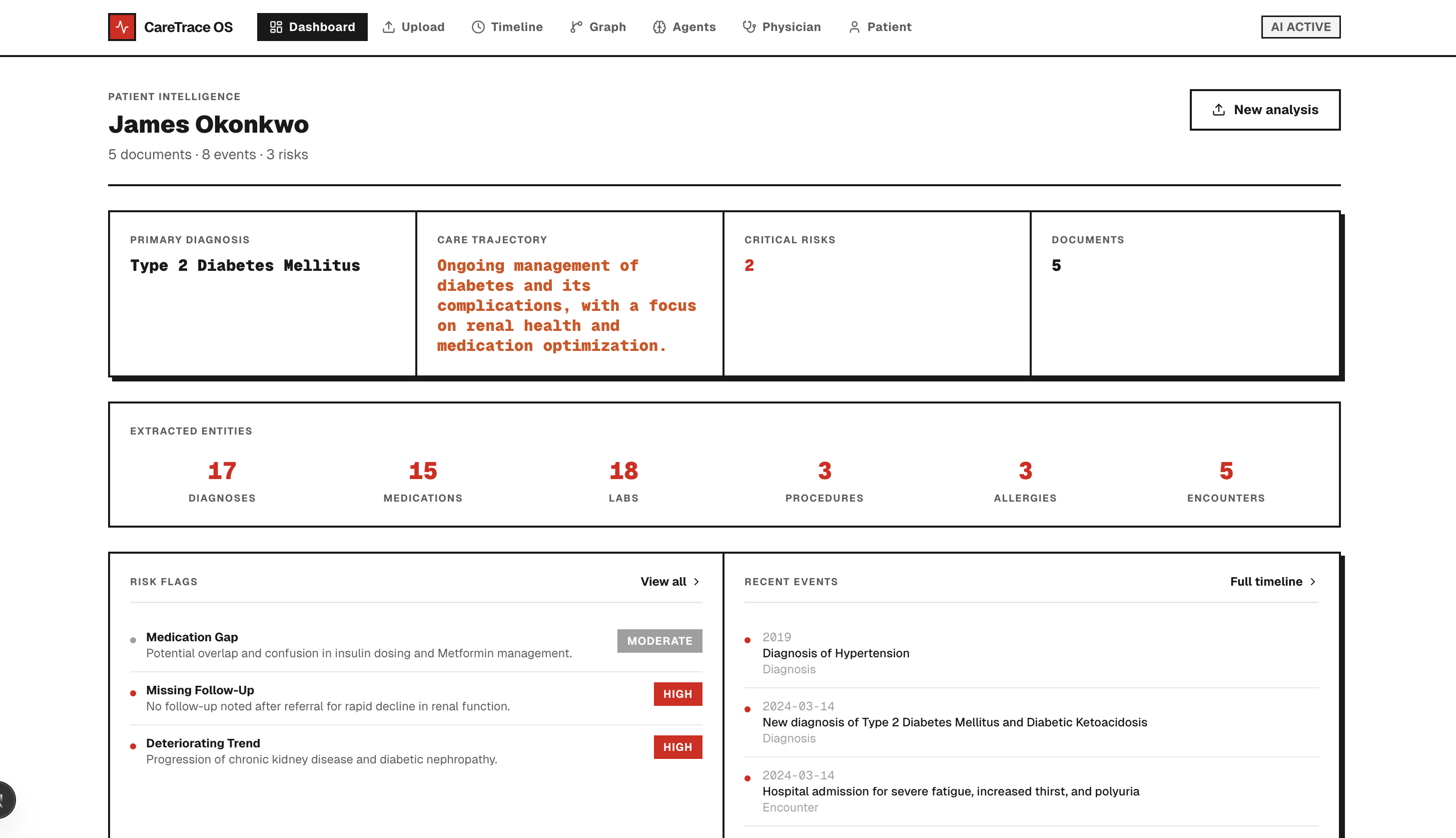
- extracts and structures medical information
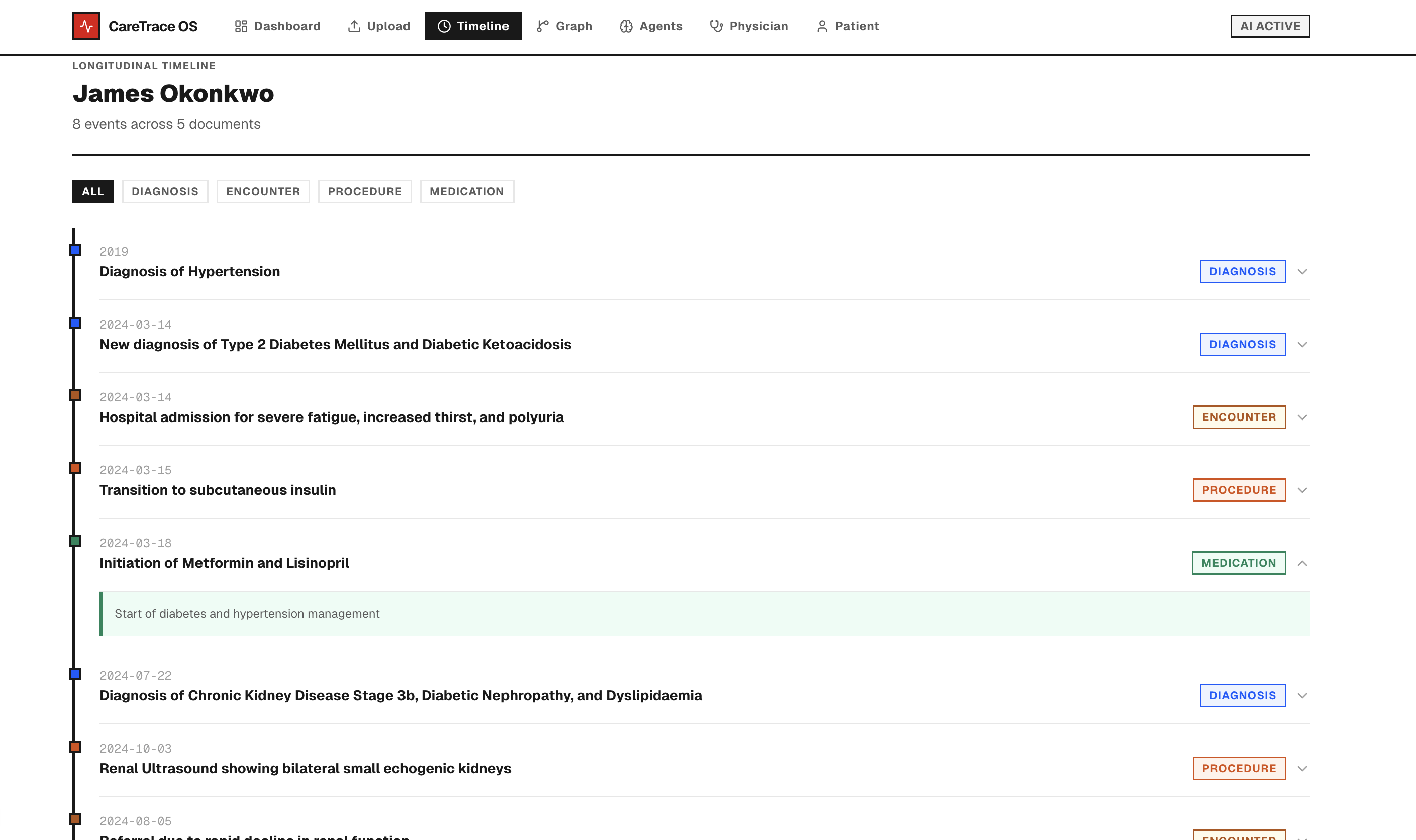
- builds a chronological patient timeline
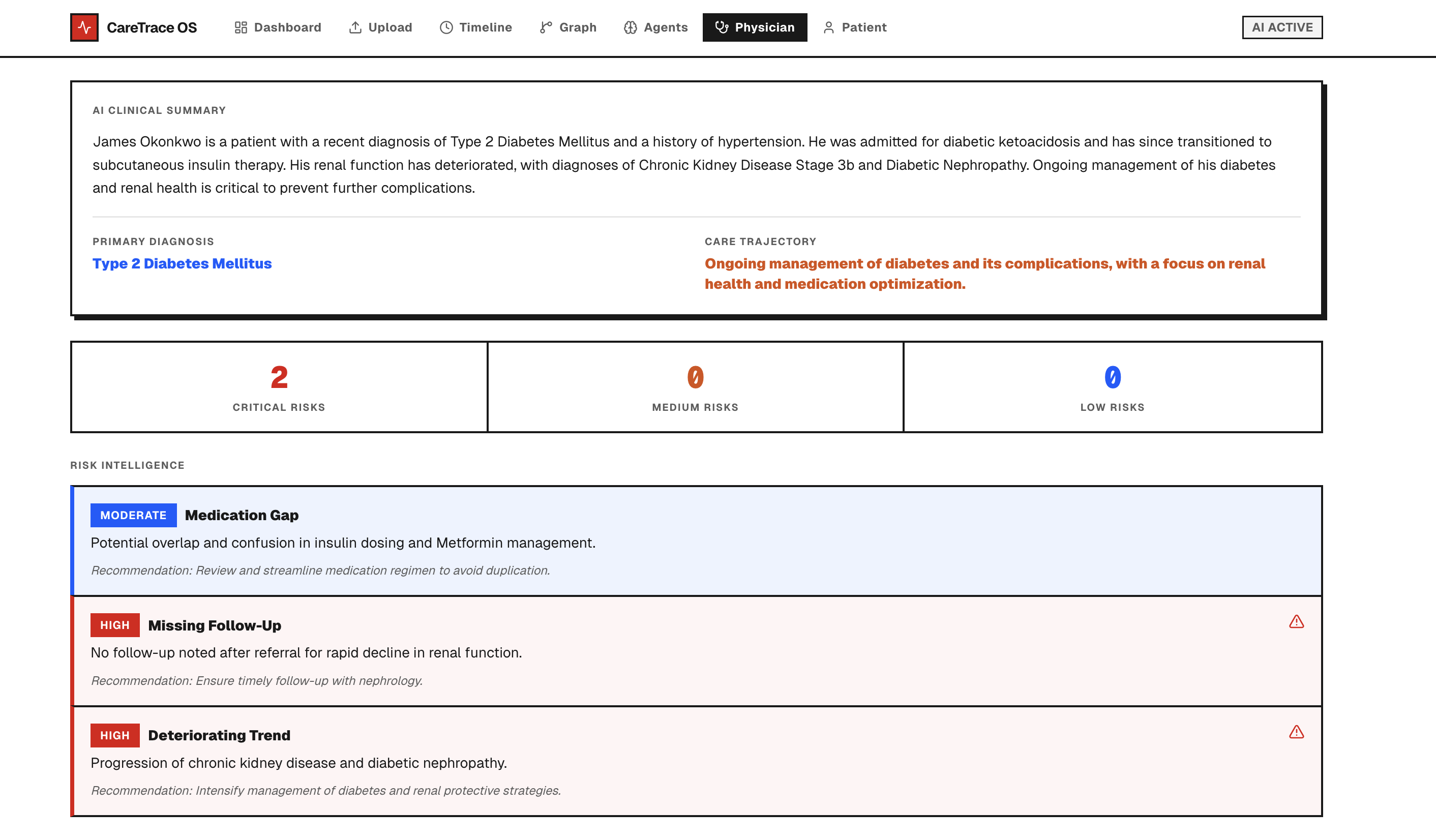
- generates physician-ready summaries
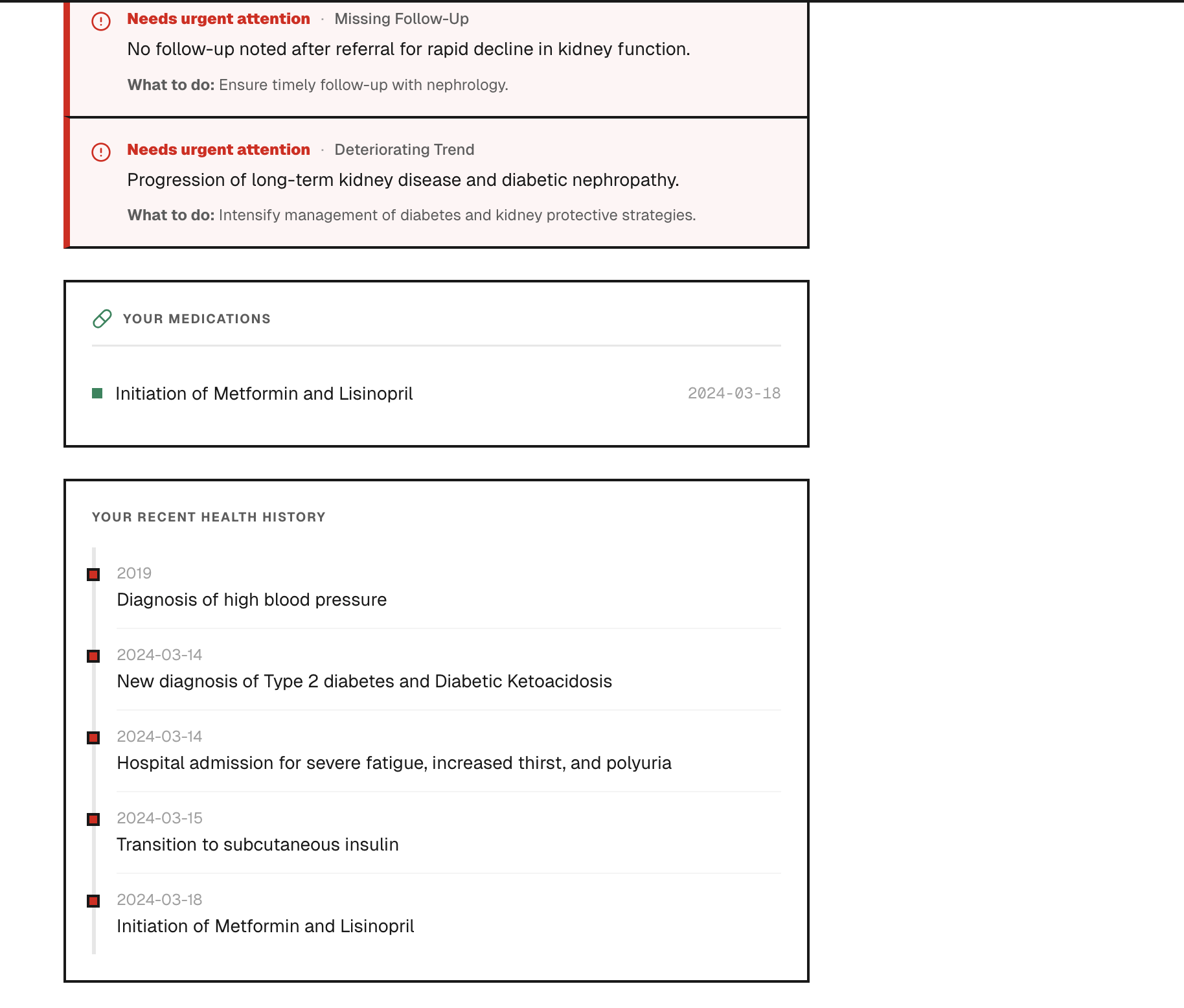
- creates patient-friendly explanations
- detects potential medical risks
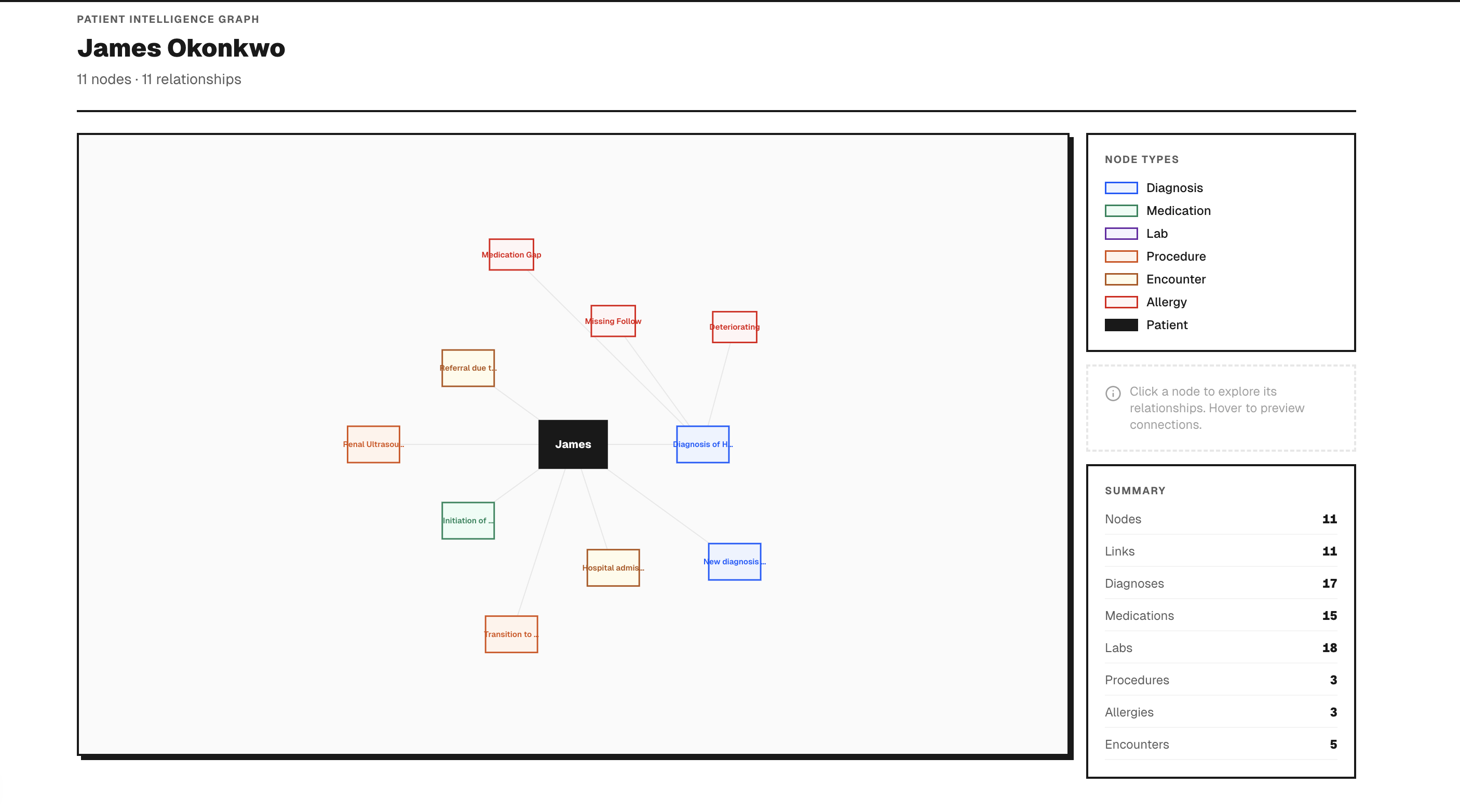
- visualizes relationships between conditions, medications, labs, and treatments
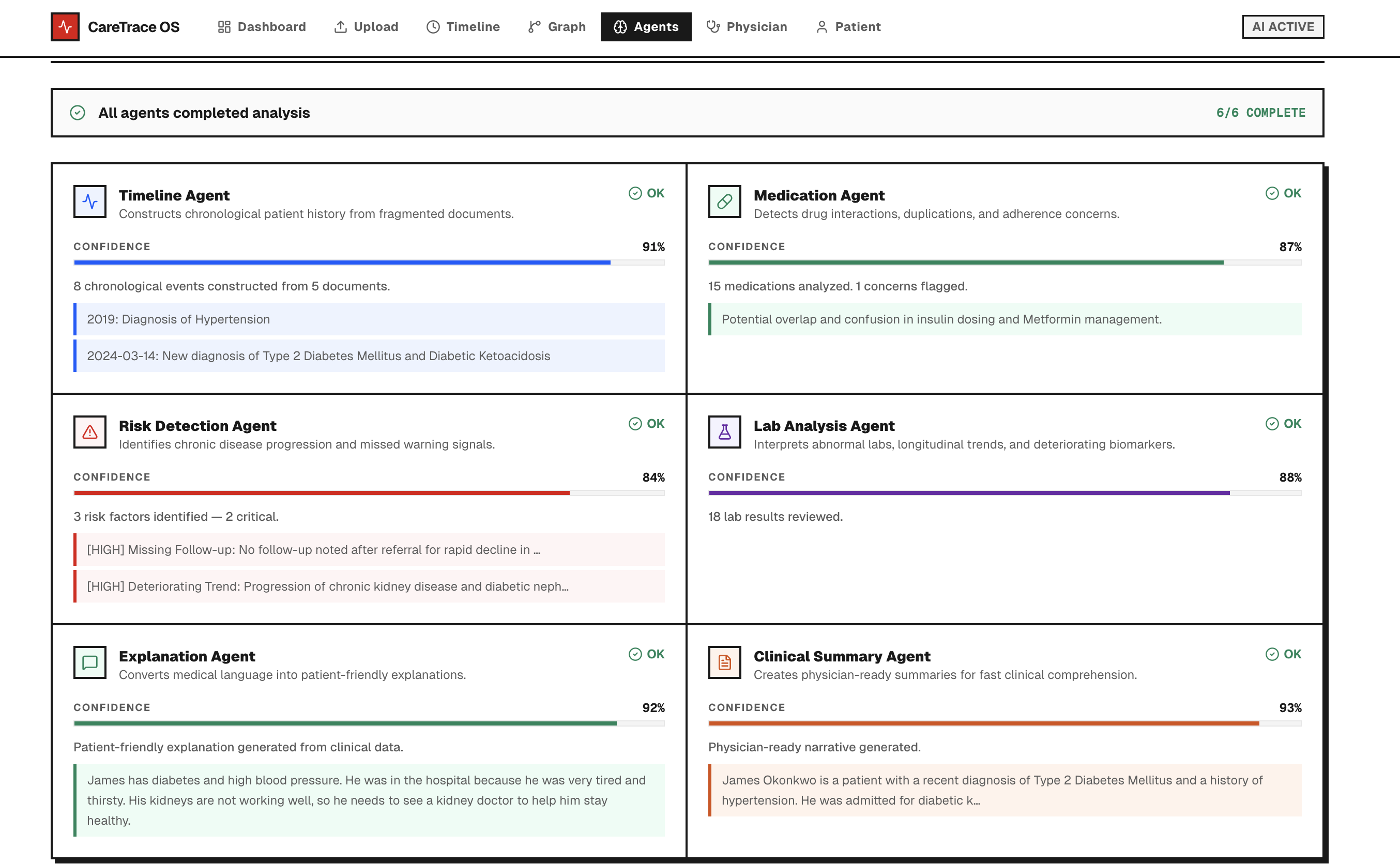
CareTrace OS also uses a multi-agent healthcare reasoning system where specialized AI agents collaborate to analyze:
- medication interactions
- disease progression
- abnormal lab trends
- unresolved clinical risks
- longitudinal health patterns
The goal is to reduce lost medical context and improve healthcare understanding for both clinicians and patients.
How we built it
We designed CareTrace OS as a modular healthcare intelligence system with multiple AI-assisted workflows.
Frontend
- Next.js
- React
- TailwindCSS
- Framer Motion
- Data visualization components for timelines and intelligence graphs
Backend
- FastAPI / API services
- Structured healthcare event processing
- Vector-based memory retrieval pipelines
AI & NLP Layer
We used AI pipelines for:
- OCR extraction
- medical entity recognition
- timeline generation
- longitudinal reasoning
- summarization
- explainable risk detection
Multi-Agent Architecture
The system was separated into specialized reasoning agents:
- Timeline Agent
- Medication Agent
- Risk Detection Agent
- Lab Analysis Agent
- Clinical Summary Agent
- Patient Explanation Agent
This allowed the platform to simulate collaborative healthcare intelligence workflows instead of relying on a single monolithic AI prompt.
UX Direction
A major focus was designing a professional clinical interface that avoided generic “AI dashboard” aesthetics. We intentionally built the product to feel like real healthcare infrastructure software:
- minimal
- structured
- trustworthy
- enterprise-grade
Challenges we ran into
One of the biggest challenges was balancing:
- clinical complexity
- explainability
- usability
Healthcare data is messy and inconsistent. Documents vary heavily in:
- formatting
- terminology
- quality
- structure
- completeness
Another major challenge was designing AI outputs that felt trustworthy instead of overly confident. We wanted the system to surface risks while also explaining:
- why something was flagged
- which documents contributed
- what evidence supported the conclusion
Building longitudinal intelligence was also difficult. Most AI systems summarize single documents, but CareTrace OS needed to reason across multiple encounters and evolving medical histories over time.
On the design side, we spent significant effort avoiding “AI slop” UI patterns. We wanted the interface to feel calm, clinically readable, and realistic for healthcare environments.
Accomplishments that we're proud of
We are especially proud of:
The longitudinal patient timeline
Instead of isolated summaries, CareTrace OS reconstructs healthcare history as a connected evolving narrative.
Multi-agent healthcare reasoning
The platform simulates specialized healthcare intelligence agents collaborating on different dimensions of patient analysis.
Explainability layer
Every important insight is tied back to reasoning and evidence rather than appearing as opaque AI output.
Dual UX system
We successfully created:
- physician-oriented summaries
- patient-friendly explanations
without losing clinical meaning.
Professional product design
We intentionally built a polished healthcare-grade interface instead of a generic AI wrapper, which made the system feel significantly more believable and impactful.
What we learned
This project taught us that healthcare AI is not just about intelligence — it is about trust, context, and clarity.
We learned:
- longitudinal reasoning is significantly harder than document summarization
- explainability is essential in healthcare systems
- interface design strongly affects perceived trustworthiness
- fragmented medical data creates major downstream problems
- AI systems become much more useful when specialized agents collaborate
We also learned how important it is to design AI systems around real workflows instead of just showcasing model capabilities.
What's next for CareTrace OS
Our long-term vision is for CareTrace OS to evolve into healthcare memory infrastructure that can integrate across hospitals, clinics, telemedicine systems, and underserved healthcare environments.
Future directions include:
- FHIR interoperability
- hospital integrations
- wearable device support
- multilingual medical processing
- mobile-first patient access
- predictive health intelligence
- population-level analytics
- rural healthcare deployment
- clinician collaboration systems
We also want to expand the explainability engine so clinicians can better understand how longitudinal risks and recommendations are generated.
Ultimately, we envision a future where no critical medical context is ever lost again.
Built With
- agents
- fastapi
- fhir
- javascript
- langchain
- python
- react
- typescript


Log in or sign up for Devpost to join the conversation.