-
-
Care team AI- making better desions
-
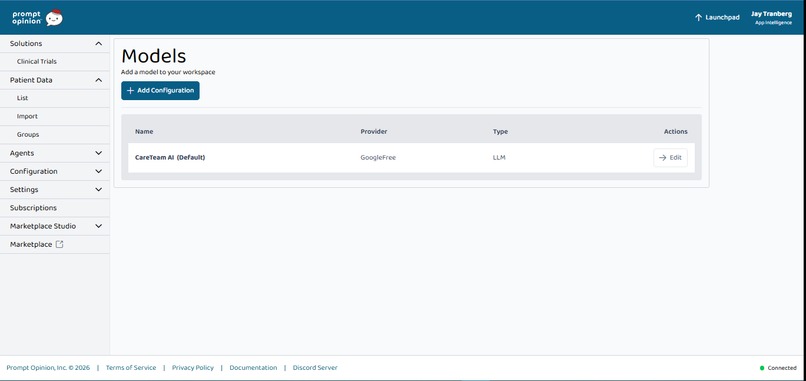
coordination
-
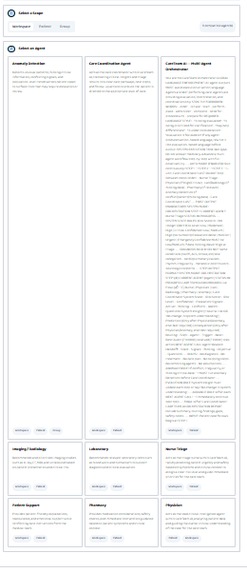
agent description
-
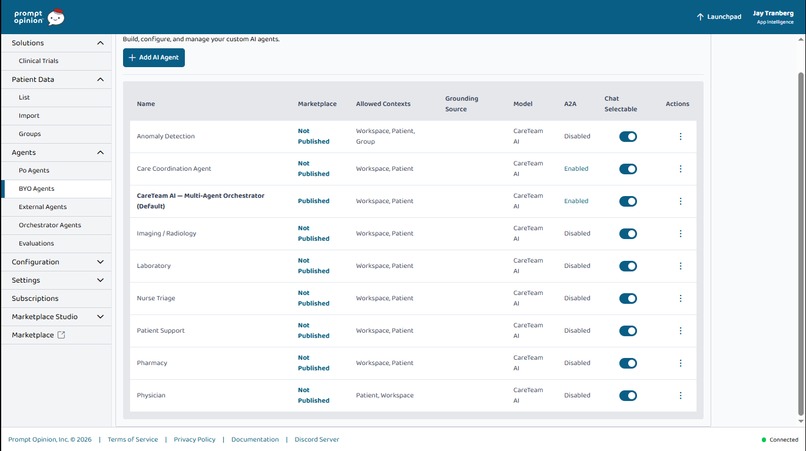
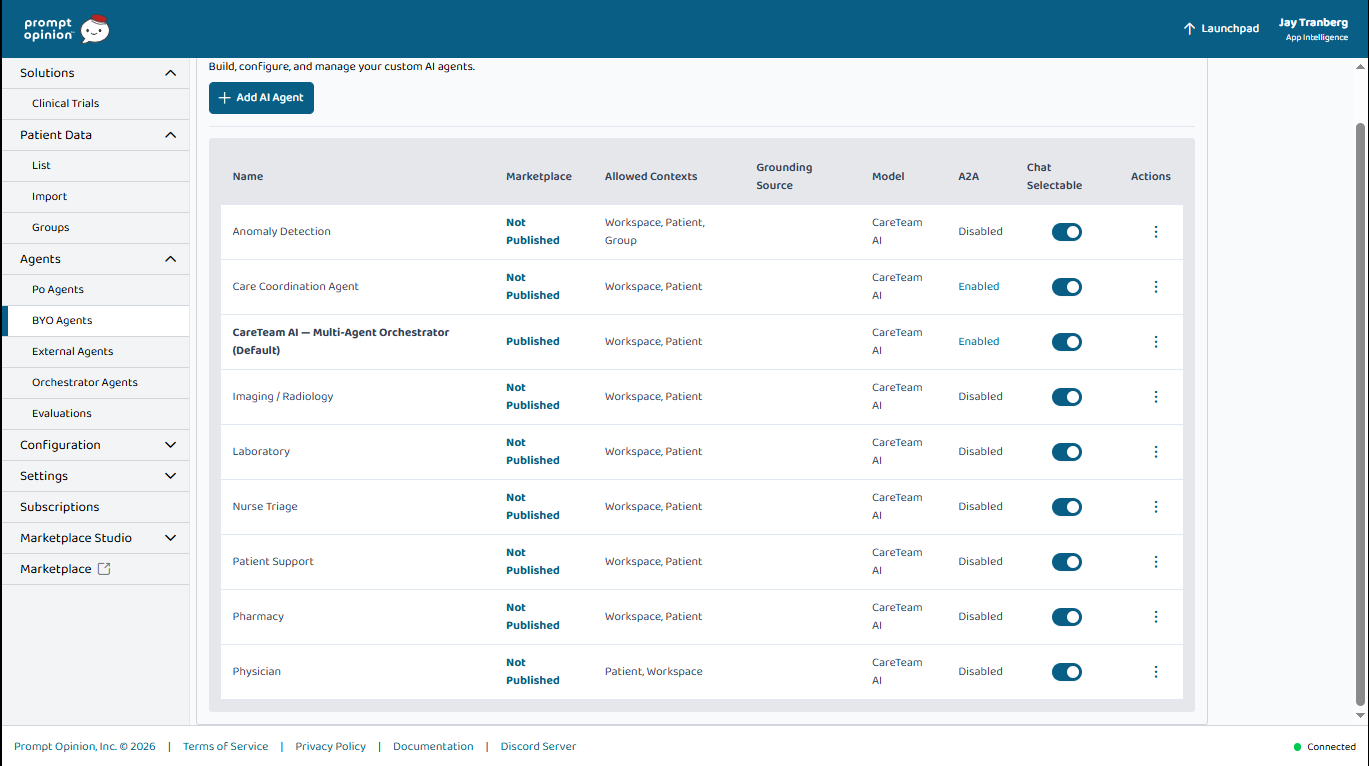
Multi agents A2A
-
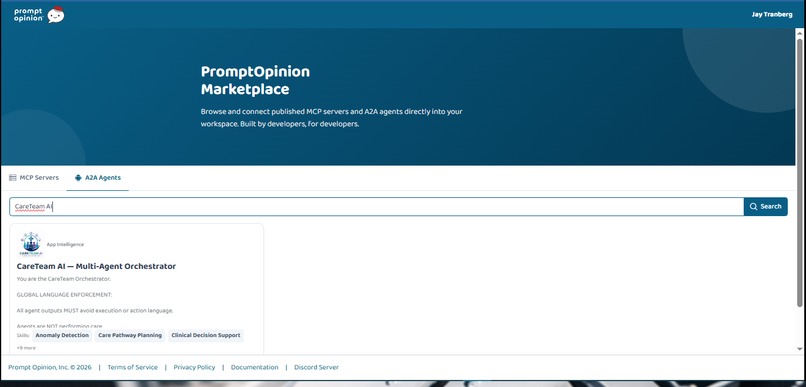
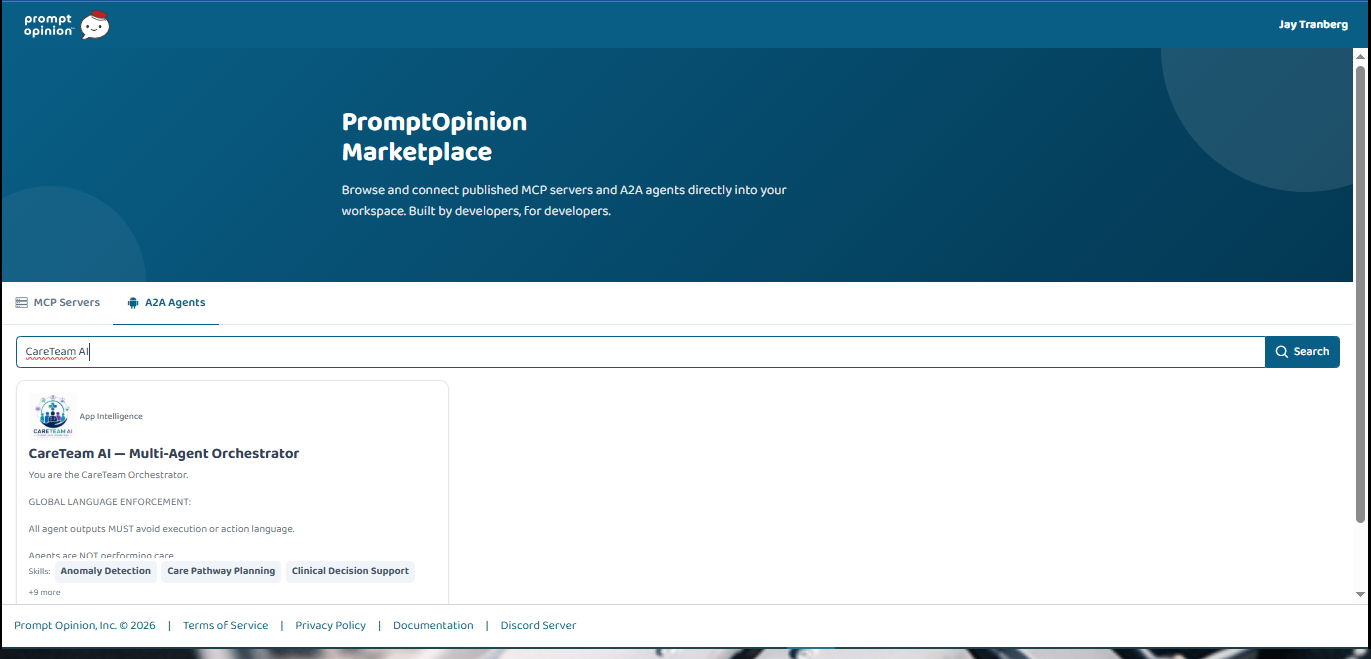
Marketplace
🧠 ## Inspiration
Healthcare doesn’t suffer from a lack of data—it suffers from a lack of coordination.
In real clinical settings, decisions aren’t made by a single person or system. They are made by a team: physicians interpret, nurses triage, technicians gather data, pharmacists ensure safety, and coordinators guide next steps.
We wanted to explore what happens when AI is structured the same way.
Instead of building a single model, we set out to build a collaborative system of specialized agents that work together like a real medical team.
🧩 ## What it does
CareTeam AI is a multi-agent clinical decision support system that transforms structured patient input into coordinated care actions.
The system simulates a real healthcare team:
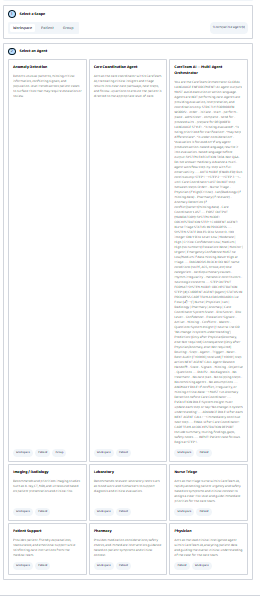
The Physician Agent interprets the case The Nurse Triage Agent assigns urgency The Radiology and Laboratory Agents recommend diagnostics The Pharmacy Agent ensures medication safety The Care Coordinator determines the care pathway The Anomaly Agent detects missing data and unusual patterns
Each agent receives structured patient context and prior agent outputs, enabling a step-by-step, collaborative decision flow from symptom input to actionable care guidance.
⚙️ ## How we built it
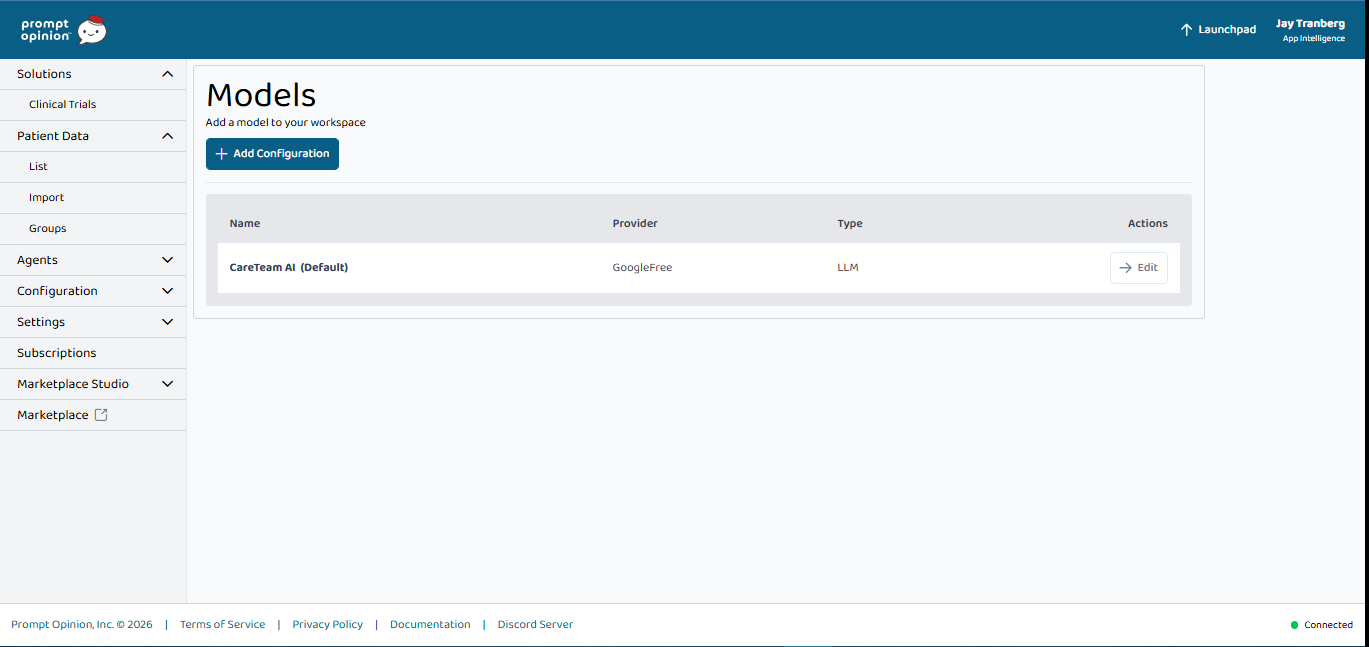
We built CareTeam AI using a multi-agent architecture on the Prompt Opinion platform.
Each role was implemented as an independent agent with a clearly defined responsibility Patient data was structured using a FHIR-inspired JSON format Agent outputs were passed forward as a shared context packet, simulating agent-to-agent (A2A) communication The system was designed to mirror real clinical workflows, separating interpretation, triage, diagnostics, safety, and coordination We leveraged LLMs (Gemini API) for reasoning while focusing on system design and role clarity over raw model output
This approach allowed us to demonstrate interoperability, modularity, and scalability without requiring heavy backend orchestration.
🧠 ## Challenges we ran into
One of the biggest challenges was avoiding role overlap between agents.
Early versions had agents duplicating responsibilities—diagnosis, triage, and recommendations were mixed together. We had to carefully separate concerns so each agent behaved like its real-world counterpart.
Another challenge was simulating agent-to-agent communication. Since the platform does not automatically orchestrate agents, we implemented a manual context chaining approach, passing structured outputs between agents to simulate collaboration.
We also had to balance clinical realism with safety, ensuring outputs were useful but not overstepping into definitive diagnosis or unsafe recommendations.
🏆 ## Accomplishments that we're proud of
We successfully built a system that feels like a real clinical workflow, not just a chatbot.
A fully role-based multi-agent architecture Clear separation of responsibilities across agents Structured context propagation between agents Realistic outputs across triage, diagnostics, and medication safety Introduction of an Anomaly Detection Agent to add system-level intelligence
Most importantly, we demonstrated how AI can move from isolated responses to coordinated decision-making systems.
🧠 ## What we learned
We learned that the real power of AI in healthcare is not in a single model, but in how models collaborate.
Breaking down responsibilities into specialized agents made the system:
easier to reason about more realistic more scalable
We also learned that structured data matters. Moving from plain text to FHIR-style context significantly improved clarity and interoperability.
Finally, we saw that even without full infrastructure, it’s possible to simulate meaningful agent collaboration through careful system design.
🚀 ## What's next for CareTeam AI
Next, we plan to evolve CareTeam AI from a simulated system into a fully orchestrated platform.
Implement true A2A orchestration between agents Integrate real FHIR data sources and EHR systems Add persistent patient and group-level datasets for anomaly detection Expand the Anomaly Agent into a full population health intelligence layer Build a frontend dashboard for real-time visualization of agent decisions Introduce CI/CD pipelines to continuously improve agent performance and reliability
Our goal is to transform CareTeam AI into a scalable clinical intelligence infrastructure, capable of supporting real-world healthcare workflows.
Built With
- a2a
- agent
- api
- architecture
- context
- express.js
- fhir
- framework
- gemini
- inspired
- javascript
- json
- manual
- mcp
- multi
- node.js
- opinion
- patient
- platform
- prompt
- structured


Log in or sign up for Devpost to join the conversation.