-
-
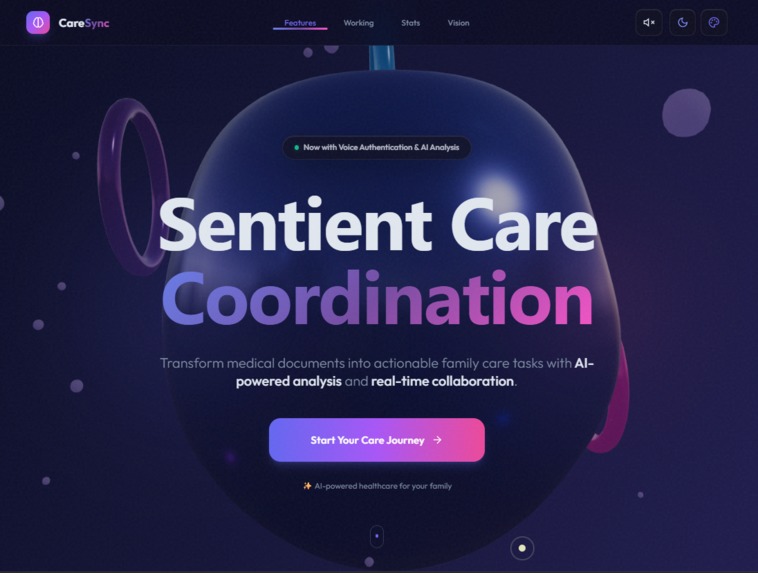
Main page
-
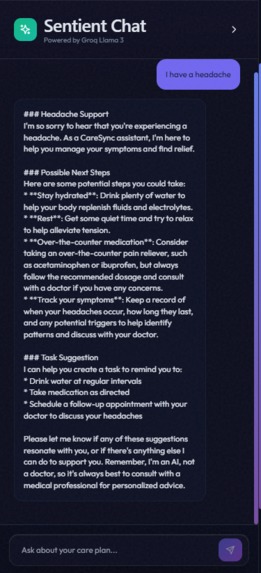
Chatbot
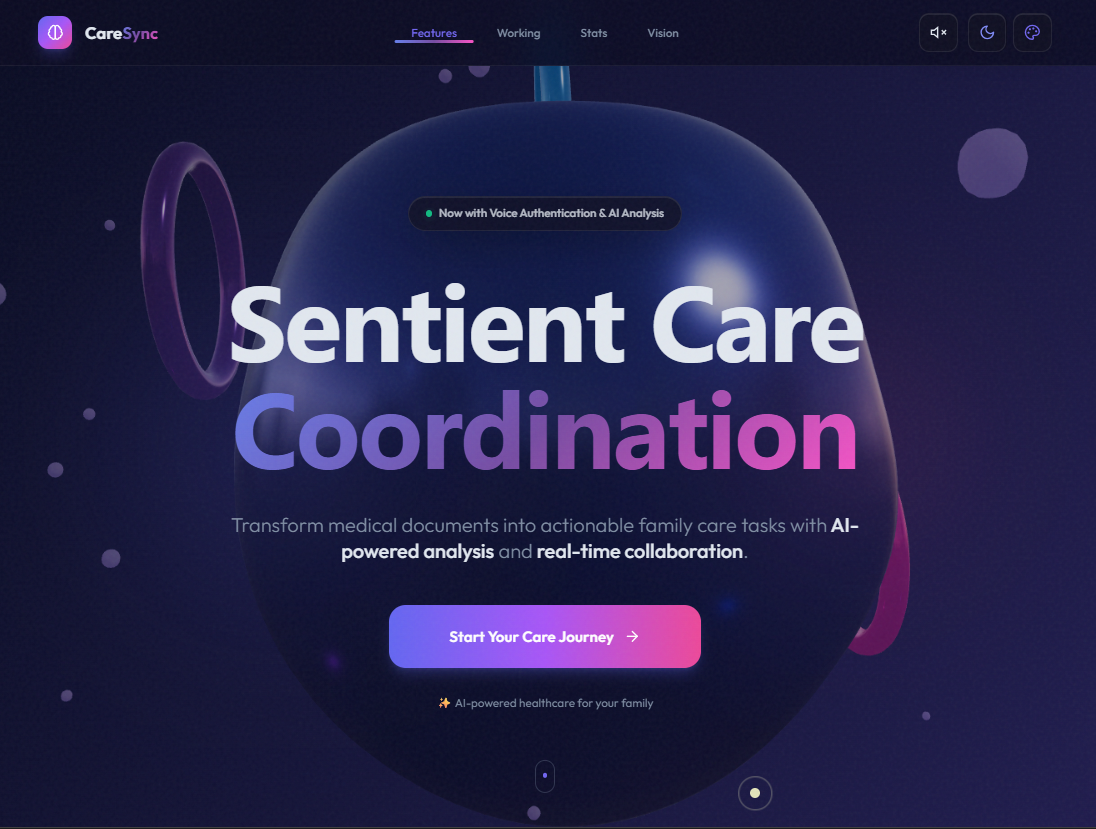
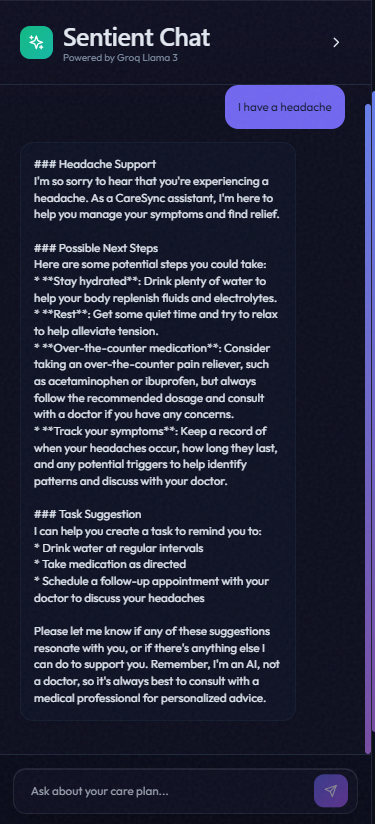
Inspiration
It started in a hospital parking lot.
One of our team members stood there at 2:00 AM, clutching a wrinkled discharge summary for their grandfather. The doctor had spent 4 minutes explaining the care plan, using words like "ambulate," "prophylaxis," and "titrate." Then, he was gone.
Standing there under the flickering streetlights, the panic set in. What if I miss a dose? What if I misinterpret 'as needed'? What if I fail him?
We realized that for millions of families, the scariest part of healthcare isn't the hospital stay—it’s the moment you get home and realize you are now the nurse, the admin, and the coordinator, with zero training.
We built CareSync because love shouldn't be overwhelmed by logistics. We wanted to turn that terrifying stack of medical papers into a simple, shared plan that lets families stop worrying about the "admin" and start focusing on the "care."
What it does
CareSync acts as a compassionate translator and a family command center.
The Jargon Buster: A user simply takes a photo of a discharge summary, a prescription bottle, or a handwritten doctor's note.
The Translation: Our AI analyzes the medical text and strips away the terrifying Latin and clinical phrasing. It converts "Administer 50mg PO q12h" into a friendly card that says: "Give Dad the blue pill at breakfast and dinner."
The Family Huddle: This information isn't just text—it is instantly converted into a shared, animated task board.
When the "Morning Meds" task is checked off by the son, the daughter across town gets a notification: "Dad took his meds (Checked by Mike)."
It tracks appointments, symptom logs, and medication inventory in real-time.
It turns a chaotic, lonely burden into a synchronized team effort.
How we built it
We built CareSync with a "privacy-first, empathy-first" architecture.
The Brain (LLM): We engineered prompts using Llama 3 to act not just as a translator, but as a compassionate guide. We tuned the temperature to prioritize extreme accuracy over creativity to ensure safety.
The Heart (Frontend): We built the website using React.JS with a focus on accessibility. Large buttons, soothing colors, and high-contrast text for elderly users.
The Nervous System (Backend): We used Supabase and localStorage to ensure real-time state management. When one person checks a box, everyone’s screen updates instantly.
Challenges we ran into
The "Doctor's Handwriting" Problem: Getting OCR to recognize scribbled notes was a nightmare. We had to implement a feedback loop where the AI asks the user to confirm ambiguous words before adding them to the schedule.
The Weight of Responsibility: Building a "to-do list" app is easy. Building a to-do list where a mistake could impact someone's health is terrifying. We spent hours refining our "Safety Guardrails"—ensuring the AI encourages users to call a doctor if the text is unclear, rather than guessing.
Balancing Tone: We struggled to find the right voice for the AI. Too clinical felt cold; too cheerful felt fake. We had to iterate to find a tone that felt like a "calm, competent nurse."
Accomplishments that we're proud of
The "Exhale" Factor: In our user testing, we showed a prototype to a real caregiver. When she saw the complex discharge paper turn into a simple checklist, she physically relaxed. She told us, "I feel like I can actually breathe." That was our biggest win.
Seamless Syncing: Getting the real-time updates to work flawlessly across devices was a technical hurdle, but seeing it work—connecting a "Mom" and "Dad" device instantly—felt like magic.
Privacy Architecture: We successfully implemented a system where personal medical data is processed ephemerally, ensuring user trust.
What we learned
Care is Collaborative: We learned that healthcare doesn't happen in isolation. It takes a village, but that village is often disconnected. Technology is the bridge.
Simplicity is Safety: In a medical crisis, cognitive load is high. The simpler the interface, the safer the patient.
Empathy is a Tech Stack: We learned that the most important "feature" wasn't the code, but the understanding of the user's emotional state.
What's next for CareSync
Voice Integration: "Hey CareSync, did Dad take his heart meds yet?" Hands-free interaction for busy caregivers.
Smart Pharmacy Connection: Automatically detecting when pill counts are low and pre-filling a refill request for the local pharmacy.
Multi-Language Support: Translating English medical documents into Spanish, Hindi, or Mandarin, so that language barriers never compromise care.
We want to make sure that no one ever has to stand in a hospital parking lot, feeling alone and afraid, ever again. CareSync is here to hold their hand.


Log in or sign up for Devpost to join the conversation.