-
-
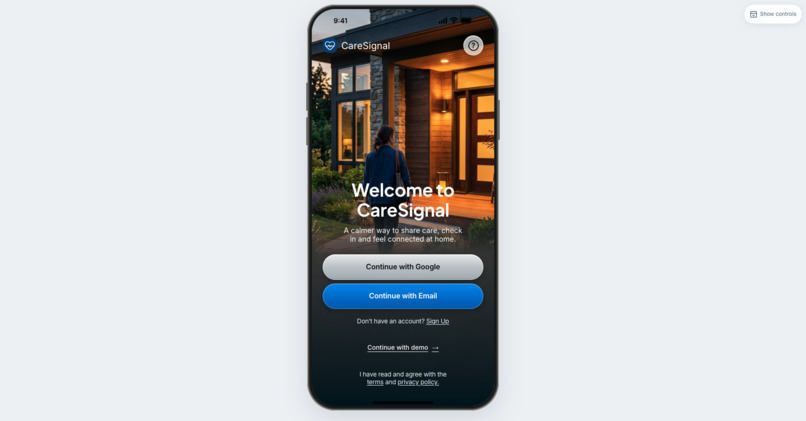
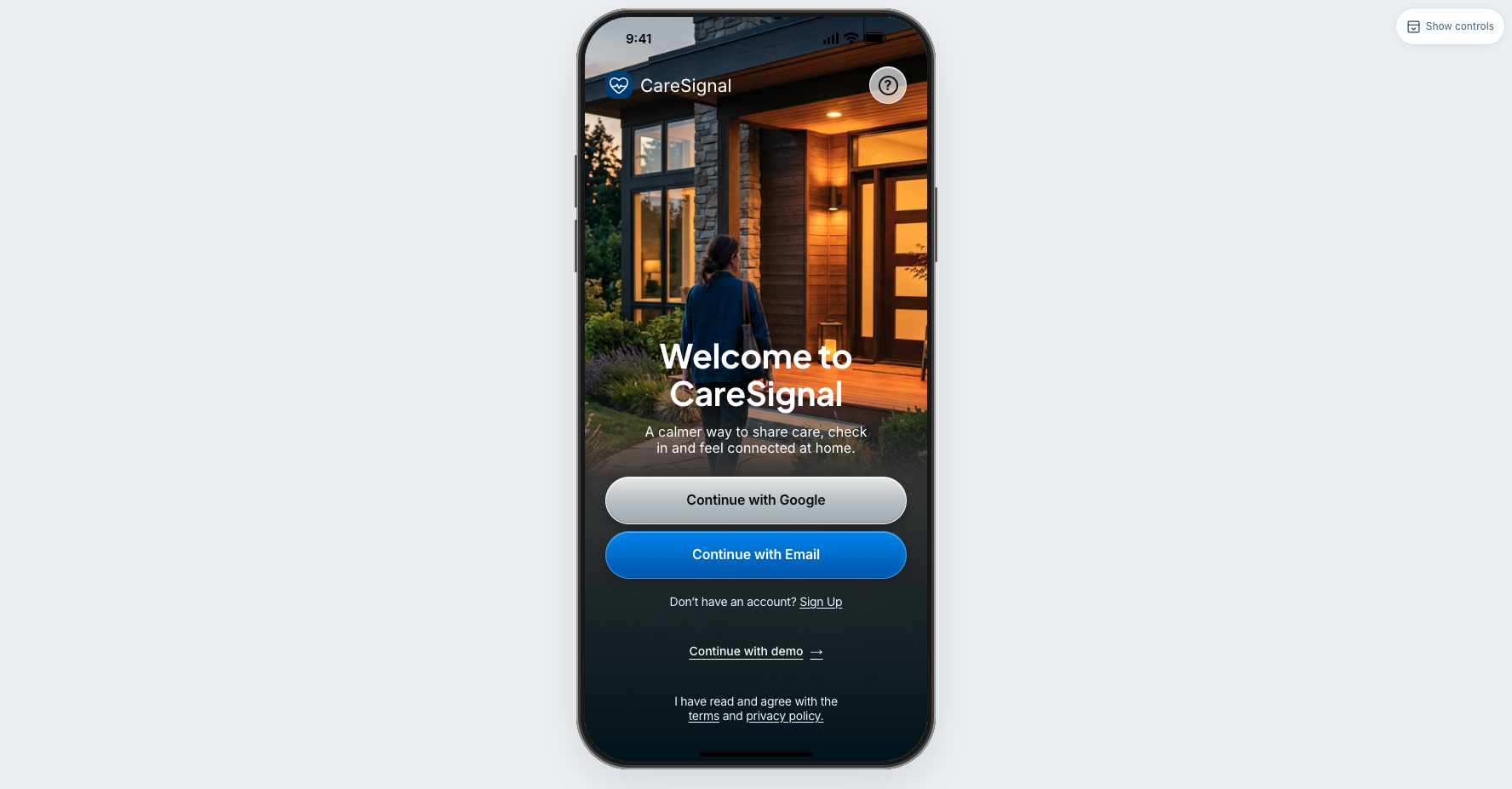
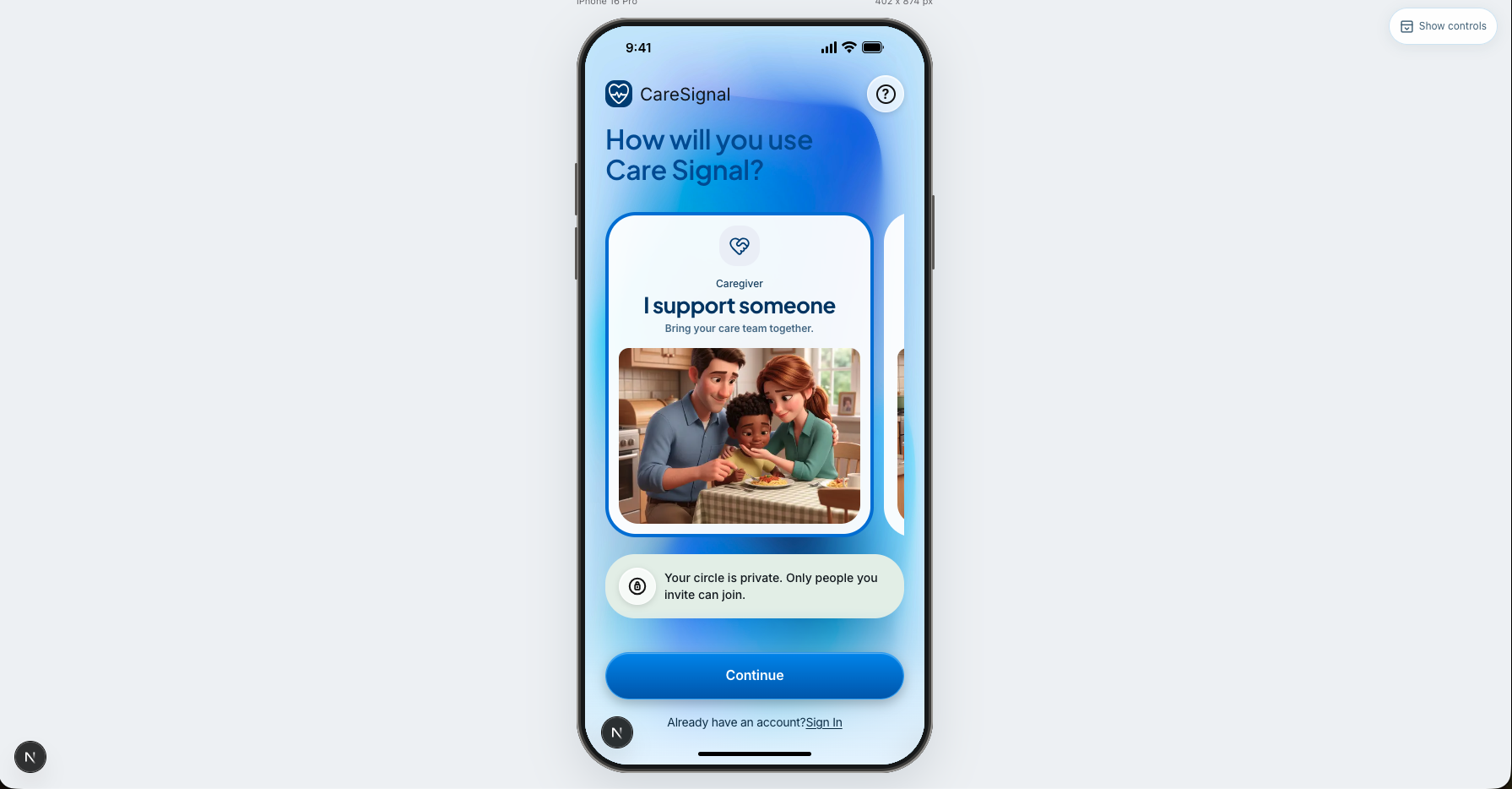
CareSignal SignUp/ SignIn screen
-
-
-
Inspiration
A doorbell or missed check-in can leave a family with the same unanswered question: who is following up? More notifications do not necessarily mean better care.
For families supporting older adults, adults with disabilities, people with mobility, sensory, or cognitive challenges, or anyone who benefits from additional assistance at home, knowing that someone will respond can make a meaningful difference.
We built CareSignal to explore a calmer alternative—clear next steps, shared responsibility, and a reassuring experience that helps people receive support while preserving their independence, dignity, and choice.
What it does
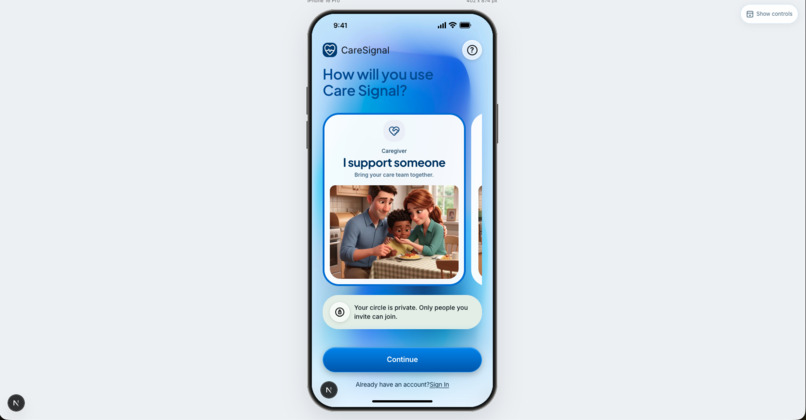
CareSignal brings complementary caregiver and care-receiver experiences into one responsive app, designed for families, professional caregivers, and adults who need occasional or ongoing support at home.
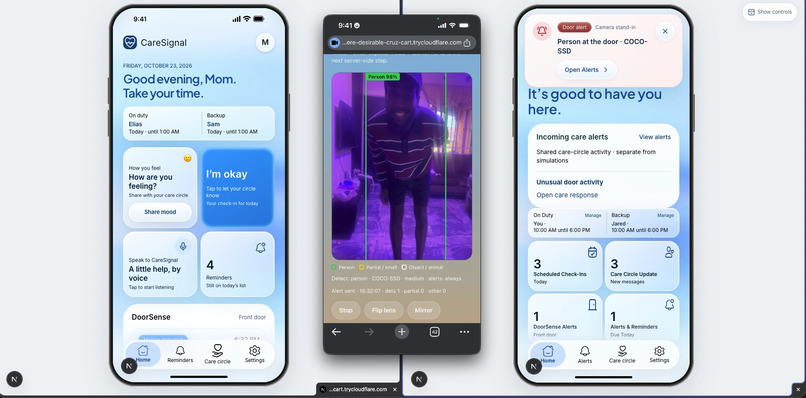
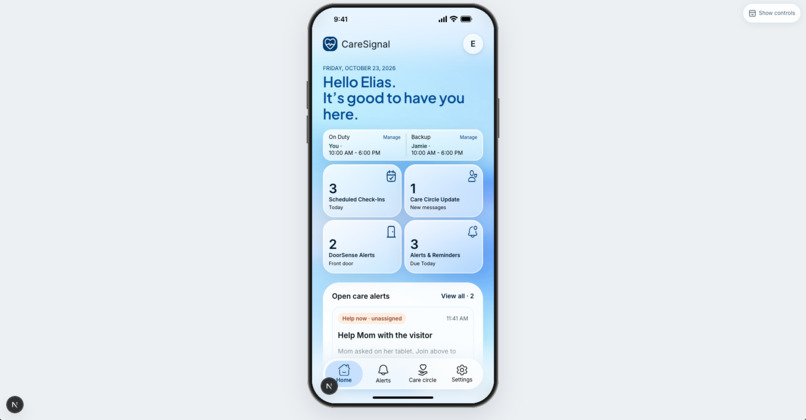
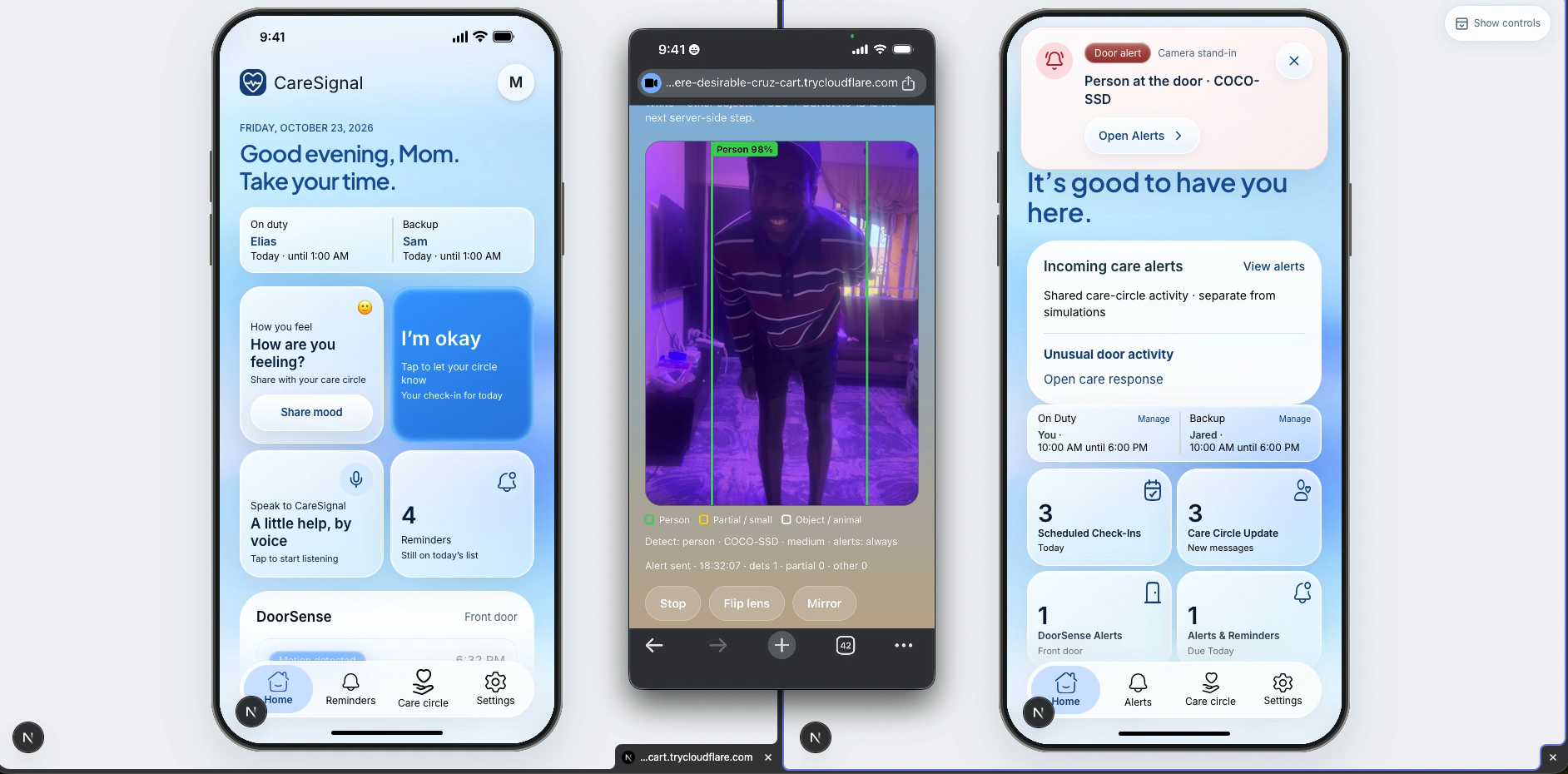
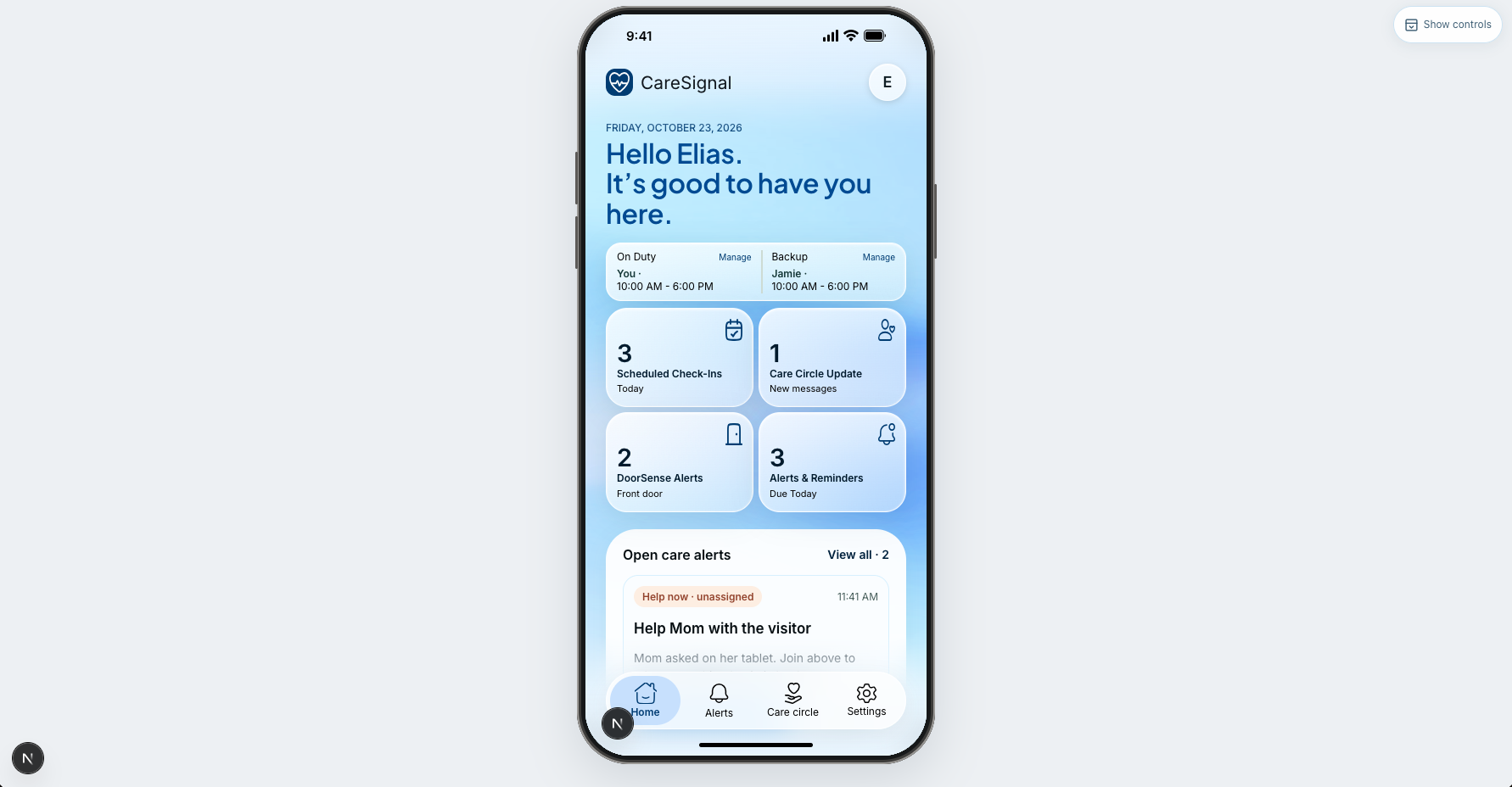
Caregivers can explore household activity, daily check-ins, care alerts, on-duty coverage, backup plans, and response playbooks. Families can coordinate responsibilities and follow up on events without relying on one person to be available at all times.
The receiver experience provides simple daily check-ins, mood sharing, and accessible DoorSense response choices. It is designed to help people with different abilities and support needs communicate how they are doing, respond to prompts, and request assistance in a way that works for them.
DoorSense explores how door activity can become an understandable prompt and a request for caregiver help, rather than just another camera notification. This can be particularly useful for people who may need assistance answering the door, communicating with visitors, or notifying a trusted caregiver that someone has arrived. DoorSense does not identify visitors or unlock doors.
CareSignal is intended to support different care arrangements, including family caregiving, professional home care, support for older adults living independently, and assistance for adults with disabilities. The goal is not to replace human care, but to make coordination, communication, and follow-up more reliable.
The prototype includes a Ring API integration path and a separately labelled phone-camera testing mode. A public demo lets reviewers explore the interface without private credentials.
How we built it
We used Next.js, React, TypeScript, and responsive CSS, with shared components for CareSignal’s blue-and-glass design system.
Ring requests run through server-side API routes, with a WebRTC/WHEP live-view implementation. Supabase provides account-authentication integration. GitHub hosts the public source, and Netlify builds and deploys the web app.
Desktop, native mobile, iPhone preview, and an Amazon Fire-style tablet preview support presentation across screen sizes. The tablet preview is a browser layout simulation, not a Fire OS emulator.
GitHub Copilot assisted implementation, debugging, and iteration.
Challenges we ran into
The biggest design challenge was balancing caregiver detail with receiver simplicity while preserving a consistent experience across phones, tablets, and desktop browsers.
We also considered the different ways people interact with technology. Someone with limited mobility, reduced vision, hearing loss, or cognitive difficulties may need clearer prompts, simpler choices, larger touch targets, and alternative ways to request help. The challenge is to make these interactions accessible without making the experience feel restrictive or overly clinical.
Technical challenges included camera permissions, OAuth redirects across hosted and local environments, and deploying Next.js correctly on Netlify. We also had to distinguish clearly between a phone-camera stand-in and actual Ring integration evidence.
Accomplishments that we're proud of
We brought caregiver coordination, receiver daily routines, DoorSense, onboarding, and the public website into a coherent responsive prototype.
The experience gives the receiver an active role while making caregiver ownership and backup coverage visible. We designed around the idea that receiving support should not mean losing independence: people should be able to communicate their needs, participate in daily routines, and request assistance in ways that suit them.
We also created a public repository, password-free demo, and actual mobile and desktop screenshots for reviewers.
What we learned
Detecting an event is only the beginning. Useful care coordination needs understandable next steps, consent, clear ownership, and honest connection feedback.
Care also looks different for different people. Effective support must account for individual abilities, preferences, routines, privacy, and the level of assistance someone wants. Technology should make it easier for people to receive help while preserving their agency and dignity.
We also learned to verify outcomes: a successful build is not necessarily a working website, an access token is not proof of live playback, and account sign-in is not household authorization.
What's next for CareSignal
Our next milestone is durable household infrastructure: individual memberships, consent-aware invitations, persistent care records, and reliable cross-device signaling.
We also plan to validate Ring events and live playback with a real device, improve notification delivery, and test accessibility with people receiving care, adults with disabilities, older adults, family caregivers, and professional care teams.
Future work will explore more flexible accessibility settings, personalized check-in routines, clearer assistance requests, and configurable escalation preferences that reflect each person's circumstances rather than assuming everyone needs the same type of care.
CareSignal is a prototype—not an emergency-response service or medical device. It is designed to support care coordination and communication, not replace professional care, emergency services, or individual care plans.
Built With
- cloudflare
- css
- github
- netlify
- nextjs
- node.js
- react
- ringapi
- supabase
- tailwindcss
- typescript
- webrtc
- webspeechapi

Log in or sign up for Devpost to join the conversation.