Inspiration
Many older people live alone while their families live far away. Most monitoring tools either stay silent until something has already gone wrong, or send so many alerts that families stop listening. We wanted something gentler: software that learns what a normal day looks like, notices meaningful changes, and brings people in, instead of raising alarms
What it does
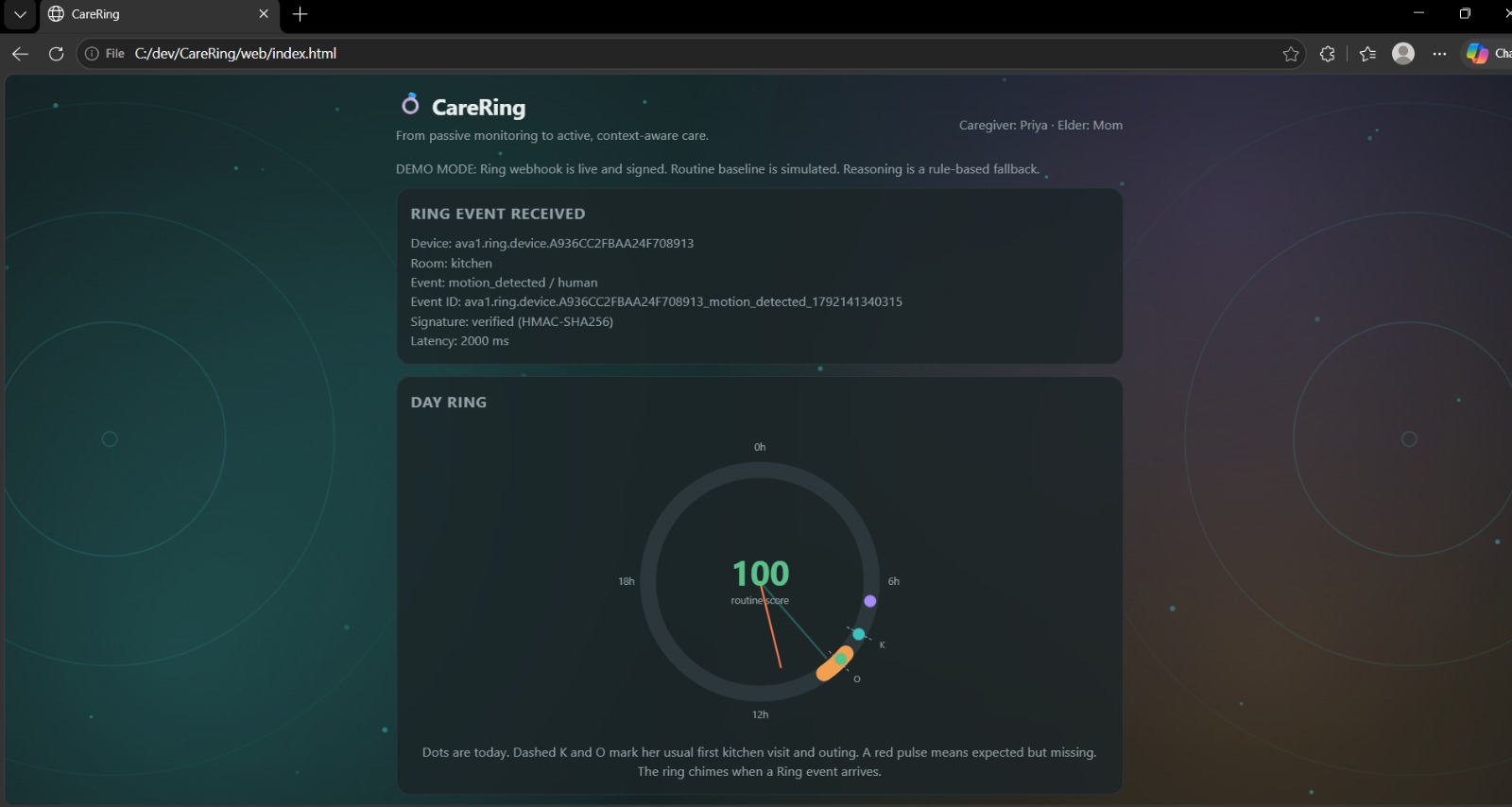
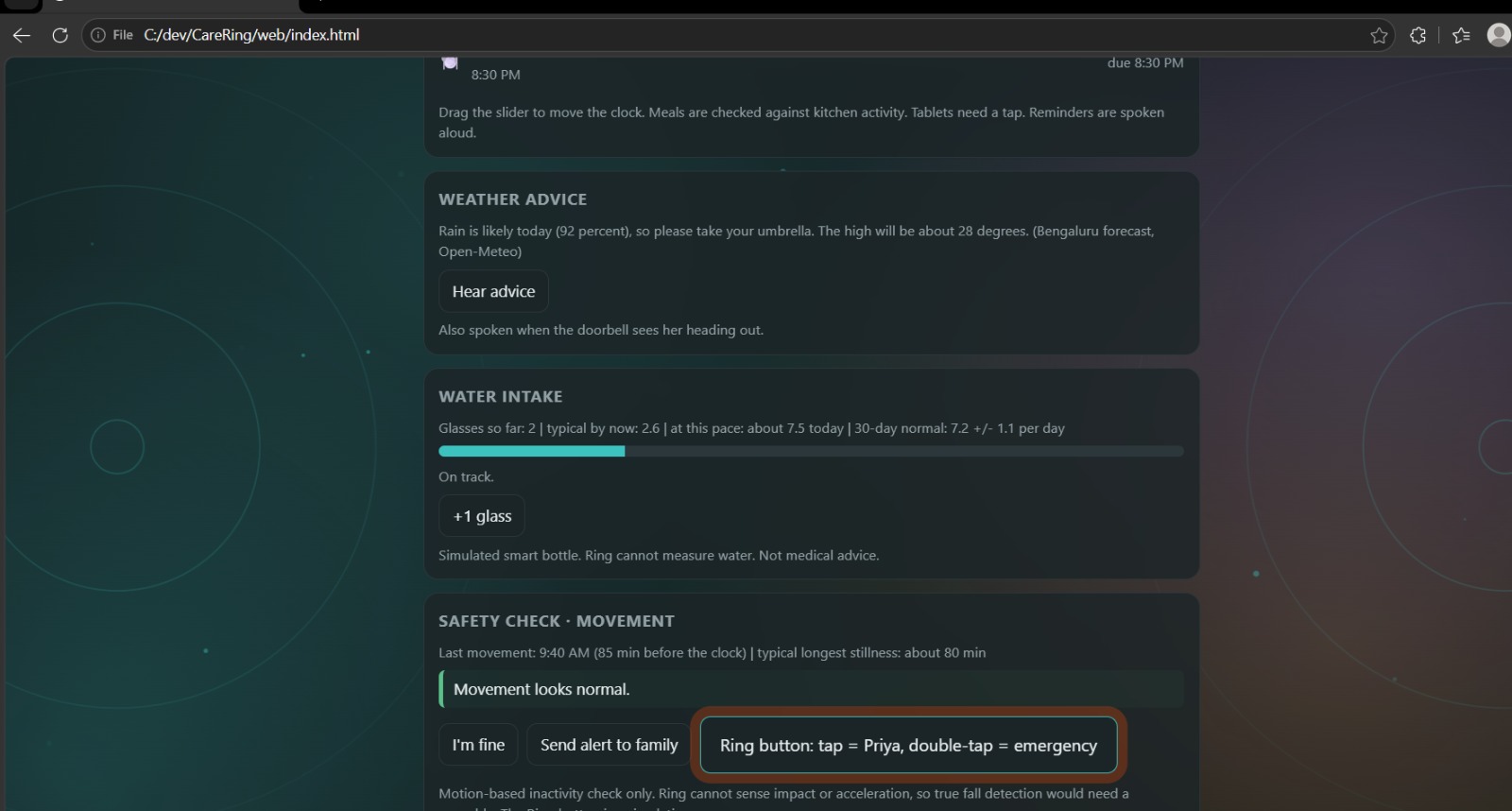
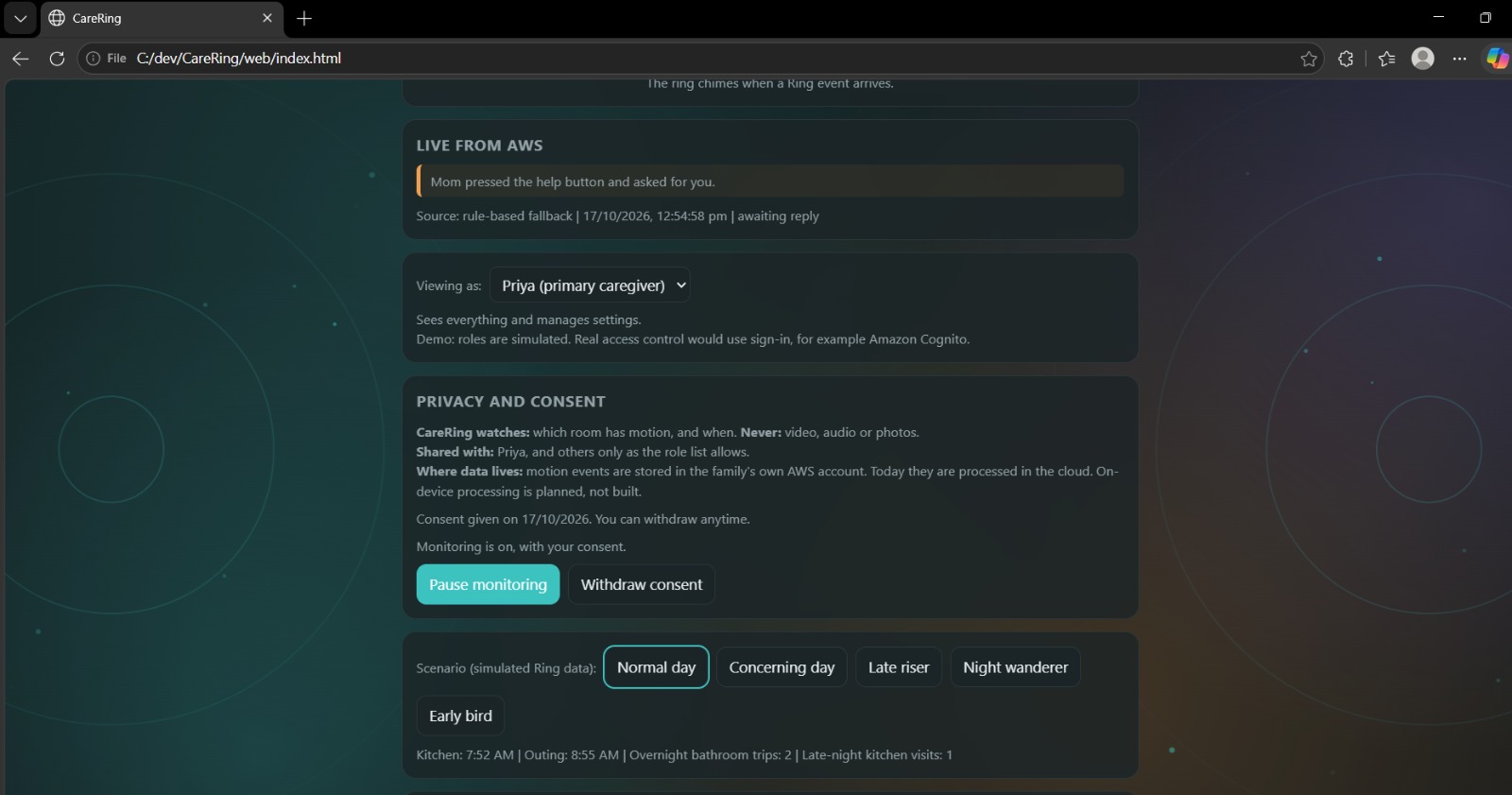
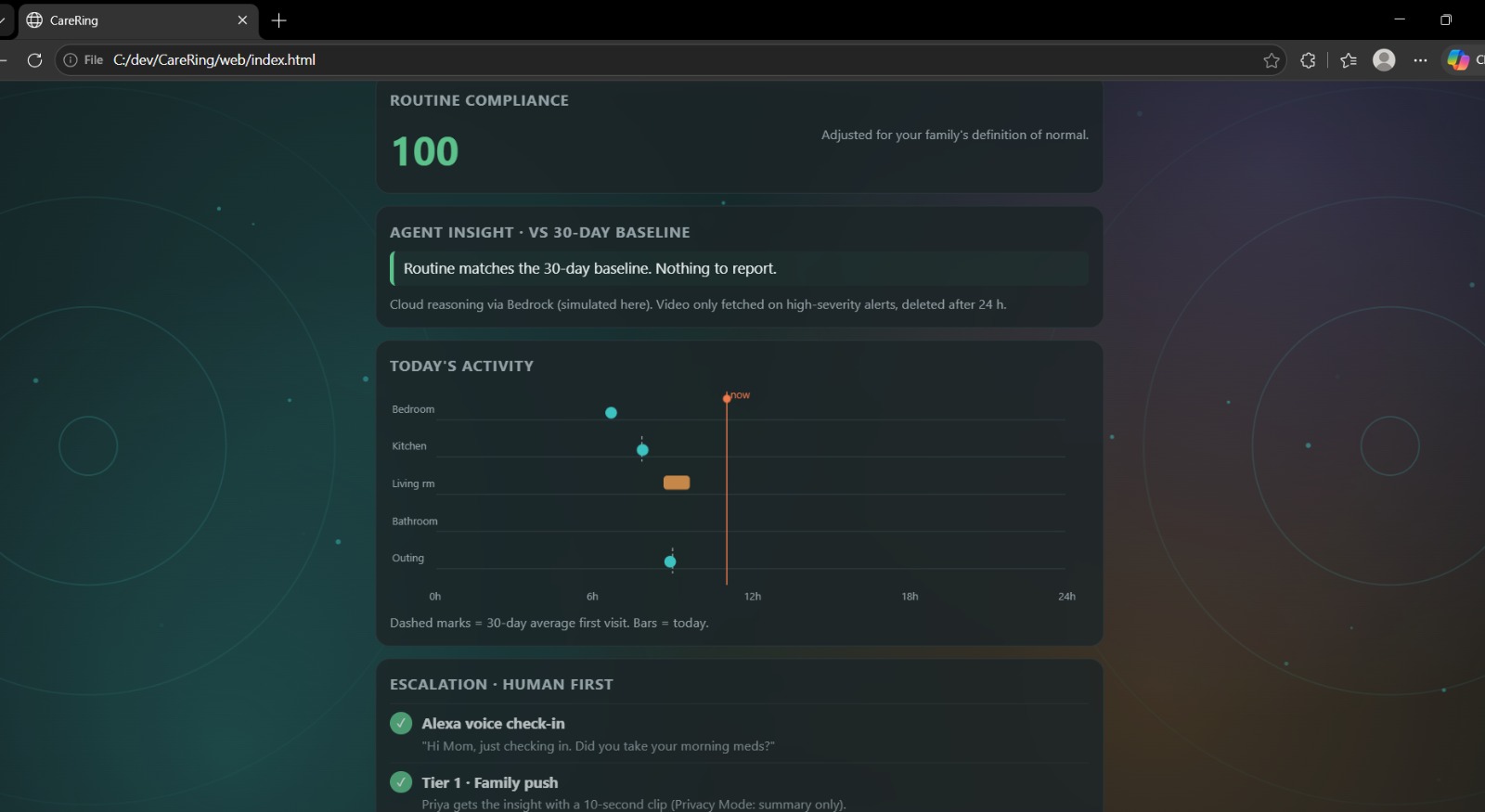
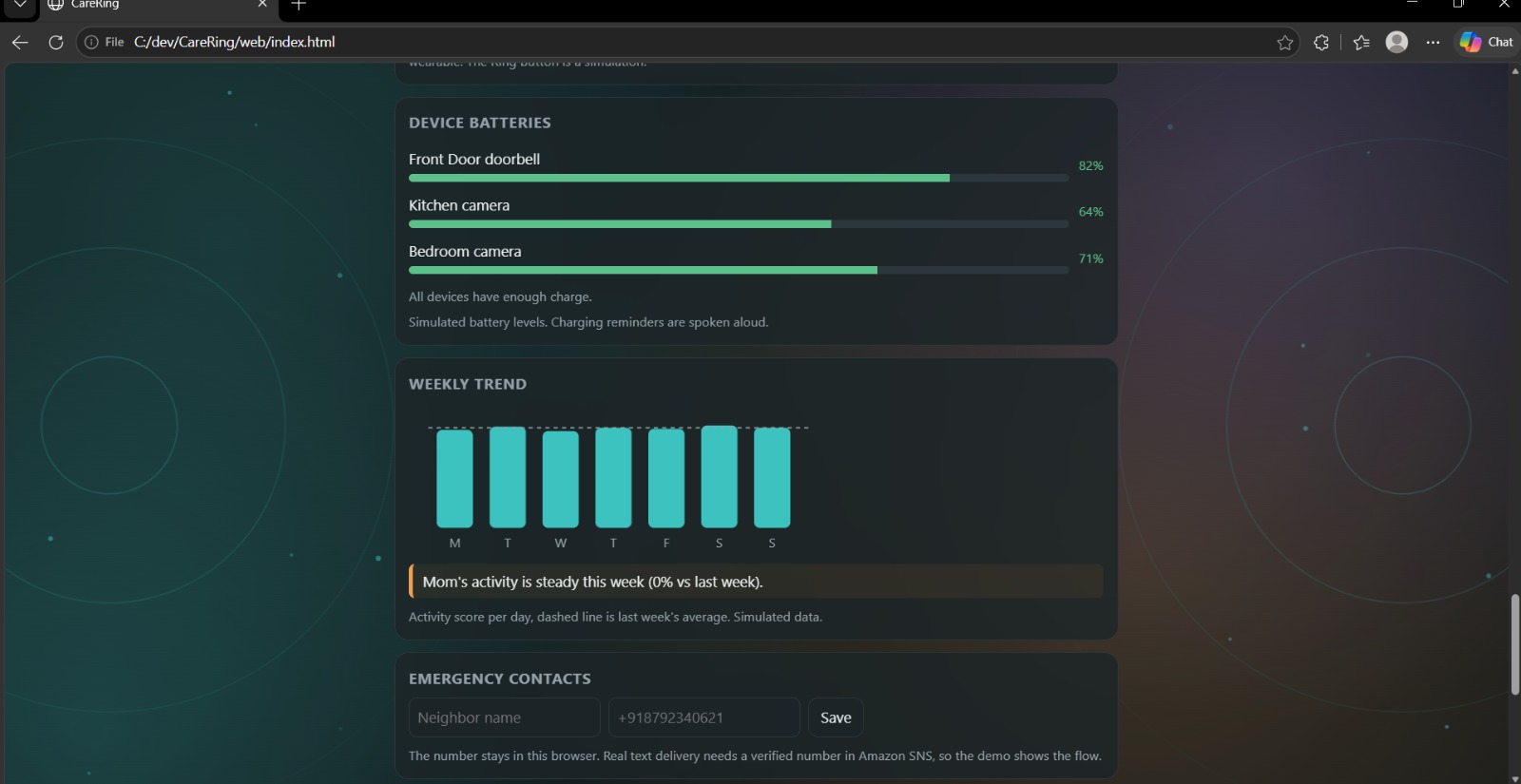
CareRing turns motion events from Ring cameras and doorbells into plain-language care. • Ring webhook receiver. It accepts Ring Partner API v1.1 motion webhooks, verifies the HMAC-SHA256 signature, ignores duplicate events, and maps each Ring device to a room. • Routine baseline. It compares today with a 30-day baseline, for example the first kitchen visit, outings and overnight bathroom trips. • Explainable alerts. Each alert says what changed, how it differs from her routine, why it matters, a suggested action and a confidence level. It never states a diagnosis. • Human-first escalation. AWS Step Functions escalates from a voice check-in to the family, then a neighbor or community worker, then a coordinator. One acknowledgement stops the chain. • Family-defined normal. A cultural routine engine handles Ramadan, Diwali and temple routines, so the system does not raise false alarms. • Everyday care. Medicine and meal reminders, weather and umbrella advice, water intake, battery reminders and a weekly trend report. • Privacy and consent first. Mom agrees before monitoring starts, sees what is watched, and can pause it with one tap. CareRing uses motion metadata only, never video, audio or photos. • Roles. Caregiver, sibling, neighbor and doctor views show different information.
How we built it
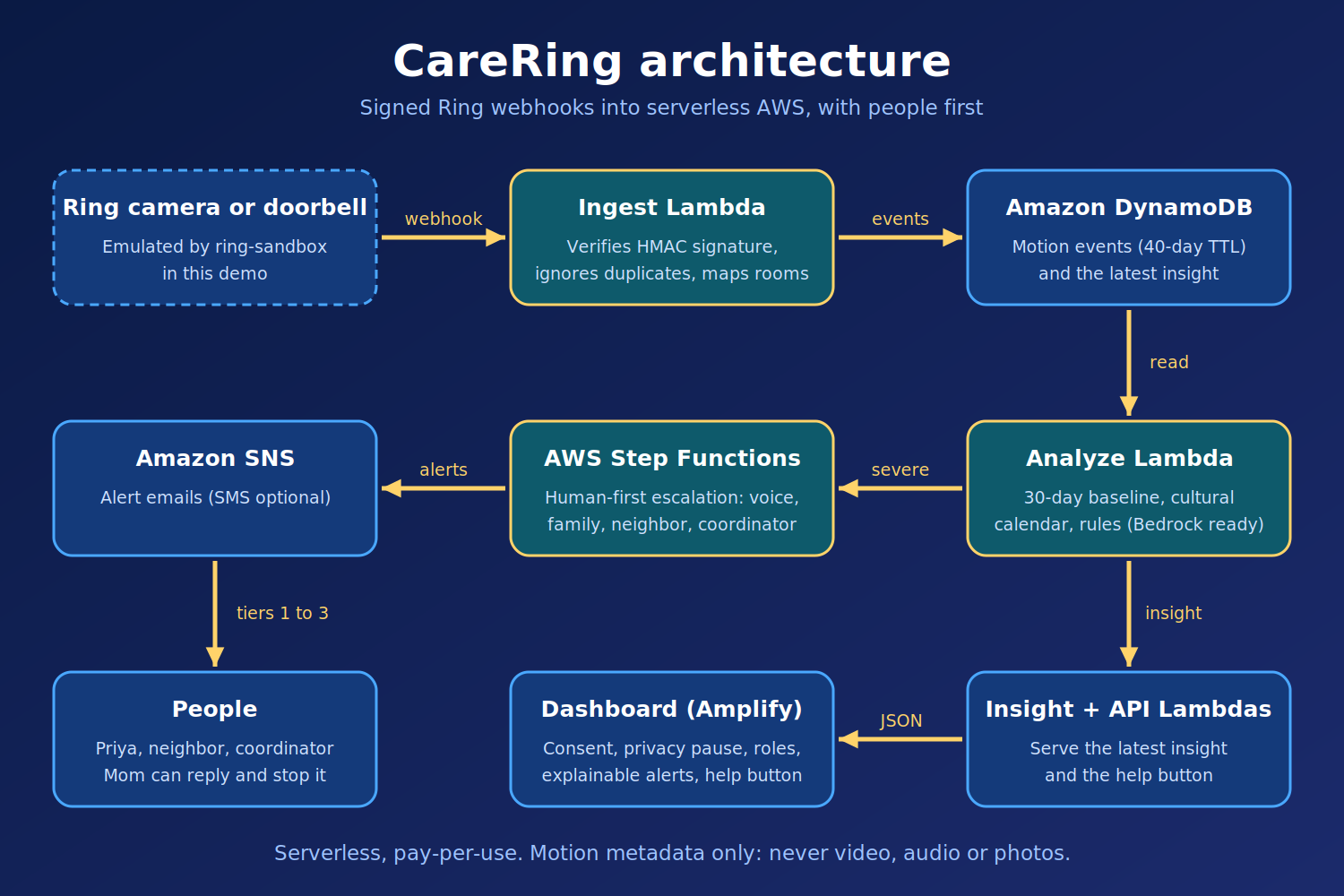
The backend is serverless on AWS and defined with AWS SAM. An Ingest Lambda receives the Ring webhook and writes events to DynamoDB. An Analyze Lambda builds the baseline and writes the insight. A Step Functions state machine runs the tiered escalation and sends alerts through Amazon SNS. Insight and Api Lambdas serve the dashboard, which is a single page of HTML and JavaScript hosted on AWS Amplify.
Challenges we ran into
• Ring testing is limited to US devices, so we built and tested against an emulator. • Amazon Bedrock returned "Operation not allowed" on our new account, so we built a rule-based fallback and kept the Bedrock path in the code. • The promotional AWS credits ran out before we could claim them, so we kept everything pay-per-use. • Webhook field names differed between the documentation and the emulator, so the parser accepts both.
Accomplishments that we're proud of
• A signed Ring webhook flows end to end into a live dashboard on AWS. • Escalation that puts people first and stops as soon as someone replies. • A privacy and consent design that keeps Mom in control, so it does not feel like surveillance.
What we learned
Good care software is mostly about restraint: fewer, clearer alerts, explained in plain language, with the older person's consent at the centre.
What's next for CareRing
Test against a real Ring device or Ring's own sandbox. • Turn on Amazon Bedrock reasoning once account access is sorted out. • Process data on the device, and add sign-in with per-family access control, for example Amazon Cognito. • Build a real Alexa skill for voice check-ins. • Publish through the Ring Appstore.
Built With
- amazon-dynamodb
- amazon-sns
- aws-amplify
- aws-lambda
- aws-sam
- aws-step-functions
- javascript
- python
- ring-partner-api
- ring-sandbox

Log in or sign up for Devpost to join the conversation.