-
-
-
-
-
-
-
-
-
-
-
-
-
-
-
-

QR Code to Presentation

Inspiration
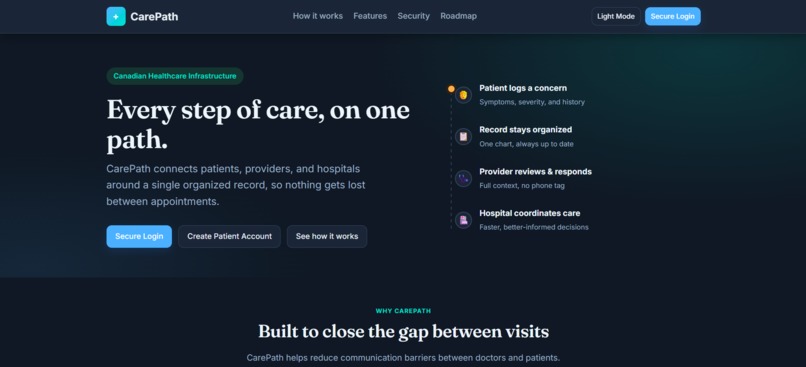
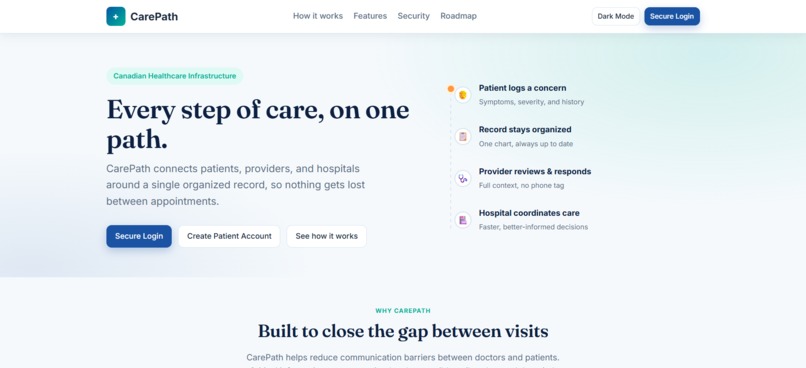
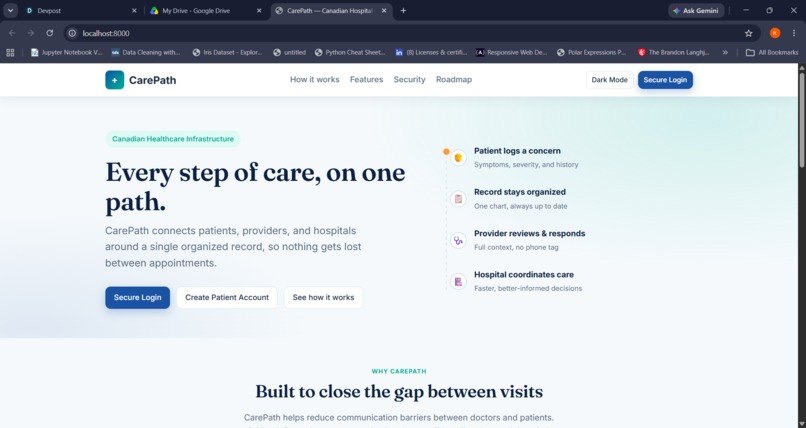
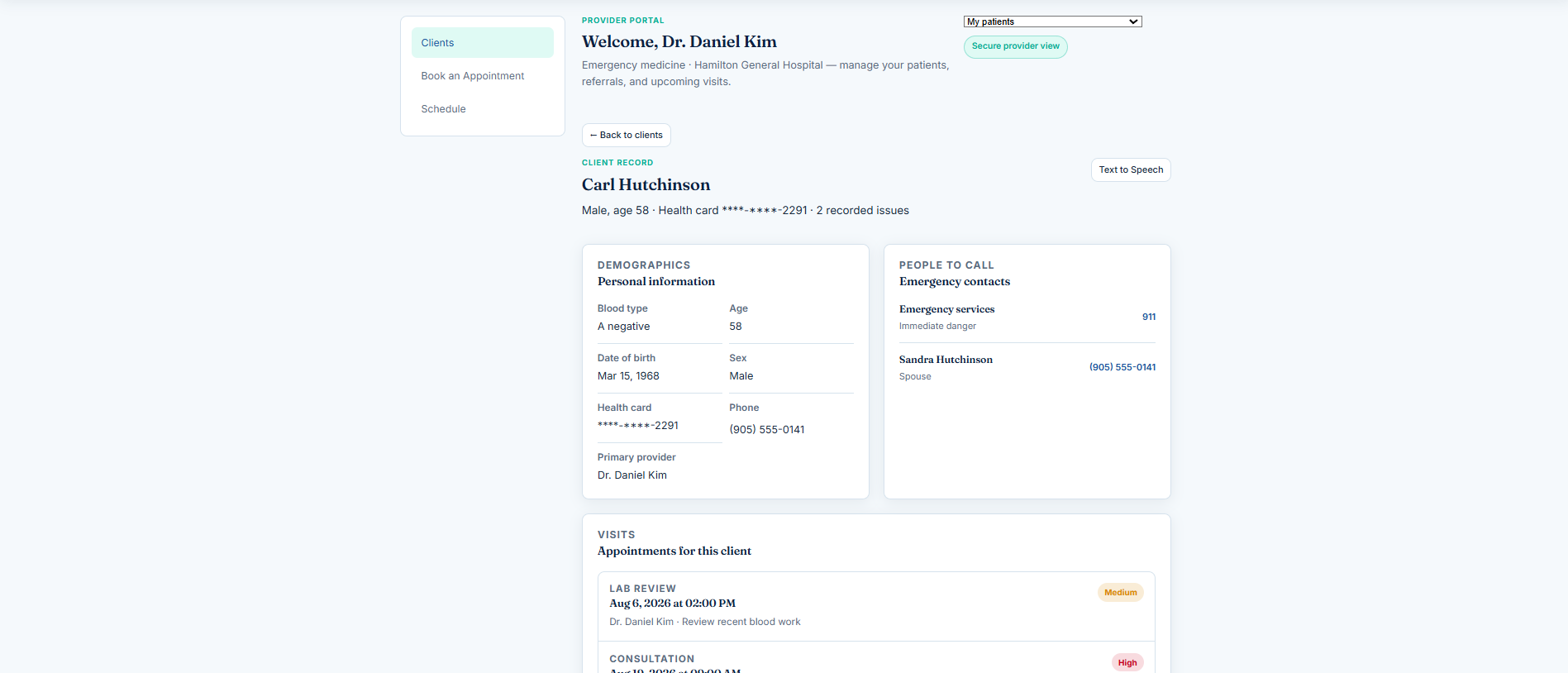
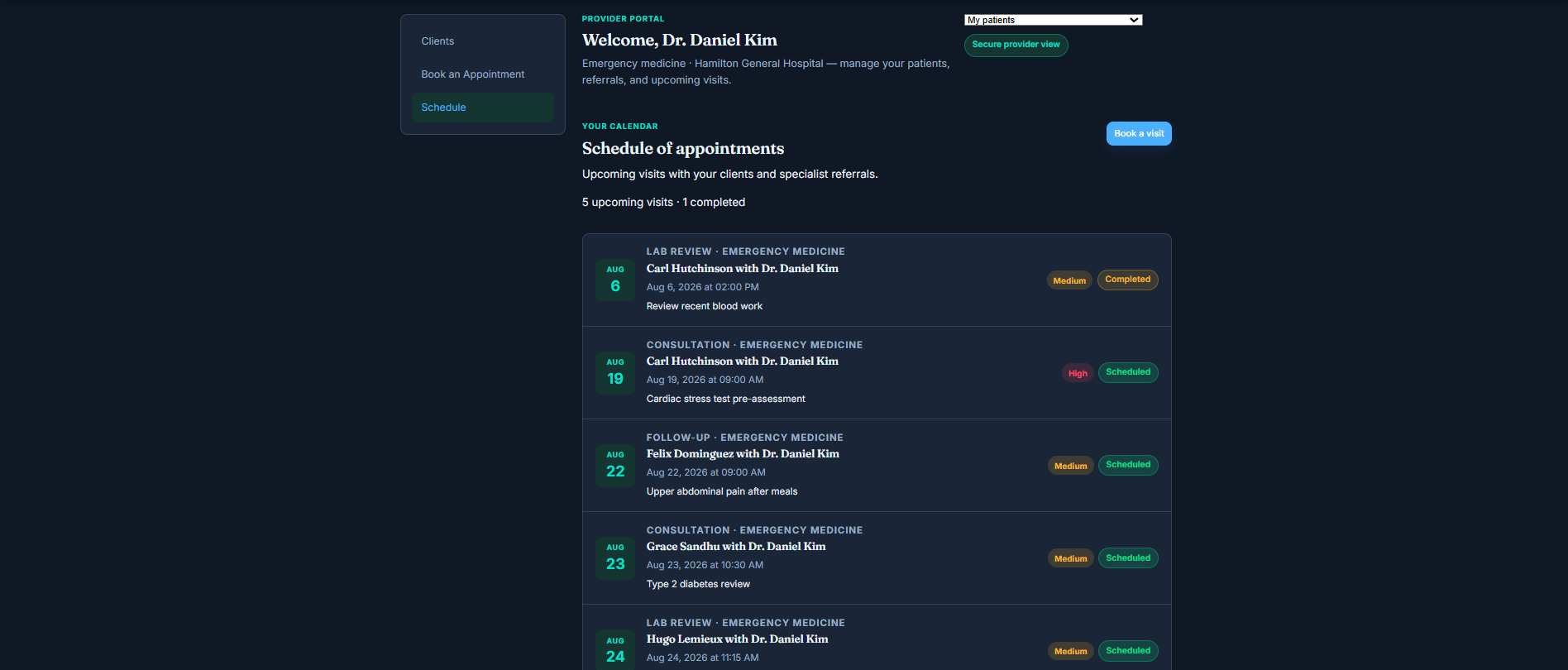
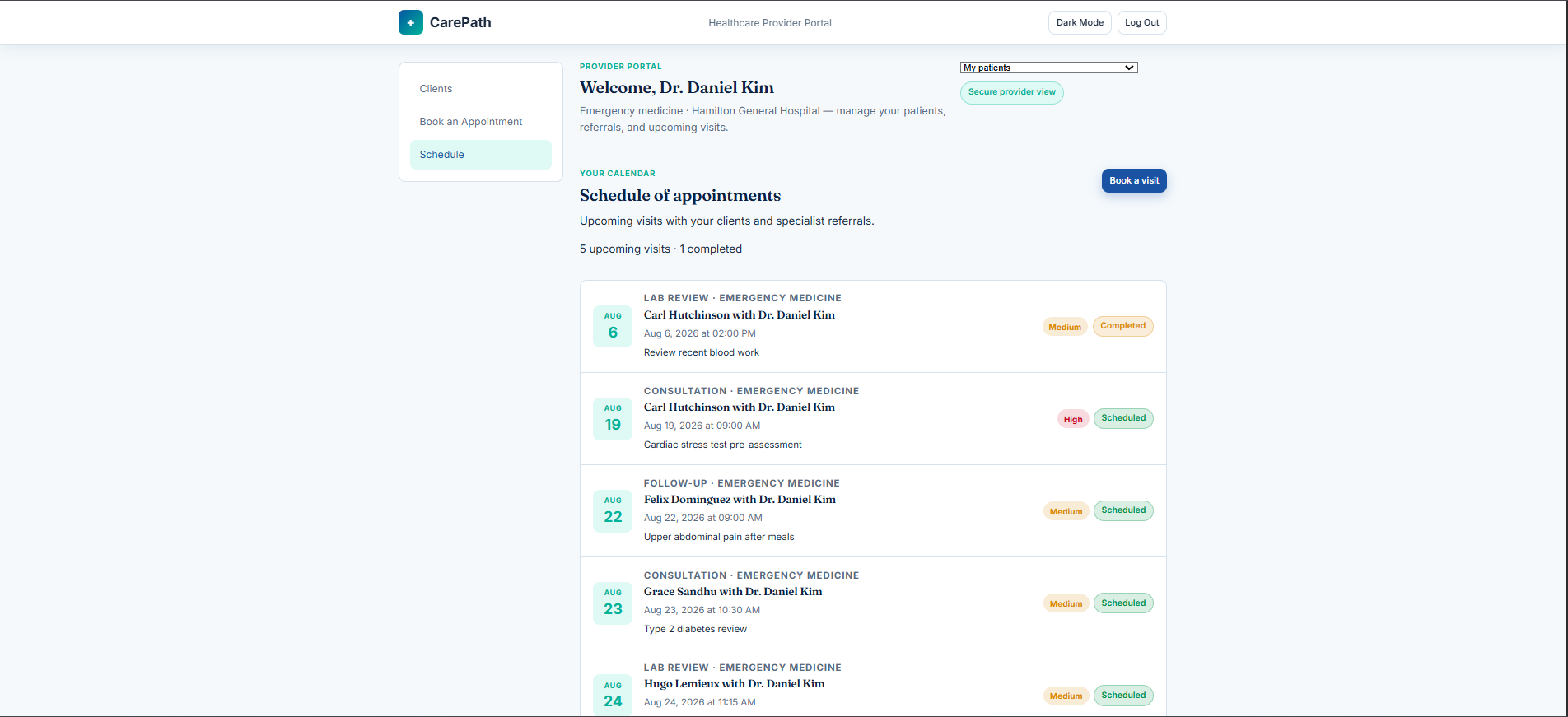
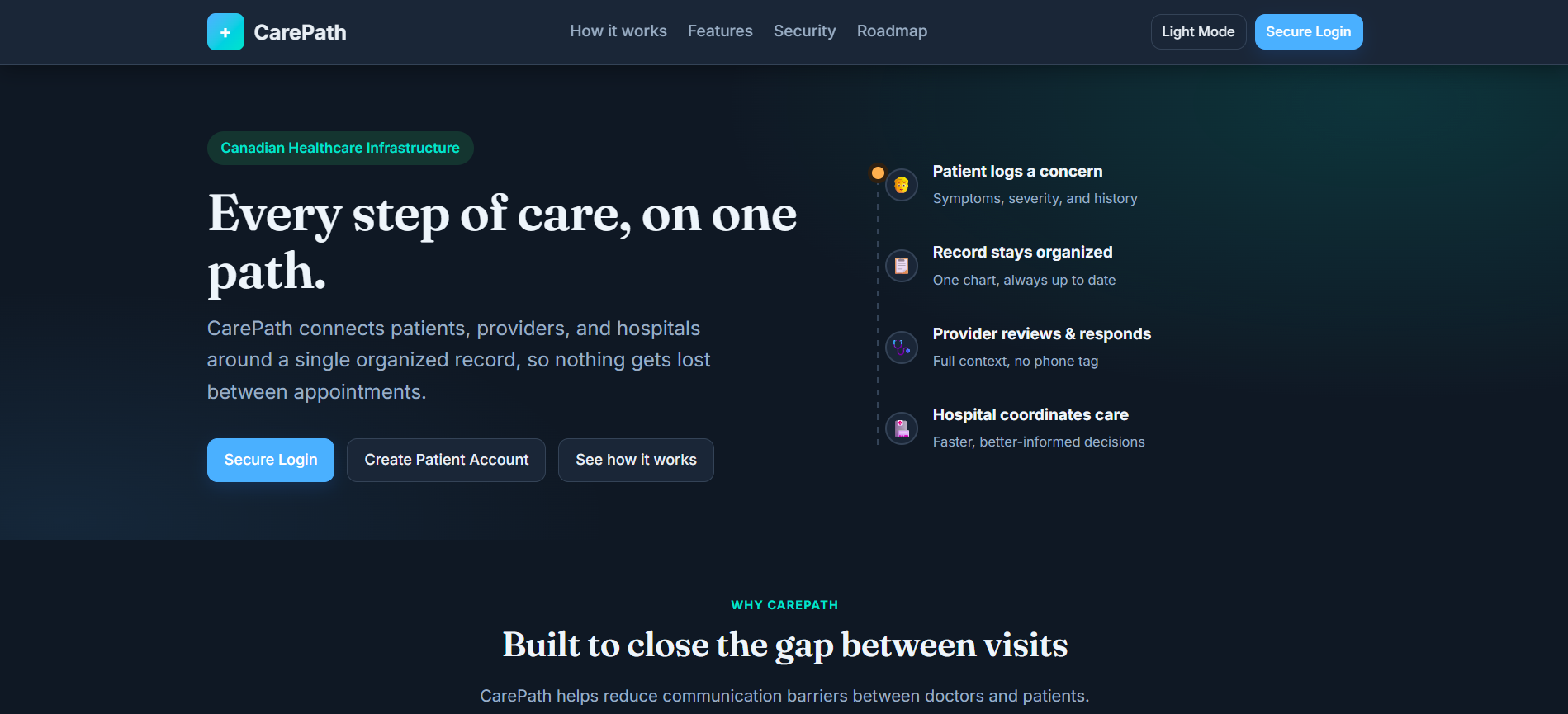
Canadian emergency departments face persistent delays caused by fragmented administrative tools and scattered patient records. CarePath was inspired by the need to eliminate these operational bottlenecks, giving healthcare staff a unified platform to manage resources efficiently and reduce emergency room wait times.
What it does
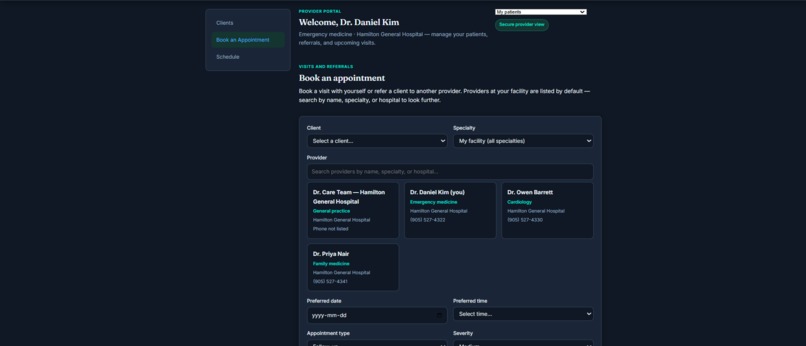
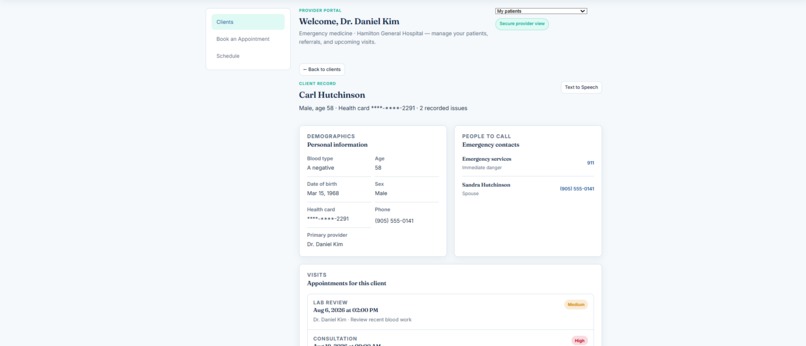
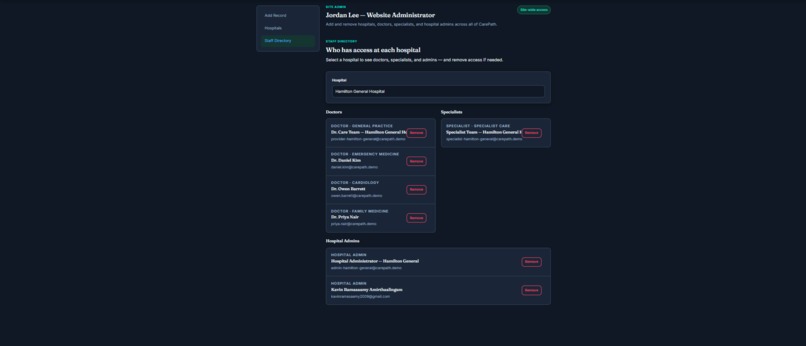
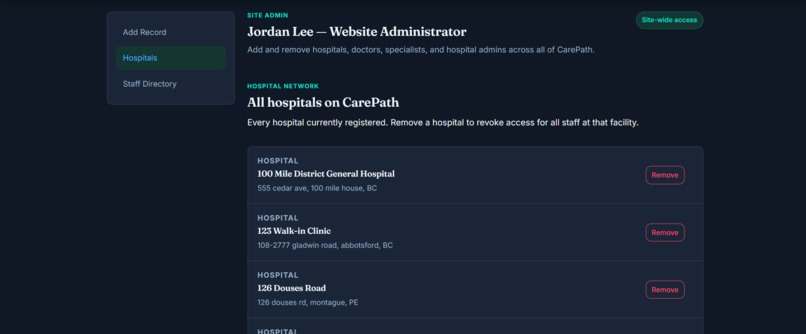
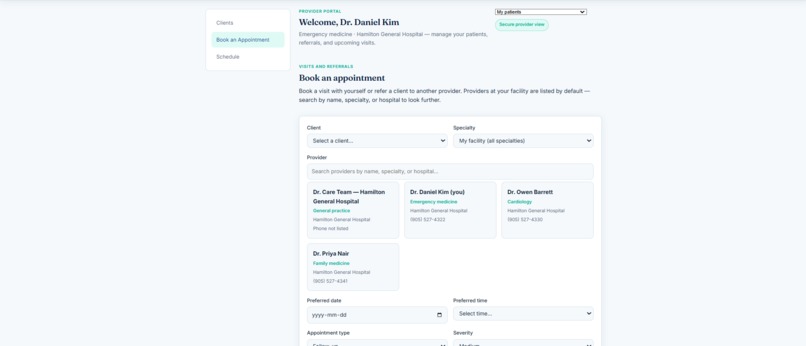
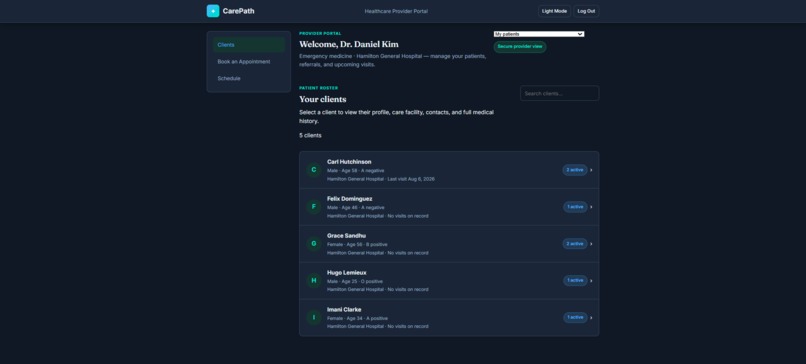
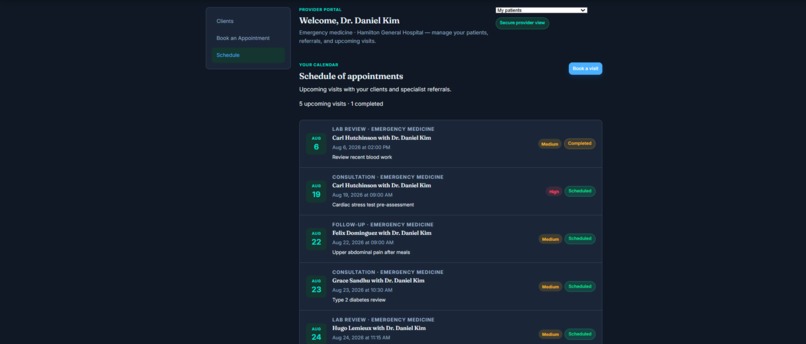
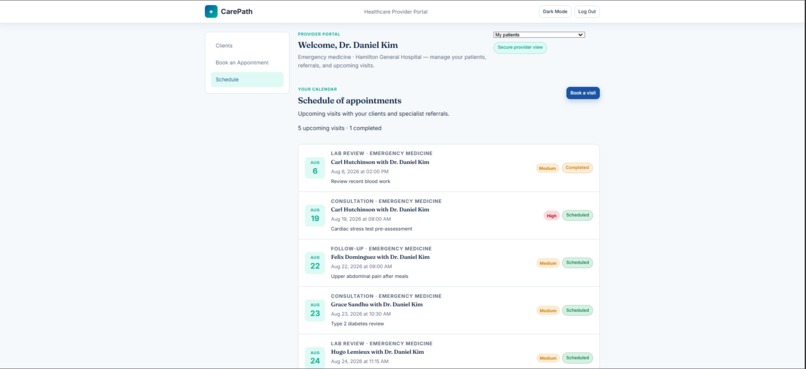
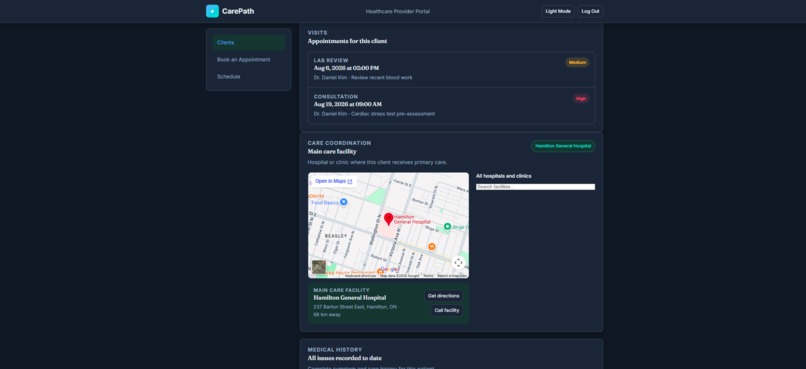
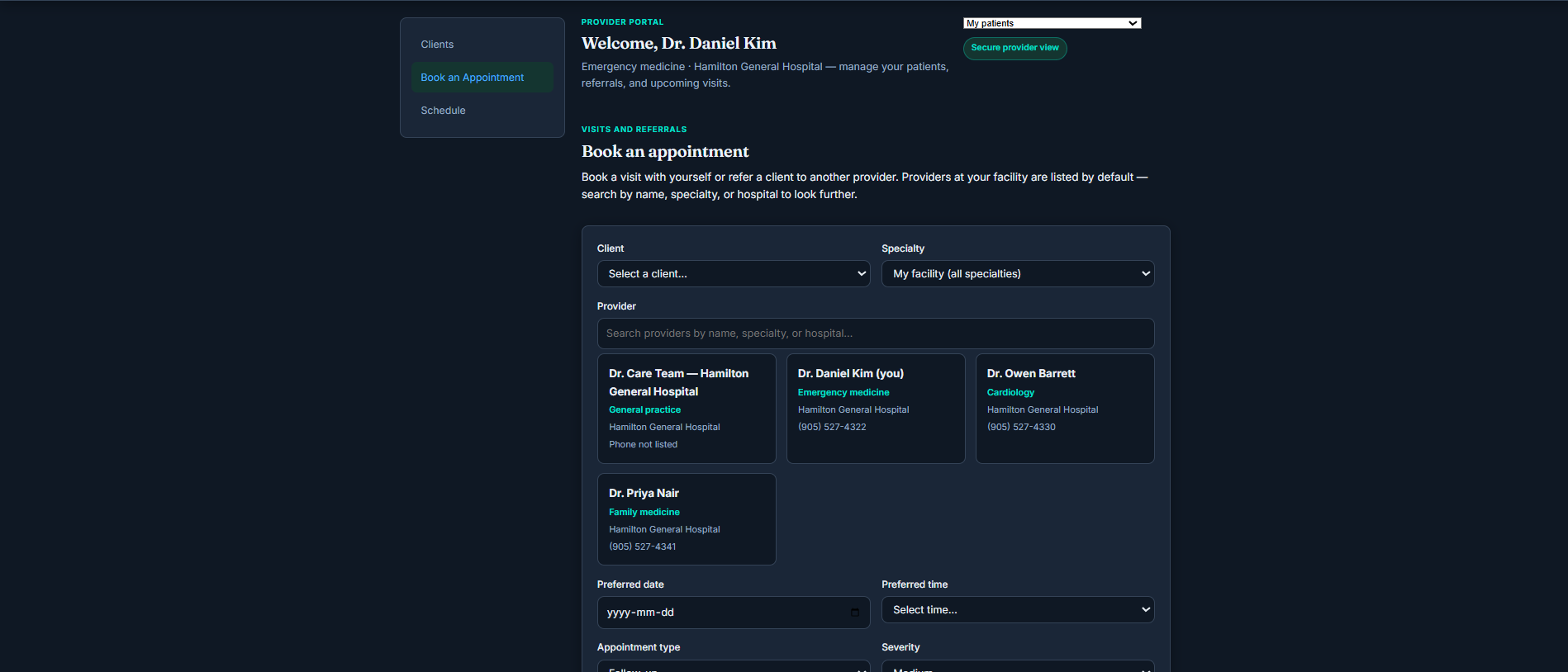
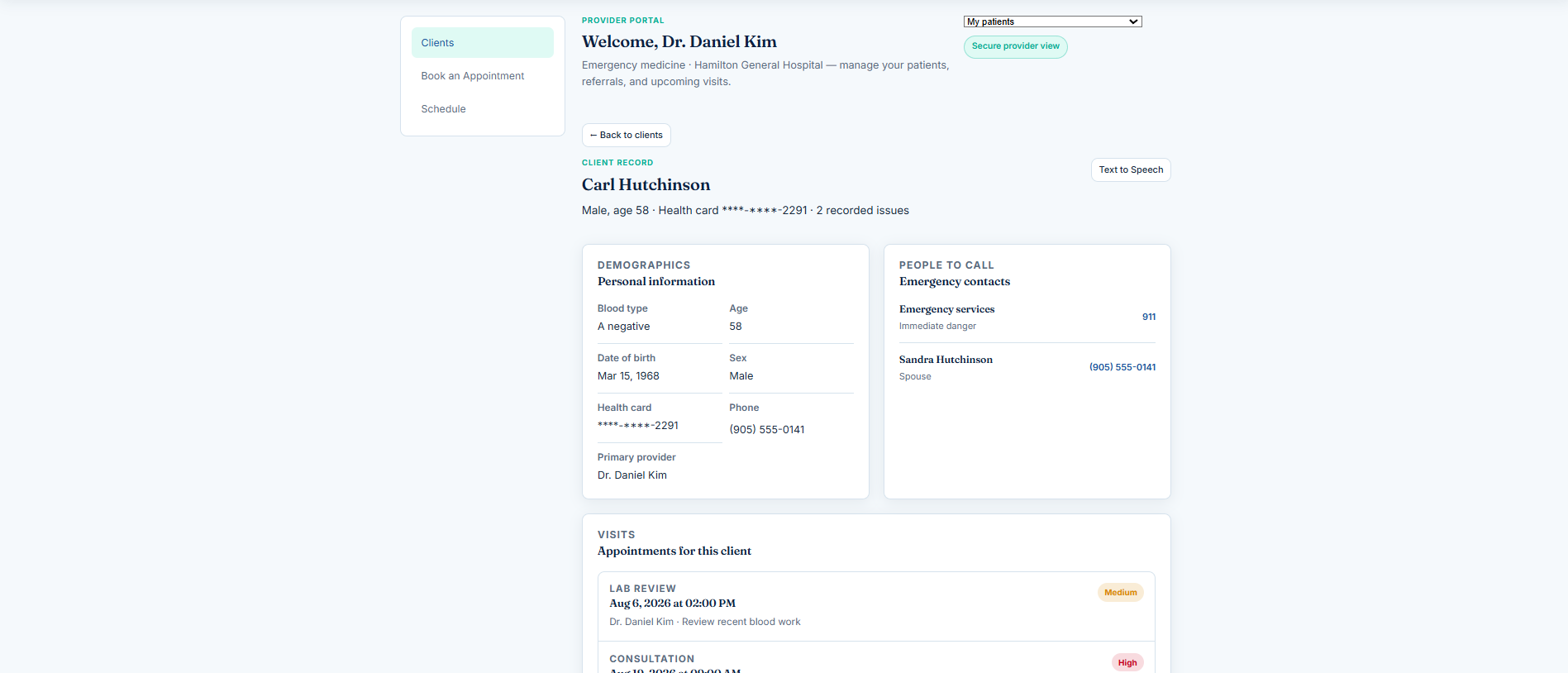
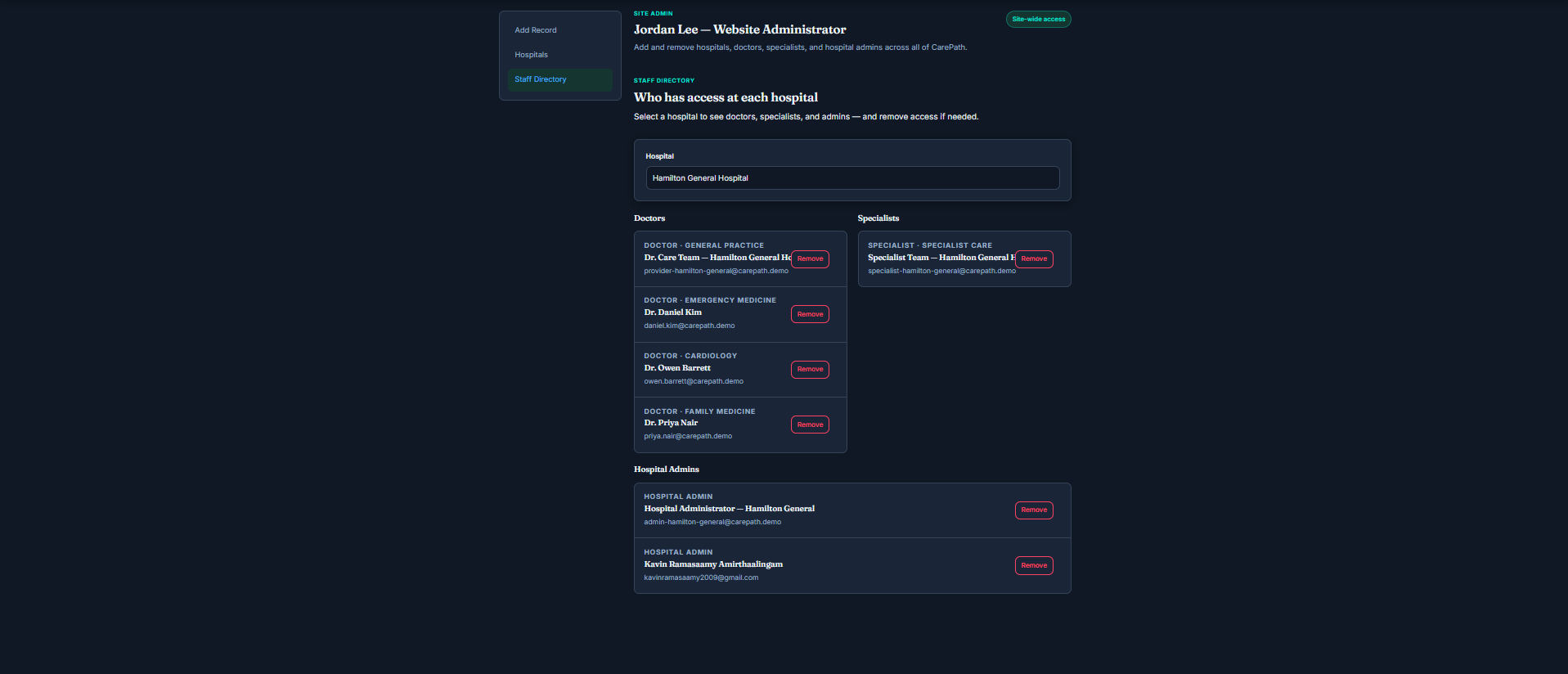
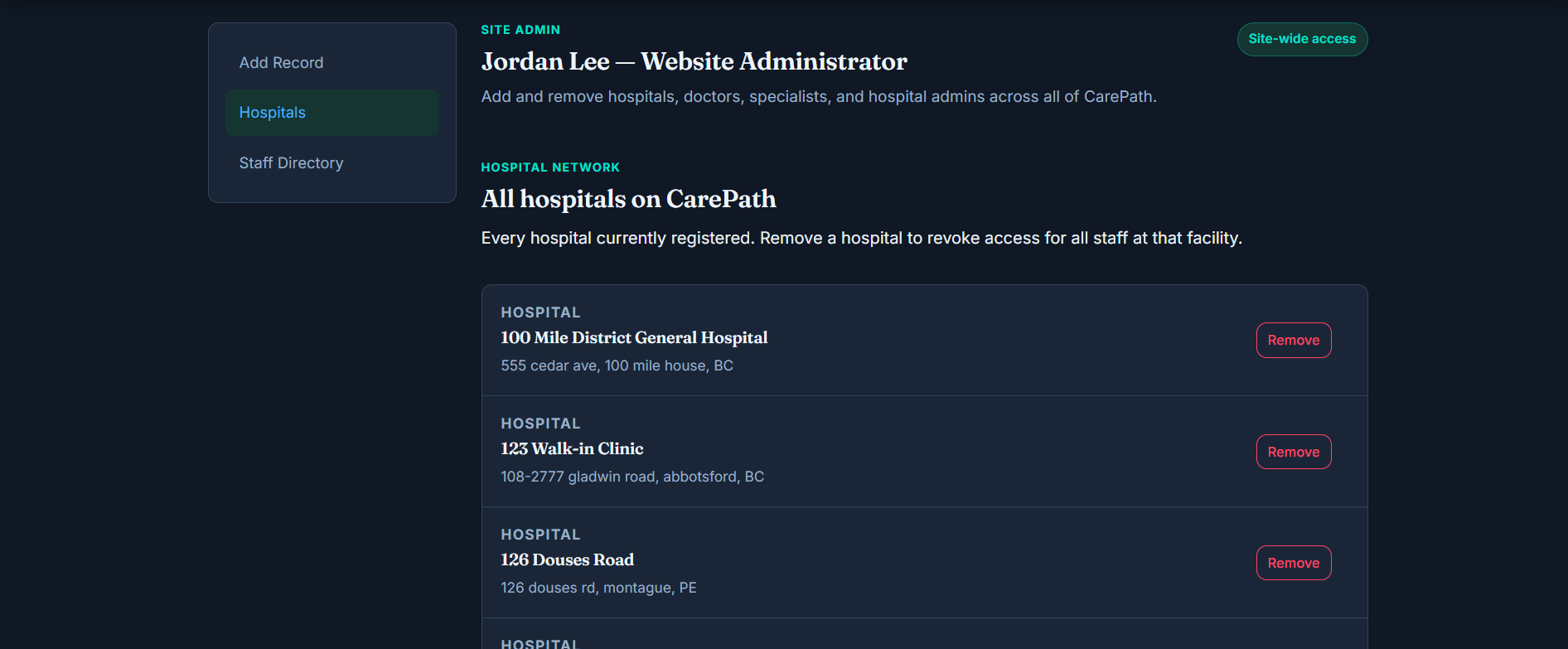
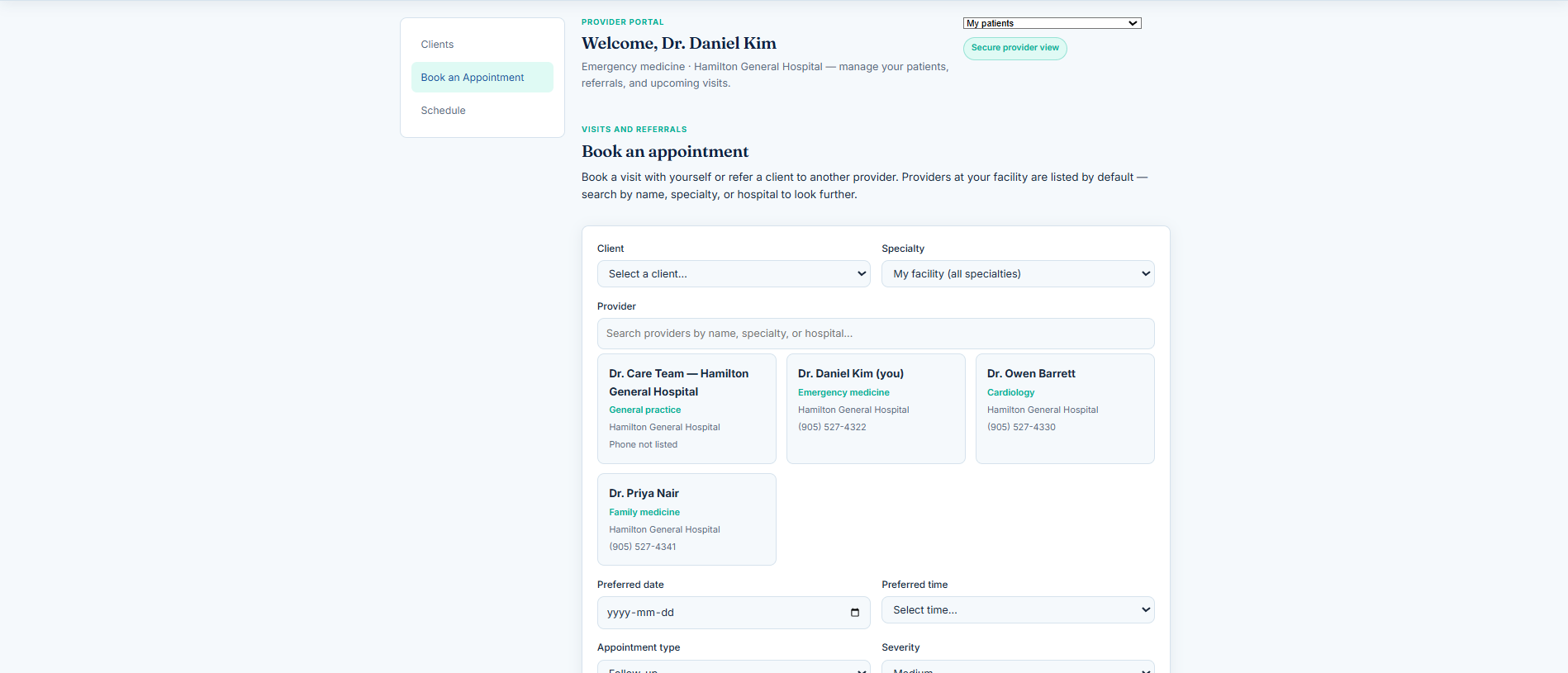
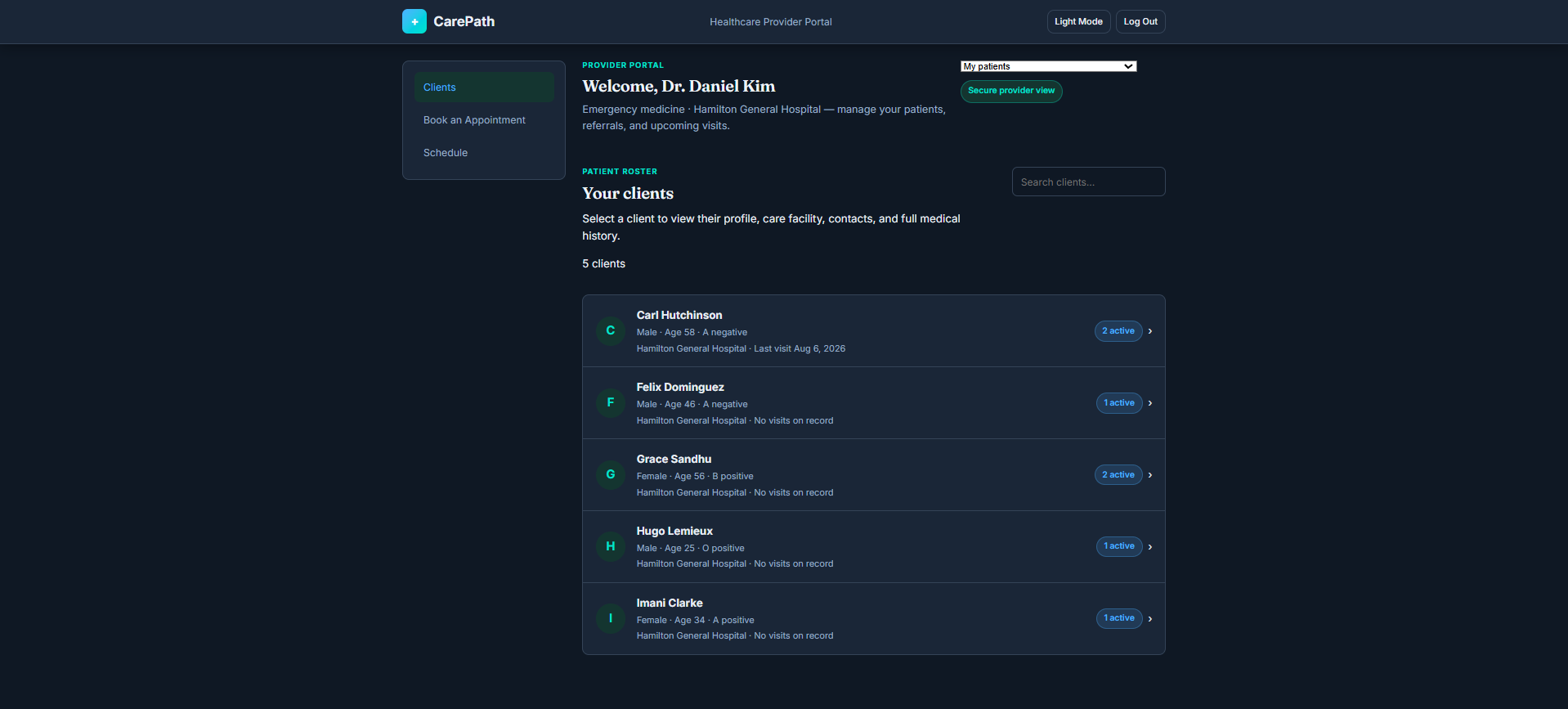
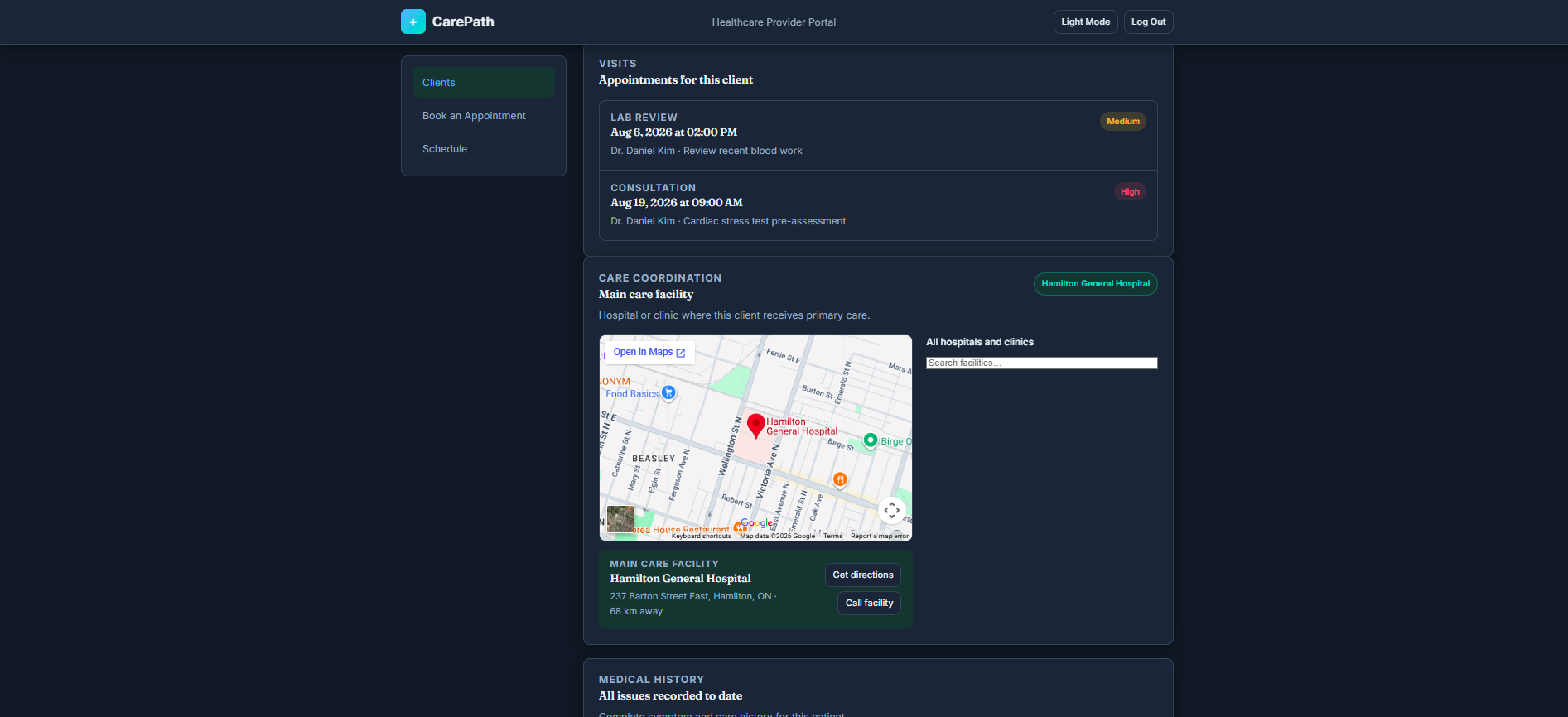
CarePath serves as a centralized operational hub for hospital workflows. It consolidates patient intake tracking, bed availability, and staff shifts into a single interface.
How we built it
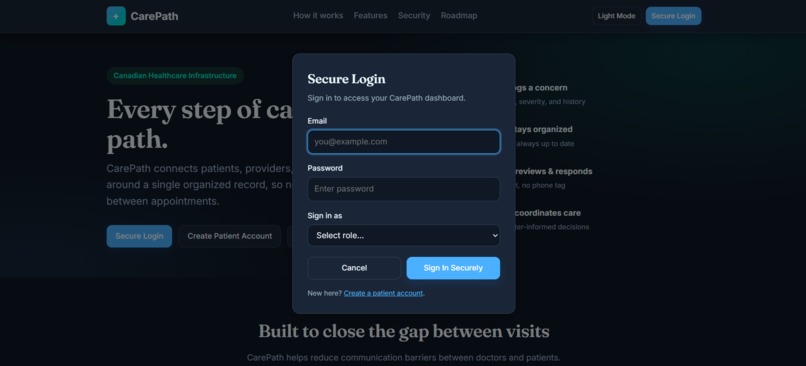
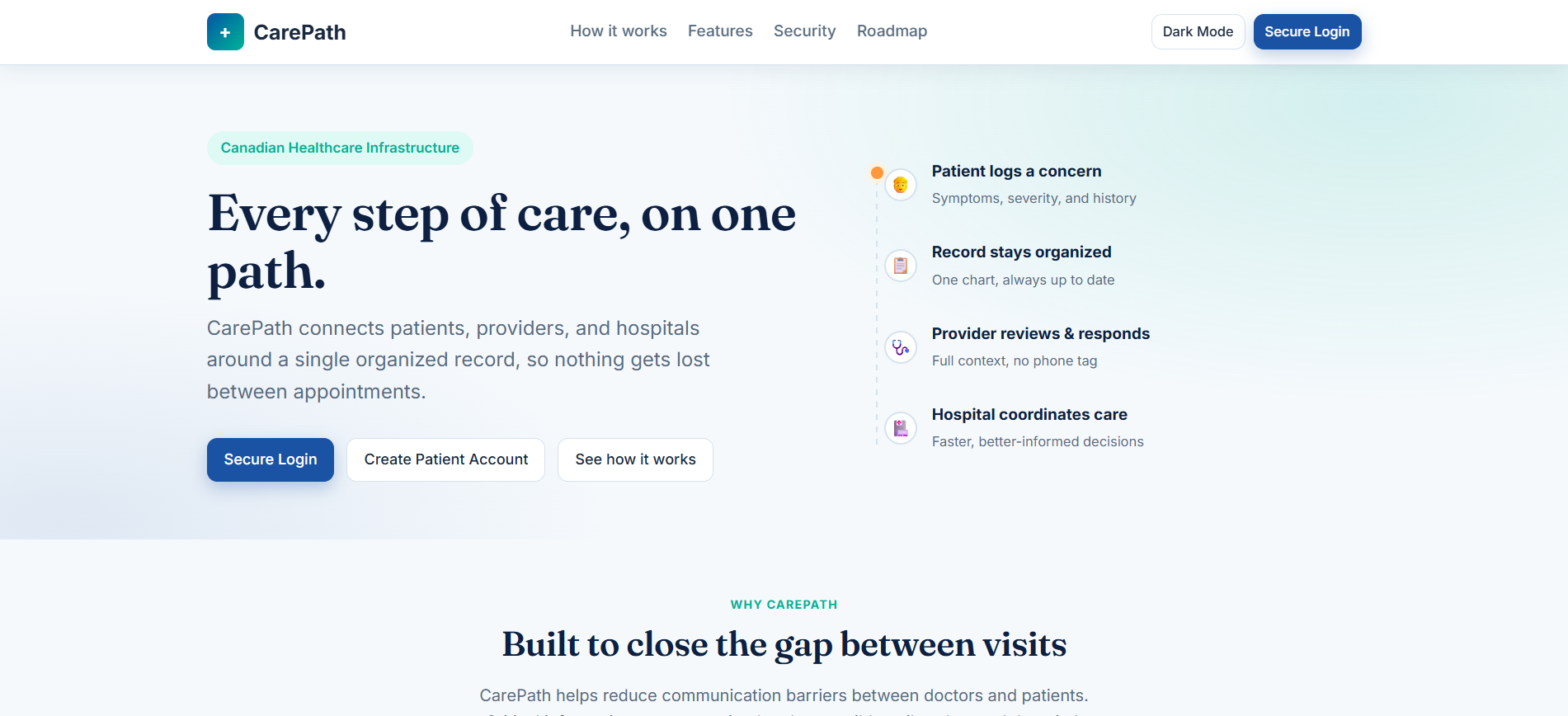
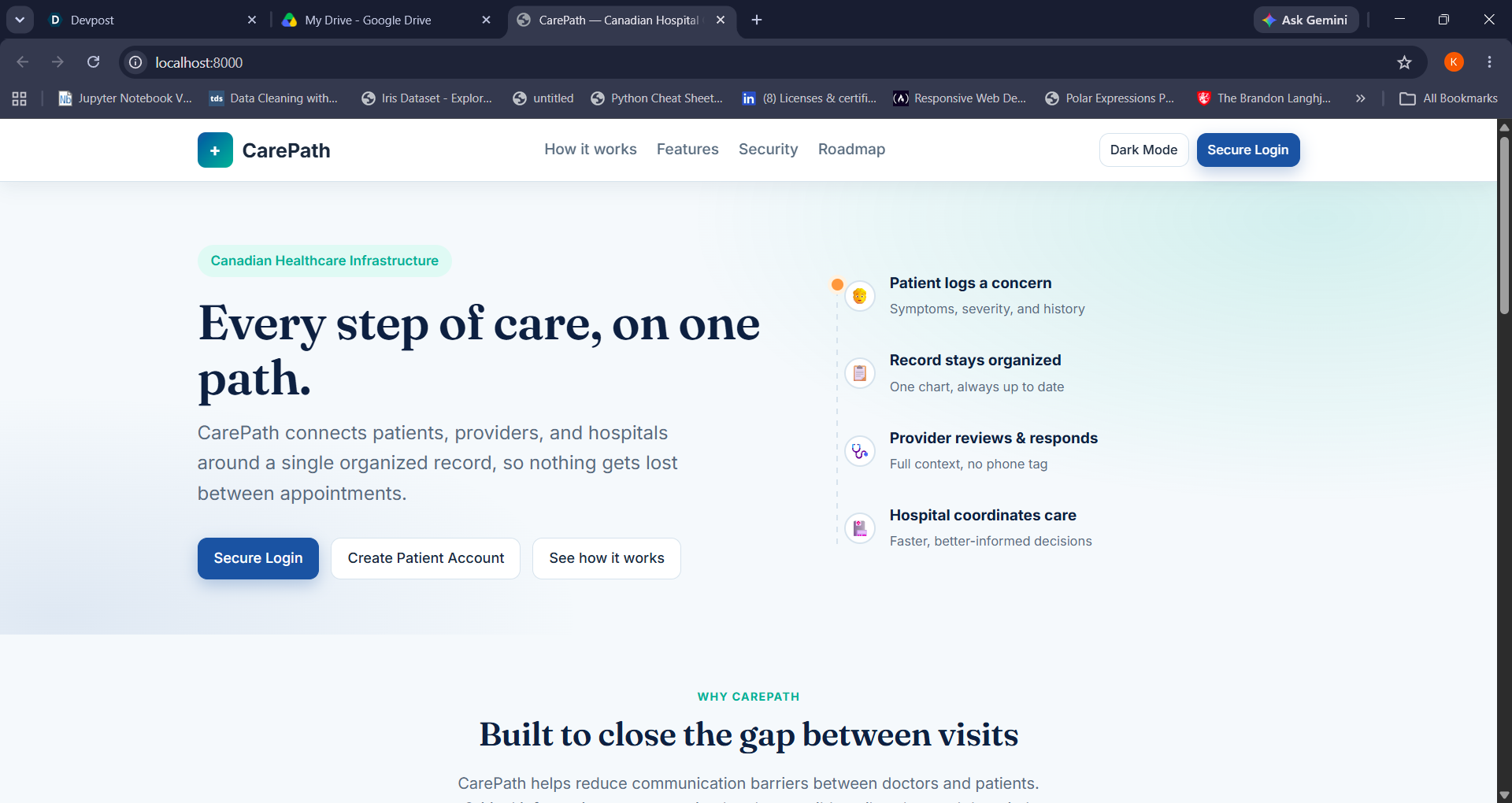
The web application was built with a responsive frontend using HTML5, CSS3, and JavaScript, engineered for high visibility and quick interaction in fast-paced medical environments. Backend data management handles state updates for patient tracking and departmental resource allocation, utilizing modular API routes to process live updates efficiently.
Challenges we ran into
The main issues we ran into was trying to connect all of the backend and frontend code. Since we built the frontend only at the beginning, the backend connecting was a bit annoying.
Accomplishments that we're proud of
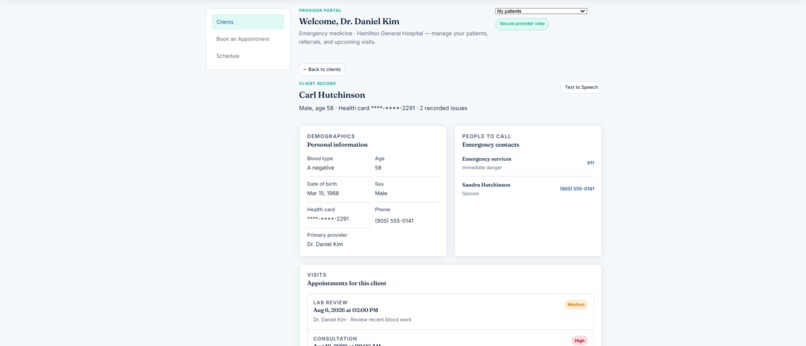
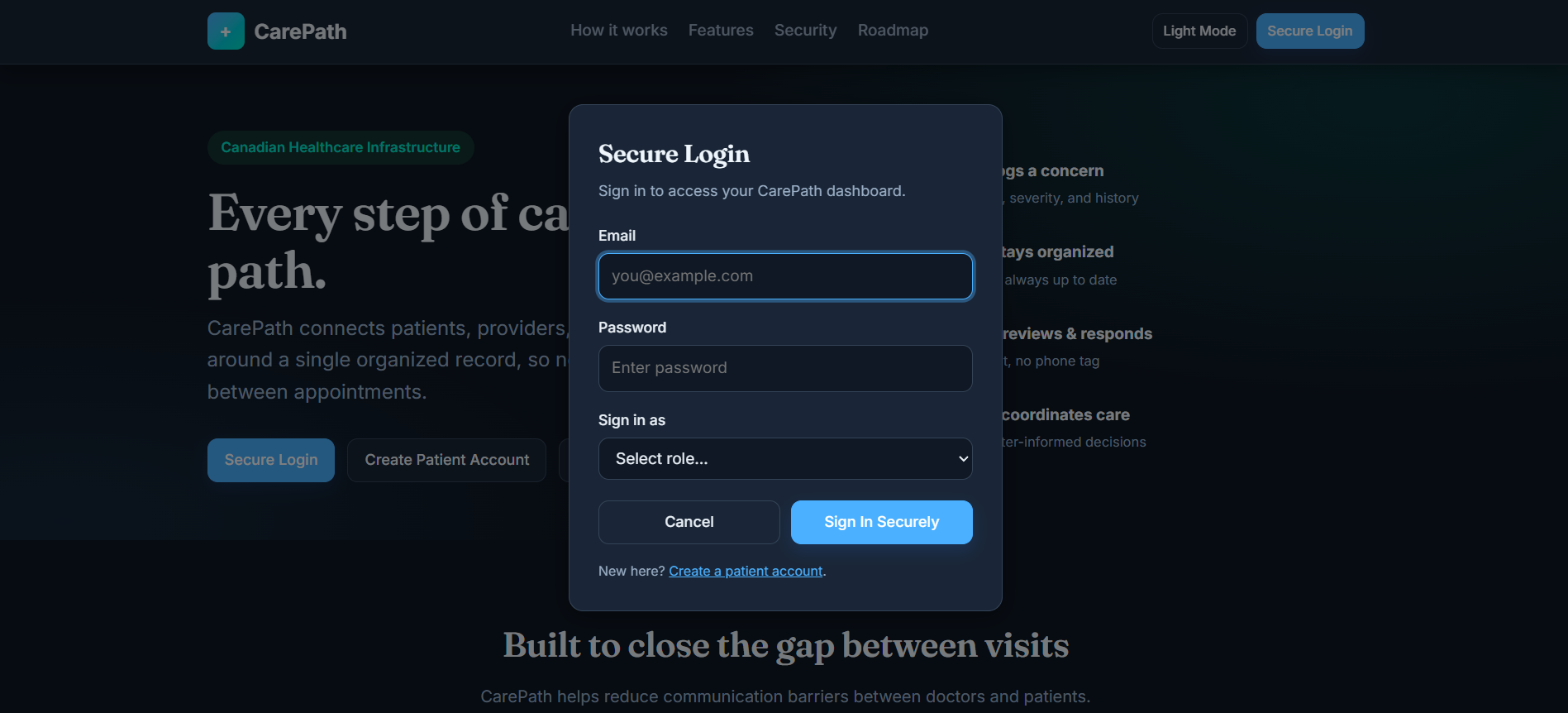
- We built a funtional website that can theoretically allow for patients and doctors to connect and find the path to their care.
What we learned
- Creating exe files
- Learnt about HTML, CSS and JS more in depth (we had some prior knowledge)
- How to connect frontends with the backends
What's next for CarePath
- The next steps would be to introduce more accessibility features as there are people who would need those (such as text to speech, speech to text, colorblind color contrast etc)
- Actual online site so every can access, not just those with the github repo
- Improved site design and ease of use


Log in or sign up for Devpost to join the conversation.