Inspiration
We’ve all watched our grandparents or older family members struggle to keep track of their daily meds. Remembering what to take, when to take it, and whether they already took it is frustrating for them, and it leaves family back home constantly stressing out. Traditional medical apps feel super cold, confusing, and full of small text that seniors hate using. We wanted to build CarePair to fix this—giving seniors a friendly, voice-based companion that feels like family, while giving caregivers total peace of mind.
What it does
CarePair is a smart caretaking web platform built for both seniors and their family caregivers:
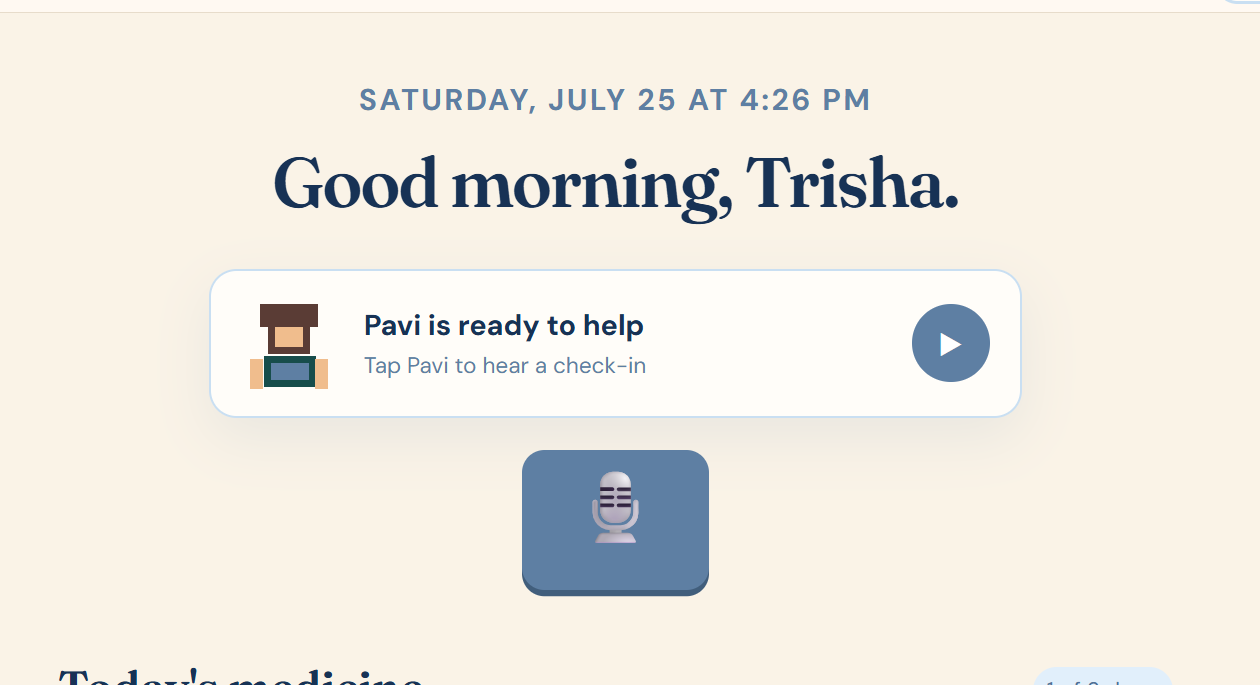
Cloned Loved-One Voice: The app checks in on the elderly user using a cloned version of a real family member's voice, so it feels natural and comforting.
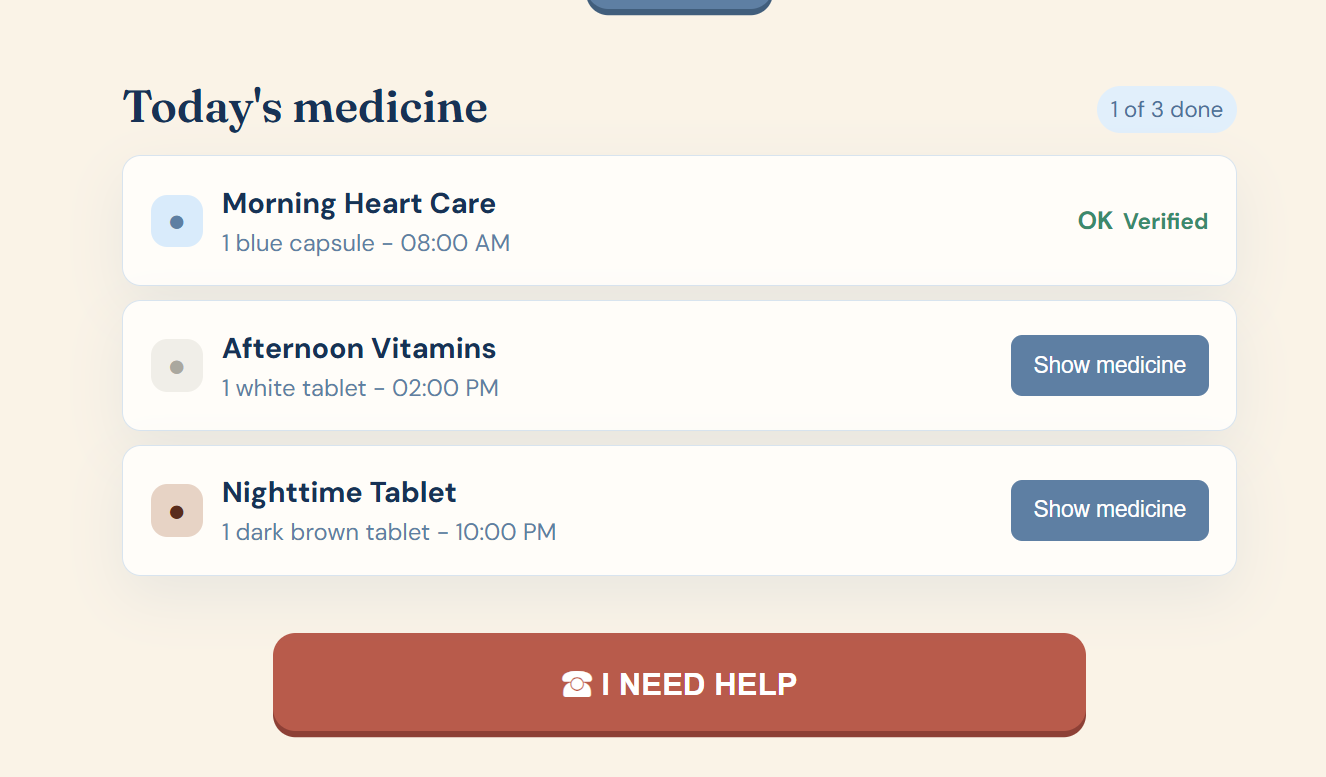
"Show the Pill" Camera Check: Instead of just clicking a button, the senior holds their medication up to the screen. Real-time vision AI double-checks that it's the right pill before telling them it's safe to take.
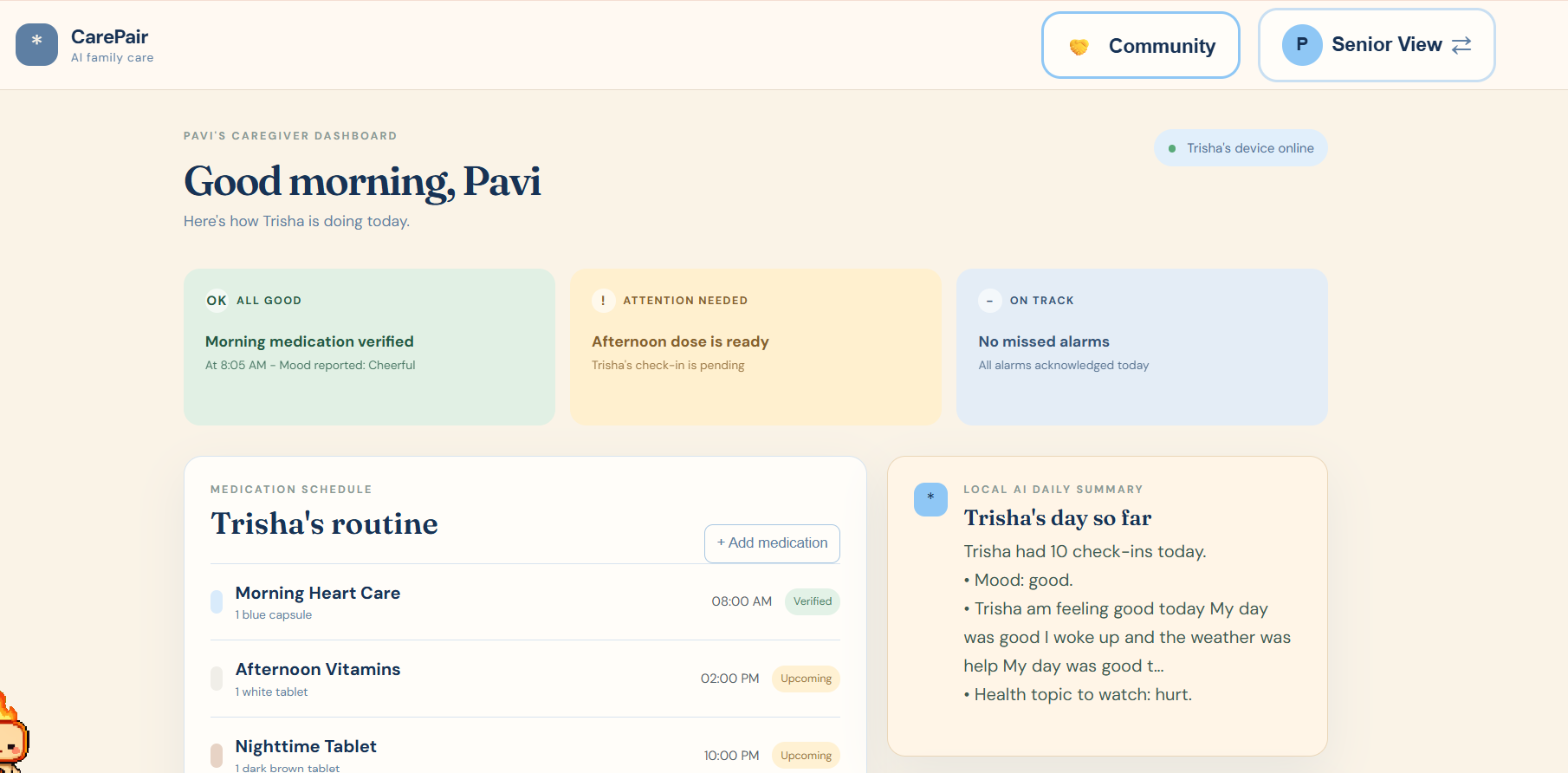
Caregiver Alert Dashboard: Caregivers get simple green, yellow, and red status boxes showing if pills were taken on time, how the senior is feeling, or if they missed an alarm.
Double-Alarm Escalation: If an alarm rings twice and gets ignored, the app automatically flags it on the caregiver’s end so someone can check in.
Built-in Role Switcher: A top toggle button lets you flip back and forth between the high-contrast Senior View and the Caregiver Dashboard on one browser screen.
How we built it
Frontend: Built with React, Next.js, and Tailwind CSS using extra-large text, high contrast, and simple single-column pages for accessibility.
Voice Cloning & TTS: Powered by the Gradium API to clone voice samples and generate friendly text-to-speech check-ins.
Vision AI: Connected Gemini Vision API to the live webcam feed so it can inspect the medicine before marking it off.
Backend State: Used Node.js and Express to track pill schedules, missed alarm counts, and audio updates.
Challenges we ran into
Getting the vision AI to reliably recognize pills was tricky because everyone's lighting and camera angles are different. We had to tune our prompts so it wouldn't give false alarms over slight shadows. Balancing real-time voice streaming with minimal latency so the conversation didn't feel laggy was another technical challenge we had to debug.
Accomplishments that we're proud of
We made a complex AI stack feel human, gentle, and accessible for elderly people who usually avoid tech.
Connecting live webcam feeds directly to vision models for real-time verification worked out really smoothly.
We built a clean, dual-sided demo that lets judges test both user experiences effortlessly.
What we learned
We learned a ton about chaining multimodal AI models (combining voice TTS and image recognition) into a single flow. We also learned how important accessible UI design is—like using giant tap targets, clear color coding, and simple layout choices for older users.
What's next for CarePair
Next, we want to add emergency voice detection so if a senior says phrases like "I fell," it automatically alerts contacts. We also plan to integrate with smartwatches to track vitals alongside medication adherence.

Log in or sign up for Devpost to join the conversation.