Inspiration
In medical emergencies, the first few minutes are critical for saving lives. However, most people panic and lack the knowledge to take immediate and correct action. We were inspired by real-life situations where delays in first aid led to severe consequences. This motivated us to build a solution that can guide people instantly during emergencies and act as a virtual assistant before professional help arrives.
What it does
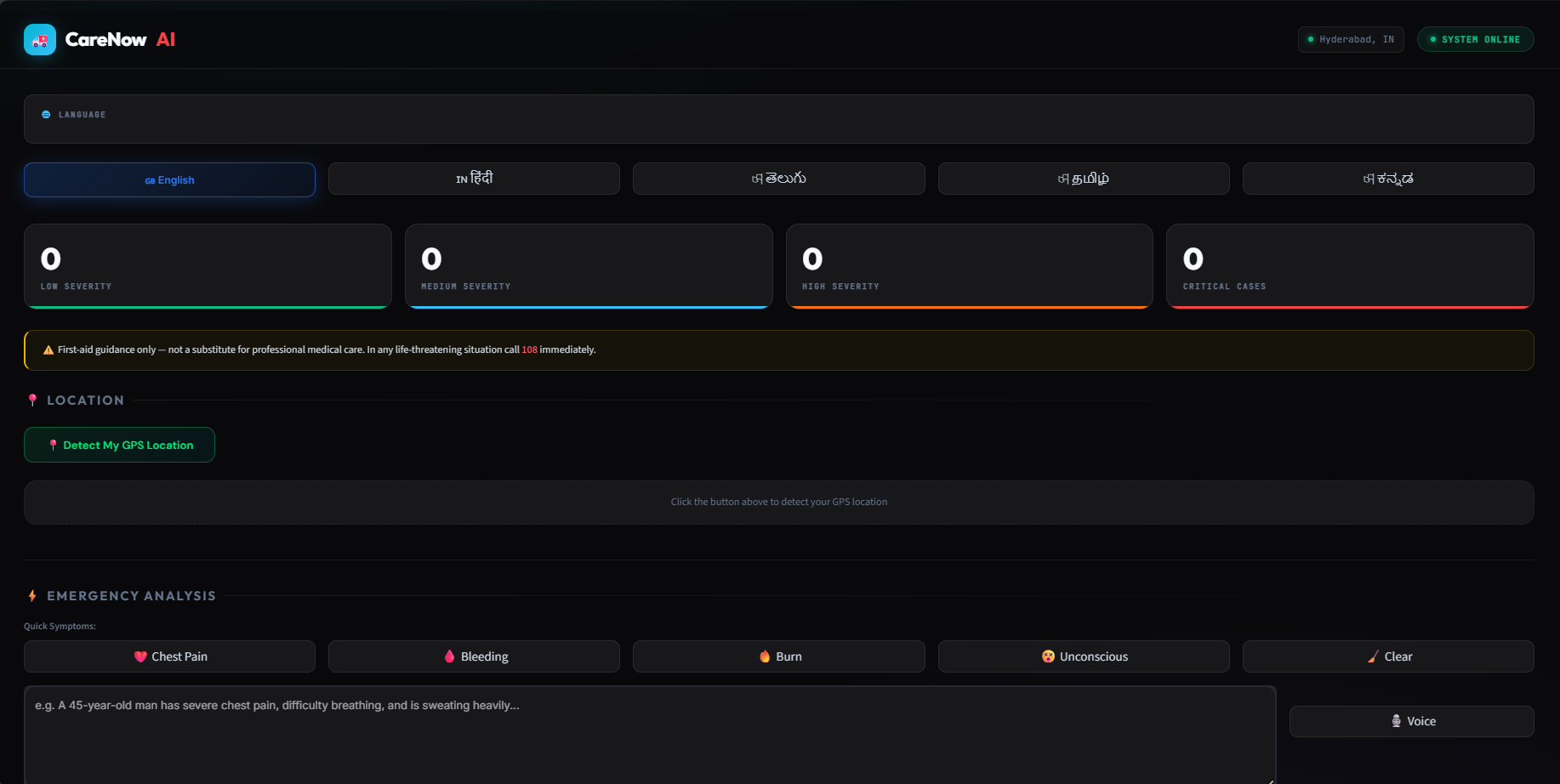
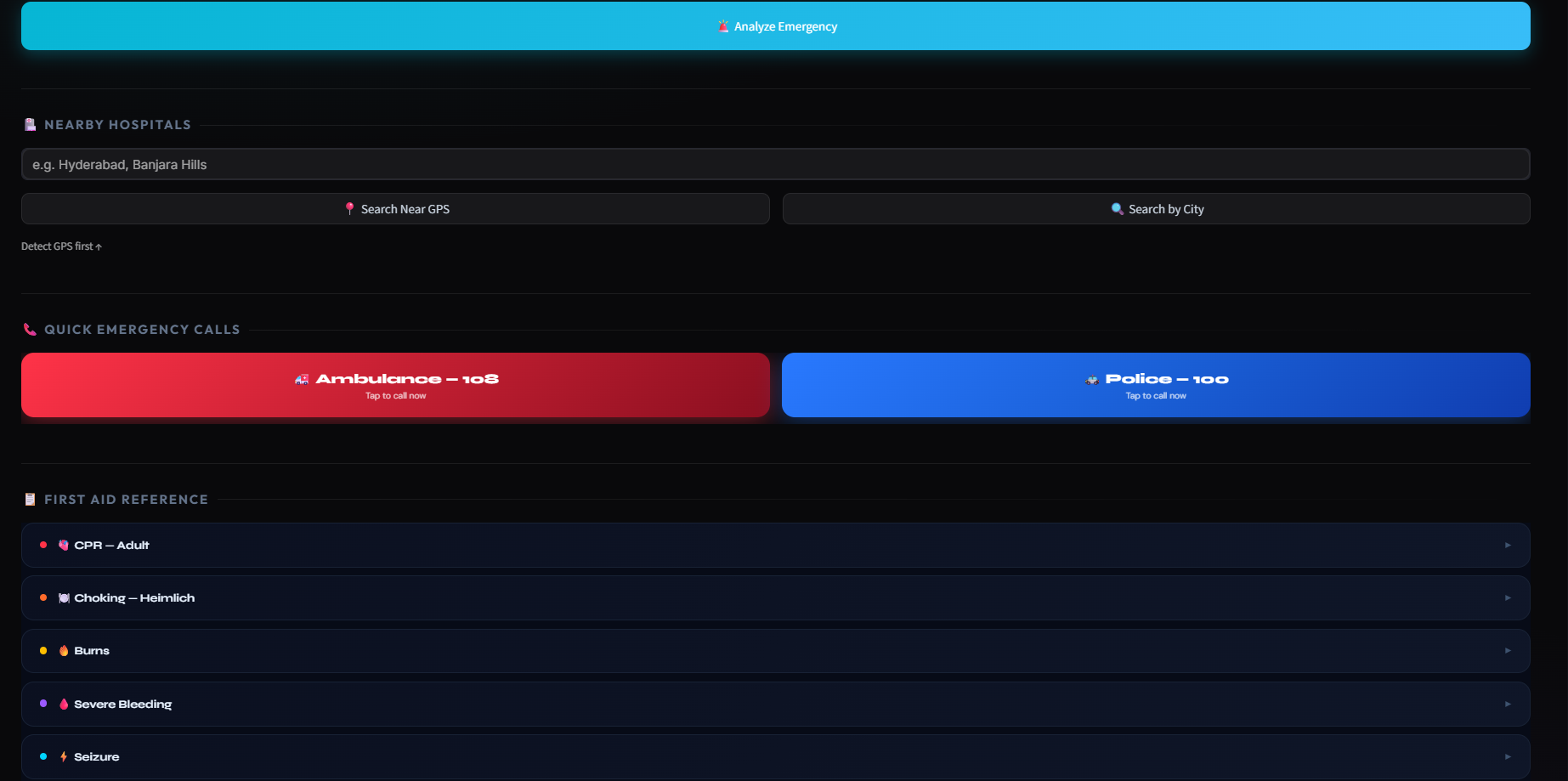
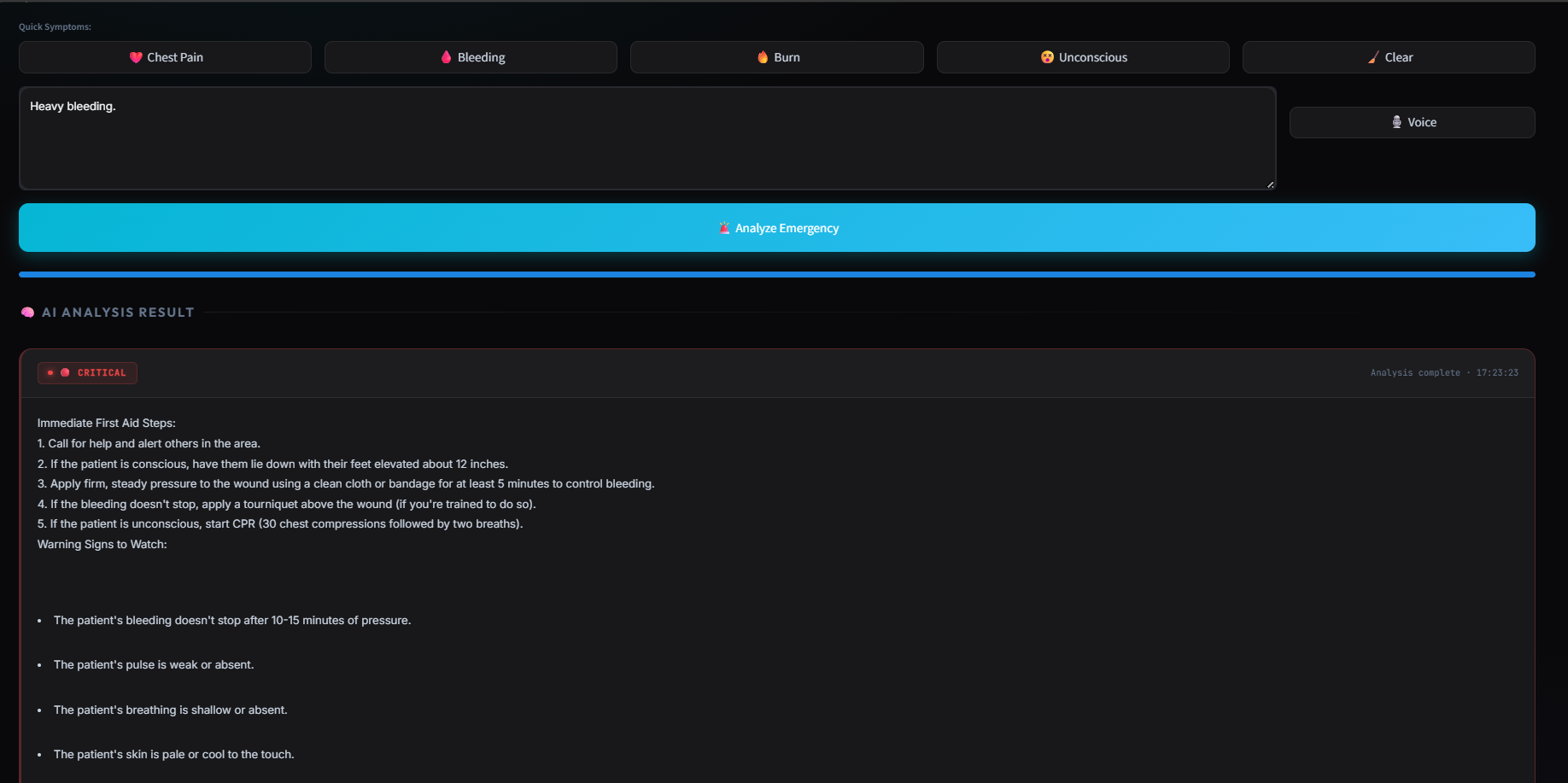
CareNow AI is a Generative AI-powered emergency assistant that provides real-time first aid guidance. Users can describe symptoms through text or voice, and the system analyzes the situation to provide step-by-step instructions. It also helps in identifying the nearest hospital and generates a structured medical summary that can be shared with doctors. The system is designed to reduce panic, improve response time, and assist users during critical moments.
How we built it
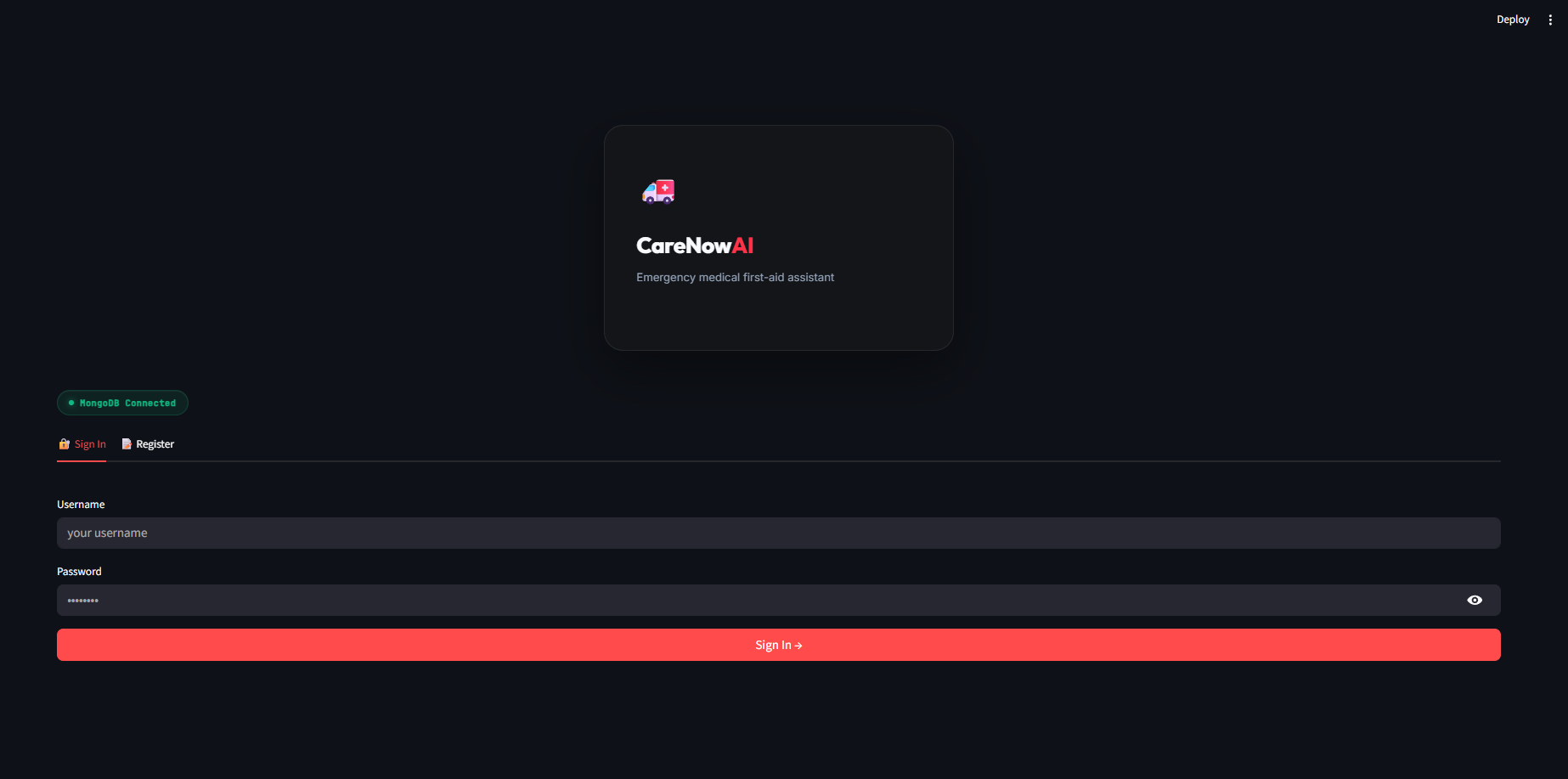
We built the system using Python for backend development. A Large Language Model (LLM) is used to understand user input and generate intelligent responses. We integrated speech-to-text functionality for voice interaction and used APIs for geolocation and hospital search. MongoDB was used for storing user data and history. The system is modular, consisting of components like chatbot logic, database handling, and response generation.
Challenges we ran into
One of the major challenges was handling real-time decision-making accurately during emergencies. Ensuring the correctness of first aid instructions was critical. We also faced issues with API integration, dependency management, and handling sensitive data like API keys securely. Another challenge was designing the system to remain simple and easy to use under stressful conditions.
Accomplishments that we're proud of
We successfully built a working prototype that can simulate emergency assistance using AI. The system can understand symptoms, provide relevant guidance, and generate medical summaries. Integrating multiple components like AI, database, and APIs into a single platform was a significant achievement. We are proud of creating a solution that has real-world impact and life-saving potential.
What we learned
Through this project, we learned how to integrate AI models into real-world applications. We gained experience in working with APIs, managing databases, and handling errors during development. We also understood the importance of user experience, especially in high-stress scenarios. Most importantly, we learned how technology can be used to solve critical real-life problems and make a meaningful impact.
What's next for CareNow AI
CareNow AI has strong potential for real-world impact, and we plan to expand its capabilities further. In the next phase, we aim to integrate the system with wearable devices such as smartwatches to automatically detect health emergencies like abnormal heart rate or falls.
We also plan to implement direct ambulance calling and emergency contact notification features to ensure faster response during critical situations. Multi-language support will be added to make the application accessible to a wider population across different regions.MongoDB, PyMongo, Python, Generative AI (LLM API), Speech-to-Text API, Google Maps API, Flask, REST APIs
Built With
- apis
- flask
- generative-ai-(llm-api)
- google-maps
- mongodb
- pymongo
- python
- rest
- speech-to-text-api

