-
-
Dashboard
-
-
MCP server
-
Tools
Inspiration
Many of us live far from parents who live alone. They forget medicines, and they rarely mention small symptoms like dizziness until something goes wrong. Families usually find out too late. I wanted a caregiver that works through simple conversation, with no new app for an elderly person to learn.
What it does
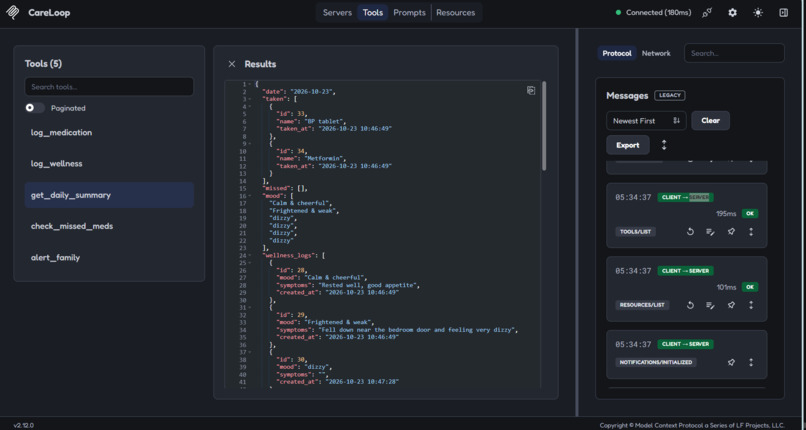
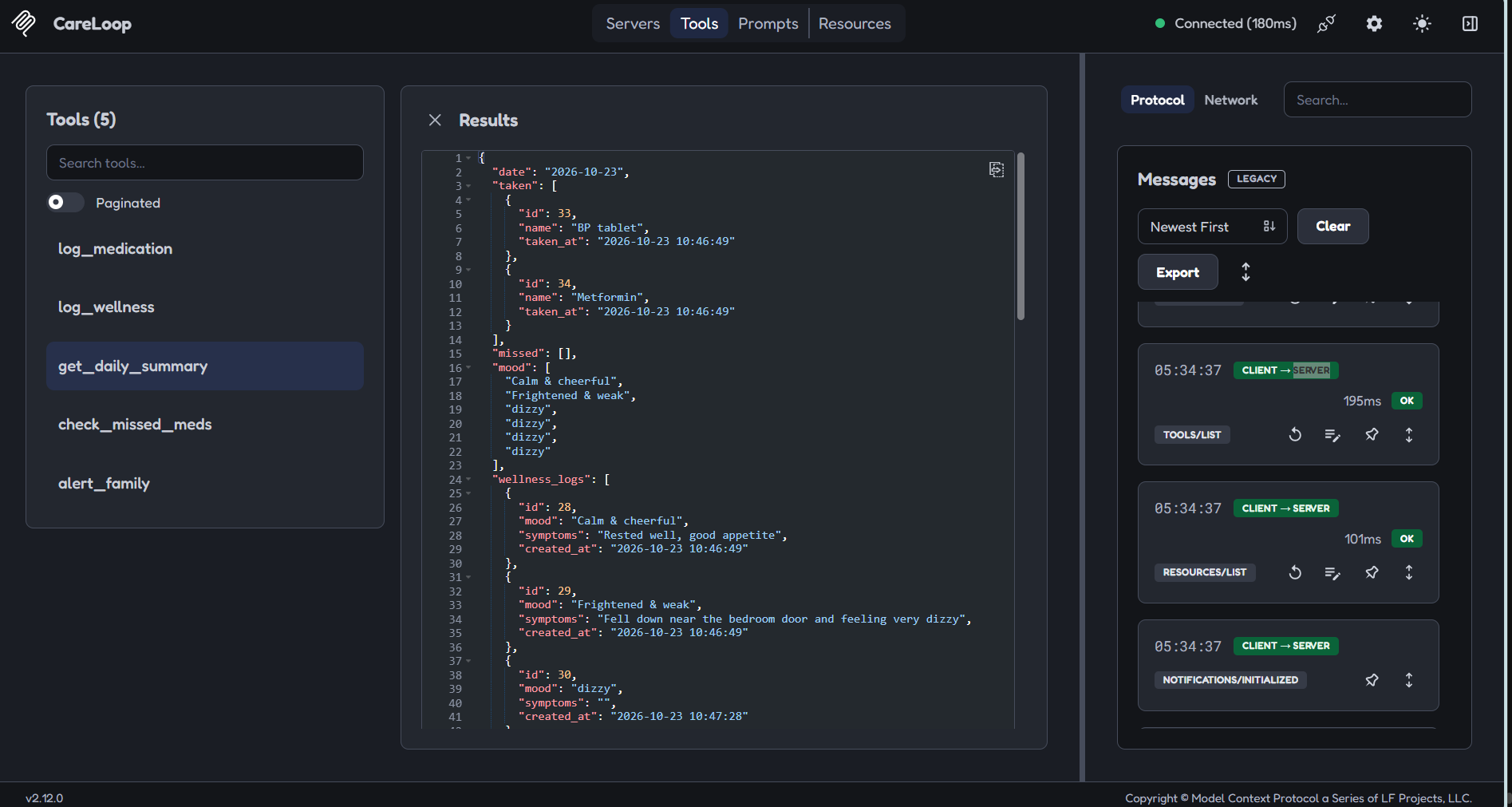
CareLoop is an Alexa+ compatible MCP server for elder care. A parent just talks: "I took my BP tablet" or "I feel dizzy." CareLoop exposes five MCP tools:
log_medication: records a dose against the schedule and notes if it is latelog_wellness: records mood and symptoms, and automatically escalates danger signs (dizzy, fell, chest pain, can't breathe, bleeding)get_daily_summary: today's medicines, mood and alertscheck_missed_meds: what is overdue right nowalert_family: stores and sends a low/medium/high severity alert
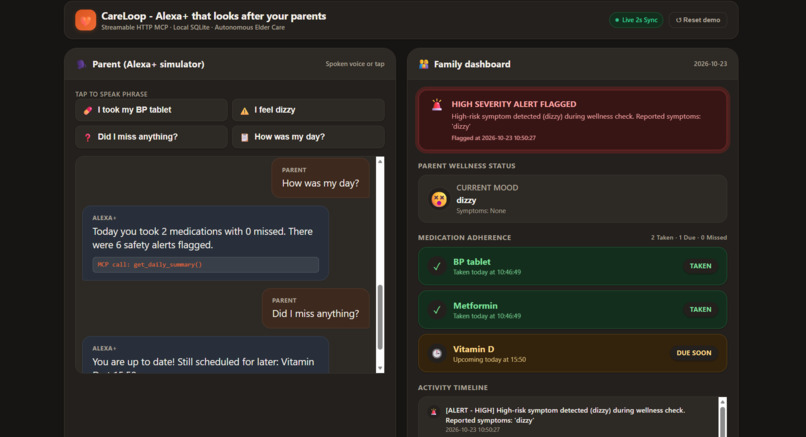
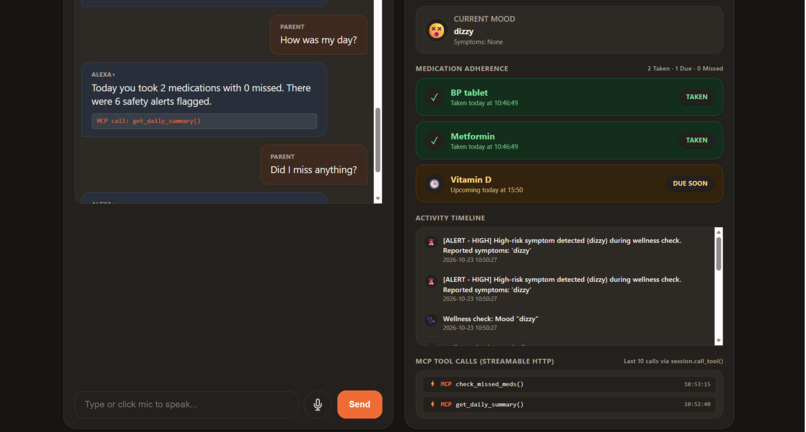
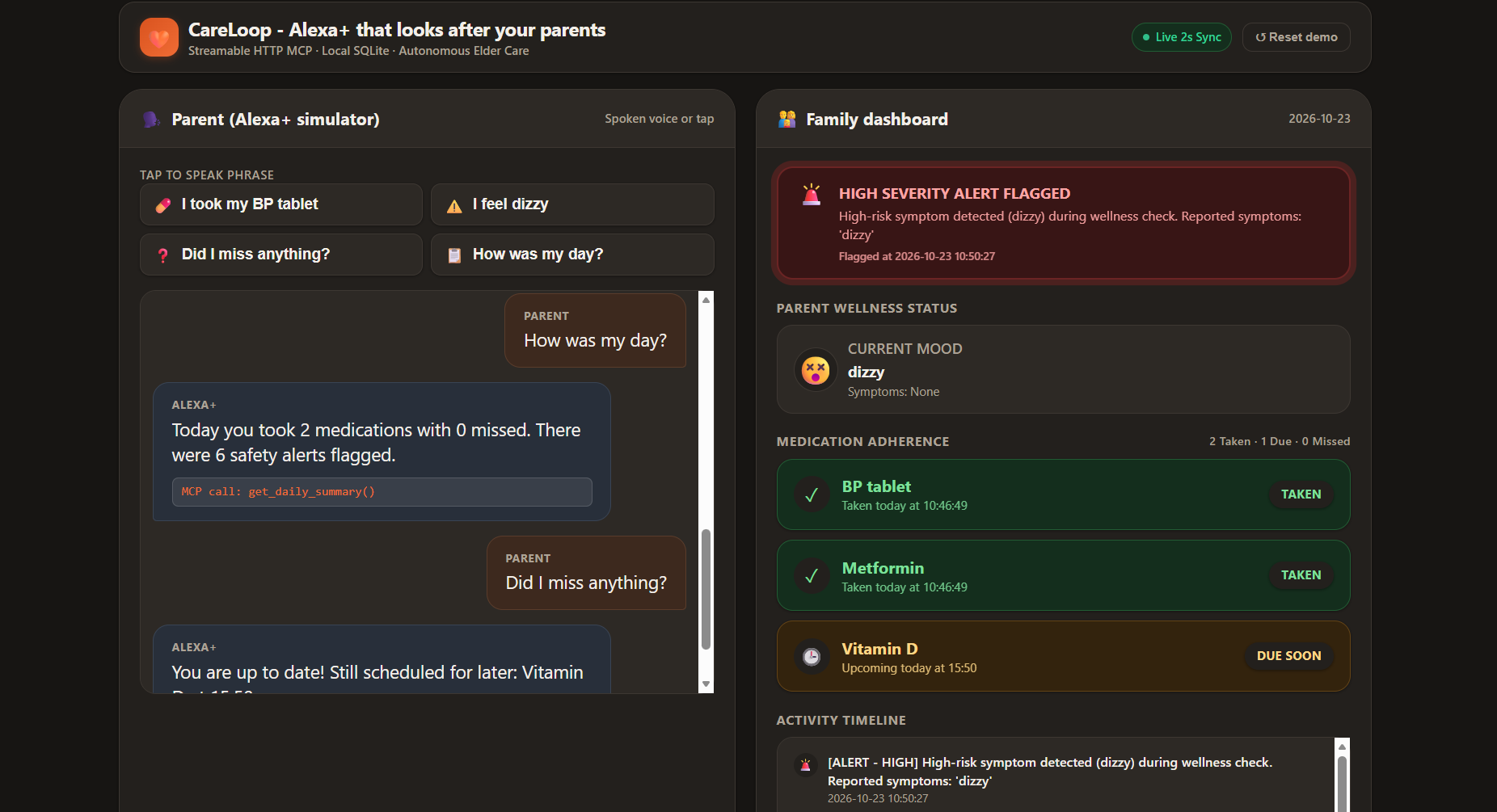
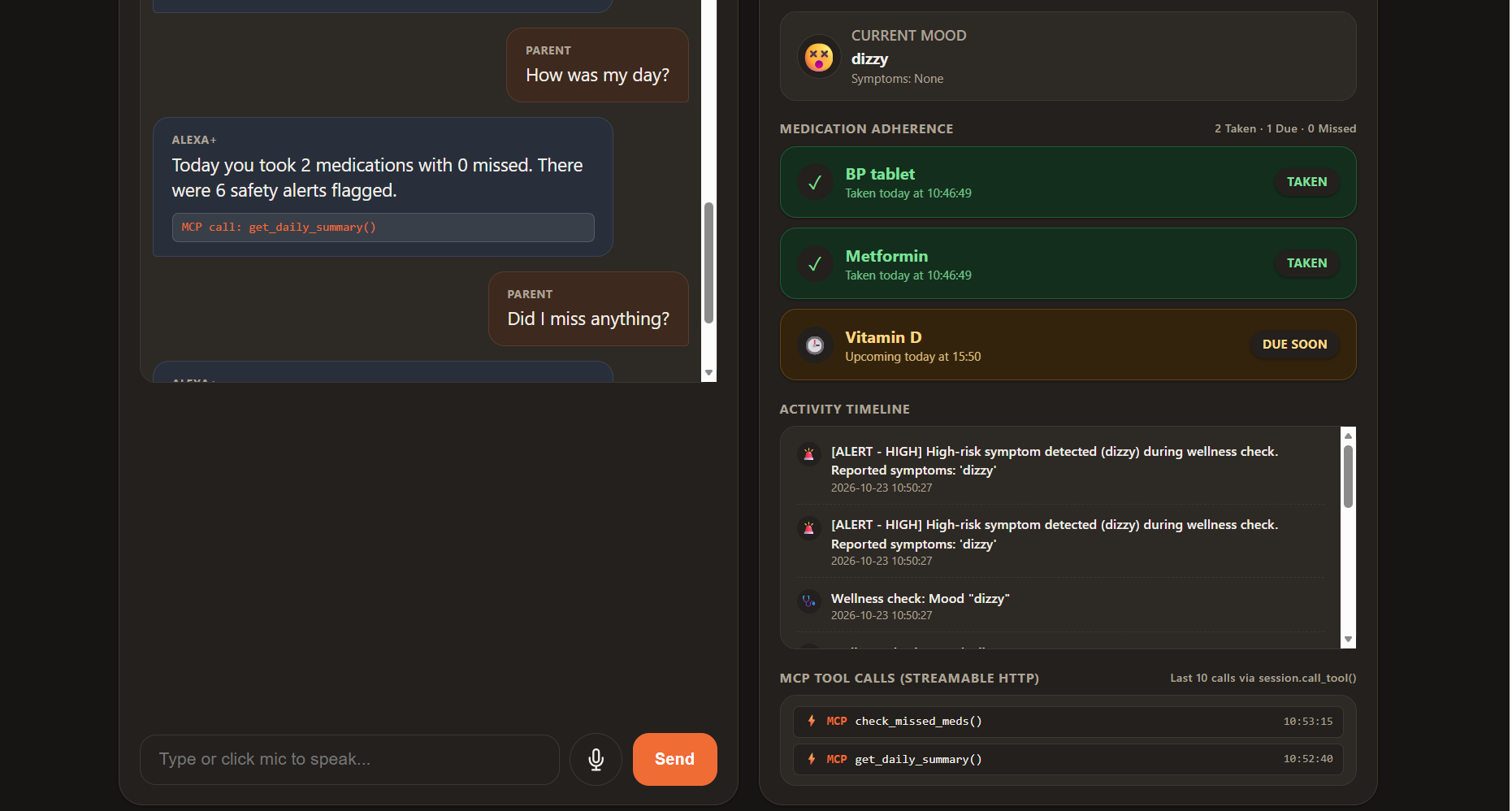
Family members see a live dashboard with medicine cards (taken / due / missed), the parent's current mood, an activity timeline, and a red alert banner for high-severity events.
How I built it
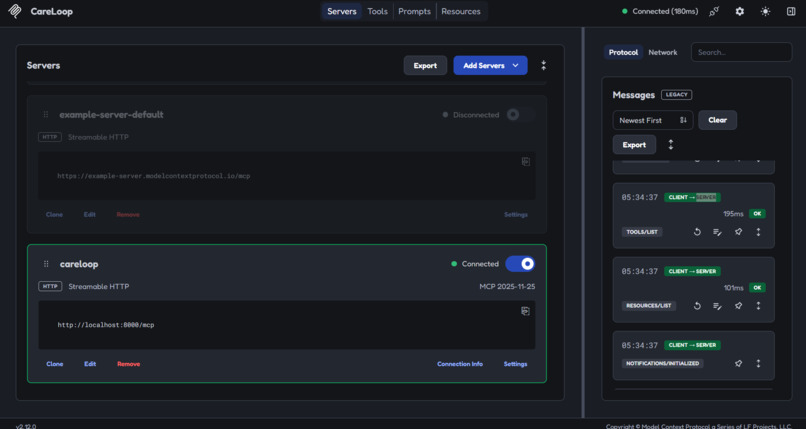
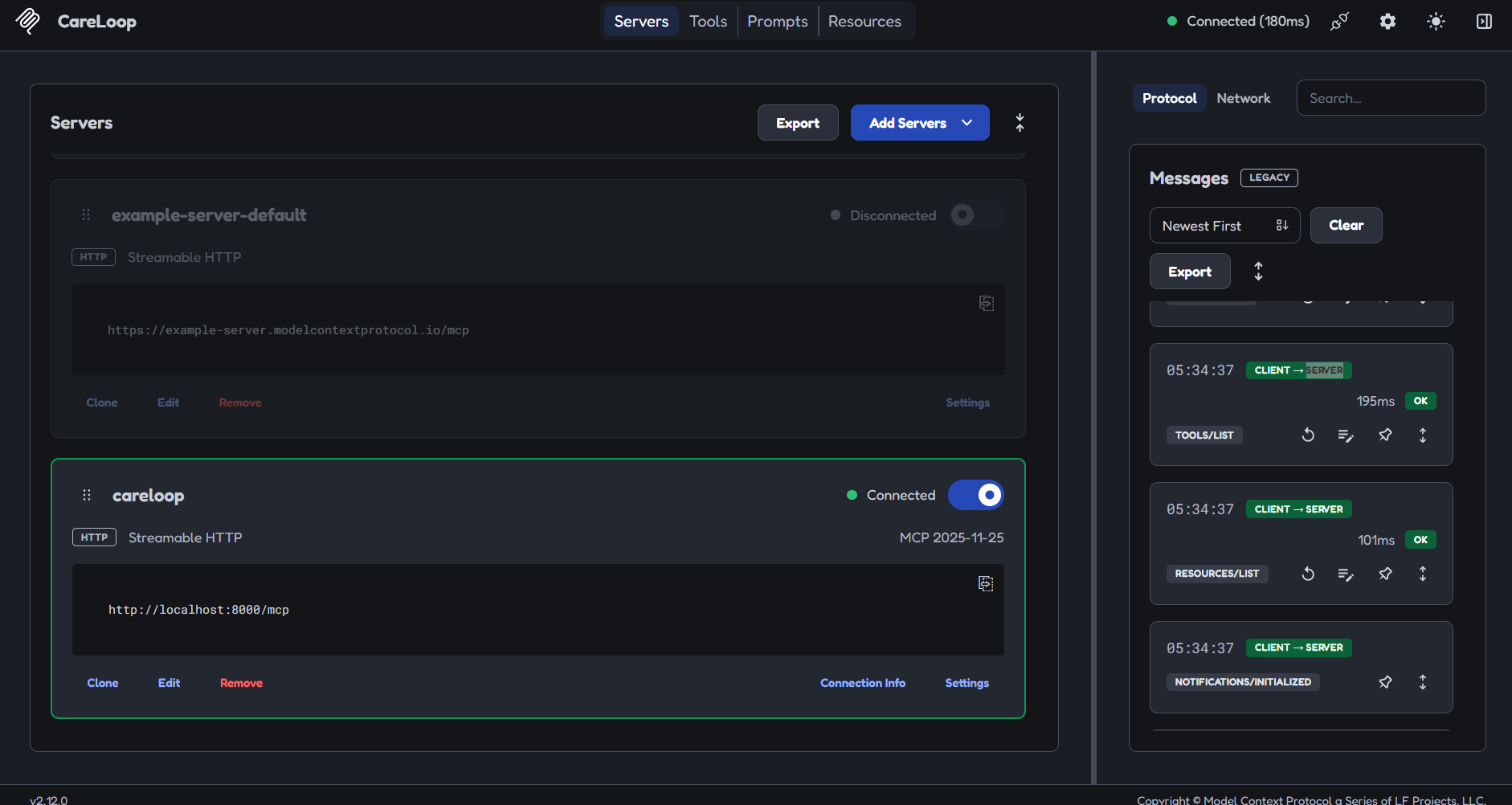
- MCP server: Python with the official MCP SDK (FastMCP), served over Streamable HTTP at
/mcp - Storage: SQLite, with fake demo data only
- Alexa+ simulator: a web chat with tap-to-speak phrases and browser voice input. It maps phrases to the MCP tools using rule-based intent matching. [Keep only if true: The simulator calls the server's
/mcpendpoint as a real MCP client.] - Family dashboard: a single vanilla JS page that refreshes every 2 seconds
- Everything is open source (MIT) and runs locally with zero paid services or API keys.
I used AI coding tools (Google Antigravity and Claude) to scaffold and iterate, and I tested the MCP endpoint with the MCP Inspector.
Challenges
- Getting the Streamable HTTP MCP transport mounted alongside the web routes in one app
- Writing reply logic that stays accurate (for example, a dose logged at 9 pm for an 8 am medicine must not be called "on time")
- Making the demo state clean and repeatable with a reset endpoint
- Keeping the build to a very tight time window
What I learned
How MCP tools are described so an agent knows when to call them, how Streamable HTTP differs from older transports, and how to design caregiving flows around safety escalation rather than just logging.
Honest note
There is no physical Alexa+ device in this demo. The simulator stands in for Alexa+'s language understanding with rule-based intent matching. The MCP server is the real, standards-based integration point.
What's next
Real Alexa+ voice integration, Telegram/SMS alerts to several family members, multi-parent support, caregiver-set medicine schedules, and weekly summaries.
Built With
- alexa-plus
- css
- fastmcp
- google-antigravity
- html
- javascript
- mcp
- python
- sqlite
- starlette
- streamable-http
- uvicorn
- web-speech-api


Log in or sign up for Devpost to join the conversation.