Inspiration
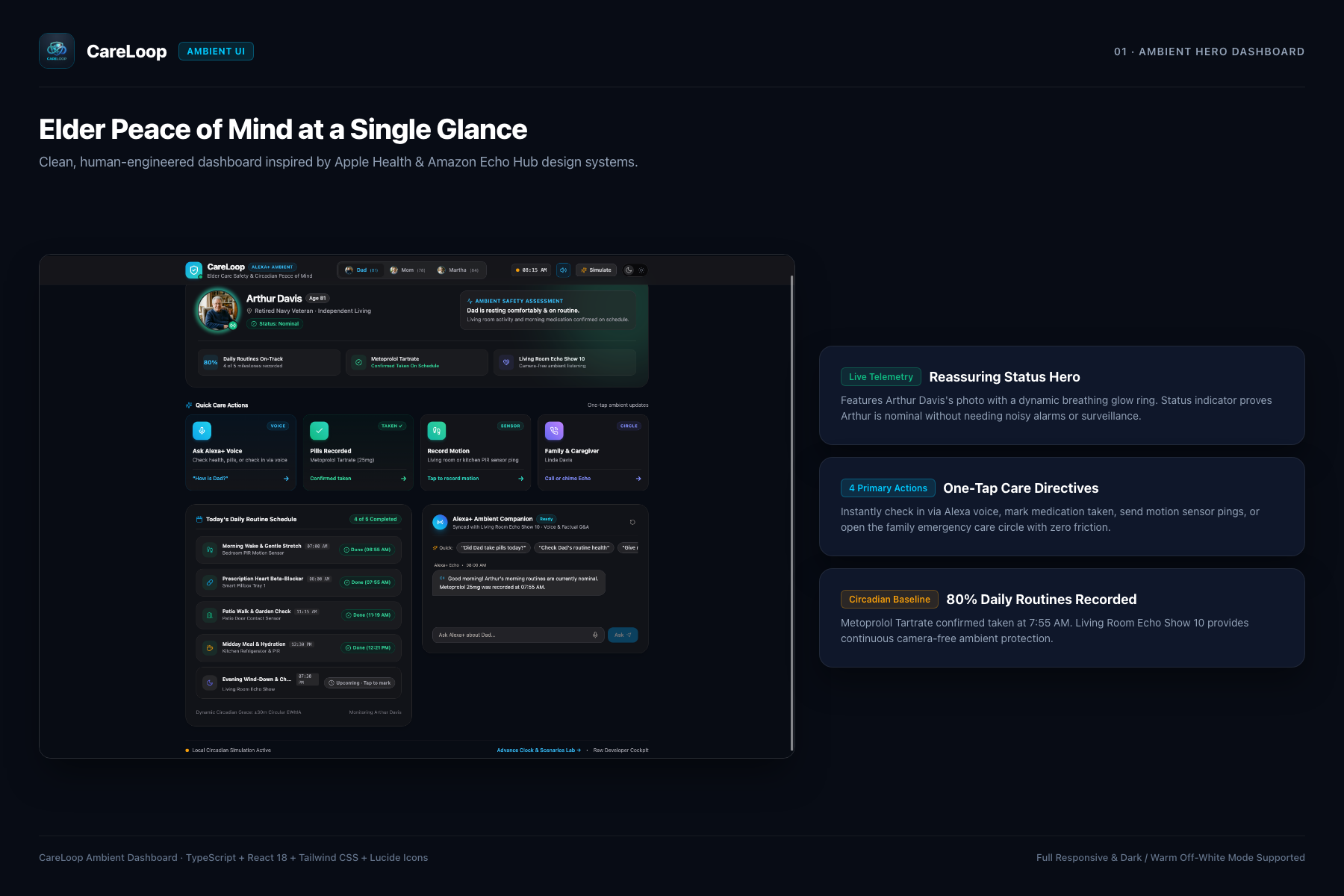
Millions of adults live far from their aging parents. The worry is constant: Did Dad take his blood-pressure pill? Did Mom eat today? Existing options are either invasive (cameras) or noisy (alerts for every small deviation). We wanted something gentle: Alexa+ already sits in the home and speaks the parent's language, so it can be the caregiver's eyes and voice without a single camera.
What it does
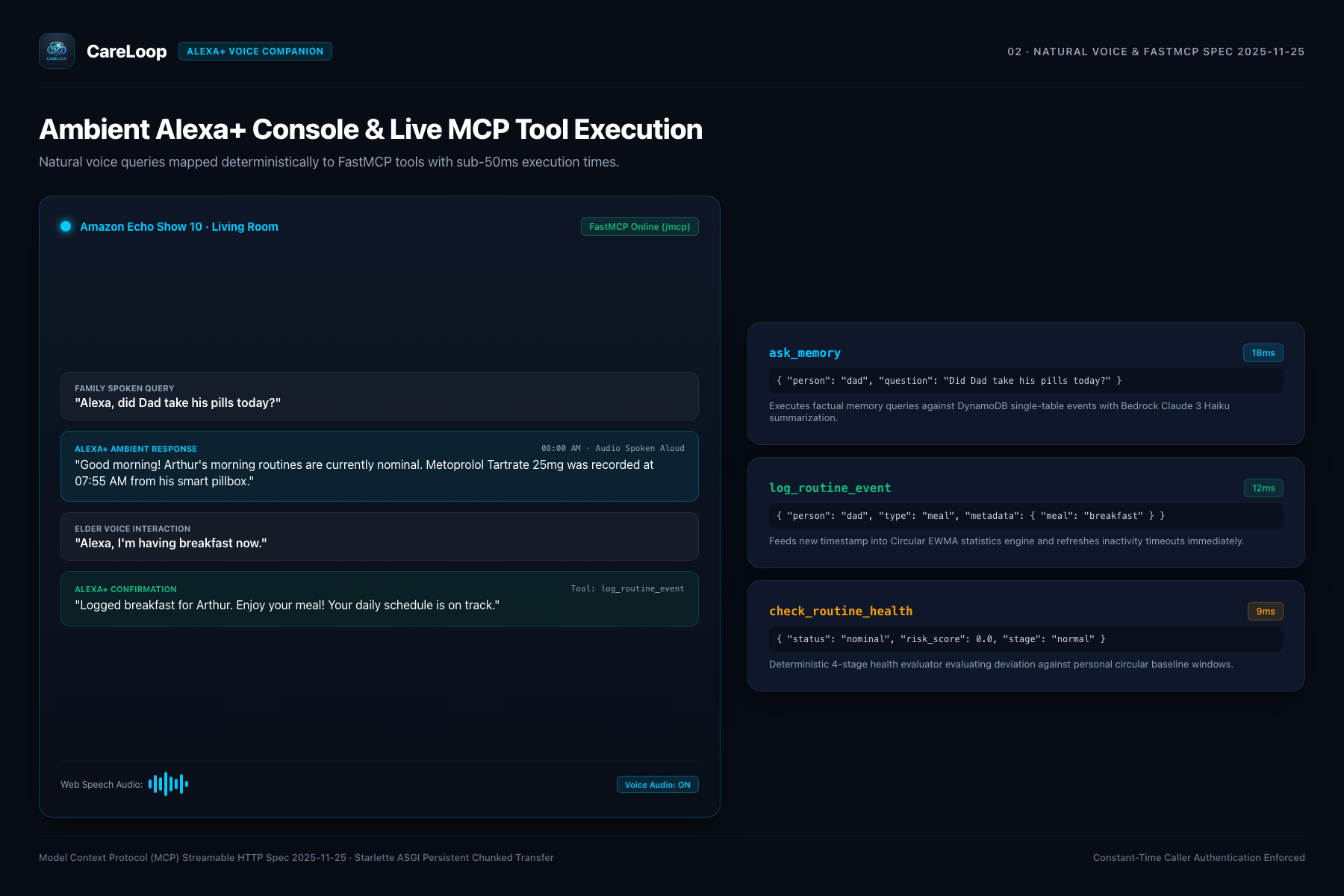
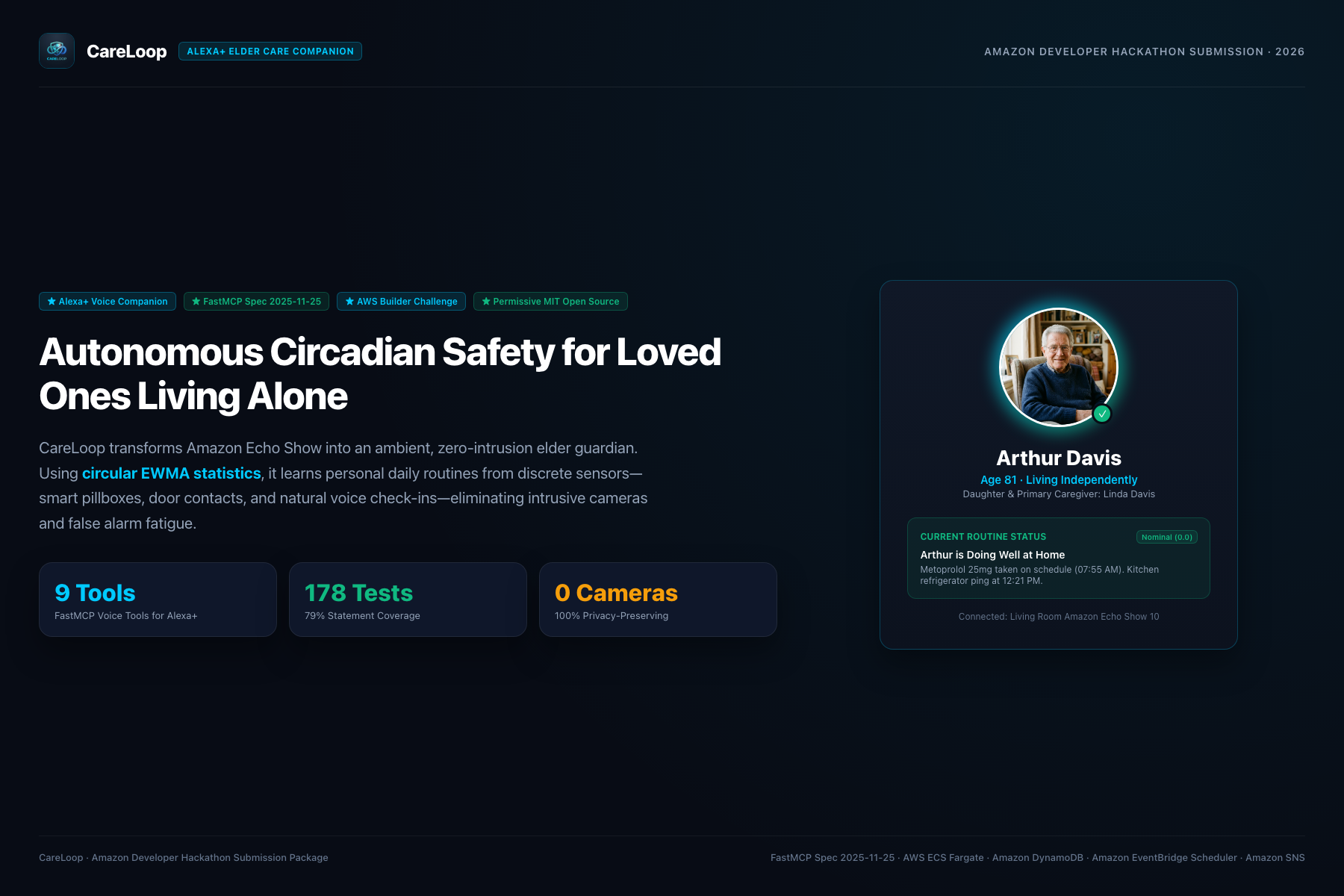
CareLoop is a self-hosted MCP server (Streamable HTTP, spec 2025-11-25) that lets Alexa+ look after a parent living alone.
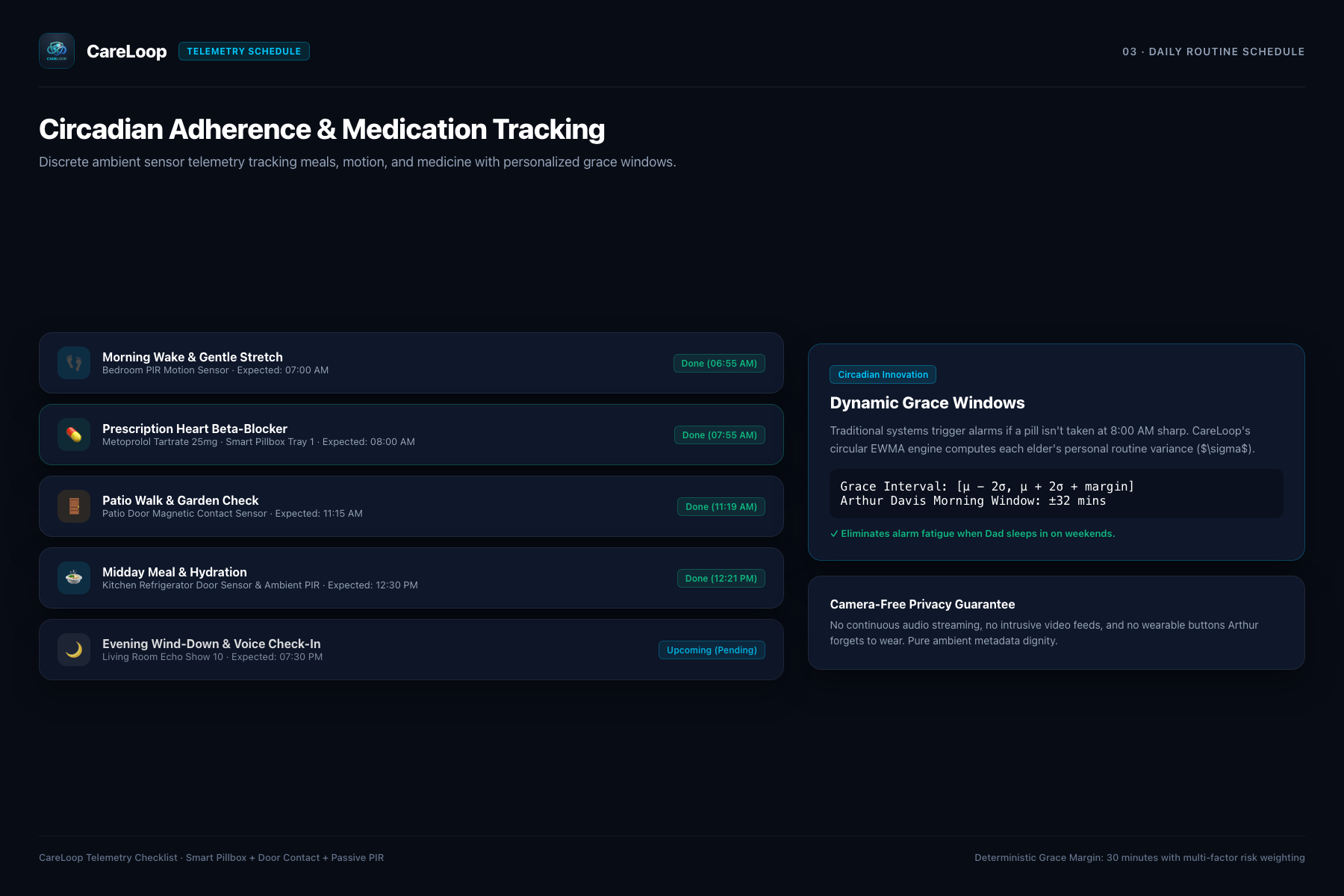
- Logs routine events from natural speech ("Alexa, I took my pill") and from home signals such as meals, movement and door opened.
- Learns each person's normal day and notices when something is off, such as a missed medication or unusual inactivity.
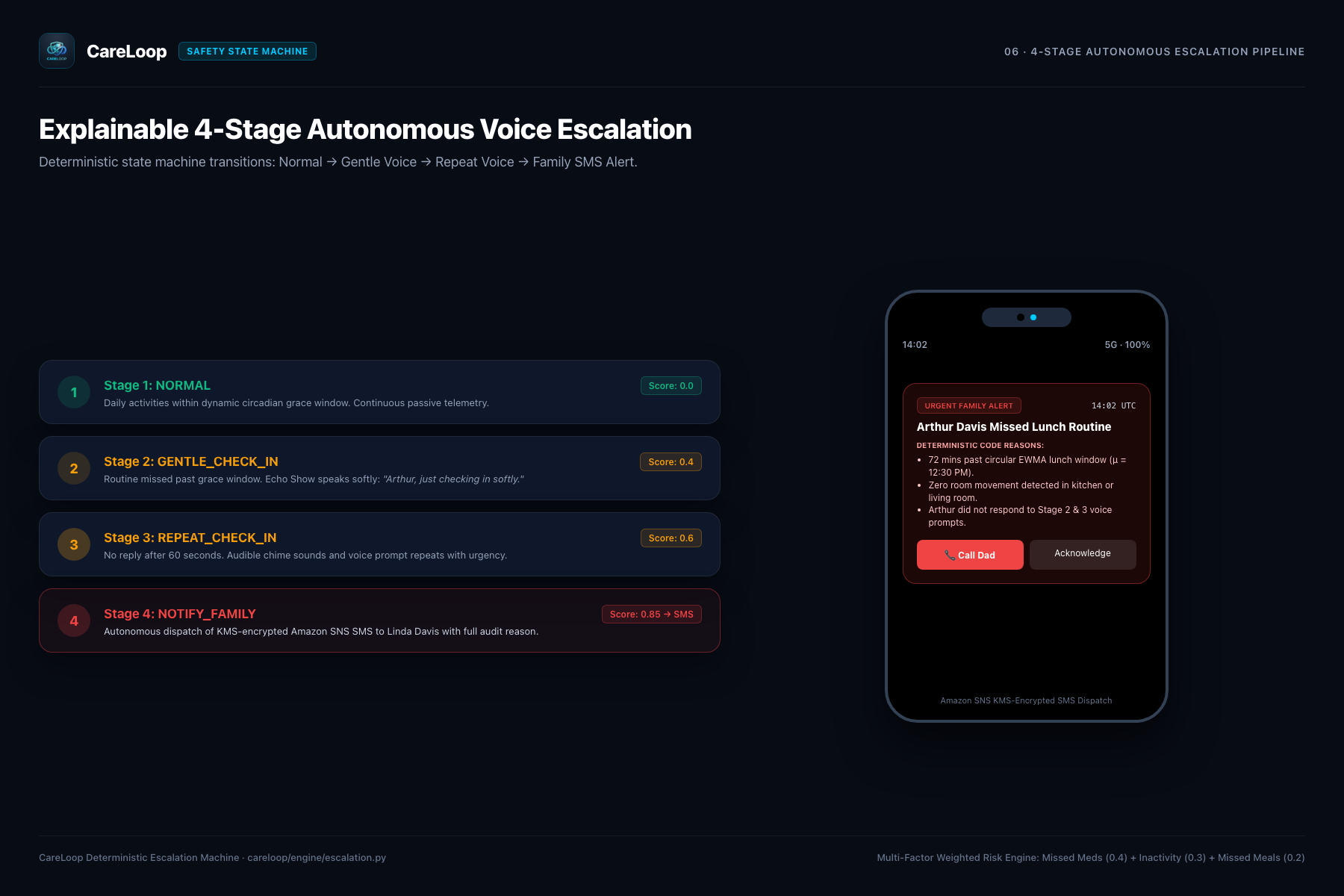
- Checks in by voice first. Alexa+ asks "Are you okay?" before anyone is alarmed.
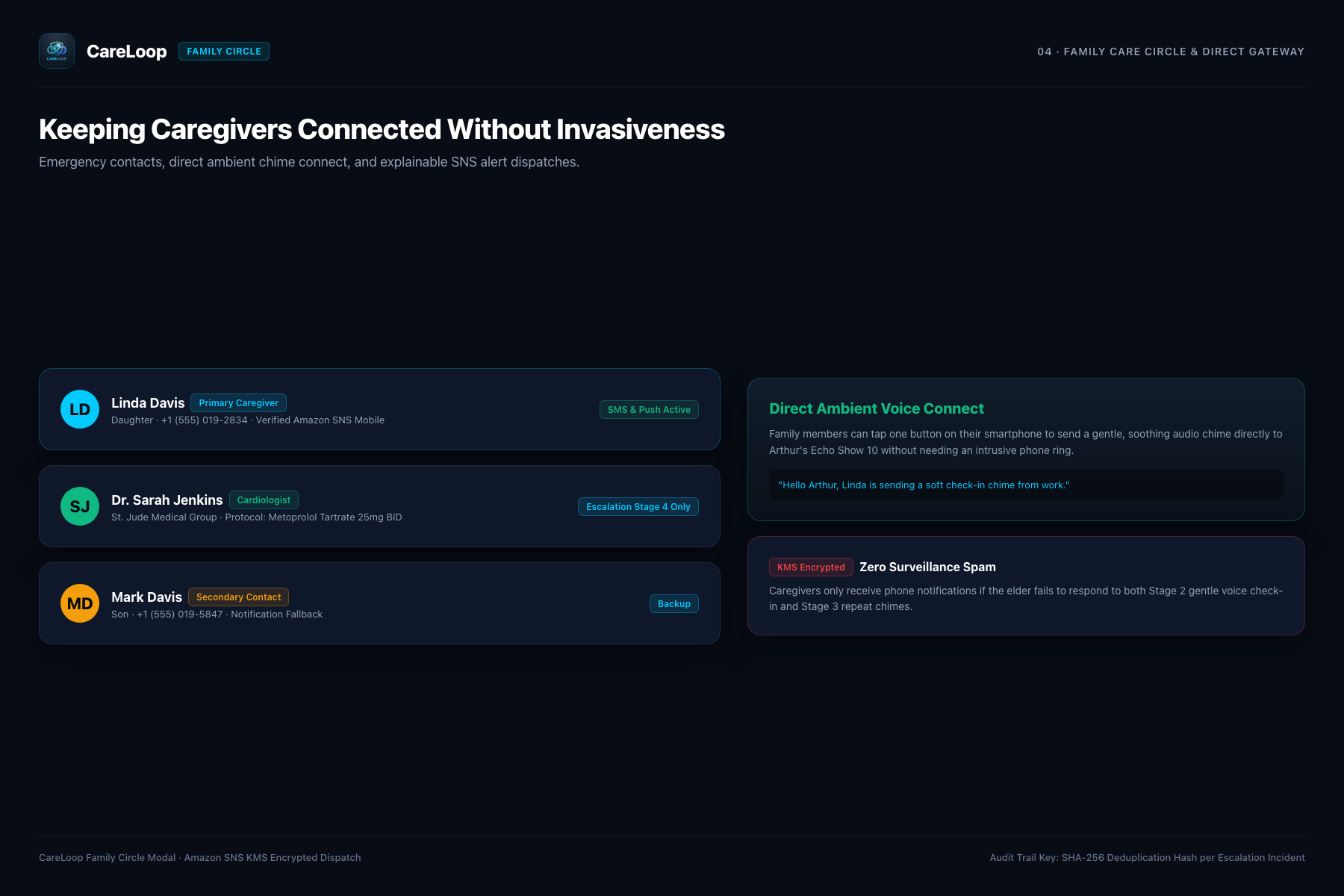
- Escalates only when needed. If there's no response, family gets an SMS or email with a plain-language summary.
- Answers memory questions for family: "Did Dad take his BP pill yesterday?"
MCP tools
| Tool | Purpose |
|---|---|
| log_routine_event | Record medication, meal, movement or door events |
| check_routine_health | Return a risk level with the reasons behind it |
| schedule_reminder | Set spoken reminders |
| notify_family | Send an alert by severity |
| daily_summary | Plain-language recap of the day |
| ask_memory | Answer questions about past events |
How we built it
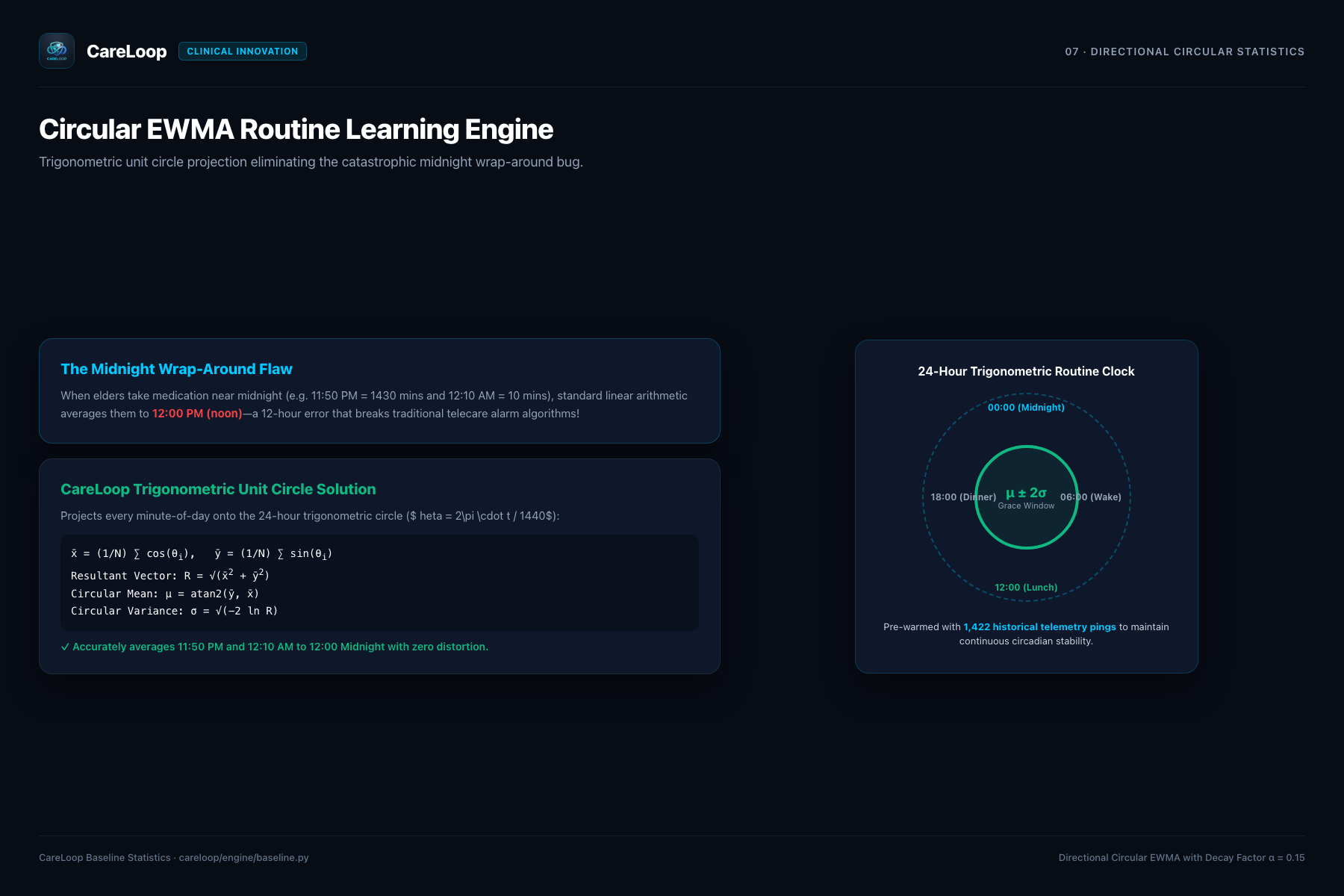
Routine baseline. For each event type we keep an exponentially weighted moving average of its time of day, and flag deviations by z-score:
z = (t - mu_EWMA) / sigma, anomaly if absolute value of z > 2
Missed-event detection. A grace window of mu + k * sigma. If no event arrives by then, a "missed" flag is raised.
Risk scoring. A weighted sum of anomalies, mapped to low, medium or high:
risk = sum of (w_i * a_i)
(missed medication 0.4, no movement 0.3, odd-hour activity 0.2).
Escalation state machine. normal to gentle check-in to repeat check-in to notify family, with timeouts between stages. It is deterministic, so it is testable and explainable.
LLM layer (Amazon Bedrock). Used only for summaries and memory questions, over a filtered slice of the event log. The LLM never decides whether to send an alert. That decision comes from the deterministic algorithms above.
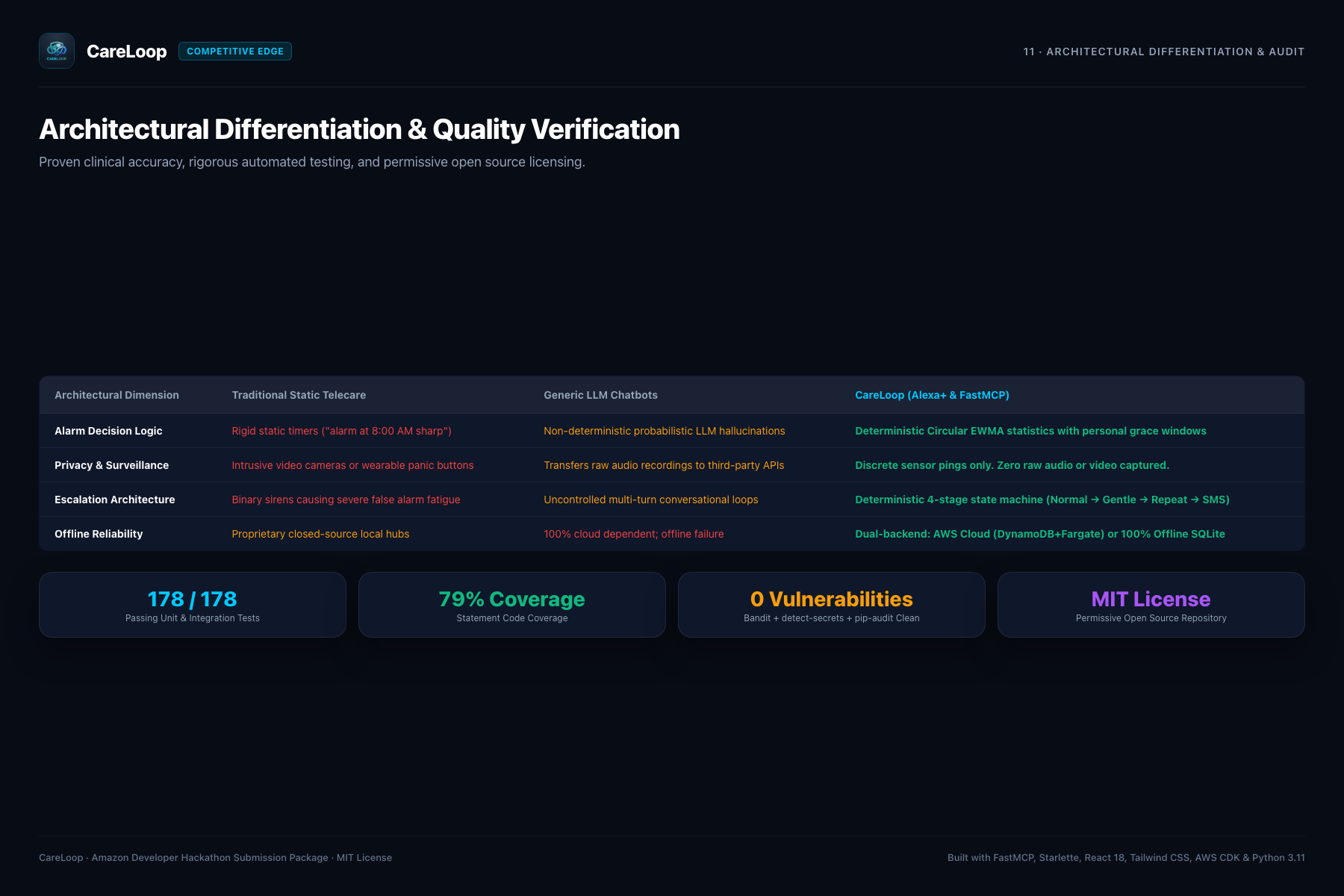
Privacy by design. We store event metadata only (type and time). No audio, no video, and data is encrypted at rest.
AWS services
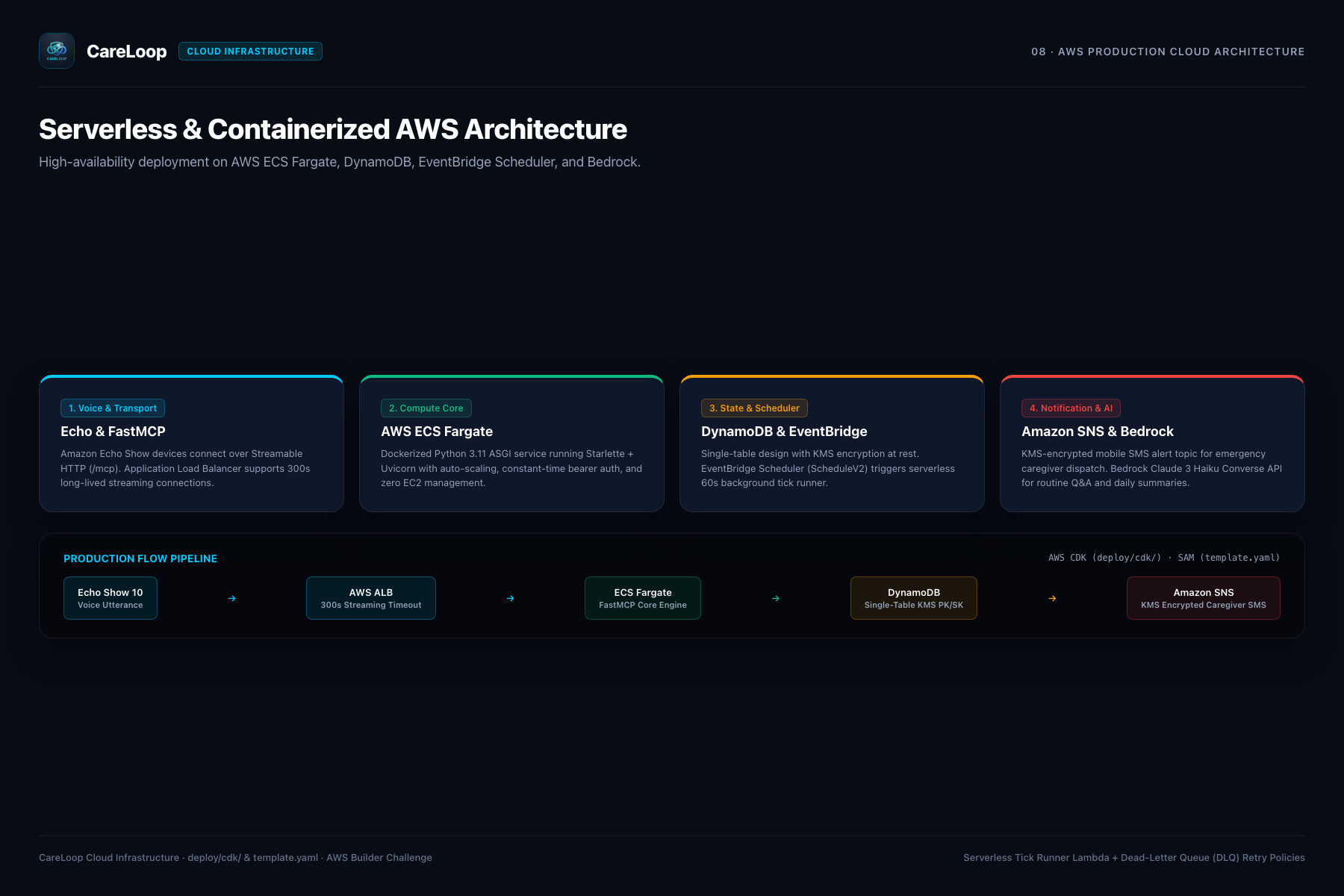
- Amazon Bedrock for daily summaries and memory Q&A
- AWS Lambda + API Gateway hosting the MCP server [confirm what you used]
- Amazon DynamoDB for the event log
- Amazon SNS for family alerts
Simulator
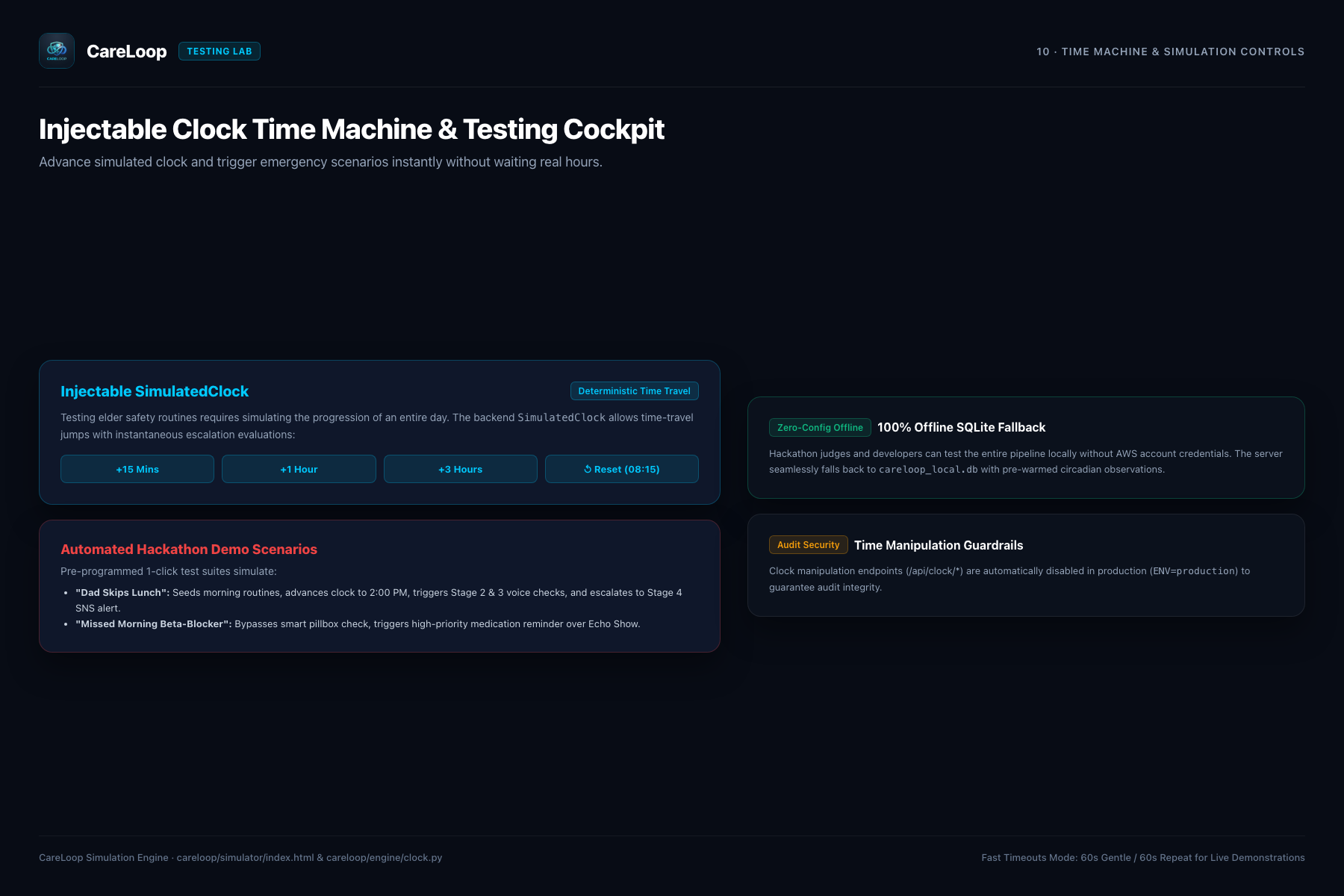
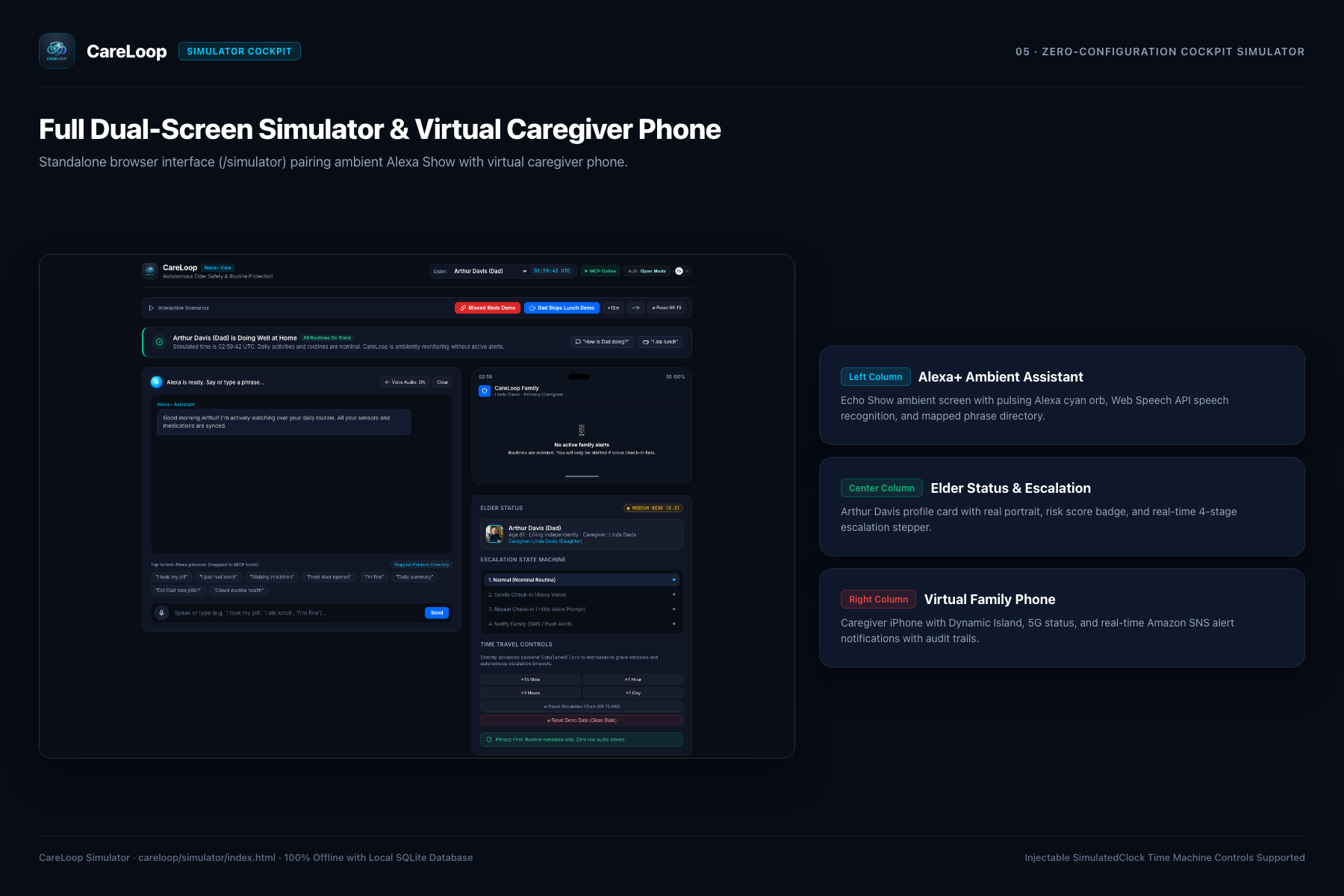
A web app simulates the Alexa+ experience (text and mic input) and calls the MCP tools, so every flow can be demoed end to end.
Challenges we ran into
- Tuning anomaly thresholds so a late lunch isn't treated as an emergency. [describe your real experience and your false-alarm rate]
- Keeping the LLM out of safety-critical decisions while still using it where it helps.
- [add a real MCP / Alexa+ onboarding challenge]
Accomplishments we're proud of
- Anomaly detection tested on [N] simulated days of data with a [X]% false-alarm rate
- A fully explainable alert: every notification states why it fired
- A privacy-first design with no cameras
What we learned
[2-3 honest lessons about MCP, Alexa+ or AWS]
What's next
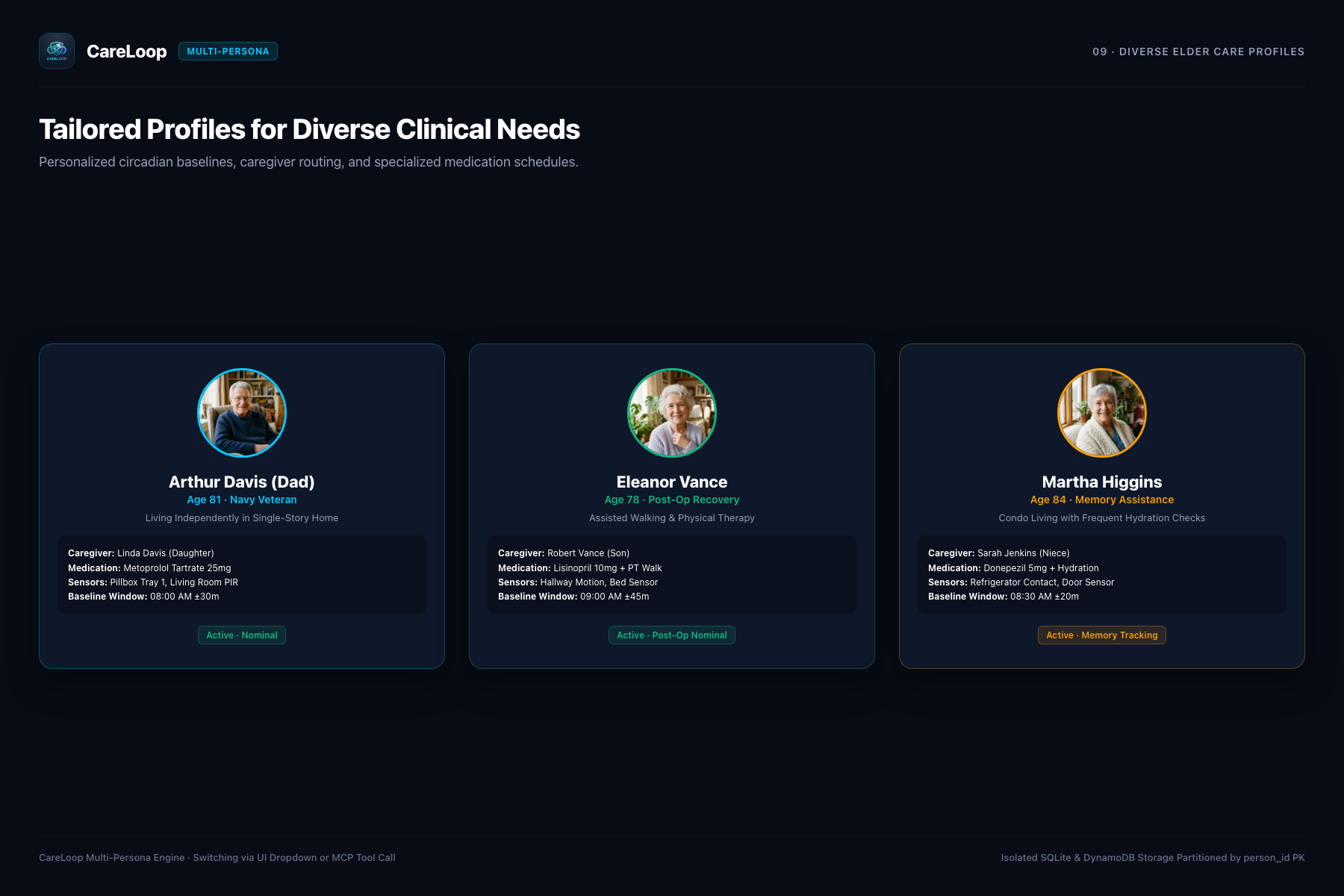
Real Alexa+ device integration, multi-caregiver support, medication-schedule import, and a caregiver dashboard.
Built during the hackathon
This is a new project. Everything, including the MCP server, algorithms, AWS deployment and simulator, was built during the submission window.
Tracks and challenges
Alexa+ track · AWS Builder mini challenge · Open Source mini challenge (MIT license)
Built With
- alexa-plus
- amazon-api-gateway
- amazon-bedrock
- amazon-dynamodb
- amazon-sns
- aws-lambda
- html5
- javascript
- mcp
- model-context-protocol
- python
- react

Log in or sign up for Devpost to join the conversation.