-

CareLoop Logo
-
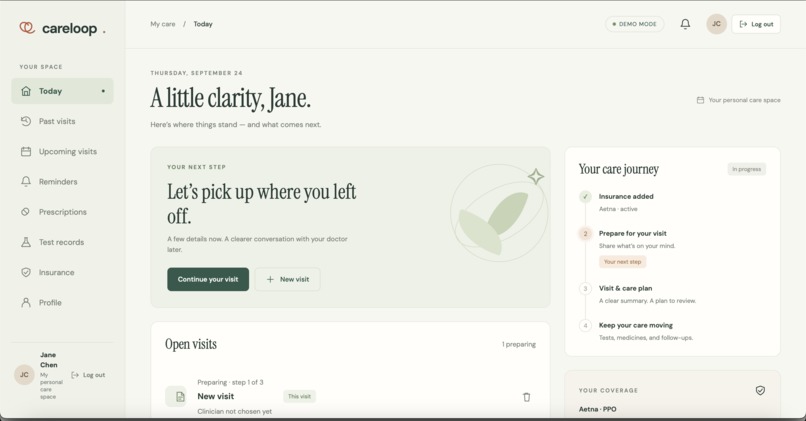
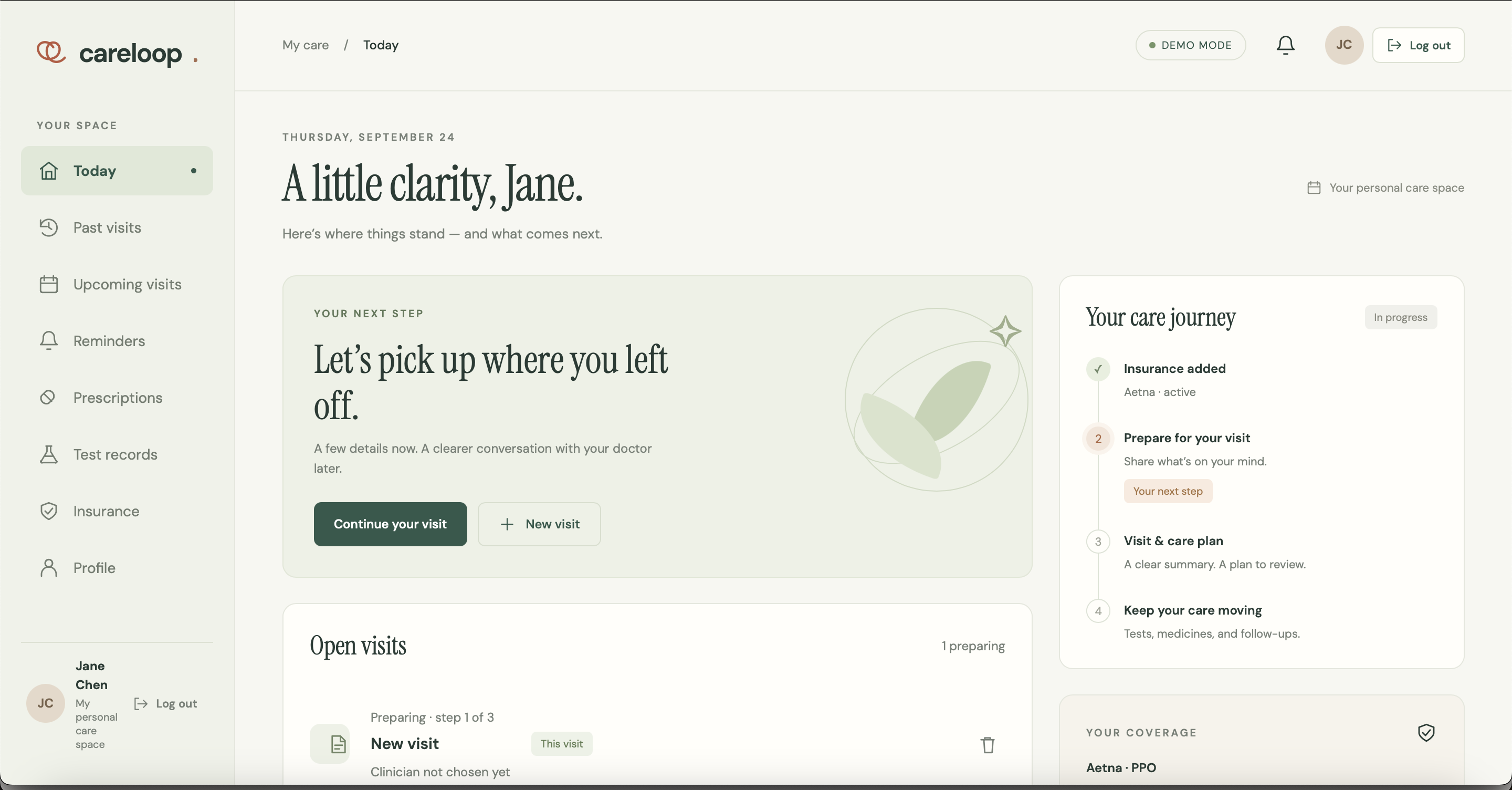
Home Screen
-
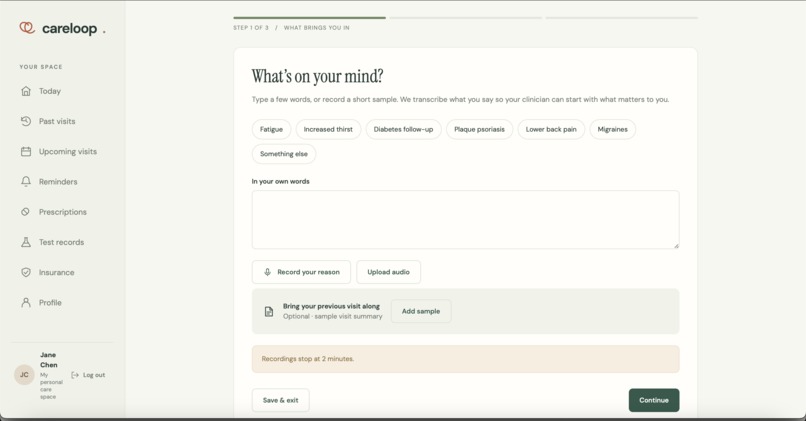
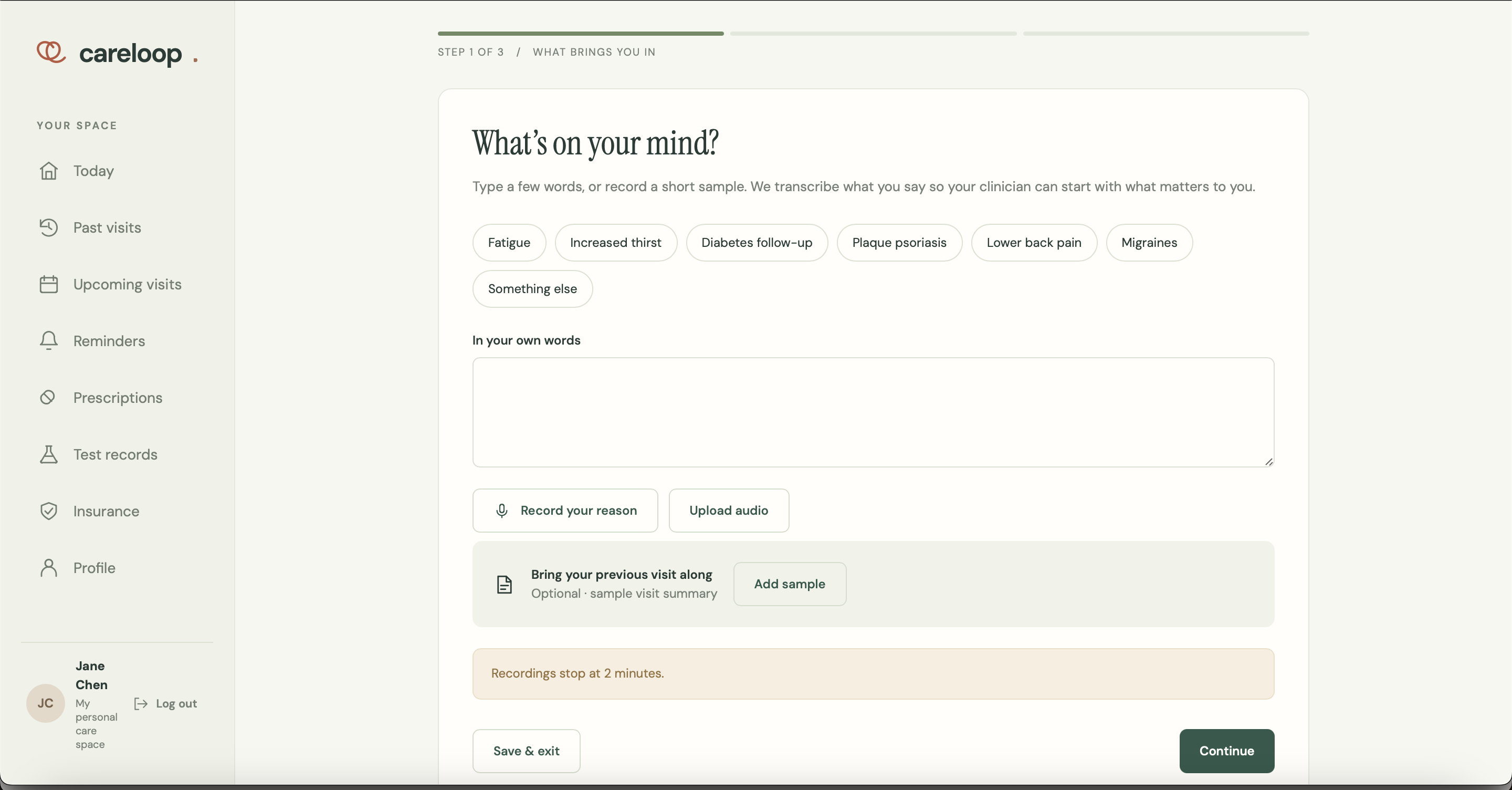
Visit Screen (Reason for visit)
-
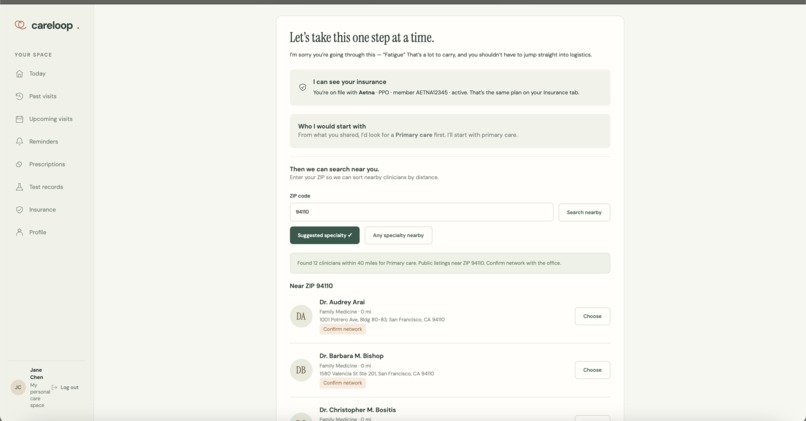
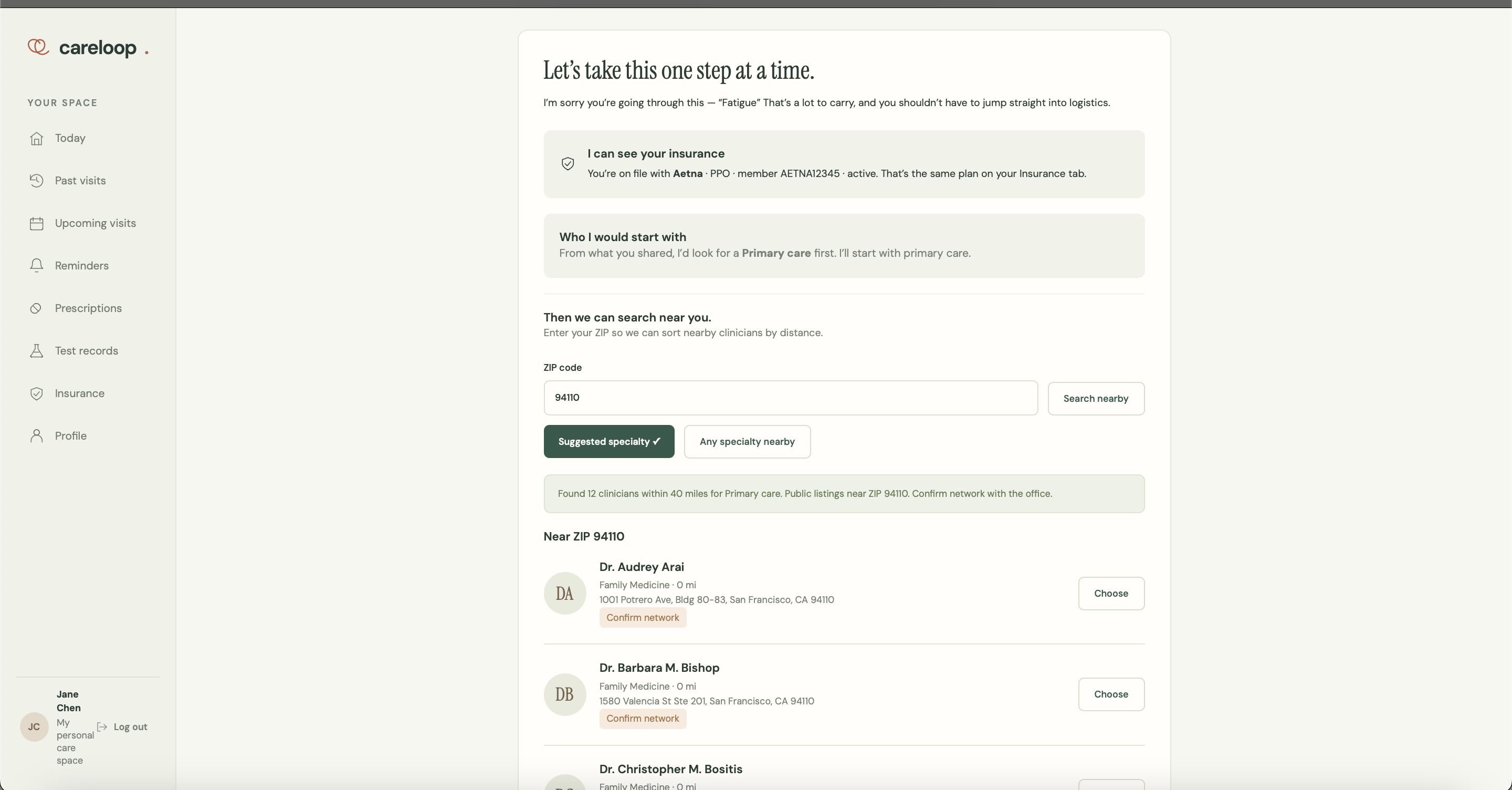
Finding nearby physicians
-
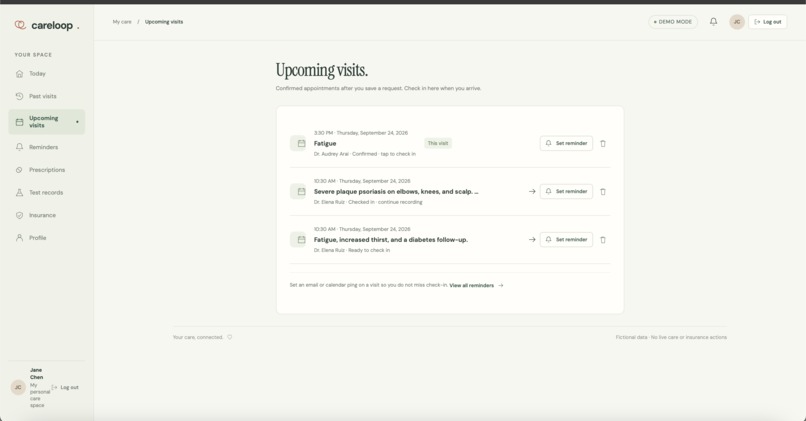
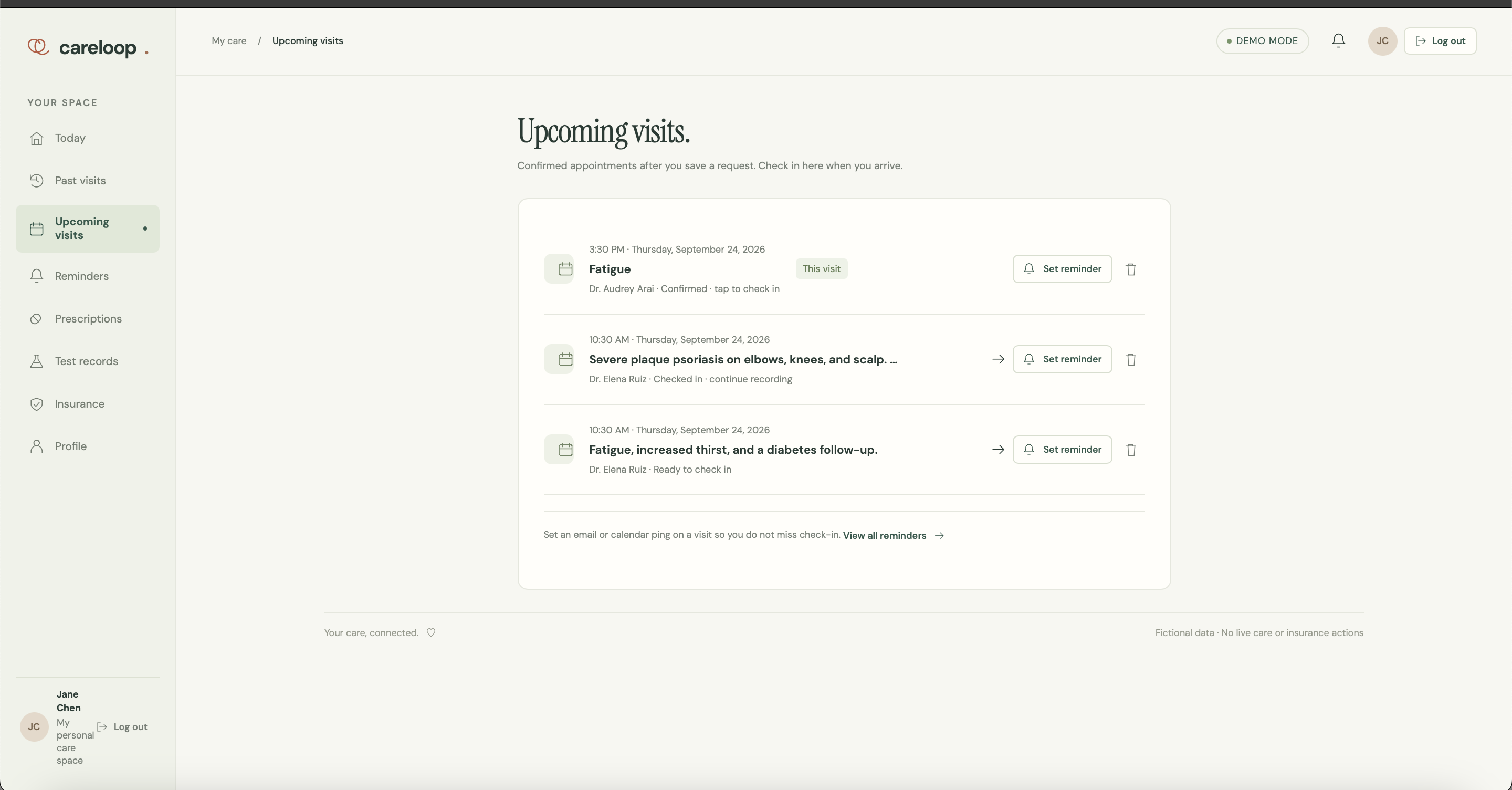
Upcoming Visits
-
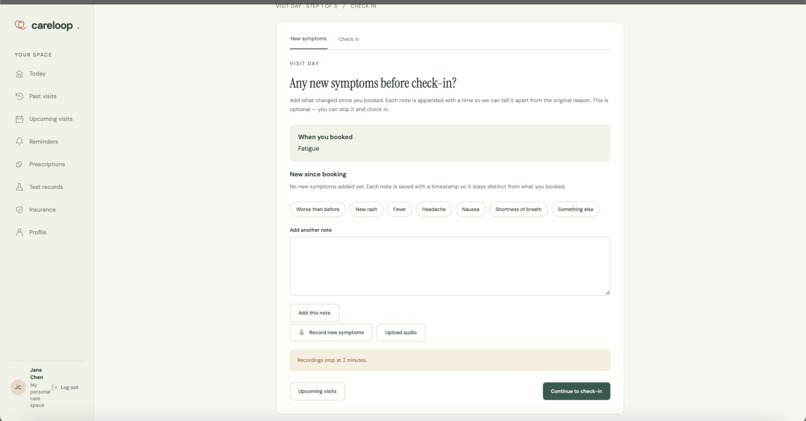
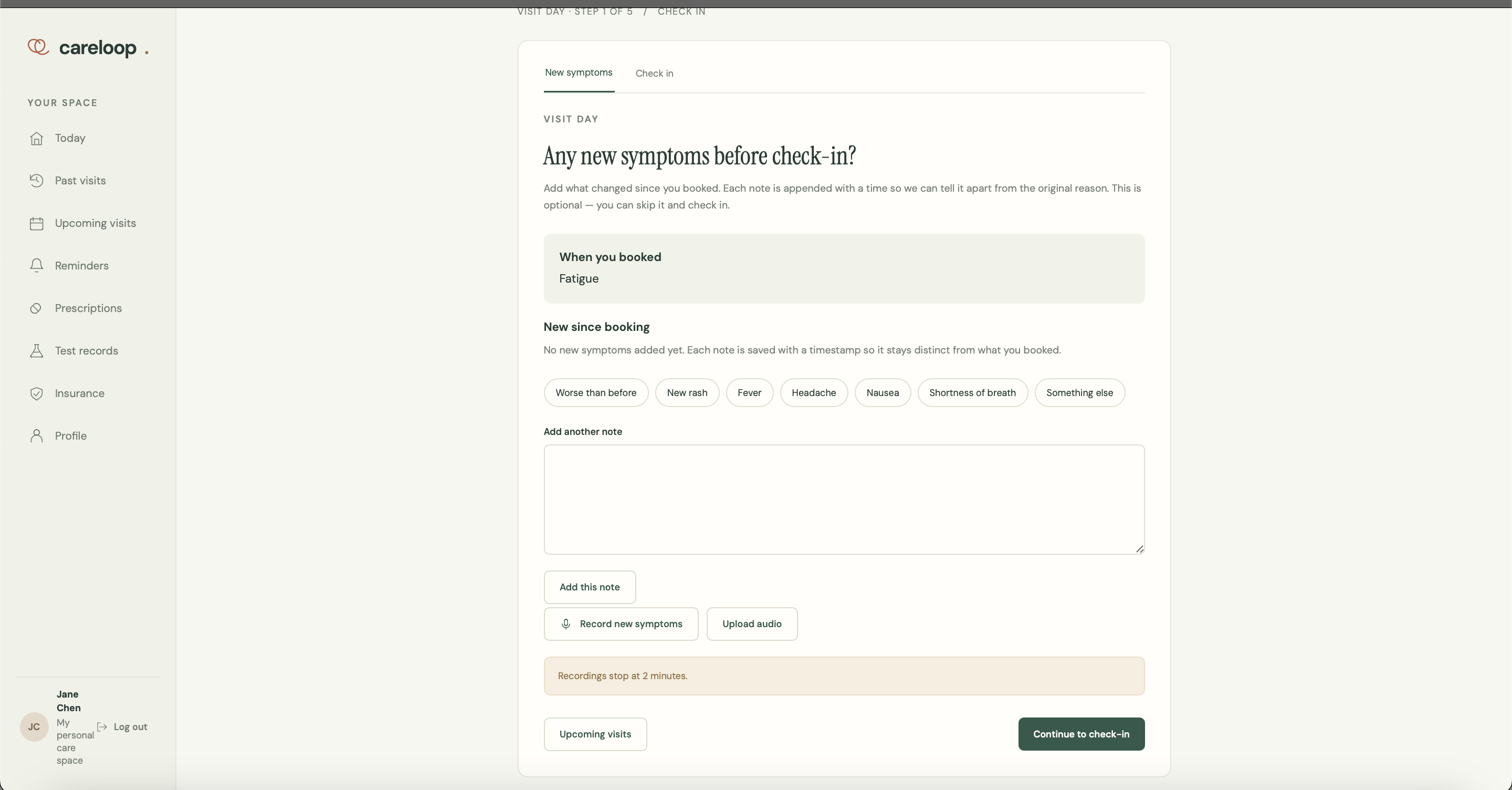
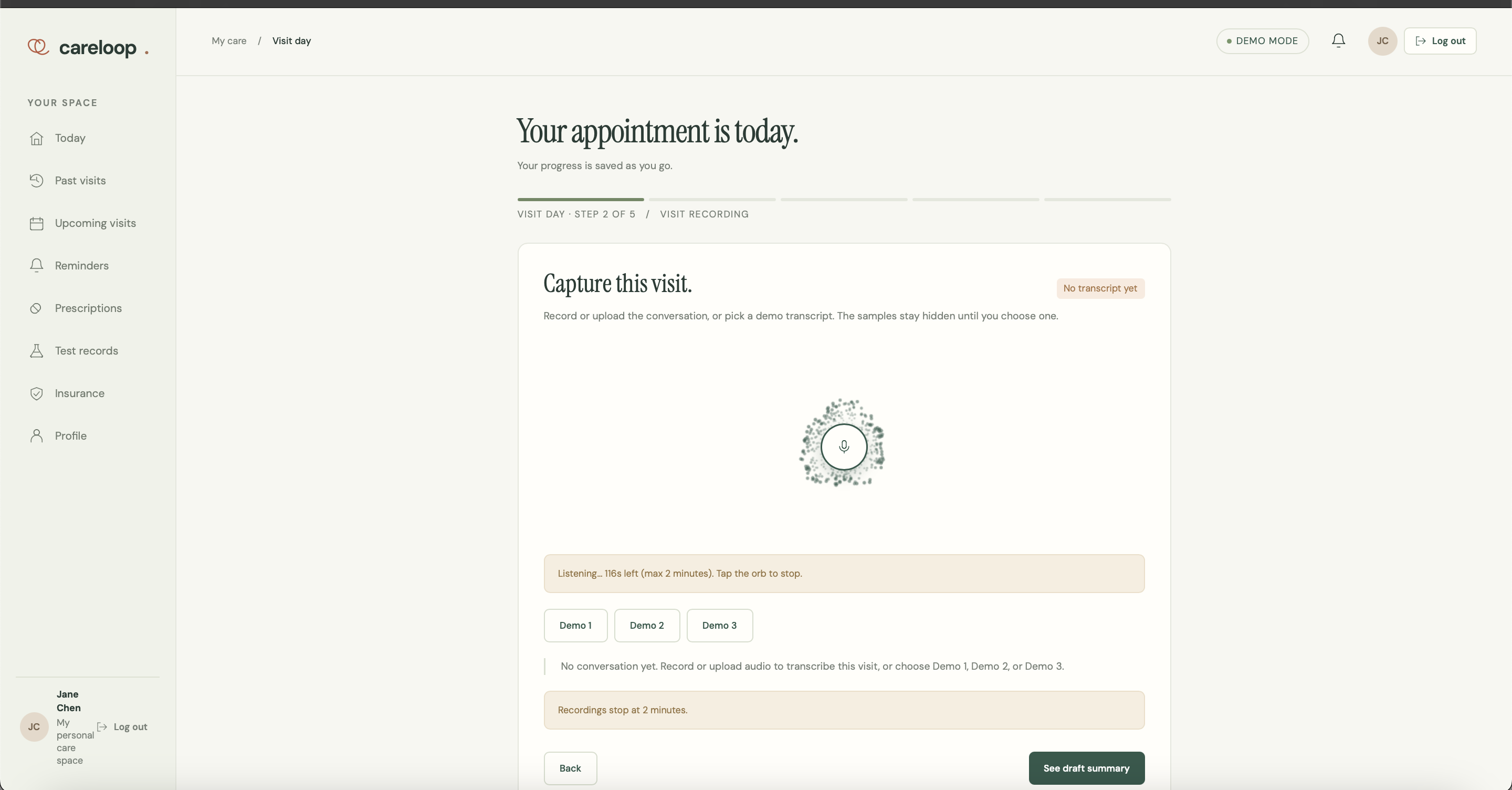
Visit Day Screen
-
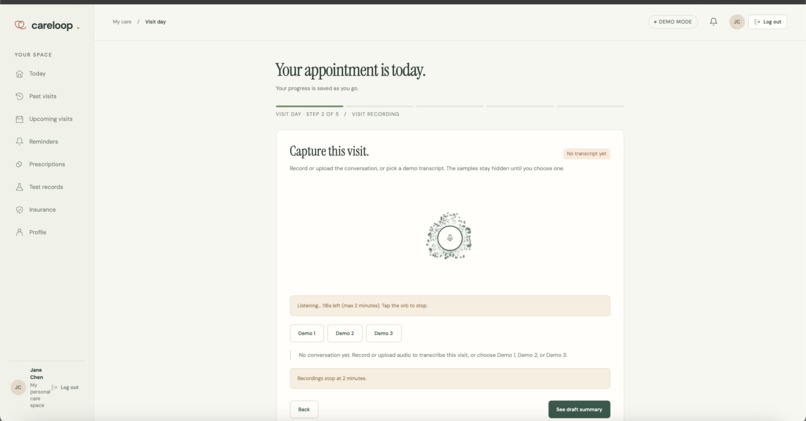
Conversation between doctor and patient
-
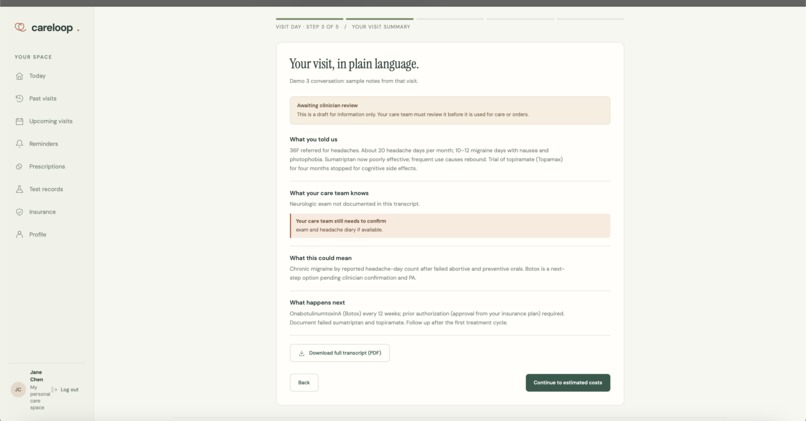
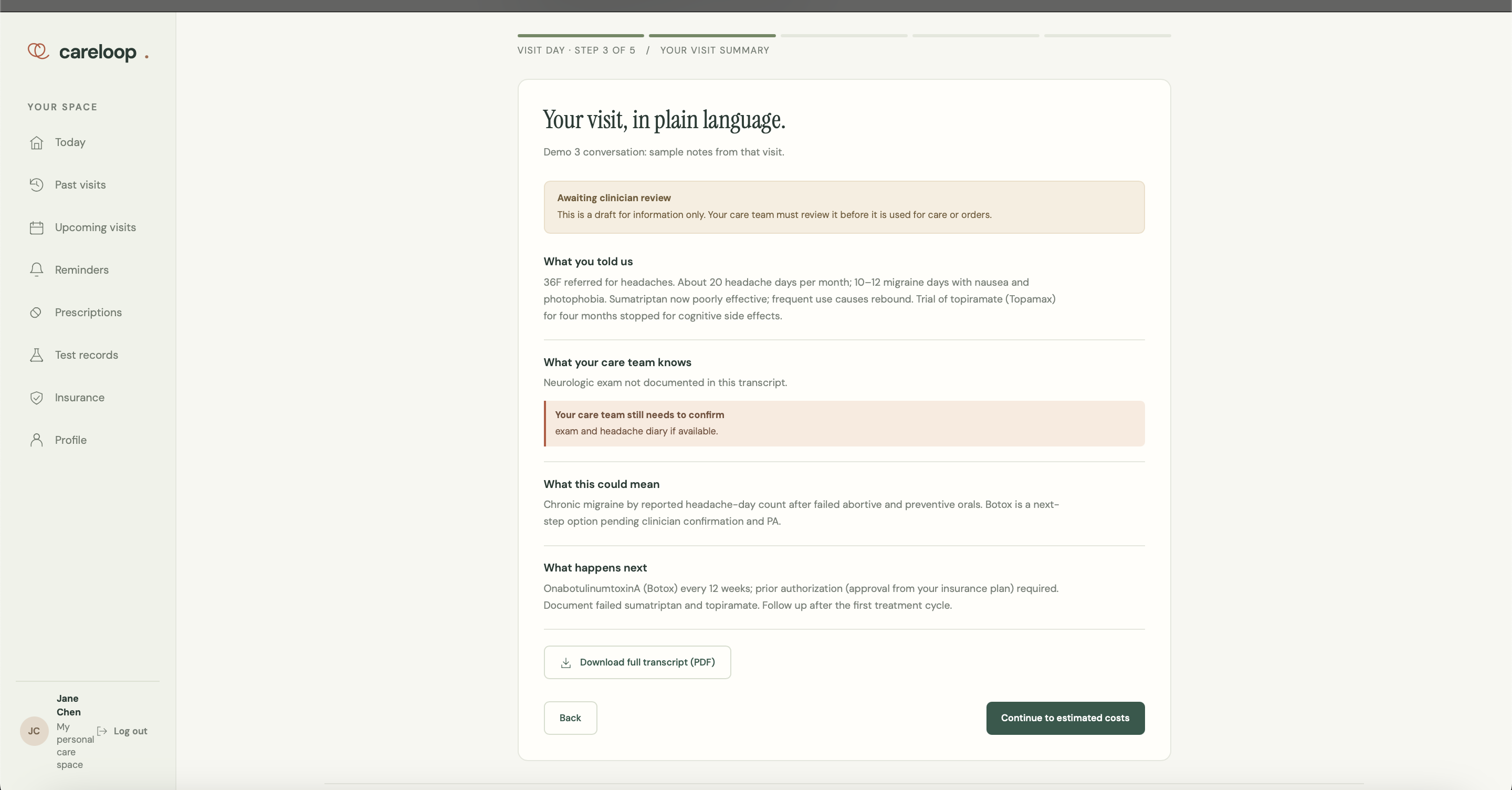
Summary of the conversation
-
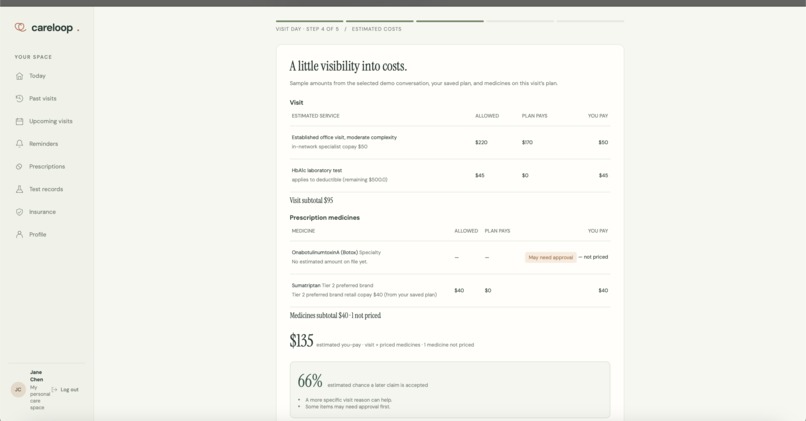
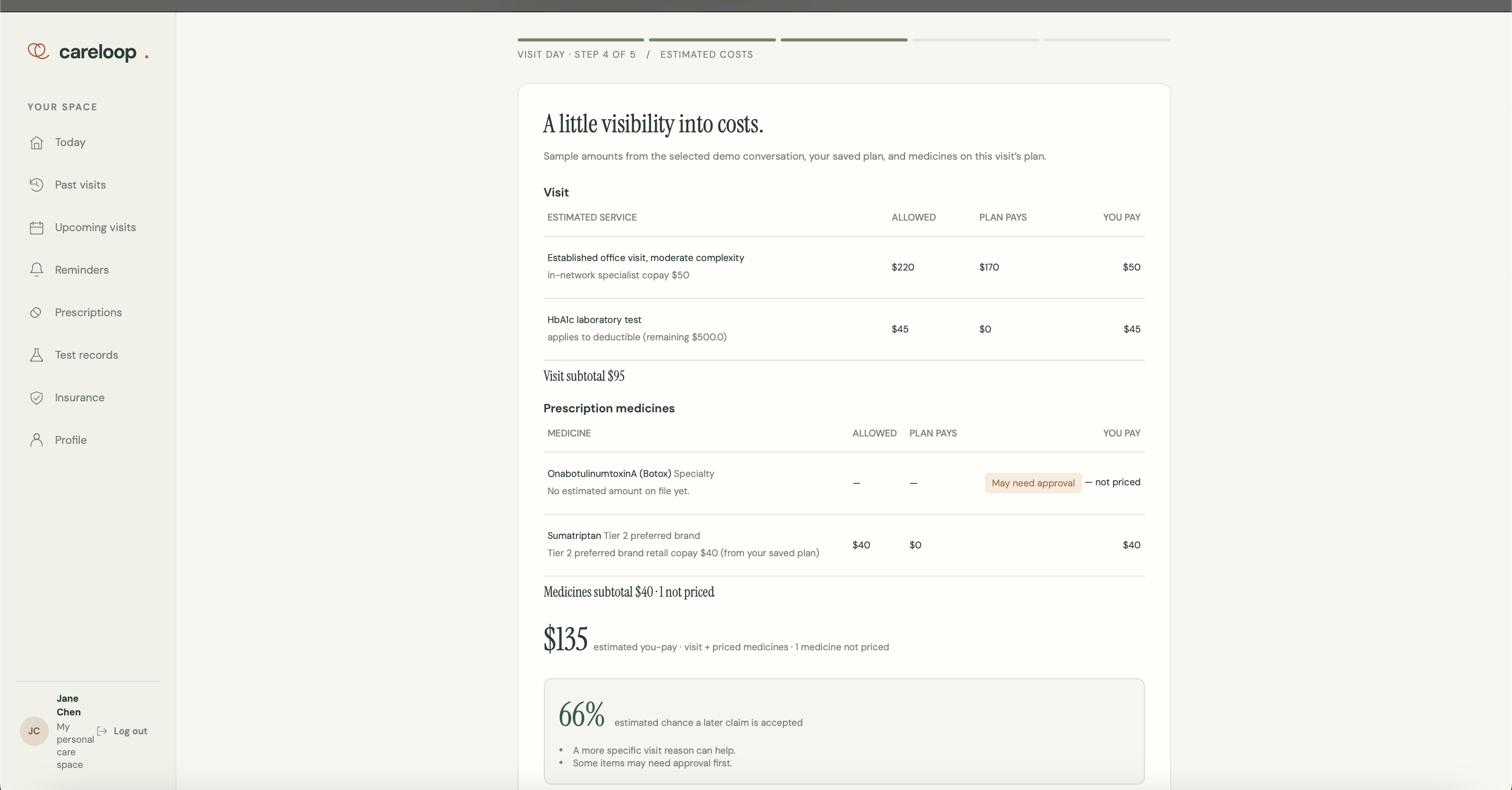
Estimated Cost Screen
-
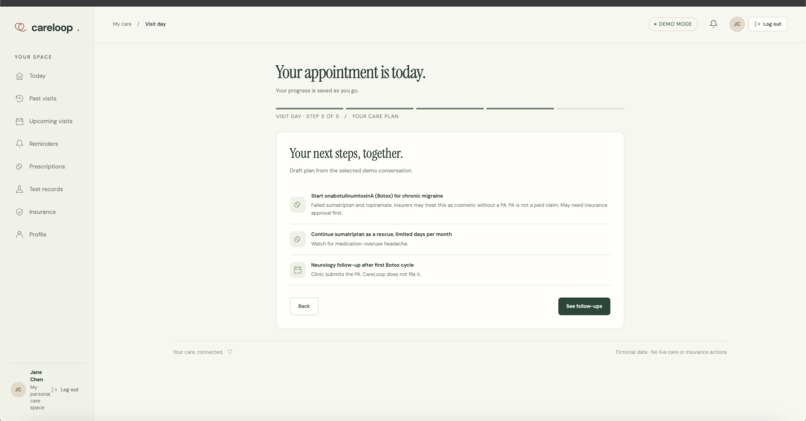
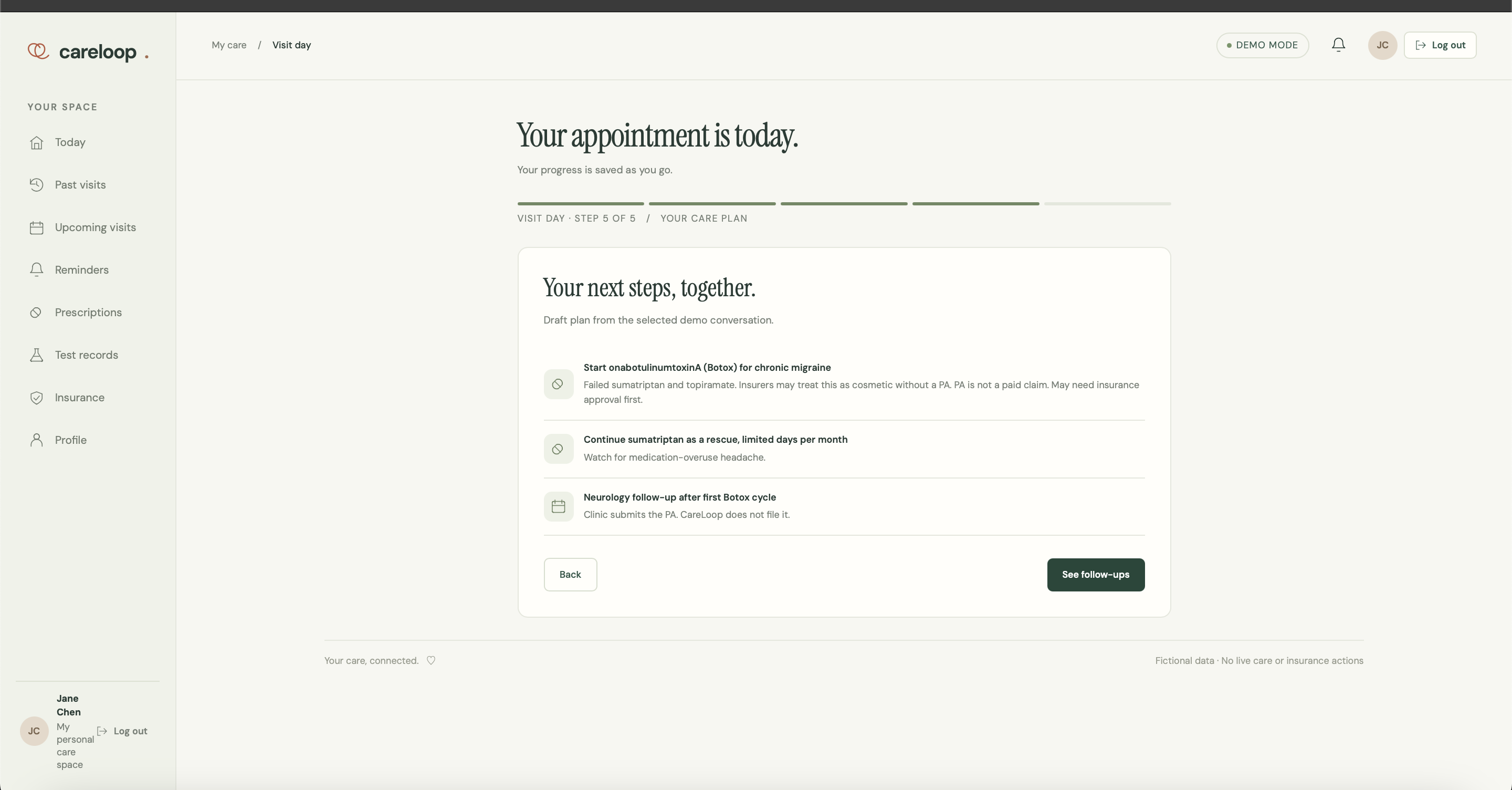
Next Steps
-
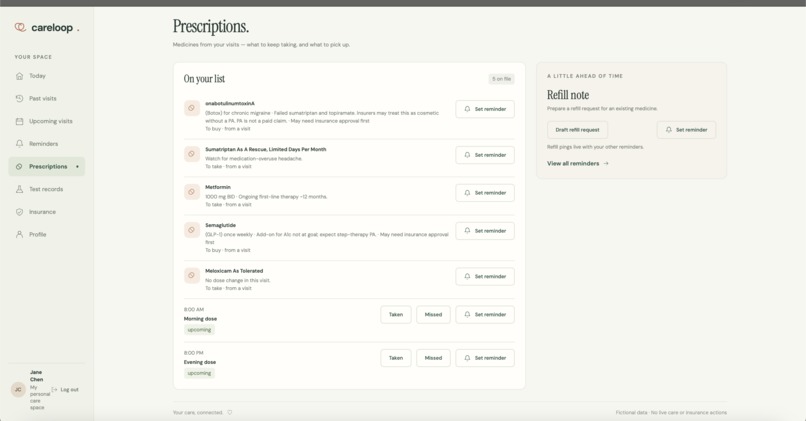
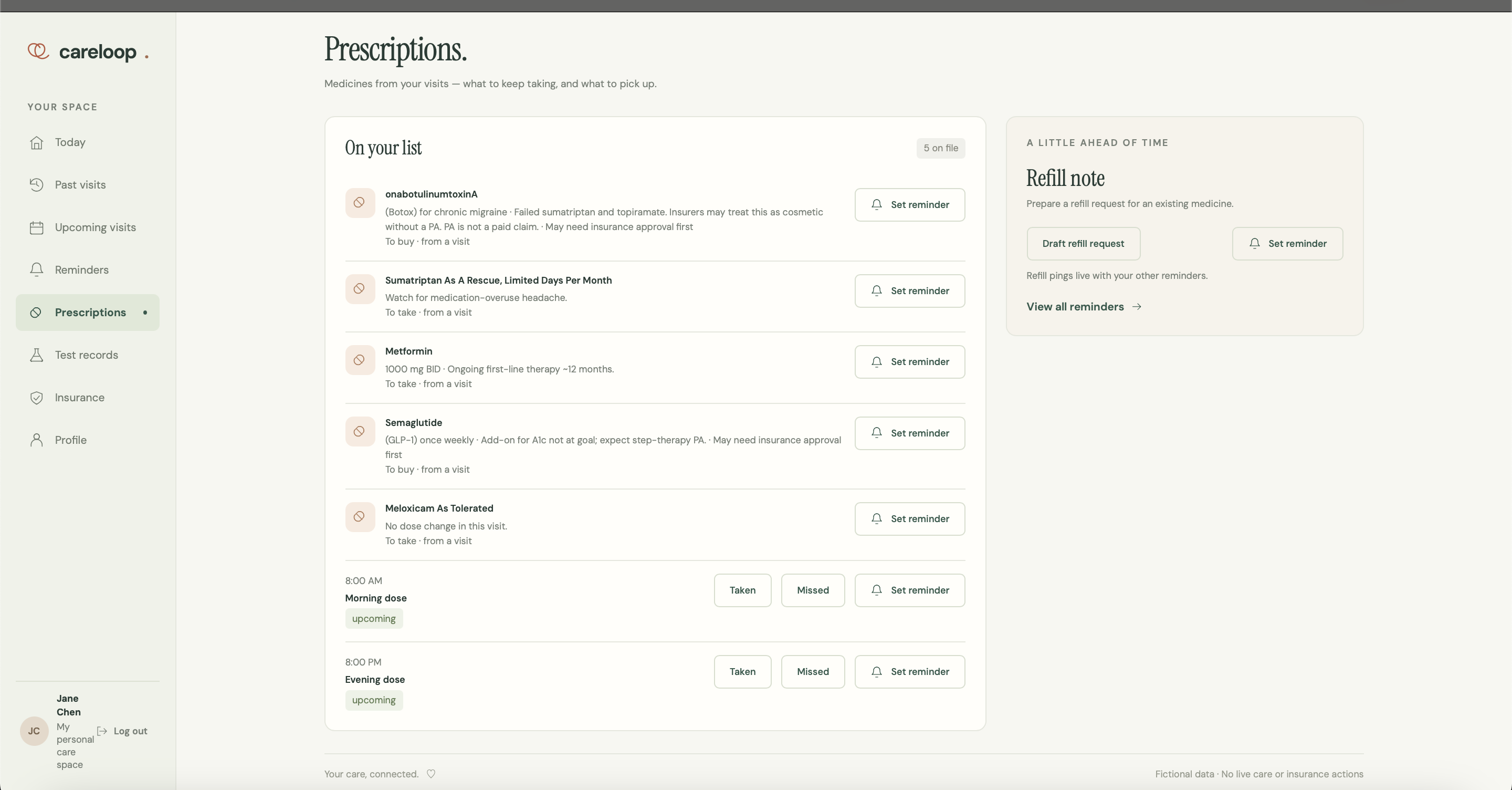
Prescription Doses
-
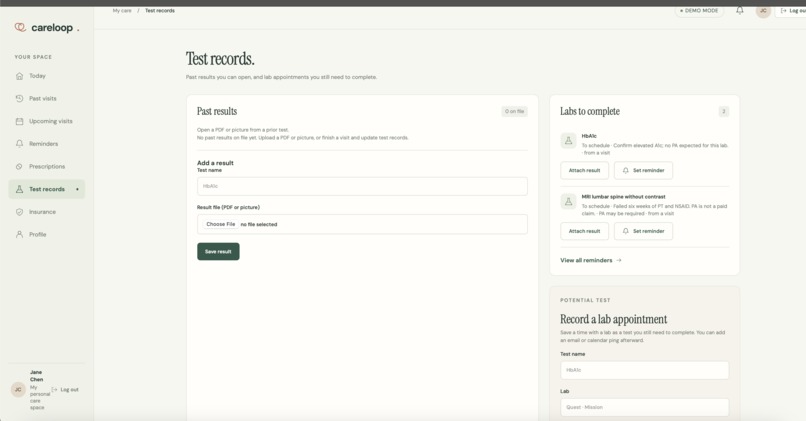
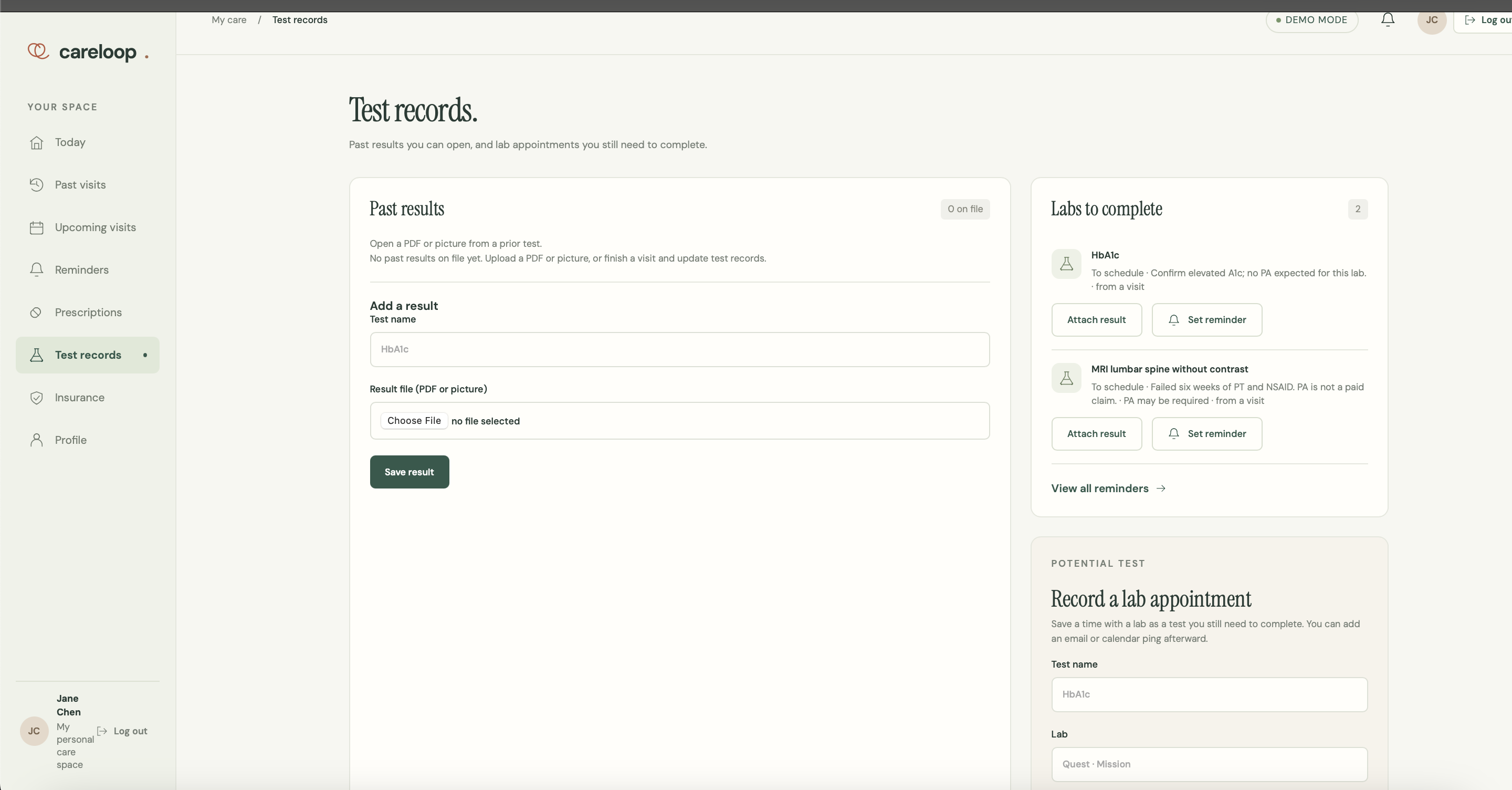
Test Screen
-
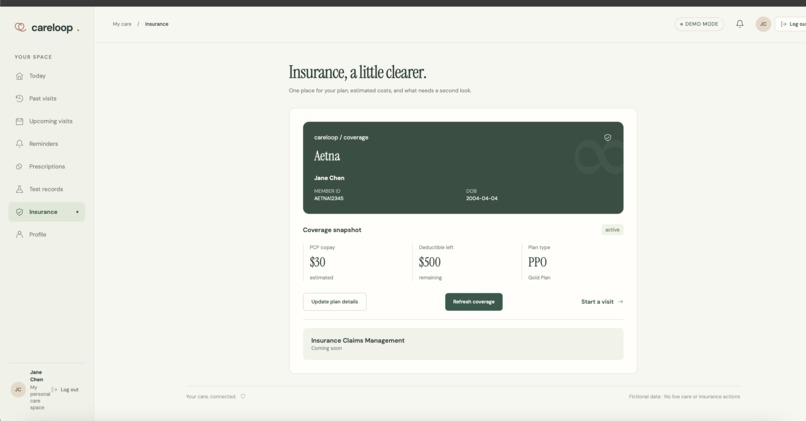
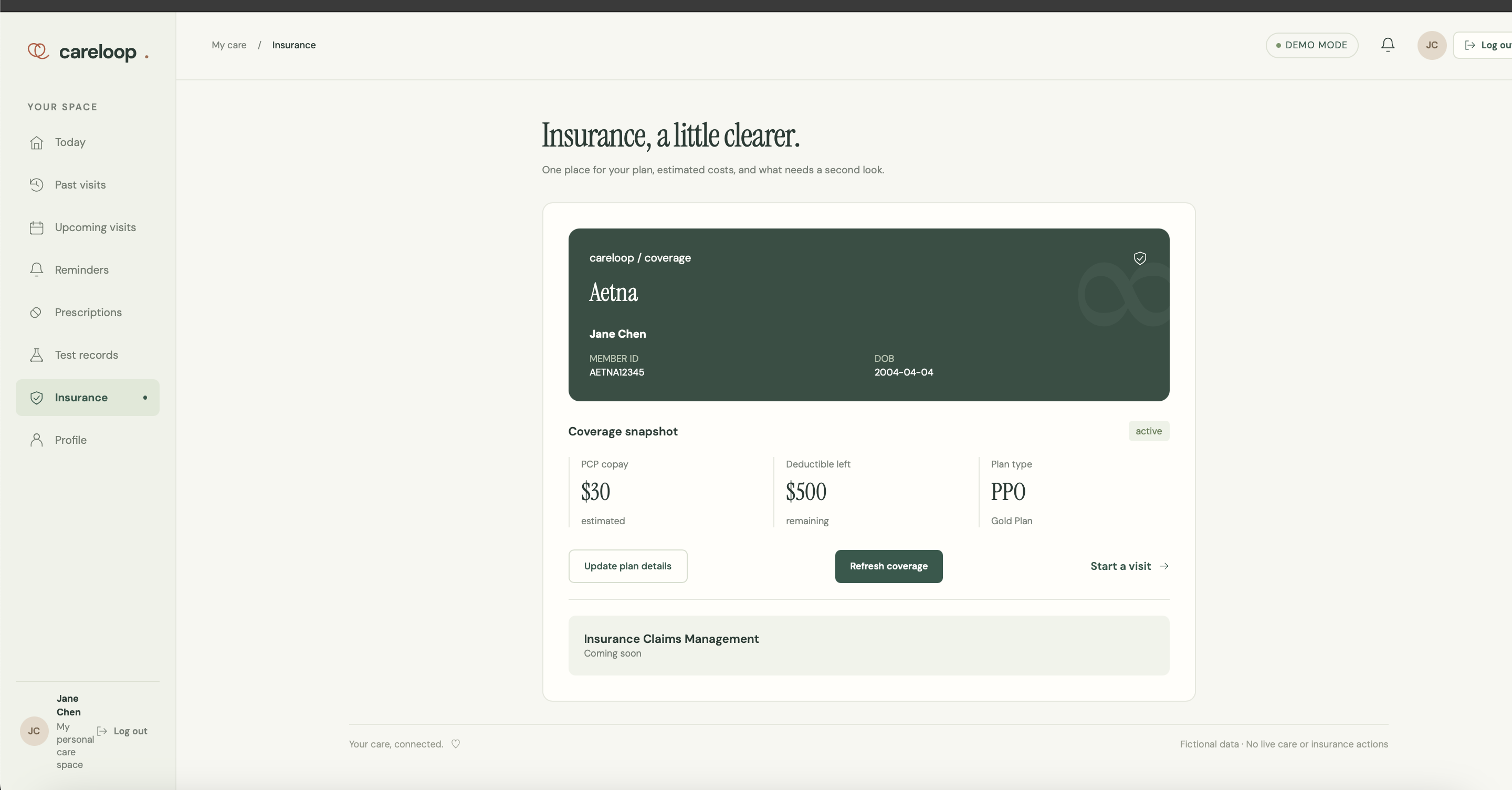
Insurance Screen
-
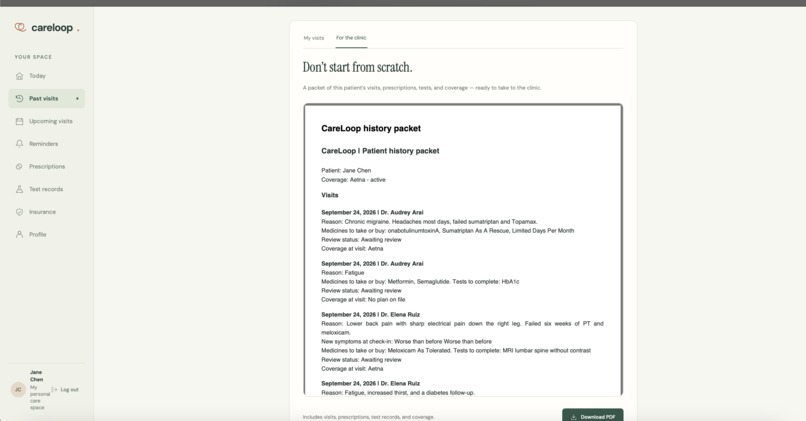
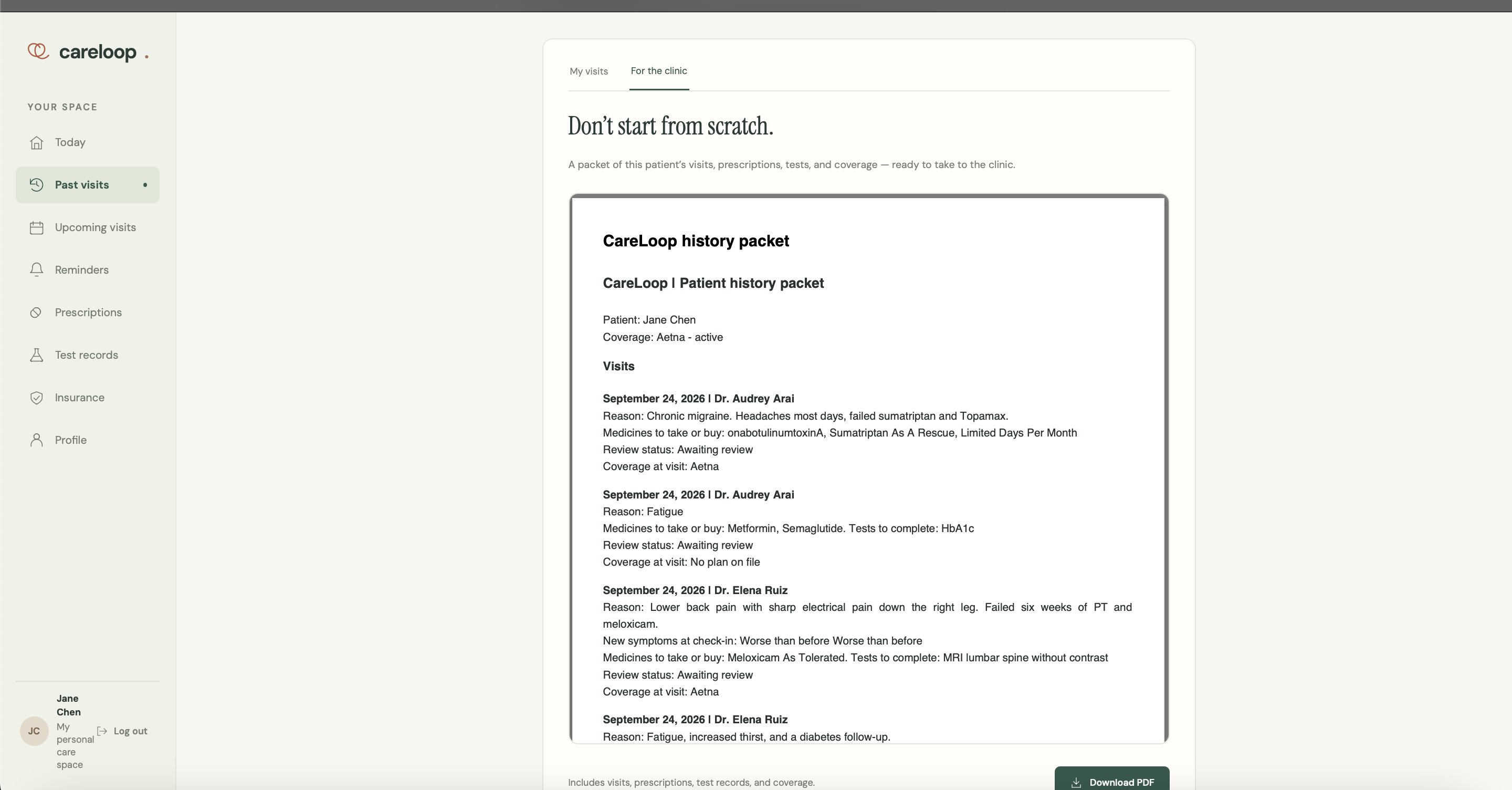
History for the Clinics

Updated Challenges only. Paste the full block:
Inspiration
A few years ago, someone close to one of our teammates had surgery. The medical care was only half the story. After that came referrals, repeating history to every new clinician, tests, prescriptions, follow-ups, and insurance paperwork, all tracked by hand. We wanted to cut that friction so a patient does not have to restart their story at every step. We also found out that in 2024, 59% of individuals had multiple online medical records or patient portals (U.S. Office of the National Coordinator for Health IT), and only 7% used an app or portal that organized records from multiple sources (ONC patient portal data). 30% of Medicare beneficiaries saw five or more physicians within one year (Medicare outpatient care trends, 2019) so we had data backed proof about our problem statement.
What it does
CareLoop is a patient app for one care thread. On a first visit it helps with coverage, finding in-network clinicians, and keeping a record of the conversation with the doctor so it can be reviewed later. It also holds prescriptions, tests, follow-ups, refills, and the same record on a return visit. Drafts stay drafts. The app does not act like a doctor or like the insurance company.
How we built it
We built a FastAPI backend and a vanilla JavaScript client, hosted on Vercel, with Supabase for auth and patient data. For insurance we used Stedi in a sandbox where a live payer connection was not realistic for a hackathon. For the visit itself we worked on diarization, speech-to-text, and summarizing the conversation with NLTK. The product is the journey: first visit through repeat visit, in one place.
Challenges we ran into
None of us grew up in the US healthcare system, so it took a while just to understand the process. We talked with people who grew up here or have lived here for years, and that helped a lot. Even then it was easy to mix up steps that feel like one thing to a patient but are separate in real life: checking if a plan is active, getting permission before a procedure, and dealing with the bill later. Live insurance data is messy on top of that, so we used a sandbox. Fitting a full loop into a short hackathon, including how sessions work and keeping drafts as drafts, was the other hard part.
Accomplishments that we're proud of
We shipped an end-to-end patient journey in a short window, as a team still new to the US. We got a real-feeling loop working: coverage, visit record, meds, tests, and coming back again, without pretending we could approve care or pay a claim. We also got new tools into production for us (Vercel, Supabase, Stedi) instead of leaving them as slides.
What we learned
Most of us are not US citizens, and this was our first month in the United States. Building this forced us to learn how care actually moves here. We also learned the stack as we went: Vercel, Supabase, Stedi’s insurance APIs, and speech work (diarization, STT, and summarization). The main product lesson was that the handoff is the problem, not one more form.
What's next for CareLoop
We want to cut the remaining manual work, the pieces patients still chase by hand, and keep building so care does not restart at every step. With below ideas helping us achieve that ->
Pharmacy checkout. Partner with CVS and other pharmacies to securely share clinician-approved prescriptions and make ordering, delivery, or pickup easier.
Insurance claims agent. With patient authorization, talk to insurers, explain status, gather documents, track what needs to happen, and prepare responses for the patient to review.
Appointment agent. Find in-network providers, compare availability, schedule or reschedule visits, prepare documents, and coordinate follow-ups.
Automated check-in. Fill hospital and clinic check-in or digital intake forms so people are not rewriting the same clipboard paperwork.
Insurance tie-ups and discounts. Partner with insurers on pre-negotiated visit rates, member discounts, and lower costs at the time of care.
Multi-factor security. Add biometric and hardware-backed MFA so health records and coverage profiles stay locked down.

Log in or sign up for Devpost to join the conversation.