-
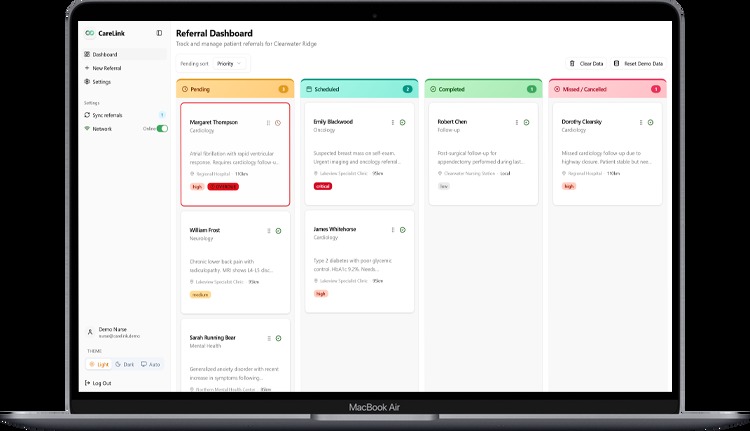
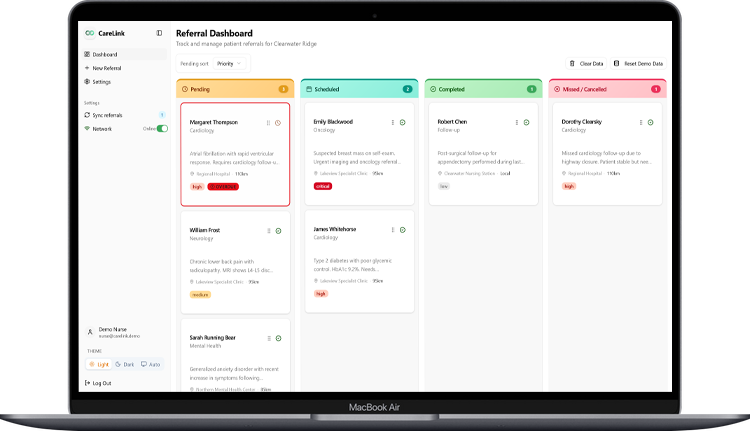
A mockup of the nurse dashboard on CareLink
-
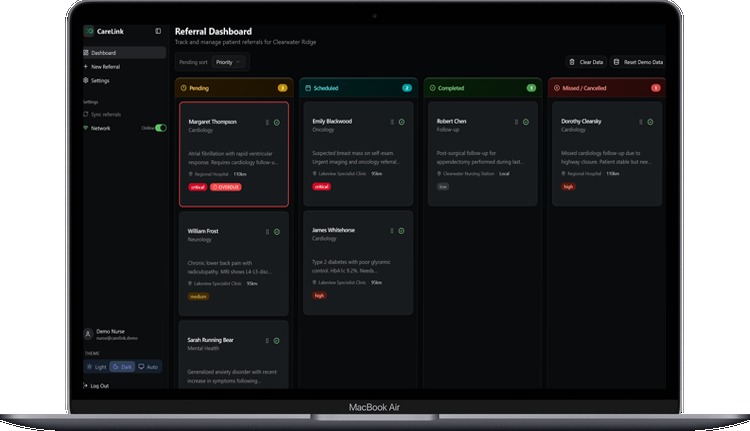
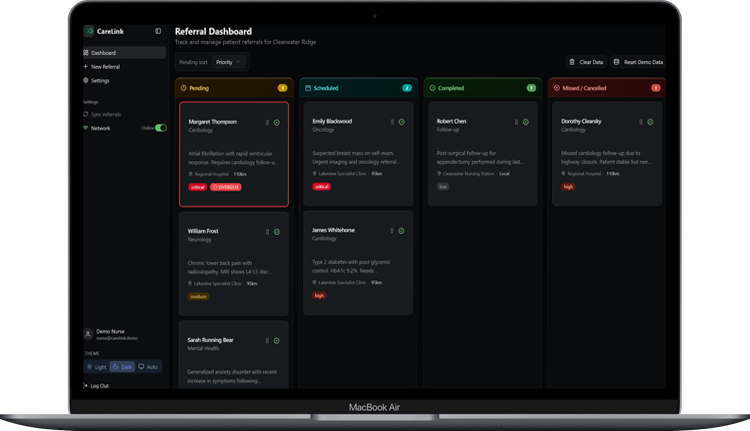
A mockup of the dark mode nurse dashboard on CareLink
-
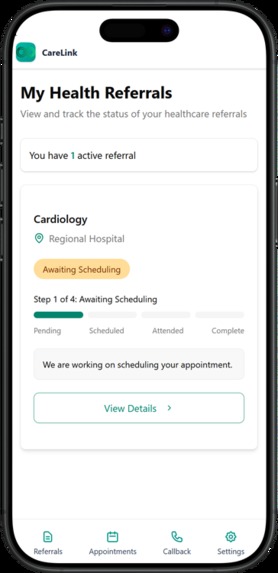
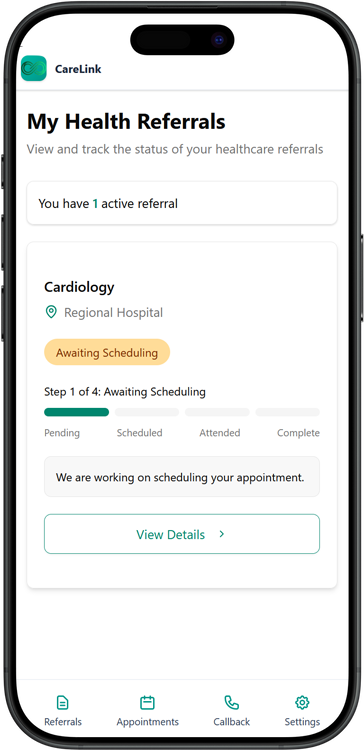
A mockup of the patient dashboard on CareLink
-
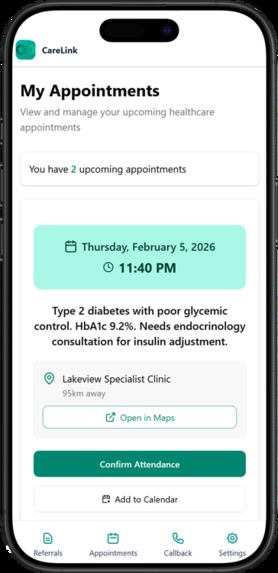
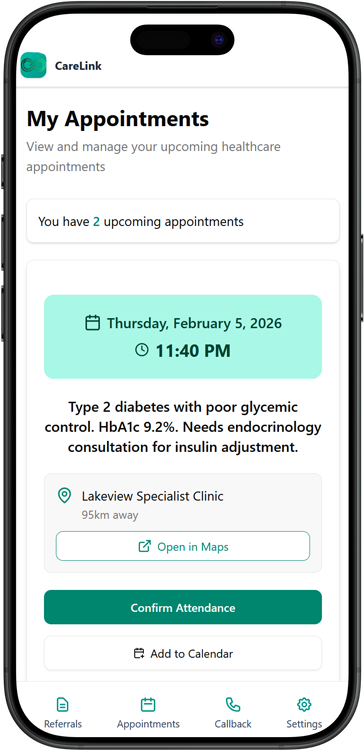
A mockup of the patient appointments screen on CareLink
CareLink - Hackathon Submission
Inspiration
The Spark 2026 hackathon challenge opened our eyes to a reality we hadn't fully appreciated: in remote Canadian communities, something as simple as a lost referral can mean months of additional waiting for critical care. With specialist wait times already averaging 30 weeks, every referral that slips through the cracks compounds the problem. We wanted to build something practical - a tool that could work without reliable internet, respect the workflows nurses already use, and give patients visibility into their own care journey.
What it does
CareLink is a Progressive Web Application designed to solve the critical problem of lost patient referrals in remote Canadian healthcare communities. At Clearwater Ridge nursing station, healthcare workers currently track referrals using paper forms, spreadsheets, and phone calls - a system where referrals frequently get "lost," resulting in missed appointments and delayed care.
For Healthcare Nurses:
- Visual Kanban Dashboard - Drag-and-drop board tracking referrals across statuses (Pending, Scheduled, Completed, Missed/Cancelled) with automatic overdue alerts for referrals pending over 14 days
- OCR Document Scanner - Photograph paper referrals and automatically extract patient information using AI vision, eliminating manual transcription errors
- Patient Management - Create and manage patient records with smart fuzzy matching for linking referrals
- Request Approval System - Review and approve/deny patient reschedule and cancellation requests
For Patients:
- My Referrals Portal - View all referrals with patient-friendly summaries and status tracking
- Appointment Calendar - View scheduled appointments, add to device calendar, confirm attendance, and request reschedules
- Smart QR Wallet - Generate shareable QR codes with critical health information for medical transfers (works offline, future feature)
- SMS Reminders - Receive appointment reminders and confirm attendance via text message
Offline-First Design: The entire application works without internet connectivity - critical for remote communities with unreliable connections. Changes sync automatically when connectivity returns.
How we built it
- Frontend: Next.js 16, React 19, TypeScript, Tailwind CSS 4, shadcn/ui
- Local Database: RxDB with IndexedDB for client-side reactive storage
- Server Database: CouchDB for document-oriented offline sync
- PWA: Serwist for service worker management and offline caching
- OCR: Groq API with LLaMA Vision for medical document processing
- SMS: Twilio for appointment reminders with bot-in-the-loop responses (future addition)
- Additional: React Hook Form + Zod for validation, @dnd-kit for drag-and-drop, Fuse.js for fuzzy search
Challenges we ran into
Offline sync complexity - Building a true offline-first application with bidirectional sync was our biggest technical hurdle. Getting RxDB and CouchDB replication to work reliably across different network conditions, handling schema migrations, and ensuring data integrity during sync conflicts required careful architecture decisions. We had to implement role-based replication where nurses get full read-write access while patients have read-only replication.
Time constraints - Like any hackathon, we had ambitious goals and limited time. We had to prioritize features carefully, focusing on the core referral tracking workflow while leaving some nice-to-haves for future development.
Accomplishments that we're proud of
OCR document scanning - We're most proud of integrating AI-powered document scanning that can photograph paper referrals and automatically extract patient information. Using the Groq API with LLaMA Vision, nurses can simply snap a photo of a handwritten or printed referral form and have it automatically populate the digital system with patient name, diagnosis, priority level, and referral type. This eliminates the tedious manual transcription that often introduces errors and saves significant time in busy nursing stations.
What we learned
RxDB/CouchDB offline sync - We gained deep experience building offline-first applications using RxDB for client-side reactive storage with CouchDB replication. We learned about schema migrations, conflict resolution, and the nuances of bidirectional vs. pull-only replication patterns.
Healthcare domain knowledge - We developed a better understanding of healthcare referral workflows, the unique challenges of remote nursing stations, and the real-world impact of missed appointments on patient outcomes. We learned that simplicity and reliability matter more than feature count in healthcare applications.
AI/OCR integration - We learned how to effectively integrate vision models for document processing, including prompt engineering for medical document extraction and handling the variability of handwritten vs. printed forms.
What's next for CareLink
- Analytics dashboard - Add comprehensive analytics for tracking referral metrics, identifying bottlenecks, and measuring outcomes over time
- Enhanced QR wallet - Expand the patient QR wallet functionality to include more health information and improve the scanning/verification experience
- Transportation integration - Allow patients to request rides to their appointments, addressing a critical barrier to healthcare access in remote communities
- Mental health resources - Integrate better mental health support resources and referral pathways, recognizing the importance of mental wellness in overall healthcare


Log in or sign up for Devpost to join the conversation.