Inspiration
The strength of patients often roots from their caregivers who provide complete dedication yet receive minimal support in return. The process of caring for elderly parents or chronically ill partners creates both emotional exhaustion and social isolation for caregivers. I developed CareLens to provide emotional check-ins for both care recipients and their caregivers.
As a graduate student juggling multiple things like academics, work, and personal responsibilities, I would often find myself overwhelmed and mentally exhausted. In those moment just having a space to pause and feel heard inspired me to develop CareLens. The tool functions as a comforting reflection space for caregivers and students and anyone who needs to release their daily burdens but it does not replace human interaction or professional healthcare.
I wanted to develop an interface which would be both empathetic and intelligent and soft to use as a digital companion that actually understands rather than just listening.
What it does
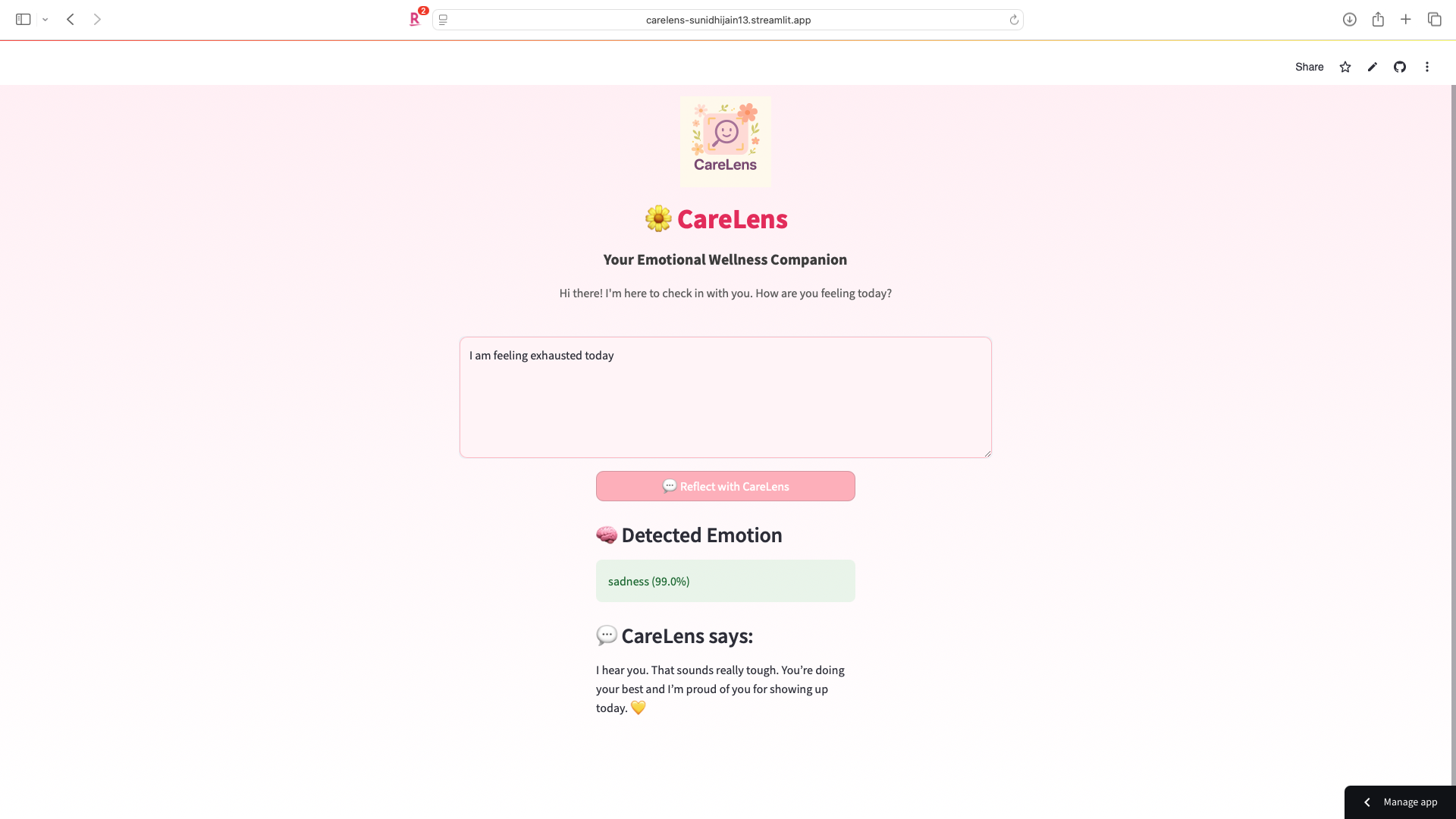
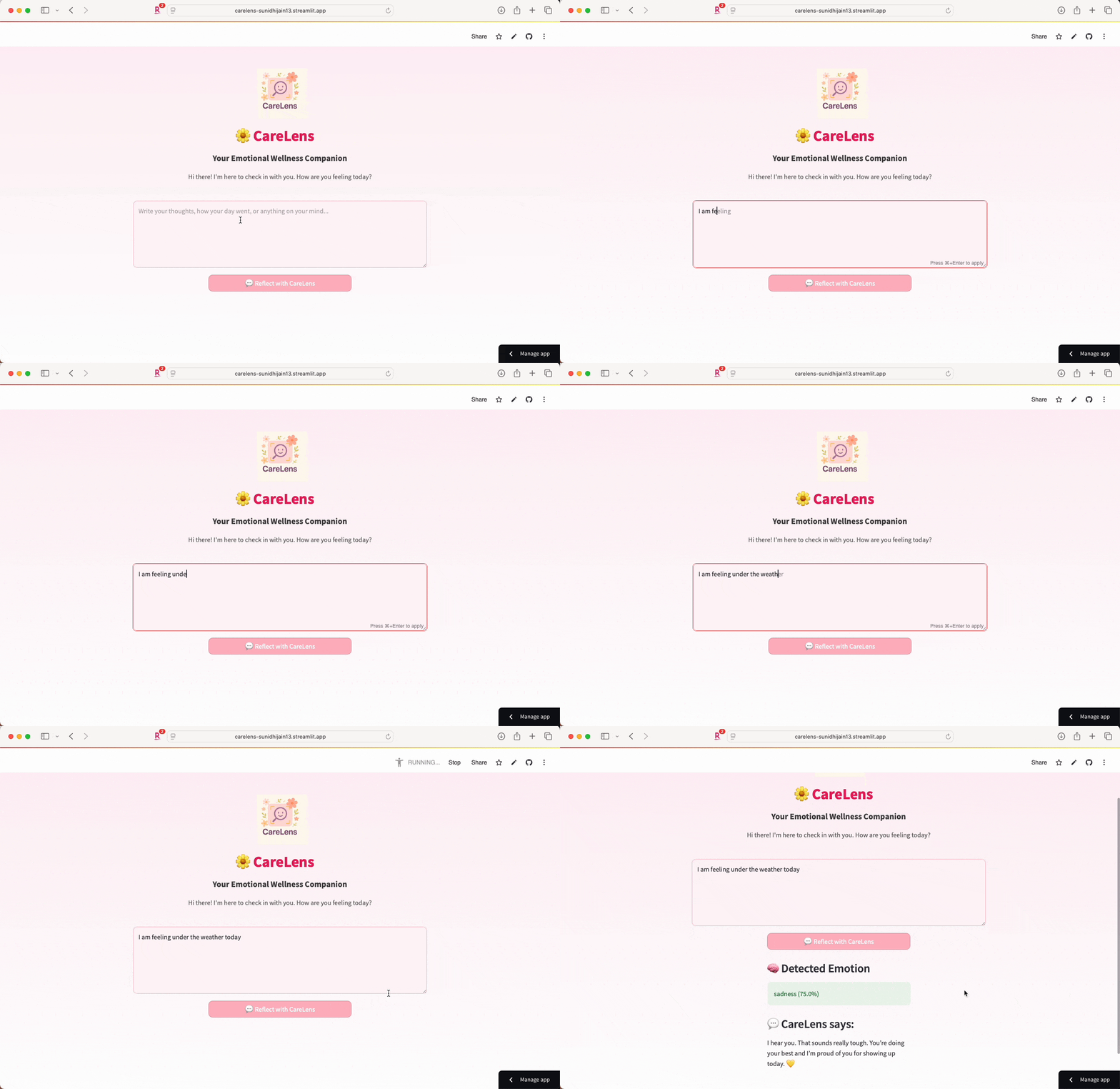
The CareLens application functions as an emotionally intelligent digital companion which focuses on mental health and wellness support. CareLens uses GPT technology to deliver gentle support to caregivers through its system that includes:
- The system uses natural dialogue to monitor your mental state
- The text-based system evaluates your emotional state to detect early signs of burnout
- The system tracks your mood development through visual displays without intrusive methods
- The system suggests appropriate self-care suggestions and relaxation methods through personalized recommendations that match your current state
- The platform functions as a dependable companion which both monitors your status and inquires about your wellness
How I built it
I focused on creating an interface that maintained a simple yet efficient design.
- Frontend: Streamlit
- Backend: FastAPI
- AI: OpenAI GPT-4 for empathetic chats + Hugging Face for emotion recognition
- Data: GoEmotions was used by the system to enhance its ability to detect minor emotional signals
- Extras: Mood dashboard, journaling input, floral-themed branding to keep it light and lovely
Challenges
- The main challenge lies in creating GPT responses which sound natural and human instead of automated
- The system needs to provide support that avoids overwhelming the users
- The user interface should present itself as a comforting interface rather than functioning as a health monitoring system
- The system needs to balance privacy concerns with individualized experiences
Accomplishments
- My developed AI system offers connections instead of basic responses to users. The GPT chat delivers emotionally intelligent and comforting responses which provide comfort without presenting as clinical or cold
- The core concept of the project guides my design choices through the implementation of soft colors and floral graphics and user-friendly interface that provides warm comfort
- Real-time burnout detection emerges through emotion analysis which provides an actual tool to identify patterns that people might overlook
- I built every component of the system from start to finish within 2.5 weeks without any external assistance
- I maintained user-centric and human-centric approaches throughout the entire development process. Every new feature addition followed the question of whether it would enhance the sense of being cared for
What I learned
- The implementation of genuine support through AI requires both empathy and creative approaches for prompting
- Less is more. I discovered that basic design along with basic functionality creates the most significant effects
- Building alone needs regular self-assessment and adjustments even when I got lost in technical issues
- Mental health tools need to be developed with unique sensitivity factors. The learning process taught me to develop systems based on trust instead of performance goals
- Short development periods become achievable when your mission drives your work with genuine passion
What's next for CareLens
I am eager to expand this project forward. The following ideas are scheduled for development:
- Voice input functionality for users who choose spoken communication instead of typing
- Daily summary emails of your mental health journey
- Allow multilingual support, accessible around the world
- Collaboration with mental health nonprofits or caregiver support orgs
- One step forward to a real life Baymax :)

Log in or sign up for Devpost to join the conversation.